dual personalities

Tag: movies

Happy birthday, Mildred Natwick

by chuckofish

Character actress Mildred Natwick was born on June 18, 1905 in Baltimore, Maryland.

She didn’t actually make that many movies, but the ones she made were memorable. She was in four John Ford movies: The Long Voyage Home (1940), 3 Godfathers (1948), She Wore a Yellow Ribbon (1949), and The Quiet Man (1952). In all four she co-starred with John Wayne–lucky lady.

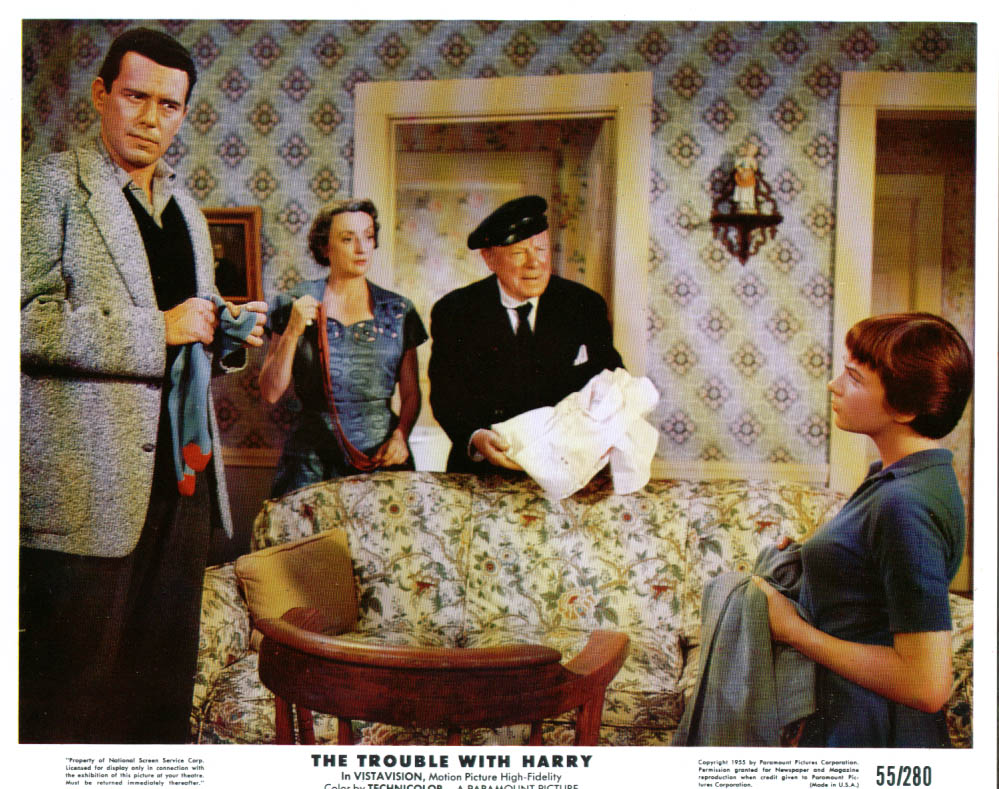
She was also in two other favorite films of mine: Alfred Hitchcock’s The Trouble With Harry (1955) with Shirley MacLaine and Jerry Mathers and Tammy and the Bachelor (1957) with Debbie Reynolds. According to IMDB.com, Truman Capote and Tennessee Williams “adored her” and cast her often in their plays. Well.

She always lent humor and authenticity to any role she played. She was nominated for two Tony Awards and finally in 1967 she received her only Oscar nomination for supporting actress in Barefoot in the Park.

A devout Christian Scientist and all-around class act, she died in 1994. She is interred next to the remains of her sister (and dual personality?) in Lorraine Cemetery in Baltimore, Maryland.

The white whale tasks me

by chuckofish

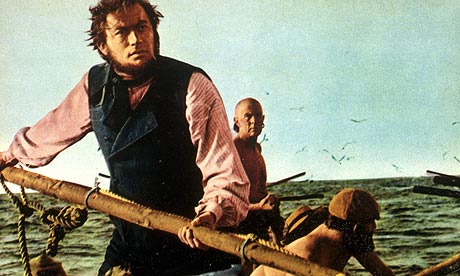
Ray Bradbury, widely considered one of the greatest writers of science fiction and fantasy, died a few days ago. He was 91 years old. Last weekend I watched the John Huston 1956 version of Moby-Dick. The screenplay was written by Ray Bradbury!

In an interview in the Paris Review Bradbury talked about writing this screenplay:

I had fallen in love with John Huston’s work when I was in my twenties. I saw The Maltese Falcon fifteen times, and The Treasure of the Sierra Madre scores of times. When I was twenty-nine I attended a film screening and John Huston was sitting right behind me. I wanted to turn, grab his hand, and say, I love you and I want to work with you. But I held off and waited until I had three books published, so I’d have proof of my love. I called my agent and said, Now I want to meet John Huston. We met on St. Valentine’s night, 1951, which is a great way to start a love affair. I said, Here are my books. If you like them, someday we must work together. A couple of years later, out of the blue, he called me up and said, Do you have some time to come to Europe and write Moby-Dick for the screen? I said, I don’t know, I’ve never been able to read the damn thing. So here I was confronted with a dilemma: Here’s a man that I love and whose work I admire. He’s offering me a job. Now, a lot of people would say, Grab it! Jesus, you like him, don’t ya? I said, Tell you what, I’ll go home tonight and I’ll read as much as I can, and I’ll come back for lunch tomorrow. By that time I will know how I feel about Melville. Because I’ve had copies of Moby-Dick around the house for years. So I went home and I read Moby-Dick. Strangely enough, a month earlier I’d been wandering around the house one night and picked up Moby-Dick and said to my wife, I wonder when I’m going to read this thing? So here I am sitting down to read it.

I dove into the middle of it instead of starting at the beginning. I came across a lot of beautiful poetry about the whiteness of the whale and the colors of nightmares and the great spirit’s spout. And I came upon a section toward the end where Ahab stands at the rail and says: “It is a mild, mild wind, and a mild looking sky; and the air smells now, as if it blew from a far-away meadow; they have been making hay somewhere under the slopes of the Andes, Starbuck, and the mowers are sleeping among the new-mown hay.” I turned back to the start: “Call me Ishmael.” I was in love! You fall in love with poetry. You fall in love with Shakespeare. I’d been in love with Shakespeare since I was fourteen. I was able to do the job not because I was in love with Melville, but because I was in love with Shakespeare. Shakespeare wrote Moby-Dick, using Melville as a Ouija board.

The day I went to see Huston I asked, Should I read up on the Freudians and Jungians and their interpretations of the white whale? He said, Hell no, I’m hiring Bradbury! Whatever is right or wrong about the screenplay will be yours, so we can at least say the skin around it is your skin.

So after I’d read the book multitudinous times, I wrote the beginning on the way to Europe on the boat, and that stayed. But everything else was so difficult. I had to borrow bits and pieces from late in the book and push them up front, because the novel is not constructed like a screenplay. It’s all over the place, a giant cannonade of impressions. And it’s a play too. Shakespearean asides, stage directions, everything.

I got out of the bed one morning in London, walked over to the mirror and said, I am Herman Melville. The ghost of Melville spoke to me and on that day I rewrote the last thirty pages of the screenplay. It all came out in one passionate explosion. I ran across London and took it to Huston. He said, My God, this is it.

Ray Bradbury never went to college. He was a self-taught, much-read writer. In that same Paris Review interview he explained, “I discovered me in the library. I went to find me in the library. Before I fell in love with libraries, I was just a six-year-old boy. The library fueled all of my curiosities, from dinosaurs to ancient Egypt. When I graduated from high school in 1938, I began going to the library three nights a week. I did this every week for almost ten years and finally, in 1947, around the time I got married, I figured I was done. So I graduated from the library when I was twenty-seven. I discovered that the library is the real school.”

Rest in peace, Ray, and may light perpetual shine upon you. “O Father, mortal or immortal, here I die. I have striven to be Thine, more than to be this world’s. Yet this is nothing. I leave eternity to Thee. For what is man, that he should live out the lifetime of his God?”

(If you would like to read the Paris Review interview in its entirety, it is here. It’s worth the effort.)

Small House of Uncle Thomas

by chuckofish

Today in 1851 Harriet Beecher Stowe’s anti-slavery serial, Uncle Tom’s Cabin or, Life Among the Lowly started a ten-month run in the National Era abolitionist newspaper. In honor of this I wanted to show you the famous scene from the King and I movie where Rita Moreno narrates a Siamese version of Little Eva’s escape from Simon Legree across the frozen river. Alas, this is not currently available on YouTube.

So here is the best I could do. It is still pretty great.

I remember back in 1994 when daughter #1 did a report in the 4th grade on Harriet Beecher Stowe. As part of her report she brought our VHS tape to school and showed the famous scene from the King and I.

A gratuitous photo of Yul Brynner to please my dual personality.

Amazingly most of her classmates had never seen it. I have always been an evangelist for great movies, even encouraging my children to embarrass themselves in front of their peers. Hopefully they have forgiven me.

Please note that 1851 was also the year that Moby-Dick was published. Amazing!

Friday movie pick

by chuckofish

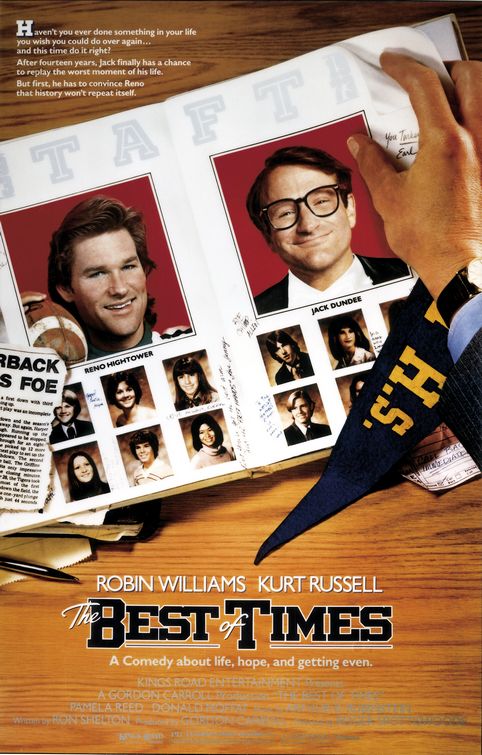
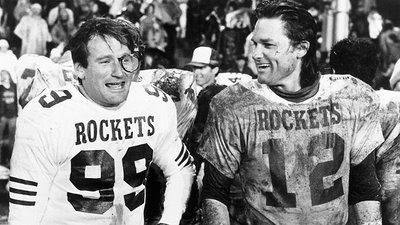
I don’t know why The Best of Times (1986) was not a commercial success when it was first released, because it is one of my favorites. I think it’s funny, and it appeals to me on a nostalgic level. Robin Williams plays Jack Dundee, a thirty-ish banker who cannot let go of his failure to catch a pass in “the big game” back in 1972, a move which (in his mind) made him the goat forever. His best friend Reno Hightower (Kurt Russell), the quarterback and high school hero, wrecked his knee in the game and ended his football career. They live in a crestfallen, has-been town. Then Dundee hits on the idea of re-playing the game and regaining their self-esteem.

Kurt Russell and Robin Williams are in top form. I like them both very much and Robin always reminds me of my brother (especially in this movie). It endears him to me. This movie even boasts a 15-year-old Kirk Cameron as Kurt’s son.

The movie is funny and sweet and there is very little vulgarity. The literary reference in the title infers that high school was also the worst of times, which we all know is true. And most of us can relate to Robin’s character: “I’m not a has-been, I’m a never-was. I aspire to be a has-been.”

Lucky Faye

by chuckofish

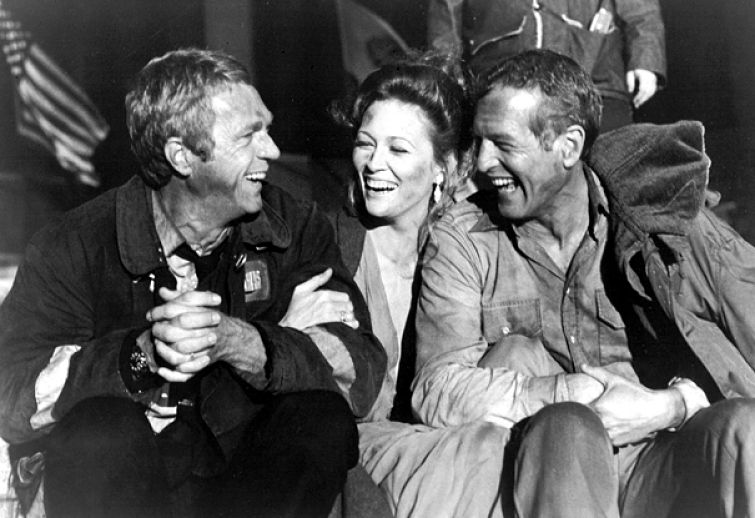
Steve, Faye and Paul on the set of The Towering Inferno. Back in the day when even a bad movie could be bearable because of the awesome cast! Do I sound enough like an old lady? I know. But, gee, some fun was being had.

This is the day

by chuckofish

What, you ask, is the climax of our lenten viewing?
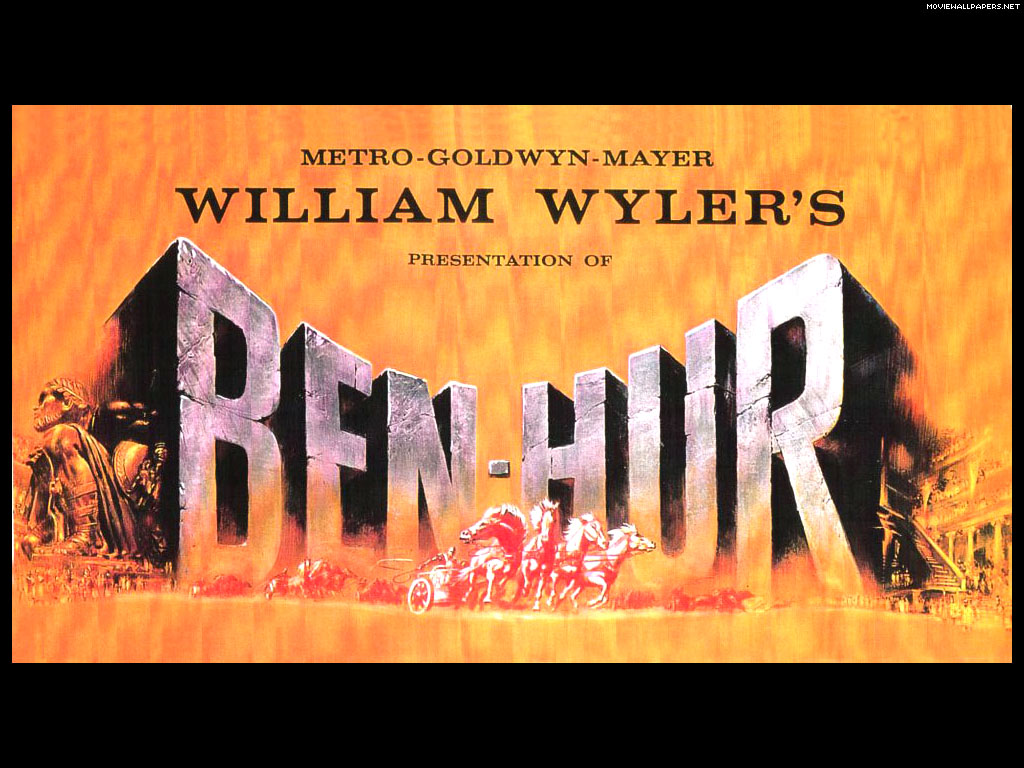
Of course, it is Ben Hur (1959).
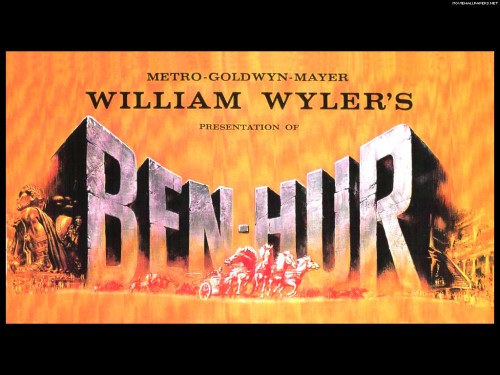
Every year on Good Friday we reverently dust off our 2-DVD set and watch, sometimes waiting until Holy Saturday to view the second part which commences with the famous chariot race. When my children were little we stayed home from church on Easter Sunday and watched the movie. One daughter famously proclaimed this to the altar guild ladies with whom she was making palm crosses in response to a question about seeing her at church on Easter. “Oh, we don’t go to church on Easter. We stay home and watch Ben Hur. My mother says it’s too crowded with all the people who only go twice a year!”

Undeniably one of the greatest movies of all time, it won 11 Academy Awards, a record untouched until Titanic came along in 1997 and tied it. (Go here for the list of Oscars Ben Hur won.)

Ben Hur deservedly won everything that year except writing for Karl Tunberg, who was given credit for what was allegedly a group effort (with Gore Vidal and Christopher Fry), and I think that is why he didn’t win. It is a great screenplay and one of the few instances where the movie is actually better than the book upon which it is based. Also no actresses were nominated, leaving the field open for Simone Signoret who won best actress for Room at the Top over Doris Day for Pillow Talk and Shelly Winters who won supporting for Diary of Anne Frank over Thelma Ritter for Pillow Talk. (All I’ll say is Doris and Thelma were robbed.)

This is such a big movie and its greatness so monumental, that it is hard to know where to start. I will do my best.

1. First and foremost, as its sub-title proclaims, this is “A Story of the Christ”. However, the face of its central character is never seen. He never speaks. I guess it took a Jewish director to figure out how powerful this is. It works.

2. It has a good plot. The author of Ben Hur, General Lew Wallace, had a good idea. The book’s main character, Judah Ben-Hur, accidentally causes injury to a high-ranking commander, for which he and his family suffer tribulations and calumny. He first seeks revenge, and then redemption. As I said earlier, the 1959 film adaption improves on this novel which became the best-selling American novel of the 19th century, surpassing Harriet Beecher Stowe’s Uncle Tom’s Cabin and is considered by some the most influential Christian book of the 19th century. One way the film is better is its depiction of the character Esther, Judah’s love interest.
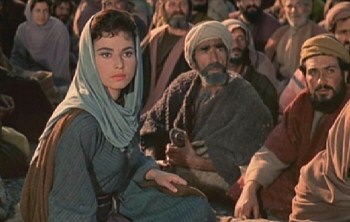
In the film she is multi-dimensional and smart. She takes charge of a very bad situation and goes forward, like an Old Testament prophetess. A former slave, she is in every way worthy of the Prince of Hur. I also think Haya Harareet, who plays Esther, is wonderful, and certainly deserved to be nominated (at least) for her performance. I love her accent and the way she imbues a simple statement with meaning: “The world is more than we know.”

3. This movie takes the view that the Romans were to blame for Christ’s crucifixion. It is a story about Christ where the Jews (and a few Arabs) are the heroes. I’m sure this was very appealing to the Hollywood powers that be, as well as mainstream Americans. Rome is evil. As Judah says to Messala, “Rome is an affront to God! Rome is strangling my people and my country, the whole Earth! But not forever. I tell you the day Rome falls there will be a shout of freedom such as the world has never heard before!” Ben Hur is all about personal freedom. And the film’s art director has a field day with Nazi iconography.

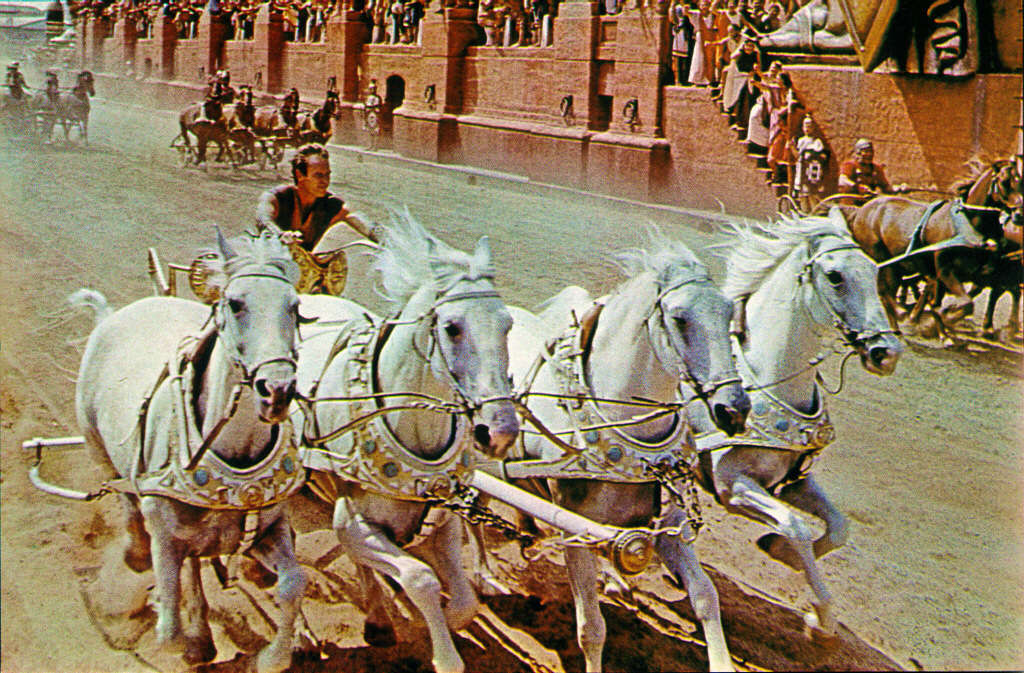
4. It has great (pre-CGI) action sequences using models (the sea battle) and the best stunt men ever. I always told my kids that one of the stunt men was killed filming the chariot race, because that is what my mother told me. But according to IMDB.com, that is an urban legend and claims that 4 stuntmen were killed during the filming of the chariot race are untrue. Charlton Heston had learned how to handle a two-horse chariot when he was making The Ten Commandments. When he arrived in Rome to shoot Ben Hur, he began lessons in four-horse chariot racing with the film’s stunt co-ordinator, Yakima Canutt. Props to Chuck–it made a big difference in the realistic final cut of the chariot race scene.

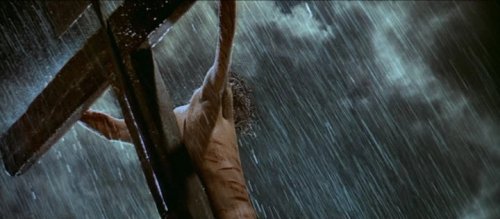
5. Like all great films, Ben Hur has great dialogue and great scenes that you cannot forget. There are, of course, the monumental scenes, but there are also the small ones that stay with you. Who can forget the face of Drusus as the jailer opens the prison door revealing Miriam and Tirzah, and the jailer saying, “Lepers!”? Or Simonides, carried by his other “half”, saying, “We will laugh…We will celebrate! Among the dust and cobwebs.” Or Quintus Arrius: “Your eyes are full of hate, forty-one. That’s good. Hate keeps a man alive. It gives him strength.” And later: “In his eagerness to save you, your God has also saved the Roman fleet.” And the end of the movie when Christ is crucified and there is the fearful thunderstorm with the scariest rumbling in movie history. The three ladies huddle in the cave and Esther says, “The shadow of a storm.”
I remember once sitting in a two-man paddle boat with the boy (when he was a little boy) on a lake in Michigan and he started amping up the speed, crying, “Battle speed!… Attack speed!… Ramming speed!” Another time when we were waiting to pick up daughter #1 and had the back of the 240 wagon open, the boy hopped in and holding tight to the seat-belt straps, re-enacted Messala’s death scene verbatim: “It goes on. It goes on, Judah. The race… the race… is not… over.”

6. One of my favorite things about Ben Hur is that Judah is the best son in literature. He spends years in the galley and all he can think about is finding out what has happened to his mother and sister. Then when he’s in Rome and Quintus has adopted him, all he wants to do is go home and save his mother and sister. And he does. Eventually.

7. All the actors are great–especially Charlton Heston, who really gave it all he had. It was the part of a lifetime and he made the most of it. Plus, let’s give him credit for having the greatest naturally-occurring physique (no steroids for Chuck) of any actor ever.
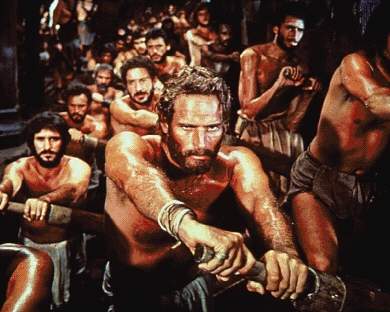
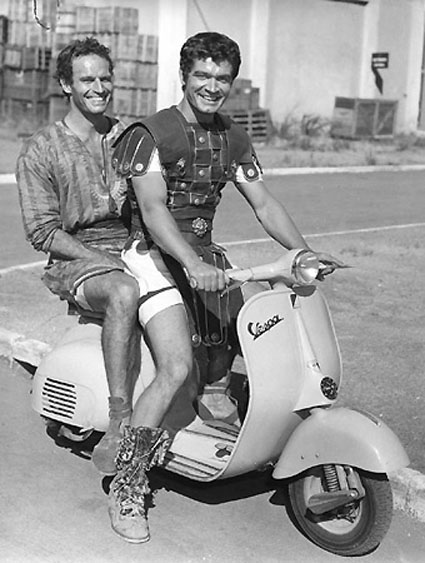
Remember the galley slave in the loin cloth floating on the scrap of wood with Quintus? Awesome. And then, of course, there’s Stephen Boyd in Roman tribune attire, looking terrific and owning it.

On that note, I’ll finish with this picture:
What is your favorite scene in Ben Hur?
To watch or not to watch

by chuckofish

As you know, I have been blogging about great movies to watch during Lent. But really, when you think about it, most “religious” movies are pretty bad.

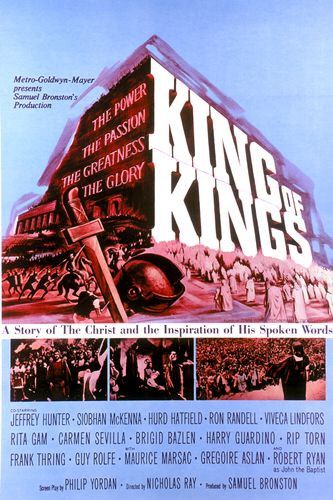
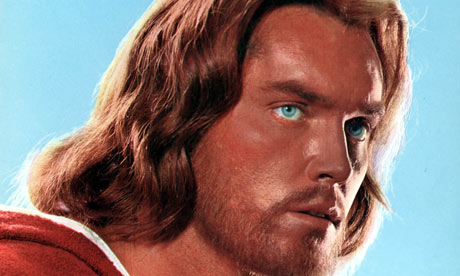
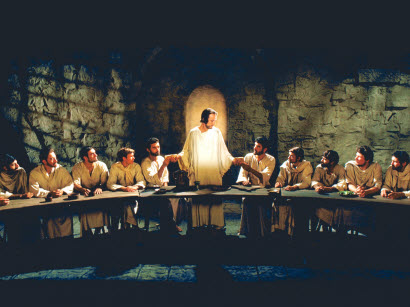
Case in point: King of Kings (1961), directed by Nicholas Ray and starring Jeffrey Hunter as the Son of God. Now when the dual personalities were little girls, we loved this movie. We thought Jeffrey Hunter was the perfect Jesus. Granted, the music by Miklos Rozsa is great and Jeff does have beautiful blue eyes, but really now, this rendition is hardly “the life of Christ intelligently told and beautifully filmed,” as the movie poster promises. The journeyman screenwriter Philip Yordan, who actually won an Oscar for another potboiler Broken Lance in 1955, was way out of his league. The gospel here is presented as a biblical Rebel Without a Cause, strictly trying to appeal to a teen crowd with Jesus as a dreamy all-American quarterback hero.

And as far as actual screen time, Barabbas, memorably played by Harry Guardino as a New York thug, gets way more than poor, sincere Jeffrey Hunter as Jesus. The respected Irish actress Siobhan McKenna is just ghastly as the Virgin Mary promising to “intercede” with her son for the lovelorn Mary Magdalen. It is just awful. I must admit that I kind of like Robert Ryan as John the Baptist, who has a certain disgusted look on his face that I can relate to. And he gets all the good lines: (to Herodias, played by the fashion model Rita Gam) “Woman, is not your cup of abominations full enough?” This movie is full of abominations.

Then there’s The Greatest Story Ever Told (1965), the second to last movie directed by the great George Stevens.

It was a major fail for him. It is based on a book by Fulton Oursler who wrote the story of Jesus with the expressed intention of trying to “make it as interesting as a serial story in a popular magazine.” Well, there you have it. This movie is deadly dull and deathly serious, while at the same time poor Max Von Sydow as Jesus is unintentionally humorous as he says his lines with a Swedish accent. “BapTIZE me, Yon,” he says to Charlton Heston (as John the Baptist) who manages to keep a straight face. This movies is chock full of famous actors and actresses in cameo roles–everyone from Pat Boone to Sidney Poitier and Shelley Winters got into the act. Even David McCallum, at the height of his Ilya Kuryakin fame, plays Judas. This is all very distracting. One is always trying to figure out who is who. Oh look, it’s Angela Landsbury! Blerg. It is just awful.

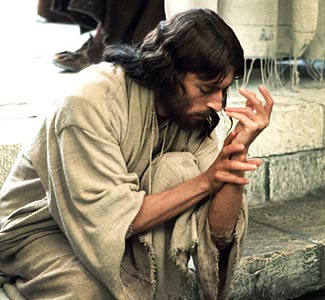
There are a few good ones. I really like the Franco Zeffirelli mini-series, Jesus of Nazareth (1977), which is an appropriately reverent and close adaption of the Gospels of Matthew, Mark and Luke. Anthony Burgess (of all people) did a fine job with the screenplay. There is no “He betook himself to Jerusalem” hokey narration like in King of Kings. He does not try to improve on the scriptures, taking much of the dialogue straight from them and the actors make it work. All the actors are excellent, especially the English actor Robert Powell as Jesus.

To watch the whole thing takes all week, so we better get started!

(The best movie about Jesus is the one where ironically his face is never seen–Ben Hur. This movie deserves its own post, so stay tuned.)

A trinity of Lenten movie picks

by chuckofish

As we hurtle through Lent, I realize that I will not get through all the good movies on my Lenten List unless I “bundle”. So today, I will combine a few suggestions for Lenten viewing in the non-openly-religious category.

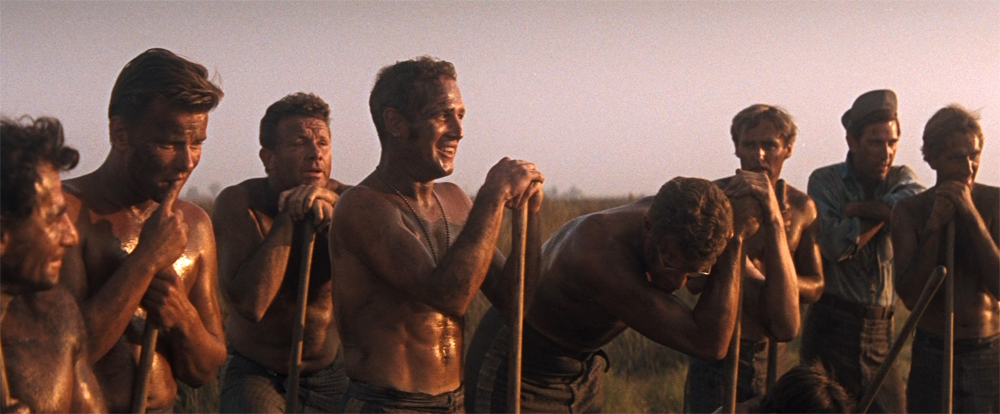
My dual personality has blogged about this one already, but Cool Hand Luke (1967), directed by Stuart Rosenberg and starring the inimitable Paul Newman as Luke, is clearly a suitable story for Lent as Luke is clearly a Christ figure surrounded by disciples, for whom he sacrifices his life. A wonderful movie based on the book by Don Pearce, it won only one Academy Award–for supporting actor George Kennedy, who shines in a firmament of spectacular supporting stars, as a stand-in for St. Peter. There were other nominations (for best actor, music and writing)–but please, no best picture, no best director? What were they thinking? And Paul Newman was down-right robbed that year. But enough said. It was a year for southern lawbreakers. Besides Cool Hand Luke, there was In the Heat of the Night, Bonnie and Clyde…and the more politically correct films won: In the Heat of the Night, Guess Who’s Coming to Dinner. A fine example of why I hate awards and award shows.

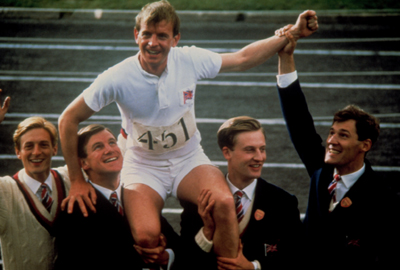
Chariots of Fire (1981), directed by Hugh Hudson and starring Ian Charleson and Ben Cross as two U.K. track athletes is an obvious choice. It is the story of a devout Christian and a determined Jew competing for places on the British 1924 Olympic team. The story of Eric Liddel and his steadfast faith is an inspiring one and not the usual stuff of late 20th century Hollywood. I loved this movie when I first saw it and still enjoy it immensely whenever I watch it. It was such a surprise when it took home the Oscar for best picture. It seemed like such an underdog that year, but it also won for costume design, music and best writing.

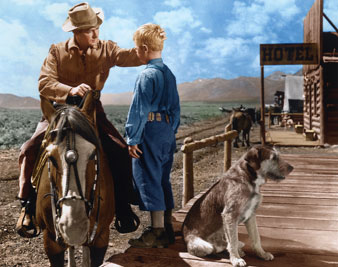
I never need an excuse to watch Shane (1953), because it is probably my favorite movie of all time–or at least up there in the Top Five–but if you are so inclined, it also makes for some good Lenten viewing/discussion. Shane is the story of a weary gunfighter who attempts to settle down with some homesteaders, but ends up sacrificing himself for their good. It is the magnus opus of its star, Alan Ladd, and its director, George Stevens. Neither was recognized by the Academy, although the film received multiple nominations, including best picture. It only won for best cinematography (Loyal Griggs) and, boy, did it deserve that one!

This film has a brilliant screenplay by A.B. Guthrie and is masterfully directed, notable for pacing, suspense and, of course, characterization. The “bad guys” in this western are not so bad really and the “good guys” are somewhat hapless. The chance arrival of the mysterious stranger Shane who throws in with the homesteaders upsets the balance and a really bad guy (Jack Palance), the gunslinger Wilson, is called in. It is important to remember when watching this movie that it has been copied badly ad nauseum, so that the original may appear cliched, when it truly is not a cliche. It is the original, a true classic, filled with wonderful archetypal scenes. Who can forget the arrival of Shane, watched from afar by the boy Joey (“I like a man who watches things go on around. It means he’ll make his mark someday.”), the symbolic conquering of the stump in the yard, the fight in the saloon with Chris (“I was just askin’ about sody pop… pigs and taters and one thing and another”), the prairie 4th of July party, the hilltop funeral where Shane quietly rallies the foundering farmers, the muddy showdown between Stonewall and Wilson, Shane’s fight with Joe and his ride into town, and, of course, the final gunfight between Shane and the cattlemen, and the haunting finale (“Shane, come back!”)? Arguably the best western ever, and John Wayne nowhere in sight! (Please note: Alan Ladd as Shane said, “You speakin’ to me?” long before Robert De Niro.)

All of these movies are good ones to watch with family and discuss with your children. They all include many “teachable moments”.

Wherefore art thou, Kirk Douglas?

by chuckofish

“Meanwhile great Odysseus in the river scrubbed the salt crust from the flesh of his back and broad shoulders and cleaned his hair of the frothy scum dried in it from the infertile sea. When he had thoroughly washed and anointed himself smoothly and put on the clothes given him by the girl, then did Athene daughter of Zeus contrive to make him seem taller and stronger, and from his head she led down the curls of his hair in hyacinthine tendrils. As when some master craftsman (trained by Hephaestus and made wise by Palas Athene in all the resources of his art) washes his silver work with molten gold and betters it into an achievement that is a joy for ever–just so did the goddess gild his head and shoulders with nobility. Then he went far apart and sat down by the margin of the sea, radiant with graciousness and glory, so that the girl in wonder said to her well-coiffed maidens…”

Homer, The Odyssey (Book VI)
translated by T.E. Shaw (1935)

Methinks the gods and goddesses were not unlike the movie moguls of yesteryear.

Happy St. Patrick’s Day

by chuckofish

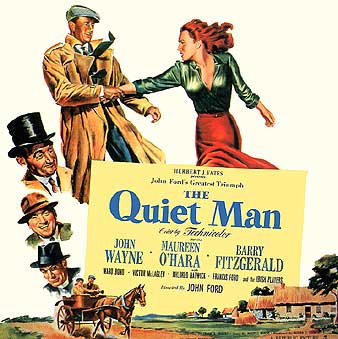
[Time out now from our Lenten movie festival for a St. Patrick’s Day Distraction.] In our decidedly un-Irish family we do make one concession to the Emerald Isle. St. Patrick’s Day is nothing if not a fine excuse for watching one of the greatest movies ever: The Quiet Man (1952).

It is firmly imbedded as one of our family favorites and is on my personal top-ten list of best movies. As with all our favorites, we know the dialogue by heart and many of the lines have become part of our family lexicon:

“Sir!… Sir!… Here’s a good stick, to beat the lovely lady.”

and

“Now I want you all to cheer like Protestants!”

and

“Impetuous! Homeric!”

And, of course, whenever we refer to our own antique furniture, pewter, plates and dishes, we like to call them our “Tings”, pronounced as Maureen O’Hara does, without the benefit of an “h”.

Last year when daughter #1 and I visited daughter #2 in Ireland where she was studying at Trinity College in Dublin, we took a day tour up through County Mayo and Connemara, stopping in the tiny village of Cong. Why, you ask? Because Cong is where The Quiet Man was filmed! It is a lovely little place and still a wee bit of a tourist attraction.

Your dual personality in front of Pat Cohan's pub in Cong.

Anyway, this is a movie not to be missed. It stars, of course, Ford’s “repertory company” which included John Wayne, Maureen O’Hara, Victor McLaglen, Barry Fitzgerald and his brother Arthur Shields, Ward Bond, Mildred Natwick, and a host of Irish character actors. John Ford won his fourth Directing Oscar and Winton C. Hoch won his third Oscar for color cinematography. What a team they were! The film was nominated for Best Picture, Best Writing, and several other Oscars.

As usual, John Wayne was overlooked. But just try to imagine this movie without him if you will! He is terrific as always, throwing his hat hither and yon, dragging Maureen over hill and dale, riding both a stallion and a tandem bicycle (at different times but in the same hell-bent-for-leather fashion), fighting the squire through the town and into the river. He was the most graceful and amazingly physical actor ever, and he could still manage to convey deep feelings without uttering a word.

Recently I saw another Irish-themed movie with a similar plot. The Field (1990), written and directed by Jim Sheridan, and starring Richard Harris, John Hurt, Sean Bean, and Tom Berenger, tells a similar story of another “rich” Irish-American who comes to a small village in the old country and attempts to buy a field. However, The Field is the nightmare flip-side of The Quiet Man. Ignorance, fear, suspicion and chronic abuse take center stage. Ultimately the rich foreigner is beaten to death for his trouble. The newer movie does somehow ring truer than Ford’s fairy tale, but I’ll take the fairy tale any day.