You know I am a great believer in re-reading books (and re-watching movies) and so is the writer of this article. “Love is the starting place of repeated rereading. And because of that beginning, the gifts of reading are amplified within its practice. Let me make a case to you: rereading is a rich, moral craft that forms us as people.”
And what do you know, science proves it! It says so here.
I definitely think this is true! I have my go-to bonafide stress-reducer movies that I like to watch when I need a lift. Don’t you? It might be time to watch Hatari (1962).
Speaking of John Wayne, this is super cool! “Many Americans of Generation X and older will recall the red, white, and blue American Freedom Train that was a centerpiece of America’s glorious Bicentennial celebration. But few know that the Freedom Train, pulled by a steam locomotive and filled with American historical artifacts, was the brainchild of none other than John Wayne.” Let’s bring back John Wayne’s rolling tribute to America’s finest.
And a bear was spotted playing in a Connecticut back yard…watch the video–priceless!
Today we toast the wonderful Shirley Temple (1928-2014) on her birthday. There has never been another child star as beloved as Shirley, who made 29 films by the time she turned 10. She was the top box office draw from 1934-1938. She was a pro and she worked hard in a tough business and survived amazingly unscathed–probably because she retired so early and never looked back.
We should all drink a non-alcoholic mixed drink (a “Shirley Temple” made with lemon-lime soda or ginger ale and a splash of grenadine, and garnished with a maraschino cherry) in her honor and watch one of her films.
Also on this day in 1953, the movie Shane, directed by George Stevens and based on the 1949 novel by Jack Schaefer, starring Alan Ladd and Jean Arthur, premiered.
As you know, it is my favorite of all time. Almost 75 years old!
In other news, on this day in 2005 YouTube’s co-founder Jawed Karim uploaded the first video to YouTube, “Me at the zoo” showing him in front of two elephants at the San Diego Zoo.
Not very exciting in my opinion, especially when compared with Shirley Temple.
Have a great Wednesday!
Count your blessings, name them one by one; Count your blessings, see what God hath done.
Well, the sun–thankfully–came out yesterday, but it was still quite cold. I had a lot of desk work to do, so I stayed inside mostly, only venturing out to mail a card. (Am I becoming my father?)
Today we celebrate the birthdays of two good writers–Elizabeth Bacon Custer in 1842 and Glendon Swarthout in 1918. Libby Custer was the wife of George Armstrong Custer. Left nearly destitute in the aftermath of her husband’s death, she became an outspoken advocate for his legacy through her popular books and lectures. She is largely responsible for his posthumous fame.
She never remarried and died in 1933, four days short of her 91st birthday.
“As the sun broke through the mist a mirage appeared, which took up about half of the line of cavalry, and thenceforth for a little distance it marched, equally plain to the sight on the earth and in the sky. The future of the heroic band, whose days were even then numbered, seemed to be revealed, and already there seemed a premonition in the supernatural translation as their forms were reflected from the opaque mist of the early dawn.”
–Boots and Saddles, or Life in Dakota with General Custer
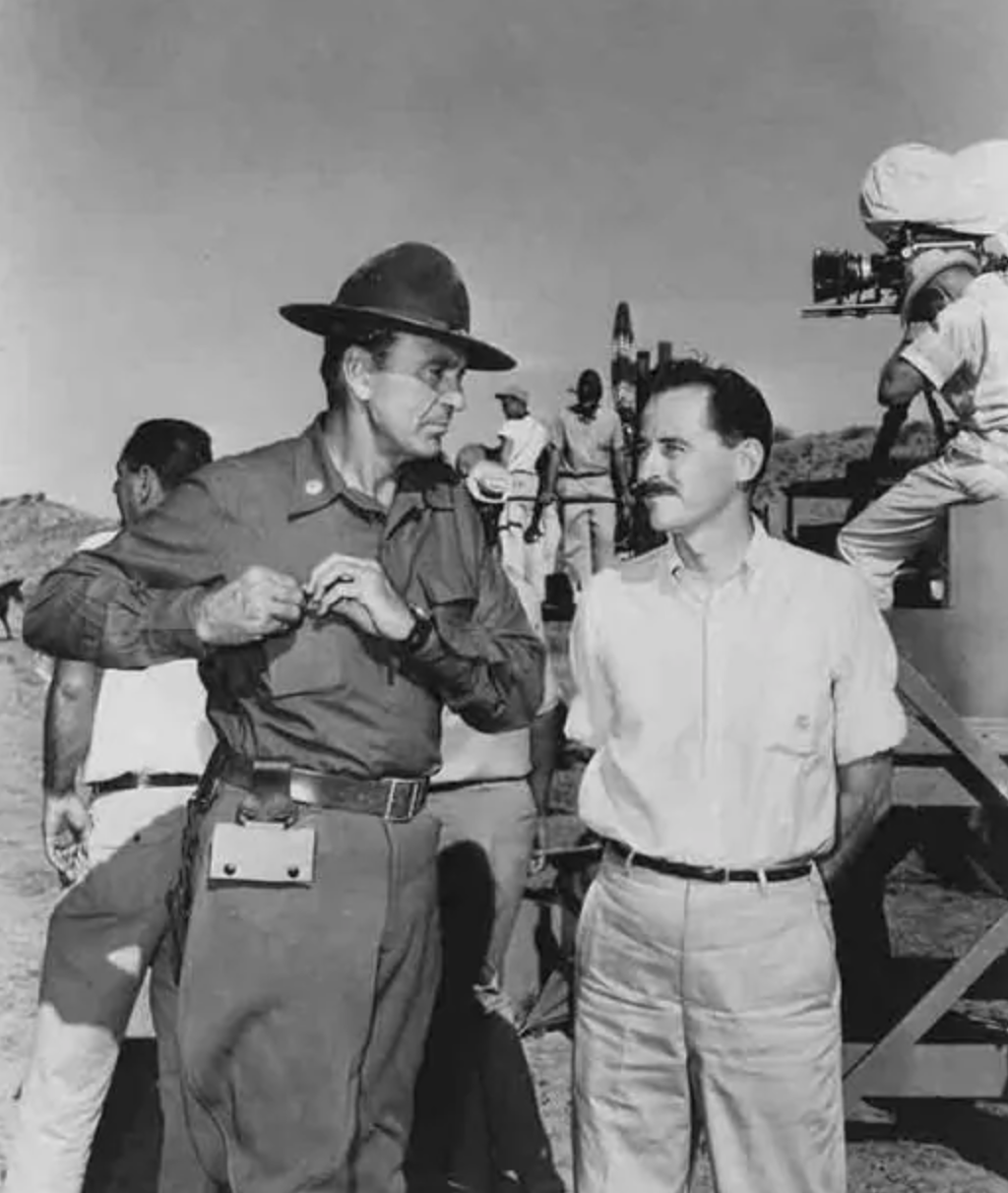
Like Libby Custer, Glendon Swarthout was born and raised in Michigan. After serving in WWII, he went back to school, earning his PhD in Victorian literature, all the while teaching in college and writing short stories. He was paid $2500 in 1955 for one of these stories, “A Horse for Mrs. Custer”, which was made into a movie starring Randolph Scott, 7th Calvary (1956). The day after he finished his last doctoral examination, he started writing a novel called They Came To Cordura about Gen. Pershing’s 1916 expedition to capture Pancho Villa. The book was quickly sold to Random House and then to Columbia Pictures in 1958, becoming a major motion picture starring Gary Cooper and Rita Hayworth.
Gary Cooper and Swarthout during filming
He wrote more best-selling novels, some of which were also made into good movies. As usual, though, the books are better than the movies.
So we’ll toast Libby Custer and Glendon Swarthout tonight and maybe we’ll watch They Died with Their Boots On (1941) with Olivia De Havilland as Mrs. Custer or They Came to Cordura (1956) or The Shootist (1976) starring John Wayne.
And it might be time to dust off Bless the Beasts and the Children and read it!
I will also note that recently our local rag (the Webster-Kirkwood Times) ran a story about the increase in recent coyote sightings in our neck of the woods. You will recall that I saw a coyote in my yard a few weeks ago and noted it. The experts attribute this to the huge cicada emergence last spring, which resulted in plentiful food resources and high survival rates for coyotes and other species. Well, my goodness, you don’t say? What I really want to know is who are the busybodies who report such things and to whom do they report them? I mean, if I saw a bear, I might call the police, but a coyote? That must be Karen, I guess.
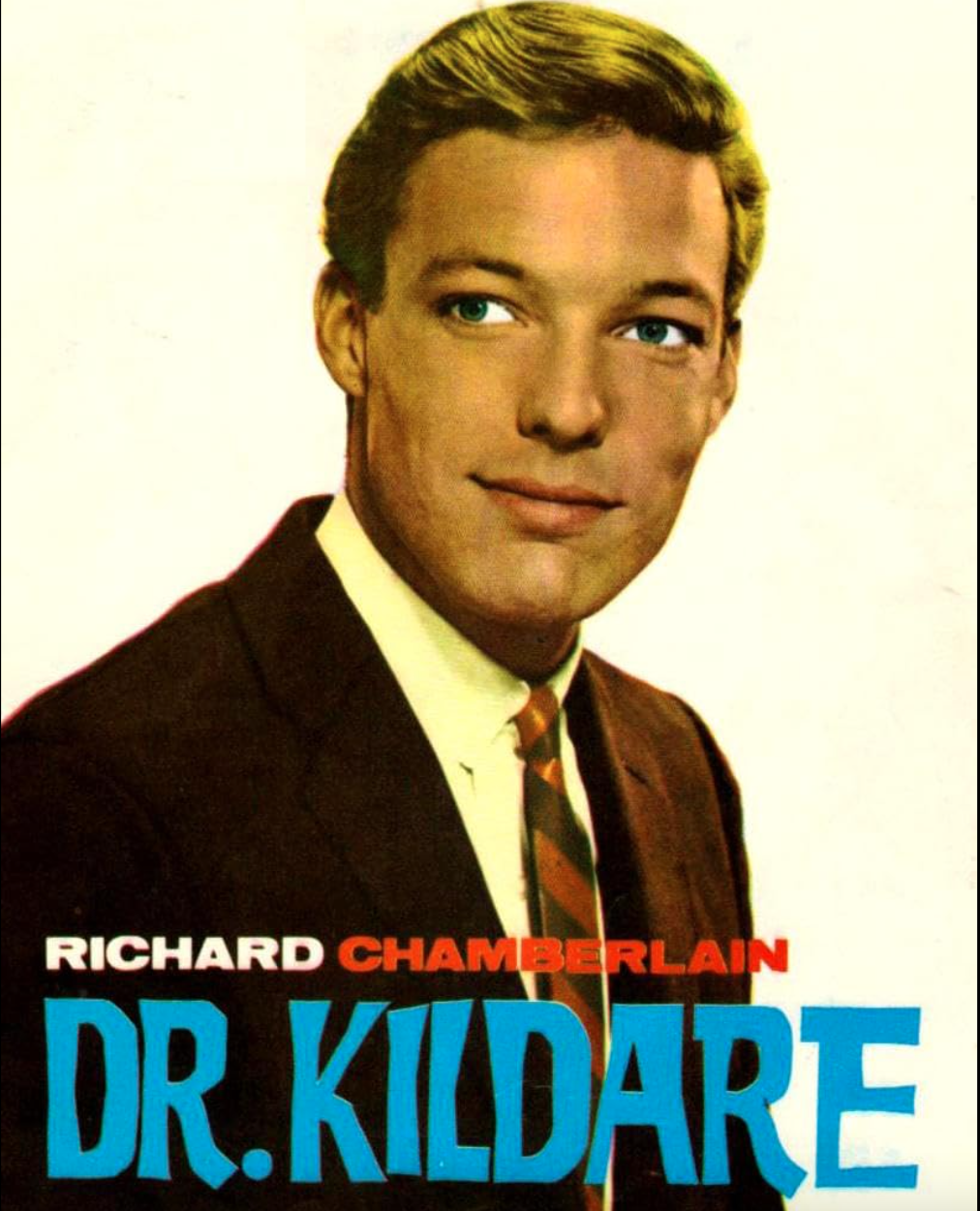
Well, we were saddened to hear that “Cousin Richard” Chamberlain had died. When I was growing up, we always called him Cousin Richard and joked that he was, indeed, our cousin, because we had the same last name and he did kind of look like our father. We liked him in his king-of-the-mini-series period in the 1970s and ’80s. If Dr. Kildare was on Amazon Prime I would watch it now. I’ve never seen an episode!
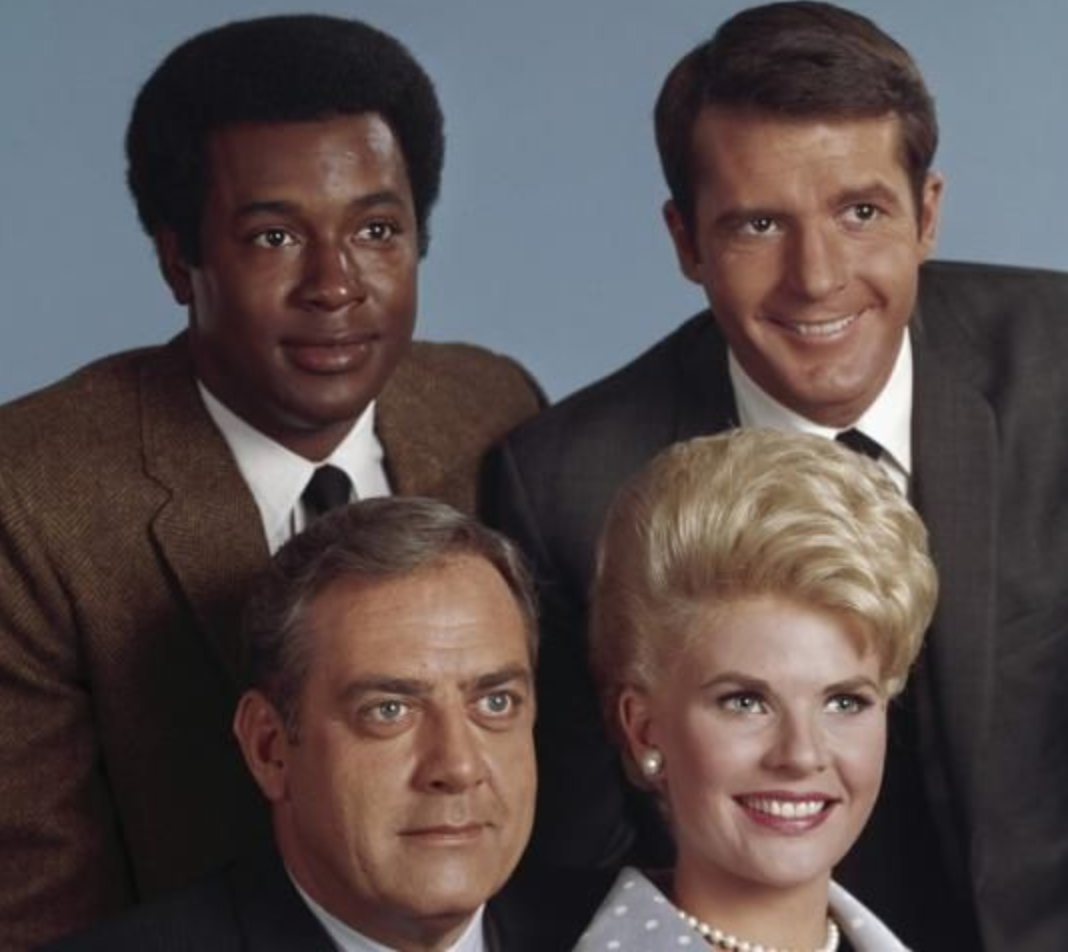
As I have mentioned, we have not watched network TV for years, preferring to watch old TV shows (sans commercials whenever possible). After many seasons of Hawaii Five-0 and some Kojack, lately we have been watching Ironside (1967-1975) which starred Raymond Burr as a a consultant to the San Francisco police department (formerly chief of detectives), who was paralyzed from the waist down after being shot by a sniper. The OM really loves the groovy theme by Quincy Jones. This publicity photo makes me chuckle, because no one ever smiles on the show, except maybe in the final scene of each episode when they are going to sit down to a meal of chili after solving their case.
I like Chief Ironside himself who is a gruff, smart, show-no-emotion kind of guy. And I have to say, I enjoy all the guest stars who were regulars on TV shows of the era, not to mention the fab fashions of the day. My favorite episodes are the ones dealing with hippies and the perceived drug crisis of the late 1960s. Anyway, it’s available on Amazon Prime.
In other news, I did watch the hilarious Major League (1989) which I highly recommend. I also watched Road to Perdition (2002) which is an excellent movie directed by Sam Mendes, but it is sad and depressing. It has a great cast–all playing terrible irredeemable Irish gangsters–including Paul Newman in one of his final roles. It won an Oscar for Conrad Hall and his wonderful cinematography. The music by Thomas Newman is A+.
To round out the weekend I watched Big Jake (1972) starring John Wayne and two of his sons (Patrick and Ethan) and Robert Mitchum’s son Christopher. I thoroughly enjoyed it and was amused by the Big Jake/Little Jake name-calling, because, of course, we have Big Wheeler/Little Wheeler in our family. At church on Sunday, I was looking for the boy and went downstairs to the Sunday School to find him. I said to the two men who were on check-in duty if Wheeler had come down. They said, Oh yeah, he’s in class. I said, No I’m looking for Big Wheeler, and they laughed. “Big Wheeler! Heh heh.” I said, well, that’s what we call him at home! They were highly amused.
The author of this article refers to our devices as “Phone Pharaohs,” which seems particularly apt. “The Lord’s command to Pharaoh could perhaps be applied to the smartphone: ‘Let my people go, so that they may worship me’ (Ex. 9:1, NIV).”
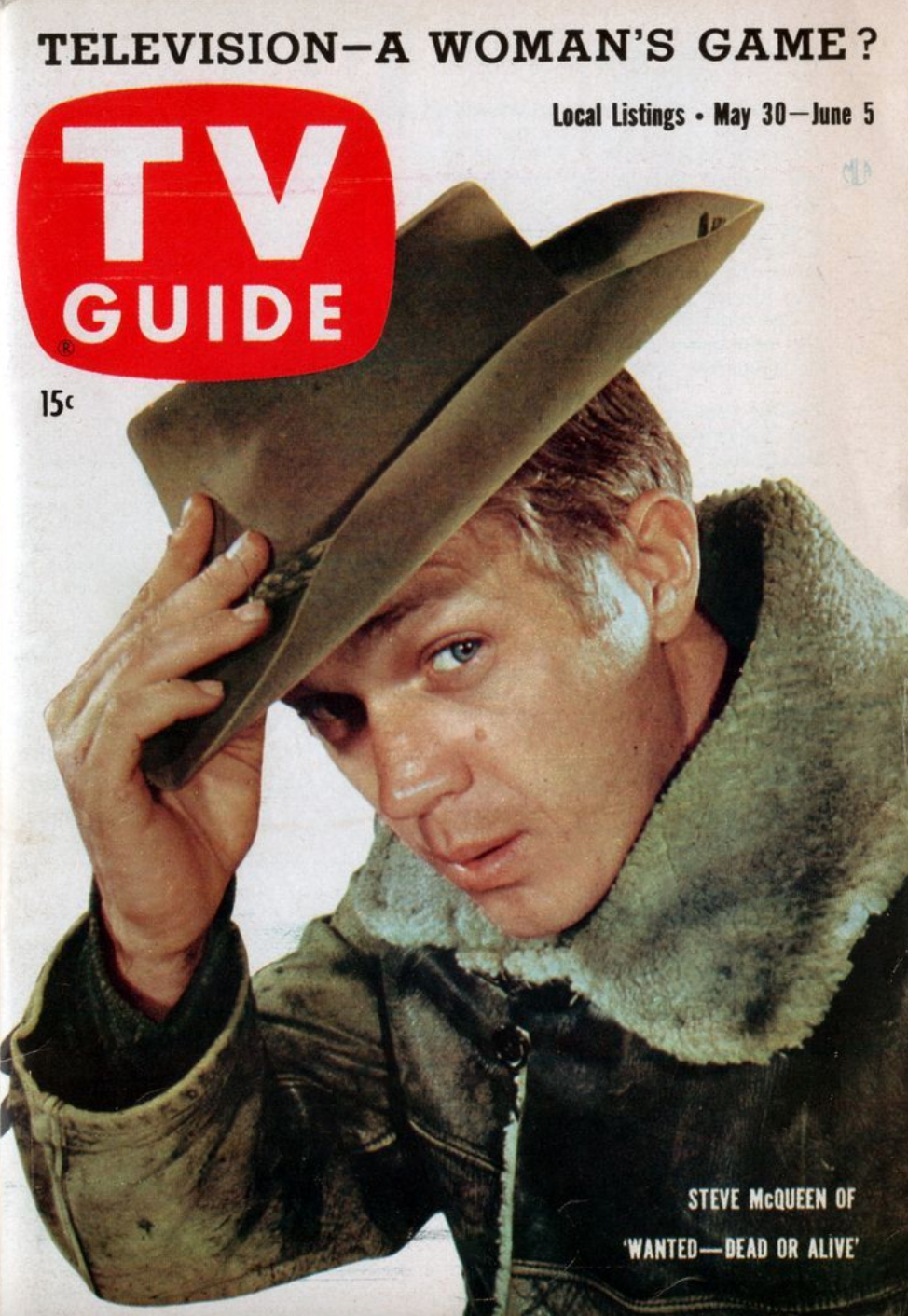
Yesterday was Steve McQueen’s 95th birthday–how did I miss that? Mea culpa for not reporting that in a timely manner. When I remembered I watched several episodes of Wanted Dead or Alive, the show that kick-started Steve’s career. It’s Steve before Steve was super-cool.
Today we toast British director David Lean who was born on this day in 1908. Lean was nominated for ten Oscars, winning seven, including two for Best Director.
Lean remains the only British director to win more than one Oscar for directing. He has seven films in the British Film Institute’s Top 100 British Films (with three of them being in the top five)–which seems rather over-indulgent. They include: Brief Encounter, Lawrence of Arabia, Great Expectations, The Bridge on the River Kwai, Doctor Zhivago, Oliver Twist, and In Which We Serve. Before he became a film director, he was a film editor. He edited Pygmalion (with Leslie Howard), Major Barbara, 49th Parallel, and One of Our Aircraft is Missing. Anyway, you might want to pick one of these movies to watch. I’m afraid it would take me at least three nights to watch Lawrence of Arabia! But I could probably handle Pygmalion.
It is also the 100th birthday of the author Flannery O’Connor. I was never a big fan of her writing. She is primarily known for her short stories which are a little too weird for my taste. I think I was seriously scarred by reading “A Good Man Is Hard to Find” in high school. You can visit her Andalusia farmhouse in Milledgeville, Georgia if you are so inclined.
And lest we forget, today is Medal of Honor Day in the U.S., created to honor the heroism and sacrifice of Medal of Honor recipients and celebrated every year since 1991. Over 3,500 Medals of Honor have been awarded, including two to Frank Baldwin (1842-1923) who is one of only 19 servicemen to receive the Medal of Honor twice and one of only 14 to be awarded the United States’ highest military honor for two separate actions.
Baldwin received his first award for his actions during the Atlanta Campaign where he led his company in battle at Peachtree Creek and captured two commissioned officers in the Civil War. He received his second for conspicuous bravery in 1874 during the Indian Wars. On November 8, 1874, while commanding a scout company on escort duty, he led a surprise attack on the camp of Grey Beard, rescuing two young sisters whose parents and brothers had been killed by another Indian band. His second citation reads “Rescued, with 2 companies, 2 white girls by a voluntary attack upon Indians whose superior numbers and strong position would have warranted delay for reinforcements, but which delay would have permitted the Indians to escape and kill their captives.” Baldwin also served in the Spanish-American War and in World War I. Let’s all take a moment.
So enjoy your day! Get out in the spring sunshine, watch an old movie, read some history, and remember that all the promises of God find their Yes in Christ.
Today we salute American stage and film actress, Josephine Hull (1877-1957), who died on this day in 1957. She made only seven films, including Harvey (1950) for which she won the Best Supporting Actress Oscar. She is most fondly remembered for portraying doughty old ladies to perfection in the original Broadway productions of You Can’t Take it With You (1936), Arsenic and Old Lace (1941)…
…and Harvey (1944). I confess that I tried to watch Harvey a few weeks ago when it was on TCM and I had to quit after 20 minutes. James Stewart just drives me crazy and I cannot watch him anymore. I loved that movie as a child and I loved James Stewart back then too, but no more. It’s funny how that works sometimes.
The reverse is also true. I never thought much of Cary Grant growing up and as a young woman, but now I think he’s great. Also true for James Cagney(!)…I watched Yankee Doodle Dandy (1942) recently and James Cagney was wonderful. He always gave 110% and I appreciate that.
Anyway, here is Josephine Hull receiving her Oscar in 1951, very graciously indeed.
We used to tease our mother that she reminded us of Josephine Hull, but now I think I am beginning to look like JH myself!
Well, have a good day! Watch an old movie, avoid Pookas.
*Wilson, reading from the encyclopedia: “P O O K A – Pooka – from old Celtic mythology – a fairy spirit in animal form – always very large. The pooka appears here and there – now and then – to this one and that one – a benign but mischievous creature – very fond of rumpots, crackpots, and how are you, Mr. Wilson?” “How are you, Mr. Wilson?” Who in the encyclopedia wants to know?
So Gene Hackman died last month. He was 95 and had had a long and fruitful career/life. Over the weekend I watched my two favorite GH movies: Bite the Bullet (1975) and Hoosiers (1986). I enjoyed them both very much.
Bite the Bullet is a western written and directed by Richard Brooks who also wrote/directed The Professionals (1966). They are similar in a lot of (good) ways. A ragtag group of misfit men (including two former Rough Riders) and one woman are trying to get somewhere and have to cross a desert. They are good people and the one young jerk learns from the older, wiser men and changes. Each player is given one or two good scenes where they confess their secrets, but there is relatively little dialogue. Everyone handles the physical stuff like pros. It is the kind of movie I like best.
Hoosiers is one of the best sports movies ever and even if, like me, you couldn’t care less about basketball, you can’t help getting carried away by it all.
Of course, Gene Hackman made a lot of other good movies during his long career. I remember when my parents went to see The French Connection in 1971. They came home and were very excited about this great movie, which they had enjoyed very much.
Gene Hackman was always convincing and real–as a good guy and as a bad guy. I prefer the good guys.
In other news, the crocus at Don’s house are blooming!
The daffodils in my yard are about six inches tall and there are some buds! Some of them do look a bit frost-bitten. Hopefully they will be okay.
Well, here we are in February. Yesterday we broke a record from back in the 1880s–reaching the temperature of 76 degrees! I made my usual Monday trip to the grocery store and swung by the P.O. It is a soggy mess out there, but I am not complaining.
Today we toast the wonderful writer MacKinlay Kantor, who was born on this day in 1904 in Webster City, Iowa. He wrote a lot of short stories for popular and pulp magazines before publishing his first historical novel, Long Remember, in 1934. Kantor was a war correspondent with the British RAF during WWII and also served as a gunner in the U.S. Air Force. After his service he became a screenwriter in Hollywood. His verse novel about three American servicemen returning to civilian life, Glory for Me, was adapted for the screen, becoming the Academy Award-winning film The Best Years of Our Lives (1946). He won the Pulitzer Prize for Andersonville, based on the notorious Confederate prisoner-of-war camp in Georgia where nearly 13,000 Union soldiers died, in 1955. I would re-read it, but I’m not sure I can handle such total depravity right now.
Anyway, I have been an admirer of Kantor for a long, long time and I recommend his books (and movies made from his books).
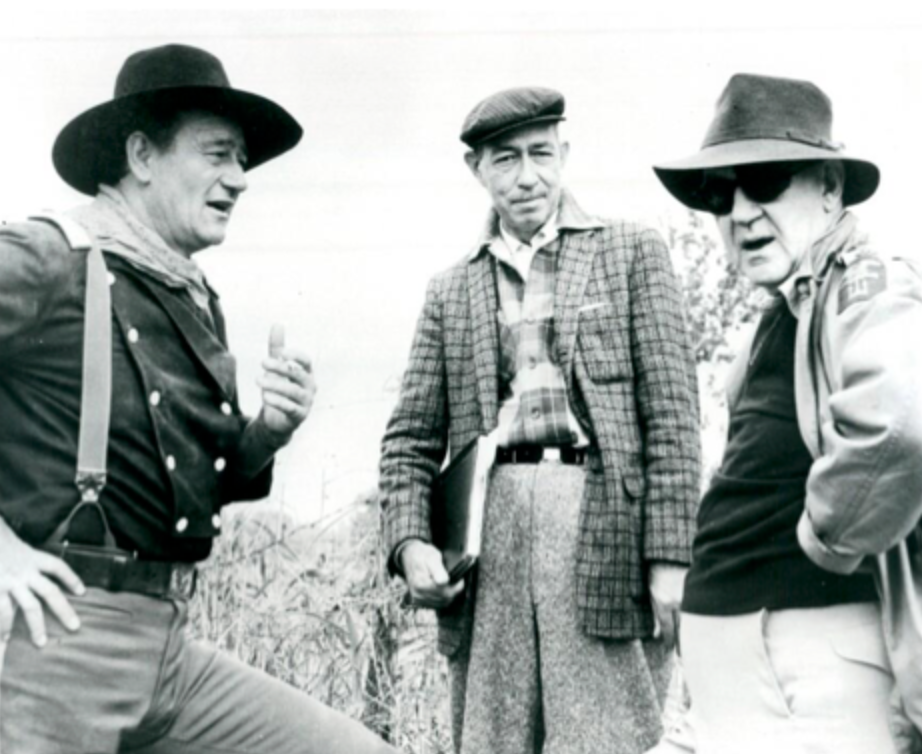
At the moment I am reading another historical novel by another American writer who wrote short stories for magazines while working in a hardware store in his hometown of Bloomington, IL. Harold Sinclair also wrote a few well-received novels, but The Horse Soldiers was his only bestseller. I have my father’s old signed copy from 1955 and I am enjoying it. Of course, the movie version starring John Wayne and William Holden is a favorite of mine. Here’s a picture of the author with John Wayne and the director John Ford.
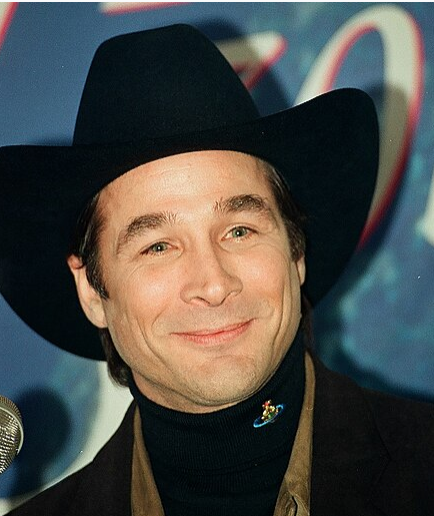
We also toast country singer Clint Black, who was born on this day in 1962. He was born in New Jersey, but grew up in Katy, Texas. We always think of him as the secret twin of George W. Bush.
Quite the resemblance, don’t you think?
Speaking of twinsies, the prairie girls are enjoying the warmer weather too…
I am proud to say I finished reading Drums Along the Mohawk–all 654 pages! It was well-worth the effort. Really a wonderful book. The author, Walter D. Edmonds, writes in his Author’s Note:
To those who may feel that here is a great to-do about a bygone life, I have one last word to say. It does not seem to me a bygone life at all. The parallel is too close to our own [1936]. Those people of the valley were confronted by a reckless Congress and ebullient finance, with their inevitable repercussions of poverty and practical starvation. The steps followed with automatic regularity. The applications for relief, the failure of relief, and then the final realization that a man must stand up to live…They suffered the paralysis of abject dependence on a central government totally unfitted to comprehend a local problem. And finally, though they had lost two-thirds of their fighting strength, these people took hold of their courage and struck out for themselves. Outnumbered by trained troops, well equipped, these farmers won the final battle of the long war, preserved their homes, and laid the foundations of a great and strong community.
Woohoo, yes, they did.
I was also reminded of how truly hard it was to be a woman on the frontier–something today’s bloggers/influencers, who find it “hard” to have babies and bring up children today, might find mind-boggling. Just to give birth to a baby in 1779 and then watch it starve or freeze to death or be tomahawked and scalped is beyond their comprehension. It’s kind of beyond mine, and, yes, yes, parents do have plenty of modern problems today–iphones and activist teachers etc. etc.–I know, but at least I have the grace to be thankful for my OB-GYN, and safe, warm house, and well-stocked grocery stores. Ye gods, women, get some perspective!
Anyway, we should all take a moment every once in awhile to remember our ancestors who stepped up and made many sacrifices so that we can enjoy our freedom. And stop whining. Please.
Today is the birthday of one of my favorite ancestors, John Wesley Prowers, who was a pioneer on another frontier. I think of his mother, my great-great-great grandmother, who gave birth to him in 1838 in Westport, MO, a frontier outpost on the Missouri River where just a handful of white people lived at the time. She gave birth to my great-great grandmother the following year. Then her husband died. She did have family nearby and the settlement was growing, but wow.
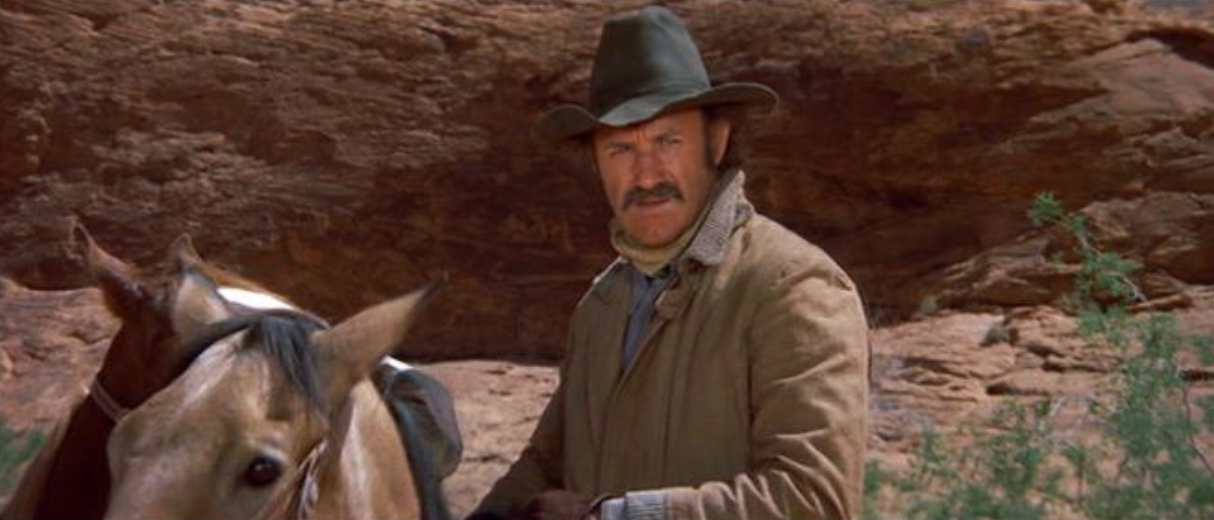
Anyway, it is my practice to watch a good cowboy movie to celebrate JWP’s birthday–usually the great Red River (1947). But I think I might dip again into Lonesome Dove (1989) this year. JWP, you will recall, was a friend and business partner of Charles Goodnight, upon whom the character Captain Call (Tommy Lee Jones) is based.
Here’s to the sunny slopes of long ago.
And this is really, really good. “To the rest of the country—the rest of the world–we don’t matter, here in the Middle of Nowhere. And that’s fine, for the most part. Most of us are happy to let the noise and craziness of the world pass us by. But that doesn’t mean that we are unseen by God. That we are unnoticed by Heaven.”
Have a good day! Read an old book. Watch an old movie. Praise God from whom all blessings flow.
It has been such a cold week! Thankfully the sun has been out much of the time and I have been able to needlepoint by my window. I also sent the Review off to the printer. I do love crossing items off my to-do list, don’t you?
I am also making headway reading Drums Along the Mohawk–the 600+-page tome given to me for Christmas. I am more than a third of the way in and I must say, it is wonderful. Published in 1936, it is well-written, exciting, and populated with realistic characters. It is very scary in parts and well it should be. It was a scary time to be on the New York frontier.
“For the first time they began to realize that there was no protection for them except in themselves. An unpredictable force had been born in the Mohawk Valley…”
The book is peopled with historical persons such as General Nicholas Herkimer and Adam Helmer, and other descendants of the German immigrants who were the majority residents in the central Mohawk Valley at the time. It also features such historical events as the Battle of Oriskany.
(Side note: When I was writing the Review article about RADM Courtney Shands, I learned that he was the commander of the aircraft carrier USS Oriskany during the Korean Conflict. The USS Oriskany was named after the famous and bloody engagement during the Saratoga Campaign. Synchronicity!)
Anyway, I am learning a lot and enjoying the book. Of course, young people today never read books like this and it is a shame. They might actually learn something about our country and the pioneers who built it. It was not easy, not easy at all.
Here’s another bit of trivia. Henry Fonda, the star of the film Drums Along the Mohawk (1939), was a descendent of Douw Fonda, (1700–1780) a prominent settler and trader in the Mohawk Valley. During the fighting with Loyalists, he was captured by a Mohawk, tomahawked and scalped. Two of Douw Fonda’s sons, John and Adam, were taken prisoner in the raid and taken to Canada.
Our ancestors were a hardy lot. They had to be.
So stay warm, read some (good) historical fiction, watch an old movie. Be thankful for and remember those who came before you.









 dual personalities