dual personalities

Tag: Missouri

Three cheers and a toast

by chuckofish

Well, as of yesterday it is officially fall. It is a little cooler and we have had a lot of much-needed rain and we are grateful.

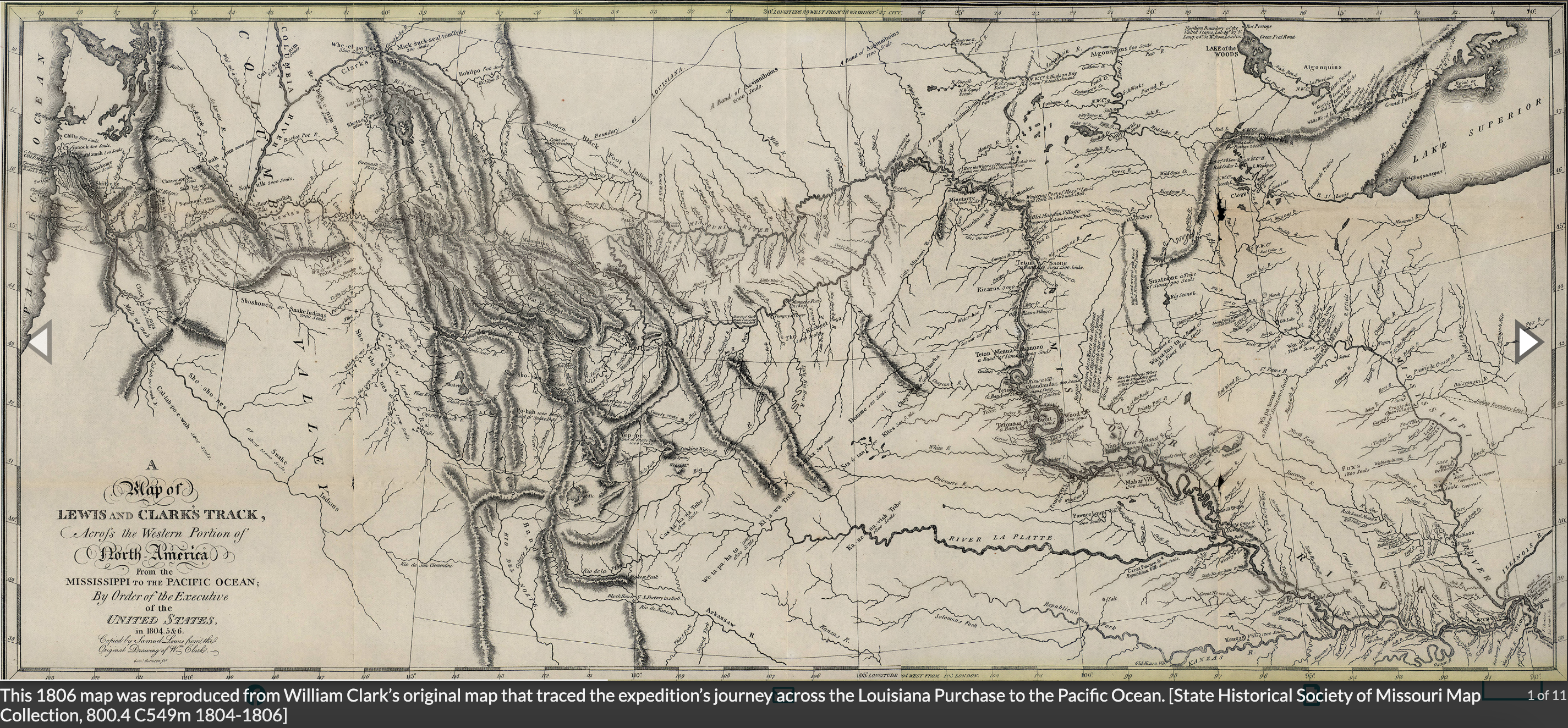
Today we toast the 219th anniversary of the return of the exploring expedition led by Meriwether Lewis and William Clark back to St. Louis in 1806. The people of St. Louis, we are told, “gathered on the Shore and Hizzared three cheers” and rifles were fired in a welcoming volley as they landed their canoes on the levee.

Two years and four months earlier, the band had departed quietly from a gathering point at Wood River, Illinois, for their 8,000-mile expedition through the Northwest. The Corps of Discovery encountered a wide variety of natural landscapes on their trek to the Pacific coast, including rolling prairies, vast rivers, towering limestone bluffs, and rugged mountain ranges. They also encountered hardship, privation, extremes of temperature and climate, danger from Indians, grizzly bears, and a wide range of physical discomforts. Several times they were presumed lost.

The two captains were fetted that evening at a state dinner followed by a grand ball. The rest of the crew were eager to resume civilian life and quickly spent their accumulation of two years’ pay in the frontier village. One can only imagine their relief and joy upon returning.

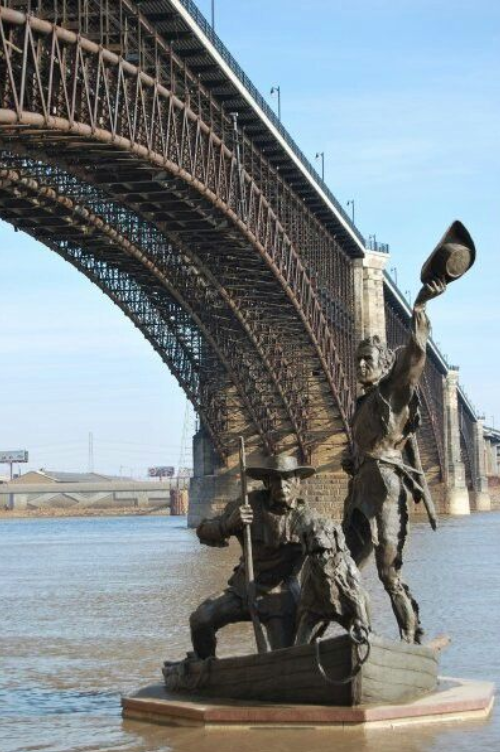
By the way, the 22 foot tall bronze statue, The Captains’ Return (shown above), depicts the return of William Clark and Meriwether Lewis to St. Louis in 1806. It was commissioned by the Greater St. Louis Community Foundation to mark the bicentennial of the end of the Lewis and Clark Expedition. After its initial placement in 2006, flooding of the Mississippi River often led to the statue being partially submerged with the result that Clark looked as if he was waving his hat as in distress. In 2014, the statue was removed and restored to fix damage from the floods, and in 2016, the statue was returned to the riverfront to a location slightly south and about 17 feet higher than before.  The sculptor, Harry Weber, has thirty-one works displayed throughout the city.

And this is a good opinion piece by Albert Mohler, Jr. about the Charlie Kirk memorial service. As he says, “We will be thinking about this service for a long time.”

(Photo from Pinterest)

Information for this post mostly gleaned from St. Louis Day By Day by Frances Hurd Stadler.

“…the great floodgates of the wonder-world swung open…”*

by chuckofish

On this day in 1844 the Missouri and Mississippi rivers reached the most devastating flood stages in history. The Mississippi River swelled to nearly 12 miles wide during the the flood. Crowds gathered on rooftops in St. Louis to watch the houses and trees of Illinoistown (now East St. Louis) being carried away. Steamboats that were still running on the river reported crashing into chimneys and mill machinery hidden below the water’s surface. River pirates took small boats back into the flooded, abandoned towns, looting the upper stories of homes.

The 1844 flood and 1993 flood square off as St. Louis’s “biggest”—the 1844 flood carried 21 percent more water, but the 1993 flood crested more than 8 feet higher. Had the 1993 flood carried the 1844 flood’s volume, it would have almost certainly crested St. Louis’s floodwall (the 1993 flood came within three feet of crest).

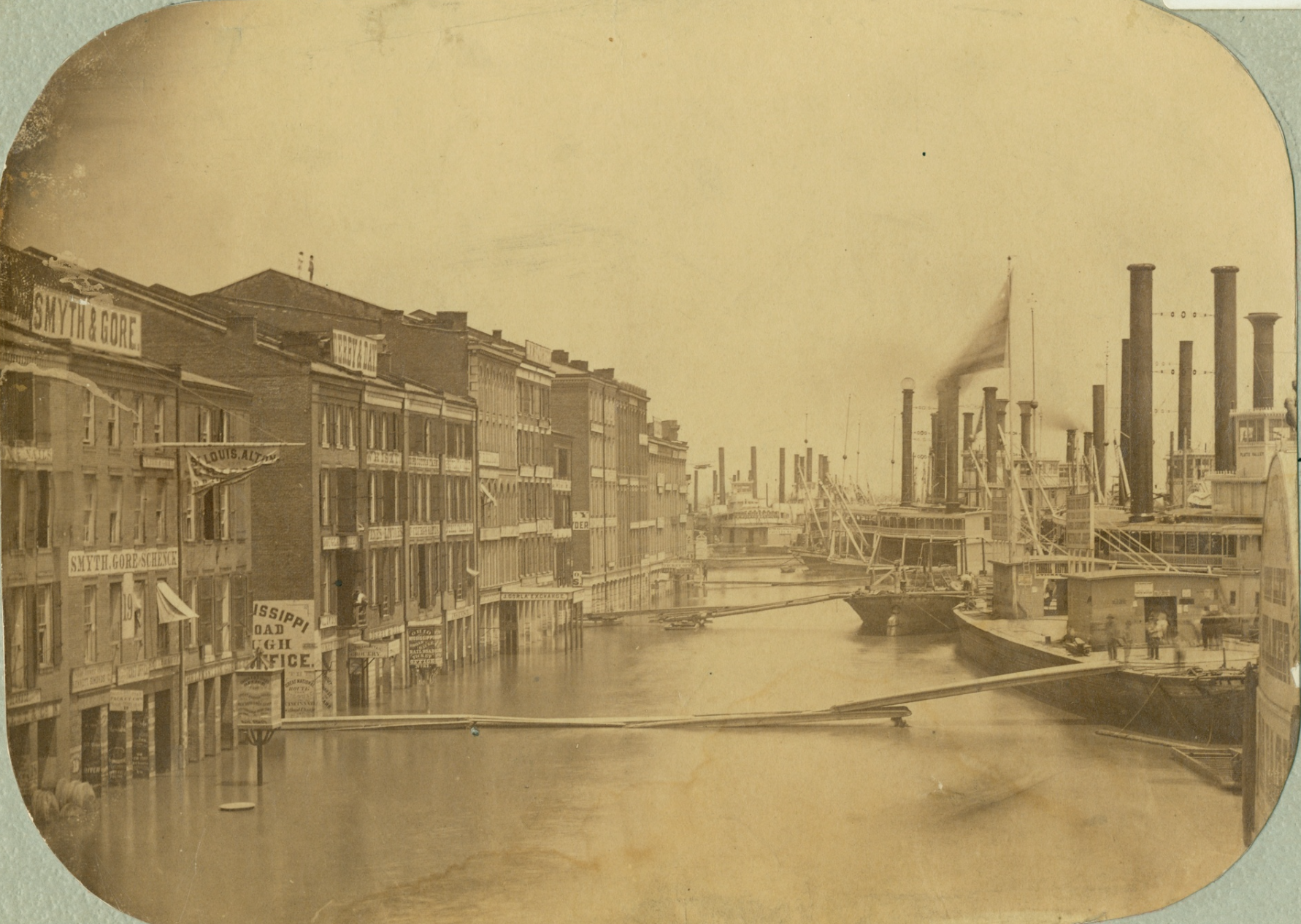
To give you an idea, here’s a photo of high water–flooded levee with buildings on one side and boats on the other–at St. Louis during the 1858 flood. (Missouri Historical Society Collections.)

Not until June 28 did the waters begin to recede. By the middle of July the river was back to normal.

After the flood, Congress passed the Swamp Act in 1849 providing land grants to build stronger levees.

“A young man was sitting at home when a terrible rainstorm began. Within hours, the man’s house began to flood, and someone came to his door offering a ride to higher ground. The man declined, saying, ‘God will take care of me.’ A few hours later, as the waters engulfed the first floor of the man’s home, a boat passed by, and the captain offered to take the man to safety. The man declined, saying, ‘God will take care of me.’ A few hours after that, as the man waited on his roof—his entire home flooded—a helicopter flew by, and the pilot offered transportation to dry land. Again the man declined, telling the pilot that God would care for him. Soon thereafter, the waters overcame the man, and as he stood before God in heaven, he protested his fate: ‘You promised that you’d help me so long as I was faithful.’ God replied, ‘I sent you a car, a boat, and a helicopter. Your death is your own fault.’ God helps those who help themselves.”

–J.D. Vance, Hillbilly Elegy

*Herman Melville, Moby-Dick

Postcards from the weekend

by chuckofish

How was your weekend? Ours was punctuated by a lot of weather disparities which we are kind of used to in the midwest. Thankfully the really bad stuff went around us this time.

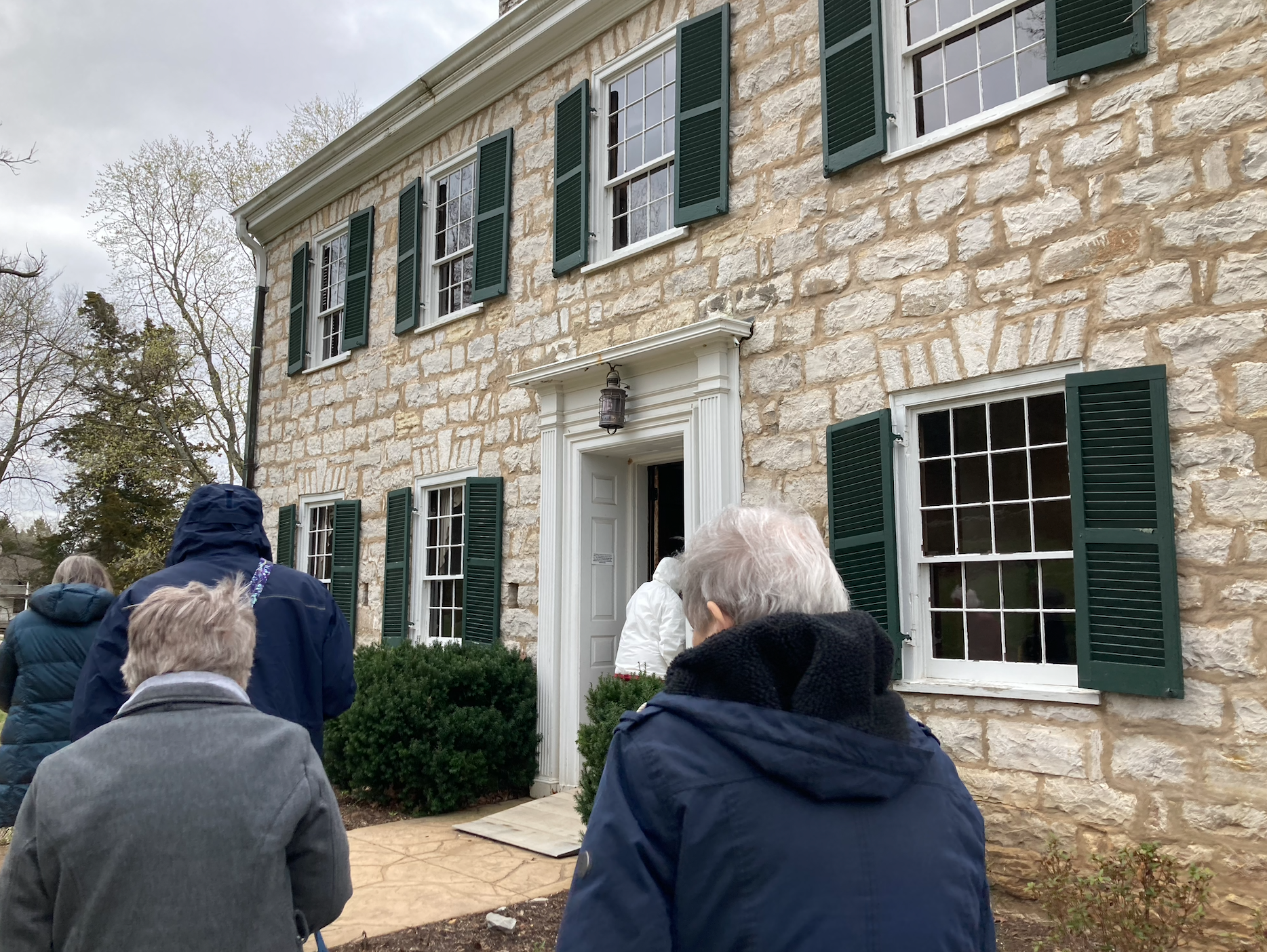
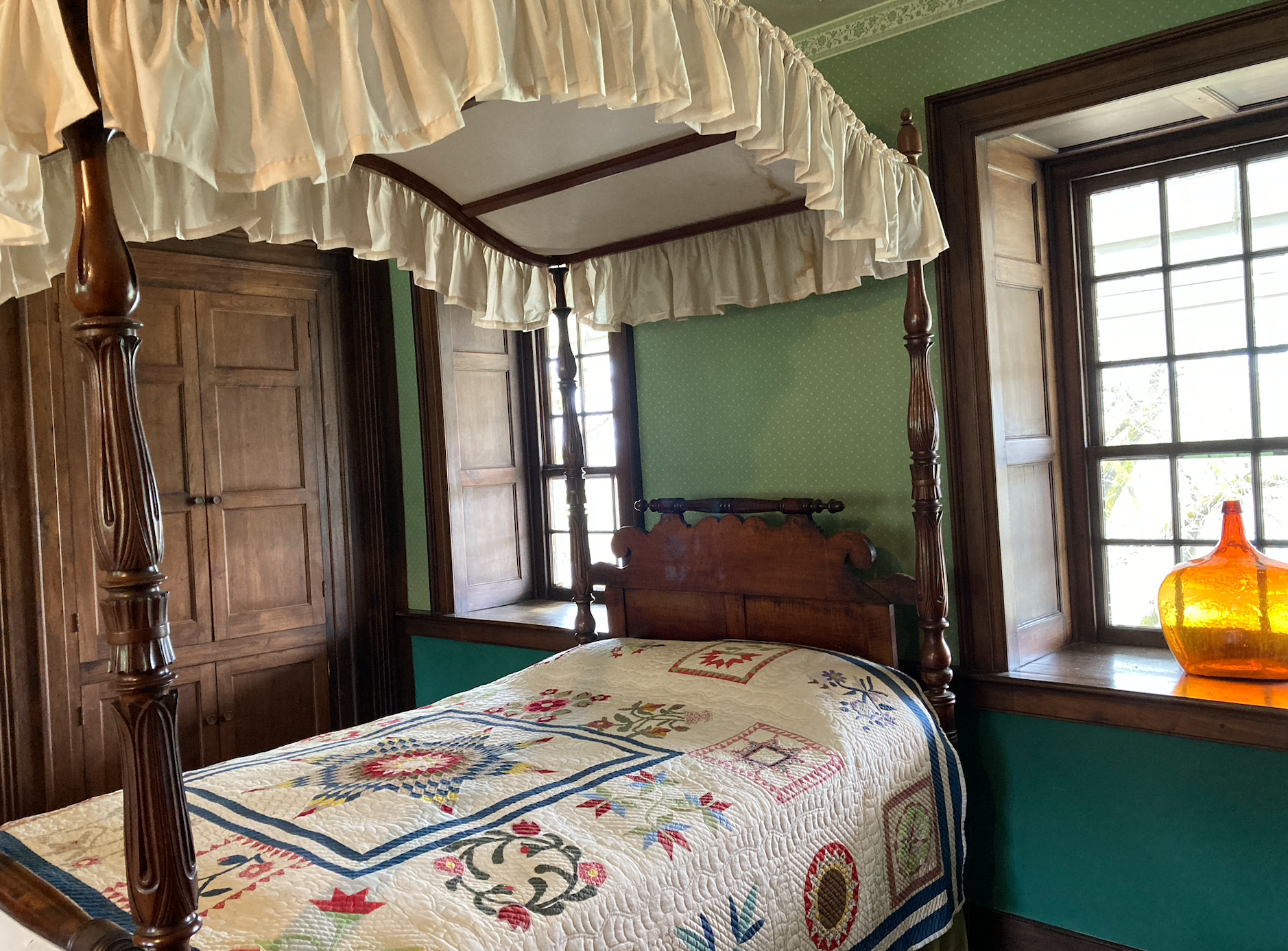
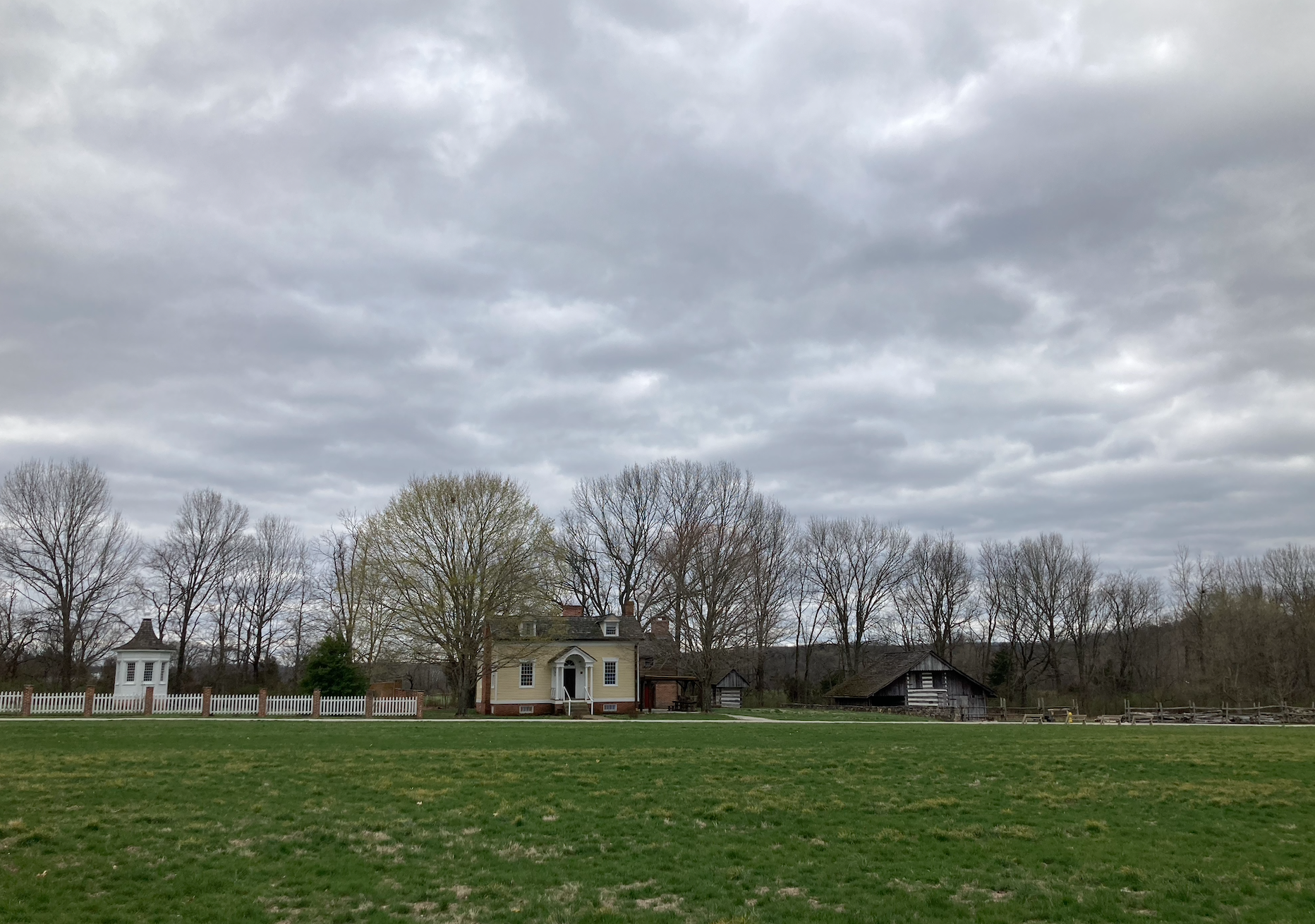
On Saturday daughter #1 and I took part in a DAR “field trip” to the historic Daniel Boone home in the rolling hills of wine country overlooking the beautiful Femme Osage Valley. I had been to the house back in the 1960s when I was a child and again in the 1990s when my own children were small. It is a lovely 1810 home built of native limestone.

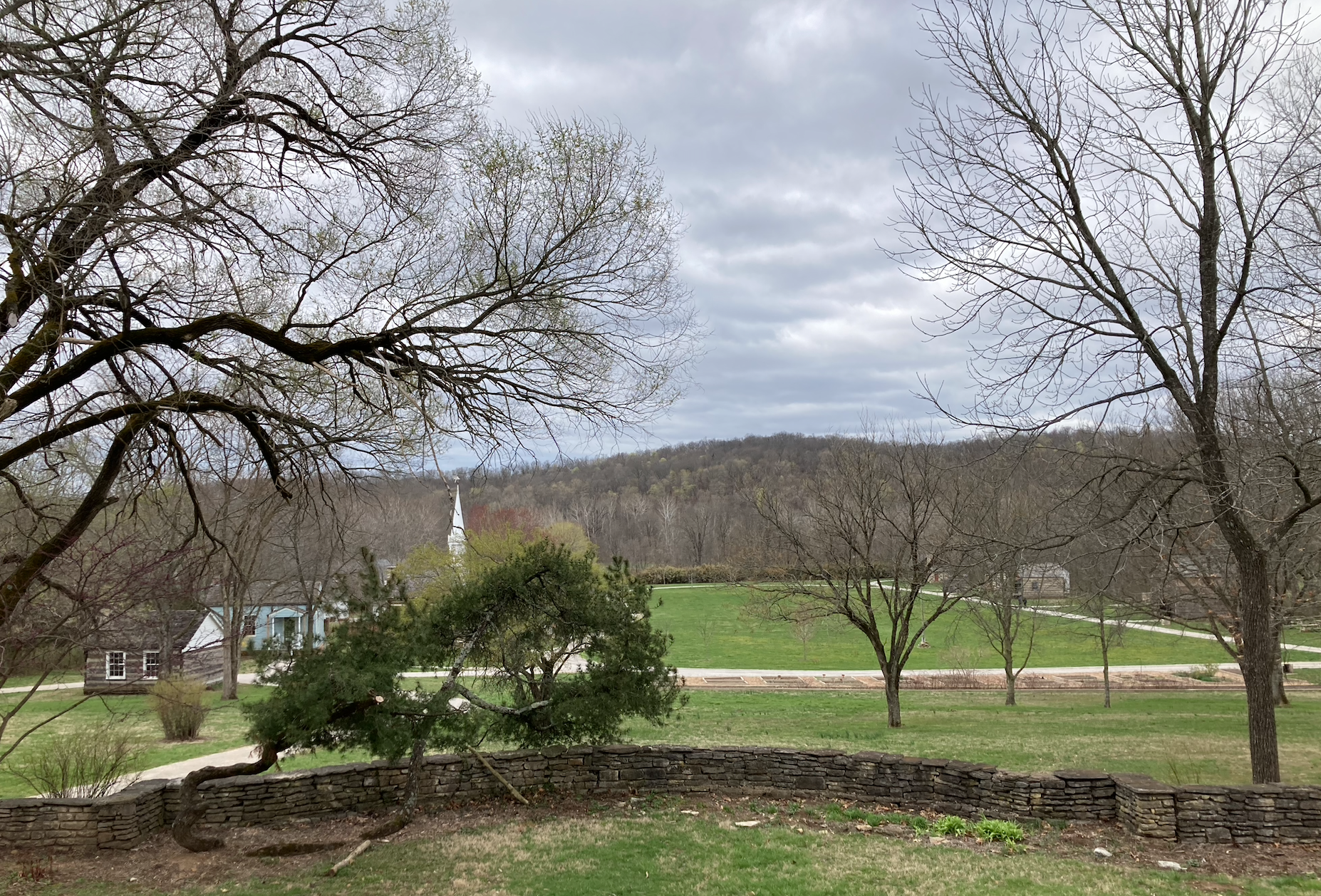
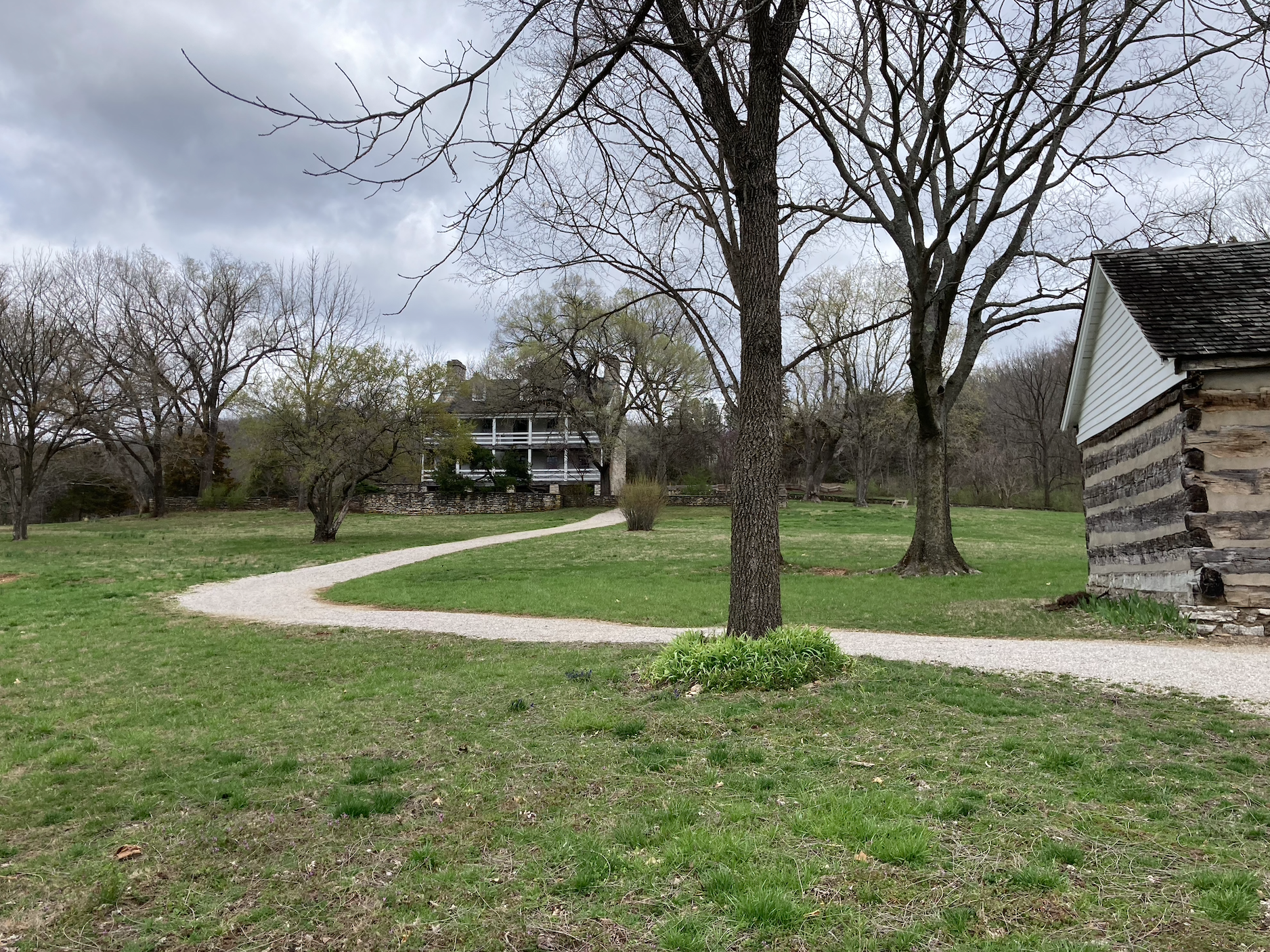
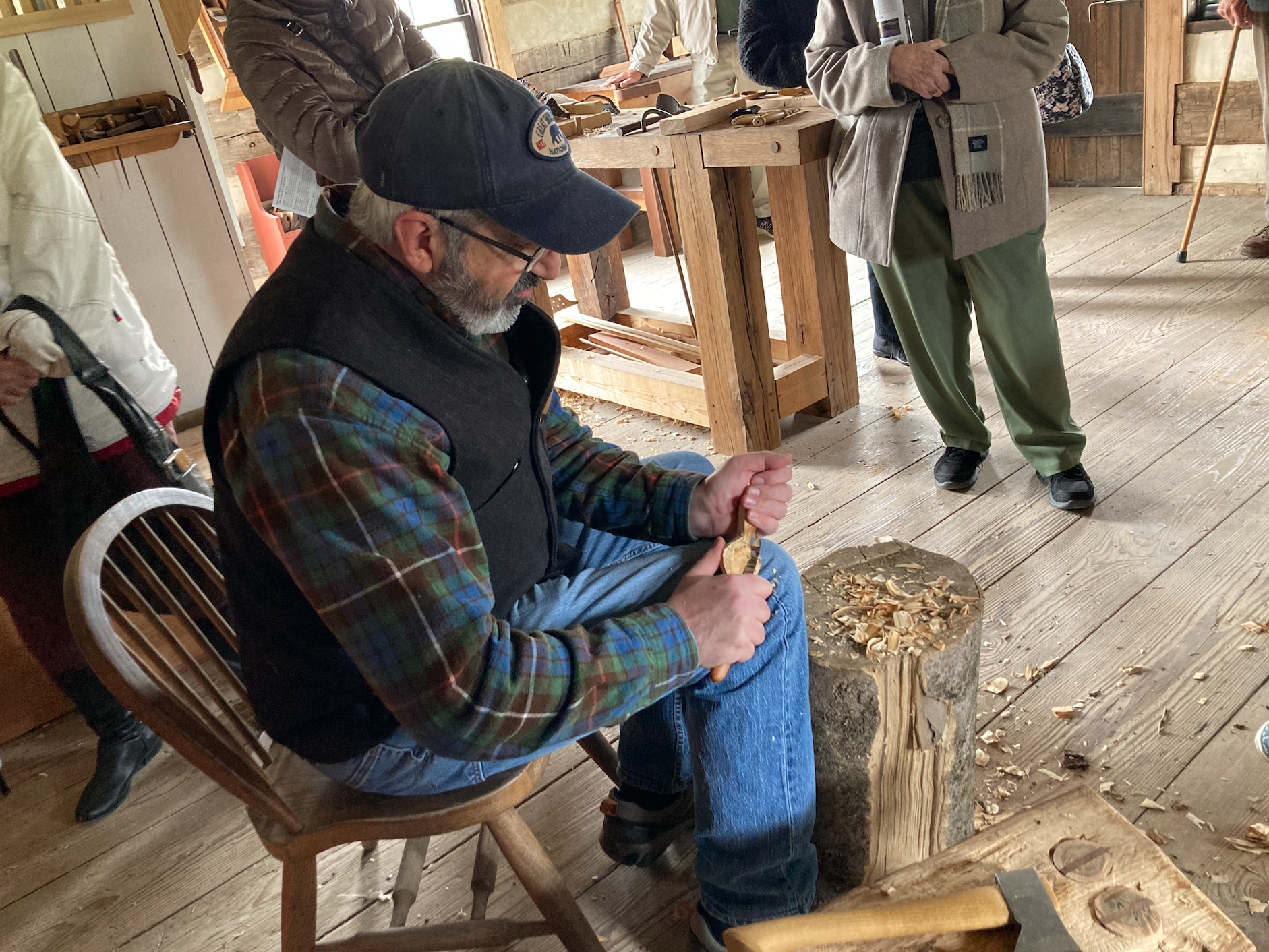
I was surprised to find that the nearly 300-acre site now includes not only the historic Daniel Boone home, but the adjoining Village historic site, and surrounding property which was given to the people of St. Charles County by Lindenwood University in 2016. I’m sure I knew that but I had forgotten. The home and property now is called The Historic Daniel Boone Home at Lindenwood Park. The dozen buildings in the village were moved there, originating from within 50 miles of the property, and include several other houses, a general store, a schoolhouse, a church, and a grist mill. It is extremely well done.

Unfortunately, as you can see from these photos, it was an unexpectedly cold, gloomy and very windy morning! Boy, were we cold!

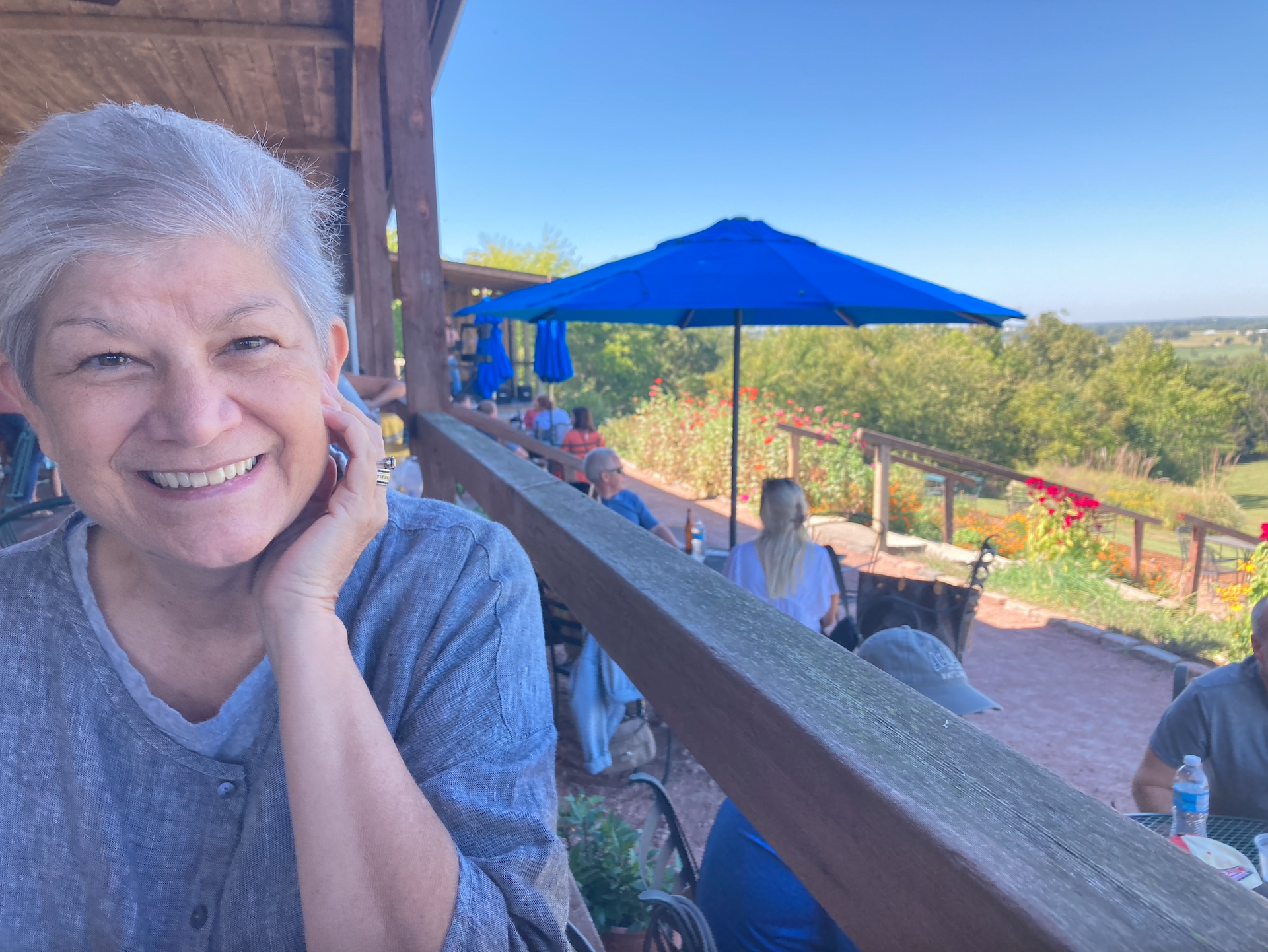
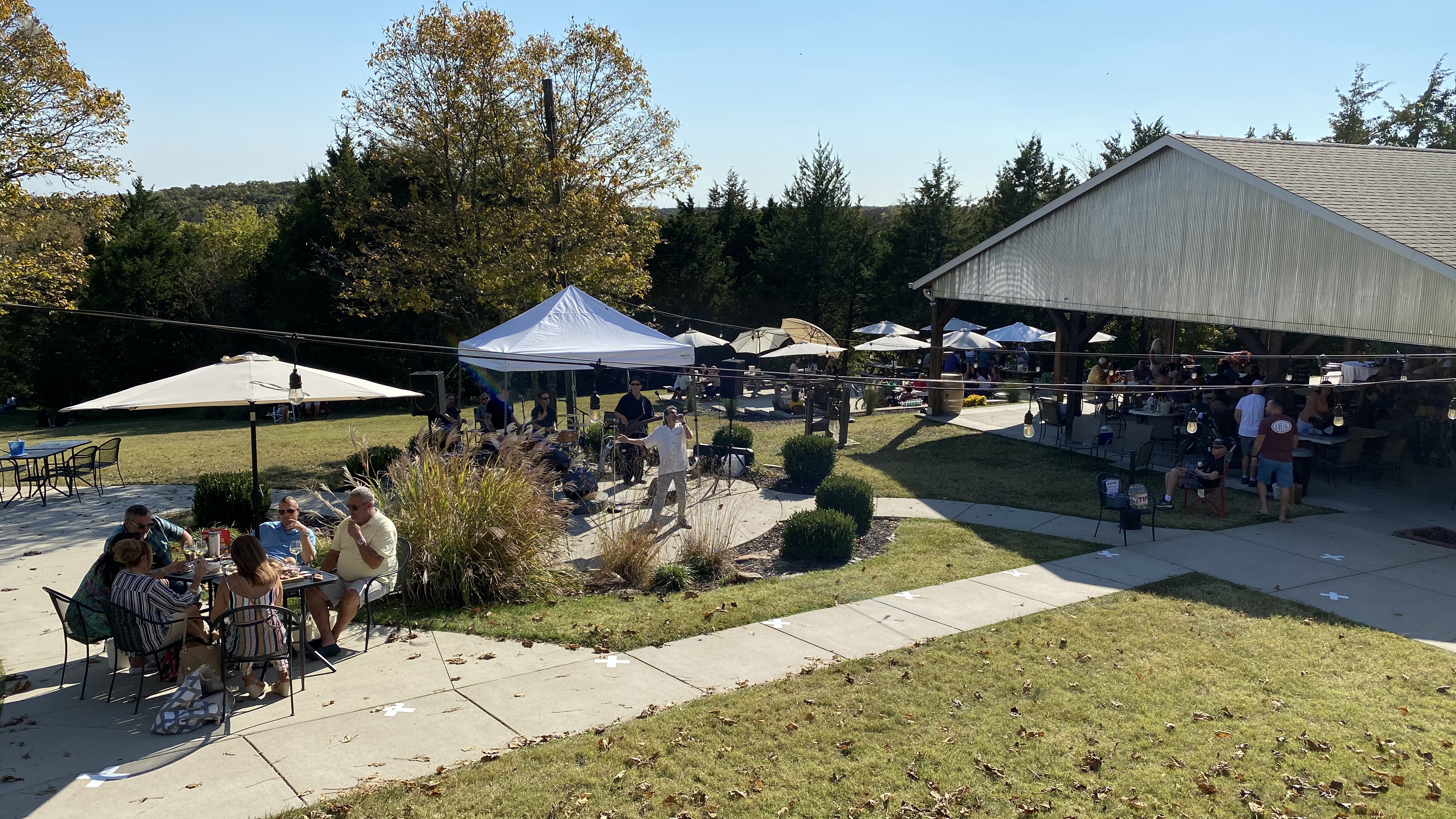
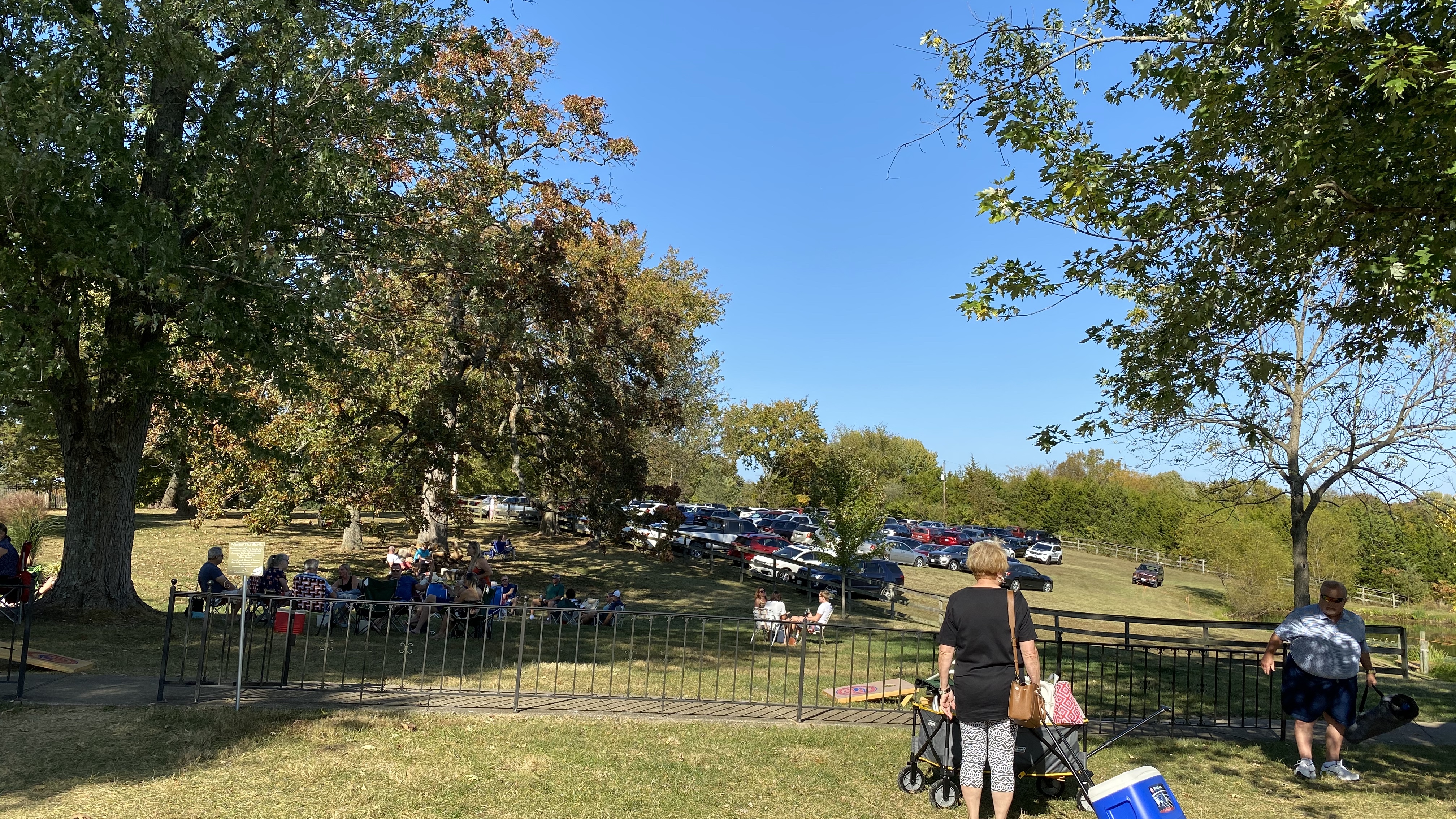
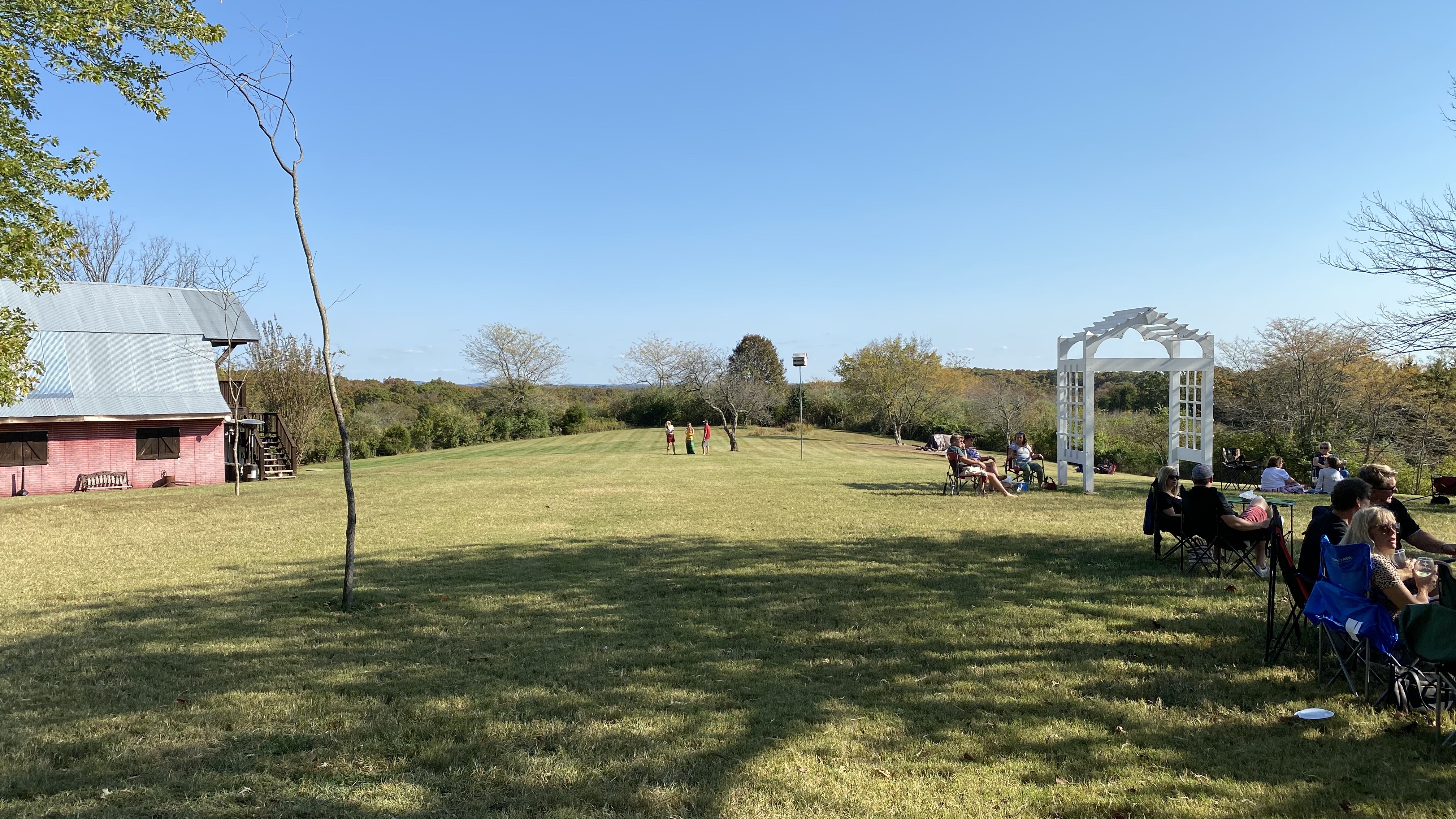
After our tour, we all hustled to our cars and drove down the road to the Defiance Ridge Winery where we had reservations for lunch. We warmed up and enjoyed a convivial time. As always at mid-MO wineries there was live entertainment and a happy crowd.

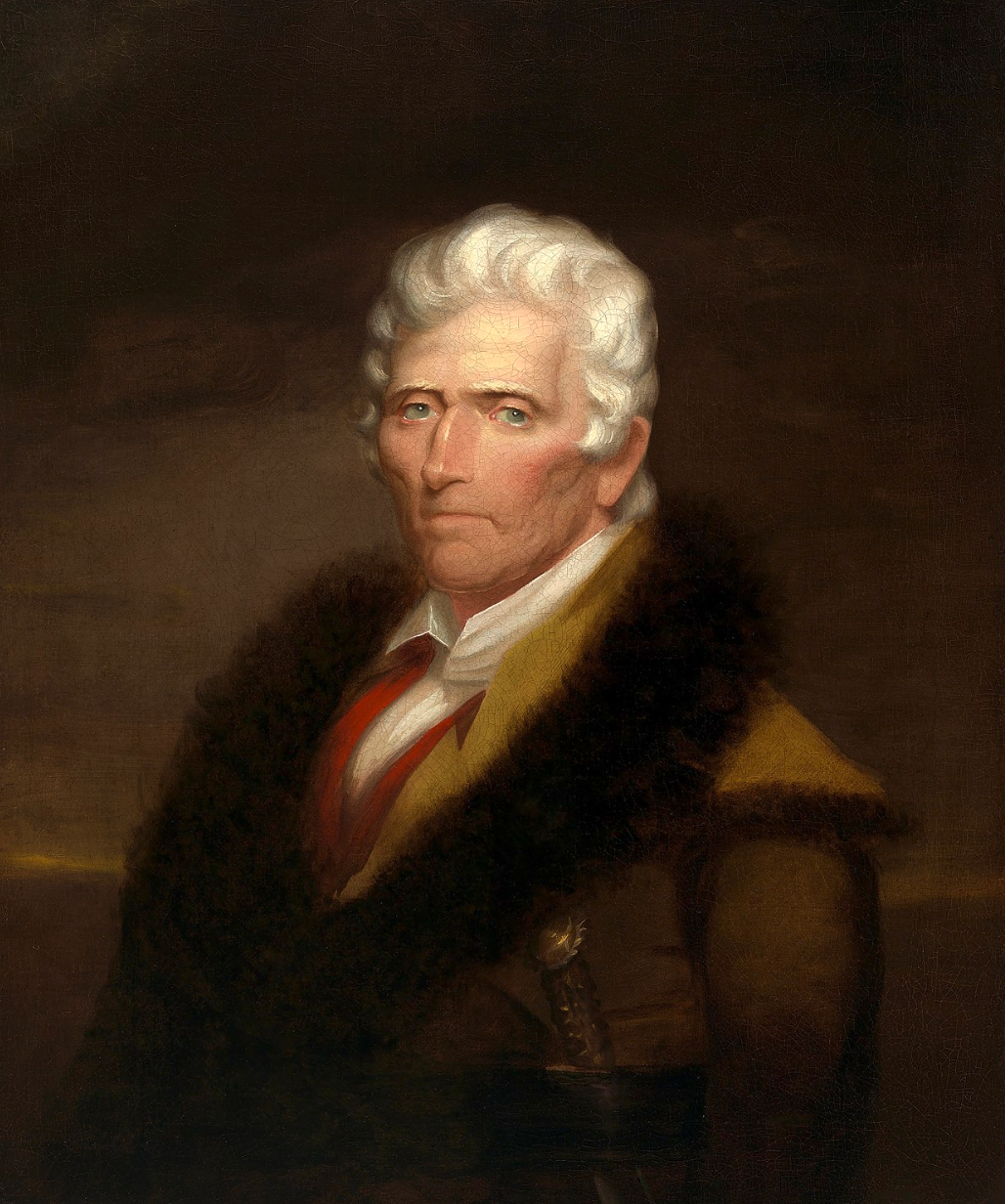
I also enjoyed becoming reacquainted with the legendary frontiersman who really was quite the exceptional guy. And as you know, this is a kind of guy that really appeals to me.

Boone spent his final years in Missouri, moving here in 1799 when it was still part of Spanish Louisiana and a pretty wild place. He lived here for twenty years and died on September 26, 1820, in the home of his son Nathan Boone on Femme Osage Creek which we visited.  (How he lived to the ripe old age of 85, leading such a life as he did, is amazing.)

Boone was buried next to his wife Rebecca, who had died on March 18, 1813.The graves, which were unmarked until the mid-1830s, were near Jemima (Boone) Callaway’s home about two miles from present-day  Marthasville, Missouri. In 1845, the Boones’ remains were disinterred and reburied in Frankfort, Kentucky. Resentment in Missouri about the disinterment grew over the years, and a legend arose that Boone’s remains never left Missouri. According to this story, Boone’s tombstone in Missouri had been inadvertently placed over the wrong grave, but no one had corrected the error. Boone’s Missouri relatives, displeased with the Kentuckians who came to exhume Boone, kept quiet about the mistake and allowed the Kentuckians to dig up the wrong remains. No contemporary evidence indicates this actually happened, but in 1983, you may recall, a forensic anthropologist examined a crude plaster cast of Boone’s skull made before the Kentucky reburial and announced it might be the skull of an African American. Both the Frankfort Cemetery in Kentucky and the Old Bryan Farm graveyard in Missouri claim to have Boone’s remains. But as our guide said, the Boones are both in heaven, so what does it matter?

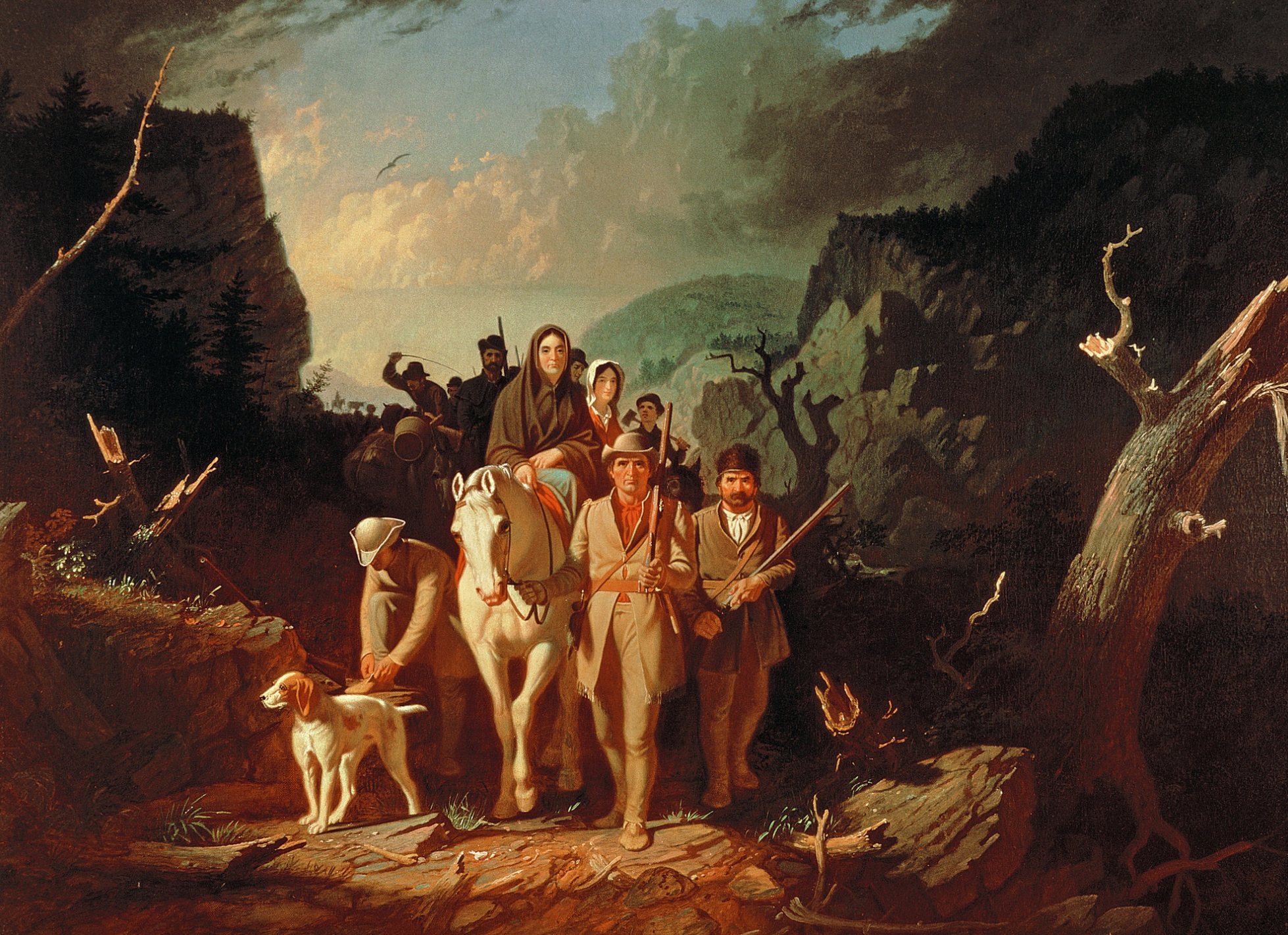
(“Daniel Boone escorting settlers through the Cumberland Gap” by George Caleb Bingham, collection of Washington University)

Yesterday, of course, was Palm Sunday.

“There was a vast multitude crying ‘Hosanna’ … But Christ at that time had but few true disciples; and all this was at an end when he stood bound, having a mock robe put on, and a crown of thorns; when he was derided, spit upon, scourged, condemned, and executed. Indeed, there was a loud outcry respecting him among the multitude then, as well as before; but of a very different kind: it was not ‘Hosanna, hosanna,’ but ‘crucify him, crucify him.’” (Jonathan Edwards)

Onward to Easter.

Let us love and sing and wonder*

by chuckofish

How was your weekend? We had lovely weather here in flyover country. Daughter #1 had a TV thing on Friday afternoon here in town, so she stayed over and on Saturday we went adventuring to St. Genevieve, Missouri, a town neither of us had ever been.

Ste. Genevieve was established in the 1750s by French colonists, when the territory west of the Mississippi River was part of French Louisiana. It became the principle civic center of the region, and continued to be so when the area passed into Spanish control with the Treaty of Paris in 1763. The original site of Ste. Genevieve, about 3 miles south of the present city, was severely damaged by major flooding in 1785. The city was relocated to its present site on higher ground over the next ten years. 

Ste. Genevieve is home to one of the highest concentrations of French colonial architecture known as poteaux en terre, or post in ground, and Poteaux-sur-sol, or post on sill. Both of these styles involve construction of walls consisting of vertical logs.

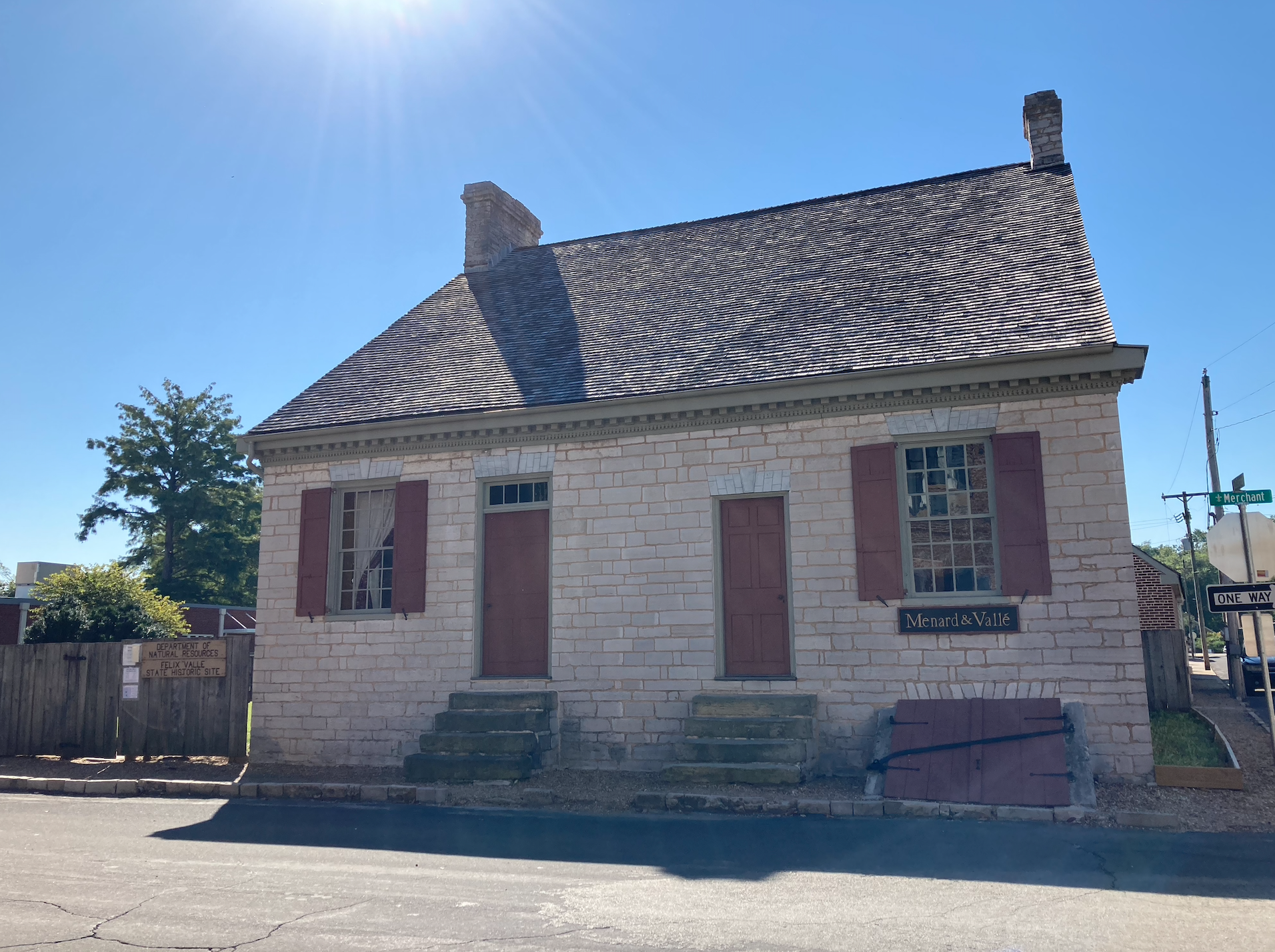
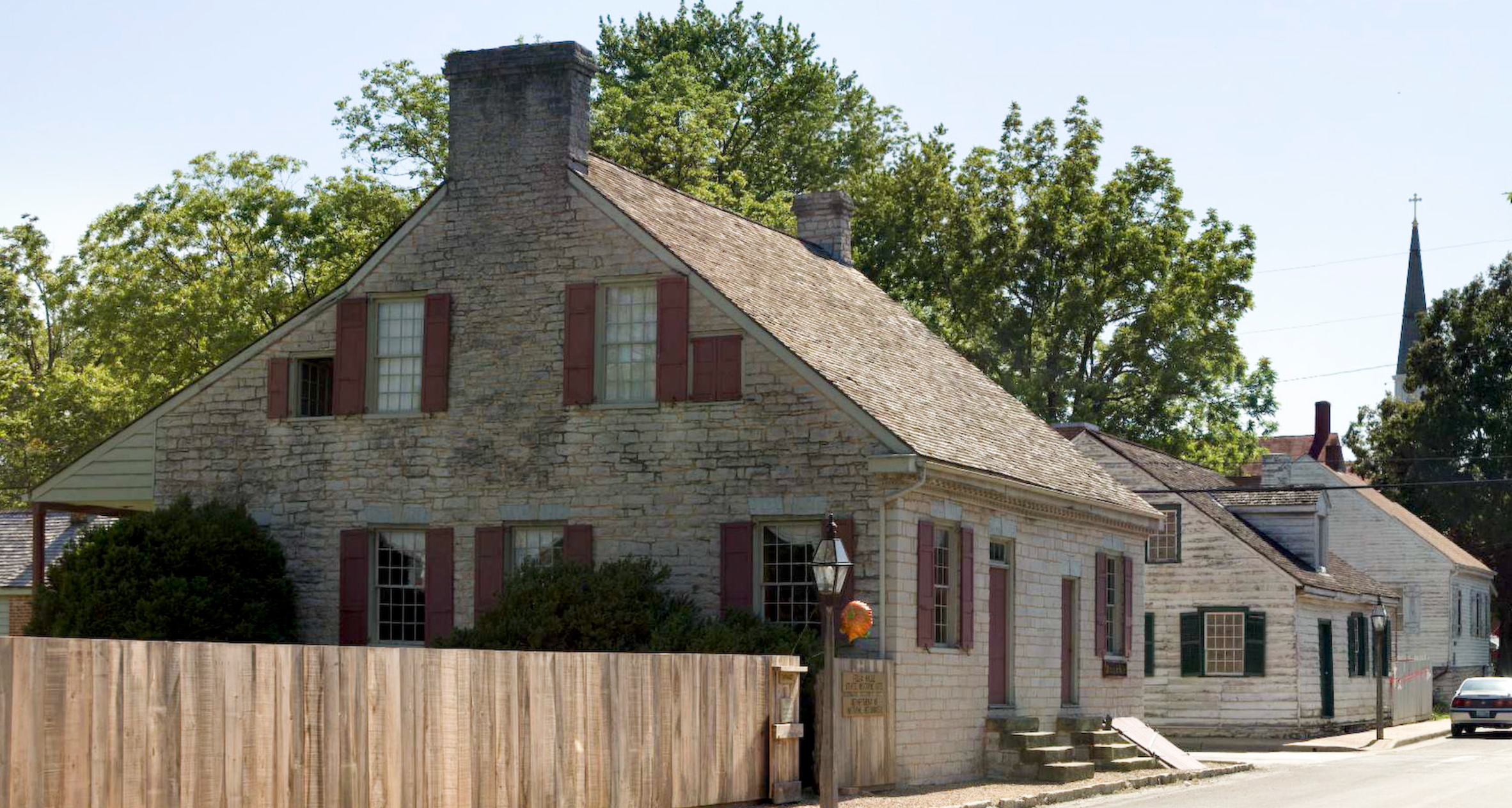
We visited the Felix Valle State Historic Site…

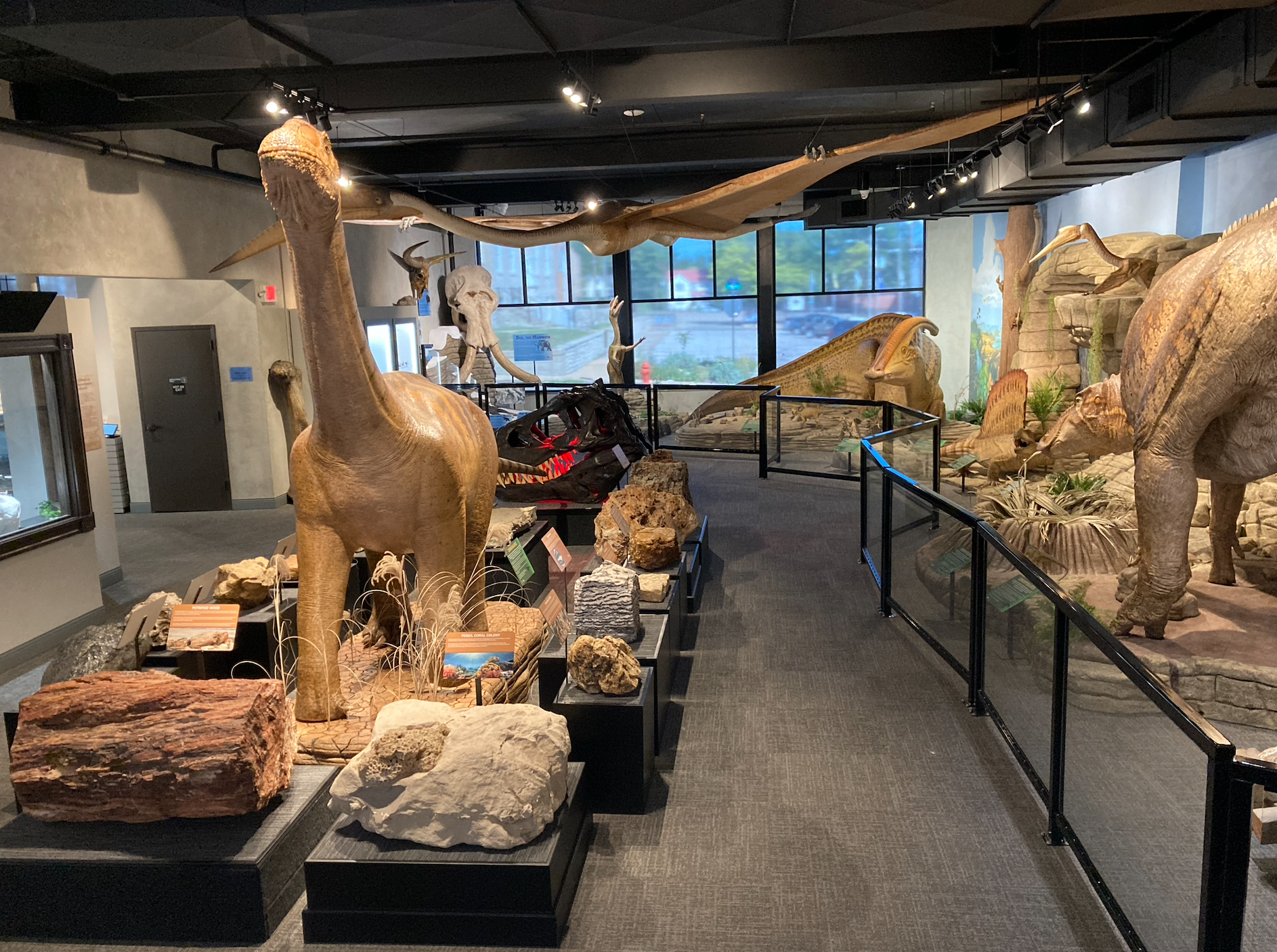
…and several interesting new museums…

…where we learned about dinosaurs in the region (!) and the Revolutionary War battle of Fort San Carlos in St. Louis, a battle about which I knew nothing. (The Spanish Militia and some local Frenchmen marched the 50 miles up to St. Louis to fight off the mercenary Indians. It was really not much of a battle.) The fort was right about where Busch Stadium is now.

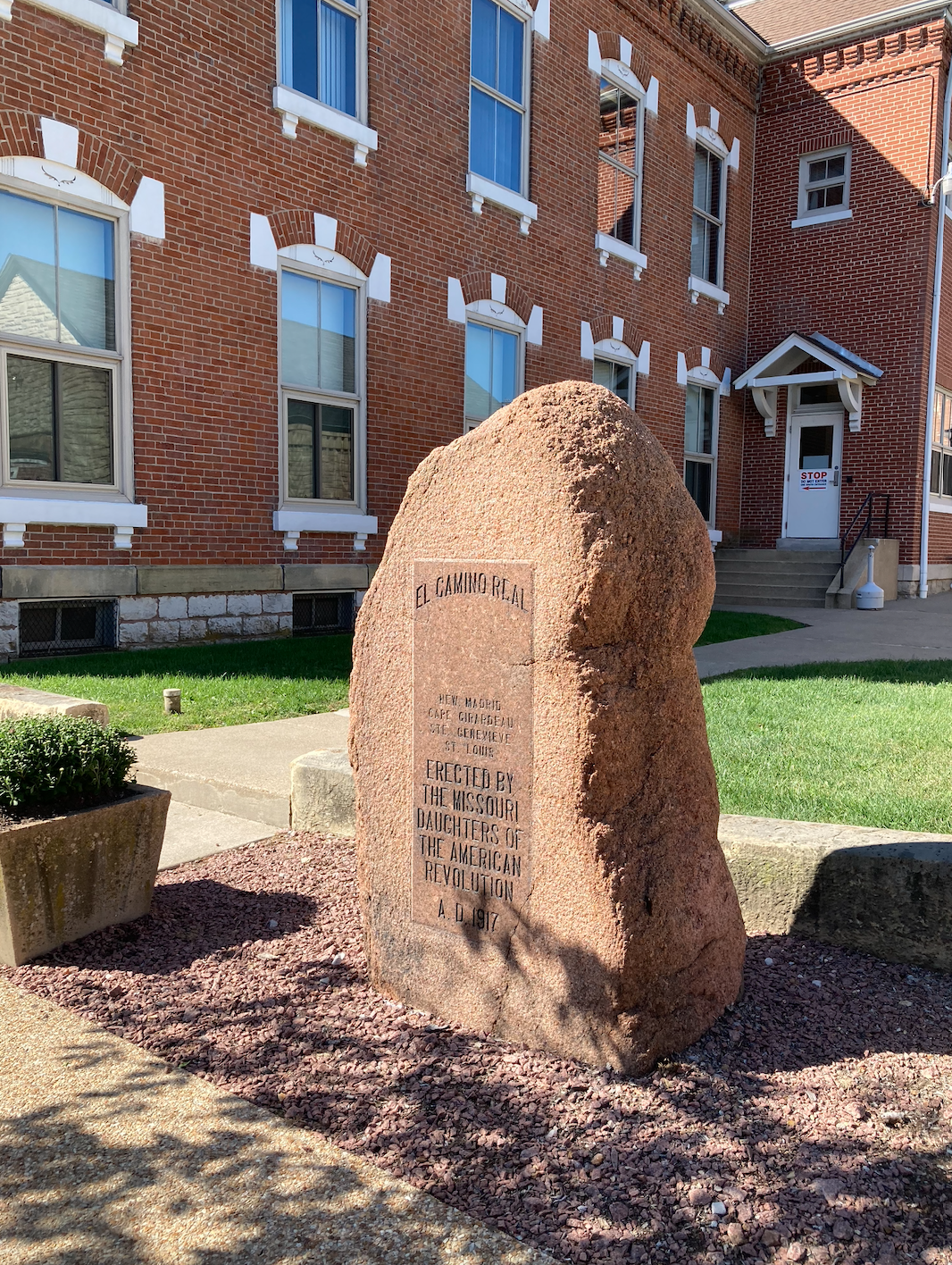
We checked out the DAR marker…

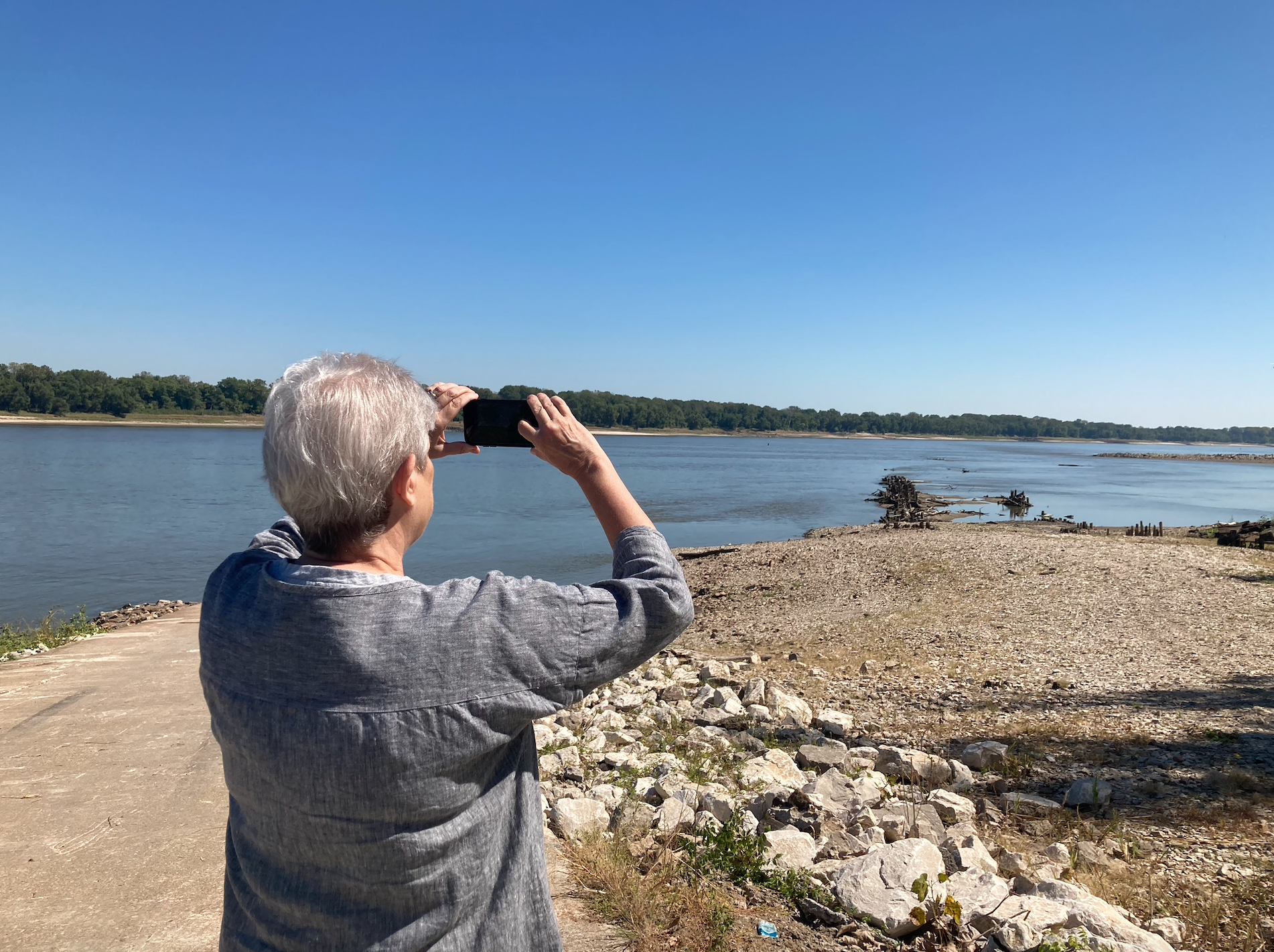
…and the Mighty Mississippi…

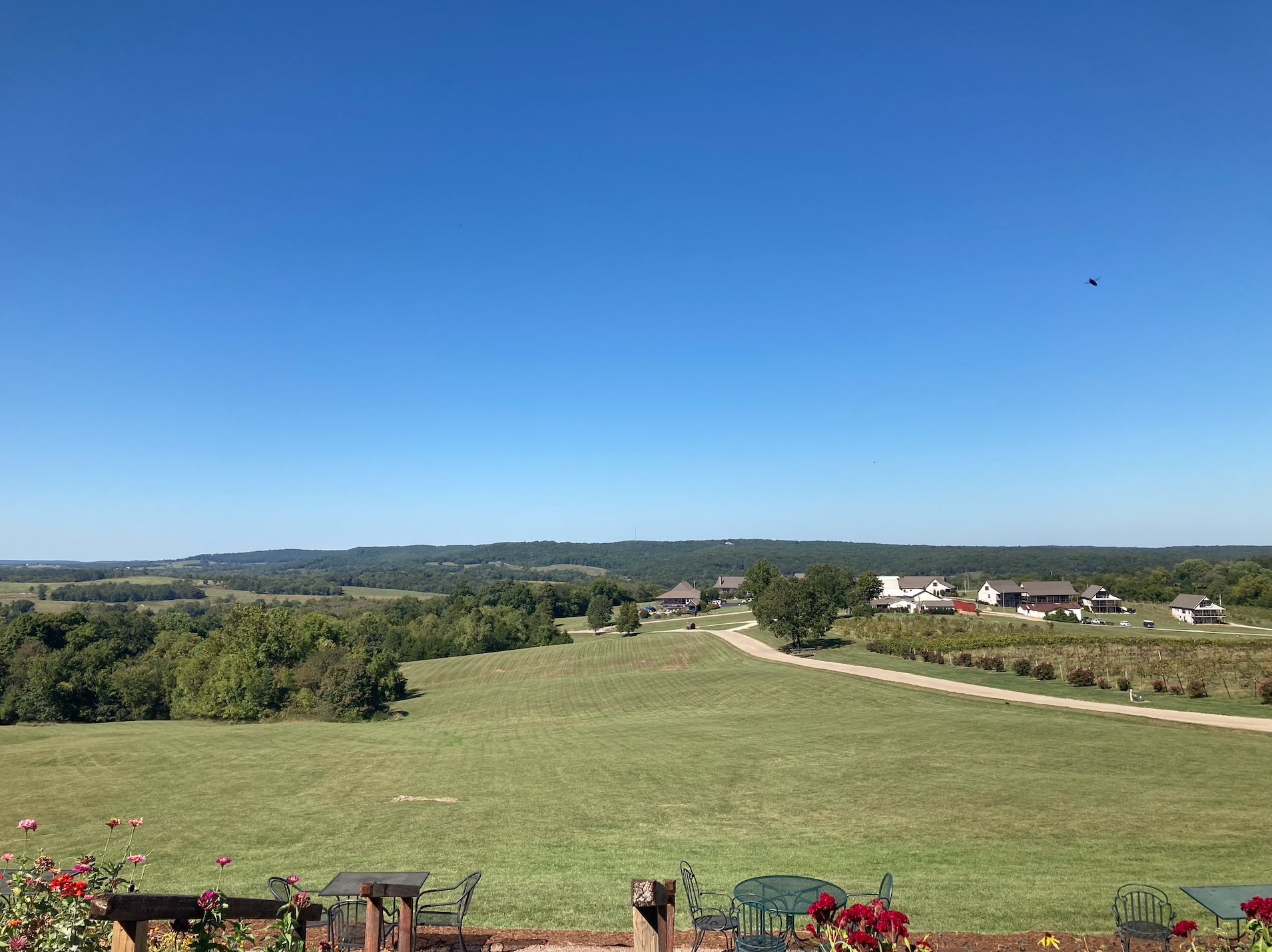
…before heading over to the Chaumette Vineyards and Winery for lunch.

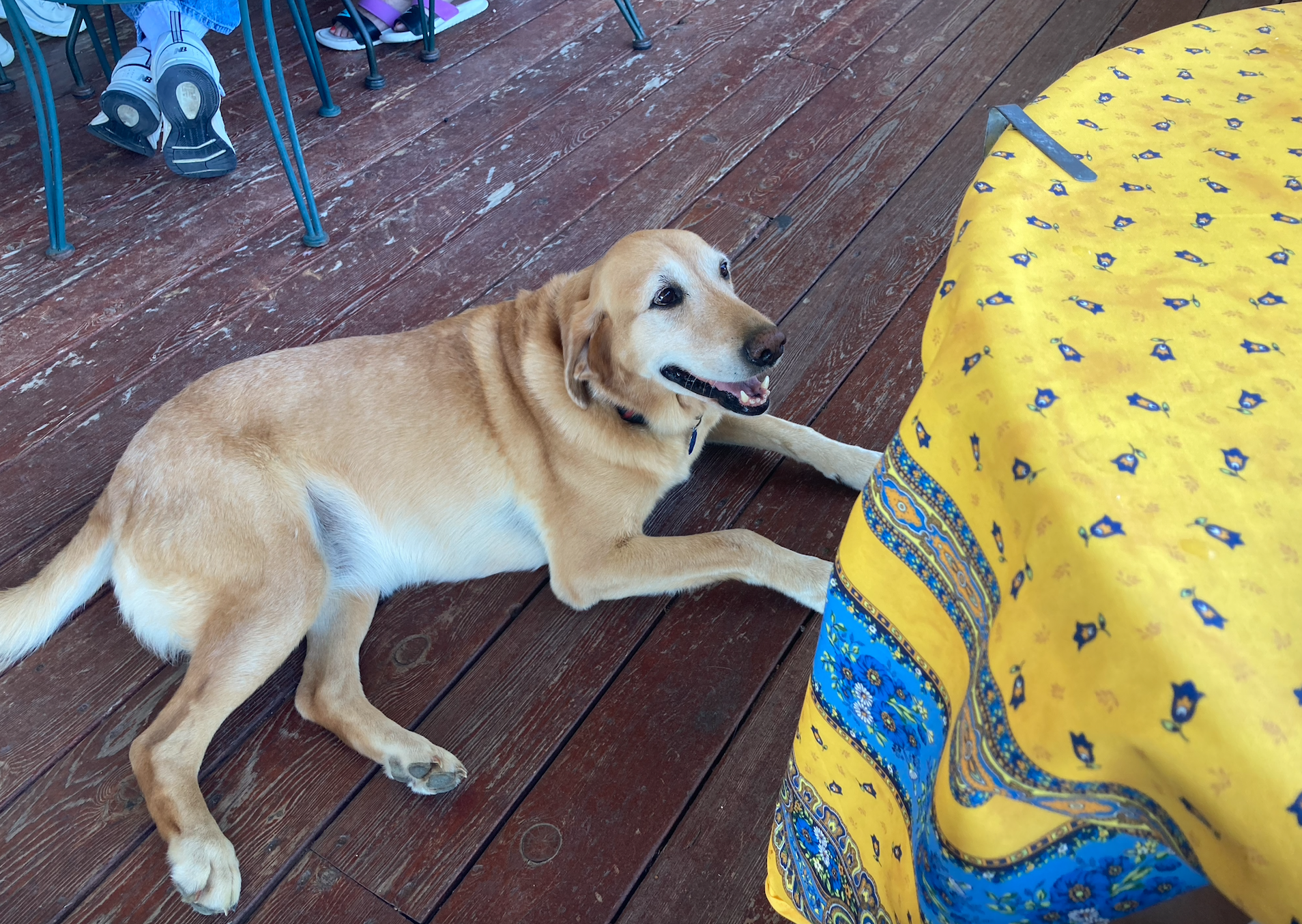
It was beautiful and the lunch was delicious! This dog came and sat with us. We didn’t mind.

We also enjoyed the musical stylings of Brian Tobin whom we had heard at our other favorite winery–Wild Sun. He provided the seventies playlist that we love.

All in all we spent a lovely day and we were reminded once again that Missouri is a very beautiful state. Why would anyone want to live anywhere else?

Os Guinness, who was in town for a conference, was supposed to preach on Sunday, but he didn’t feel well so some Covenant Seminary professor pinch hit. It was disappointing, but the large congregation shook the building with their singing.

Speaking of pinch-hitting, Albert Pujols hit his 699th and 700th homerun in Friday’s game, becoming the fourth player in MLB history to reach that mark. Pujols hit his first career home run in April of 2001 as a Cardinal rookie. I am not much of a baseball fan anymore, but I am happy and proud for Albert.

And high fives to the Chick-fil-A employee who foiled a carjacking at a restaurant in Florida. As John Crist says, “Chick-fil-A employees are next level…the Lord has their back.”

Have a blessed day! Happy fall!

*#172, John Newton

We are family*

by chuckofish

Last September when we were bouncing around southeast Colorado, we visited the John W. Rawlings Heritage Center in Las Animas. A helpful staff person there told me that they had a few volunteers who would do research for me, since their Heritage Library is not open to the public on a regular basis. I filled out a form asking for information concerning my Hough and Prowers ancestors. After some phone message tag and an email, I was getting ready to check back with them when, low and behold, yesterday I received a little packet of photocopies in the mail.

“Bing-pot!”**

Included were photocopies of several photos donated to the museum by one of the daughters of John W. Prowers, including this portrait of our great-great grandmother Mary Prowers Hough at a younger age than previously we have seen with the notation “Aunt Mimie Hough”.

There is a new portrait of Anna Hough, daughter of Mary and John Hough, our great-grandmother (on the left)…

…and of the elusive Susie V. Hough, sister of Anna.

This is thrilling!

There is also a picture of Frank Baron Hough, John and Mary’s son, as a boy…

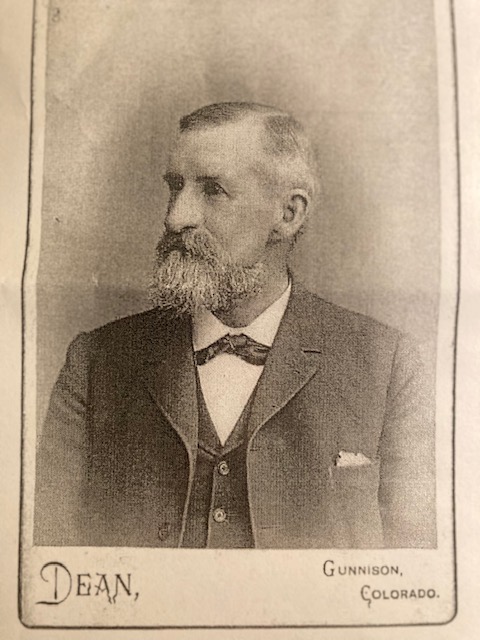
Here is a new-to-me picture of John S. Hough at an older age…

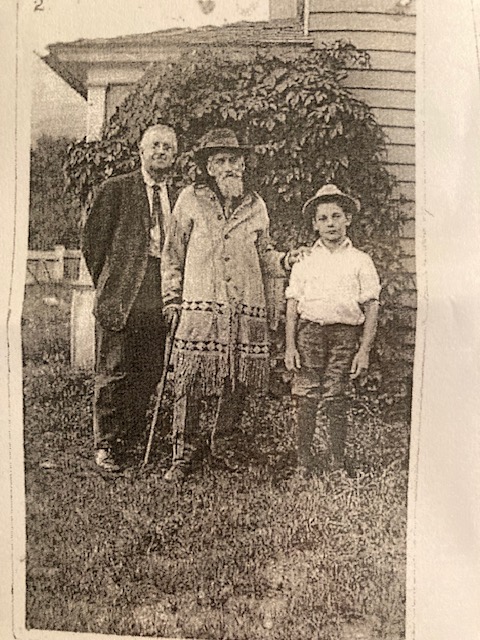
…and at a very old age in Lake City, Colorado with his son Frank and a young neighbor (Ward Crane) circa August, 1919. “The last picture Dad had made.” (He died on November 28, 2019.) Note he is wearing the Kit Carson coat.

Along with another portrait of Mary Hough which I already have is the notation: “Mrs. Mary Hough, a well beloved Christian whose untiring efforts matched by faith which never wavered, gave to this community its early Baptist Church. In early 1874 a group of seven Baptists, led by Mrs. Mary Hough, associated themselves together for the purpose of organizing a Baptist Church. The first church building was erected that year.” It was the first church in Bent County. Indeed, Mary was what they now call a church “planter”–someone who organized a community of believers wherever she chanced to be. She helped to do this in Las Animas, Lake City and Trinidad, Colorado. She usually ran the Sunday School.

This makes sense since Mary grew up in the wild and wooly Westport Landing, which became Kansas City. Westport, you will recall, was founded by John Calvin McCoy, the missionary who came to help resettle the Eastern tribes that were beginning their migration to the Plains States. He plotted most of the original streets and settlements of the city. His brother-in-law, Johnston Lykins, was the first duly-elected mayor of Kansas City who, along with his wife, Mattie, pulled together the founders of First Baptist Church on April 21,1855. Before this, these pioneers would have met in private homes. Lykins is the minister who married our great-great-great grandmother Susanna Matney Prowers and her second husband Louis Vogel in 1840. They would have been members of this group.

Well, we keep digging away and sometimes our digging yields dividends!

*Sister Sledge

**Bing-pot = bingo and jackpot combined, coined by Jake Peralta

Postcards from mid-MO

by chuckofish

The OM and I drove over to Jeff City to visit daughter #1 for the 4th of July. The weather was hot, but not overbearingly so. We were able to visit our favorite winery in Rocheport and sit outside and enjoy the river views.

We did a little “vintiquing” and checked out the the city’s downtown festival district.  The next day the boy and his little famille joined us and the pace of our adventures picked up 100%.

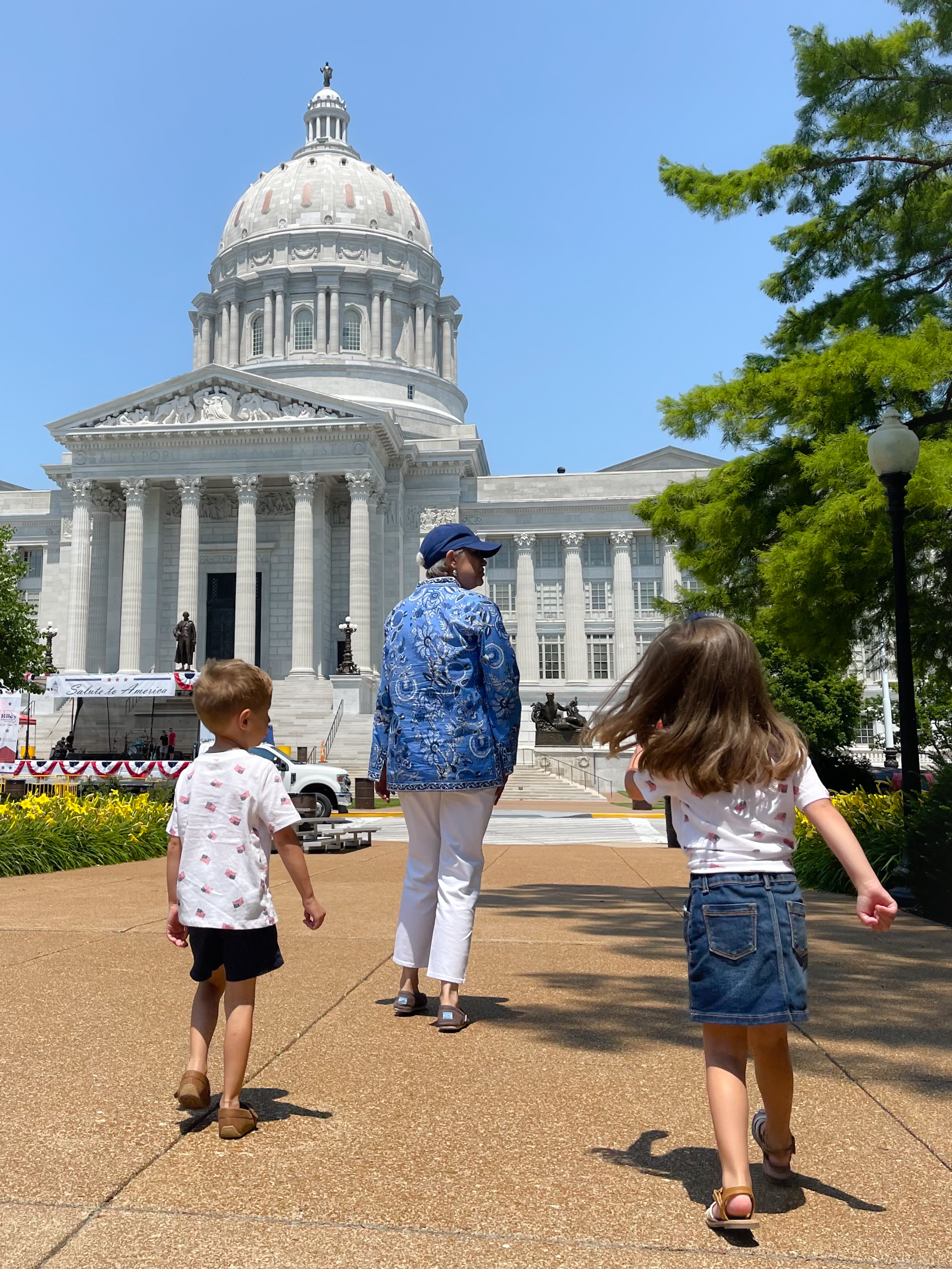
We walked over to the capitol and visited “Aunt Mary’s” office and ran amok through the building, which was okay, since there were very few people there. It is indeed a very neat space full of fascinating things.

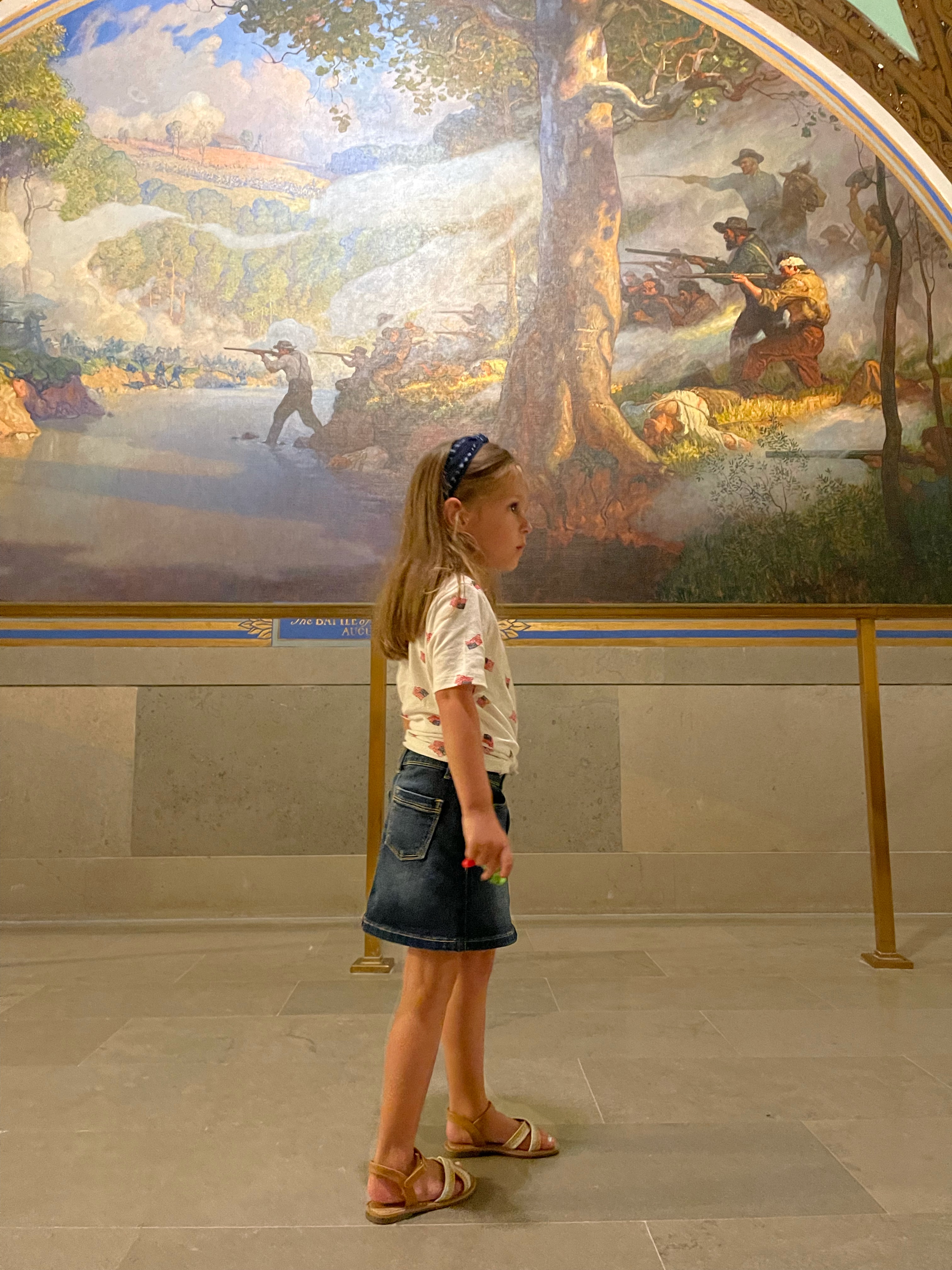
Love those N.C. Wyeth murals!

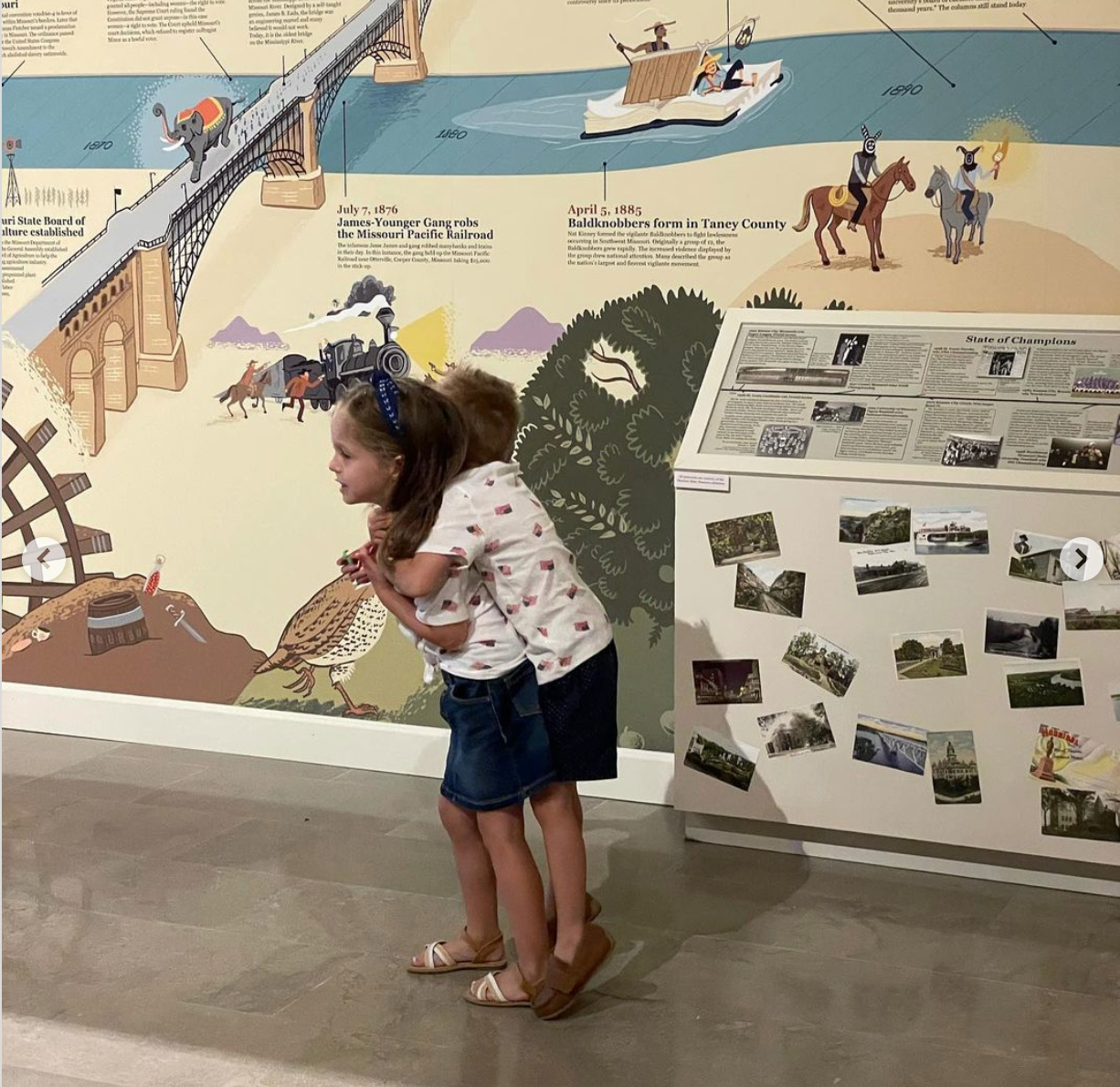
It was fun to introduce the small fry to Missouri history, flora and fauna. And we went on a bear hunt through the halls, looking for all the ubiquitous ursi…

That evening we walked with our folding chairs over to the House parking garage where daughter #1 had staked out a parking place on the top floor where we set up for viewing the fireworks. We had a perfect view of the huge and impressive display on the river. It seemed like a long walk home after that, but we made it.

We went home the next day and recovered.

Keep swinging

by chuckofish

Once again daughter #1 has been busy criss-crossing the state,

so I am once again filling in on Wednesday with more blather from my world.

I had one of those days yesterday that started at 7:30 am and finished at 7:00 pm! One of those days when the computer guy was at our house for 5 hours. Aaargh. And it rained all day. When I finally sat down in front of the tv and put on The Wind and the Lion (1975), I promptly fell asleep.

So all I have today is this scene from Frasier about Politics: Frasier finds the perfect candidate.

And for good measure (and because she’s adorable) here’s a picture of Katiebelle.

“We’re just hands up, roller coaster, flyin’ with no breaks”*

by chuckofish

What a busy weekend! I am very grateful that daughter #1 came home and shook up our routine a bit, because our lives, like everyone else’s I suspect, have become rather sheltered and isolated. But we got out and about a little bit (wearing masks, of course).

We went to a couple of estate sales and got some good books (just what we need) and I made a needlepoint rescue.

Two Nutcracker pillows for Xmas!

The wee babes also came over with their dad and ran us ragged, per usual.

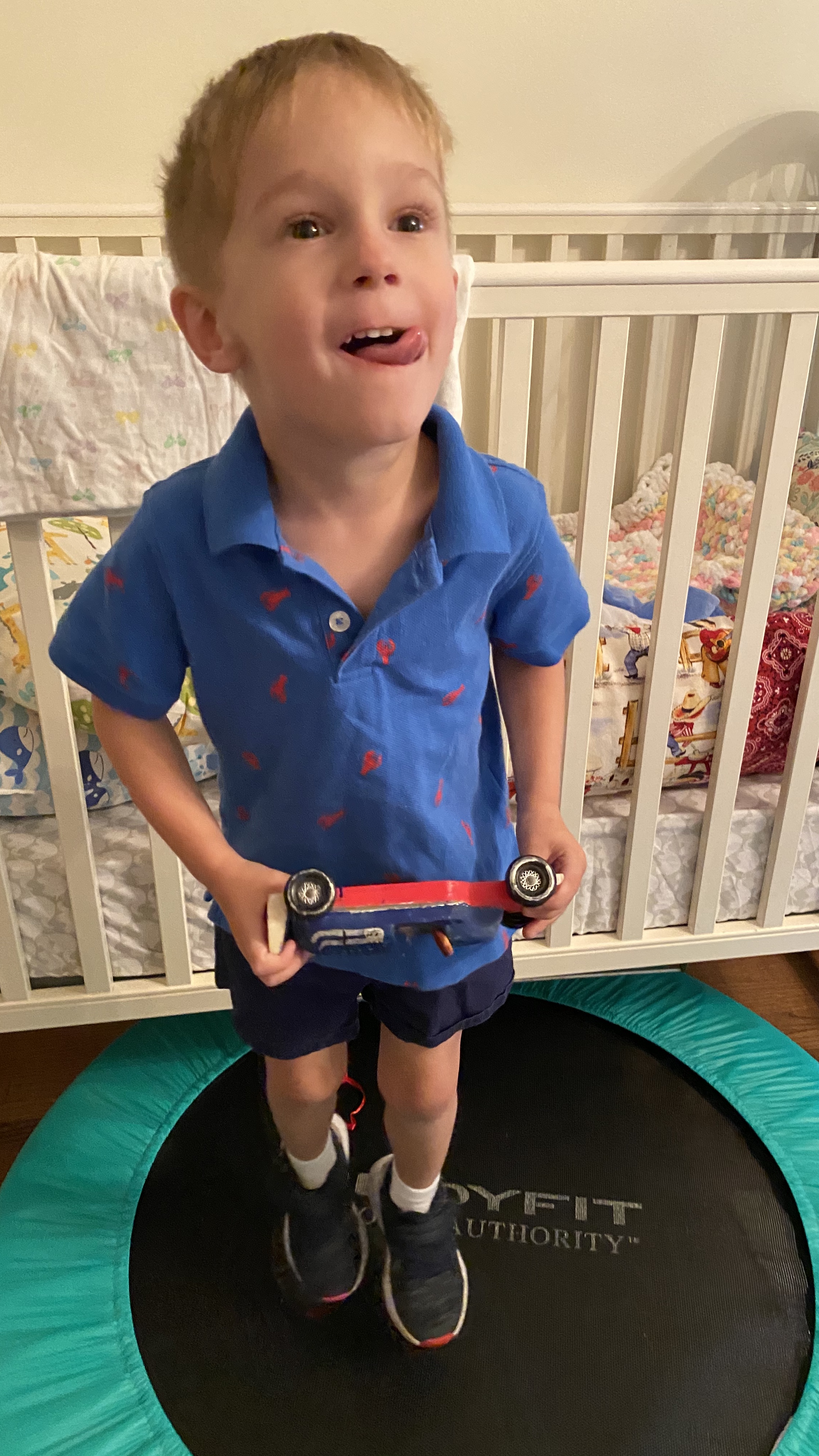
Jumping on the mini trampoline is so fun!
Yes, he did bite his tongue.
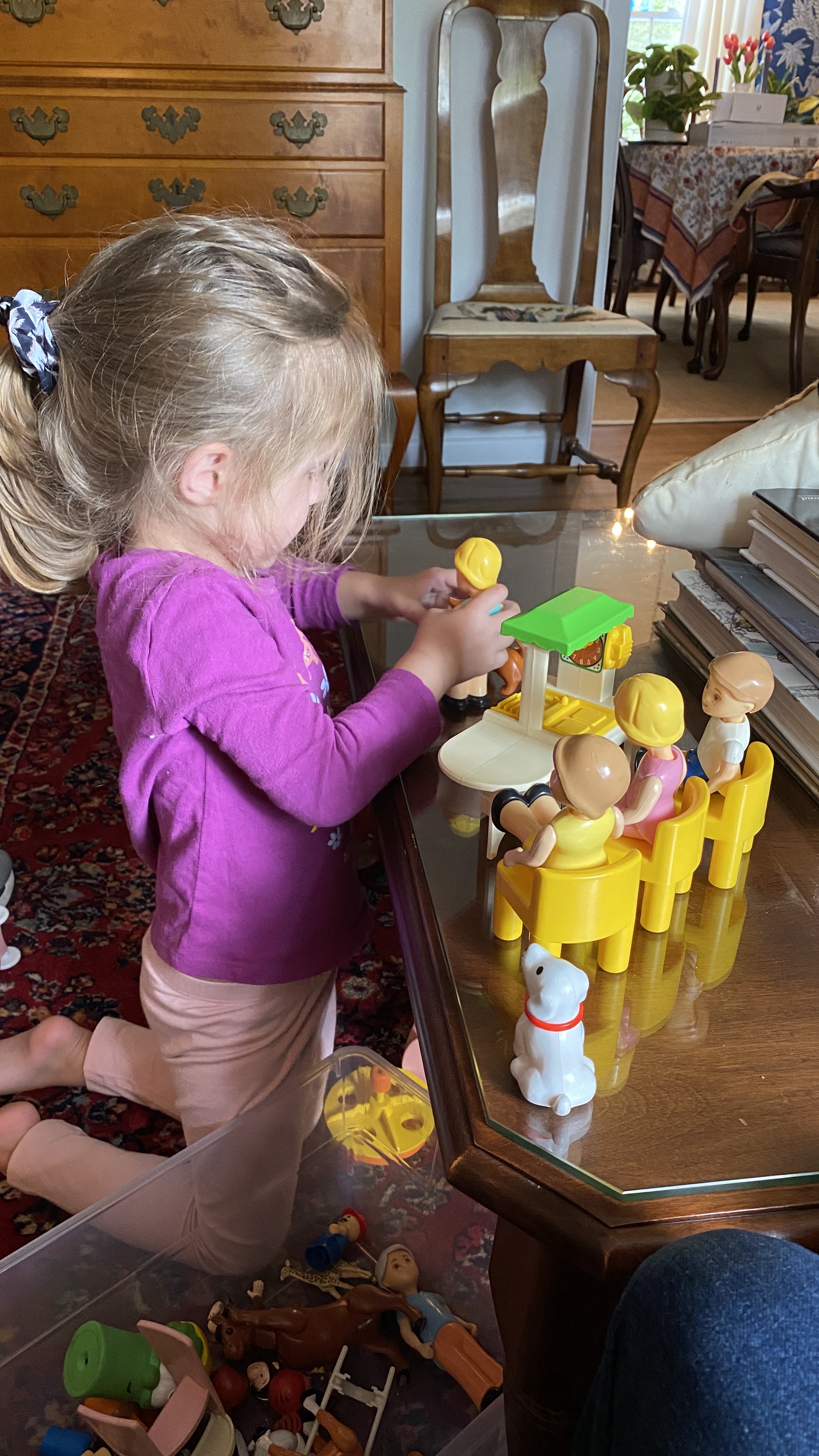
Yes, my Dad did my hair today. What about it?
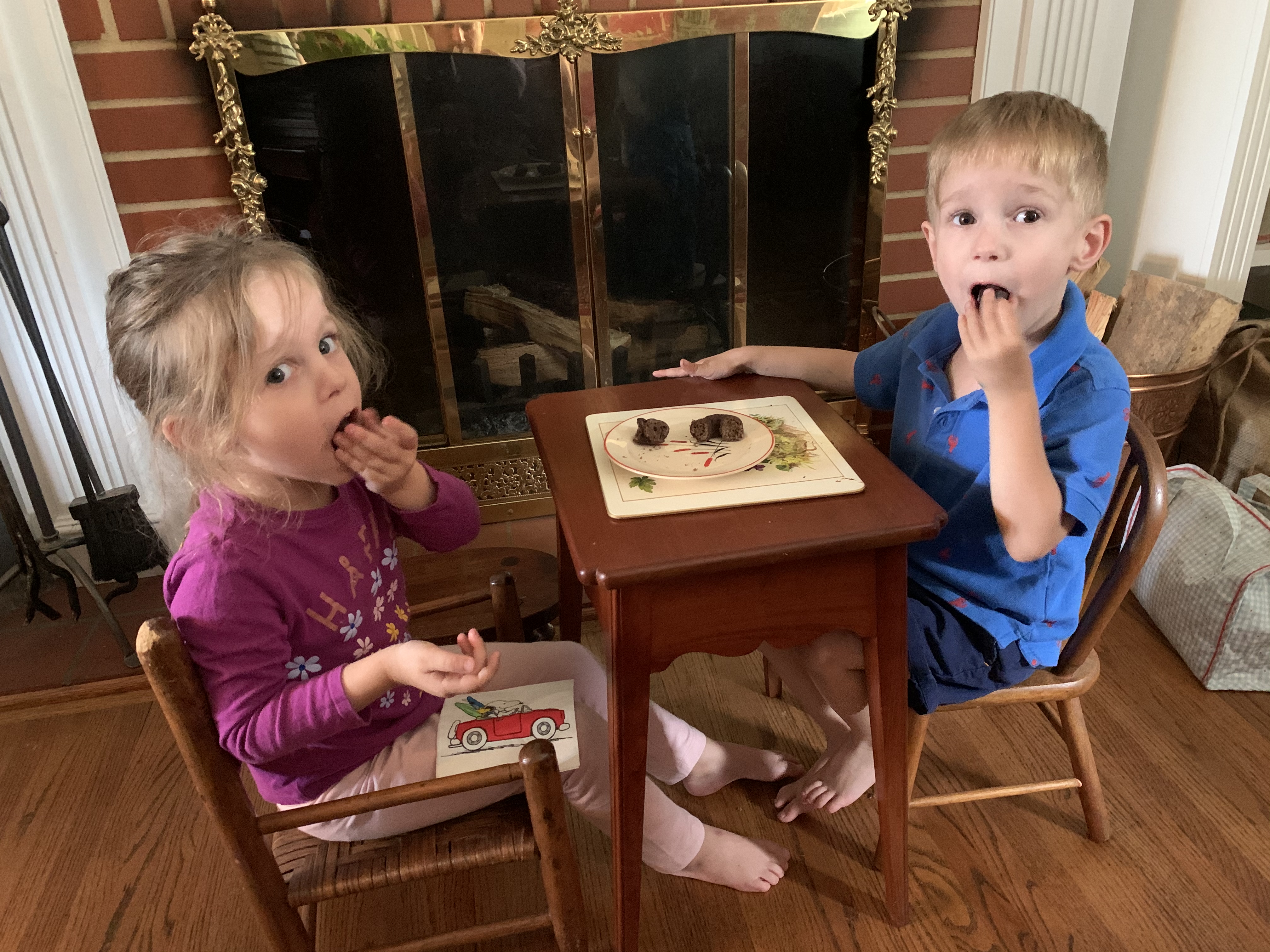
How many donettes can we stuff in our mouths at once? A lot more.

We also played outside with the Cozy Coupe, which the wee laddie decided to push down the hill into the street. I ran after the runaway coupe and fell flat on my face racing downhill. Luckily no one took a picture. He was in the doghouse after that and had to sit on the stairs with his Pappy. I am sure he learned no important lesson from this, but I took the opportunity to give him a short lecture on the doctrine of total depravity.

After they went home we drank the margaritas we had cleverly gotten to-go from Club Taco ahead of time. We sang along to Bob Dylan (very therapeutic) and maybe got a little tipsy.

On Sunday we were adventurous and drove to Hillsboro in Jefferson County, 40 minutes south of us. We went specifically to the Wild Sun Winery where we joined a large group of people sitting outside drinking wine and listening to a Blues band.

It was a beautiful day and we had a lovely, relaxing time. While daughter #1 got us our wine, I saved two chairs on the side of the roof deck. But then a nice young man came up to me and said, “Ma’am, are you waiting for a table, because we’re leaving and you can have ours.” I said, “Yes! that would be great!” That is par for the course in outstate MO.

Well, there are a lot of wineries in our part of the state and we plan to check them all out.

We also FaceTimed with these two cuties…

All in all, it was a super fun weekend and we were diverted from thinking about Life and the Apocalypse. Now it is back to the salt mine/Zoom School. One day at a time.

*”Trip Around the Sun” by : Brett Cornelius / Hillary Lindsey / Nick Brophy

“Hey, Ma, how ’bout some cookies?”

by chuckofish

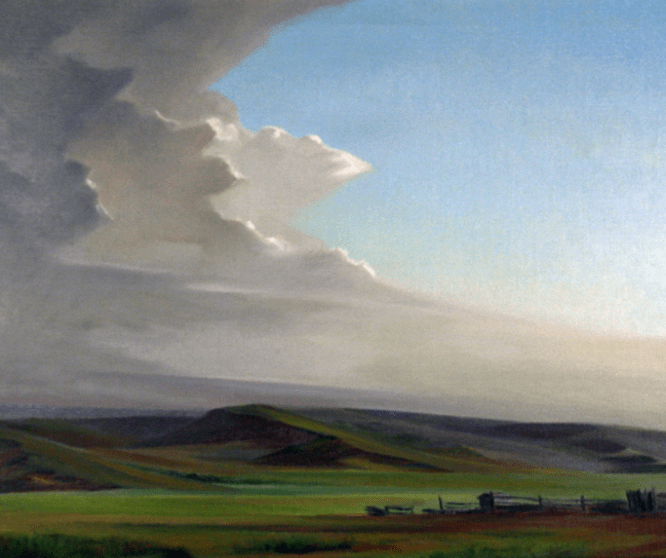
Raymond J. Eastwood
High Plains Range Land, 1950

A glorious three-day weekend is upon us. My office is officially closing at Noon today so it’s actually a three and a half day weekend! One more Zoom meeting to go and then I am free to putter around my house to my heart’s content. (Daughter #1 is driving home this weekend so I will do more than putter.)

Yesterday we had the electrician in our house all day fixing numerous things and (finally) installing a new ceiling fan in my ‘office.’ Hopefully nothing will break for awhile. Now we will have light in the basement again, so we have no excuses for getting back to work on all those boxes.

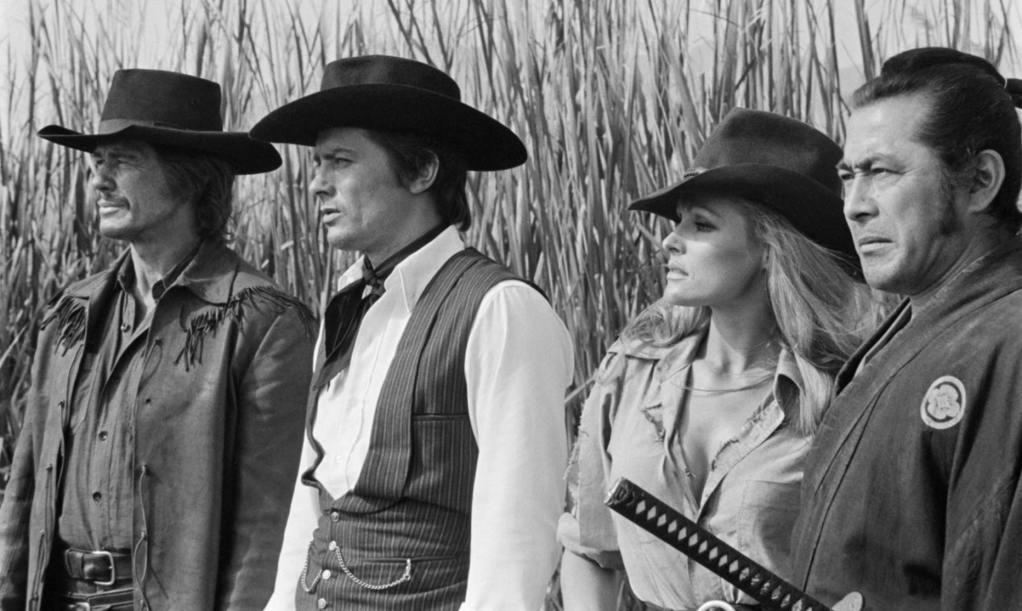
This week we watched a couple of old Charles Bronson movies: Breakheart Pass (1975) and Red Sun (1971). Breakheart Pass is a good western/mystery-on-a-train story written by Alistair Maclean and directed by Tom Gries. Red Sun is also a western with the added attraction of Toshiro Mifune as a samurai who joins forces with Bronson to retrieve a ceremonial Japanese sword.

Both movies offer lavish productions, good casts and excellent music. I enjoyed them. However, I can never watch a Charles Bronson movie without thinking of this:

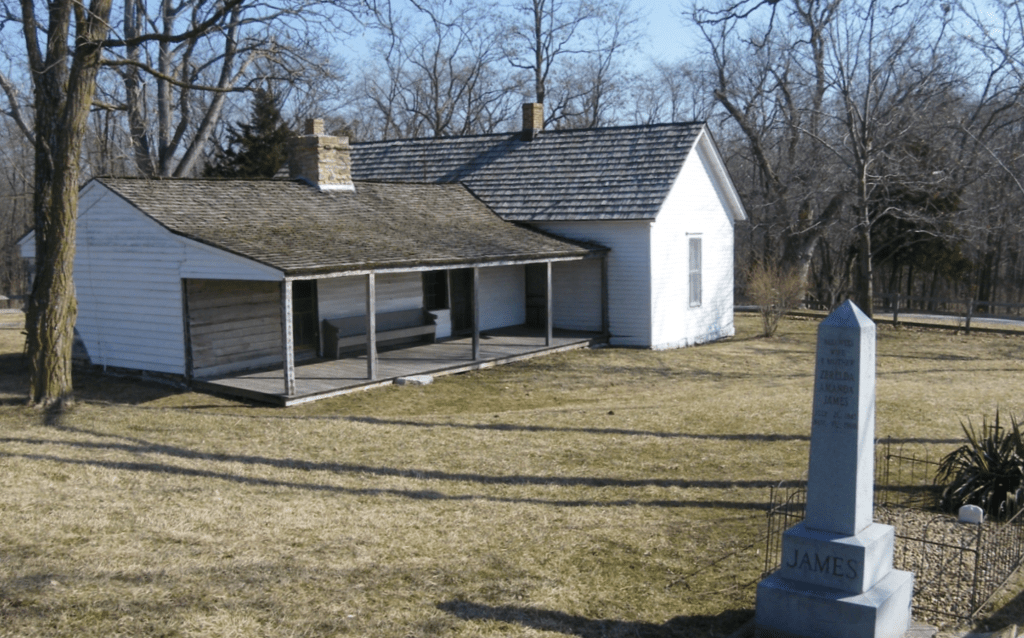
Tomorrow is the birthday of Missouri native and legend Jesse James (1847-1882). Everyone knows that he and his brother Frank were American outlaws, bank and train robbers. Disenfranchised ex-Confederates, they wrecked havoc across the Midwest, gaining national fame and often popular sympathy. Jesse James has been portrayed in film by Tyrone Power, Roy Rogers, Rod Cameron, Audie Murphy, Clayton Moore, Robert Wagner, James Keach, Robert Duvall, Kris Kristofferson, Colin Farrell, and Brad Pitt, just to name a few. I tried to watch the Brad Pitt version of the Jesse James story, The Assassination of Jesse James by the Coward Robert Ford (2007) in preparation for this post, but it was unwatchable. I cut my losses halfway through. Like many 21st century films, it was more interested in the look and sound of the movie than the story or the characters. There was not one likable or interesting character. It was slow, it was boring. Worst of all, it was filmed in Canada and did not even look like Missouri.

There are many museums and sites devoted to Jesse James across the U.S. including several in his home state. The James farm in Kearney, MO is a house museum and historic site operated by Clay County. It was listed on the National Register of Historic Places in 1972. One can’t help but think his mother would be proud. I may have to add Kearney to my bucket list.

One of my favorite blogs, which I have read for years and whose author I admire, is ending (at least for the time being.) Times change and we roll with the punches and I applaud her decision to focus (without guilt) on her large and exuberant southern family. You go, girl!

I thought this piece from one of my favorites was very on point. “We have to decrease and defund our inner police so that Jesus can increase in us.” (Did you get the reference to John 3:30?) SO true!

Have a joy-filled weekend. Love where you are and who you’re with.

“Step down off your high horse, mister”*

by chuckofish

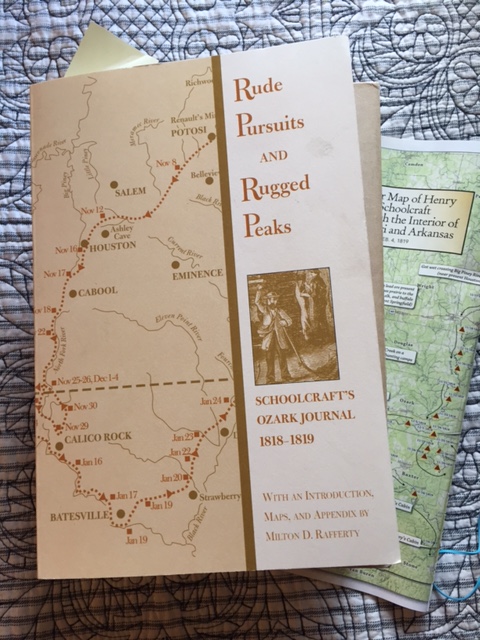
On Wednesday my copy of Rude Pursuits and Rugged Peaks, Schoolcraft’s Ozark Journal 1818-1819 arrived.
IMG_3877.JPG

Included in this edition, besides Schoolcraft’s journal of his and Levi Pettibone’s expedition from Potosi, Missouri, to what is now Springfield by way of Arkansas, are an introduction, maps and appendix by Milton D. Rafferty. Rafferty was a professor and head of the Department of Geography, Geology and Planning at Missouri State University in Springfield. These additions are very helpful.

I will read the whole thing, but I know you are all wondering what I found out about the Matneys, so I will tell you.
Screen Shot 2019-02-14 at 12.54.51 PM.png

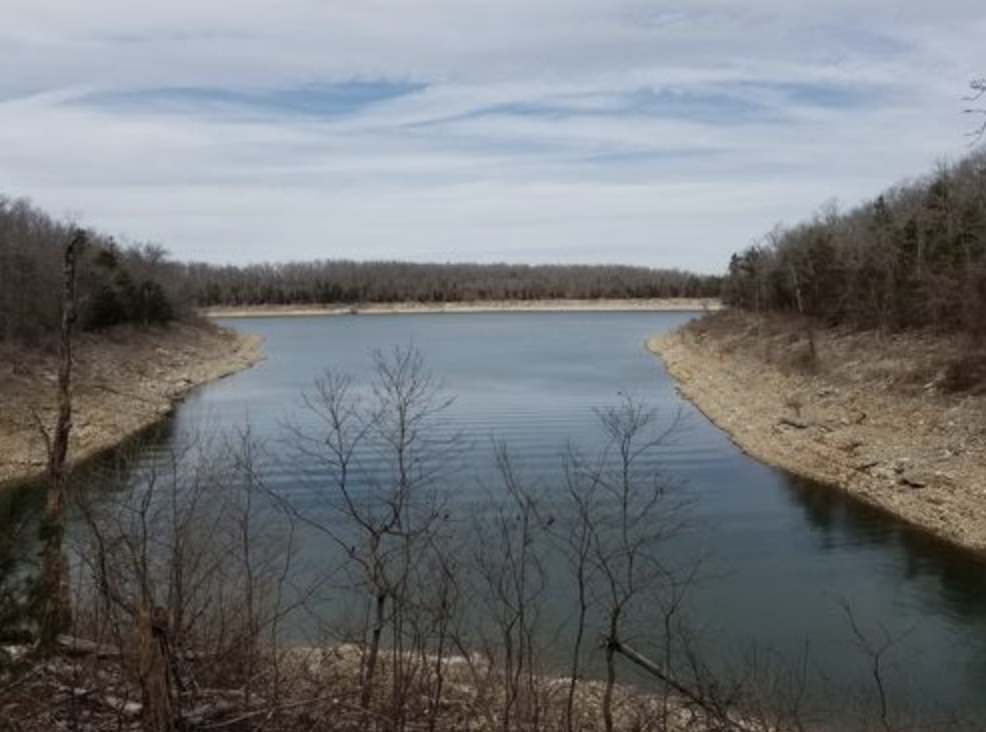
Schoolcraft and his partner arrived at dusk at their cabin, “wet and chilly” from swimming across the White River, on January 14.

Compelled, by the non-arrival of our canoe, to spend the day at this spot, I determined to improve the time by a ramble through the adjacent country, and to seek that amusement in the examination of rocks, and trees, and mountain-scenery, which was neither to be found in conversation with the inmates of the house, nor in any other way.

How rude.

With such an assemblage of interesting objects around me, I sauntered out to take a nearer view of the face of nature, and spent the day along the shores of the river, in the contiguous forest, or on the naked peaks of the neighboring hills.

After spending the day taking notes on the flora, fauna and mineral deposits in the area, Schoolcraft returned to the Matney Cabin to find that the hunters had not yet arrived with their canoe, but finally made their appearance at dusk…

accompanied by several neighbors and friends in their canoes, who also came down to trade, making a party of twelve or fourteen in all. Whisky soon began to circulate freely, and by the time they had unloaded their canoes, we began plainly to discover that a scene of riot and drinking was to follow. Of all this, we were destined to be unwilling witnesses; for as there was but one house, and that a very small one, necessity compelled us to pass the night together; but sleep was not to be obtained. Every mouth, hand, and foot, were in motion. Some drank, some sang, some danced, a considerable proportion attempted all three together, and a scene of undistinguishable bawling and riot ensued. An occasional quarrel gave variety to the scene, and now and then, one drunker than the rest, fell sprawling upon the floor, and for a while remained quiet. We alone remained listeners to this grand exhibition of human noises, beastly intoxication, and mental and physical nastiness. We did not lie down to sleep, for that was dangerous. Thus the night rolled heavily on, and as soon as light could be discerned in the morning we joyfully embarked in our canoe, happy in having escaped bodily disfiguration, and leaving such as could yet stand, vociferating with all their might like some delirious man upon his dying bed, who makes one desperate effort to rise, and then falls back in death.

What a picture he paints! Clearly he was not amused by their behavior, but I surely was, reading about it. Prof. Rafferty explains Schoolcraft’s sometimes disdainful appraisal of frontier life by asking us to consider his youth (he was only 25) and that he was “freshly indoctrinated with a church upbringing, including a strong emphasis on Christian dutifulness and temperance…”

I have to say, I can relate to young Schoolcraft. I remember going on a school-sanctioned float-trip back in high school–on some river in Missouri–where everyone got drunk, including the two male, gym-teacher chaperones! One other girl and I stayed awake most of the night watching out for our classmates and making sure they didn’t drown while relieving themselves. (Seriously) It was not fun, but nobody died or anything.

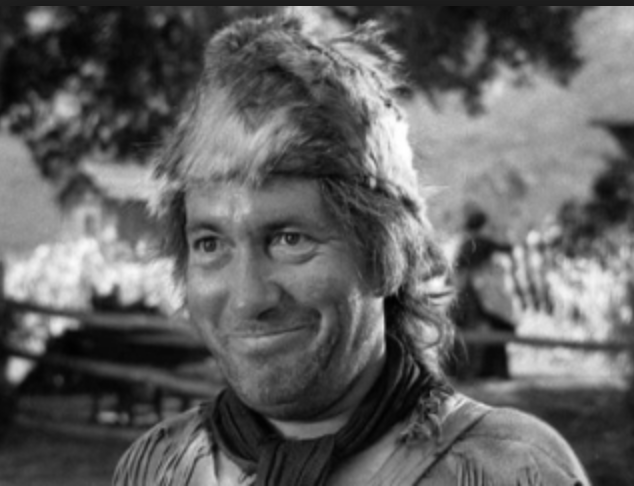
Matney and his companions remind me of Mac MacPherson, the wild Scotsman played by Wilfred Lawson in Alleghany Uprising (1939).
Screen Shot 2019-02-14 at 9.27.46 AM.png

Another literary evocation of this type is Worth Luckett in The Trees by Conrad Richter, who provides for his family by hunting wild animals for food and trading their pelts for other commodities they need. When Worth notices that the wild game is leaving the woods near their settlement in Pennsylvania, he convinces his wife and family to move where the animal population is more plentiful–further west.

These men were the hardiest of woodsmen, cut from the same cloth as Daniel Boone and his sons, who settled along the interior streams, hunting and trading. Schoolcraft “admired their stoic courage and tenacity, but could not conceal his disdain for their lack of education and rude lifestyle. He noted that men and women alike could talk only of bears, hunting, and the rude pursuits and coarse enjoyments of hunters.” (Rafferty) He had to admit they were hospitable.

I have always been oddly drawn to this type and I guess now I know why. It runs in my blood. Come the apocalypse, I want to be on their team. I am pretty sure this is how my great-great grandfather John Simpson Hough felt. He went west to get away from Philadelphia and all his well-meaning, upstanding Quaker relatives. He was smitten with all the old rough types he met in Missouri and Kansas and in his travels westward: Uncle Dick Wooten, Seth Hays, Kit Carson. I am sure he would have liked his freedom-loving grandfather-in-law, Mr. Matney.

Funnily enough, I have just been reading about Conrad Richter and had already resolved to re-read The Trees. Now I will for sure.

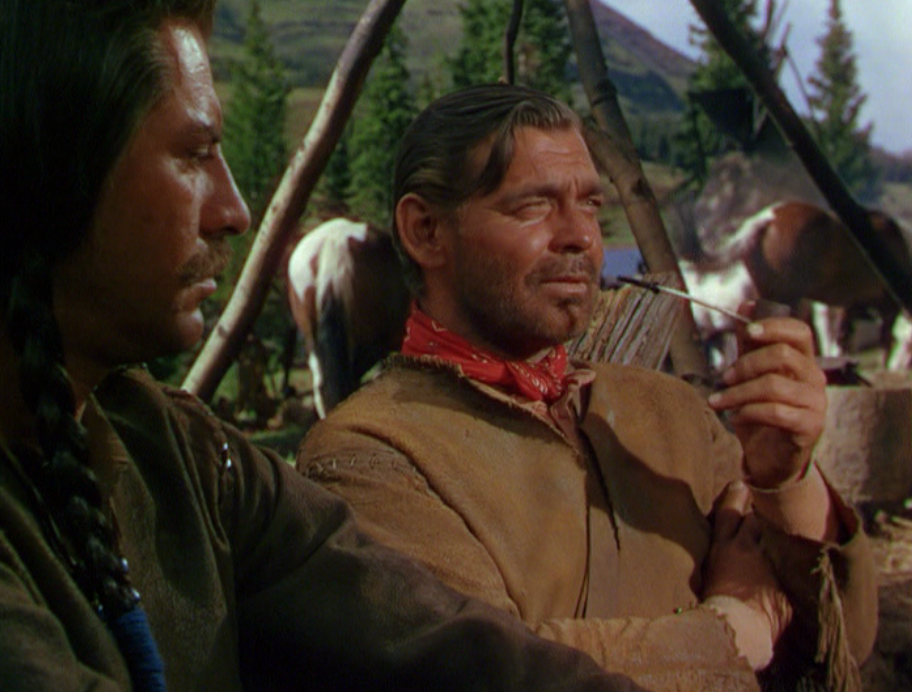
And this weekend I’ll find something to watch where the men wear buckskin suits.
Screen Shot 2019-02-14 at 8.50.05 PM.png

You betcha.

*Davy Crockett (John Wayne) in The Alamo (1960)