dual personalities

Tag: Longmire

What are you reading?

by chuckofish
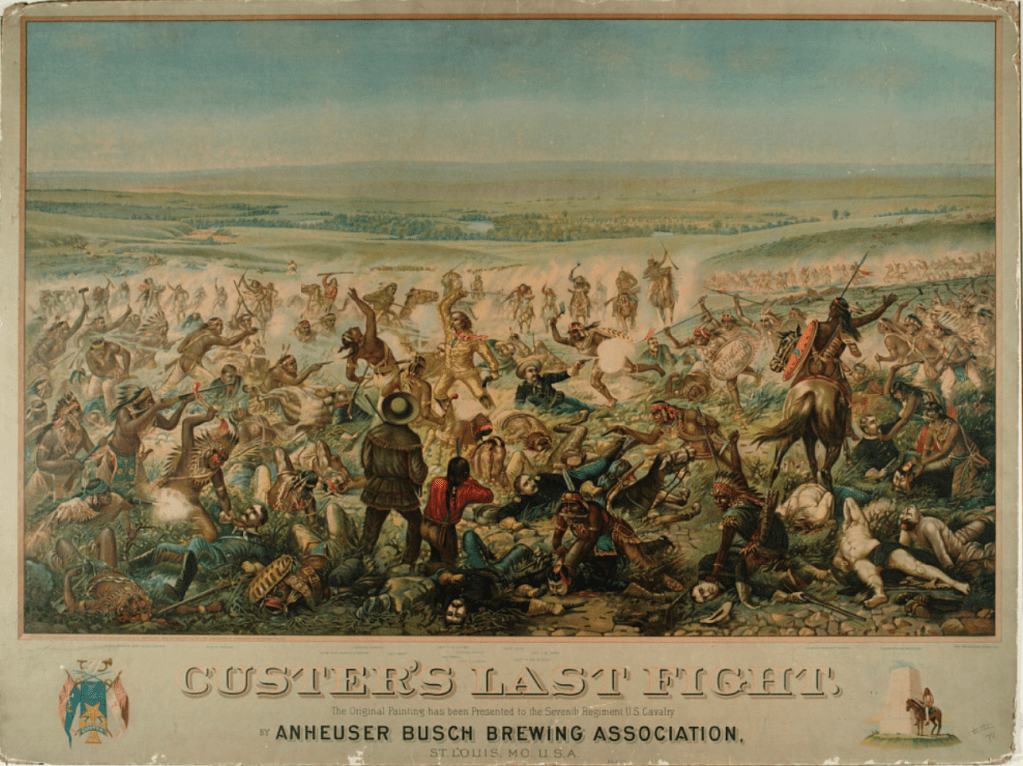
Craig Johnson’s newest Longmire mystery, Next to Last Stand, releases today and I should be getting it in the mail shortly. The plot hinges on a famous American painting:

One of the most viewed paintings in American history, Custer’s Last Fight, copied and distributed by Anheuser-Busch at a rate of over a million prints a year, was destroyed in a fire at the 7th Cavalry Headquarters in Fort Bliss, Texas, in 1946… Or was it? When Charley Lee Stillwater dies of an apparent heart-attack at the Sailor’s & Soldier’s Home of Wyoming, Walt Longmire is called in to try and make sense of a hauntingly familiar, partial painting and a Florsheim shoebox containing a million dollars both found in the veteran’s footlocker. Encountering some nefarious characters along the way, Longmire strives to make sure the investigation doesn’t become his own Next To Last Stand.

Interestingly, (at least to me) this large painting hung in our father’s classroom for many years. Someone gave it to him I suppose. I think our brother has it now. As a child I thought it was rather shocking, because you will note, there are some near-naked men in the painting. There are also several soldiers being scalped. All rather too graphic for my taste.

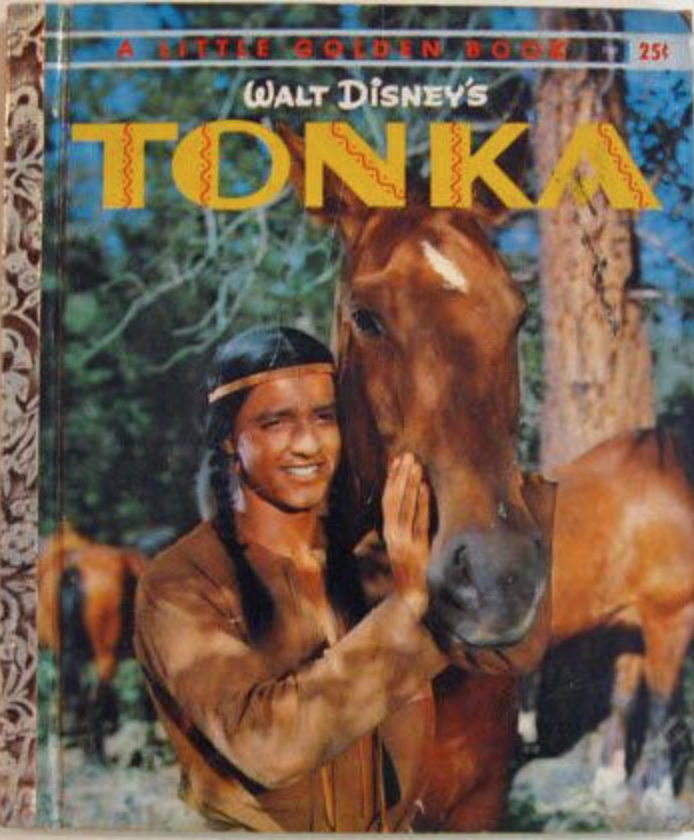
Much more to my liking as a child was the Disney movie Tonka (1958). This story takes place in the territory of the Dakotas in the 1870s, where a young Indian brave, White Bull, captures a wild stallion and names him Tonka. Yellow Bull, the brave’s cousin, is jealous and mistreats Tonka so that White Bull frees the horse once more. The horse’s new master, Capt. Myles Keogh, rides him into battle with General Custer in the Battle of the Little Big Horn, where Keogh is killed by Yellow Bull.
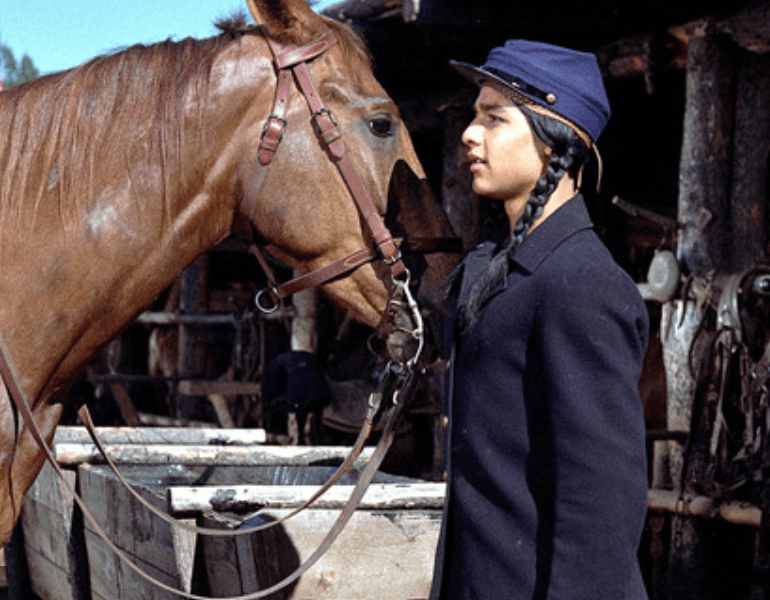
In retaliation Yellow Bull is stomped upon and killed by Tonka, who is the only survivor of the battle. He is officially retired by the U.S. Seventh Cavalry on April 10, 1878, to be ridden only by his exercise boy, his beloved master…White Bull! Directed by Lewis R. Foster, the film stars Sal Mineo (White Bull) and was filmed at the Warm Springs Indian Reservation in Oregon by Loyal Griggs, who had filmed such famous westerns as Shane. Released on video in 1986, it is no longer available, no doubt because it is so politically incorrect. Indeed, there aren’t many of those “Wonderful World of Disney” movies that we watched on Sunday night TV available on their new streaming channel. I guess they’d have to put too many warnings about the pre-enlightened attitudes of yesteryear to make it worthwhile.

I had the Golden Book…
Anyway, I am really looking forward to reuniting with Sheriff Longmire and Henry Standing Bear et al. I have been setting the stage by re-reading Land of Wolves, the 2019 offering and enjoying it.

The idiot actually leaned in. “I said, do you know who the f–k I am?” Henry peered at him and actually looked concerned. “Do you not know who you are?”

I’ll let you know how it goes.
“You come with me, we hunt buffalo, get drunk together! Hallelujah! Hallelujah!”*

by chuckofish

This November, we celebrate Native American Heritage Month, a time to honor the history, culture, and traditions of Native Americans past and present.

On September 28, 1915, President Calvin Coolidge issued a proclamation that resulted in the first Native American heritage celebration in the United States; he declared the second Saturday of each May as American Indian Day. In 1990, President George H. W. Bush approved a joint resolution designating November as National American Indian Heritage Month.

We will try to be more respectful in our celebrations this month than might be suggested from our entertaining, but culturally appropriative, singing of “Ugga Wugga Wigwam” to the wee babes the other night.

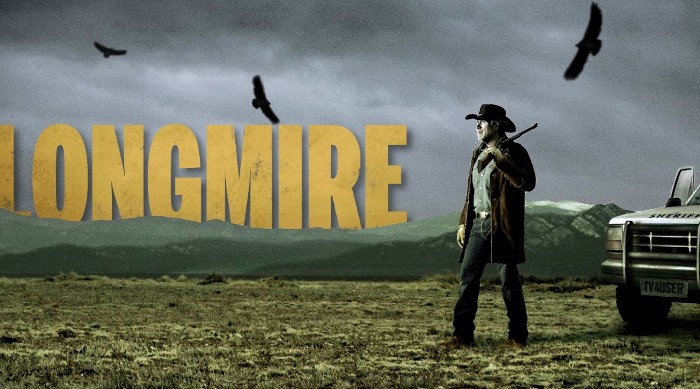
Perhaps we will watch the final season of Longmire, which premiers next Friday.

But I doubt it. Since reading all the books last summer, I am loathe to watch the show, because in my opinion, the video version and its ridiculous story lines do not compare positively to the books. I mean, there is no torture of people (Indian or white) in the books (see trailer)! There is no evil Indian bad guy in the books! And I’m sorry, Walt is a lot smarter in the books! Furthermore, Walt has a good relationship with the Cheyenne in the books, not the relationship fraught with drama portrayed on the tv series. All the racial unrest on the show is inserted to heighten the drama and that drives me crazy. Ugh.

We’ll have to think of something to do to celebrate Native American Heritage Month, such as visit one of the various American Indian sites throughout our state. There are several–for instance, I did not know there is a restored and authentically finished 1790-1815 French and Indian trading post and village, at Fort Charrette Village and Museum, 10 minutes east of Washington, Missouri. The fort includes five log houses, one of which is believed to be the oldest log house west of the Mississippi River. All are furnished with 1700s American antiques. There is even a winery nearby!

In the meantime, here is something beautiful and perceptive from Willa Cather:

“It was the Indian manner to vanish into the landscape, not to stand out against it. The Hopi villages that were set upon rock mesas were made to look like the rock on which they sat, were imperceptible at a distance. …

In the working of silver or drilling of turquoise the Indians had exhaustless patience; upon their blankets and belts and ceremonial robes they lavished their skill and pains. But their conception of decoration did not extend to the landscape. They seemed to have none of the European’s desire to “master” nature, to arrange and re-create. They spent their ingenuity in the other direction; in accommodating themselves to the scene in which they found themselves. This was not so much from indolence, the Bishop thought, as from an inherited caution and respect. It was as if the great country were asleep, and they wished to carry on their lives without awakening it; or as if the spirits of earth and air and water were things not to antagonize and arouse. When they hunted, it was with the same discretion; an Indian hunt was never a slaughter. They ravaged neither the rivers nor the forest, and if they irrigated, they took as little water as would serve their needs. The land and all that it bore they treated with consideration; not attempting to improve it, they never desecrated it.”

Death Comes for the Archbishop

Screen Shot 2017-11-08 at 11.31.28 AM.png

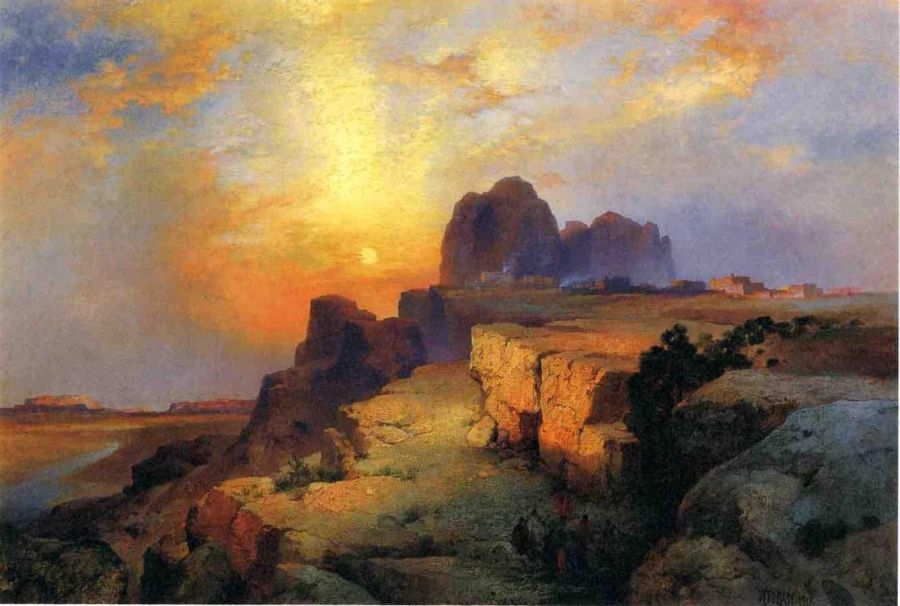
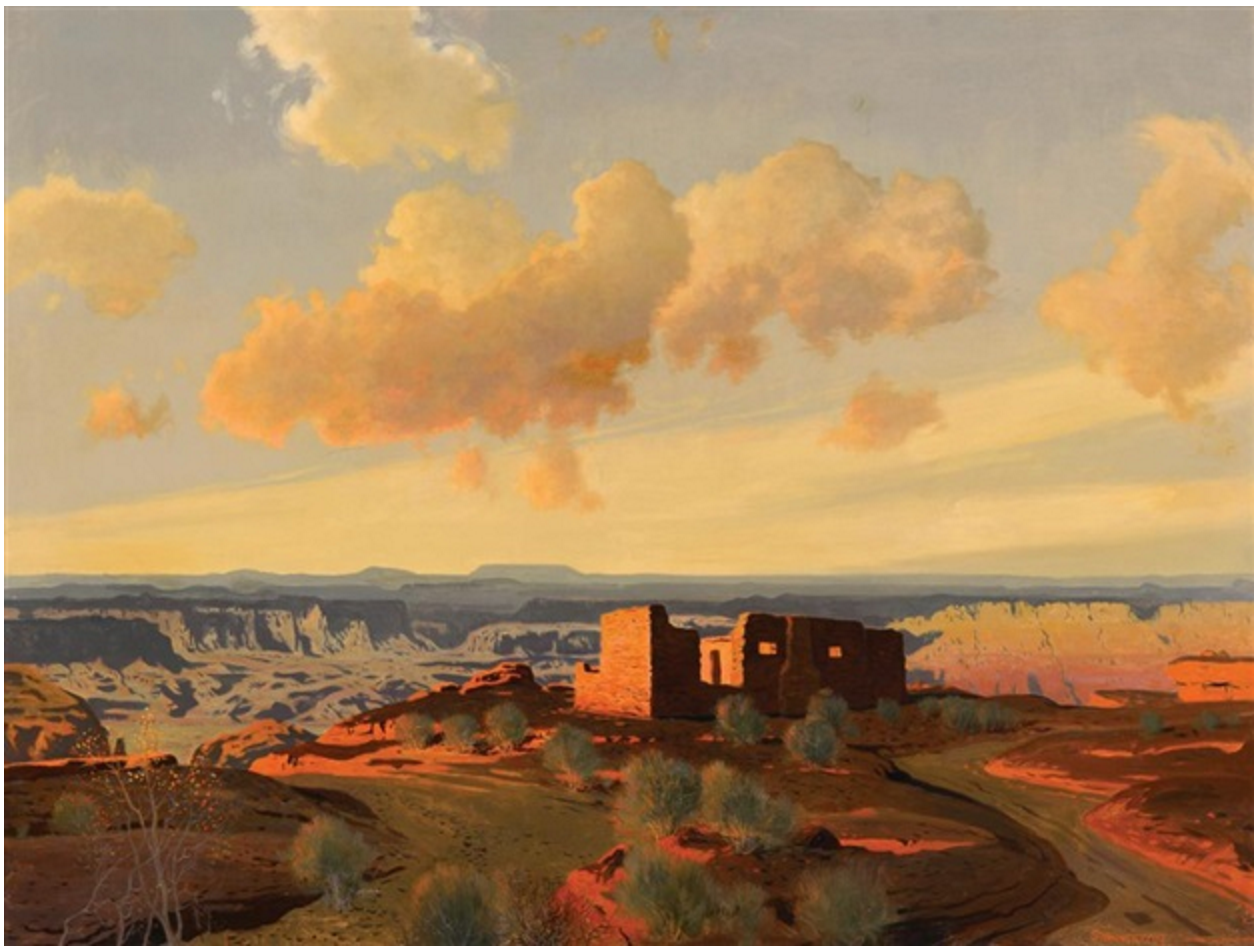
Ruins of Hopi Trading Post by James Swinnerton (1875–1974)

43e5bf44ad0298f0d8a498ee3f3c7b64.jpg

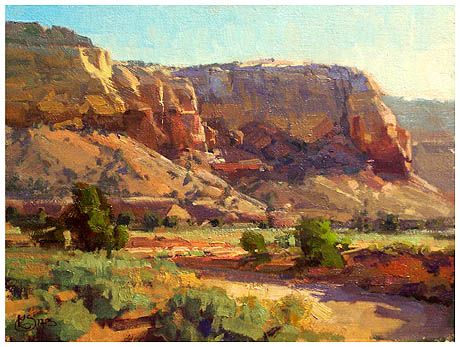
Thomas Moran (1837–1926)

06a1c5a60553a822961b4d062c1a12e8--southwest-art-landscape-paintings.jpg

Thomas Moran (American, 1837 – 1926) -“Hopi Museum, Arizona”, 1916

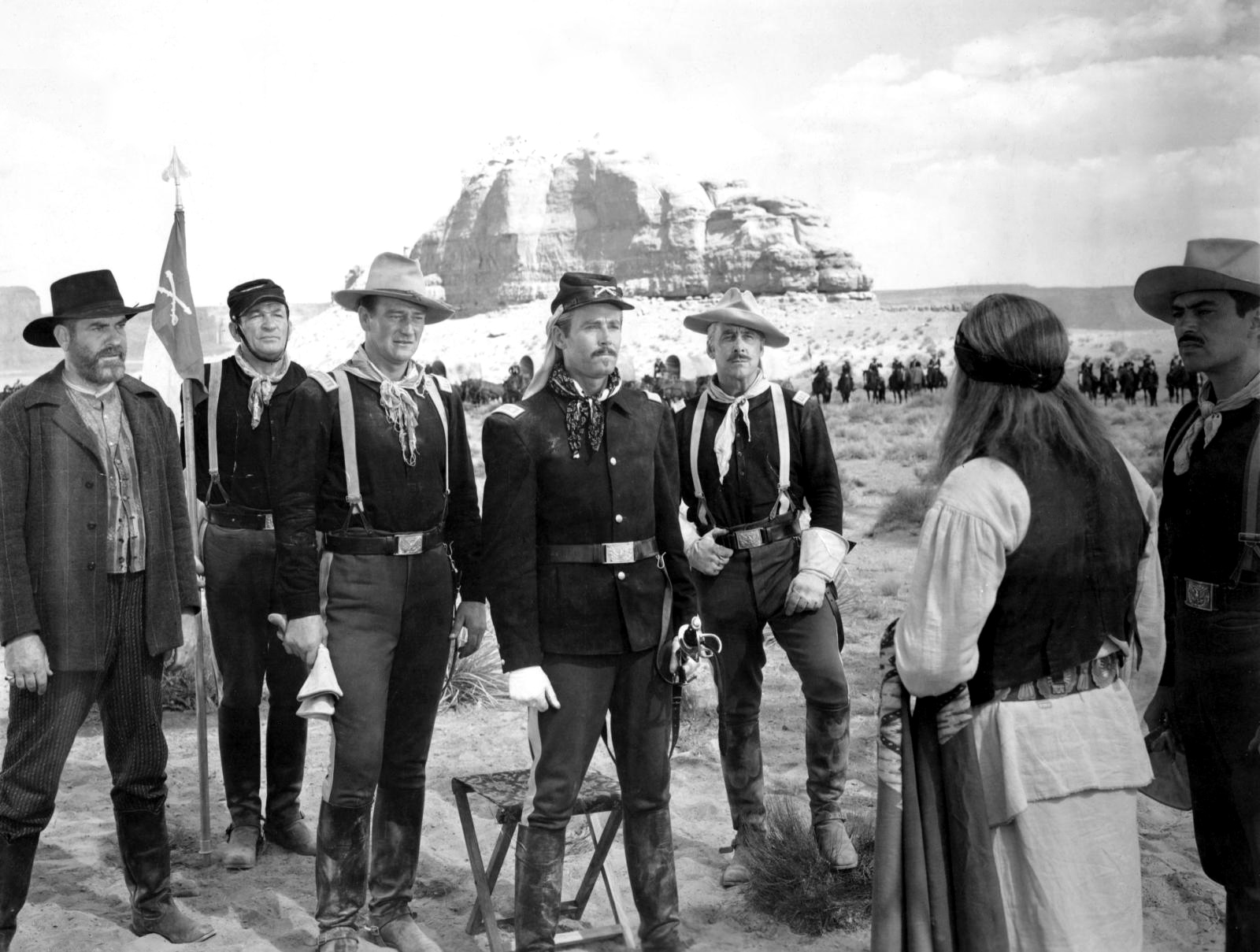
*Pony That Walks in She Wore a Yellow Ribbon (1949)

Home, home on the range

by chuckofish

The OM and I have been watching Longmire, season 4 on Netflix for several days in a row.

longmire-season-4

We have enjoyed it a lot, but then it ended precipitously after only 10 episodes. Now we will have to wait until they come up with season 5 to see what happens. That is the trouble with binge-watching one show.

Modern problems.

Anyway, all of this Longmire viewing with its myriad plots and sub-plots involving Native Americans leads me to my next subject.

Did you know that Indigenous Peoples’ Day is a holiday celebrated in various places in the U.S.? It was begun as a counter-celebration to Columbus Day, which, as you know, is coming up next week. The purpose of the day is to promote “Native American culture” and to commemorate the history of Native American peoples. At least four states do not celebrate Columbus Day (Alaska, Hawaii, Oregon, and South Dakota) with South Dakota officially celebrating Native American Day instead. Various tribal governments in Oklahoma designate the day “Native American Day” or name the day after their own tribe. 

Well. I would just as soon celebrate Native American Day as Columbus Day, but I would no doubt do it by watching John Wayne movies or something equally offensive to Indians. (Not that it should be.)

annex_-_wayne_john_fort_apache_03

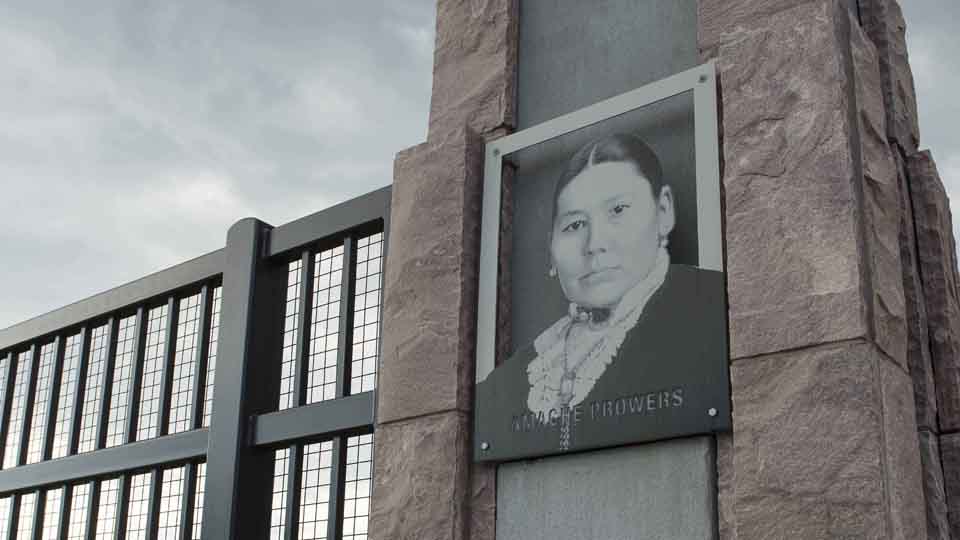
Another way to celebrate would be to head out to Kansas City to see the ten decorative panels which were installed on the new Red Bridge in Kansas City in 2011.   Each panel represents an individual who has ties to the area as part of the Three Trails Crossing during the westward expansion of the 1800s.  (The area around Red Bridge is historically significant as the crossing at the Blue River was the only location where the Santa Fe, California, and Oregon Trail intersected.  From approximately 1821 to 1880 it is estimated that thousands of travelers crossed the Blue River near the current bridge.) It is a very ethnically-diverse group and the Native American represented is my great-great-uncle, John Prowers’s, wife, Amache Ochinee Prowers! Pretty cool, right?

Red-Bridge-Column-Panels

Amache is usually recognized as someone who bridged the two cultures–Indian and white–successfully. As I have noted previously, she and John had nine children together who, it would appear, were whole-heartedly welcomed into the mainstream of Colorado society. You can’t believe everything you see in the movies.

Someday I will head out to K.C., but not this weekend. I don’t even get Columbus Day off, so what am I talking about?