dual personalities

Tag: Lent

Rend your hearts, and not your garments

by chuckofish

I regret to say that as Lent comes to a close I haven’t blogged about or even mentioned my usual Lenten movie watching traditions, because, alas, I haven’t watched any of my favorite Lenten movies! Last year I wrote about them here and here and of course here.

Indeed, it hasn’t been a typical Lent. In fact, the only thing I gave up for Lent was going to church! Sigh. Well, anyway, I will definitely watch Ben Hur on Good Friday.

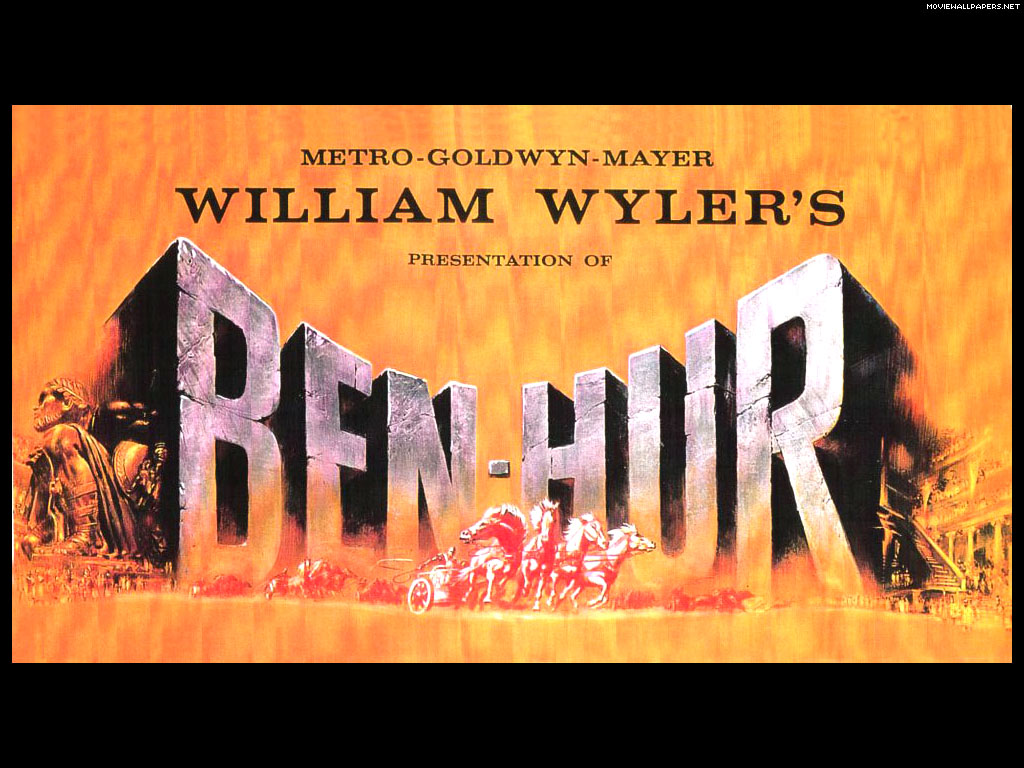
ben-hur_pic_heston_nd2009_1000px

Earlier in March I did try to watch The Bible, the television miniseries produced by Roma Downey and Mark Burnett on the History Channel, but I really couldn’t watch more than 15 minutes. Myeh.

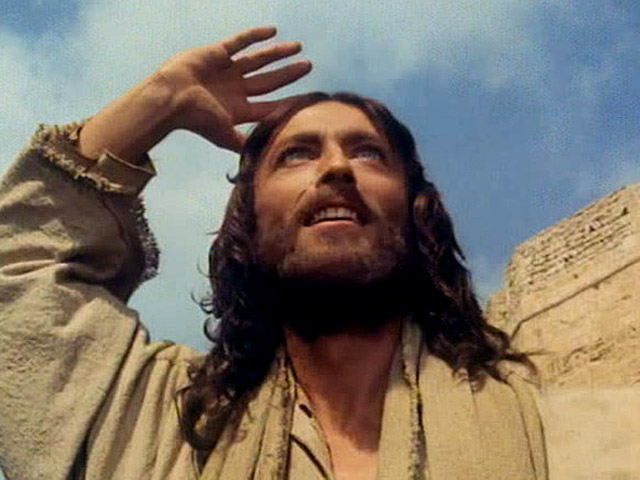
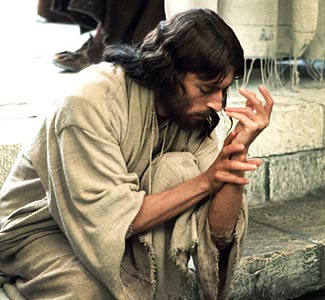
Perhaps this weekend I will watch some of Franco Zeffirelli’s Jesus of Nazareth, the miniseries first aired in 1977 which I like very much. It has a wonderful script by Anthony Burgess and I like Robert Powell as the unblinking Jesus.

Jesus-of-Nazareth-film

Also memorable are Laurence Olivier as Nicodemus, my girl Claudia Cardinale as the Adulteress, Ralph Richardson as Simeon, and Ian McShane as Judas. James Farentino (!) as Peter and Ann Bancroft as Mary Magdalene, prove that, although it helps, you don’t have to be British to star in a biblical film. They are both wonderful.

Speaking of favorite biblical miniseries–I love Peter and Paul, a 1981 biblical drama starring Anthony Hopkins as Paul of Tarsus.

1981 Peter and Paul 03

Ever since first watching it in 1981, whenever I read the words of Paul, I hear them spoken in Hopkins’ Welsh accent.

What then shall we say to this? If God is for us, who is against us? He who did not spare his own Son but gave him up for us all, will he not also give us all things with him? Who shall bring any charge against God’s elect? It is God who justifies; who is to condemn? Is it Christ Jesus, who died, yes, who was raised from the dead, who is at the right hand of God, who indeed intercedes for us? Who shall separate us from the love of Christ? Shall tribulation, or distress, or persecution, or famine, or nakedness, or peril, or sword? As it is written,

“For thy sake we are being killed all the day long;
we are regarded as sheep to be slaughtered.”

No, in all these things we are more than conquerors through him who loved us. For I am sure that neither death, nor life, nor angels, nor principalities, nor things present, nor things to come, nor powers, nor height, nor depth, nor anything else in all creation, will be able to separate us from the love of God in Christ Jesus our Lord.

Romans 8: 31-39

Well, we all worship in our own way.

Praising my savior all the day long

by chuckofish

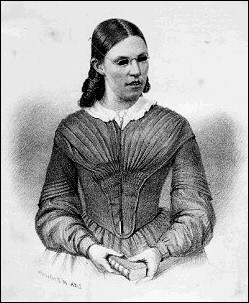
Frances Jane Crosby was the most prolific writer of hymn texts and gospel songs in the American evangelical tradition of the late nineteenth and early twentieth centuries. She wrote more than eight thousand sacred texts in addition to other poetry.

crosby

Born in Putnam County, New York, on March 24, 1820, she lost her sight as an infant as a result of complications from a childhood illness. At the age of fifteen, she entered the New York Institute for the Blind where she would later teach for a number of years. In 1858, she married Alexander van Alstyne, a musician in New York who was also blind. Crosby was a lifelong Methodist.

Fanny Crosby is honored with a feast day on the liturgical calendar of the Episcopal Church in the United States of America on February 11, even though none of her hymns are included in either the 1940 or 1982 Hymnal. Go figure.

Here is an excellent rendition of one of her most famous hymns, Blessed Assurance, performed by Third Day. Listen to the whole thing and start your Lent on a positive note.

This is the day

by chuckofish

What, you ask, is the climax of our lenten viewing?
Of course, it is Ben Hur (1959).
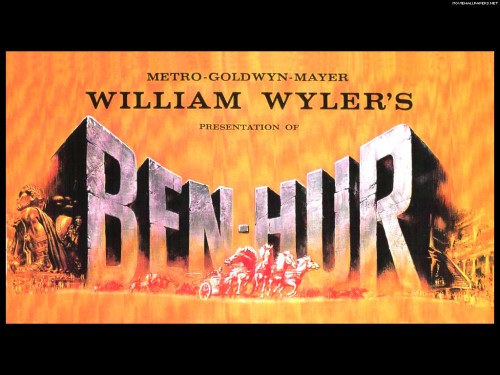
Every year on Good Friday we reverently dust off our 2-DVD set and watch, sometimes waiting until Holy Saturday to view the second part which commences with the famous chariot race. When my children were little we stayed home from church on Easter Sunday and watched the movie. One daughter famously proclaimed this to the altar guild ladies with whom she was making palm crosses in response to a question about seeing her at church on Easter. “Oh, we don’t go to church on Easter. We stay home and watch Ben Hur. My mother says it’s too crowded with all the people who only go twice a year!”

Undeniably one of the greatest movies of all time, it won 11 Academy Awards, a record untouched until Titanic came along in 1997 and tied it. (Go here for the list of Oscars Ben Hur won.)

Ben Hur deservedly won everything that year except writing for Karl Tunberg, who was given credit for what was allegedly a group effort (with Gore Vidal and Christopher Fry), and I think that is why he didn’t win. It is a great screenplay and one of the few instances where the movie is actually better than the book upon which it is based. Also no actresses were nominated, leaving the field open for Simone Signoret who won best actress for Room at the Top over Doris Day for Pillow Talk and Shelly Winters who won supporting for Diary of Anne Frank over Thelma Ritter for Pillow Talk. (All I’ll say is Doris and Thelma were robbed.)

This is such a big movie and its greatness so monumental, that it is hard to know where to start. I will do my best.

1. First and foremost, as its sub-title proclaims, this is “A Story of the Christ”. However, the face of its central character is never seen. He never speaks. I guess it took a Jewish director to figure out how powerful this is. It works.

2. It has a good plot. The author of Ben Hur, General Lew Wallace, had a good idea. The book’s main character, Judah Ben-Hur, accidentally causes injury to a high-ranking commander, for which he and his family suffer tribulations and calumny. He first seeks revenge, and then redemption. As I said earlier, the 1959 film adaption improves on this novel which became the best-selling American novel of the 19th century, surpassing Harriet Beecher Stowe’s Uncle Tom’s Cabin and is considered by some the most influential Christian book of the 19th century. One way the film is better is its depiction of the character Esther, Judah’s love interest.
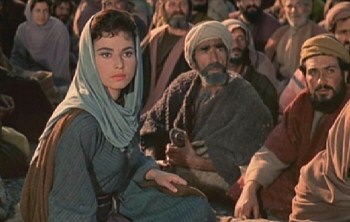
In the film she is multi-dimensional and smart. She takes charge of a very bad situation and goes forward, like an Old Testament prophetess. A former slave, she is in every way worthy of the Prince of Hur. I also think Haya Harareet, who plays Esther, is wonderful, and certainly deserved to be nominated (at least) for her performance. I love her accent and the way she imbues a simple statement with meaning: “The world is more than we know.”

3. This movie takes the view that the Romans were to blame for Christ’s crucifixion. It is a story about Christ where the Jews (and a few Arabs) are the heroes. I’m sure this was very appealing to the Hollywood powers that be, as well as mainstream Americans. Rome is evil. As Judah says to Messala, “Rome is an affront to God! Rome is strangling my people and my country, the whole Earth! But not forever. I tell you the day Rome falls there will be a shout of freedom such as the world has never heard before!” Ben Hur is all about personal freedom. And the film’s art director has a field day with Nazi iconography.

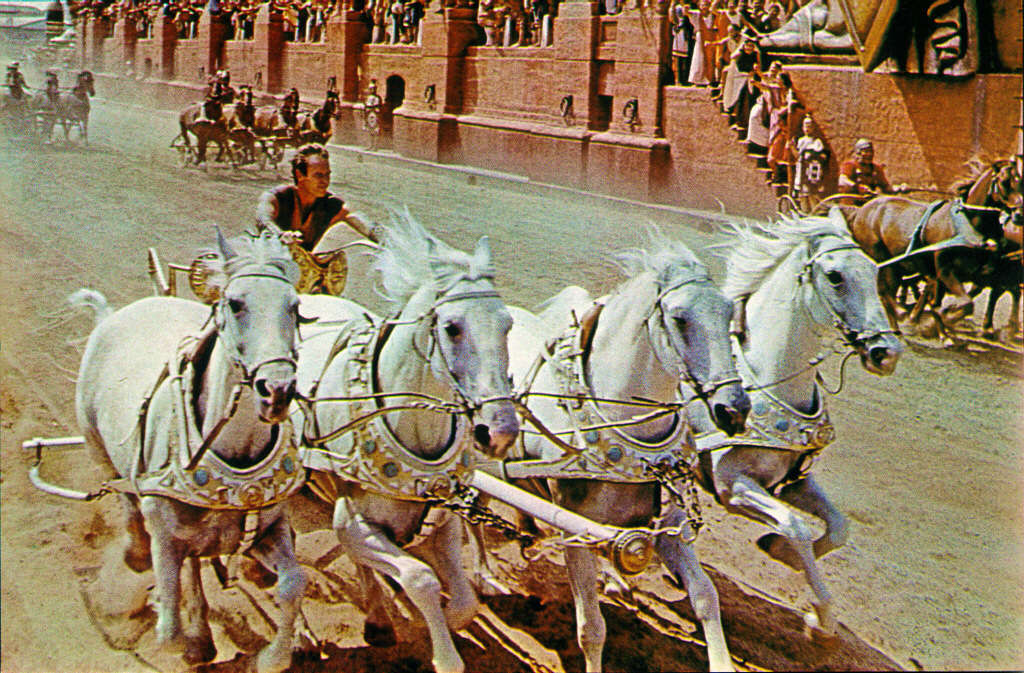
4. It has great (pre-CGI) action sequences using models (the sea battle) and the best stunt men ever. I always told my kids that one of the stunt men was killed filming the chariot race, because that is what my mother told me. But according to IMDB.com, that is an urban legend and claims that 4 stuntmen were killed during the filming of the chariot race are untrue. Charlton Heston had learned how to handle a two-horse chariot when he was making The Ten Commandments. When he arrived in Rome to shoot Ben Hur, he began lessons in four-horse chariot racing with the film’s stunt co-ordinator, Yakima Canutt. Props to Chuck–it made a big difference in the realistic final cut of the chariot race scene.

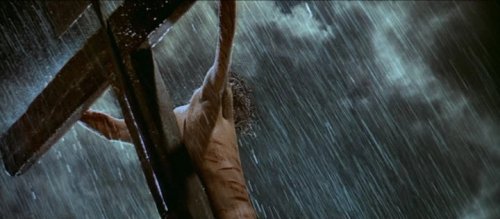
5. Like all great films, Ben Hur has great dialogue and great scenes that you cannot forget. There are, of course, the monumental scenes, but there are also the small ones that stay with you. Who can forget the face of Drusus as the jailer opens the prison door revealing Miriam and Tirzah, and the jailer saying, “Lepers!”? Or Simonides, carried by his other “half”, saying, “We will laugh…We will celebrate! Among the dust and cobwebs.” Or Quintus Arrius: “Your eyes are full of hate, forty-one. That’s good. Hate keeps a man alive. It gives him strength.” And later: “In his eagerness to save you, your God has also saved the Roman fleet.” And the end of the movie when Christ is crucified and there is the fearful thunderstorm with the scariest rumbling in movie history. The three ladies huddle in the cave and Esther says, “The shadow of a storm.”
I remember once sitting in a two-man paddle boat with the boy (when he was a little boy) on a lake in Michigan and he started amping up the speed, crying, “Battle speed!… Attack speed!… Ramming speed!” Another time when we were waiting to pick up daughter #1 and had the back of the 240 wagon open, the boy hopped in and holding tight to the seat-belt straps, re-enacted Messala’s death scene verbatim: “It goes on. It goes on, Judah. The race… the race… is not… over.”

6. One of my favorite things about Ben Hur is that Judah is the best son in literature. He spends years in the galley and all he can think about is finding out what has happened to his mother and sister. Then when he’s in Rome and Quintus has adopted him, all he wants to do is go home and save his mother and sister. And he does. Eventually.

7. All the actors are great–especially Charlton Heston, who really gave it all he had. It was the part of a lifetime and he made the most of it. Plus, let’s give him credit for having the greatest naturally-occurring physique (no steroids for Chuck) of any actor ever.
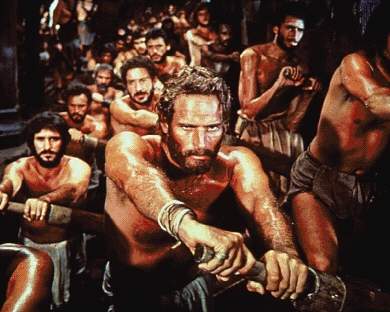
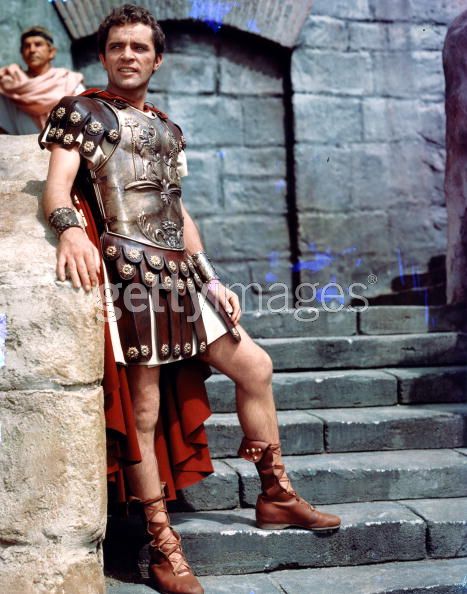
Remember the galley slave in the loin cloth floating on the scrap of wood with Quintus? Awesome. And then, of course, there’s Stephen Boyd in Roman tribune attire, looking terrific and owning it.

On that note, I’ll finish with this picture:
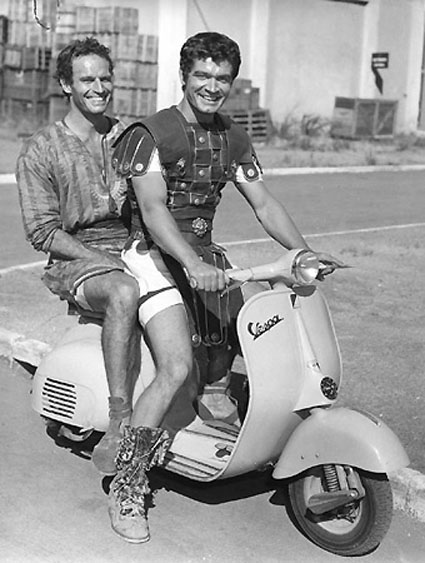
What is your favorite scene in Ben Hur?
To watch or not to watch

by chuckofish

As you know, I have been blogging about great movies to watch during Lent. But really, when you think about it, most “religious” movies are pretty bad.

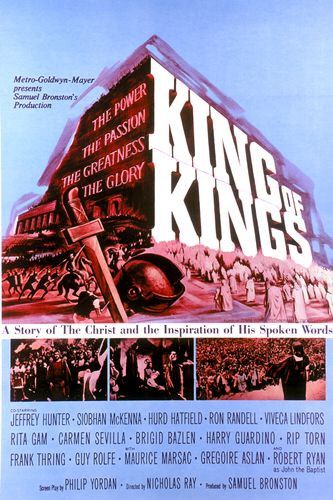
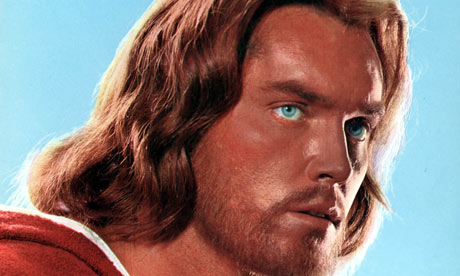
Case in point: King of Kings (1961), directed by Nicholas Ray and starring Jeffrey Hunter as the Son of God. Now when the dual personalities were little girls, we loved this movie. We thought Jeffrey Hunter was the perfect Jesus. Granted, the music by Miklos Rozsa is great and Jeff does have beautiful blue eyes, but really now, this rendition is hardly “the life of Christ intelligently told and beautifully filmed,” as the movie poster promises. The journeyman screenwriter Philip Yordan, who actually won an Oscar for another potboiler Broken Lance in 1955, was way out of his league. The gospel here is presented as a biblical Rebel Without a Cause, strictly trying to appeal to a teen crowd with Jesus as a dreamy all-American quarterback hero.

And as far as actual screen time, Barabbas, memorably played by Harry Guardino as a New York thug, gets way more than poor, sincere Jeffrey Hunter as Jesus. The respected Irish actress Siobhan McKenna is just ghastly as the Virgin Mary promising to “intercede” with her son for the lovelorn Mary Magdalen. It is just awful. I must admit that I kind of like Robert Ryan as John the Baptist, who has a certain disgusted look on his face that I can relate to. And he gets all the good lines: (to Herodias, played by the fashion model Rita Gam) “Woman, is not your cup of abominations full enough?” This movie is full of abominations.

Then there’s The Greatest Story Ever Told (1965), the second to last movie directed by the great George Stevens.

It was a major fail for him. It is based on a book by Fulton Oursler who wrote the story of Jesus with the expressed intention of trying to “make it as interesting as a serial story in a popular magazine.” Well, there you have it. This movie is deadly dull and deathly serious, while at the same time poor Max Von Sydow as Jesus is unintentionally humorous as he says his lines with a Swedish accent. “BapTIZE me, Yon,” he says to Charlton Heston (as John the Baptist) who manages to keep a straight face. This movies is chock full of famous actors and actresses in cameo roles–everyone from Pat Boone to Sidney Poitier and Shelley Winters got into the act. Even David McCallum, at the height of his Ilya Kuryakin fame, plays Judas. This is all very distracting. One is always trying to figure out who is who. Oh look, it’s Angela Landsbury! Blerg. It is just awful.

There are a few good ones. I really like the Franco Zeffirelli mini-series, Jesus of Nazareth (1977), which is an appropriately reverent and close adaption of the Gospels of Matthew, Mark and Luke. Anthony Burgess (of all people) did a fine job with the screenplay. There is no “He betook himself to Jerusalem” hokey narration like in King of Kings. He does not try to improve on the scriptures, taking much of the dialogue straight from them and the actors make it work. All the actors are excellent, especially the English actor Robert Powell as Jesus.

To watch the whole thing takes all week, so we better get started!

(The best movie about Jesus is the one where ironically his face is never seen–Ben Hur. This movie deserves its own post, so stay tuned.)

Imperatives

by chuckofish

Imperatives, Part 2 of Mysteries of the Incarnation

by Kathleen Norris

Look at the birds 1

Consider the lilies 2

Drink ye all of it 3

Ask 4

Seek

Knock

Enter by the narrow gate 5

Do not be anxious 6

Judge not; 7 do not give dogs what is holy 8

Go: be it done for you 9

Do not be afraid 10

Maiden, arise 11

Young man, I say, arise 12

Stretch out your hand 13

Stand up, 14 be still 15

Rise, let us be going …14

Love 15

Forgive 16

Remember me

1 Matthew 6:26. See also Luke 12:24, “Consider the ravens.” 2 Matthew 6:28; Luke 12:27. 3 “Drink from it, all of you” (Matthew 26:27). Norris uses the King James translation here. 4 This stanza is a series of Jesus’s commands from the Sermon on the Mount: “Ask, and it shall be given you; seek, and ye shall find; knock, and it shall be opened unto you” (Matthew 7:7, King James; also Luke 11:9). 5 Matthew 7:13-14; also Luke 13:23-24. 6 Matthew 6:25, 31; Luke 12:22, 29. 7 Matthew 7:1; Mark 4:24; Luke 6:37-38. 8 Matthew 7:6. 9 Matthew 8:13. 10 “Do not be afraid” – a frequent command by Jesus; for example, Matthew 10:31; 14:27; 17:7; 28:10. 11 The healing of Jairus’s daughter: “Little girl, get up!” (Mark 5:41; also Luke 8:54). 12 The healing the widow’s only son; Luke 7:14. 13 The healing of the man with the withered hand: Matthew 12:13; Mark 3:1-6; Luke 6:6-11. 14 Jesus’s healing the paralyzed man: Matthew 9:2-8; Mark 2:1-12; Luke 5:17-26. 15 Jesus’s command to the ocean: Mark 5:39; also Matthew 8:26; Luke 8:24. 14 Jesus to his disciples in Gethsemane: “Rise, let us be going: behold, he is at hand that doth betray me” (Matthew 26:46; Mark 14:42). 15 Jesus’s two great commandments: “You shall love the Lord your God with all your heart, and with all your soul, and with all your mind. … You shall love your neighbor as yourself” (Matthew 22:37-39; also Mark 12:28-31; Luke 10:25-28). 16 Matthew 18:21-22; Luke 17:4.

A trinity of Lenten movie picks

by chuckofish

As we hurtle through Lent, I realize that I will not get through all the good movies on my Lenten List unless I “bundle”. So today, I will combine a few suggestions for Lenten viewing in the non-openly-religious category.

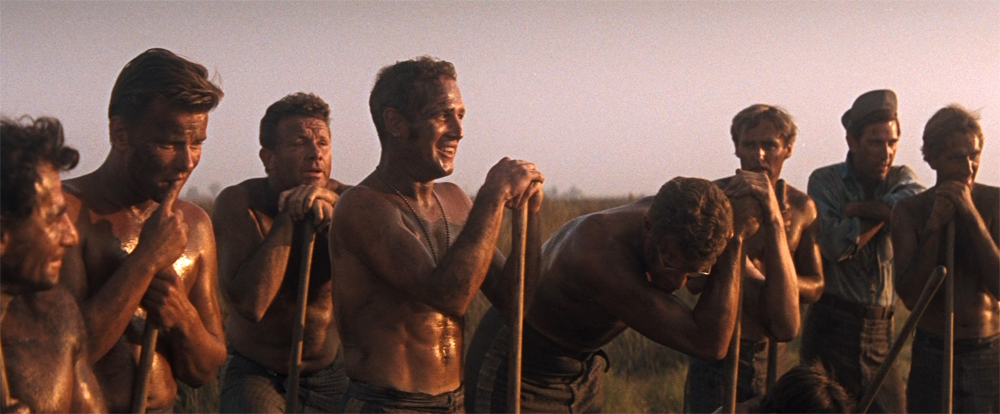
My dual personality has blogged about this one already, but Cool Hand Luke (1967), directed by Stuart Rosenberg and starring the inimitable Paul Newman as Luke, is clearly a suitable story for Lent as Luke is clearly a Christ figure surrounded by disciples, for whom he sacrifices his life. A wonderful movie based on the book by Don Pearce, it won only one Academy Award–for supporting actor George Kennedy, who shines in a firmament of spectacular supporting stars, as a stand-in for St. Peter. There were other nominations (for best actor, music and writing)–but please, no best picture, no best director? What were they thinking? And Paul Newman was down-right robbed that year. But enough said. It was a year for southern lawbreakers. Besides Cool Hand Luke, there was In the Heat of the Night, Bonnie and Clyde…and the more politically correct films won: In the Heat of the Night, Guess Who’s Coming to Dinner. A fine example of why I hate awards and award shows.

Chariots of Fire (1981), directed by Hugh Hudson and starring Ian Charleson and Ben Cross as two U.K. track athletes is an obvious choice. It is the story of a devout Christian and a determined Jew competing for places on the British 1924 Olympic team. The story of Eric Liddel and his steadfast faith is an inspiring one and not the usual stuff of late 20th century Hollywood. I loved this movie when I first saw it and still enjoy it immensely whenever I watch it. It was such a surprise when it took home the Oscar for best picture. It seemed like such an underdog that year, but it also won for costume design, music and best writing.

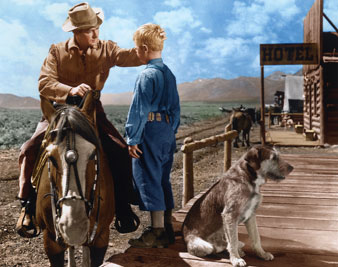
I never need an excuse to watch Shane (1953), because it is probably my favorite movie of all time–or at least up there in the Top Five–but if you are so inclined, it also makes for some good Lenten viewing/discussion. Shane is the story of a weary gunfighter who attempts to settle down with some homesteaders, but ends up sacrificing himself for their good. It is the magnus opus of its star, Alan Ladd, and its director, George Stevens. Neither was recognized by the Academy, although the film received multiple nominations, including best picture. It only won for best cinematography (Loyal Griggs) and, boy, did it deserve that one!

This film has a brilliant screenplay by A.B. Guthrie and is masterfully directed, notable for pacing, suspense and, of course, characterization. The “bad guys” in this western are not so bad really and the “good guys” are somewhat hapless. The chance arrival of the mysterious stranger Shane who throws in with the homesteaders upsets the balance and a really bad guy (Jack Palance), the gunslinger Wilson, is called in. It is important to remember when watching this movie that it has been copied badly ad nauseum, so that the original may appear cliched, when it truly is not a cliche. It is the original, a true classic, filled with wonderful archetypal scenes. Who can forget the arrival of Shane, watched from afar by the boy Joey (“I like a man who watches things go on around. It means he’ll make his mark someday.”), the symbolic conquering of the stump in the yard, the fight in the saloon with Chris (“I was just askin’ about sody pop… pigs and taters and one thing and another”), the prairie 4th of July party, the hilltop funeral where Shane quietly rallies the foundering farmers, the muddy showdown between Stonewall and Wilson, Shane’s fight with Joe and his ride into town, and, of course, the final gunfight between Shane and the cattlemen, and the haunting finale (“Shane, come back!”)? Arguably the best western ever, and John Wayne nowhere in sight! (Please note: Alan Ladd as Shane said, “You speakin’ to me?” long before Robert De Niro.)

All of these movies are good ones to watch with family and discuss with your children. They all include many “teachable moments”.

God be in my head

by chuckofish

"Old Sarum" by John Constable

God Be in My Head
Anonymous
(from a 1506 Sarum Book of Hours)

God be in mihede And in min vnder ston dyng
God be in myn hyyesse And in min lokeyng
God be in mi movthe And in myspekeyng
God be in my hart And in my thovgvt
God be at myneyende And ad myde partying

God be in my head
And in my understanding;
God be in mine eyes
And in my looking;
God be in my mouth
And in my speaking;
God be in my heart
And in my thinking;
God be at mine end,
And at my departing.

Old Sarum as it looks today.

And here’s a picture of the “New Sarum” also by John Constable.

Back to Buechner

by chuckofish

“What’s prayer? It’s shooting shafts into the dark. What mark they strike, if any, who’s to say? It’s reaching for a hand you cannot touch. The silence is so fathomless that prayers like plummets vanish into the sea. You beg. You whimper. You load God down with empty praise. You tell him sins that he already knows full well. You seek to change his changeless will. Yet Godric prays the way he breathes, for else his heart would wither in his breast. Prayer is the wind that fills his sail. Else drift with witless tides. And sometimes, by God’s grace, a prayer is heard.”
― Frederick Buechner, Godric

A Lenten movie pic

by chuckofish

When my children were younger, I made an effort during Lent to program our movie watching accordingly. We had a list of movies which we watched every Lent. Some were blatantly “religious” films, like Ben Hur. Some just had a spiritual message or undercurrent. Today’s pic was in the former category.


The Robe (1953) is based on the bestseller by Lloyd C. Douglas. I have read the book and it is a good read. It posits the question and earnestly tries to answer what might have happened to the robe which belonged to Christ and over which lots were cast by the Roman soldiers who crucified him:

And they crucified him, and parted his garments, casting lots: that it might be fulfilled which was spoken by the prophet, They parted my garments among them, and upon my vesture did they cast lots. (Mathhew 27:35)

Oscar-nominated for Best Picture, the movie, which stars a young Richard Burton and Jean Simmons, is a very enjoyable adaption, mostly because it has such attractive stars. It won Oscars for set design and costumes and should have won for its lushly poignant score. It also features Victor Mature in his 2nd greatest role (his best performance being that of Doc Holliday in My Darling Clementine) as Demetrious, the Greek slave. There is a lot of scenery chewing in this movie, but no scene-stealing compares to Mature’s, especially when he accuses his master, the Roman tribune Marcellus (Burton), of being a “jungle animal” shortly after Jesus has been crucified. Richard Burton also has some great scenes, and it is early enough in his career and he is not yet so jaded that we believe him as he undergoes his spiritual transformation. I would be remiss if I did not also mention Jay Robinson as Caligula whose over-the-top depiction of the crazed emperor is truly wonderful.

The movie successfully conveys the idea that being a Christian under Caligula’s rule was seriously dangerous and there is enough daring-do and sword-fighting to keep the action moving. These early Christians are real action heroes–brave, faithful and, to use the current vernacular, extremely hot. No one looked better in a toga and armour than Richard Burton as Marcellus.

No one, that is, until Stephen Boyd.

Take it easy on yourself

by chuckofish

(because)…the world will keep turning without any help…

This is a good thing to “meditate on” during Lent. We really have control over so little. So don’t sweat the small stuff. All you really need is love! At least that’s what Don Williams says.

You remember Don Williams. He’s “The Gentle Giant” of country music, singer of popular ballads with 17 Number 1 records to his credit. But then, maybe you don’t. Even with all those hits, Don was never a super star (except, oddly enough, in England and Africa). In the U.S. he hit his peak in the 1970s and 80s. I remember seeing ads for his records on Channel 11 and laughing, confident in my own sophisticated taste. (I must add that where I went to school we laughed at everything and everyone. Forced gaiety was our way of life. This is not to say, that I did not take some things seriously–but these things were guarded dearly and only talked about at home.) Anyway, somewhere along the way I heard old Don. I was hooked. And I tell you, if you are ever stressed out and in need of a chill pill, Don Williams is for you. Listen to him on the way to work or on the way home, and you will find yourself newly calm, cool and collected–even smiling.

Here’s a link to my favorite Don Williams song “Good Ole Boys Like Me” which has wonderful literary references to the “Williams boys–Hank and Tennessee” and Thomas Wolfe, not to mention the great line about “When I was a kid Uncle Remus he put me to bed with a picture of Stonewall Jackson above my head”. You ask, how could we resist putting a picture of U.S. Grant over the boy’s bed? Well, we couldn’t, and, yes, we did. And it was really cool.

You may wonder if there is going to be a country music Lenten theme on this blog. Well, probably not, but if the shoe fits…