Did you know that in 1961 Jorge Luis Borges, aging and mostly blind, began teaching at the University of Texas, Austin, and the state of Texas captured a special place in his heart, as reflected in his poem “Texas”?
Texas
Here too. Here, as on the other unfurling
Frontier of the continent, the great
Prairie where a solitary cry fades out;
Here too the lariat, the Indian, the yearling.
Here too the secretive and unseen bird
That over the clamorous strains of history
Sings for one evening and its memory;
Here too the mystic alphabet, the word
Of stars which dictate to my cursive flow
Names that the days on their labyrinthine way
Will leave behind them: San Jacinto, say,
Or that other Thermopylae, the Alamo.
Here too that unknown, brief,
Needy and fretful commotion, life.
–translated by Robert Mezey
Well, he did. The world is more than we know.
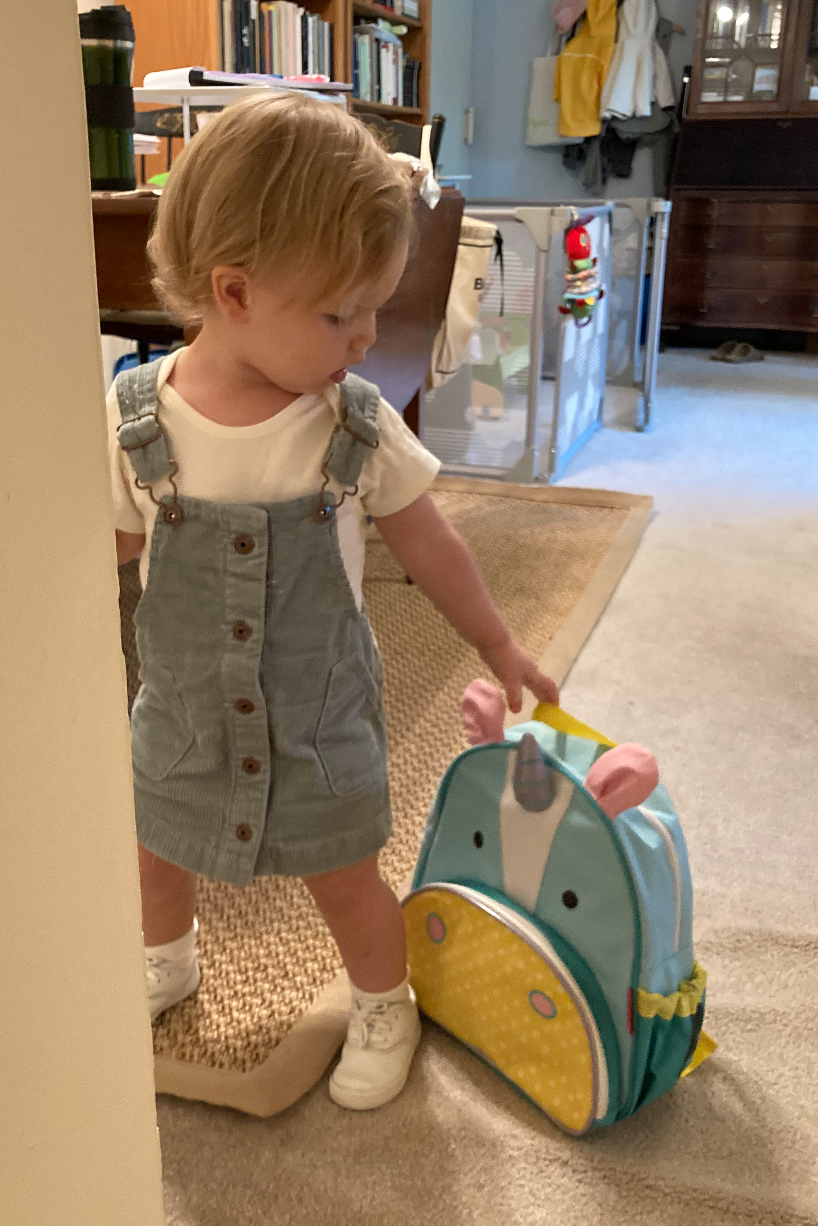
Daughter #2, along with my dear DP, will pick up the slack on the blog while we are out of town, so be sure to tune in for an update on Miss Katiebelle, fashion-setting trendsetter of the daycare set.
And pray for traveling mercies as we launch ourselves out into the unfurling Frontier of the continent.
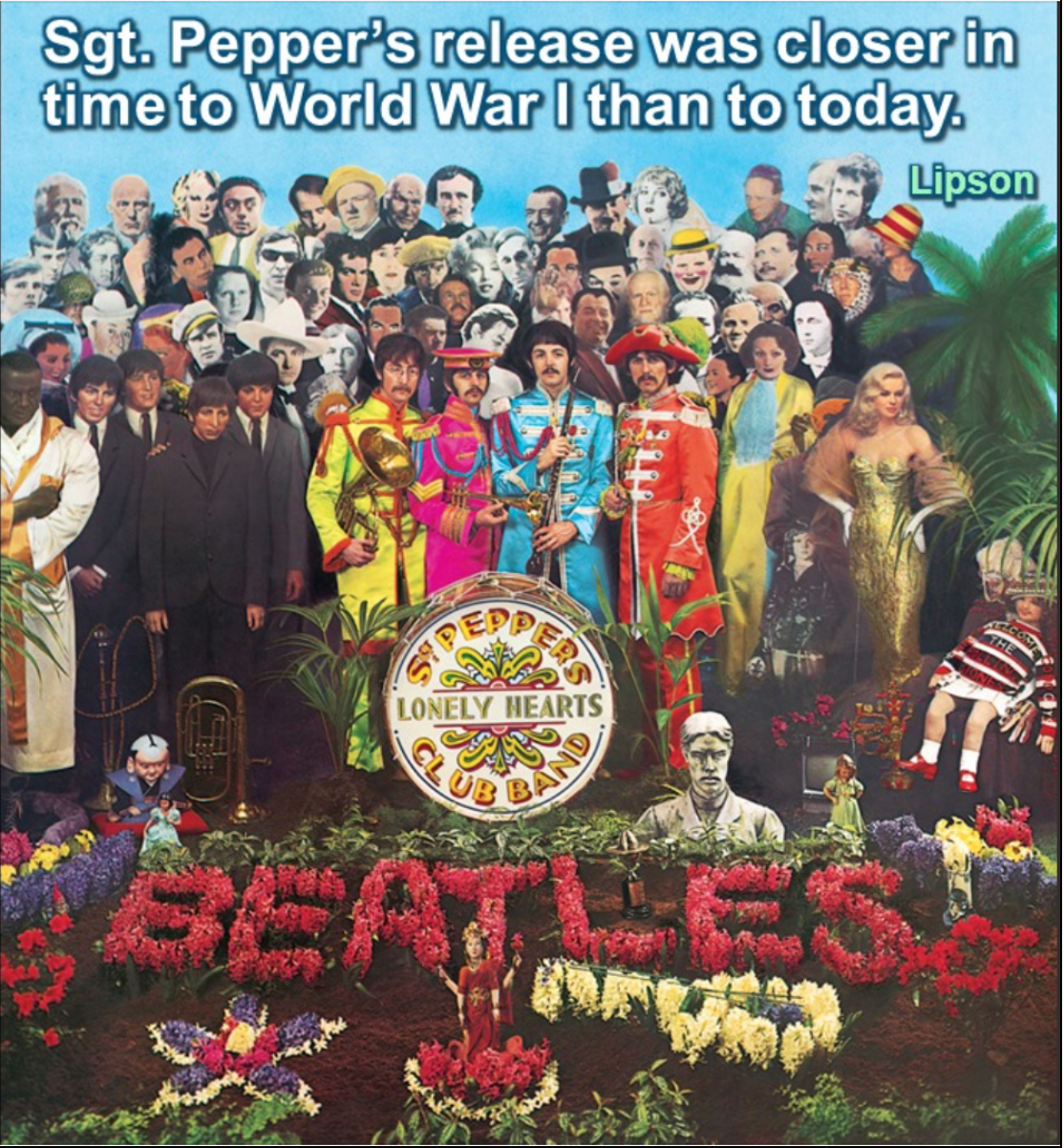
We think a lot about the passing of time and this was a shocker:
Yes, the album was released on May 26, 1967–54 years ago. And WWI was only 50 years before that. Western culture had changed a lot in those 50 years, but think about how much it’s changed in the past 54 years.
As usual, I am trying to escape our crumbling culture by reading something uplifting. Currently I am re-reading Hannah Coulter by Wendell Berry. This novel has much to say about the passage of time and people living in community.
As I have told it over, the past visible again in the present, the dead living still in their absence, this dream of time seems to come to rest in eternity. My mind, I think, has started to become, it is close to being, the room of love where the absent are present, the dead are alive, time is eternal, and all the creatures prosperous. The room of love is the love that holds us all, and it is not ours. It goes back before we were born. It goes all the way back. It is Heaven’s. Or it is Heaven, and we are in it only by willingness. By whose love, Andy Catlett, do we love this world and ourselves and one another? Do you think we invented it ourselves? I ask with confidence, for I know you know we didn’t.
Frederick Buechner calls it “the Room called Remember.”
The past and the future. Memory and expectation. Remember and hope. Remember and wait. Wait for him whose face we all of us know because somewhere in the past we have faintly seen it, whose life we all of us thirst for because somewhere in the past we have seen it lived, have maybe even had moments of living it ourselves. Remember him who himself remembers us as he promised to remember the thief who died beside him. To have faith is to remember and wait, and to wait in hope is to have what we hope for already begin to come true in us through our hoping. Praise him.
Anyway, I highly recommend both Wendell Berry and Frederick Buechner.
And, of course, there’s always Jorge Luis Borges…
In the golden afternoon, or in a serenity the gold of afternoon might symbolize, a man arranges books on waiting shelves and feels the parchment, the leather, the cloth, and the pleasure bestowed by looking forward to a habit and establishing an order. Here Stevenson and Andrew Lang, the other Scot, will magically resume their slow discussion which seas and death cut short, and surely Reyes will not be displeased by the closeness of Virgil. (In a modest, silent way, by ranging books on shelves we ply the critic’s art.) The man is blind, and knows he won’t be able to decode the handsome volumes he is handling, and that they will never help him write the book that will justify his life in others’ eyes; but in the afternoon that might be gold he smiles at his curious fate and feels that peculiar happiness which comes from loved old things.
We are at peak lushness here in flyover country. Can’t wait for the Iris to pop!
I am back to reading Jorge Luis Borges:
That One
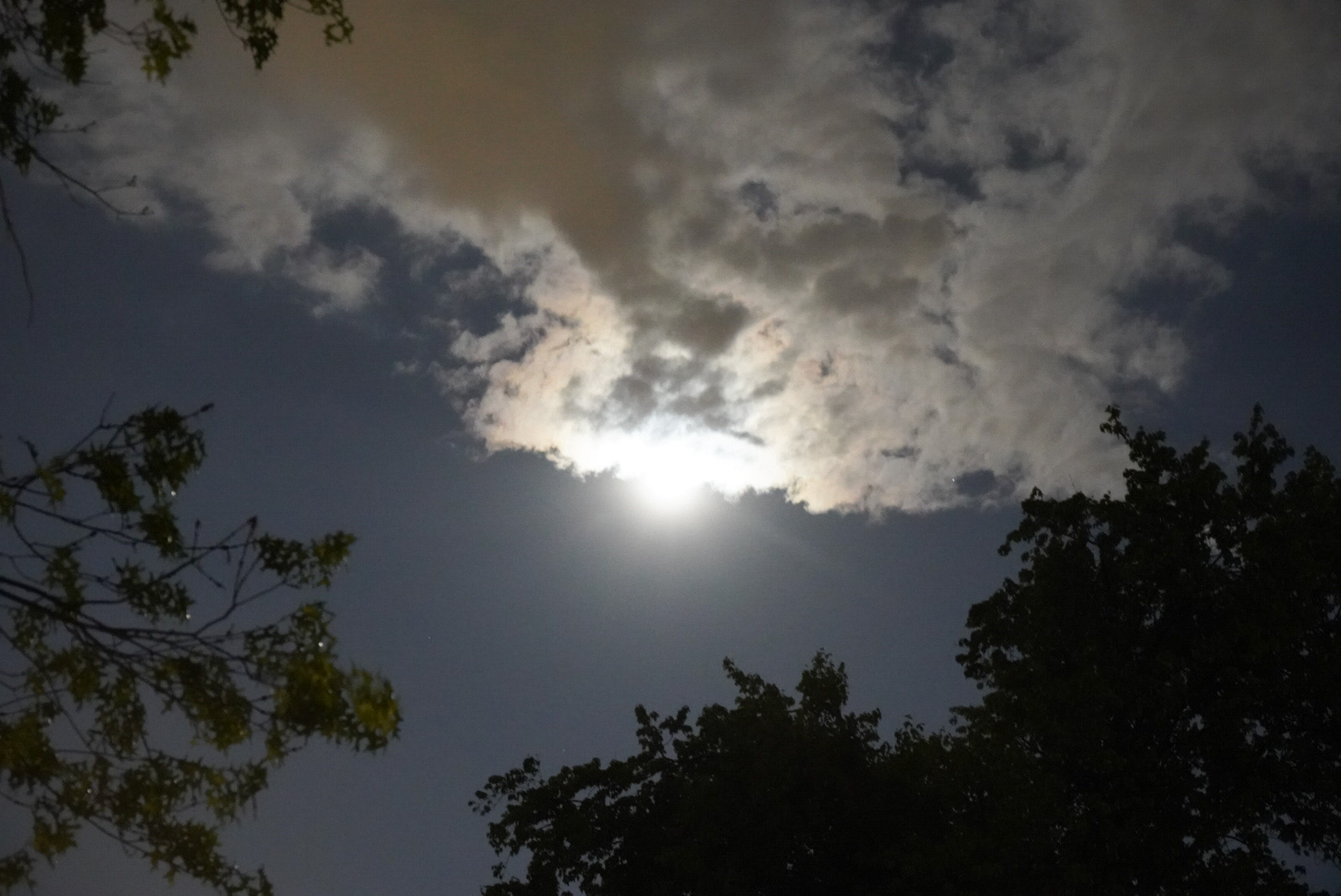
Oh days devoted to the useless burden of putting out of mind the biography of a minor poet of the Southem Hemisphere, to whom the fates or perhaps the stars have given a body which will leave behind no child, and blindness, which is semi-darkness and jail, and old age, which is the dawn of death, and fame, which absolutely nobody deserves, and the practice of weaving hendecasyllables, and an old love of encyclopedias and fine handmade maps and smooth ivory, and an incurable nostalgia for the Latin, and bits of memories of Edinburgh and Geneva and the loss of memory of names and dates, and the cult of the East, which the varied peoples of the teeming East do not themselves share, and evening trembling with hope or expectation, and the disease of entymology, and the iron of Anglo-Saxon syllables, and the moon, that always catches us by surprise, and that worse of all bad habits, Buenos Aires, and the subtle flavor of water, the taste of grapes, and chocolate, oh Mexican delicacy, and a few coins and an old hourglass, and that an evening, like so many others, be given over to these lines of verse.
Today is Truman Day, a holiday in our state and for some people a day off from work.
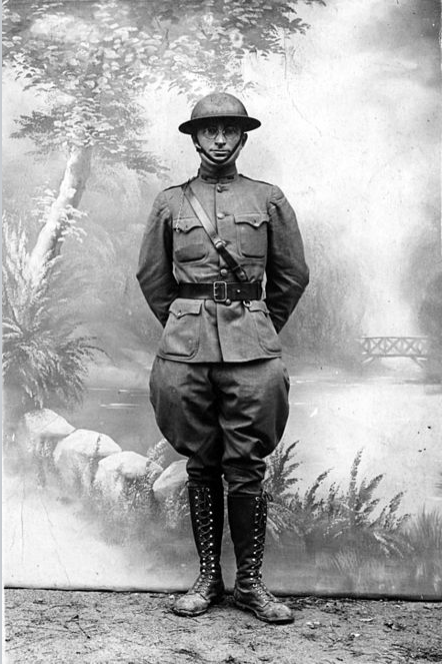
Harry in WWI. Are his pants inflated?
I do not have the day off, but I will raise a toast to Harry nonetheless at the appropriate hour. A Missouri Mule, which was created by bartender Joe Gilmore especially for President Truman, would be nice. I thought a Missouri Mule was bourbon, lime and ginger ale, but when I looked it up, the ingredients are:
•2 parts Bourbon
•2 parts Applejack
•2 parts Lemon juice
•1 part Campari
•1 part Cointreau
Well, you learn something new every day, right?
Mother’s Day is on Sunday and I am hoping the wee babes will drop by for awhile to frolic in our yard. They came over on Wednesday and frolicked in the yard and we practiced social distancing while they picked flowers and threw rocks. It was a nice diversion.
After reading daughter #2’s blogpost yesterday about some “mildly captivating” recent films, I got thinking, of course, about classic films. I had just watched Juarez (1939) and really marveled at how good it is.
The film focuses on the conflict between Maximilian I, an Austrian archduke who was installed as the puppet ruler of Mexico in 1863 by Napoleon III, and Benito Juarez, the country’s president. It is not a story that particularly interests me, but as presented by Warner Brothers with all their bells and whistles, it was riveting.
Maximilian is the Hapsburg dupe who is used by Napoleon III to expand the French empire in Mexico. Jaurez, who idolizes Abraham Lincoln so we know he is a good guy, is the hero of the piece, but as played by Paul Muni, he isn’t half as interesting as Brian Aherne as the emperor and Bette Davis as his crazy wife, Carlota.
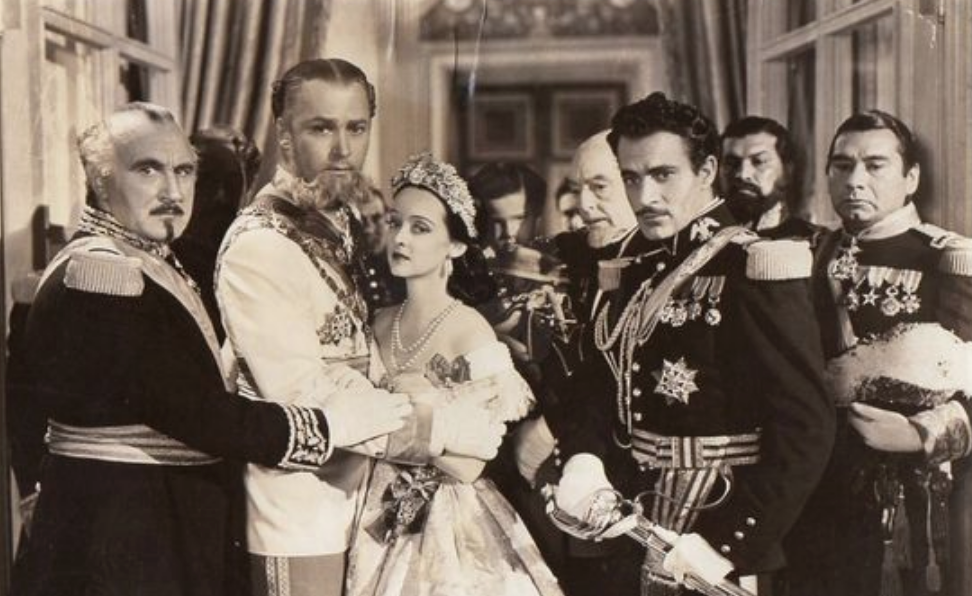
Donald Crisp, Brian Aherne, Bette Davis, and be-still-my-heart Gilbert Roland
The real Emperor with the unfortunate Hapsburg mouth
The screenplay by John Huston and Aeneas MacKenzie is, as you would expect, excellent and the Warner Brothers cast is terrific. How can you go wrong with John Garfield, Gilbert Roland, Claude Rains, Donald Crisp, Gale Sondergaard, Henry Davenport, etc. in supporting parts? You can’t. Handsome Brian Aherne is actually very sympathetic and believable as the overly trusting archduke and Bette Davis is thankfully limited to a couple of Big Scenes, so she doesn’t manage to take over and ruin the film. Paul Muni is stalwart as the Zapotec Man of the People. Sure the plot probably doesn’t have much resemblance to reality, but we don’t care. It is a good story.
They knew how to tell good stories and, indeed, make a movie in 1939. And they don’t seem to anymore. Is that because screenwriters and directors nowadays are too focused on their own genius to actually make anything worth watching, much less art?
I suppose I am a broken record, but with all this time on your hands and nowhere to go, you are much better served to find and watch some movies from the classic era of Hollywood. For instance, I also watched The Scarlet Empress (1934)–a movie which is nearly ninety years old!–starring Marlene Dietrich as Catherine the Great and it was really something–beautifully staged and photographed. The art direction was A++.
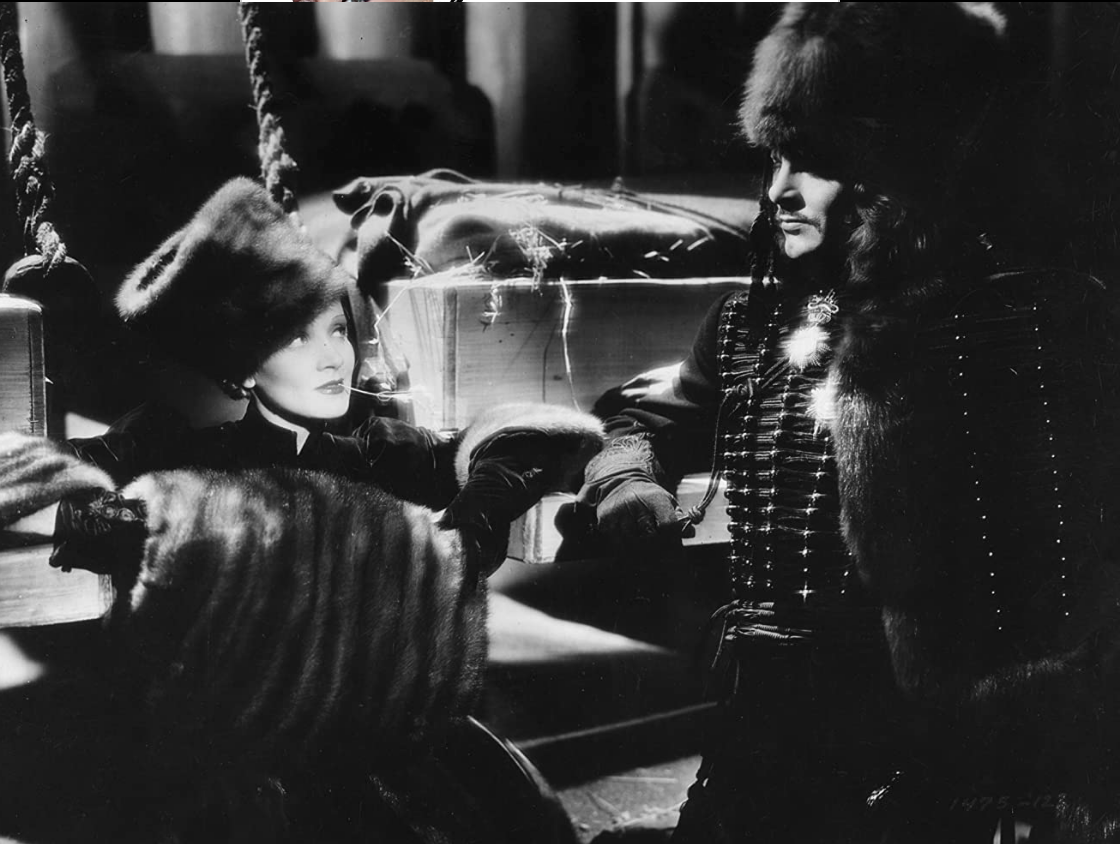
Marlene and the remarkably sexy John Lodge (of the Boston Lodges) who went on to be a congressman and governor of Massachusetts after he’d had enough of the movie biz.
And there is no one to compare with Marlene Dietrich these days. Seriously. Who can you think of?
Well, once again, I sound like an old lady.
But at least I’m consistent.
If you are looking for something a little more highbrow than old movies, I have something wonderful for you. I have been listening to the Norton Lectures given by Jorge Luis Borges at Harvard in 1967-68. I listen to each lecture (about 45 minutes) while needlepointing. It is very restful and I hope I am learning something from this brilliant man.
He was almost blind by the time he gave these lectures and so he used no notes. Can you imagine! He is just the best.
“A book is more than a verbal structure or series of verbal structures; it is the dialogue it establishes with its reader and the intonation it imposes upon his voice and the changing and durable images it leaves in his memory. A book is not an isolated being: it is a relationship, an axis of innumerable relationships.”
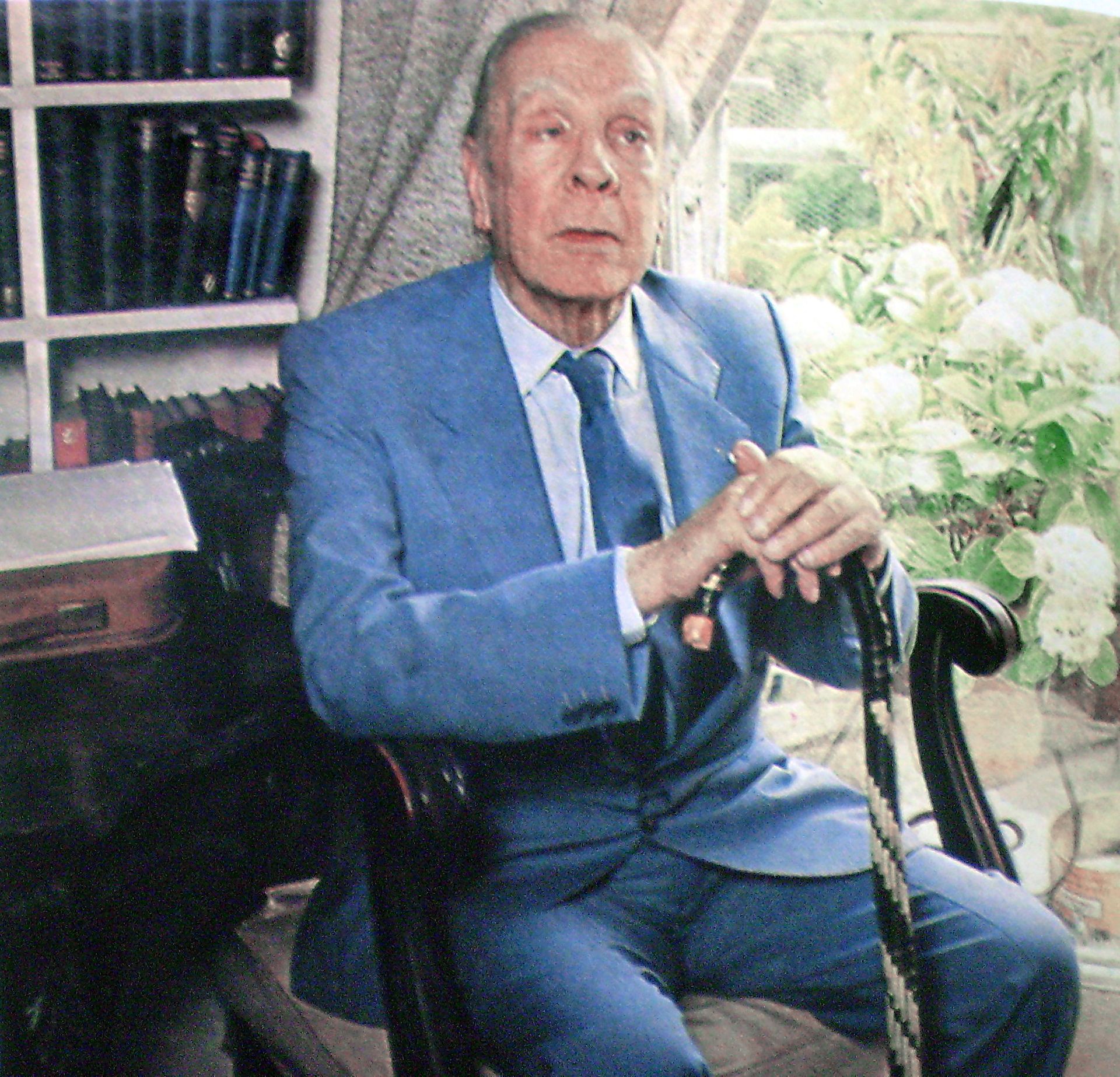
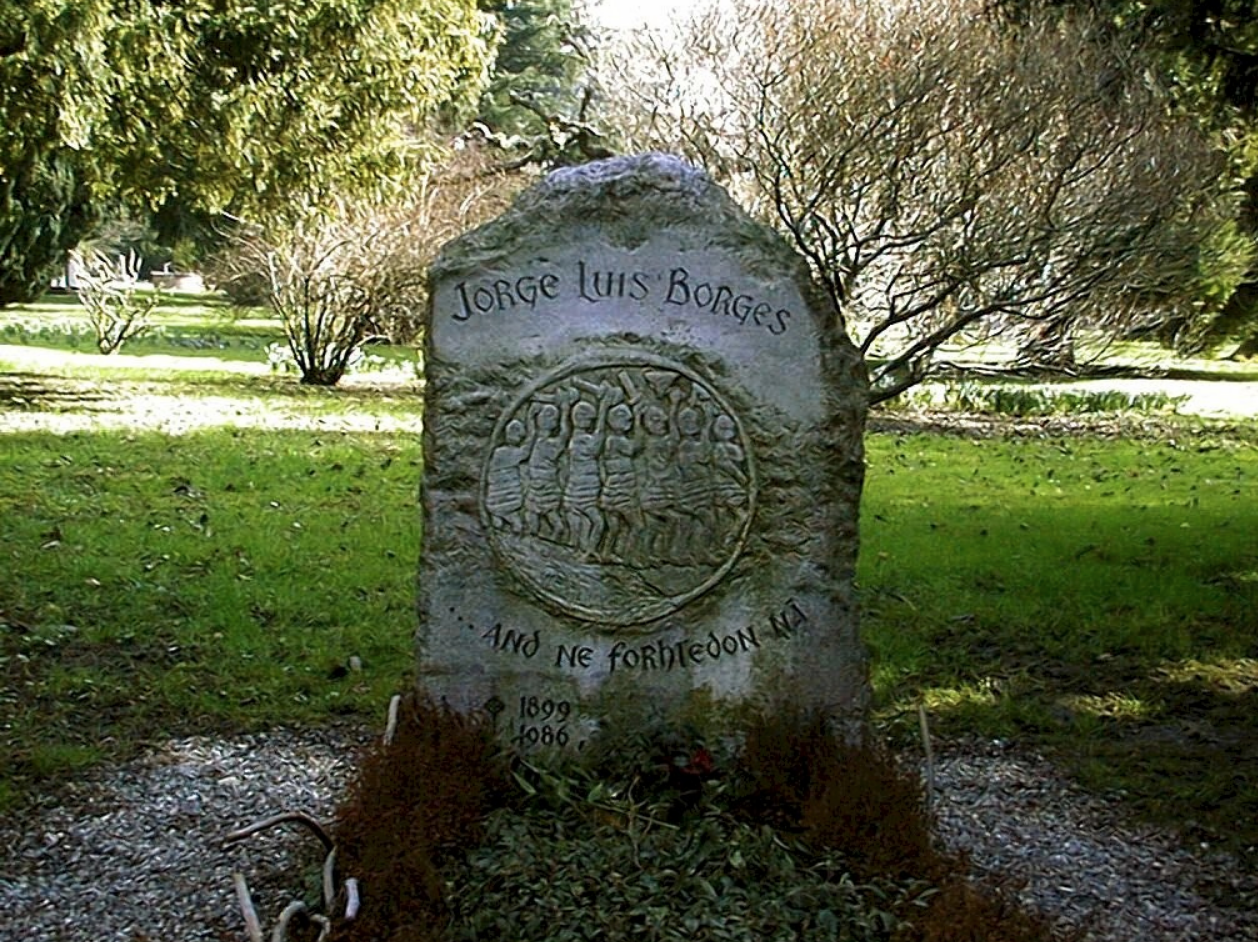
Today is the anniversary of the death of Jorge Luis Borges (1899-1986), Argentine short-story writer, essayist, poet and translator.
He is buried in the Cimetière de Plainpalais, in Geneva, Switzerland, along with John Calvin.
Many people thought that he should have been awarded the Nobel Prize for literature. This makes me think of Philip Roth, who died a few weeks ago, who also felt robbed of the same award.
Well, as Calvin said, “Man’s nature, so to speak, is a perpetual factory of idols.”
If you are looking for something to read, you might look up old Jorge Luis Borges. I am not well read in his canon, but what I have read, I liked.
I’m talking to an American: there’s a book I must speak about — nothing unexpected about it — that book is Huckleberry Finn. I thoroughly dislike Tom Sawyer. I think that Tom Sawyer spoils the last chapters of Huckleberry Finn. All those silly jokes. They are all pointless as jokes; but I suppose Mark Twain thought it was his duty to be funny even when he wasn’t in the mood. The jokes had to be worked in somehow. According to what George Moore said, the English always thought, “better a bad joke than no joke.”
I think that Mark Twain was one of the really great writers, but I think he was rather unaware of that fact. But perhaps in order to write a really great book, you must be rather unaware of the fact. You can slave away at it and change every adjective to some other adjective, but perhaps you can write better if you leave the mistakes.
I remember Bernard Shaw said, that as to style, a writer has as much style as his conviction will give him and not more. Shaw thought that the idea of a game of style was quite nonsensical, quite meaningless. He thought of Bunyan, for example, as a great writer because he was convinced of what he was saying. If a writer disbelieves what he is writing, then he can hardly expect his readers to believe it. In this country, though, there is a tendency to regard any kind of writing — especially the writing of poetry — as a game of style. I have known many poets here who have written well — very fine stuff — with delicate moods and so on — but if you talk with them, the only thing they tell you is smutty stories or they speak of politics in the way that everybody does, so that really their writing turns out to be a kind of sideshow. They had learned writing in the way that a man might learn to play chess or to play bridge. They were not really poets and writers at all. It was a trick they had learned, and they had learned it thoroughly. They had the whole thing at their finger ends. But most of them — except four or five, I should say — seemed to think of life as having nothing poetic or mysterious about it.
How meanly and miserably we live for the most part! We escape fate continually by the skin of our teeth, as the saying is. We are practically desperate. But as any man, in respect to material wealth, aims to become independent or wealthy, so, in respect to our spirits and imagination, we should have some spare capital and superfluous vigor, have some margin and leeway in which to move. What kind of gift is life unless we have spirits to enjoy it and taste its true flavor? if, in respect to spirits, we are to be forever cramped and in debt?
–Henry David Thoreau, Journals
As for [William] Blake’s happiness–a man who knew him said: “If asked whether I ever knew among the intellectual, a happy man, Blake would be the only one who would immediately occur to me.”
And yet this creative power in Blake did not come from ambition. …He burned most of his own work. Because he said, “I should be sorry if I had any earthly fame, for whatever natural glory a man has is so much detracted from his spiritual glory. I wish to do nothing for profit. I wish to live for art. I want nothing whatever. I am quite happy.”
…He did not mind death in the least. He said that to him it was just like going into another room. On the day of his death he composed songs to his Maker and sang them for his wife to hear. Just before he died his countenance became fair, his eyes brightened and he burst into singing of the things he saw in heaven. ”
–Brenda Ueland, If You Want to Write
In the empty night hours I can still walk through the streets. Dawn may surprise me on a bench in Garay Park, thinking (trying to think) of the passage in the Asrar Nama where it says that the Zahir is the shadow of the Rose and the Rending of the Veil. I associate that saying with this bit of information: In order to lose themselves in God, the Sufis recite their own names, or the ninety-nine divine names, until they become meaningless. I long to travel that path. Perhaps I shall conclude by wearing away the Zahir simply through thinking of it again and again. Perhaps behind the coin I shall find God.








 After reading daughter #2’s blogpost yesterday about some “mildly captivating” recent films, I got thinking, of course, about classic films. I had just watched Juarez (1939) and really marveled at how good it is.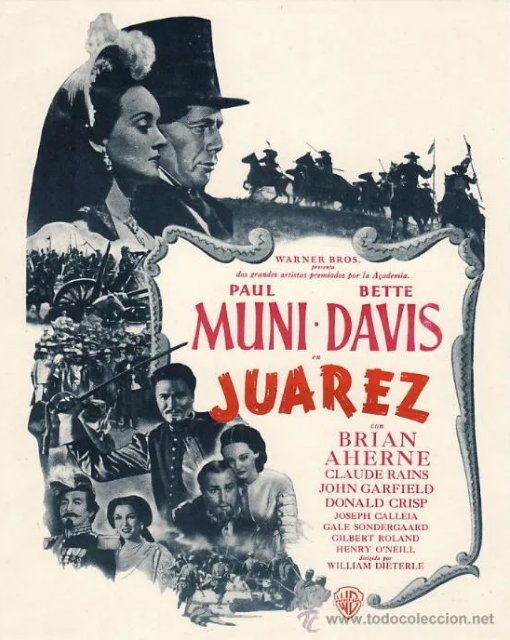

 dual personalities