I was busy last week and failed to notice that Harry Carey, Jr. had died on December 27. He was 91 and had lived a long, full life.
Rio Grande (1950)
Henry George “Dobe” Carey, Jr. (May 16, 1921 – December 27, 2012) appeared in over 90 films as well as numerous television series. Born in Saugus, California, he was the son of respected actor Harry Carey (1878–1947) and actress Olive Carey (1896–1988). As a boy, he was nicknamed “Dobe”, short for adobe, because of the color of his hair. He served with the United States Navy during World War II.
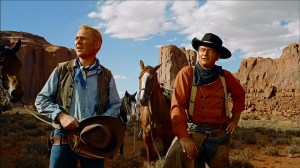
One of my pet peeves, as you may know, is Hollywood being such a nepotiz-town. There are way too many sons, daughters, nieces and nephews in the business, if you ask me. If they weeded out all the Ben Stillers and Drew Barrymores out there…well, I’ll end this rant now before I really get going. Sorry. But clearly Harry Carey, Jr. was an actor who owed his career to his father whose famous friends like John Ford were willing to insert his son into their movies. In this case, however, Junior seemed satisfied with being a character in the background. He excelled as a character actor in such movies as Rio Grande, where he was priceless teamed with Ben Johnson. When he did get a part with featured billing, he rose to the occasion, as in 3 Godfathers, where he played the guileless Abilene Kid admirably. He is also excellent in The Searchers as the clueless young man who elicits the wrath of Ethan Edwards.
Carey made eleven films with John Wayne and at least nine with John Ford– awesome career accomplishments in themselves! He also played ranch counselor Bill Burnett in the popular Disney serial Spin and Marty and an assortment of grizzled types in his later career which lasted through the 1990s.
I did not get a chance to watch 3 Godfathers over the holidays, so I think I will watch it now in honor of Harry Carey, Jr. Vaya con Dios, amigo!
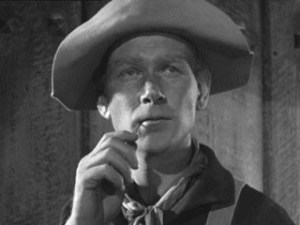
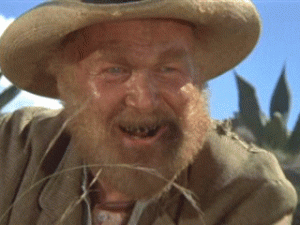
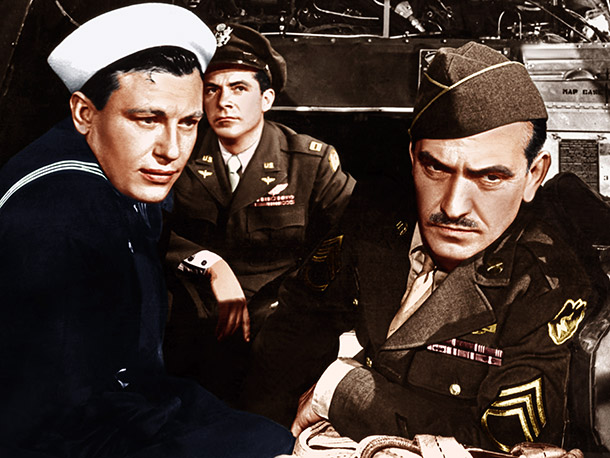
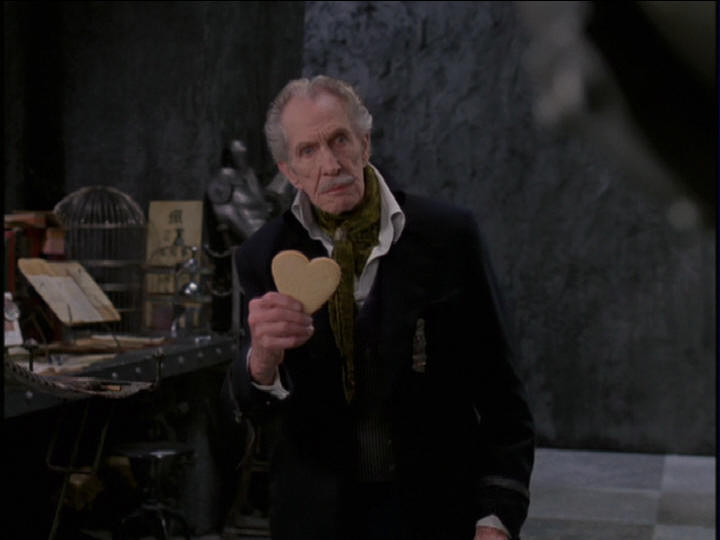
I have to add that for years we have kidded my husband about being Harry Carey, Jr’s doppelganger (see top picture). But, oh my, what does the future hold?
The birthday yesterday of Gerard Butler and my recommendation of Dear Frankie got me thinking about movies that make me cry and the benefits of said cry.
The complexities of the human body are varied and innumerable. We all know that lacrimation can have cathartic effects. Science has proven this. When we cry, we actually excrete toxins. Additionally, it protects the body from high levels of stress hormones and has also been linked to the release of endorphins. Because endorphins numb pain and improve mood, this is another reason why crying tends to make us feel better. These mental effects of crying are also reflected in the altered physical state it results in. Generally after crying, our breathing, sweating, and heart rate decrease, and we enter a more relaxed state. Therefore, a good cry (every once in a while) is a good thing.
So, without further ado, I will give you a list of my favorite movies that are guaranteed to make you cry time and time again. (First, as a disclaimer, let me say that I was probably the only teenager in 1970 who did not shed a tear at Love Story, and generally speaking, movies of the tear-jerker variety leave me cold.)
1. To Kill a Mockingbird (1962) The music by the great Elmer Bernstein is killer. I dare you to watch this scene where Scout says hey to Boo Radley behind the bedroom door and not cry. I double dog-dare you. (It cuts off too soon, but you get the idea.)
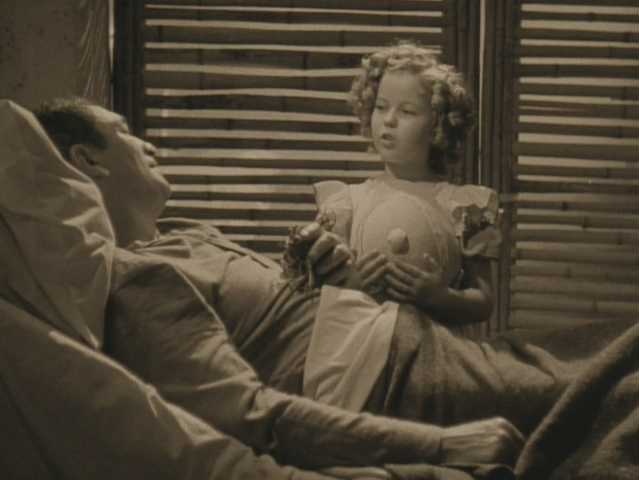
2. Wee Willie Winkie (1937), directed by John Ford and starring Shirley Temple. When she sings Auld Lang Syne to the dying Victor McLaglen even my teenage brother broke down.
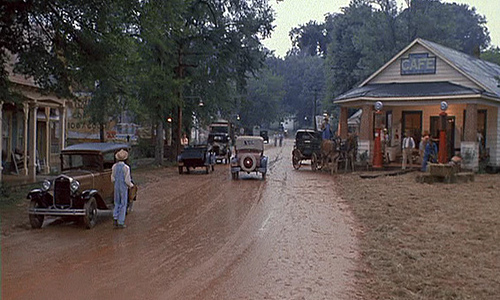
3. Fried Green Tomatoes (1991) from the book by Fannie Flagg is all about the meaning of family. The music by Thomas Newman, son of the awesome Alfred Newman, is a stab to the heart every time.
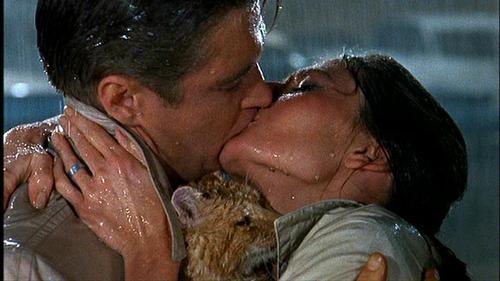
4. Breakfast at Tiffany’s (1961), although a funny movie, always makes me sad. The music by Henry Mancini is key–Moon River–c’mon. Audrey, George and Cat in the rain, the music swells, sobbing ensues. I should also add that pretty much any time Audrey Hepburn tears up in a movie, so do I. I really do feel her pain. (Think Roman Holiday.)
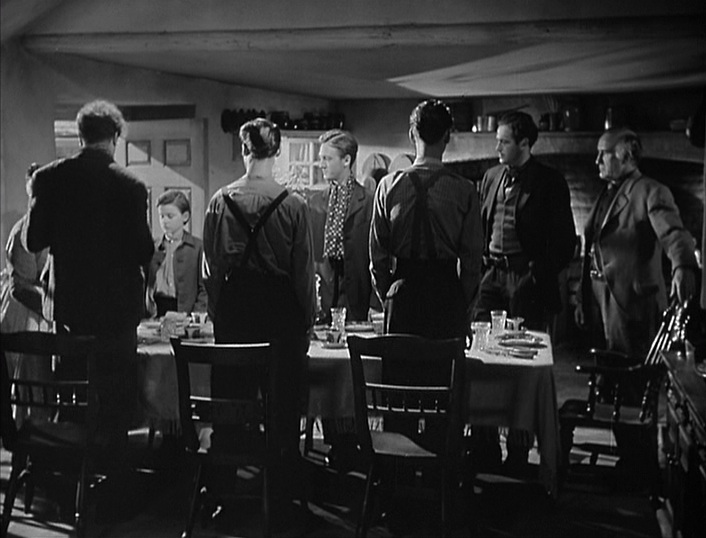
5. How Green Was My Valley (1941), another film directed by John Ford to great manipulative effect. The music by Alfred Newman is so sad. Indeed, John Ford knew how to use music to its optimal effect. Not all great directors do. (For instance, John Huston invariably comes close to ruining his movies with terrible or inappropriate music–e.g.The Treasure of the Sierra Madre.) There are a lot of wonderfully sad moments in Ford films, many featuring Henry Fonda, who teamed with the director for his best movies, notably Young Mr. Lincoln, The Grapes of Wrath, My Darling Clementine, etc.–all with the aforementioned throat-tightening scenes.
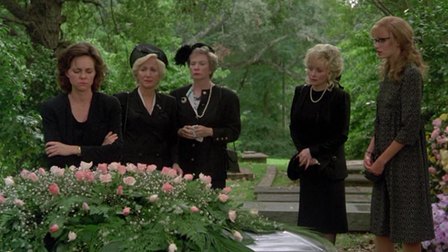
6. Steel Magnolias (1989)–granted it’s the exception to my tear-jerker/soap opera rule, but it’s sure to cause major Kleenex usage. The scene in the cemetery with Sally Field never fails. (And Dolly Parton co-stars!)
7. The King and I (1956)–oh yes. The first time I saw this (when I was about 8), I could not believe the ending of the movie. Pure disbelief. It still stings every time.
8. Shane (1953) “Shane, come back!” Need I say more? There are other scenes in Shane that are sad (if not tear-inducing) as well–such as Stonewall’s funeral where they sing Rock of Ages. There is the scene where Shane walks out in the rain and the one where Joey tells his mother that he loves Shane. Well, you get the picture.
9. The Best Years of Our Lives (1946)–the great post-war film directed by William Wyler with an unsentimental screenplay by Robert Emmet Sherwood from a story by Mackinlay Kantor rises above the maudlin and soars, helped by a really good musical score by Hugo Friedhofer. So well done. So many great scenes.
10. Edward Scissorhands (1990), directed by Tim Burton and starring Johnny Depp and Vincent Price in his last movie. The music by Danny Elfman is perfect and so is Johnny. In different ‘hands’ this movie would have been frightful, but it is sweet and innocent and sad.
I know. I know. I haven’t mentioned Cool Hand Luke (1967) or Awakenings (1990) or Life is Beautiful (1997) orThe Shawshank Redemption (1994) or The Elephant Man (1980) or The Bicycle Thief (1948) or, find me in the right mood, Scott of the Antarctic (1948), but I had to draw the line somewhere!
What movies have I forgotten? Which ones make you cry?
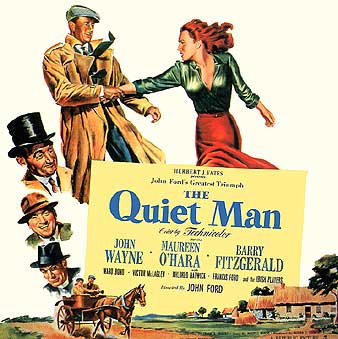
[Time out now from our Lenten movie festival for a St. Patrick’s Day Distraction.] In our decidedly un-Irish family we do make one concession to the Emerald Isle. St. Patrick’s Day is nothing if not a fine excuse for watching one of the greatest movies ever: The Quiet Man (1952).
It is firmly imbedded as one of our family favorites and is on my personal top-ten list of best movies. As with all our favorites, we know the dialogue by heart and many of the lines have become part of our family lexicon:
“Sir!… Sir!… Here’s a good stick, to beat the lovely lady.”
and
“Now I want you all to cheer like Protestants!”
and
“Impetuous! Homeric!”
And, of course, whenever we refer to our own antique furniture, pewter, plates and dishes, we like to call them our “Tings”, pronounced as Maureen O’Hara does, without the benefit of an “h”.
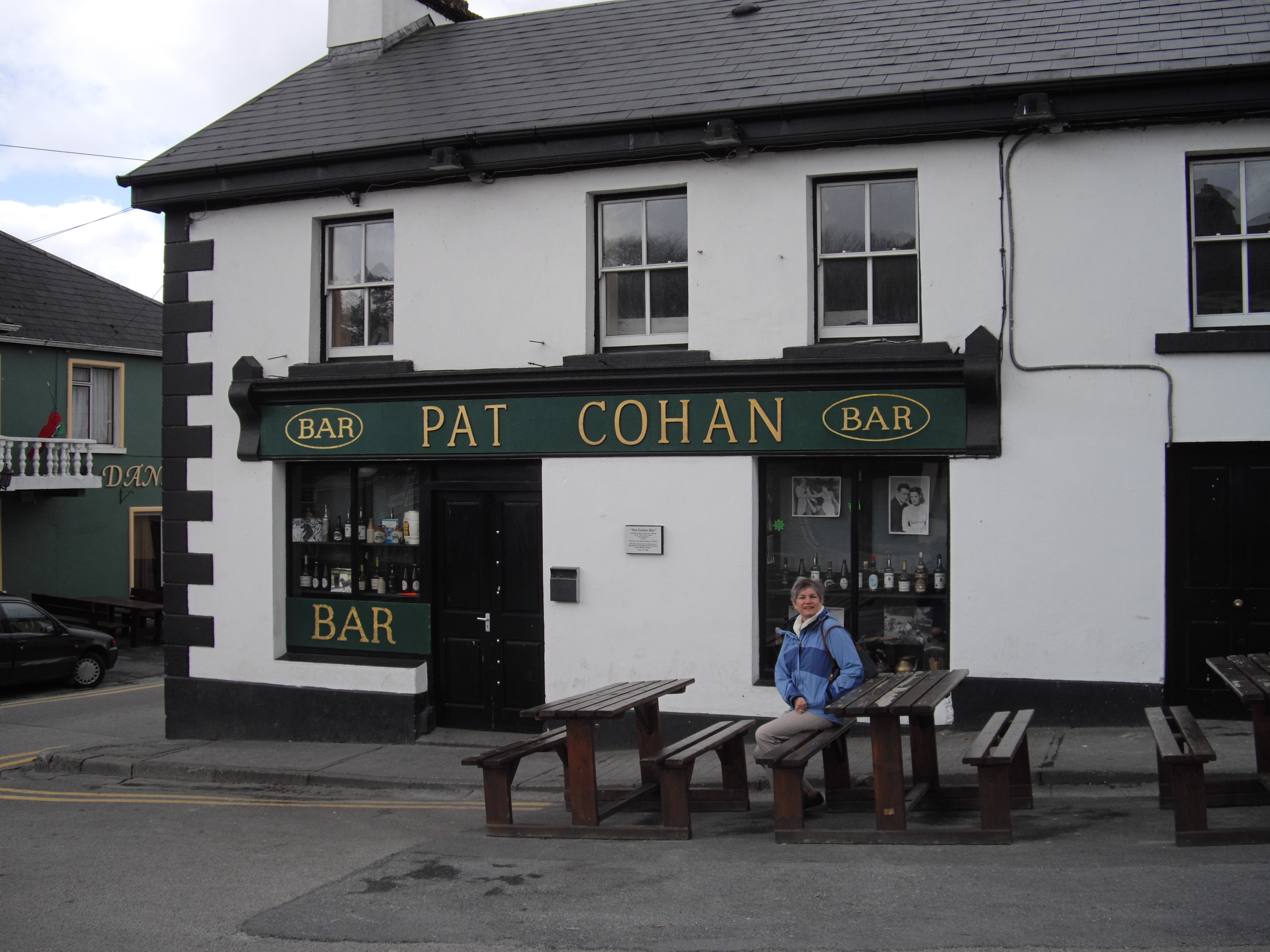
Last year when daughter #1 and I visited daughter #2 in Ireland where she was studying at Trinity College in Dublin, we took a day tour up through County Mayo and Connemara, stopping in the tiny village of Cong. Why, you ask? Because Cong is where The Quiet Man was filmed! It is a lovely little place and still a wee bit of a tourist attraction.
Your dual personality in front of Pat Cohan's pub in Cong.
Anyway, this is a movie not to be missed. It stars, of course, Ford’s “repertory company” which included John Wayne, Maureen O’Hara, Victor McLaglen, Barry Fitzgerald and his brother Arthur Shields, Ward Bond, Mildred Natwick, and a host of Irish character actors. John Ford won his fourth Directing Oscar and Winton C. Hoch won his third Oscar for color cinematography. What a team they were! The film was nominated for Best Picture, Best Writing, and several other Oscars.
As usual, John Wayne was overlooked. But just try to imagine this movie without him if you will! He is terrific as always, throwing his hat hither and yon, dragging Maureen over hill and dale, riding both a stallion and a tandem bicycle (at different times but in the same hell-bent-for-leather fashion), fighting the squire through the town and into the river. He was the most graceful and amazingly physical actor ever, and he could still manage to convey deep feelings without uttering a word.
Recently I saw another Irish-themed movie with a similar plot. The Field (1990), written and directed by Jim Sheridan, and starring Richard Harris, John Hurt, Sean Bean, and Tom Berenger, tells a similar story of another “rich” Irish-American who comes to a small village in the old country and attempts to buy a field. However, The Field is the nightmare flip-side of The Quiet Man. Ignorance, fear, suspicion and chronic abuse take center stage. Ultimately the rich foreigner is beaten to death for his trouble. The newer movie does somehow ring truer than Ford’s fairy tale, but I’ll take the fairy tale any day.
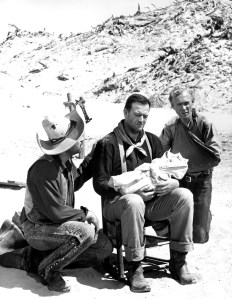
3 Godfathers (1948) directed by John Ford and starring John Wayne and a cast of Ford stalwarts is one of my very favorite Christmas movies. I always watch it with the boy, because we are the two family members who really love it. Written by Laurance Stallings and Frank S. Nugent, it is the story of three outlaws on the run who discover a dying woman and help her deliver her baby. They swear to bring the infant to safety across the desert, even at the risk of their own lives.
Frank Nugent also collaborated with Ford on such classics as Fort Apache (1948), She Wore a Yellow Ribbon (1948), The Quiet Man (1952), Mister Roberts (1955), The Searchers (1956), Two Rode Together (1961), and Donovan’s Reef (1963). So you know what you can expect: great dialogue, a light touch with some underlying darkness, memorable characters.
John Wayne was seldom better than in this movie. He is in top form. Handsome, manly, graceful, full of repressed feeling and submerged anger. We wonder throughout the movie what has made him turn to a life of lawlessness. Why has he lost his faith? He is clearly a well-brought-up “good guy”. He is more than ably supported by Harry Carey, Jr. and the Mexican film star Pedro Armendáriz as the other two godfathers. The three of them work so well together. There is genuine affection in their verbal wrangling. Mildred Natwick, a personal favorite of mine, has a great cameo part as the doomed mother.
Because it is a Ford movie, the cinematography (by Winton Hoch), especially the outside scenes, are wonderful. The scene when they are trudging across the parched desert and the Abilene Kid lies down to die should be shown to all film students. There is nothing sentimental in this scene. It is heart-breakingly real.
In this movie Ford never resorts to the broad down-homey humor he sometimes does in order to break up what he must have seen as too much tension in a film. Ward Bond is kept in check. Hank Worden too. Jane Darwell and Jack Pennick portray remarkably observed characters that stand out in a very full line-up of characters.
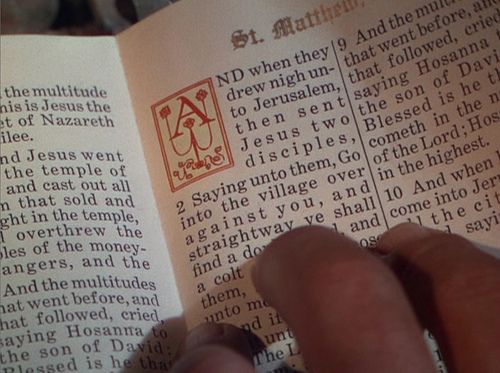
And you gotta love a movie where scripture is used successfully as a plot devise. At least I do.
And, yes, it is a Christmas movie. It is a story of redemption and of three wise men who follow a star and find a baby. FELIZ NAVIDAD.


 dual personalities