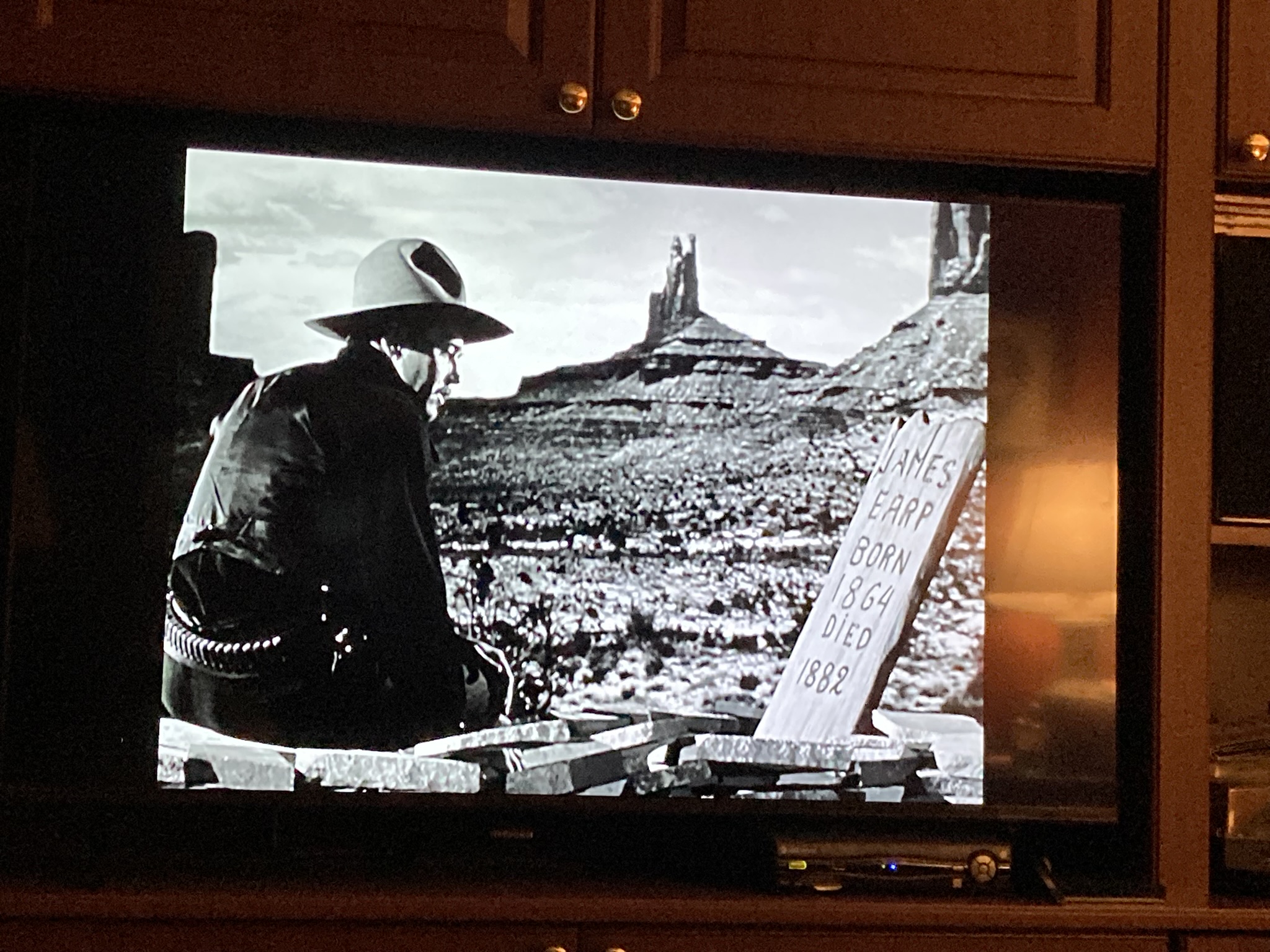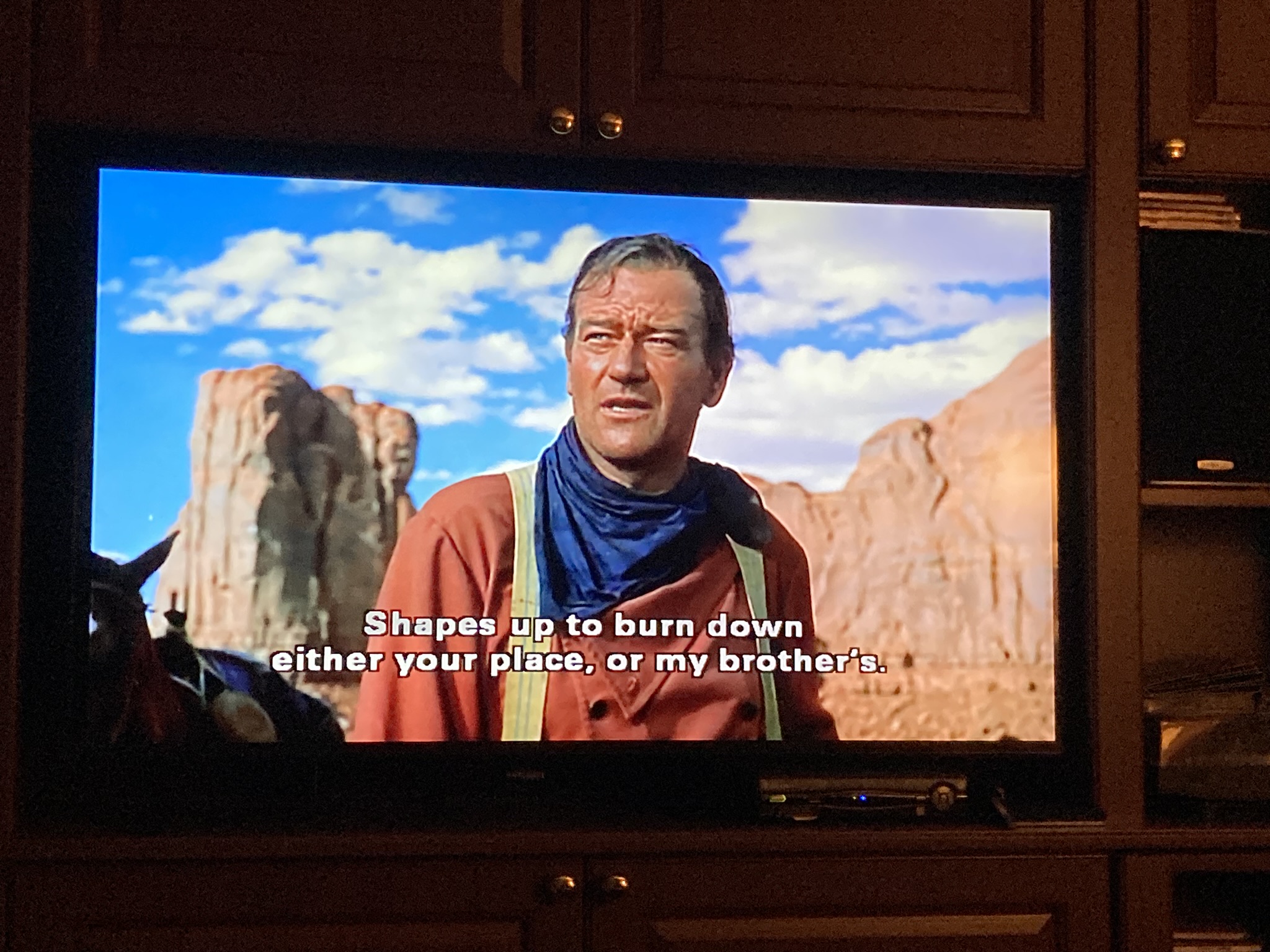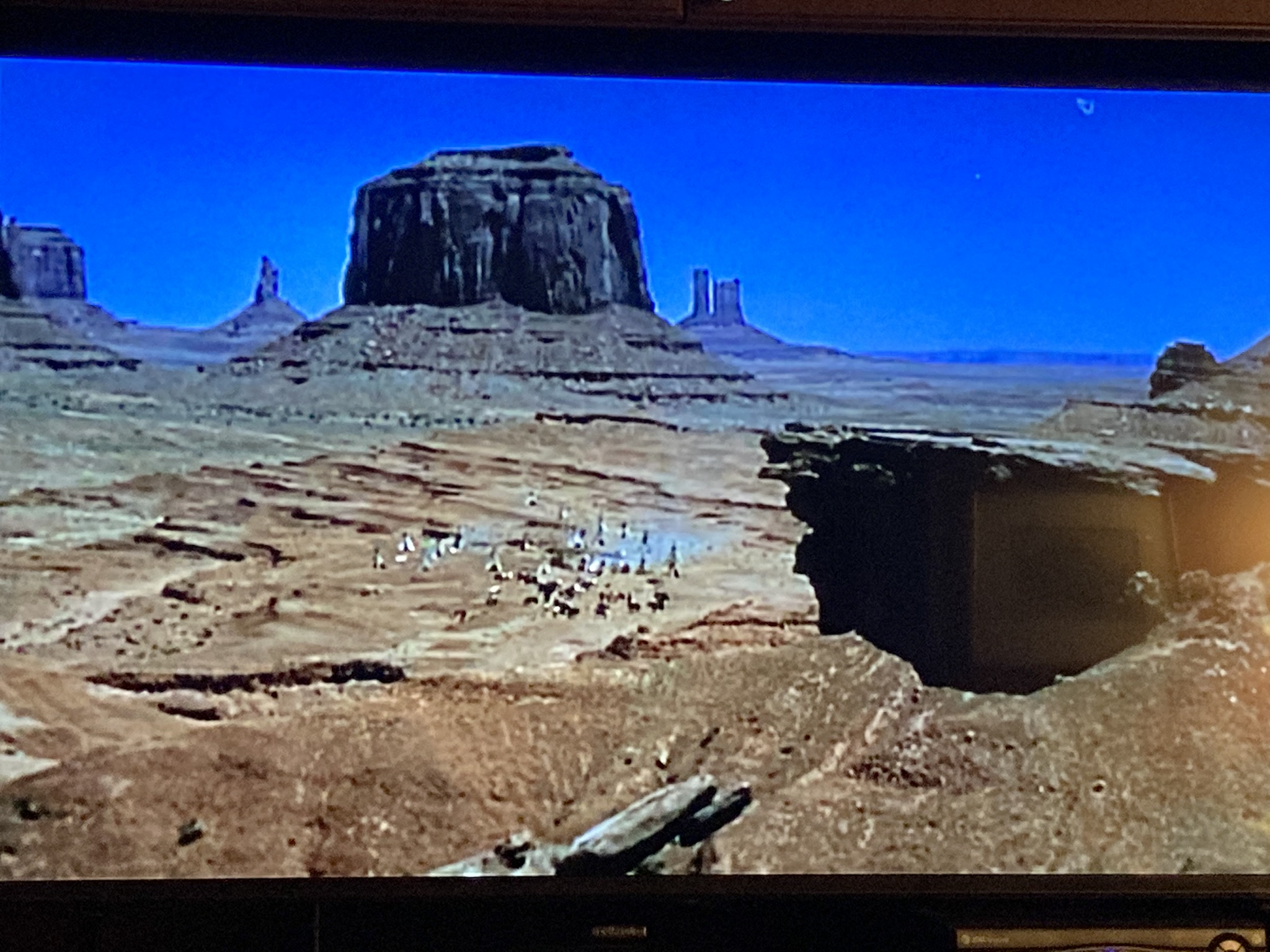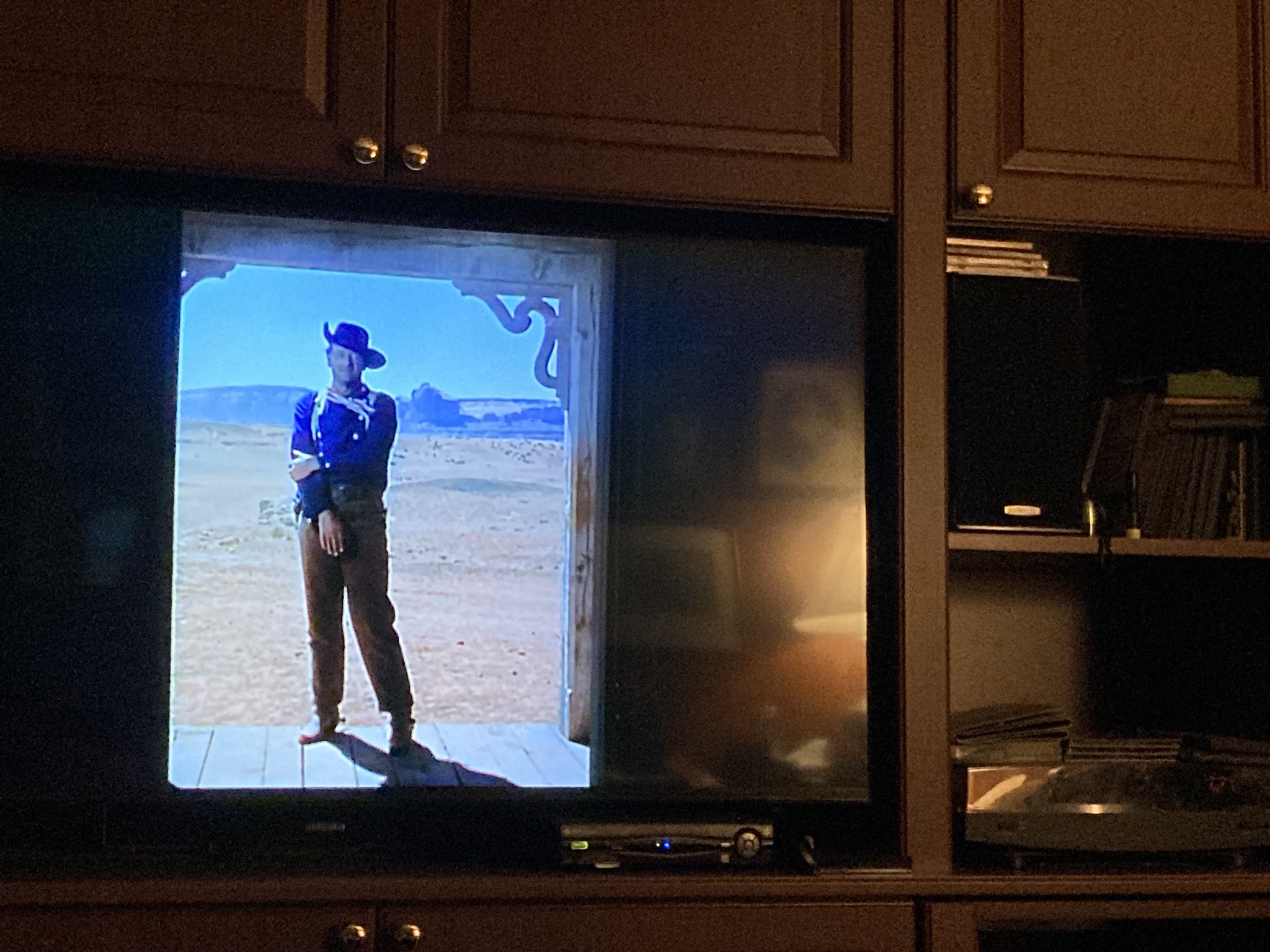
dual personalities

Tag: john ford

Yá’át’ééh

by chuckofish

Hello! We made it back from the Navajo Nation and Arizona.
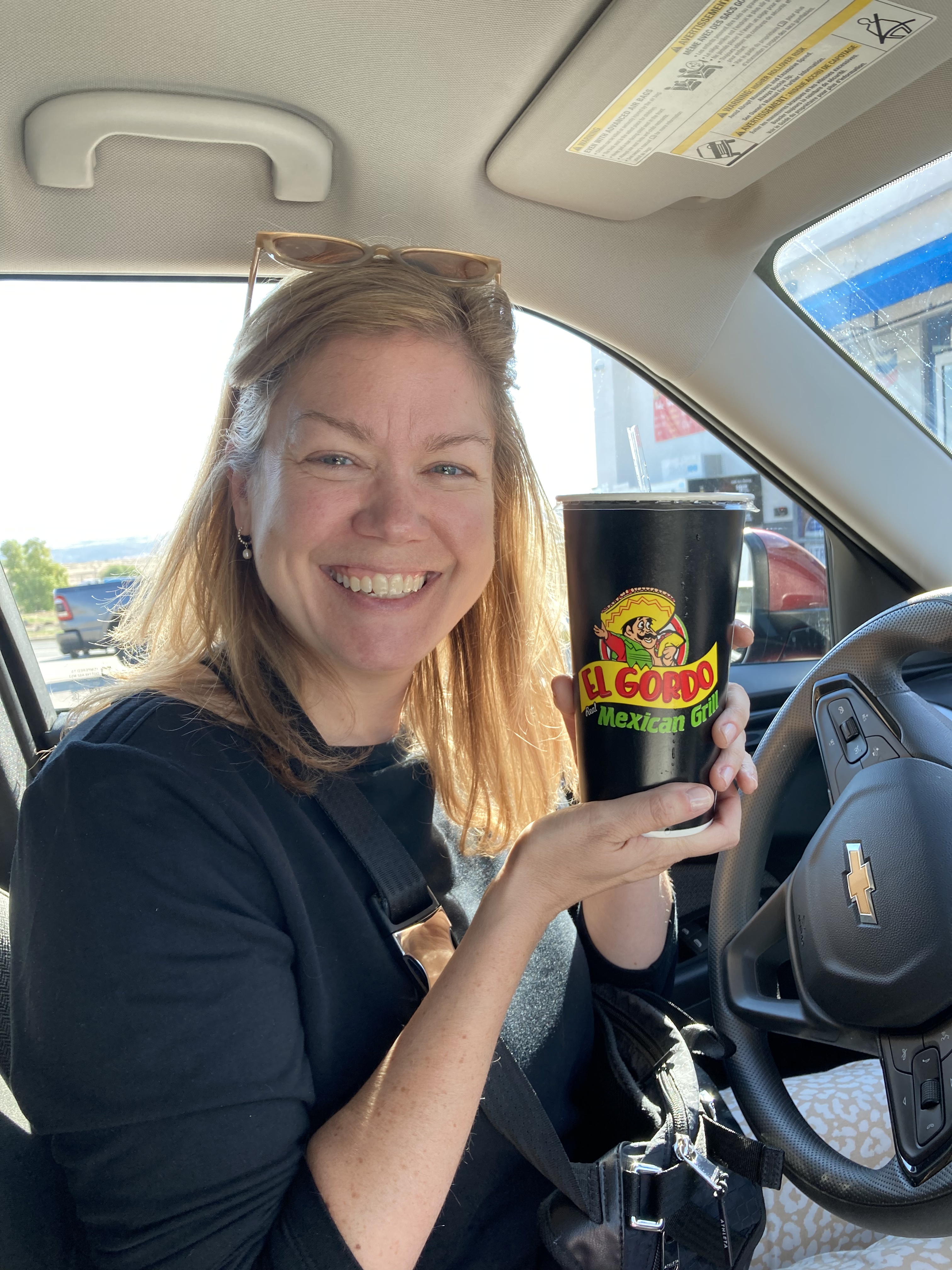
All went pretty smoothly and my travel planning skills were generally high-fived all around. The OM had some trouble adjusting to the altitude, but he soldiered on. We hydrated. Daughter #1 did a A+++++ job as our driver/navigator/community engagement coordinator.

Monument Valley is a remote place and it is not easy to get to. It was a six hour drive from Phoenix (this after getting up at 3 a.m. to make a 6:00 a.m. flight!) through the mountains. No one told us Flagstaff is in the mountains! (If I knew, I had forgotten.) Daughter #1 will regale you with her memories of this later in the week.

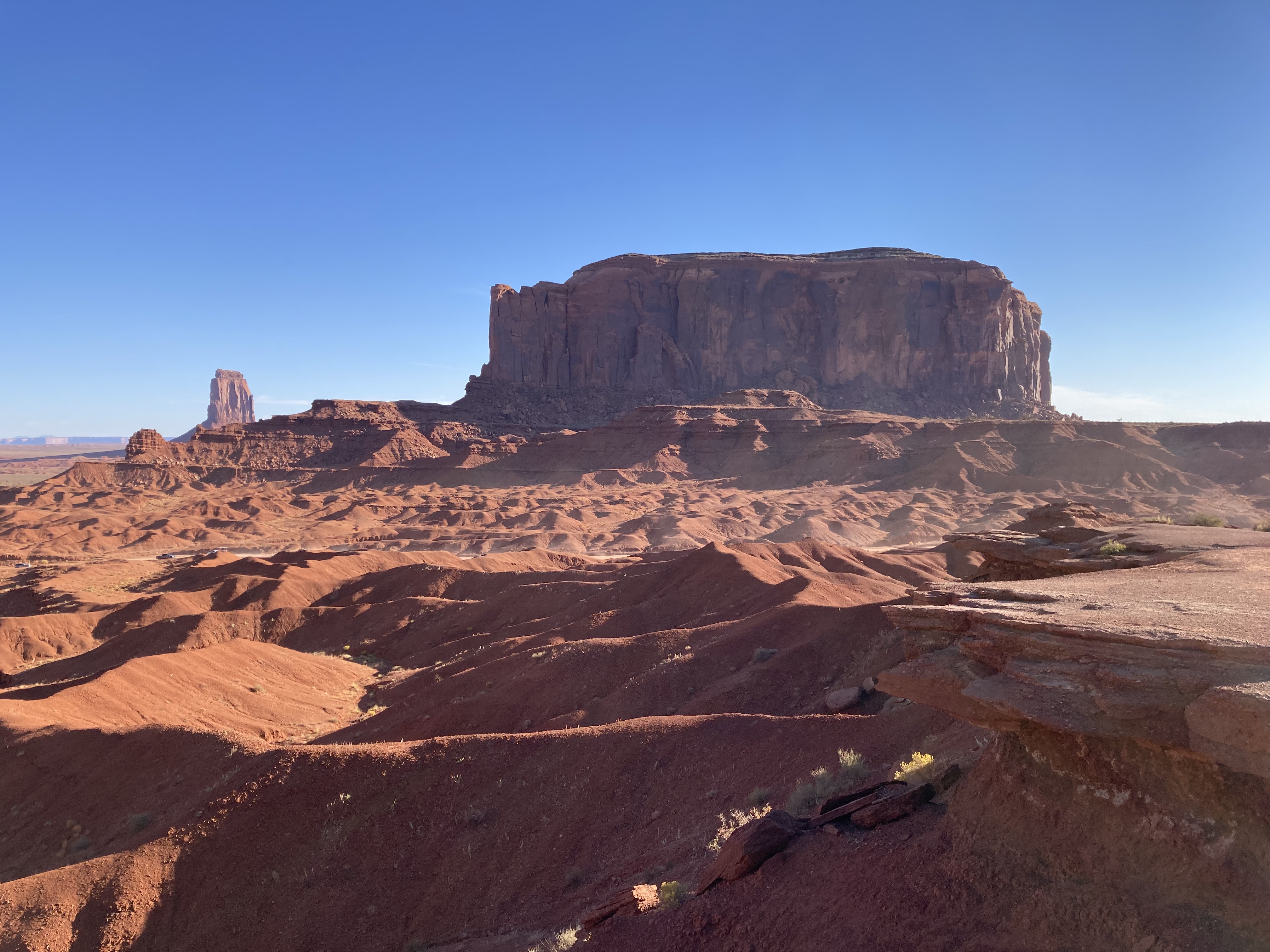
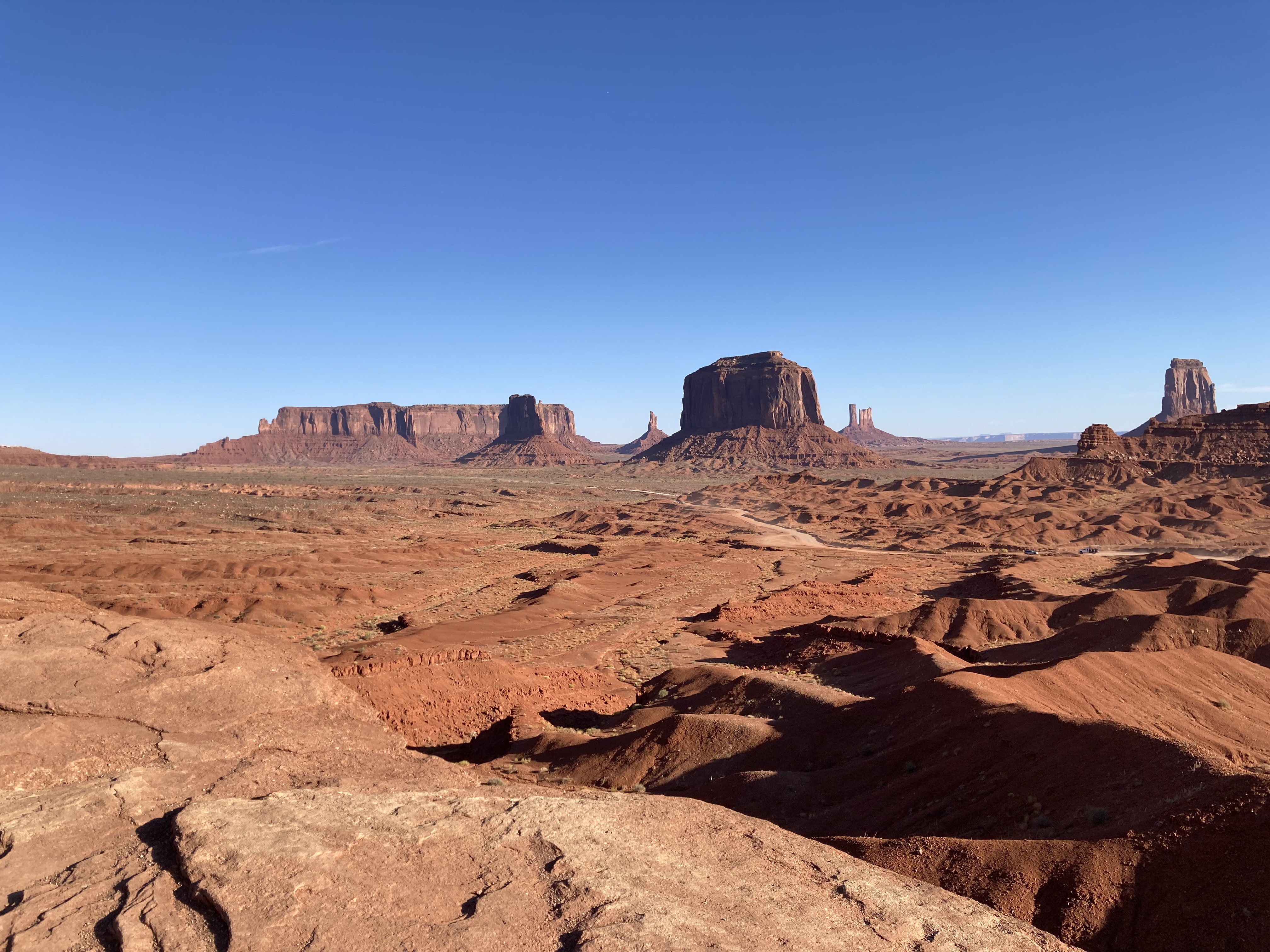
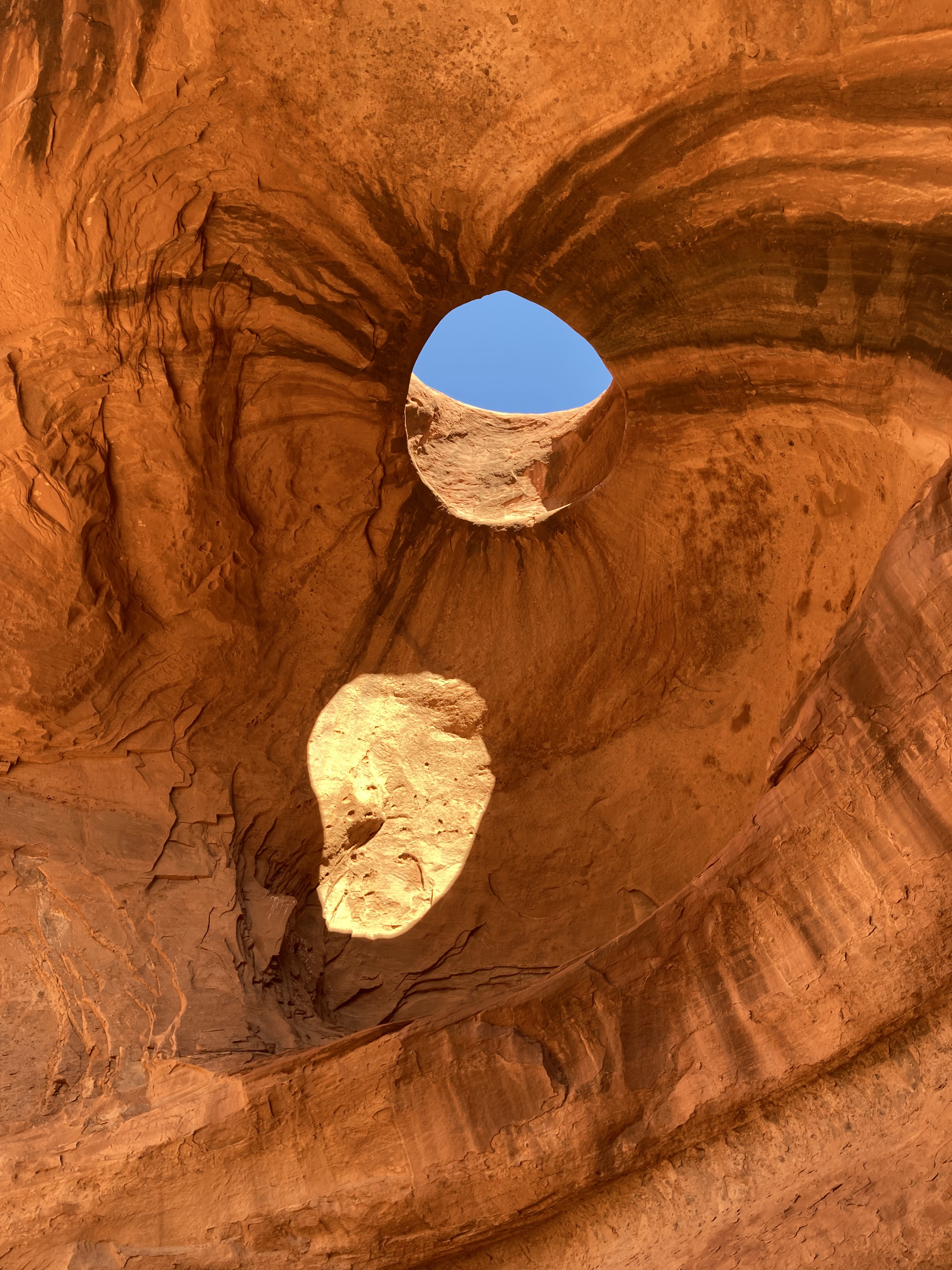
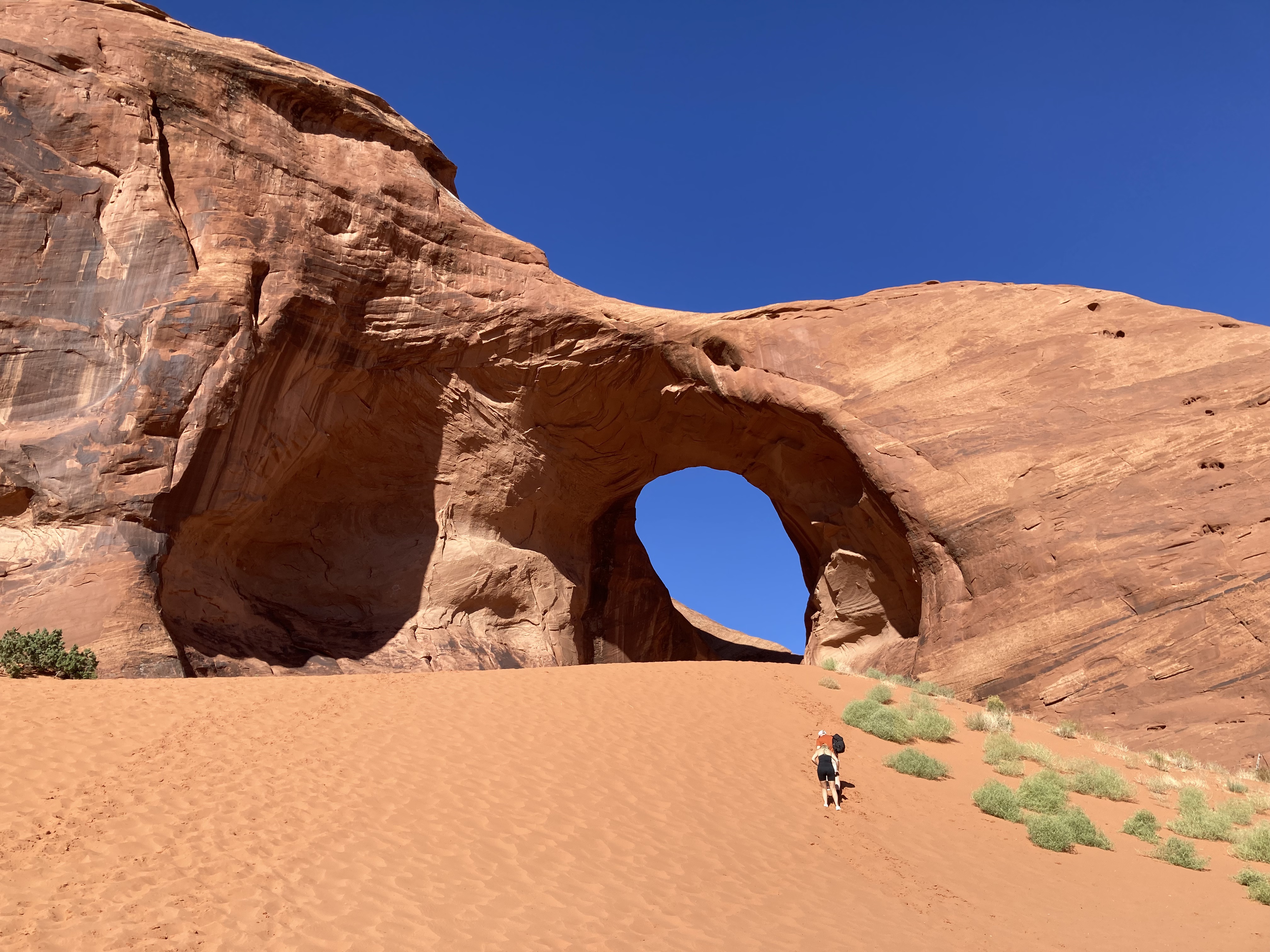
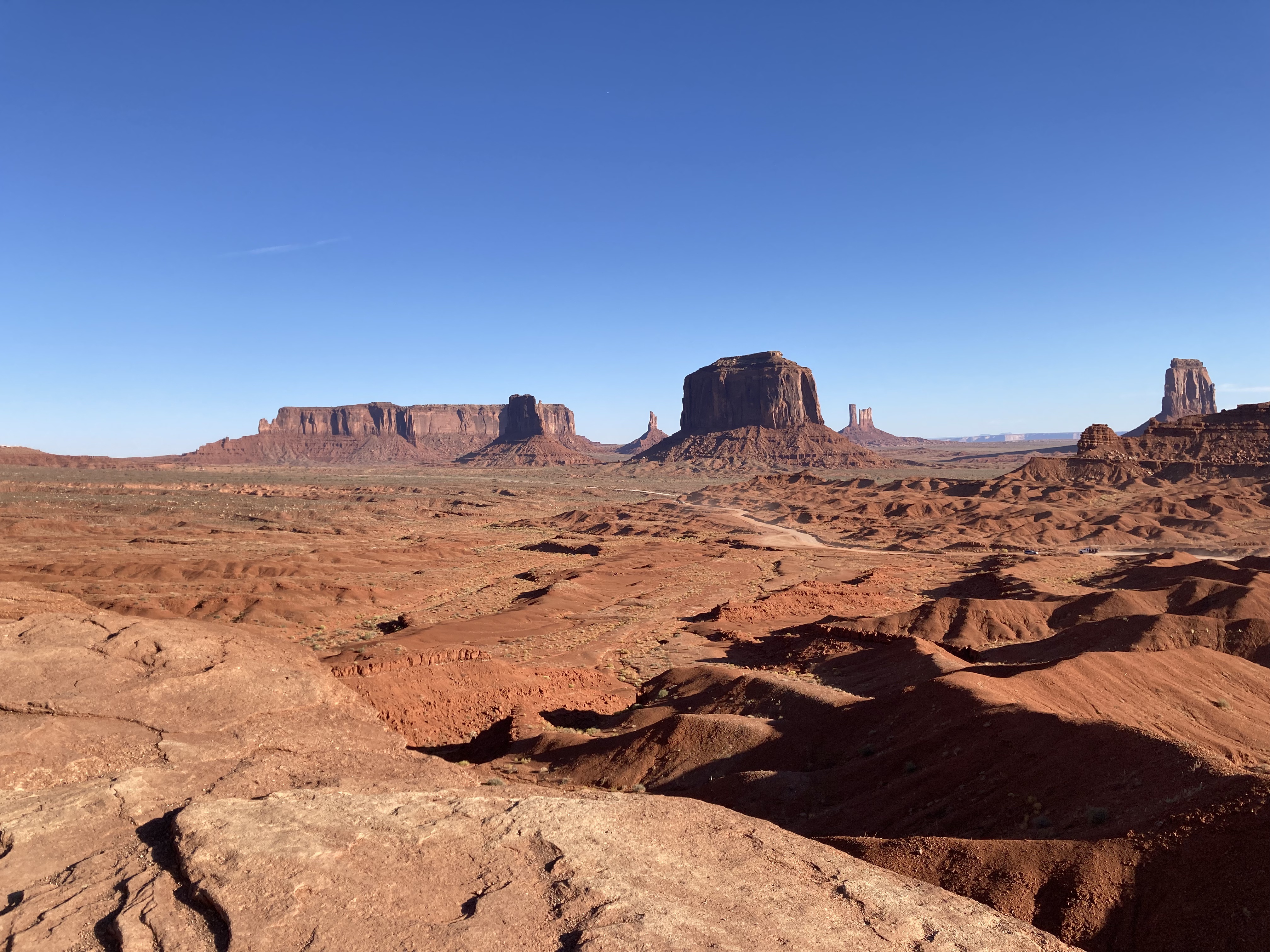
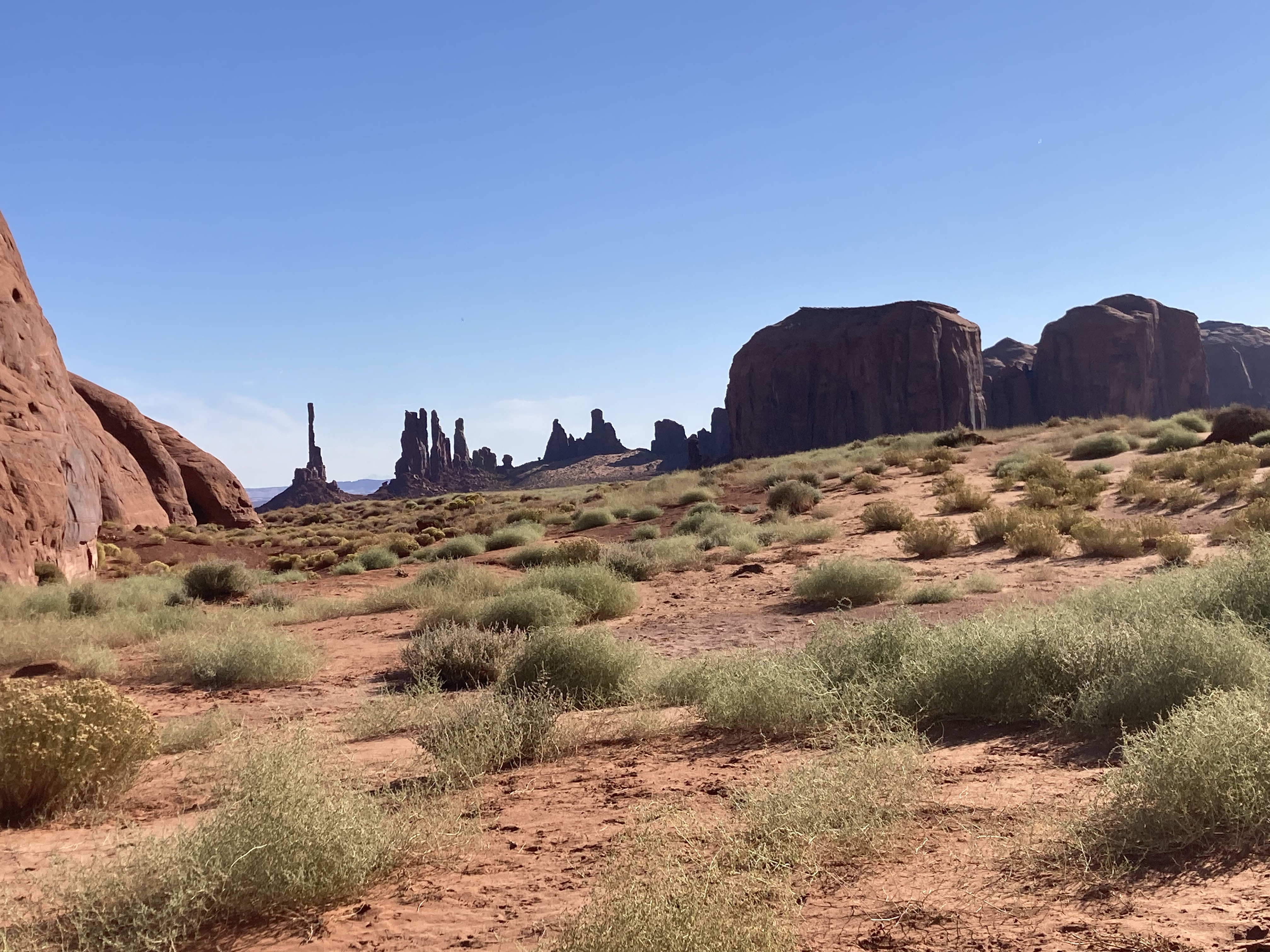
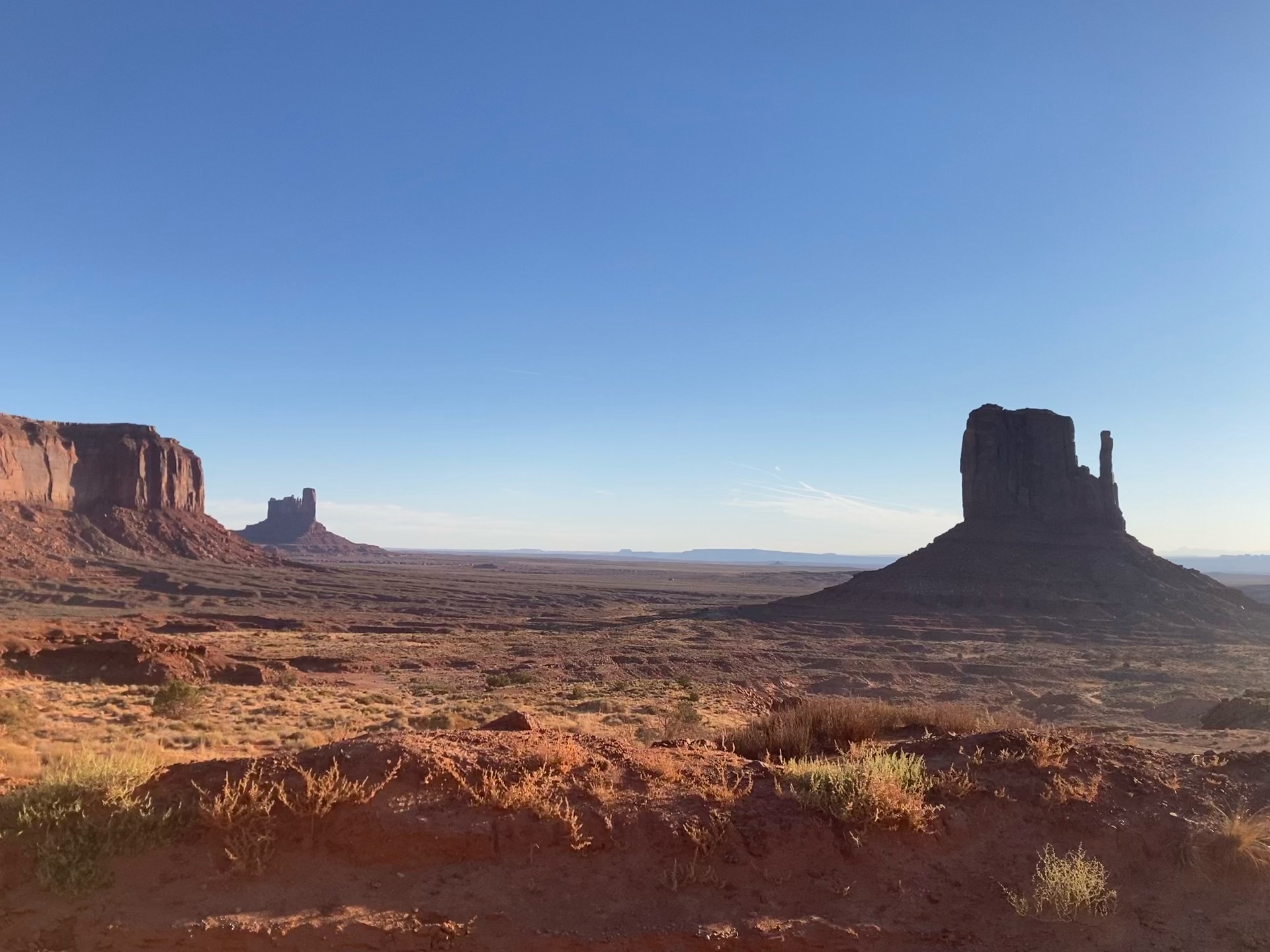
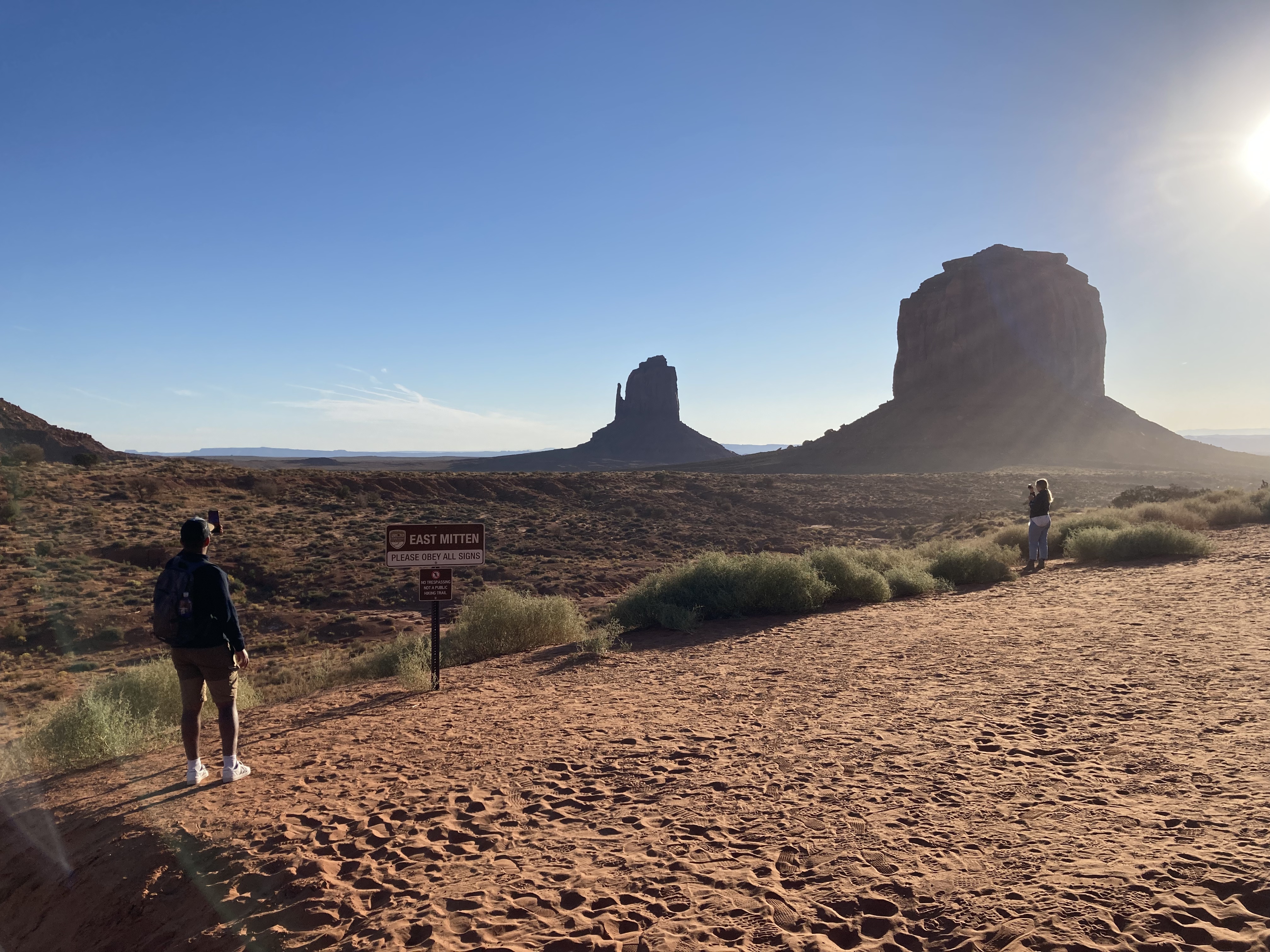
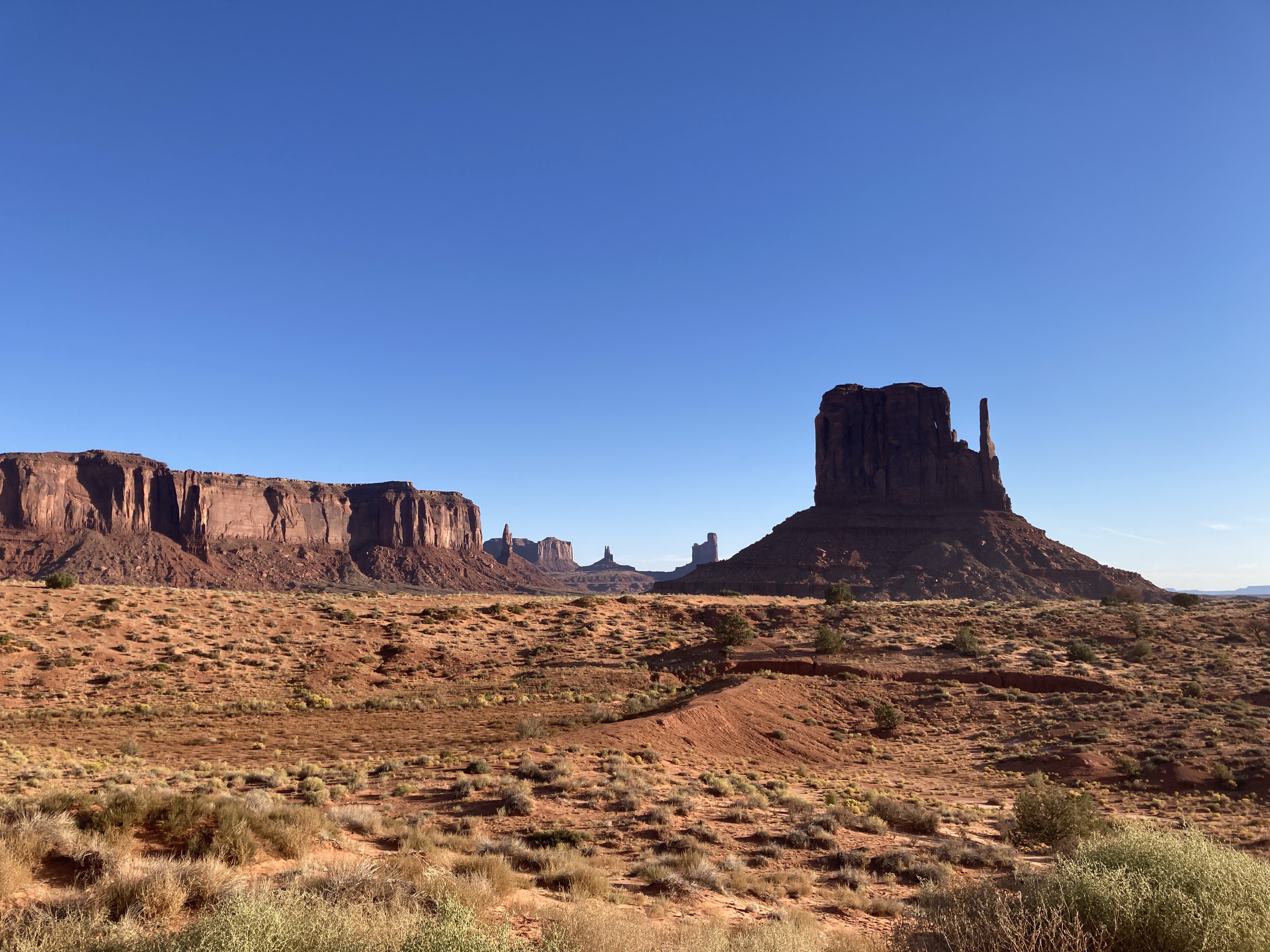
But we made it and I am amazed when I look back at my photos and realize, yes, we were actually there in this amazing, other-wordly place. You literally can not take a bad picture.
We stayed at Goulding’s Lodge, which has been in operation 100 years. It is where John Ford and his actors and crew stayed and that is respected and honored, but not overdone or commercialized.
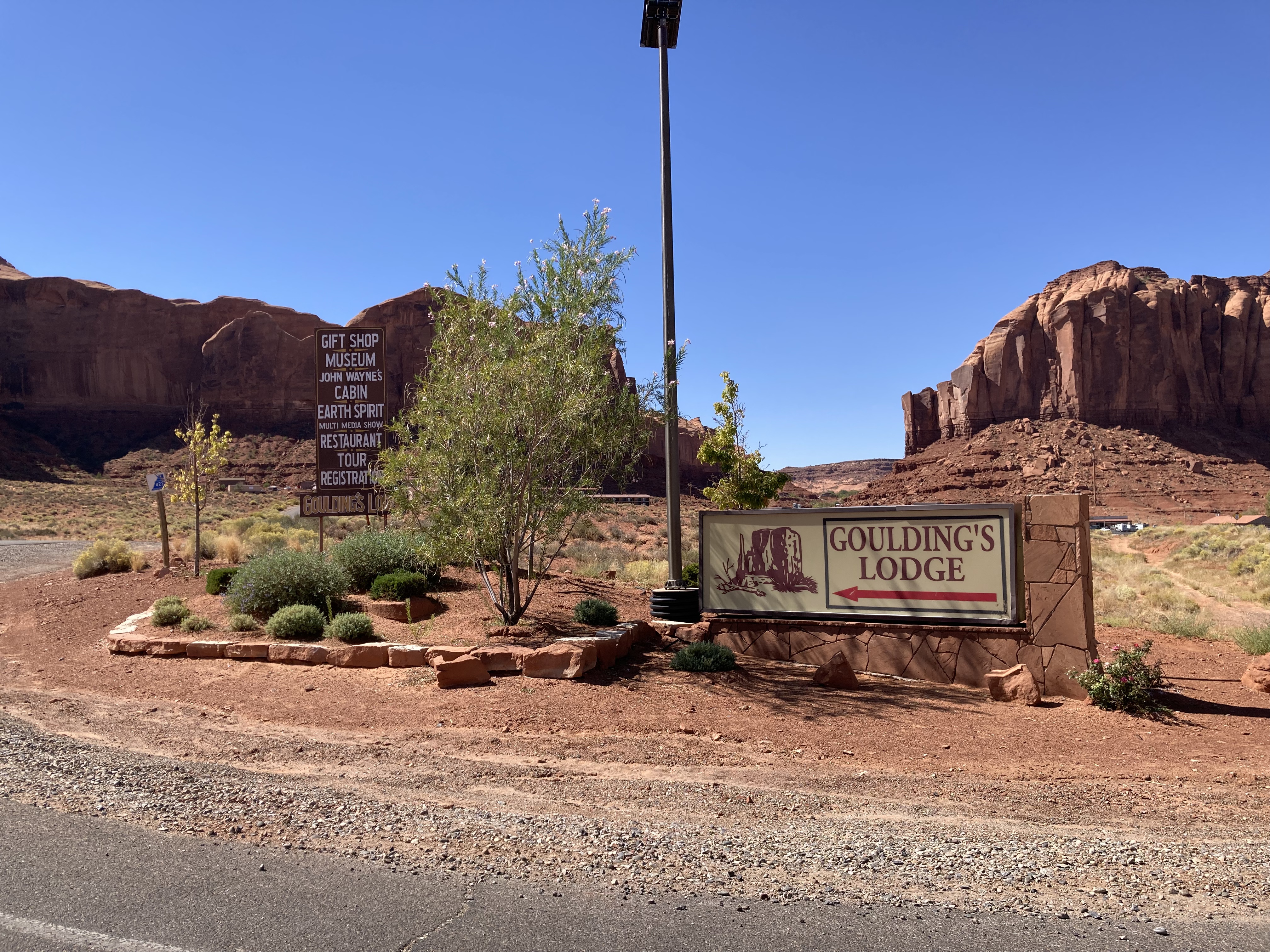
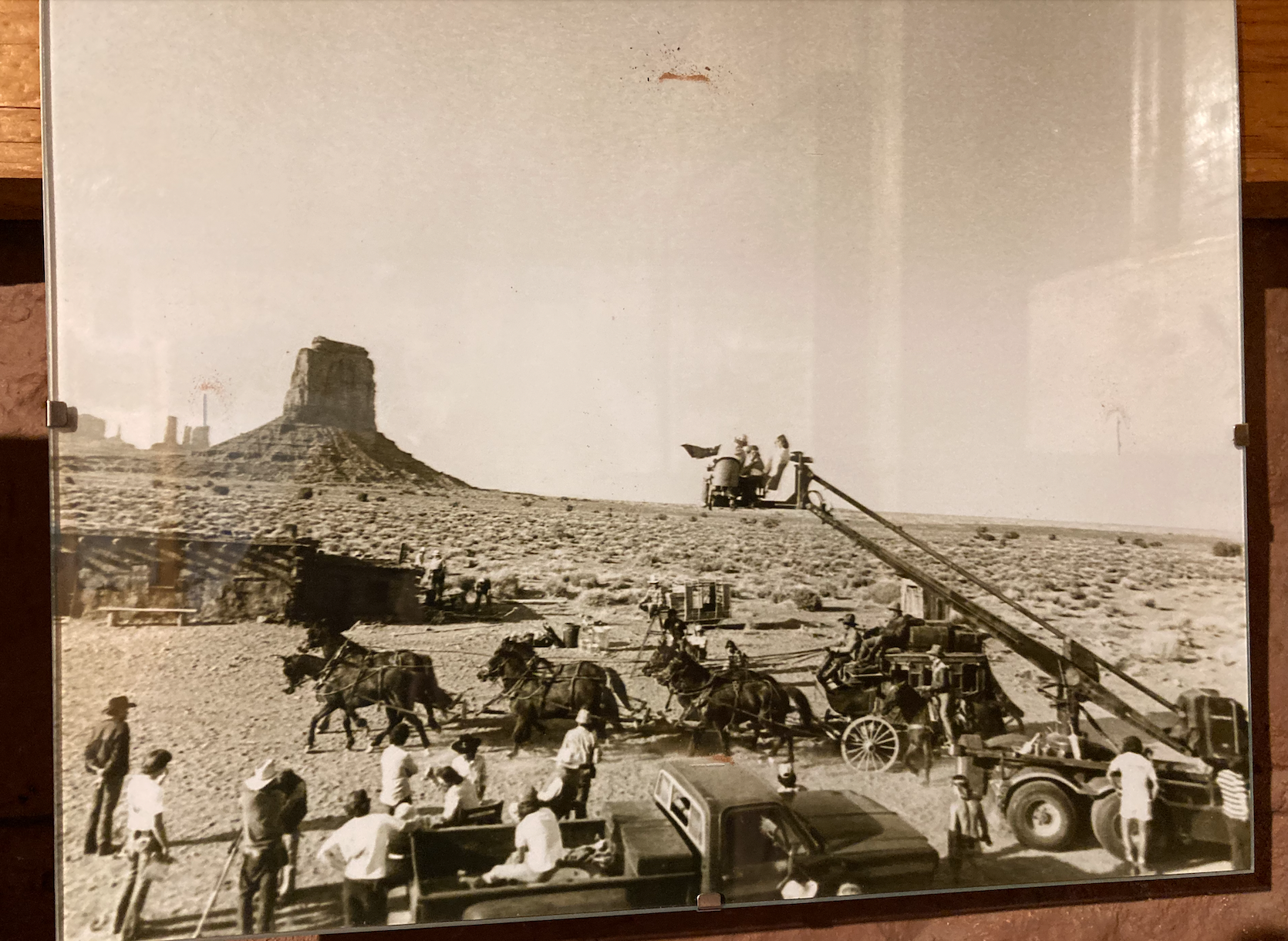
We enjoyed it very much and would recommend it highly. There is a dusty old museum…
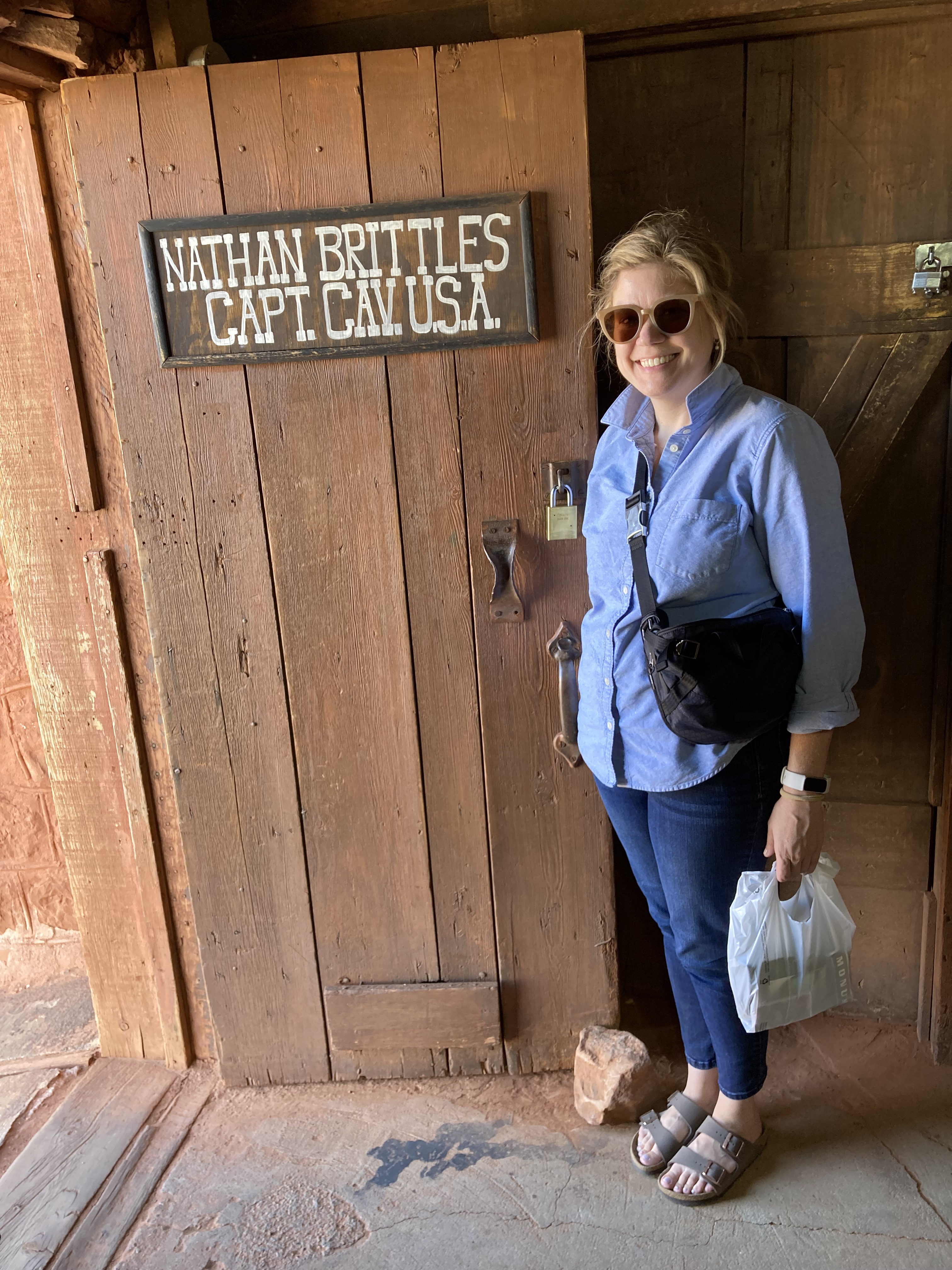
…and you can go in Nathan Brittles’ (John Wayne’s) cabin from She Wore a Yellow Ribbon.
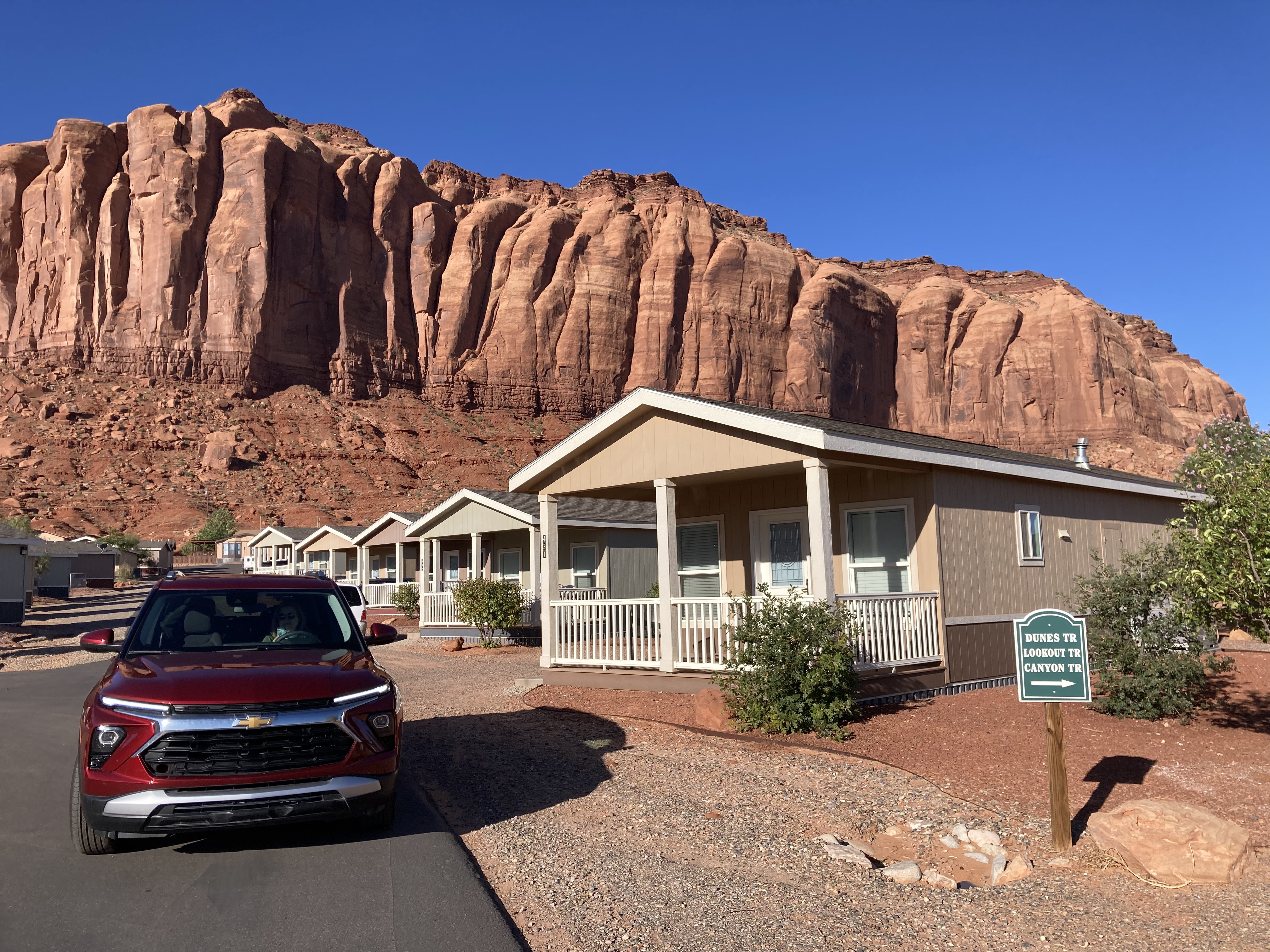
We stayed in a “villa” and not the main hotel…

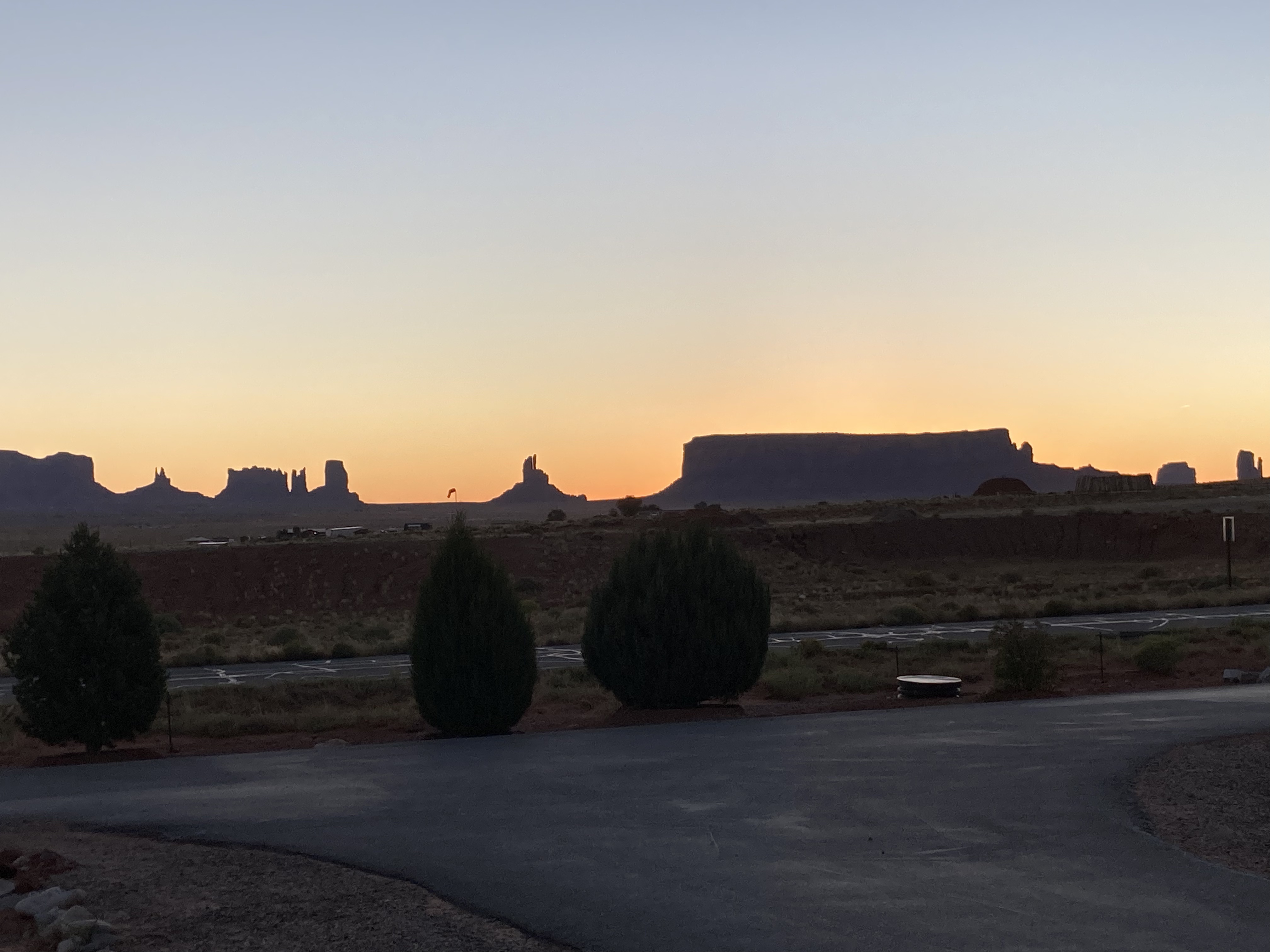
This was our view in the morning, drinking coffee on the porch…
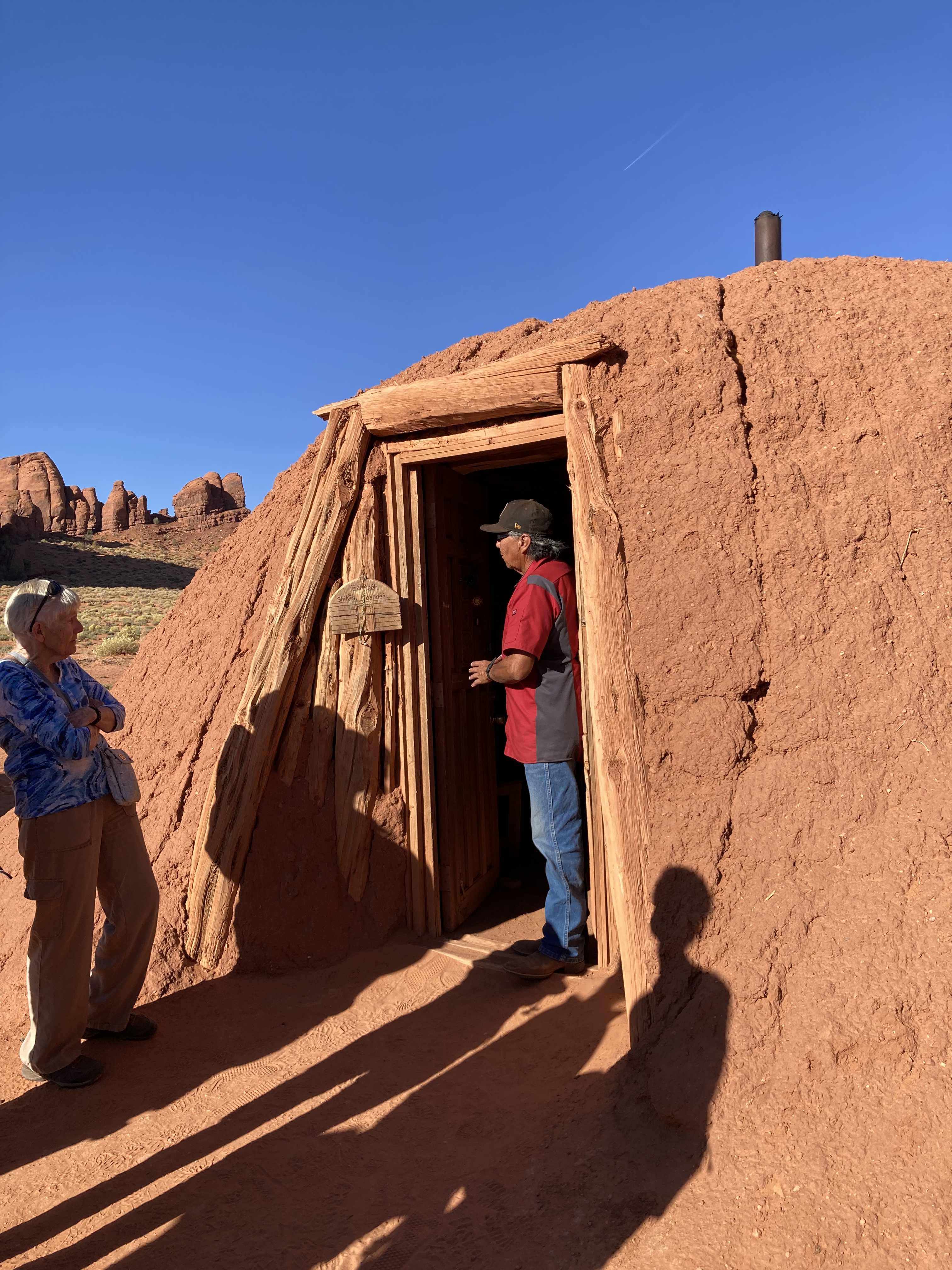
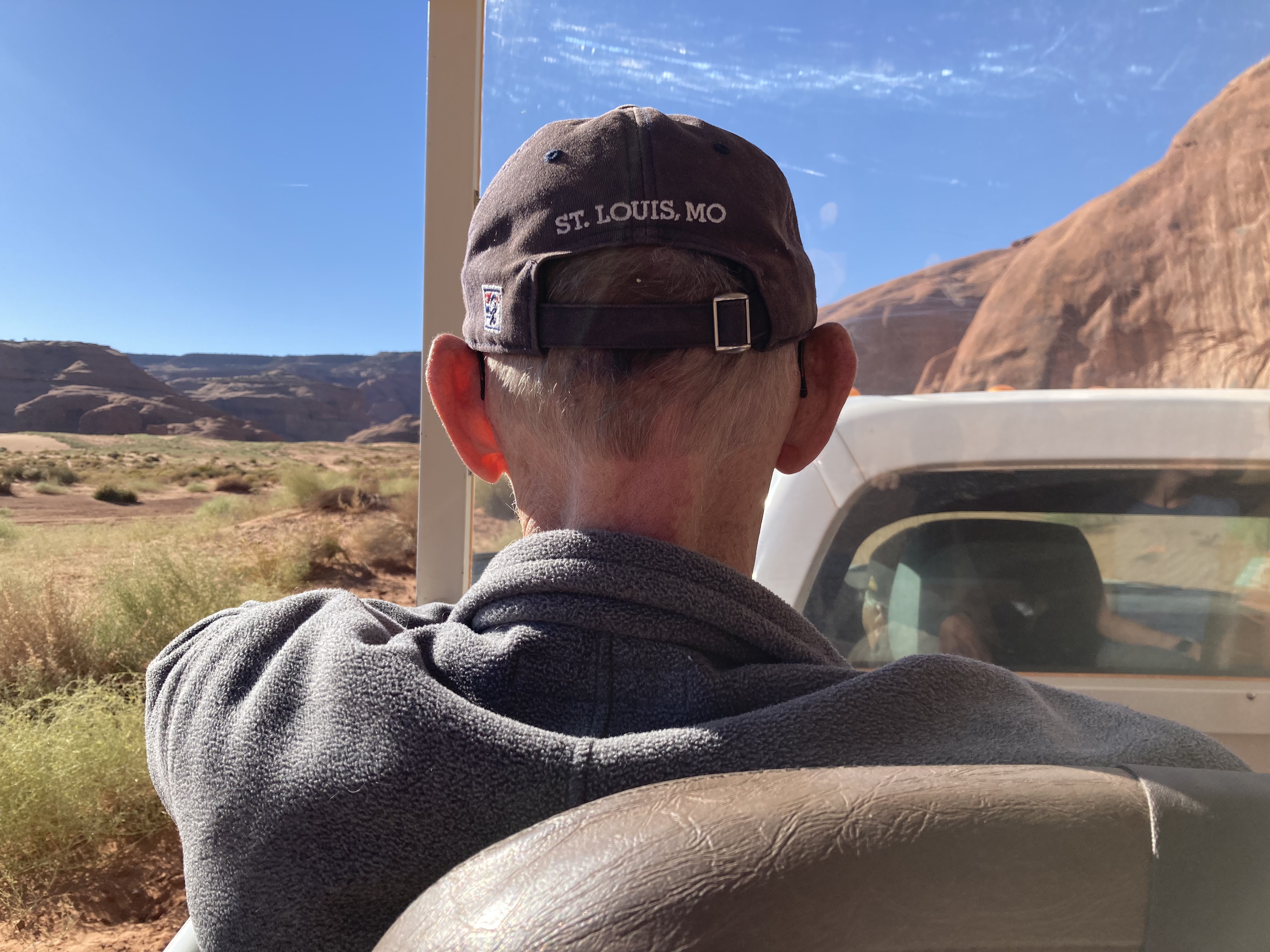
We took a great 3.5 hour tour led by Sam, our Navajo guide, through Monument Valley. We rode in a Hatari-reminiscent open vehicle and got out at many points along the way and walked around.
Our fellow tourists, most of whom were Europeans (French and German), looked exactly like variations on my brother and sister-in-law. We were all exhausted and dusty by the end. Wonderful.
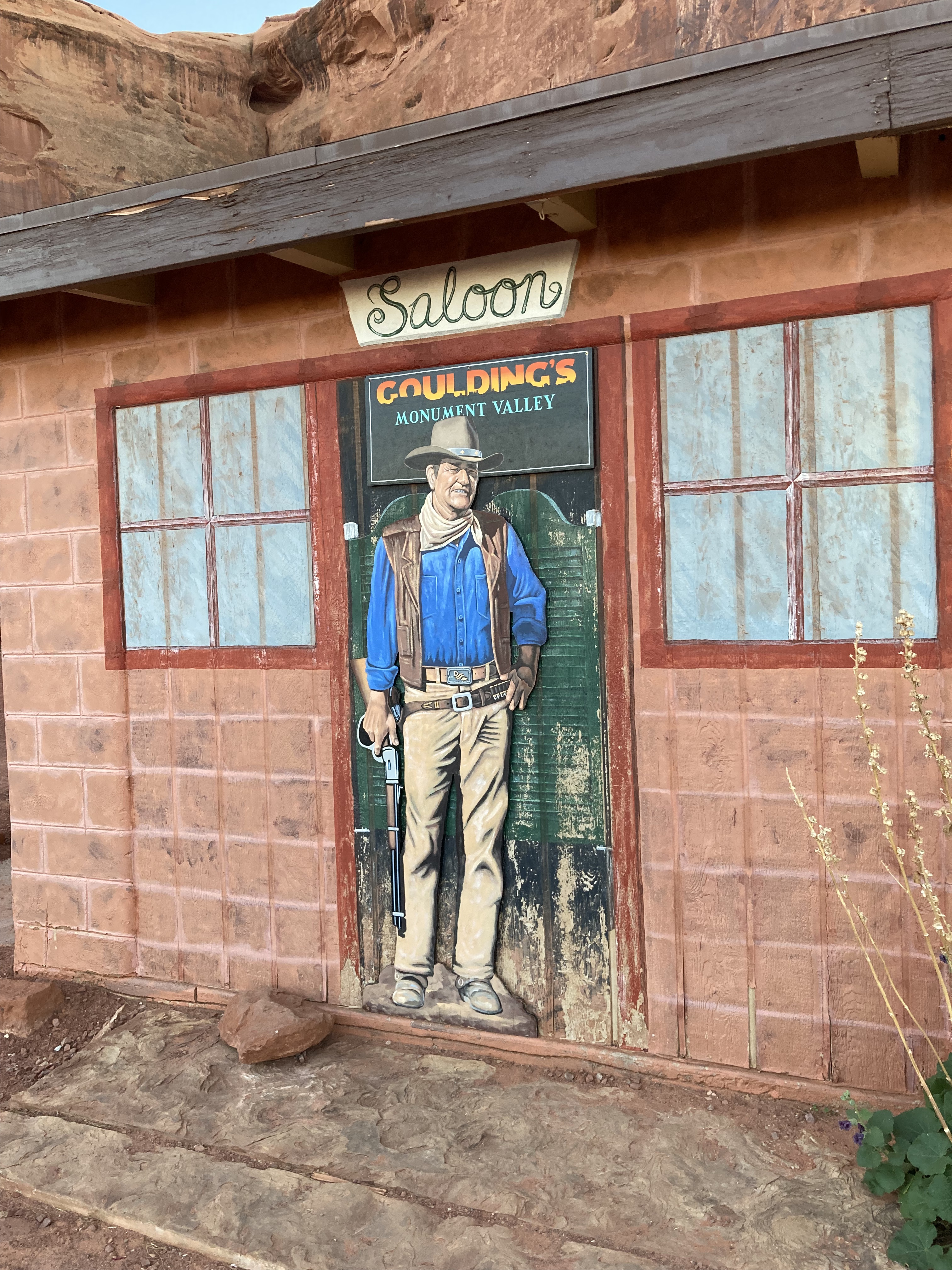
Truly it was kind of a religious experience for me, on the level with going to the Holy Land a few years ago. No kidding. I loved everything.

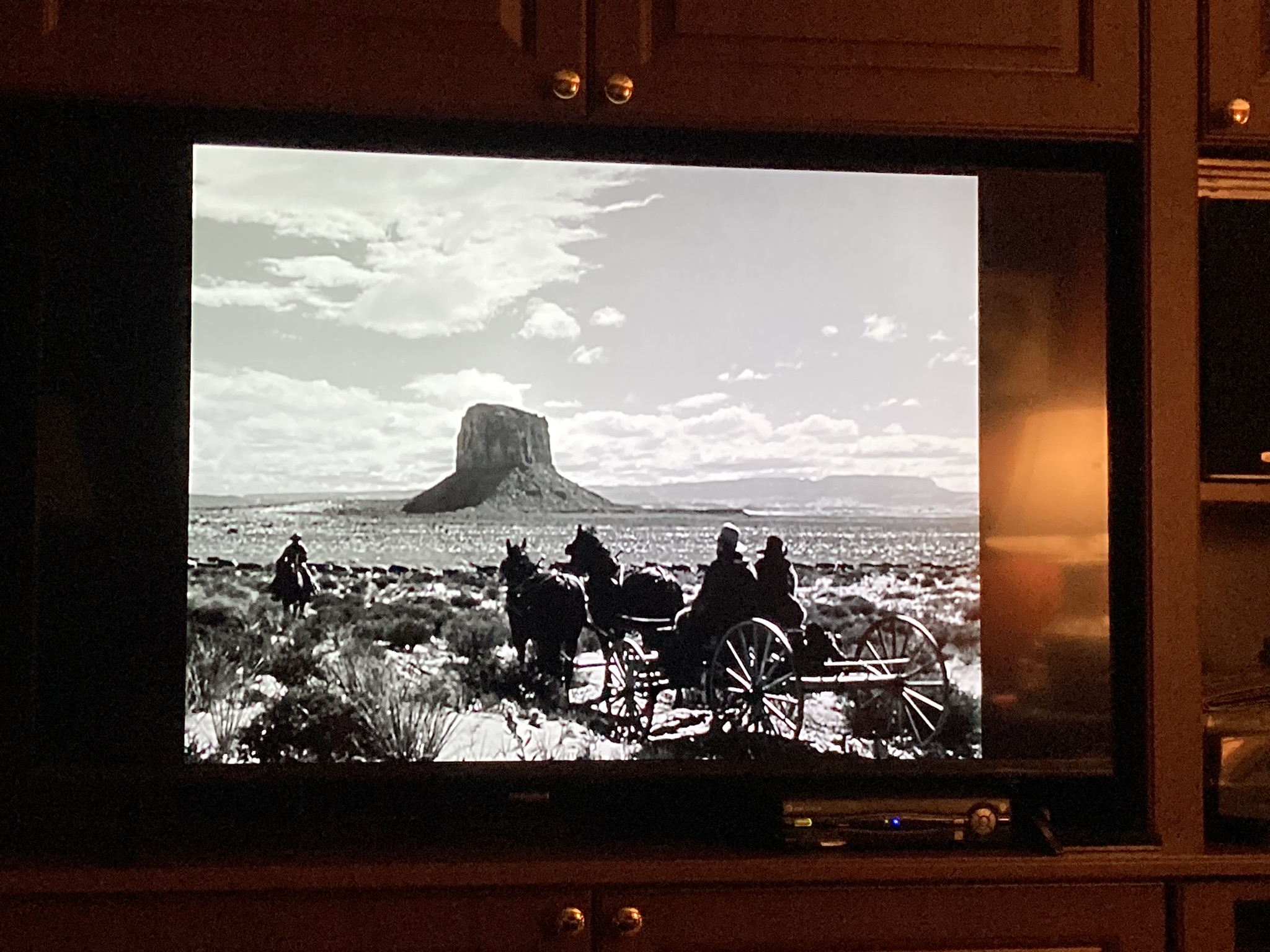
Back home on Saturday night I watched My Darling Clementine (1946) and it was awesome.
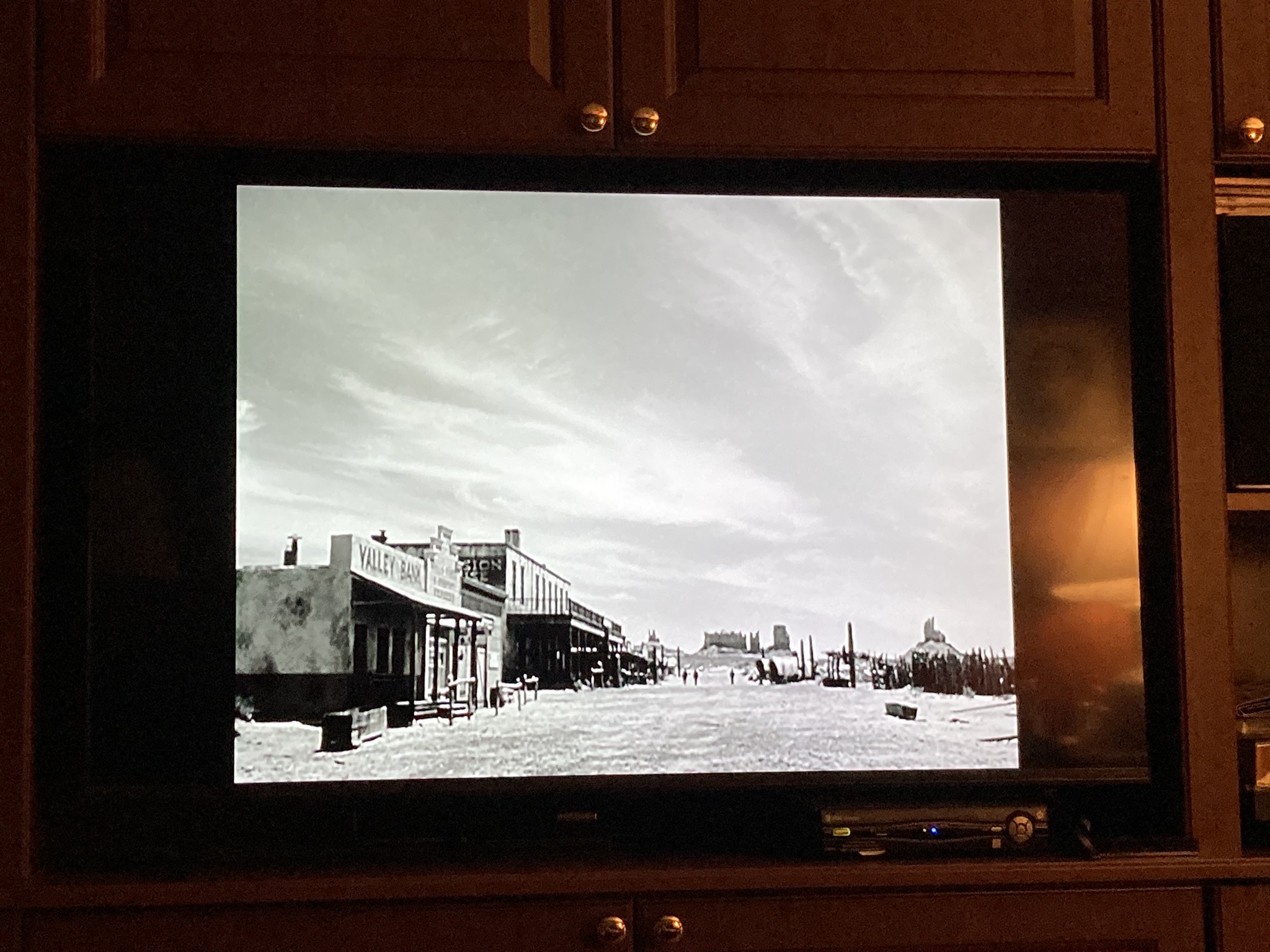
On Sunday we watched Ford’s masterpiece, The Searchers (1956). OMG.
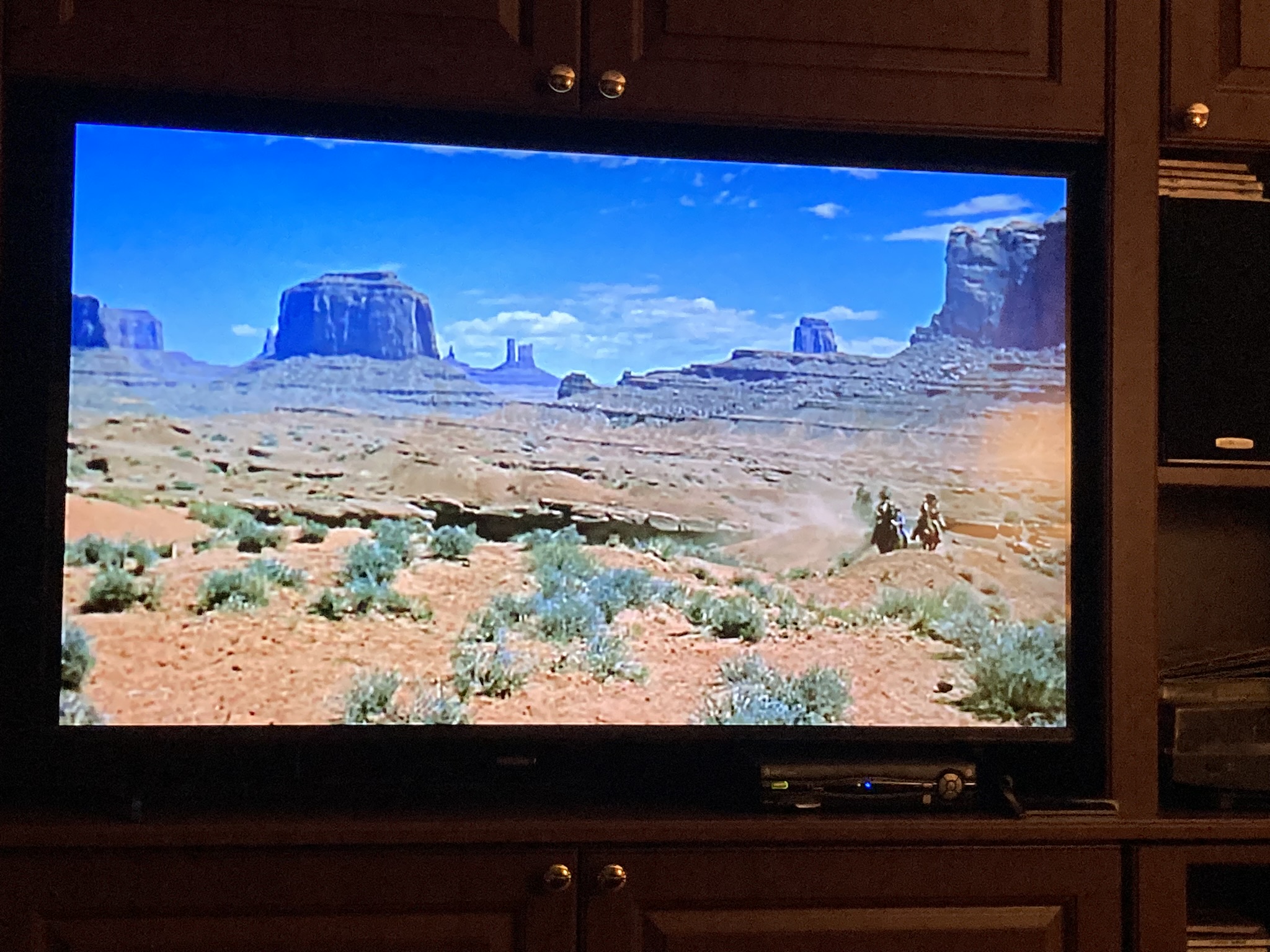
Wow.

Tomorrow I’ll tell you about our adventures at the Grand Canyon!

P.S. Many thanks to daughter #2 and DN for taking care of the blog last week! Much appreciated. (Hope it didn’t inconvenience the prairie girls too much 😉!)
There’s not a plant or flow’r below, but makes Thy glories known,
And clouds arise, and tempests blow, by order from Thy throne;
While all that borrows life from Thee is ever in Thy care;
And everywhere that we can be, Thou, God, art present there.

–Isaac Watts, 1715
“Oh, the places you’ll go.”*

by chuckofish

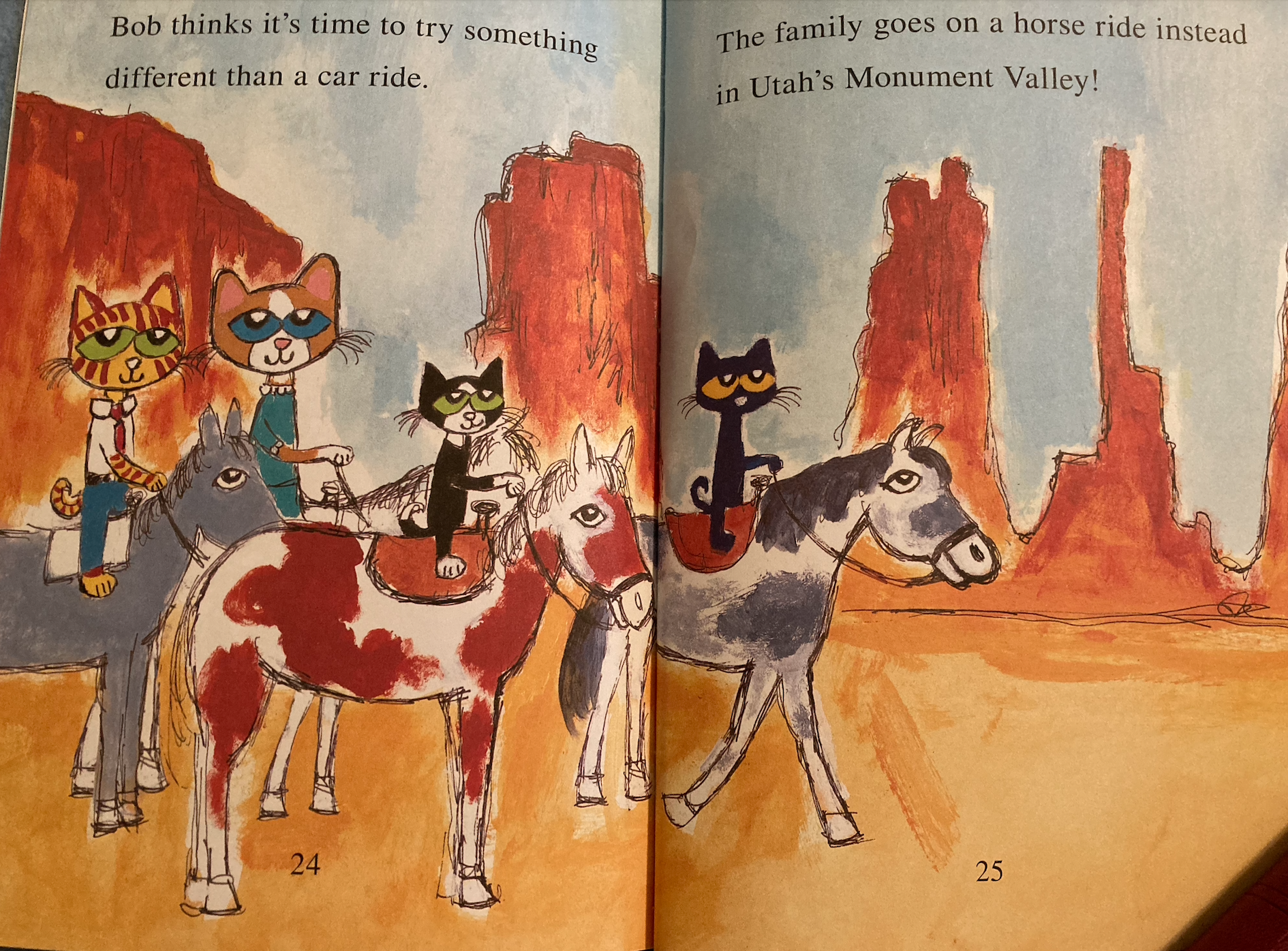
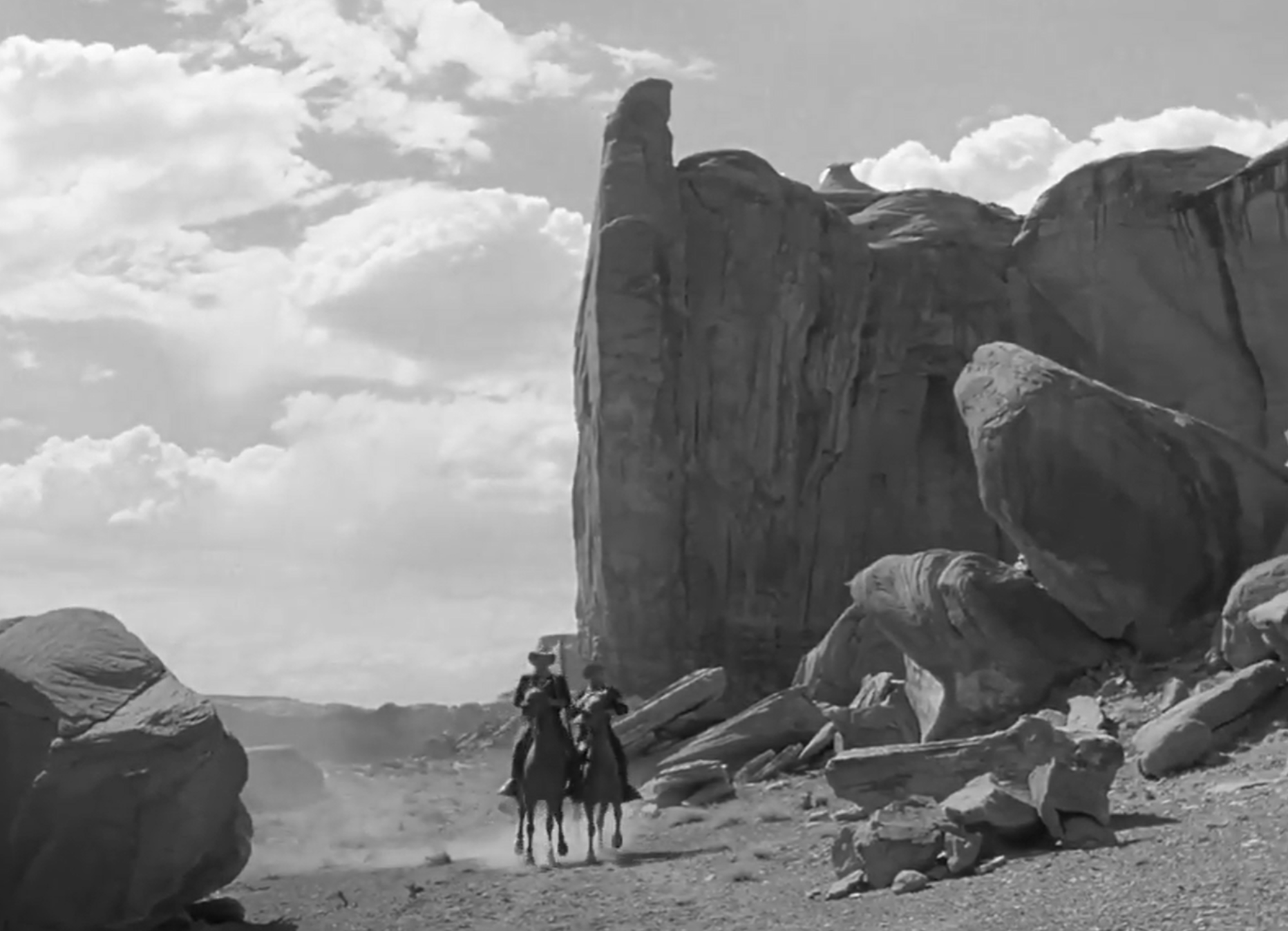
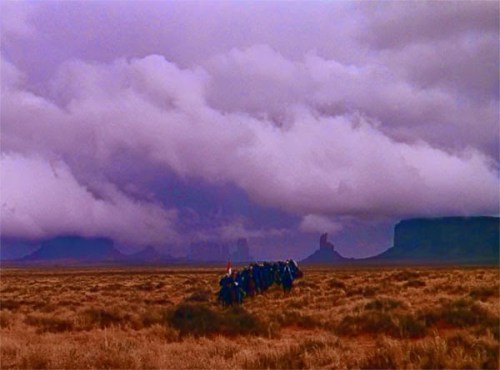
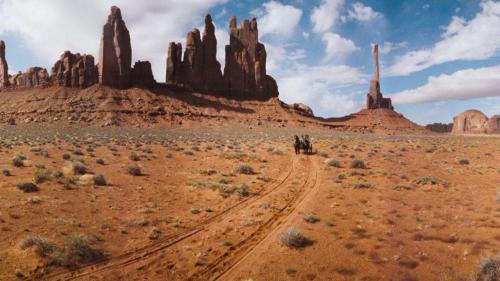
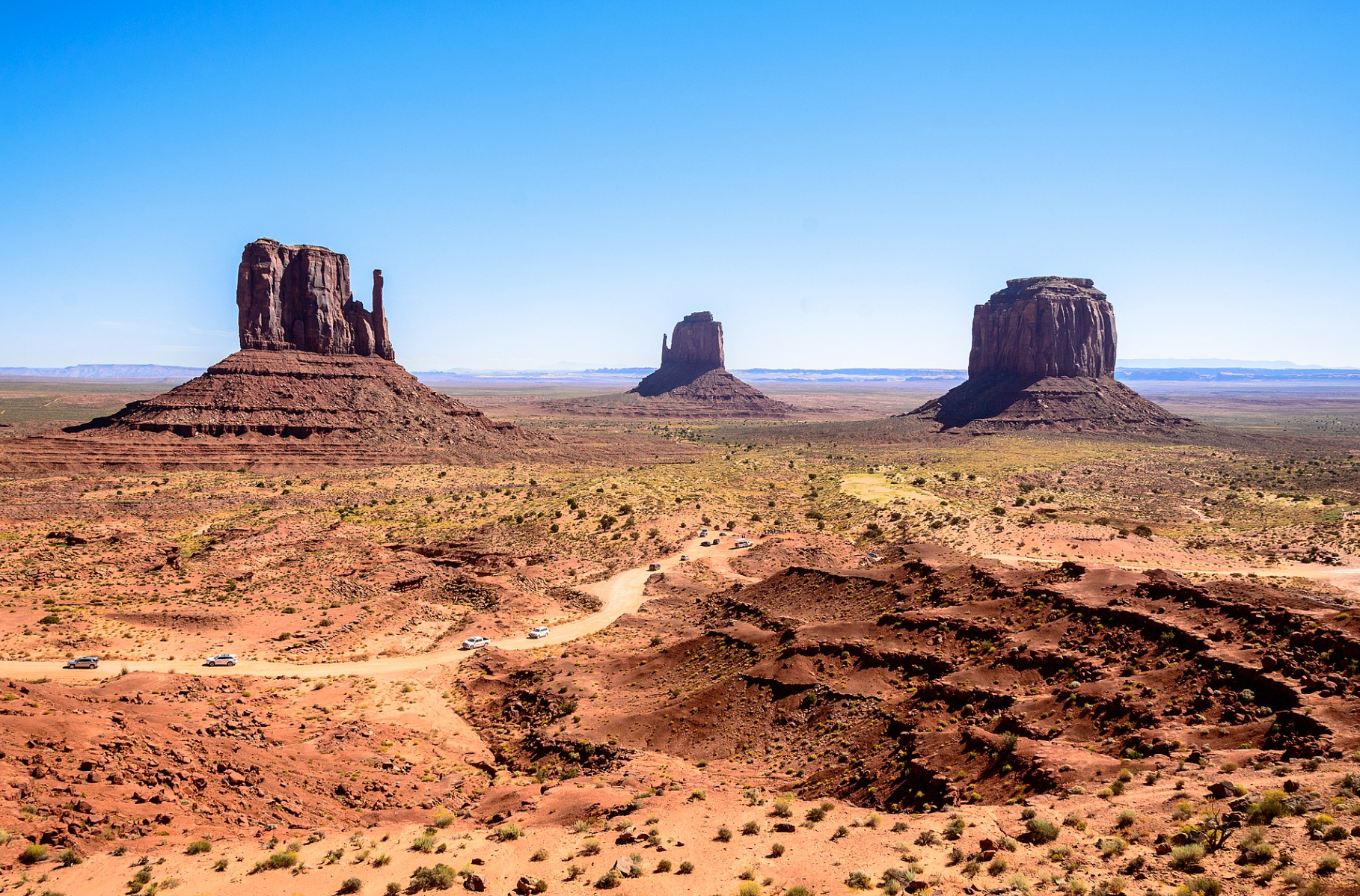
I may have mentioned that next week the OM, daughter #1 and I are heading out West to visit Monument Valley on the Arizona-Utah border. The valley is considered sacred by the Navaho Nation, within whose reservation it lies. It is rather sacred to me as well. We are pretty excited.

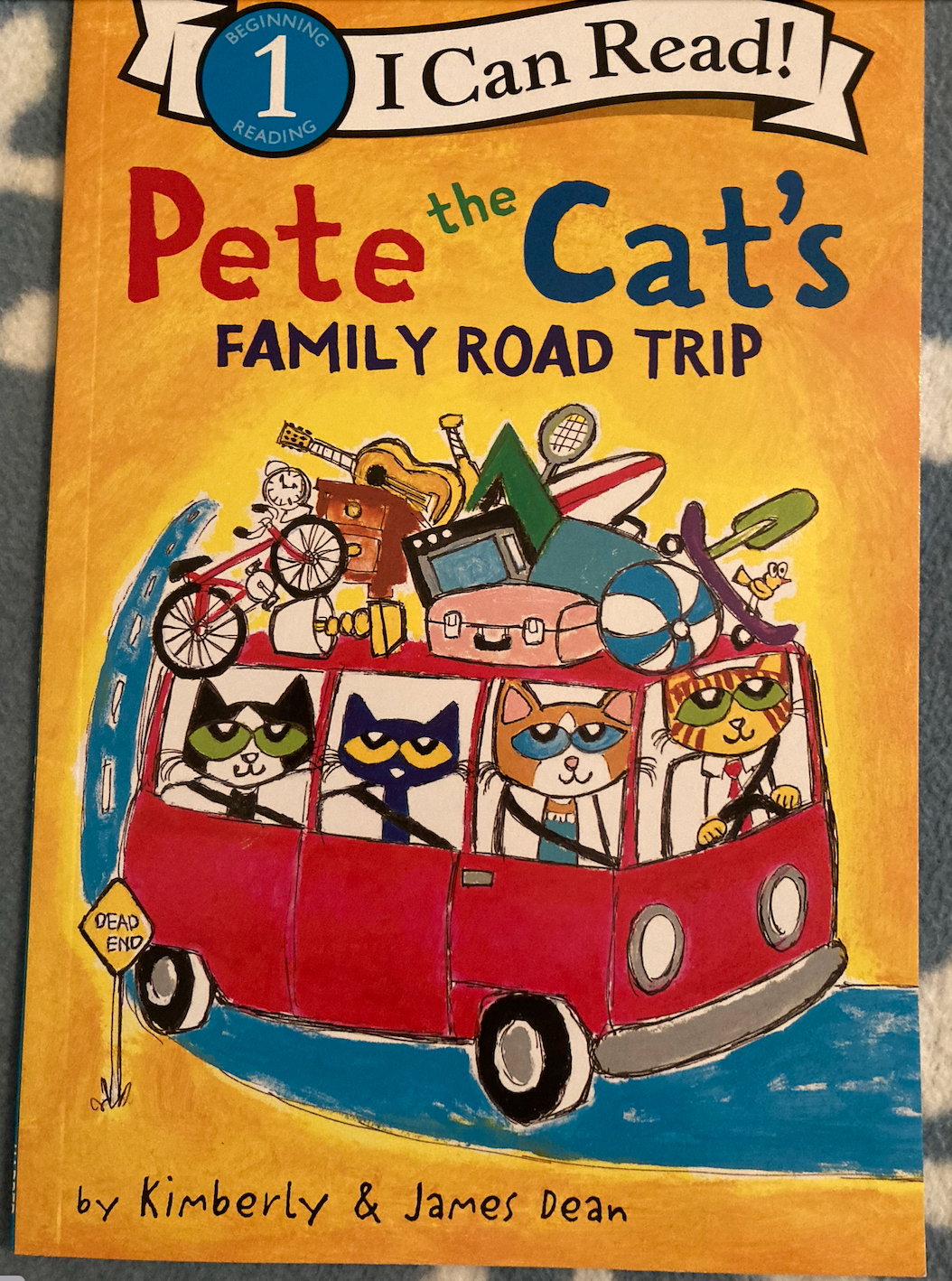
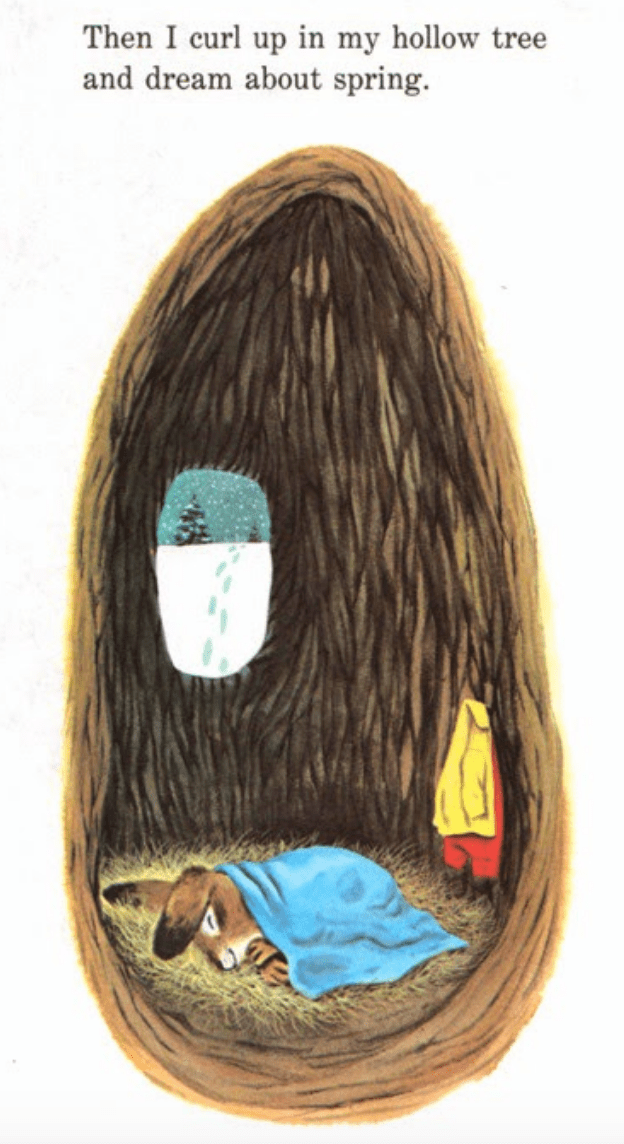
Recently daughter #2 and Katie were reading this book…

…which included this…

How cool is that? IYKYK. I do love Pete.

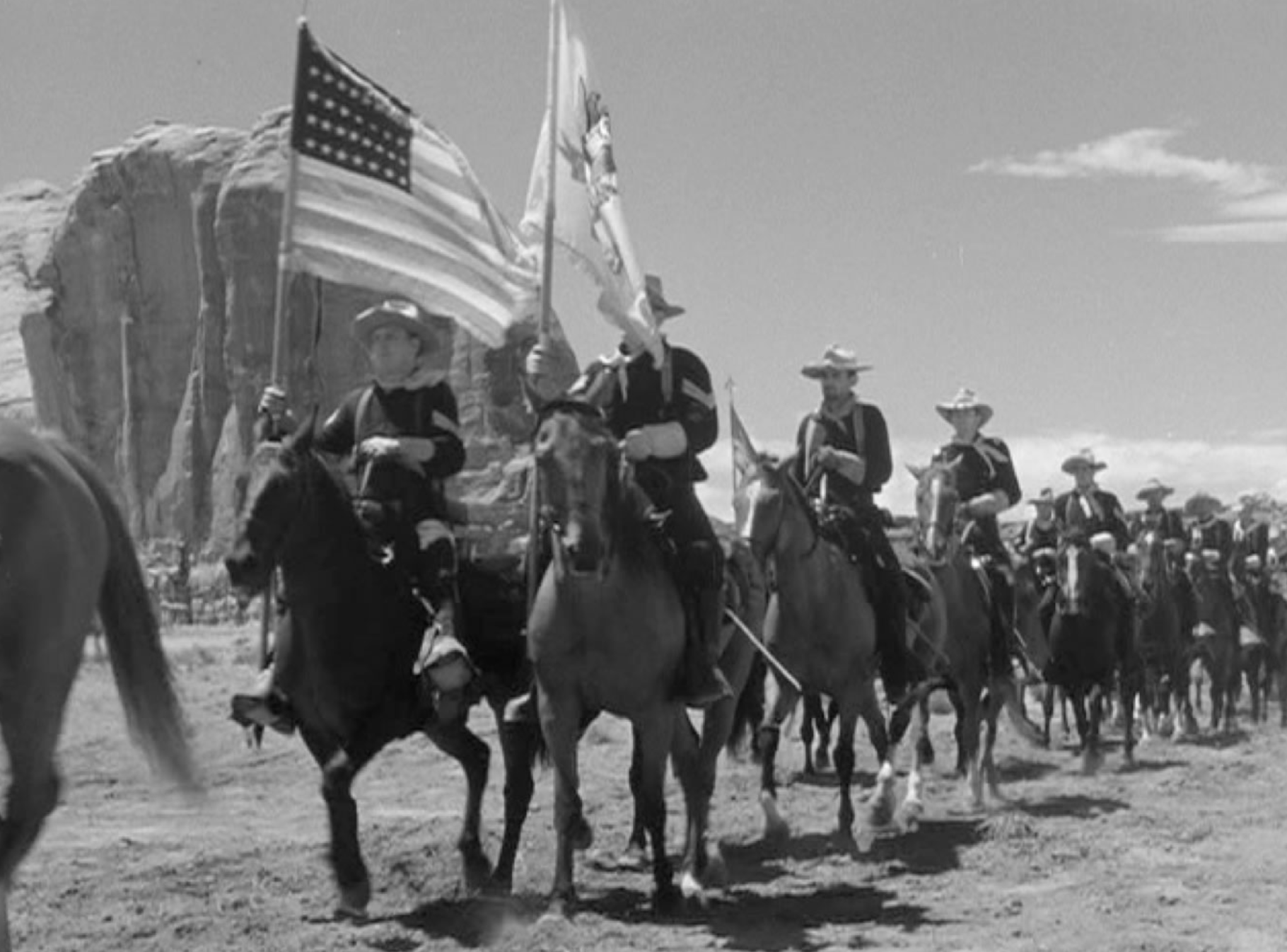
In preparation for this trip, I am re-watching some of John Ford’s iconic films. First up was Fort Apache (1948) starring John Wayne, Henry Fonda, Shirley Temple, et al. It is the first of Ford’s Cavalry Trilogy.

Next on the docket will be Stagecoach (1939), My Darling Clementine (1946) and She Wore A Yellow Ribbon (1949)–three of my all-time favorites.

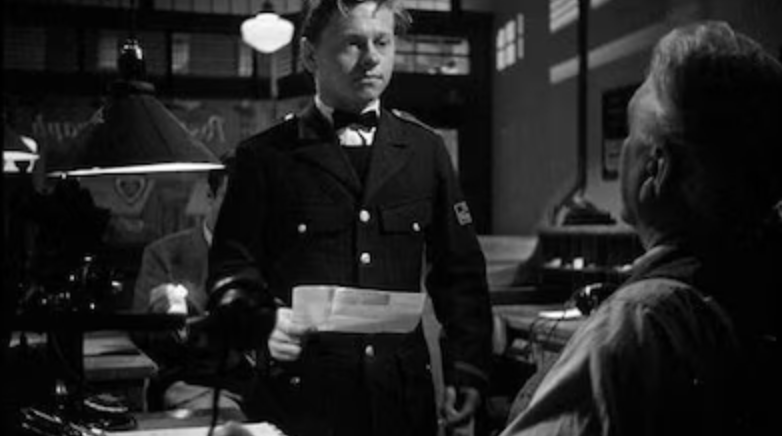
Unrelated to this, I also recently watched The Human Comedy (1943) on TCM. Directed by Clarence Brown from a story by William Saroyan, it stars Mickey Rooney as high school student Homer Macauley, who works part-time as a telegram delivery boy in the fictional town of Ithaca, California, during World War II. The movie depicts the effects of the war on the Home Front over a year in Homer’s life in a series of vignettes involving himself, his family, friends and neighbors in his hometown, and his brother Marcus, a Private in the U.S. Army. Homer is thrust into some difficult situations, some of which are heart-wrenching.

Rooney handles it all with skill and does not overdo it. (He was nominated for a Best Actor Oscar.) He is really quite impressive and he carries the film like a pro.

This scene, which does not involve Rooney, but includes Van Johnson as his brother on a troop train, is a real emotional highpoint–the kind they were not embarrassed to attempt in 1943.

I have no doubt that many today would find this entire movie to be absolute hokum and too rah-rah America, but I did not. I pity them. We still sing this hymn at my church and I will always think of these soldiers from now on when I hear it.

*Dr. Seuss

“Impetuous. Homeric!”

by chuckofish

Happy Friday! My weekend will be quiet as daughter #1 headed off to visit daughter #2, leaving Mr. Smith with us.

The boy is taking the twins on an overnight camping trip, so they will miss Sunday with us. Sigh.

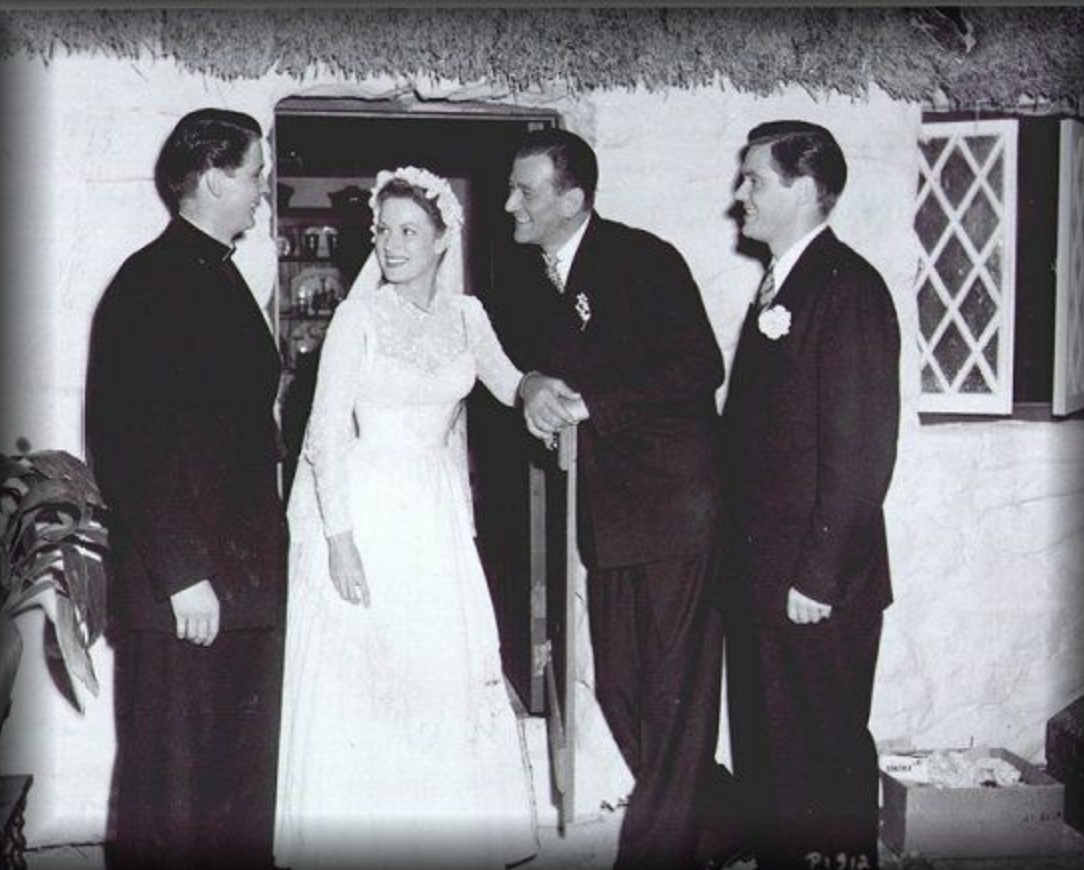
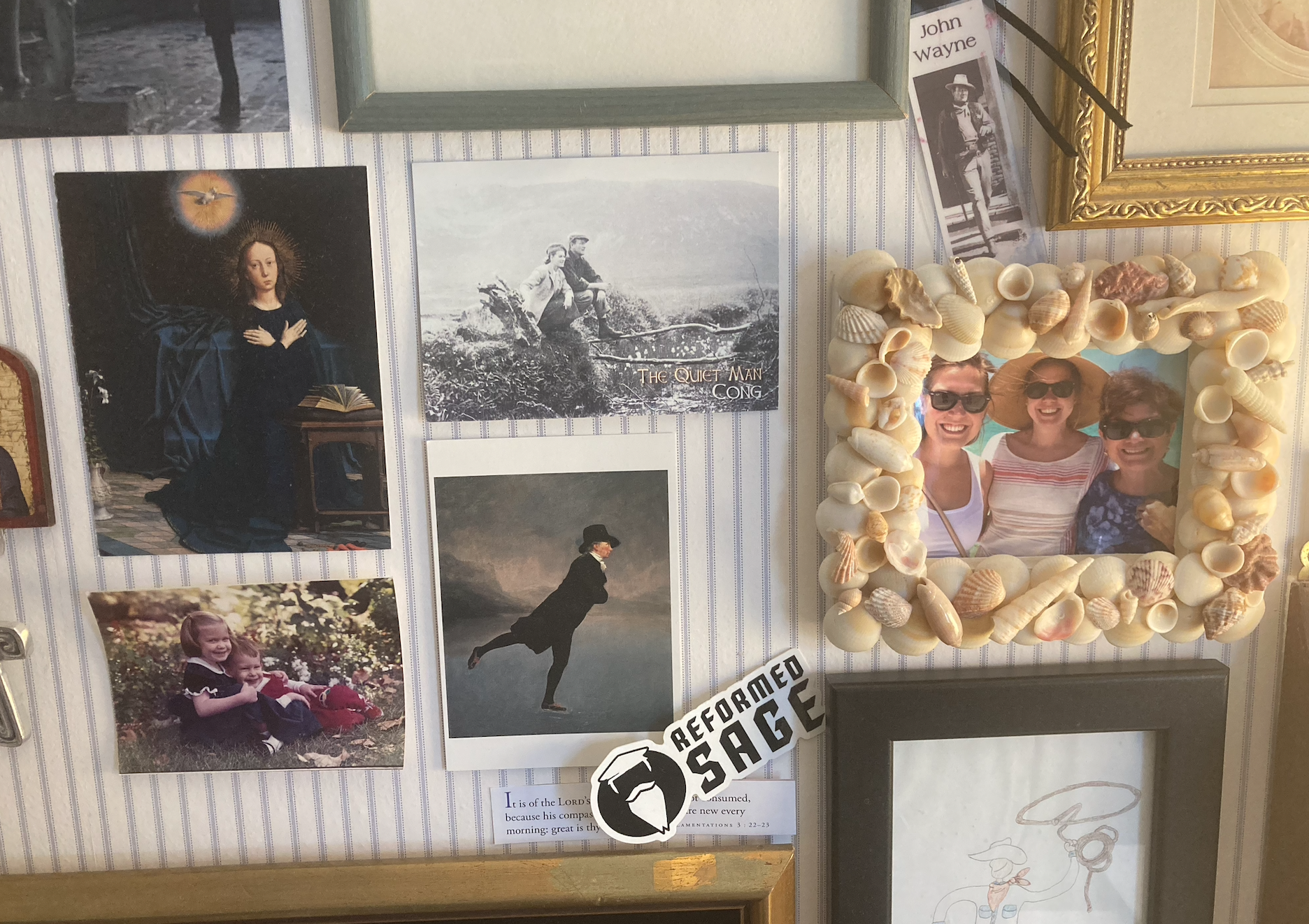
But Sunday is St. Patrick’s Day so we will be watching The Quiet Man (1952) as this is our March 17th tradition. It is a fairy tale, a make-believe wish of what Ireland is like, but I love it–mostly because John Wayne is great and at the height of his powers.

To get you in the mood to watch, here are a few fun facts to know and share about the movie.

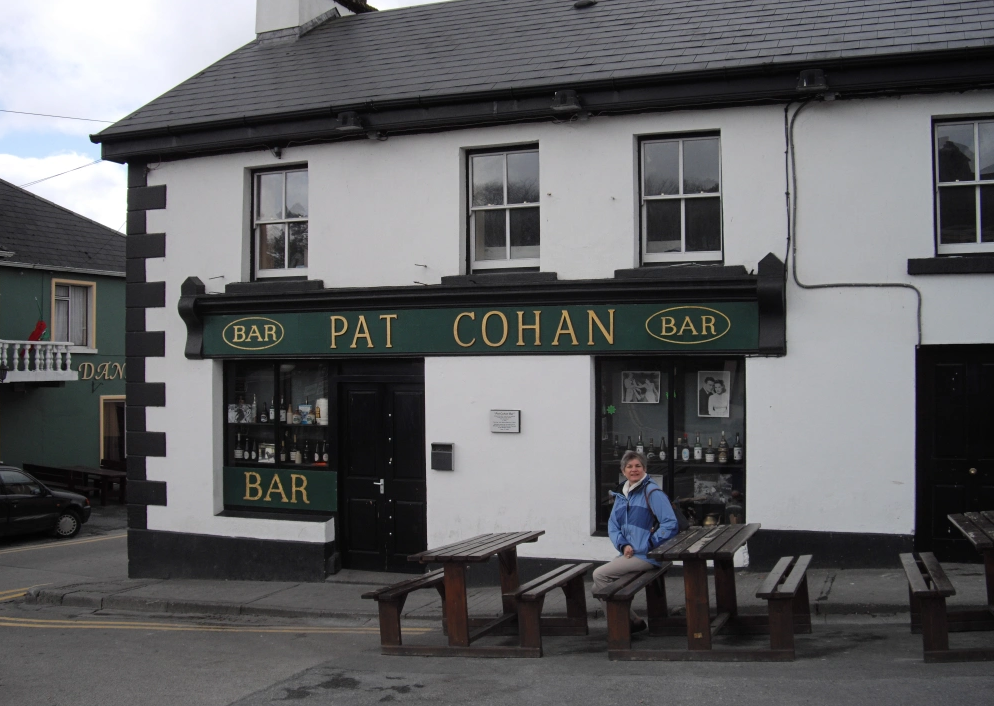
As you recall, when daughters #1 and #2 and I were traveling in Ireland in 2011, we made a pilgrimage to Cong where the movie was filmed.

The Quiet Man Museum is around the block from Pat Cohan’s Bar.

The town of Cong, in County Mayo was just getting electricity in 1951 when the actors and crew were there. A few scenes show utility poles, but no wires are clearly visible. The town folk were excited because they thought the electricity wouldn’t cost anything. When they learned otherwise, they insisted they didn’t want or need it – get rid of it. (Later, of course, their attitude changed.)

Charles B. Fitzsimmons (Hugh Forbes, IRA man) and James O’Hara (Father Paul) were the real-life younger brothers of Maureen O’Hara.

The white-haired, frail Dan Tobin, who gets up from his death bed and runs to see the fight, was John Ford’s older brother, Francis Ford. Four of John Wayne’s children appear in the steeplechase scene, which Wayne directed while Ford was sick.

Barry Fitzgerald, who plays the character of Michaleen Oge Flynn, and Arthur Shields, who played the Protestant vicar Cyril ‘Snuffy’ Playfair, were brothers in real life. They were both Protestants born in Dublin, Ireland. Shields was the family name. The Oscar-winner Fitzgerald, who was nearly eight years older than his brother, was born William Joseph Shields.

It is Maureen O’Hara’s favorite of her own films.

John Ford won his fourth Best Director Oscar and the film was in the top ten moneymakers of the year. Winton Hoch won the Oscar for Best Cinematography.

Stephen Spielberg, a great admirer of John Ford, paid tribute to The Quiet Man in E.T. (1982):

When the film was first screened in Boston, MA, Michaleen Flynn’s line on seeing the broken bed, “Impetuous! Homeric!”, was censored.

Well, watch it or don’t–that’s how I celebrate St. Patrick’s Day!

And here’s a bonus picture of Ida waving at the fish in the fish pond.

Another pop quiz

by chuckofish

Since it is February 1 and the birthday of John Ford, I thought it was time for another pop quiz! The following quotes are all from famous films directed by John Ford between 1939 and 1956. See how many you can get and I’ll post the answers in the comment section later today.

“My friends just call me Ringo – nickname I had as a kid. Right name’s Henry.”

“We seem to lose our heads in times like this. We do things together that we’d be mighty ashamed to do by ourselves!”

“You’ve been lucky, Huw. Lucky to suffer and lucky to spend these weary months in bed. For so God has given you a chance to make the spirit within yourself. And as your father cleans his lamp to have good light, so keep clean your spirit… By prayer, Huw. And by prayer, I don’t mean shouting, mumbling, and wallowing like a hog in religious sentiment. Prayer is only another name for good, clean, direct thinking. When you pray, think. Think well what you’re saying. Make your thoughts into things that are solid. In that way, your prayer will have strength, and that strength will become a part of you, body, mind, and spirit.”

“Listen, son: you and I are professionals. If the manager says, “Sacrifice”, we lay down a bunt and let somebody else hit the home runs. We know all about those destroyers out of commission, tied up around San Diego. We could use them here. But they’re not around. They won’t be. Our job is to lay down that sacrifice. That’s what we were trained for, and that’s what we’ll do. Understand?”

“Shakespeare was not meant for taverns… nor for tavern *louts*.”

“Well, that’s the last of the gringo-head cactus.”

–The army will never be the same when we retire, sir.

–The army is always the same. The sun and the moon change, but the army knows no seasons.

–This fella talked derogatory about the boy’s pappy.

–Yeah, he called him the teacher’s pet of a chowder-headed Mick sergeant. What’s that mean, doc?

An Indian will chase a thing till he thinks he’s chased it enough. Then he quits. Same way when he runs. Seems like he never learns there’s such a thing as a critter who’ll just keep coming on. So we’ll find ’em in the end I promise you. We’ll find ’em. Just as sure as the… turnin’ of the earth.

Join me in toasting Ford and in watching one of his great movies tonight. Oh, and here’s a fun fact: Wee Willie Winkie (1936)–directed by Ford–is the only movie in which Shirley Temple is spanked.

In other news, I noticed that after we have cleaned up all the toys and the twins have gone home, I always find things like this…

It is like the lingering Christmas decorations that continue to show up…

This article is right on target. “Any fearful thing you are made to focus on day after day will become hyper-magnified in your mind.”

I concur. “I feel sad for those who hold to a utilitarian view of the universe, of creation, of people. Life becomes a means to an end – an end that is never quite realized.”

“For the mountains may be removed and the hills may shake,
But My lovingkindness will not be removed from you…

Isaiah 54:10

”Oh the white tops are a rollin’ rollin’, and the big wheels keep on turnin’”*

by chuckofish

I hope you had a lovely weekend. I puttered around, planted some more annuals in pots on the patio, trimmed ivy, tidied up the house so that the wee twins could wreck havoc in it again…the usual.

The highlight was going to my new church with the boy and getting to spend a few hours together–an unusual thing since he is almost always working or in the midst of twin-created havoc. We had coffee afterwards at Bread Co. and had a real conversation. Super. Nice.

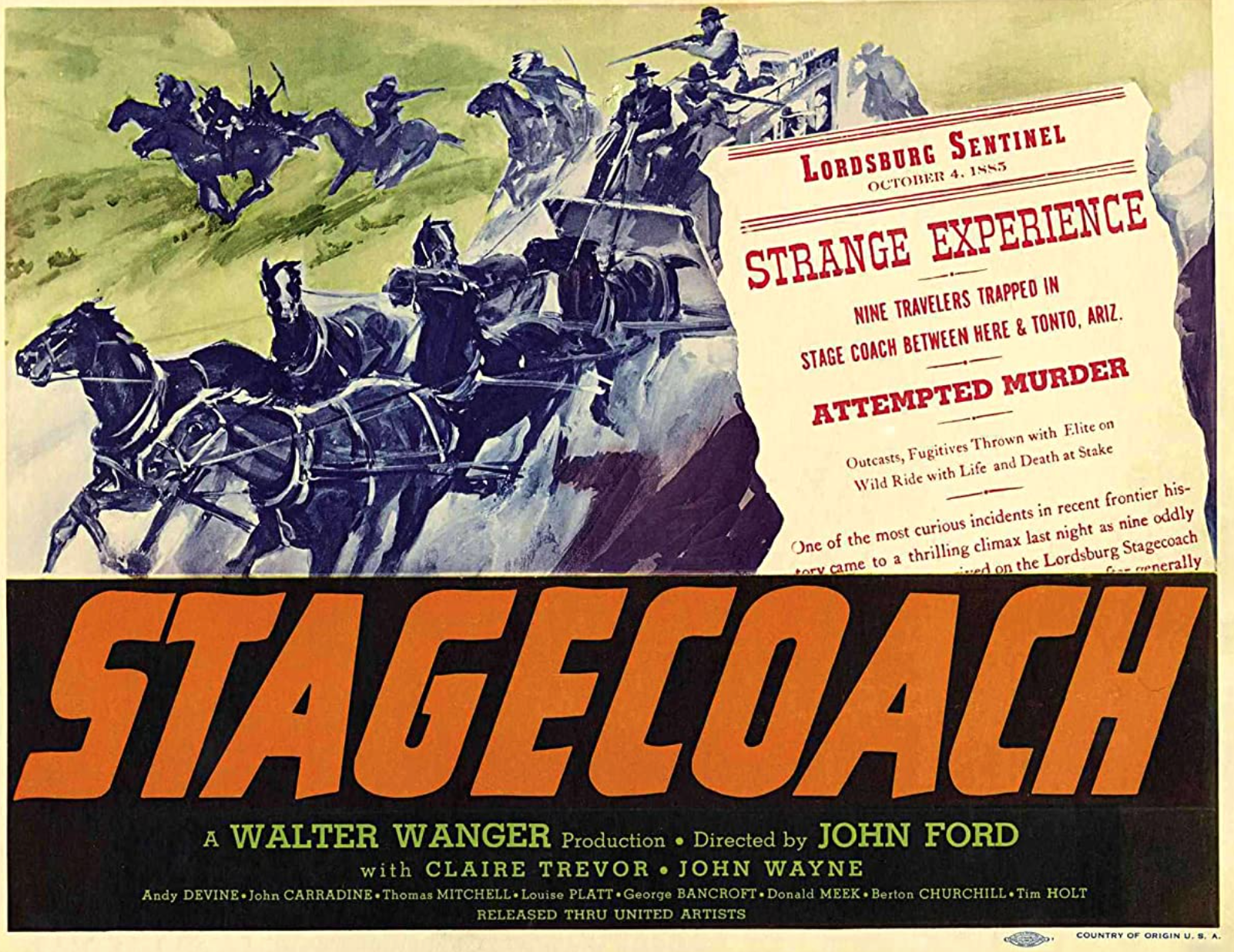
I watched some PGA tour action on TV and a couple of good movies, including Stagecoach (1939) and Wagon Master (1950), both directed by John Ford.

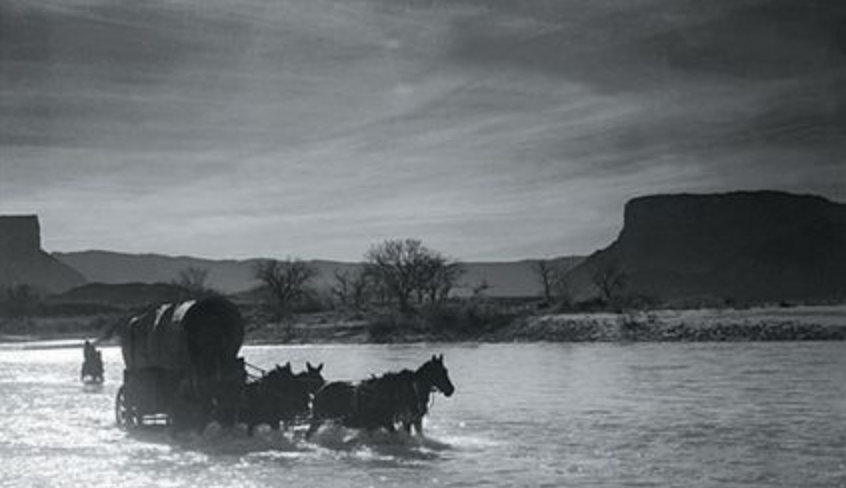
Stagecoach is, without a doubt, 96 of the best minutes ever put on film. Orson Welles called it textbook filmmaking and he was right. It is tops in storytelling, character development, acting, action, romance, cinematography, score–it has it all.

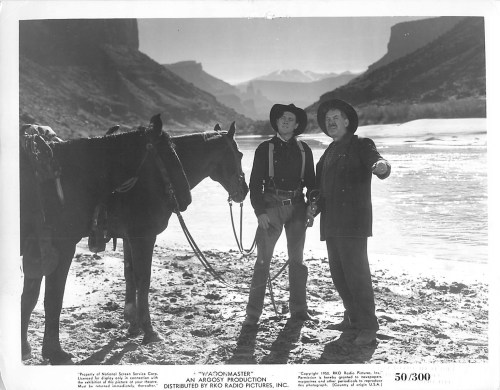
Wagon Master is also about a (bigger) bunch of misfits (Mormons, outlaws and stranded medicine show con artists) going on a journey and meeting up with impediments along the way. Even without John Wayne or, really, any star, it is a lyrical yarn with meaty characters, beautifully photographed.

I recommend them both, and seeing them together, is an interesting and worthwhile undertaking.

I also re-read a good bit of Harry Carey Jr.’s memoir about his life as an actor in the John Ford “stock company” which was somewhat enlightening about the behind-the-scenes goings-on of making Wagon Master and other Ford movies. John Ford was an enigma, wrapped in a mystery, as they say. But he sure made good movies.

The wee twins came over Sunday night and annoyed the OM and even prompted me to give them another mini lecture on the doctrine of total depravity. They look innocent enough, but…

We had fun, of course, and the boy got a second helping of tortellini.

And so, sleepy, cowpokes, goodnight.

*Travis and Sandy, singing in Wagon Master.

“Shakespeare was not meant for taverns… nor for tavern louts.”*

by chuckofish

Screen Shot 2019-01-31 at 1.58.28 PM.png

What a week–besides being impressively busy at work, it was freezing cold! Schools were closed all over the place (and with good reason) but we soldiered on and stayed open. I donned my old wool sweaters and dealt with hat-hair.

Screen Shot 2019-01-31 at 11.27.21 AM.png

Thankfully temps are warming up and it promises to be quite balmy over the weekend. I can’t wait.

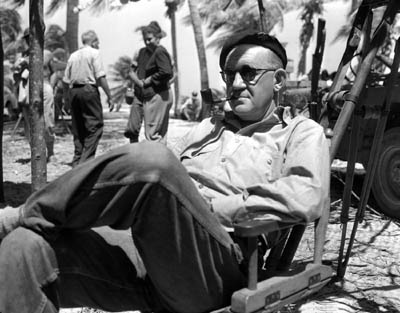
Since today is the birthday of John Ford (February 1, 1894 – August 31, 1973), the obvious choice for movie viewing this weekend is any number of his stellar films.

Screen Shot 2019-01-31 at 8.20.00 PM.png

By most accounts, he was kind of a real S.O.B., but that notwithstanding, he was the greatest of all films directors. (Orson Welles, Ingmar Bergman and Akira Kurosawa agree with me.)

Screen Shot 2019-01-31 at 7.42.11 PM.png

So what shall it be?

Stagecoach (1939)

Young Mr. Lincoln (1939)

Drums Along the Mohawk (1939)

The Grapes of Wrath (1940)

How Green Was My Valley (1941)

They Were Expendable (1945)

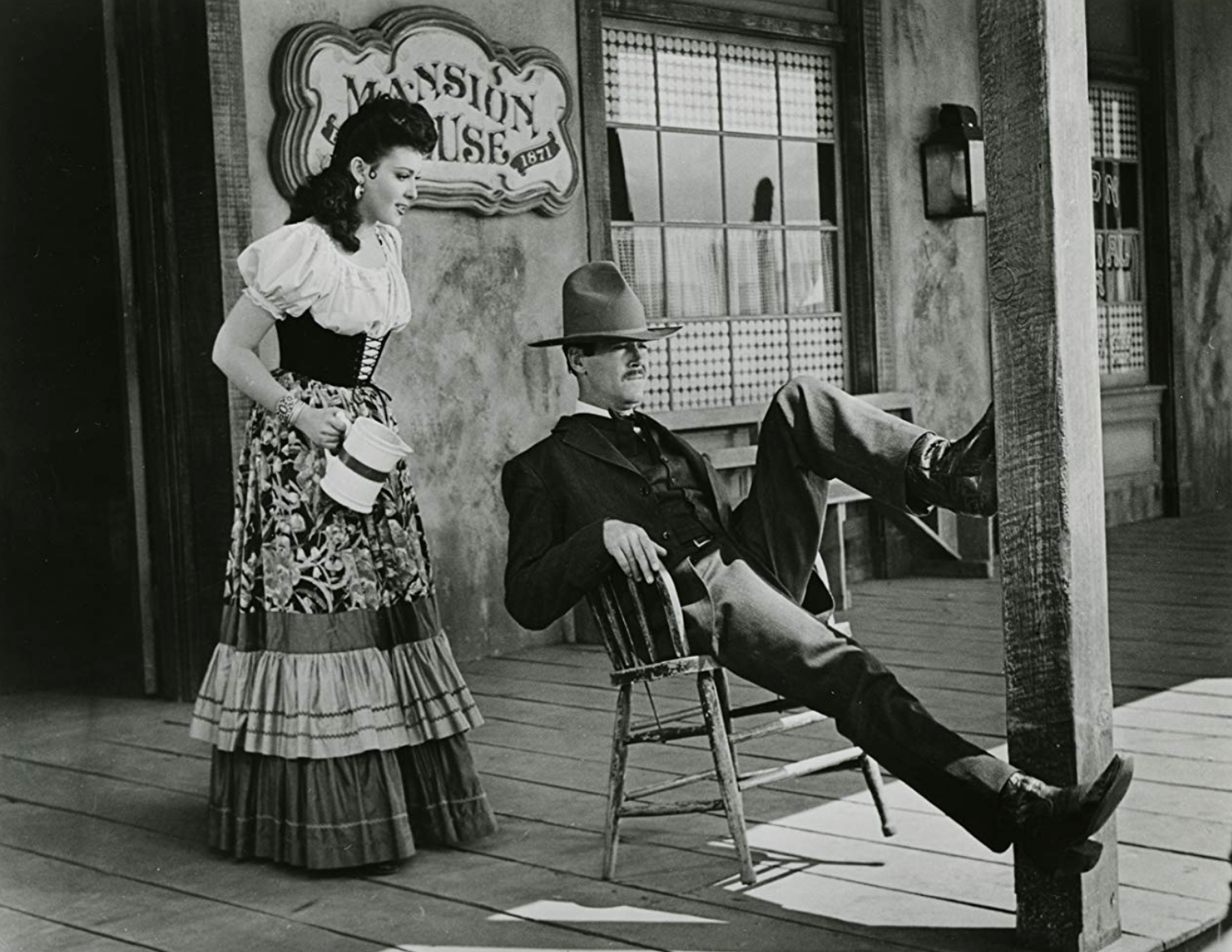
My Darling Clementine (1946)

Fort Apache (1948)

3 Godfathers (1948)

She Wore a Yellow Ribbon (1949)

Wagon Master (1950)

Rio Grande (1950)

The Quiet Man (1952)

Mr. Roberts (1955)

The Searchers (1956)

The Horse Soldiers (1959)

Sergeant Rutledge (1960)

The Man Who Shot Liberty Valance (1962)

How the West Was Won (1962)

Mighty impressive. I am  leaning toward How Green Was My Valley.

Screen Shot 2019-01-31 at 7.30.06 PM.png

What do you think?


screenshot2019-01-31at8.08.33pm

Choose joy this weekend, and by that I mean, watch a good movie!

*Granville Thordyke in My Darling Clementine.

Friday movie pick: saddle up

by chuckofish


harrysallycover2

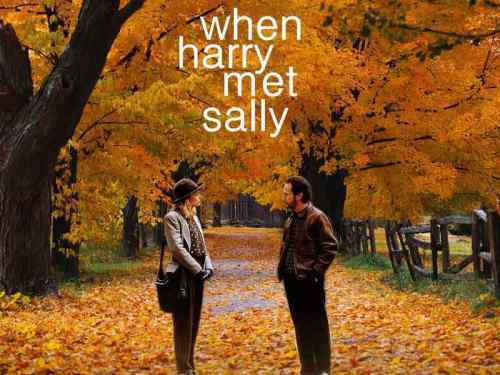
Apartment Therapy had a post about 15 Autumnal Movies to Get You in the Mood for Fall. Of course I hadn’t seen a lot of the movies (i.e. all the Harry Potter films) but I thought it was a good idea. I tried to come up with my own list, but my interest flagged and I failed.
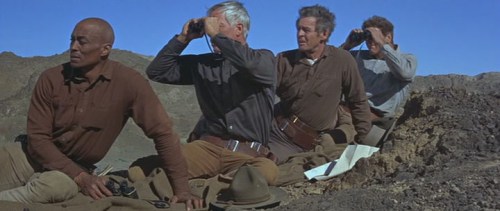
However, I am also seeing lists of the twenty best westerns, probably due to the release of the new The Magnificent Seven. This subject interests me, but most of these lists include movies I loathe. This, of course, is just my opinion. Everyone is entitled to their own. But it got me to thinking of what my list of the 20 best westerns would actually include. (By this I mean movies that take place west of the Mississippi and therefore do not include Civil War movies such as The Horse Soldiers.)

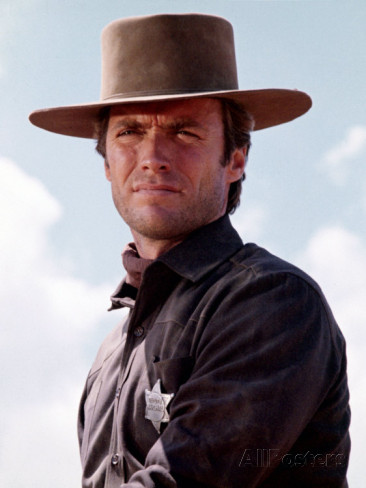
My list does not include The Wild Bunch  or Butch Cassidy and the Sundance Kid or anything with Clint Eastwood. I watched Hang ’em High (1968) recently and the only thing in it that I liked was Clint himself,

hang-em-high-clint-eastwood-1968

who is very attractive and worth watching, but the movie itself was terrible and a perfect example of why the genre was ruined. The only Clint Eastwood western I might include would be The Outlaw Josey Wales (1976), but, as you will see, I did not.

Well, here is my list of the 18 best westerns. You won’t be surprised–I have blogged about most of them. They are distinguished by great screenplays that feature outstanding characters, excellent direction and fine acting. Most also boast wonderful cinematography, although a few do not.

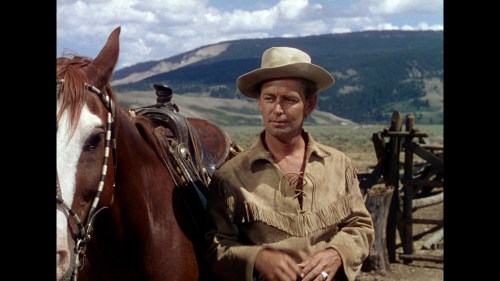
Shane (1953) George Stephens

large_shane_blu-ray_03

Stagecoach (1939) John Ford

stagecoach_landscape

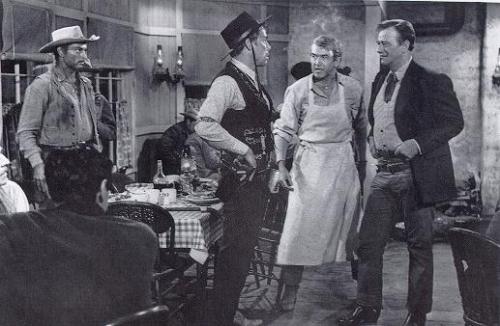
The Man Who Shot Liberty Valance (1962) John Ford

liberty

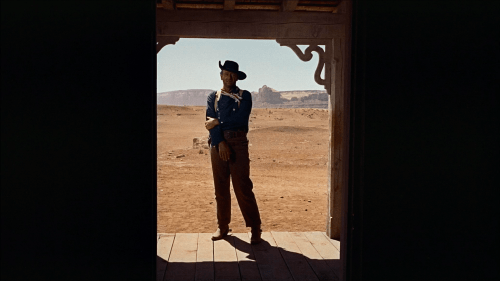
The Searchers (1956) John Ford

iconicdoorwayshot_thesearchers

My Darling Clementine (1946) John Ford

MY DARLING CLEMENTINE

She Wore a Yellow Ribbon (1949) John Ford

she-wore-a-yellow-ribbon

3 Godfathers (1948) John Ford

godfather-john-wayne

How the West Was Won (1962) various

how-the-west-was-won

Rio Bravo (1957) Howard Hawks

035-rio-bravo-theredlist

Rio Grande (1950) John Ford

fb2b43dd6a9a56add000f94191ad6a77

Hombre (1967) Martin Ritt

16hoberman-blog427

The Professionals (1966) Richard Brooksthe-professionals-1966-se-dvdrip-xvid-ac3-c00ldude05817415-42-50

El Dorado (1966) Howard Hawks

9627_5
The Plainsman (1936) Cecil B. DeMille

plainsman-1

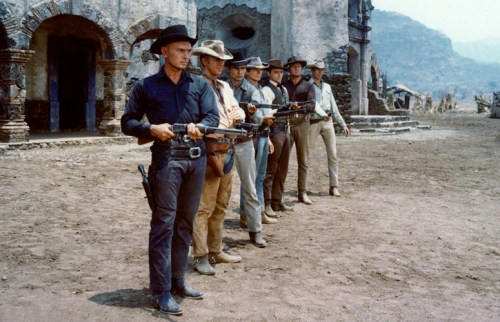
The Magnificent Seven (1960) John Sturges

the-magnificent-seven-1960

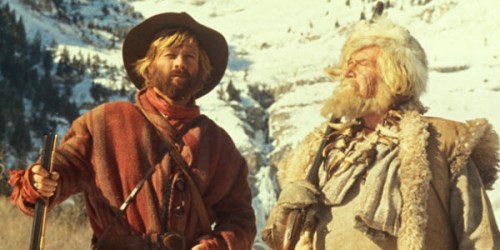
Jeremiah Johnson (1972) Sydney Pollack

9144298a21929ce29685567b0e488b80-1

Red River (1948) Howard Hawks

homepage_eb19980301reviews08401010355ar

Santa Fe Trail (1940) Michael Curtiz

reagan-dehavilland-flynn

As you can see, I have nothing on my list after 1972. The only western I can think of from those latter days is Silverado (1985), which I enjoyed very much at the time. However, it is an extremely derivative movie. There is nothing original in it. Even the performances seem to me to be impersonations of other actors.

If you ask me, I think television caused the western genre to go downhill fast. Characters became caricatures, plots were repetitive and violence took the place of plot. The genre was further degraded in the fifties when screenwriters tried to address 20th century problems–racial prejudice, McCarthyism, etc–by making them issues in westerns to dreary effect. Nobody seemed to care about authenticity anymore–they just wanted to make a point.   Heaven’s Gate (1980)–one of the worst movies ever and the biggest financial debacle in Hollywood history–dealt the final death blow.

What did I forget? There are plenty of westerns which I find highly enjoyable and that deserve some special call-out, but do not rank as “the best”. These would include: Rocky Mountain (1950), Johnny Guitar (1954), The Furies (1950), True Grit (1969), The Cowboys (1972), The Shootist (1976), The Big Country (1958), Monte Walsh (1970), Hondo (1953), Sergeant Rutledge (1960), The Long Riders (1980). And I did not include Lonesome Dove because it is a miniseries made for television and not, therefore, constrained to the 2-3  hour time limit of the others. But it ranks up there as a great western.

Anyway…there are two spots left in my “top 20”, so convince me!

Discuss among yourselves.

“I hope you have the pleasure of buying me a drink on your next payday.”

by chuckofish

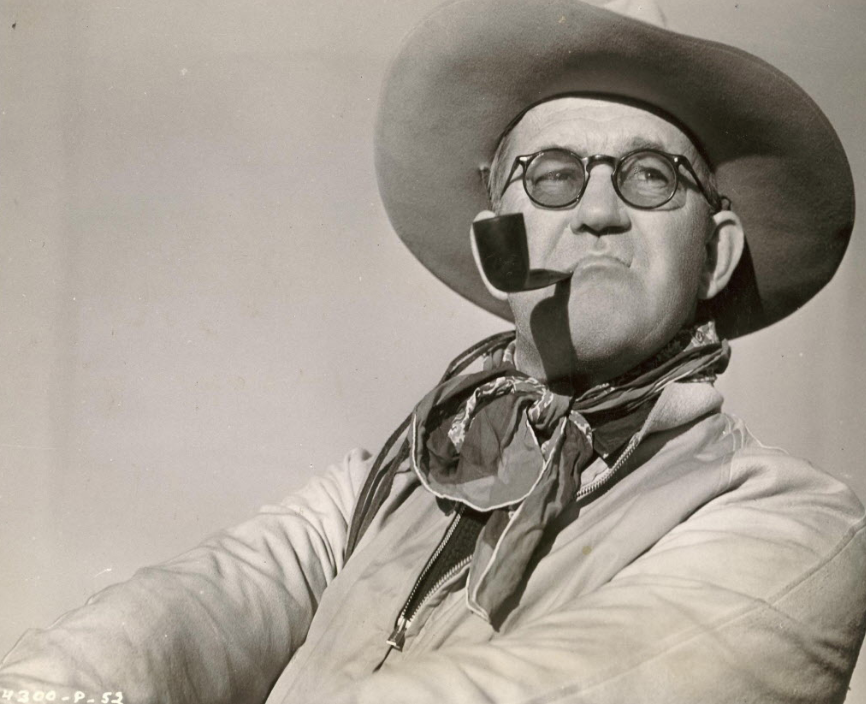
Yesterday was the birthday of the great director John Ford (February 1, 1894 – August 31, 1973). In fact, he is probably the greatest of all film directors. Even Bergman and Kurosawa looked up to him.

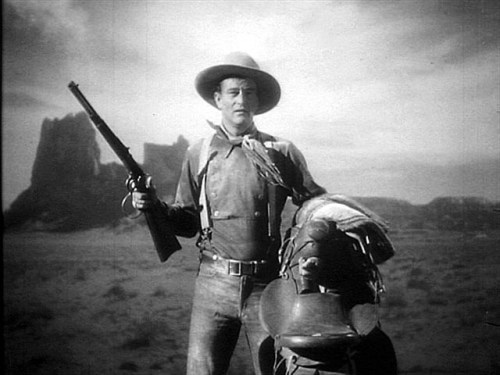
"Stagecoach" 1939

“Stagecoach” 1939

When I was watching Red River (1948) the other day, which is directed by the great Howard Hawks, I kept thinking, “This is good, but it would have looked so much better had John Ford directed.” There are some good shots in this movie–notably of the swarming cattle herd–but he never gets the huge vistas that Ford would have had. You never get the sense of the size of Texas or the sky in Kansas. Most of it looks like it was filmed on a soundstage with bad lighting. John Ford would have opened it up.

She-Wore-a-Yellow-Ribbon

The iconic approaching storm scene in “She Wore a Yellow Ribbon” 1949

"The Searchers" 1956

“The Searchers” 1956

A lot of Ford’s success is due to his close association with two great cinematographers, with whom he worked on many of his greatest films: Winton C. Hoch (3 Godfathers (1948), She Wore a Yellow Ribbon (1949), The Quiet Man (1952), and The Searchers (1956); and Bert Glennon: Stagecoach (1939), Young Mr. Lincoln (1939), Drums Along the Mohawk (1939), Rio Grande (1950), Wagon Master (1950), Sergeant Rutledge (1960).

He knew how to pick ’em. And he knew how to cast. His ensemble casts are second to none.

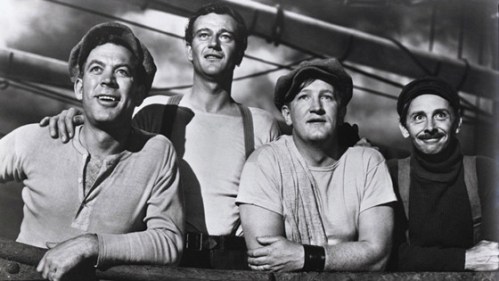
"The Long Voyage Home" 1940

“The Long Voyage Home” 1940

He won four Best Director Oscars–for The Informer (1935), The Grapes of Wrath (1940), How Green Was My Valley (1942), and The Quiet Man (1952).

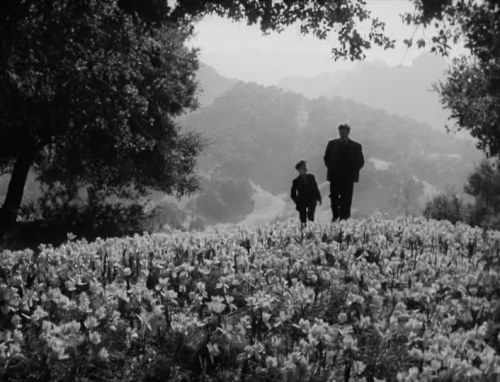
"How Green Was My Valley" 1940

“How Green Was My Valley” 1942

He won two more  Academy Awards for best Documentary–The Battle of Midway (1942) and December 7th (1943). Of course, not one of them was for a western. There are so many for which he should have at least been nominated–The Searchers (1956) and My Darling Clementine (1946) chief among them.

I’m  not saying that all his films are great. In fact, they are quite inconsistent. He can succumb to a weepy Irish sentimentality which is unfortunate and can be embarrassing. Any movie involving James Cagney, Tyrone Power, Grace Kelly, Spencer Tracy, and/or English history (yes, I’m thinking Mary of Scotland) should be avoided. But even these can be entertaining and worth watching.

Wagon_Master

John Wayne and Henry Fonda were never better than under the direction of John Ford. And John Ford had the good sense to use them often. He famously cast the relatively unknown John Wayne in Stagecoach when the producer wanted Gary Cooper and Marlene Dietrich. The result using the big stars would have been a good movie, but Marlene would have taken over and Gary would have been all aw shucks and adorable–standard fare.

WayneStagecoach01

Directors who copied his style have made a lot of standard movies. His never were.

johnford1

John Wayne gave the eulogy at his funeral.

So a toast tonight to the great John Ford!

Sgt. Beaufort in Fort Apache (1948)

June continues to bust out all over

by chuckofish

We have enjoyed a really nice June in our flyover state–relatively cool and lots of rain. This is certainly not always the case! So it is good to take a moment and think about how nice it is.

The grass looks great and has not started to burn up yet.

grass

The flowers are happy.

yellowfleur

crys

And the tiger lilies are starting to pop!

lilies

We can enjoy open toe espadrilles

feet

and more hours of daylight. Lately it has been cool enough to actually work in the yard after dinner.

And here’s a fun fact: The Horse Soldiers (1959) was released to movie theaters 55 years ago yesterday.

Horse_Soldiers_(1959)x01

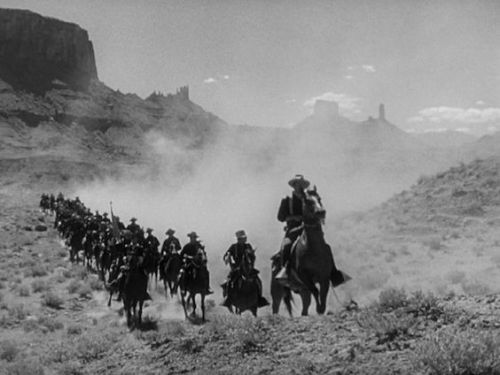
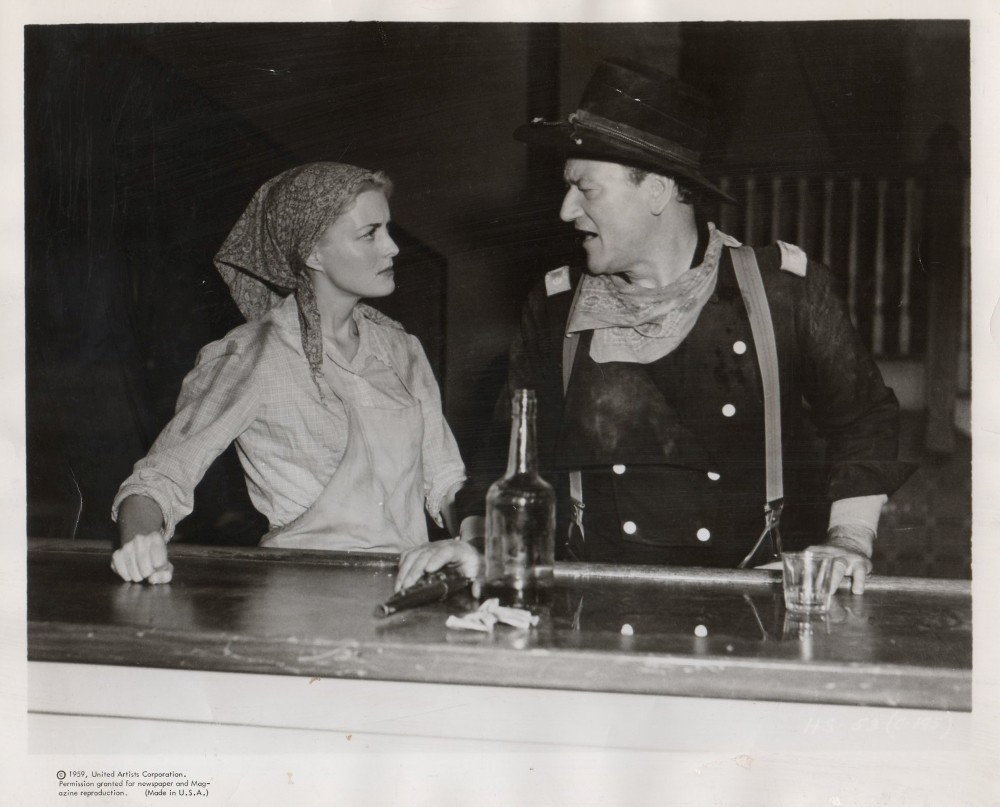
This is one of my favorite John Ford movies. It’s the one where a Union Cavalry outfit sets out from northern Mississippi and rides several hundred miles behind confederate lines in April 1863 to destroy a rail/supply center. Based on a true story, the raid was as successful as it was daring, and remarkably bloodless. The Horse Soldiers was filmed on location in Natchitoches Parish Louisiana along the banks of Cane River Lake and in and around Natchez, Mississippi. The locations give it a real sense of place and authenticity that Civil War movies don’t always have. The plantation house, for instance, where Towers’ character lives, is a real antebellum house and not Tara.

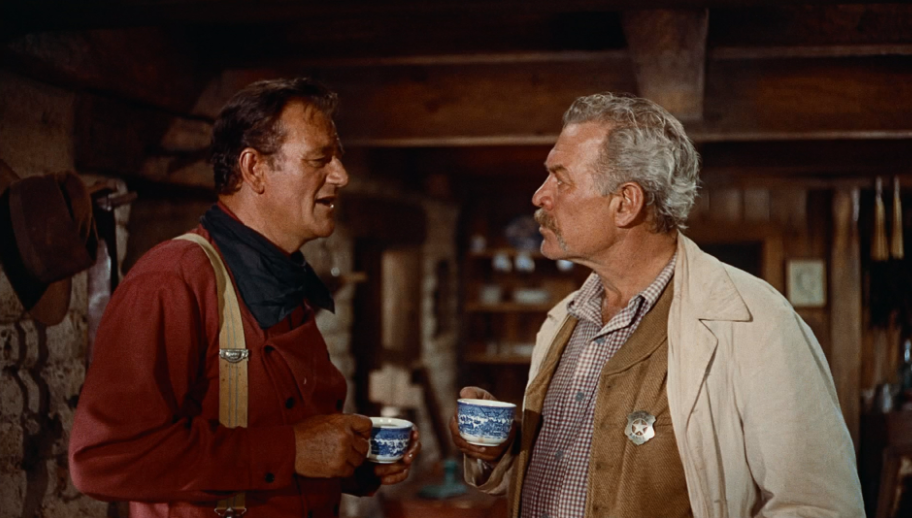
William Holden plays a doctor who immediately comes into conflict with the commander of the mission (John Wayne). The officers are overheard discussing their secret plan by a clever southern belle (Constance Towers) who must then be taken along to assure her silence. Holden is a great foil for Wayne, who, in my opinion, gives one of his best performances. He has a couple of really memorable scenes, such as the one where he explains to Hannah Hunter why he hates doctors. Nobody could break whiskey glasses like John Wayne.

wayne254

It should also be noted that the Duke is very sexy in this movie and the sophisticated William Holden never has a chance with the leading lady.

The main female character is also a refreshingly good one. She has some depth–she is smart and spunky and well-played by Towers.

The Horse Soldiers also includes a large number of great Ford character actors–from Anna Lee to Hoot Gibson, Strother Martin, Denver Pyle, Ken Curtis, Hank Worden, and even the always bizarre O.Z. Whitehead–all playing clearly defined people.

6559

These characters are but one aspect that sets apart Ford’s films from the vast majority of run-of-the-mill movies made over the years. But this aspect is huge. All the minor characters have a line or two and all are memorable.

HorseSoldiers18_zps13757f49

You remember them all: the officers, including Major Gray, an actor quoting Tennyson (“Blow, bugle, blow”) and Colonel Secord, almost a senator (“This would look great on my record”), as well as the enlisted men (“You told us it was all right as long as we could see the top of her head.”), the deserters (“We’re confederate, but we ain’t hostile–honest”) to Lukey, Hannah’s devoted slave (“Contraband? That’s me, ain’t it?”). The Horse Soldiers also includes the leg-amputating scene with Bing Russell (Kurt’s father) which traumatized me as a child.

File13_zpsb1da73a4

Anyway, The Horse Soldiers is my Friday movie pick. Sure, it’s another reminder that they don’t make ’em like this anymore, but c’est la vie.

That’ll be the day!

by chuckofish

Last weekend I ended up watching three of my all-time favorite movies: Breakfast at Tiffany’s, The Searchers and The Wizard of Oz. All three should have won Best Picture Oscars, but, of course, none of them did. For me, Breakfast at Tiffany’s (1962) and The Wizard of Oz (1939) are perfect movies. I wouldn’t change a thing about either of them.

The Searchers (1956) is a great, great movie, but it is not perfect. It is arguably the pinnacle of the John Wayne-John Ford collaboration and is considered one of the greatest Westerns ever made. I watched it on TCM as part of their “Essentials” series, introduced by Robert Osborne and Drew Barrymore. I was curious to hear what they had to say. Robert Osborne, who has the best job in the world, can be quite a dolt, and he certainly was this time around.

Permit me now a little rant. Osborne said he preferred John Ford’s black and white films shot in Monument Valley. The technicolor photography of The Searchers was “lurid”. This is comparing apples and oranges. I love the black and white westerns as well, but The Searchers is a whole different scale and category. It is an epic. To give Drew credit, she said she felt like she was watching a work of art, and for once I agreed with her.

the-searchers-original1

Osborne said a lot of other stupid things, but the most egregious comment was stating that John Wayne is at his most “Duke-ish” in this movie. John Wayne is not the Duke in this movie. He is a bitter war veteran who is eaten up with hate. The woman he loves has been savagely murdered by Indians along with her husband and son. He is heart-broken and angry and hell-bent on vengeance. Is this the Duke? Hardly. (As the boy explained, “The Duke is The Fighting Seabees.”)

SearchersEthan3

No, John Wayne is acting in this movie and he is great. He should have won an Oscar for this movie. But, of course, Robert Osborne and Drew Barrymore never mention Wayne’s acting or anyone else’s for that matter. It is as if they do not expect there to be acting in a Western–there is only action, right? He did mention that for once Jeffrey Hunter had a better part than usual, but no credit was given to John Wayne.

John-Wayne-in-The-Searchers

As I said before, this is a flawed film. The great John Ford seems uneasy with the serious subject matter and he undermines Wayne’s great performance by frequently cutting from a dramatic scene to a haw-haw “my fi-an-cy” scene in an irritating way. Even at the denouement of the movie when Wayne’s character finally confronts his long-lost niece, Ford cuts immediately to Ward Bond with his pants down. Why does he do this? It is perplexing. It is, indeed, almost like two films: the one with John Wayne out on the trail and the one with the people back at home. When the two intersect, it is problematic.

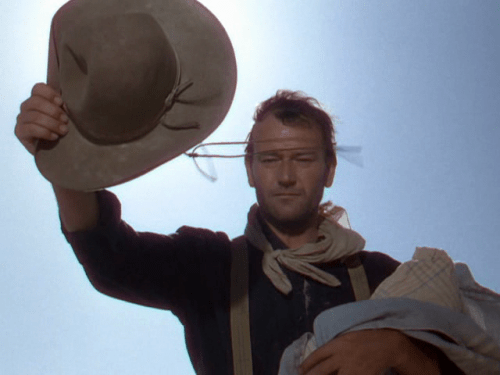
But still, John Wayne is at his graceful best: throwing his hat, gesticulating and waving, galloping and shooting, and spitting out lines like,

“Well, Reverend, that tears it! From now on, you stay out of this. All of ya. I don’t want you with me. I don’t need ya for what I got to do..”

and

“What do you want me to do? Draw you a picture? Spell it out? Don’t ever ask me! Long as you live, don’t ever ask me more.”

He does it all like no one before or since. He can tell you how he feels by moving one muscle in his face. I have heard that the Duke himself considered this his greatest role and his own favorite movie. Of course he did.

IMGP0818