That’ll preach
by chuckofish

Amen, brother.
Read the Bible, find a church with good biblical preaching. And also this. “Let us fall before the majesty of our great God.”
Amen, brother.
Read the Bible, find a church with good biblical preaching. And also this. “Let us fall before the majesty of our great God.”
Well, I have made it through two days of VBS. The weather has been beautiful so no complaints there.

Everything is going according to well-laid plans. This is necessary when you have over 200 kids in attendance. And the boy assures me that the wee twins are practicing their songs and praise hands at home.

Besides praise singing, we do a lot of scripture memorizing using a variety of games. I ask you, what could be better for small children to learn and internalize than this:
So do not fear, for I am with you; do not be dismayed, for I am your God. I will strengthen you and help you; I will uphold you with my righteous right hand. (Isaiah 41:10)
My girls won the “Multi Verse Games” yesterday in our age group, so I was very proud. (Not that there are prizes or anyone pays attention to who wins or loses, but still, I was pleased.) We also tied in our field hockey game using pool noodles.
So onward and upward and here’s part of a prayer by John Calvin:
Grant that I may hear your voice in the morning since I have hoped in you. Show me the way in which I should walk, since I have lifted up my soul unto you. Deliver me from my enemies, O Lord, I have fled unto you. Teach me to do your will, for you are my God. Let your good Spirit conduct me to the land of uprightness.
“A book is more than a verbal structure or series of verbal structures; it is the dialogue it establishes with its reader and the intonation it imposes upon his voice and the changing and durable images it leaves in his memory. A book is not an isolated being: it is a relationship, an axis of innumerable relationships.”
Today is the anniversary of the death of Jorge Luis Borges (1899-1986), Argentine short-story writer, essayist, poet and translator.
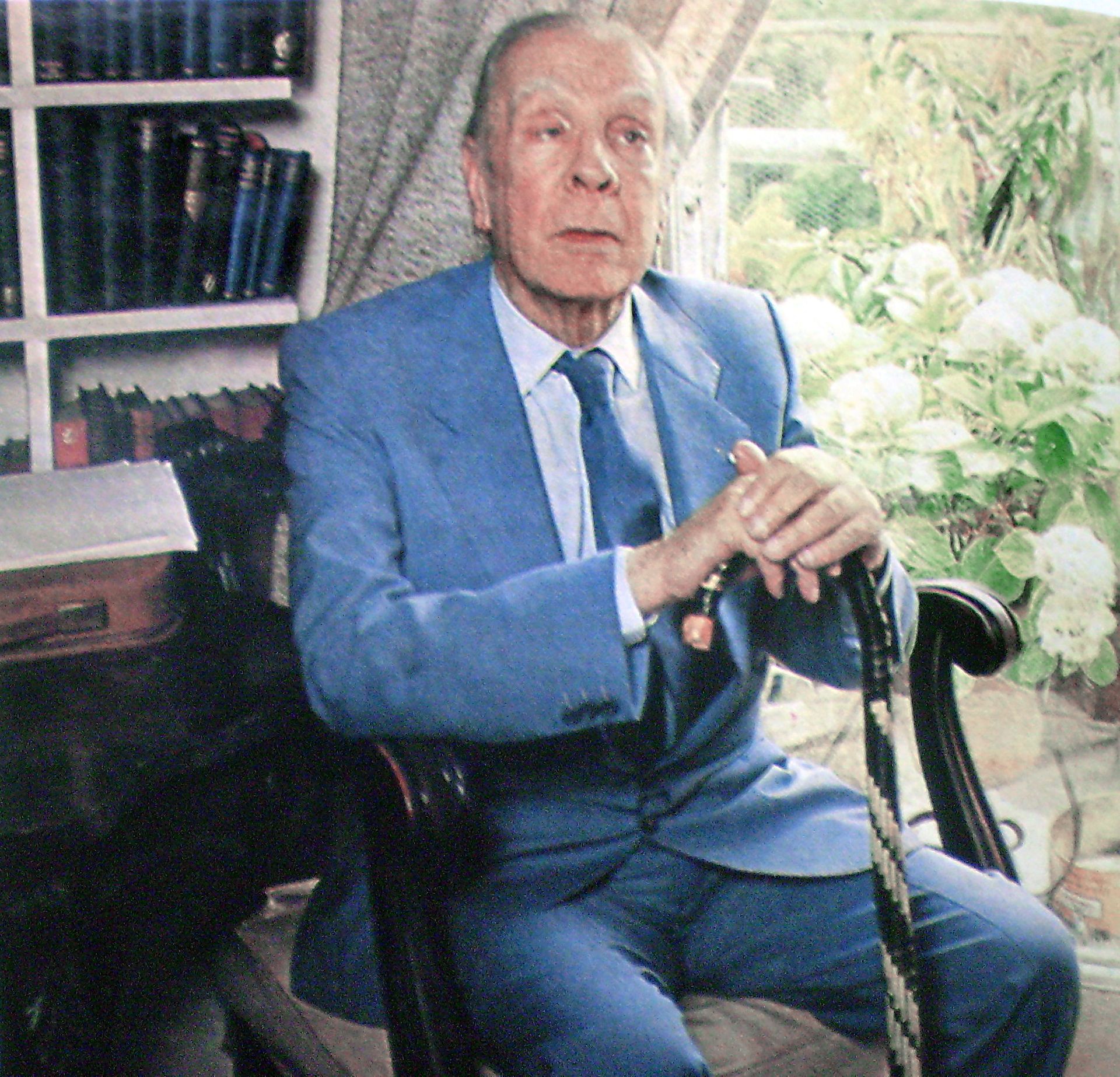
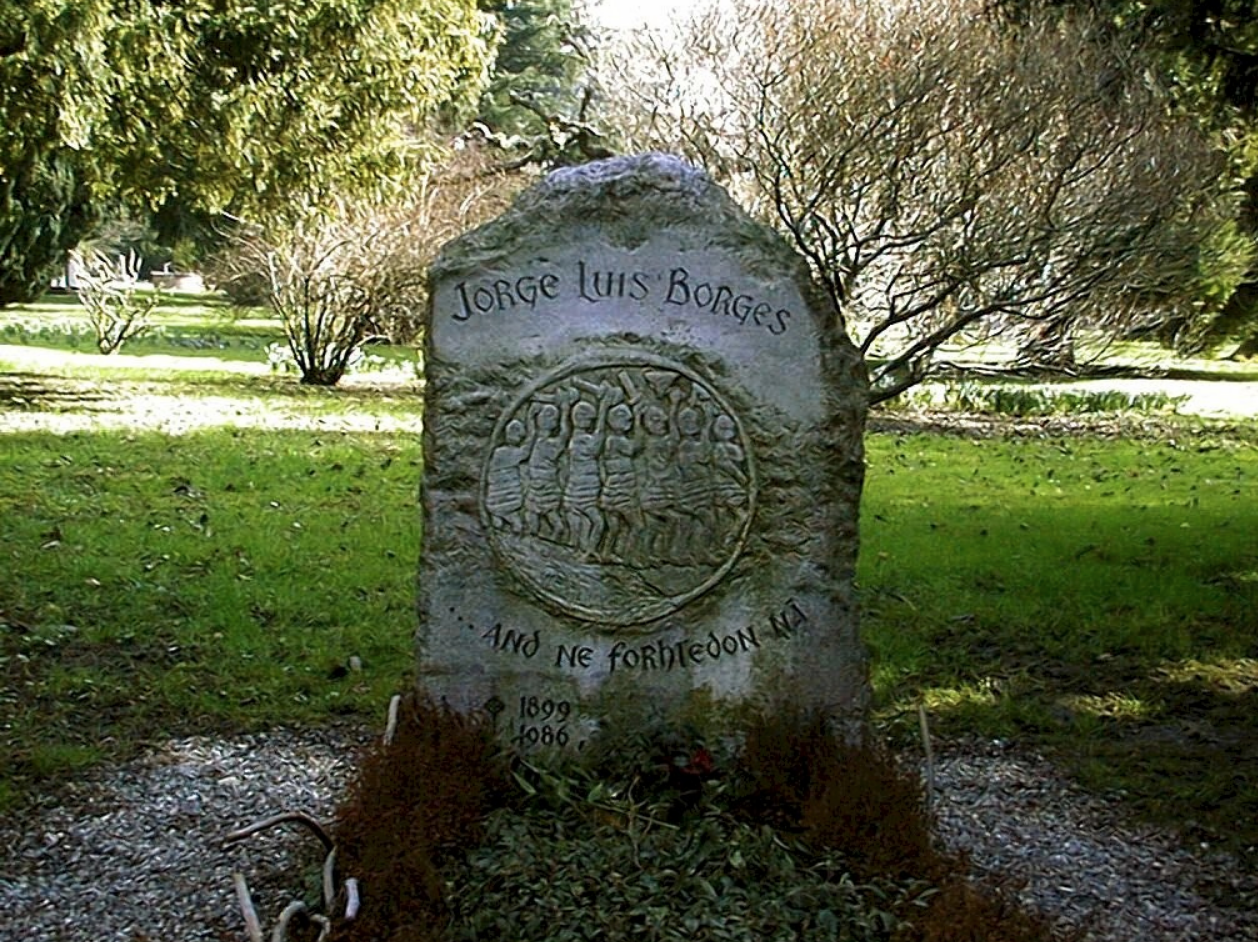
He is buried in the Cimetière de Plainpalais, in Geneva, Switzerland, along with John Calvin.
Many people thought that he should have been awarded the Nobel Prize for literature. This makes me think of Philip Roth, who died a few weeks ago, who also felt robbed of the same award.
Well, as Calvin said, “Man’s nature, so to speak, is a perpetual factory of idols.”
If you are looking for something to read, you might look up old Jorge Luis Borges. I am not well read in his canon, but what I have read, I liked.
I’m talking to an American: there’s a book I must speak about — nothing unexpected about it — that book is Huckleberry Finn. I thoroughly dislike Tom Sawyer. I think that Tom Sawyer spoils the last chapters of Huckleberry Finn. All those silly jokes. They are all pointless as jokes; but I suppose Mark Twain thought it was his duty to be funny even when he wasn’t in the mood. The jokes had to be worked in somehow. According to what George Moore said, the English always thought, “better a bad joke than no joke.”
I think that Mark Twain was one of the really great writers, but I think he was rather unaware of that fact. But perhaps in order to write a really great book, you must be rather unaware of the fact. You can slave away at it and change every adjective to some other adjective, but perhaps you can write better if you leave the mistakes.
I remember Bernard Shaw said, that as to style, a writer has as much style as his conviction will give him and not more. Shaw thought that the idea of a game of style was quite nonsensical, quite meaningless. He thought of Bunyan, for example, as a great writer because he was convinced of what he was saying. If a writer disbelieves what he is writing, then he can hardly expect his readers to believe it. In this country, though, there is a tendency to regard any kind of writing — especially the writing of poetry — as a game of style. I have known many poets here who have written well — very fine stuff — with delicate moods and so on — but if you talk with them, the only thing they tell you is smutty stories or they speak of politics in the way that everybody does, so that really their writing turns out to be a kind of sideshow. They had learned writing in the way that a man might learn to play chess or to play bridge. They were not really poets and writers at all. It was a trick they had learned, and they had learned it thoroughly. They had the whole thing at their finger ends. But most of them — except four or five, I should say — seemed to think of life as having nothing poetic or mysterious about it.
(Interview with Borges in The Paris Review)
 dual personalities