dual personalities

Tag: hymns

Praising my savior all the day long

by chuckofish

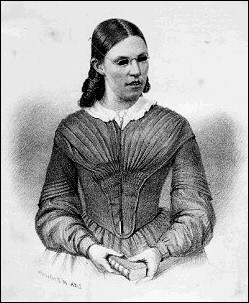
Frances Jane Crosby was the most prolific writer of hymn texts and gospel songs in the American evangelical tradition of the late nineteenth and early twentieth centuries. She wrote more than eight thousand sacred texts in addition to other poetry.
crosby

Born in Putnam County, New York, on March 24, 1820, she lost her sight as an infant as a result of complications from a childhood illness. At the age of fifteen, she entered the New York Institute for the Blind where she would later teach for a number of years. In 1858, she married Alexander van Alstyne, a musician in New York who was also blind. Crosby was a lifelong Methodist.

Fanny Crosby is honored with a feast day on the liturgical calendar of the Episcopal Church in the United States of America on February 11, even though none of her hymns are included in either the 1940 or 1982 Hymnal. Go figure.

Here is an excellent rendition of one of her most famous hymns, Blessed Assurance, performed by Third Day. Listen to the whole thing and start your Lent on a positive note.
Kick it off, Katie

by chuckofish

Since we have been on the subject of hymns lately, I will perk up your Wednesday with this rendition of What a Friend We Have in Jesus by The Purple Hulls. It has been recorded by everyone from Aretha Franklin to Alan Jackson to John Tesh (!), but I like this version.

The Purple Hulls are a band of siblings and that’s one reason their harmony is so great. They also do a nice instrumental version of Be Thou My Vision, which was always a favorite hymn of mine and which we sang in our school chapel (sans banjo).

(A hat tip to the wonderful Hay Quaker blog where I am always discovering new things, such as The Purple Hulls.)

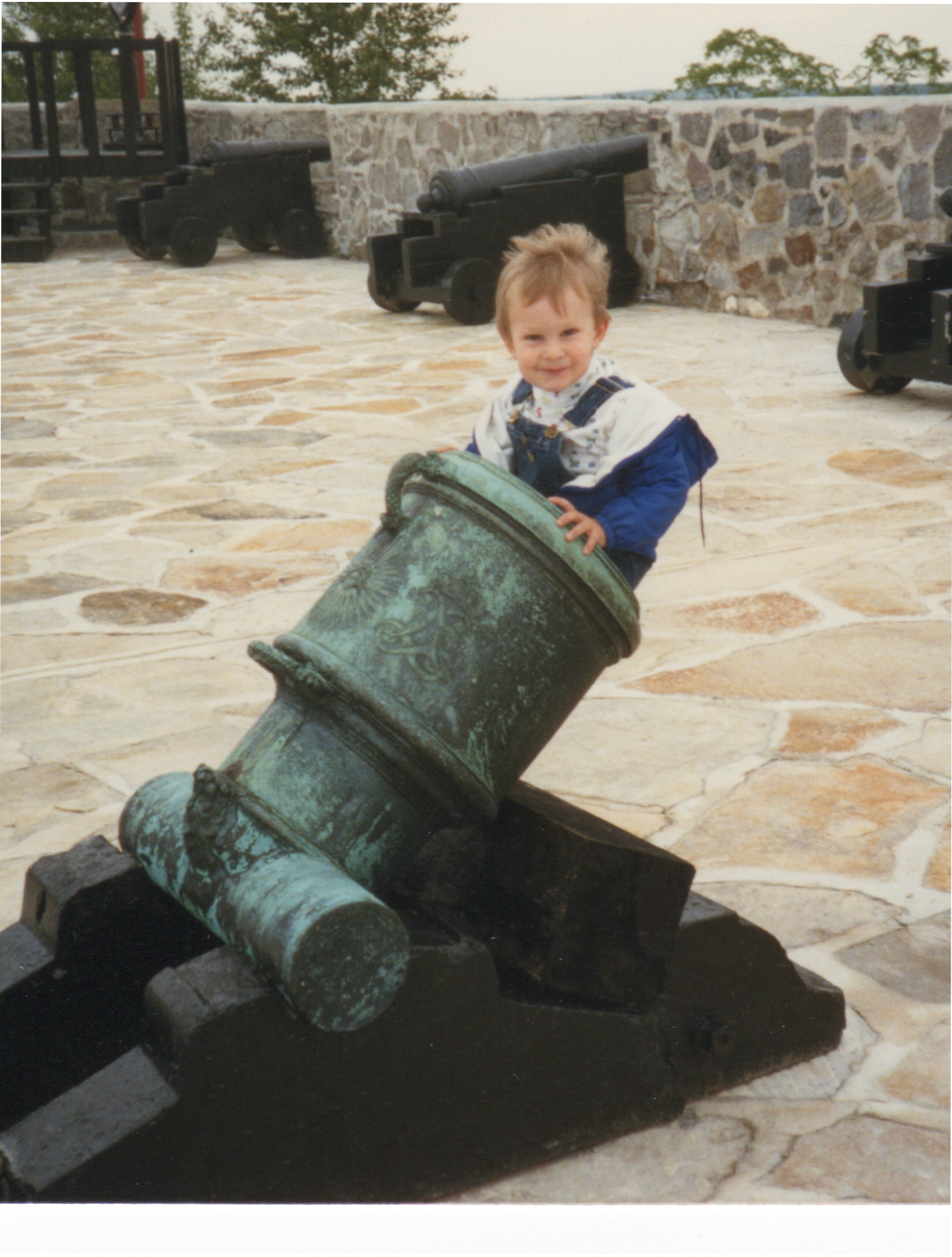
And a special birthday shout out to the boy who turns 26 today!

He has always been a fine young man. This picture reminds us, to paraphrase the great Pete Townshend, that all the best cowboys have Chinese eyes.

Though he with giants fight

by chuckofish

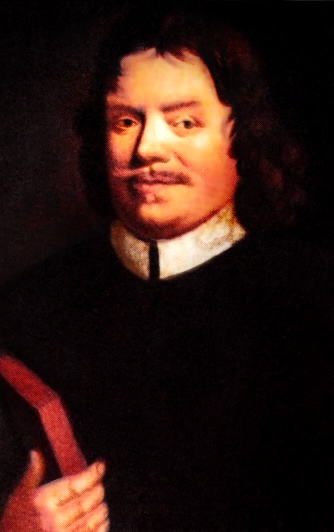
John Bunyan (28 November 1628 – 31 August 1688) was, of course, an English Christian writer and preacher, who is well known for his wonderful book The Pilgrim’s Progress. Though he was a Reformed Baptist, he is remembered in the Church of England with a Lesser Festival on August 30, and on the liturgical calendar of the Episcopal Church (US) on August 29.

I have mentioned before that we had a daily chapel service at the private school I attended. I remember our English headmaster telling us that the hymn “He Who Would Valiant Be” was a favorite (if not the favorite) hymn of Winston Churchill. That struck me as significant and I paid close attention to the words.

He Who Would Valiant Be Hymn

He who would valiant be ’gainst all disaster,
Let him in constancy follow the Master.
There’s no discouragement shall make him once relent
His first avowed intent to be a pilgrim.

Who so beset him round with dismal stories
Do but themselves confound – his strength the more is.
No foes shall stay his might; though he with giants fight,
He will make good his right to be a pilgrim.

Since, Lord, Thou dost defend us with Thy Spirit,
We know we at the end, shall life inherit.
Then fancies flee away! I’ll fear not what men say,
I’ll labor night and day to be a pilgrim.

I tried to find a Youtube video of the hymn, but they all featured the wrong tune (Monk’s Gate). Here is one that at least plays the St. Dunstan’s tune, so you can sing along!

A morning prayer

by chuckofish

Now that the daylight fills the sky,
we lift our hearts to God on high,
that, he, in all we do or say,
would keep us free from harm this day:

Our hearts and lips may he restrain;
keep us from causing others pain,
that we may see and serve his son,
and grow in love for everyone.

From evil may he guard our eyes,
our ears from empty praise and lies;
from selfishness our hearts release,
that we may serve, and know his peace.

–John Mason Neale
#4 The Episcopal Hymnal 1982

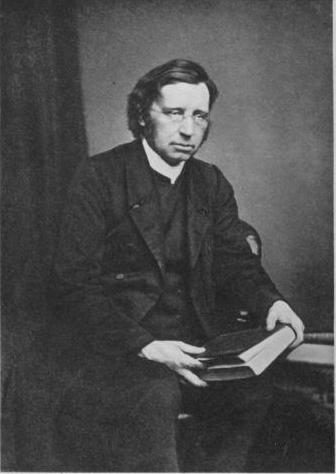
I must say that this hymn/prayer is a wonderful and worthy way to start one’s day. It is one of the lesser known hymns of the great hymn writer John Mason Neale, Anglican priest and scholar, who was educated at Sherborne School, Dorset, and Trinity College, Cambridge, where (despite being said to be the best classical scholar in his year) lack of ability in mathematics prevented him taking an honours degree. Neale was named after the Puritan cleric and hymn writer John Mason (1645–1694), of whom his mother Susanna was a descendant.

A dour looking guy, probably still bitter about those low math scores.

Neale’s most enduring and widely known legacy is probably his contribution to the Christmas repertoire, most notably “Good Christian Men, Rejoice” and his original legendary Boxing Day carol, “Good King Wenceslas”. He was also responsible for much of the translation of the Advent hymn “O come, O come, Emmanuel”, based on the “O Antiphons” for the week preceding Christmas and his hymn “A Great and Mighty Wonder” (translated from the Greek of St Germanus).

Since Neale died on the Festival of the Transfiguration, he is commemorated by the Anglican churches on the following day, 7 August. He is also commemorated in the Calendar of Saints of the Evangelical Lutheran Church in America as a hymn writer on 1 July with Catherine Winkworth.