dual personalities

Tag: History

Postcards from the weekend

by chuckofish

How was your weekend? Ours was punctuated by a lot of weather disparities which we are kind of used to in the midwest. Thankfully the really bad stuff went around us this time.

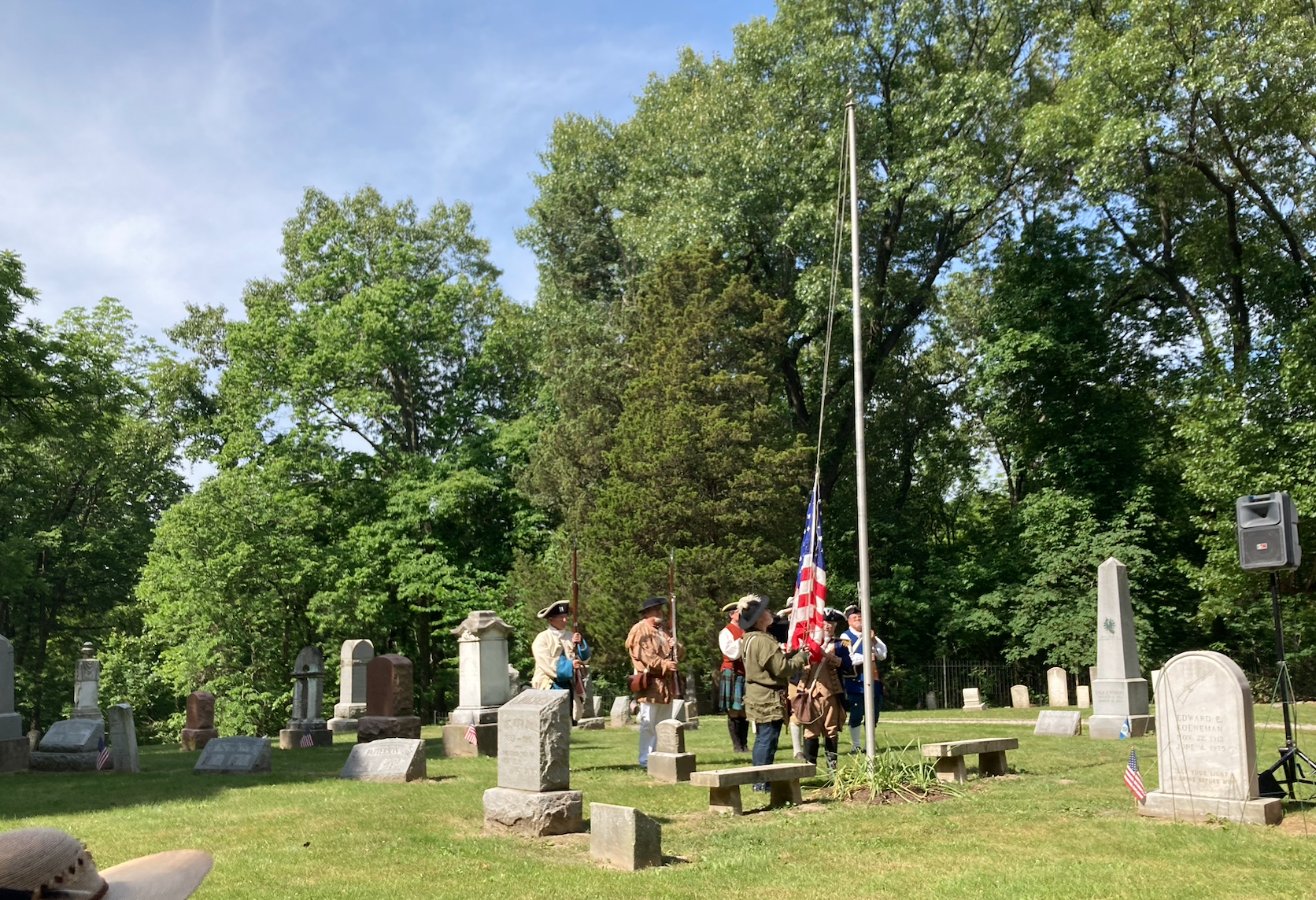
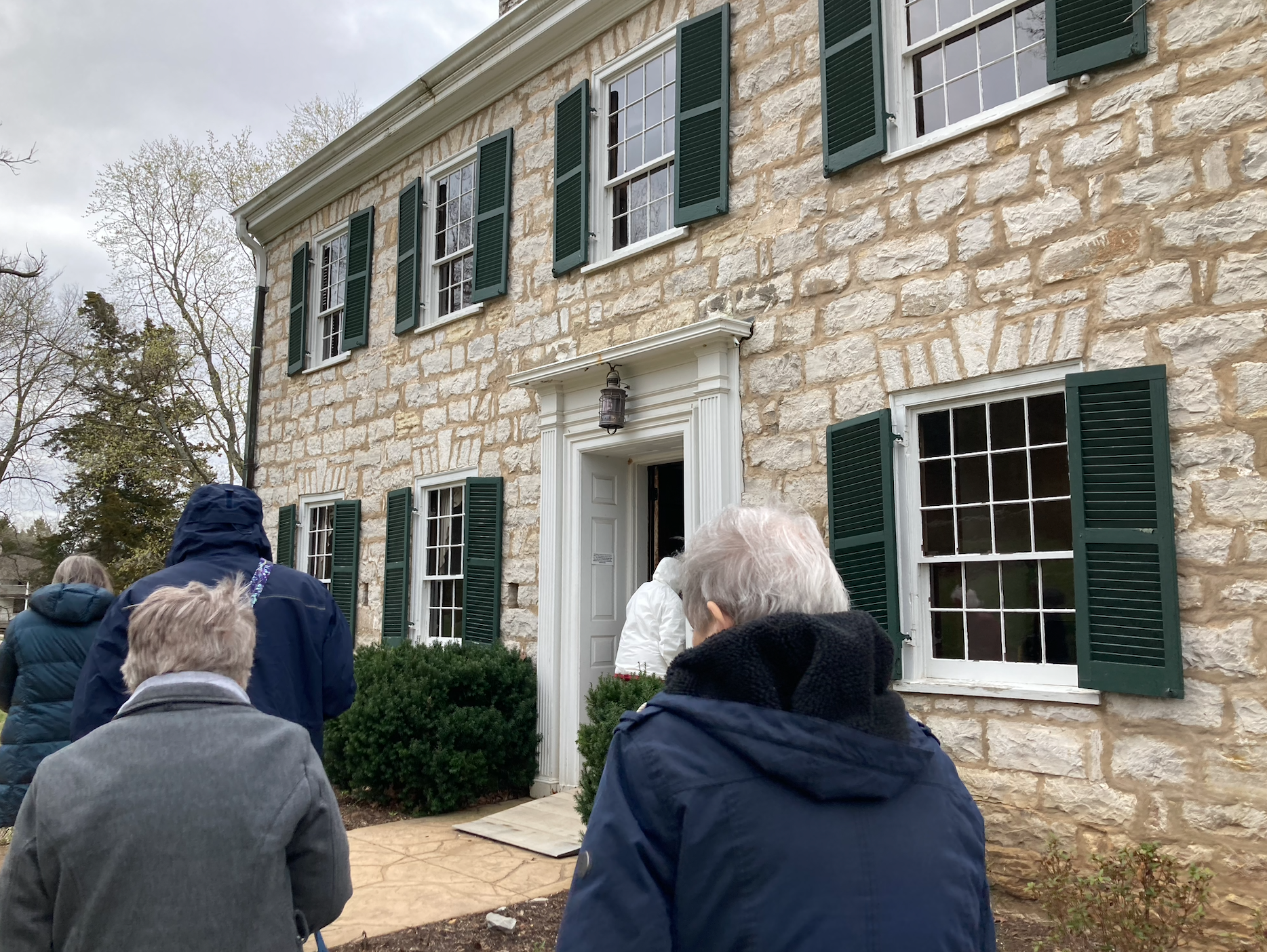
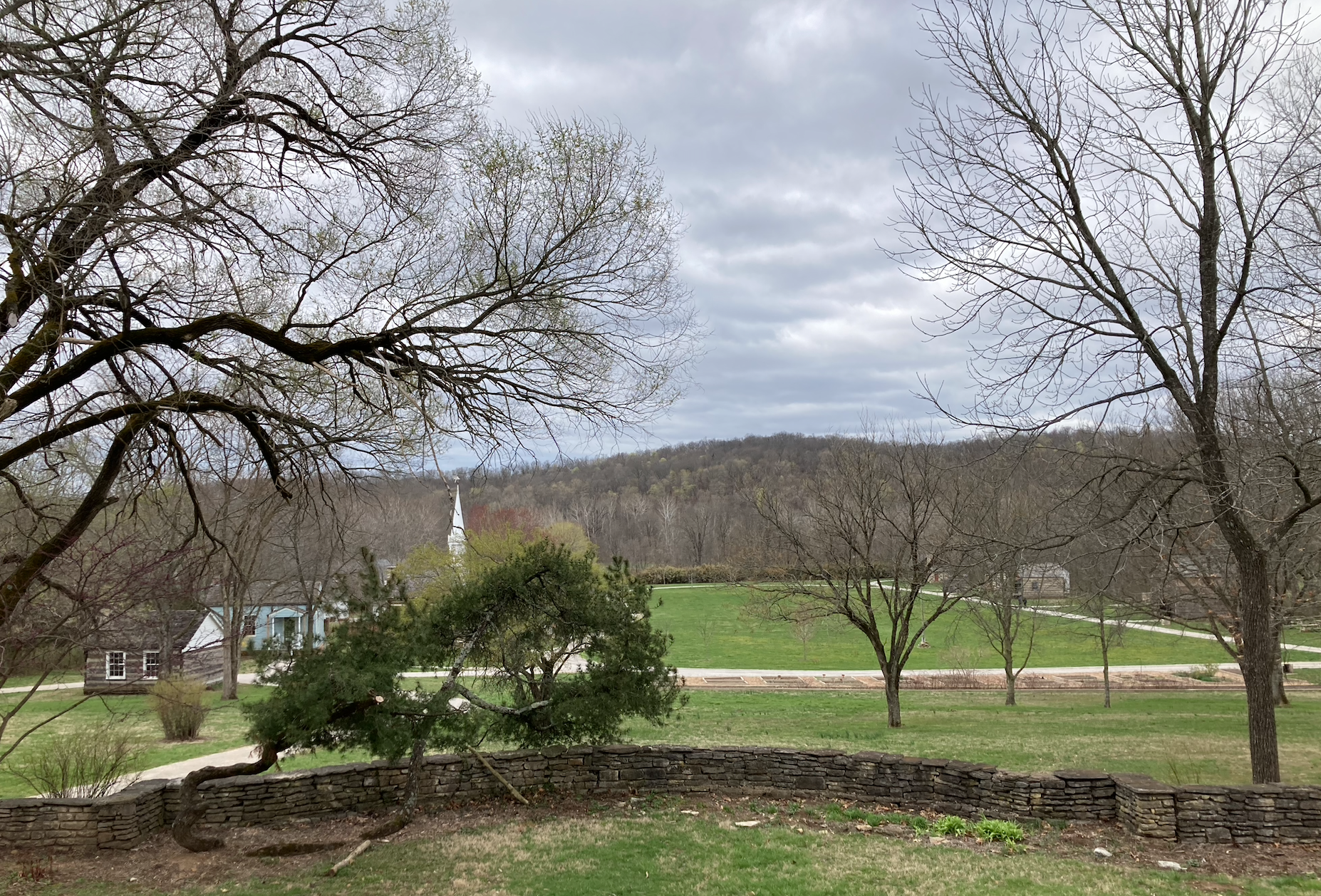
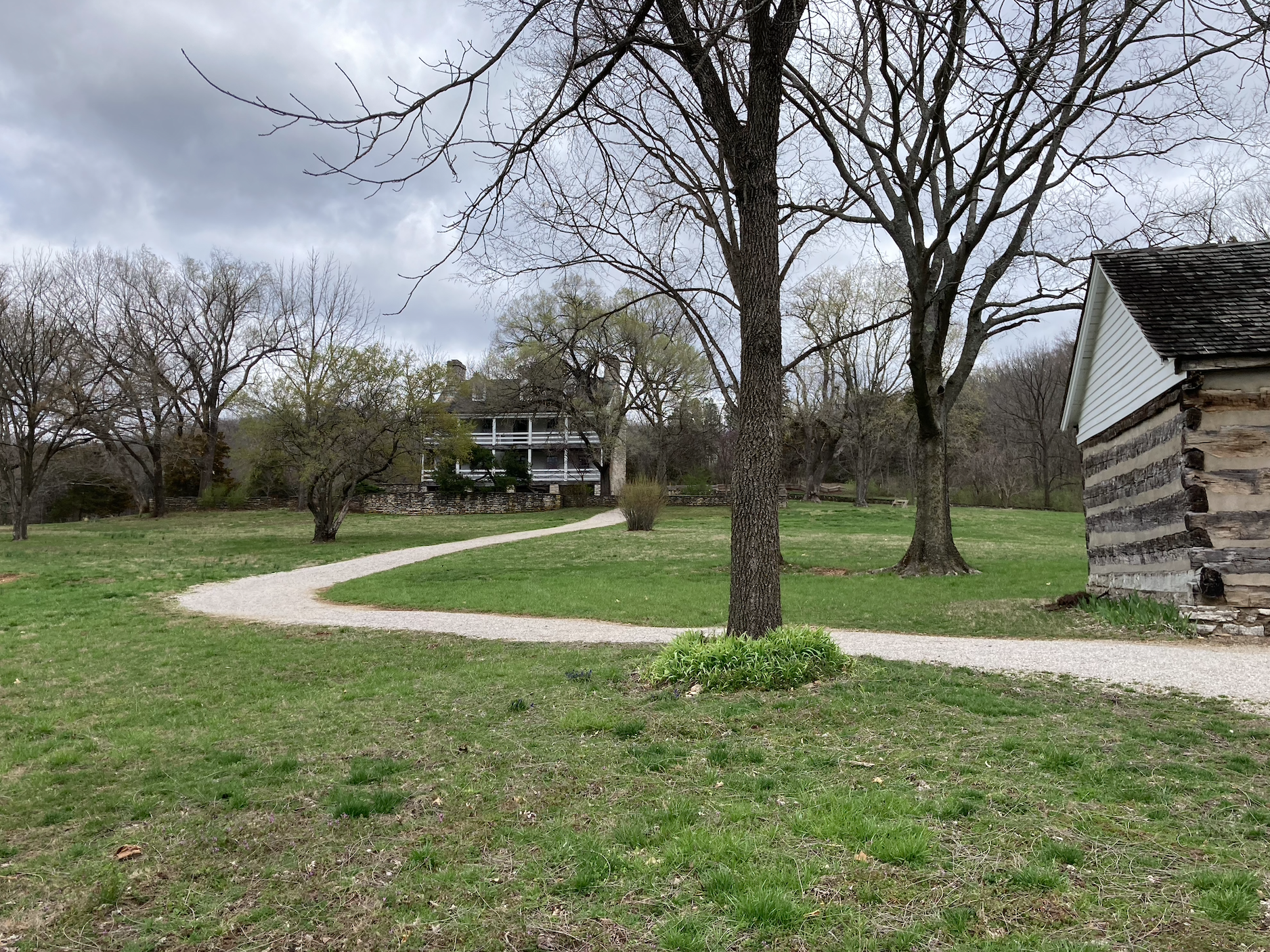
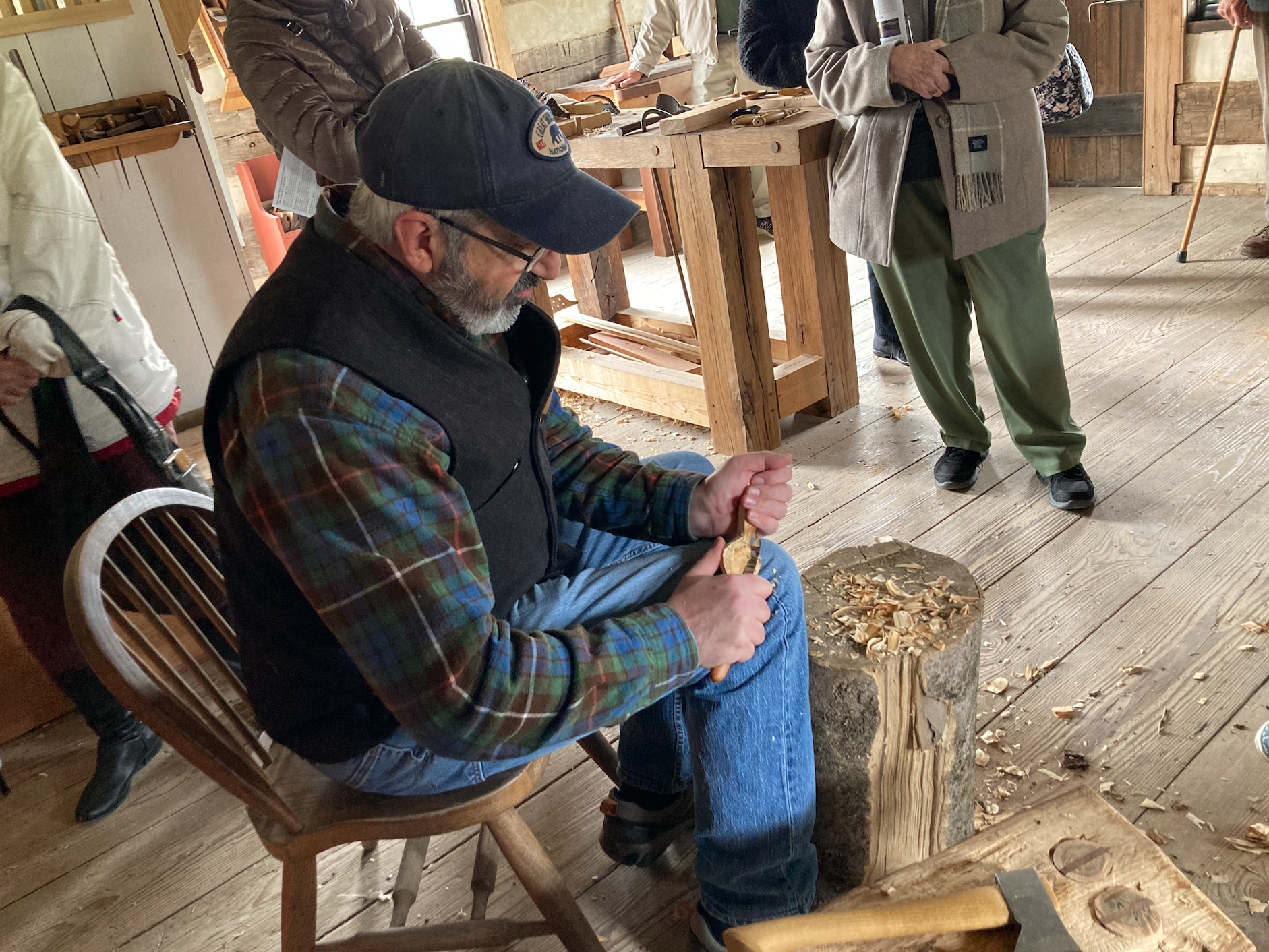
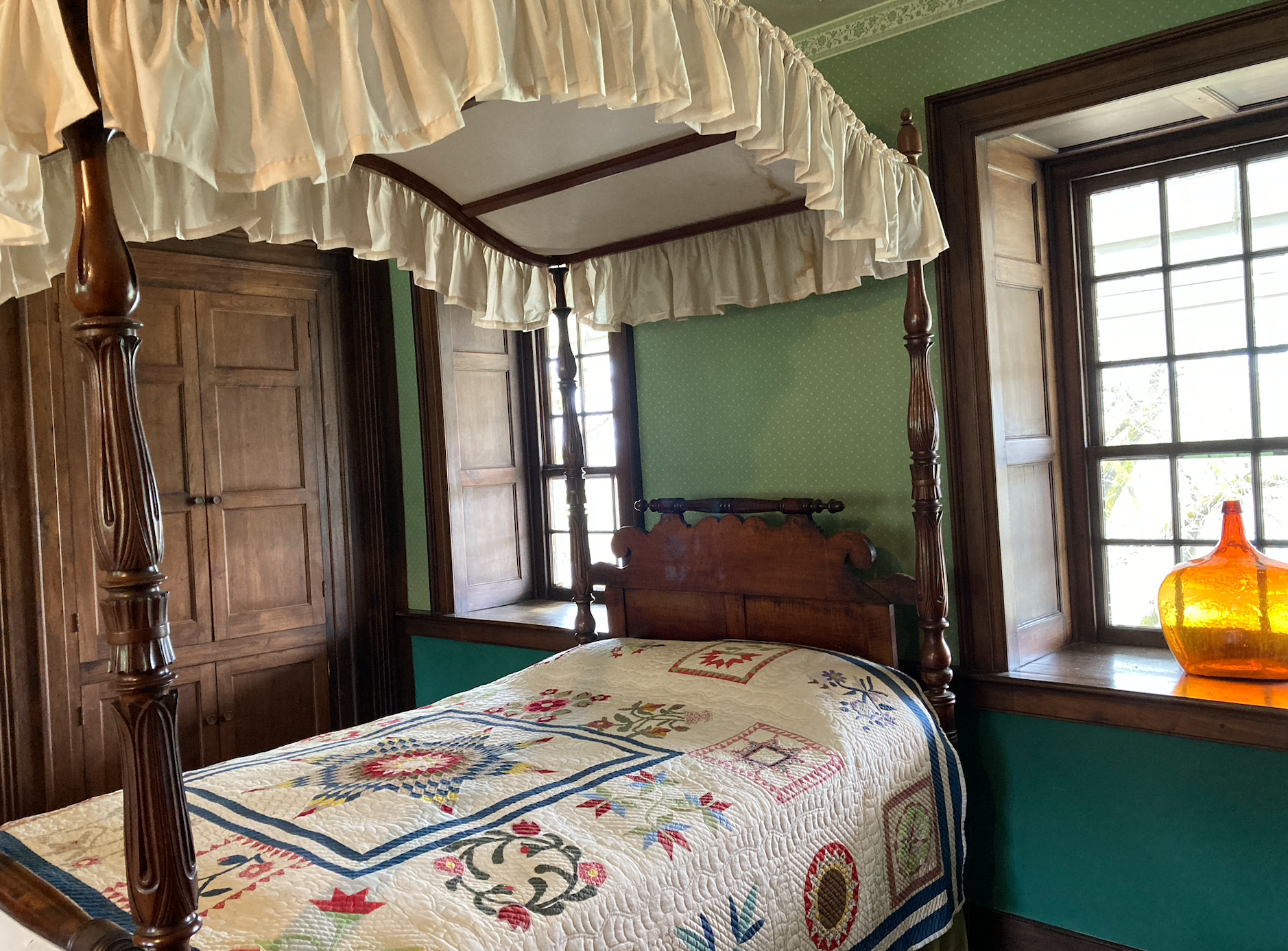
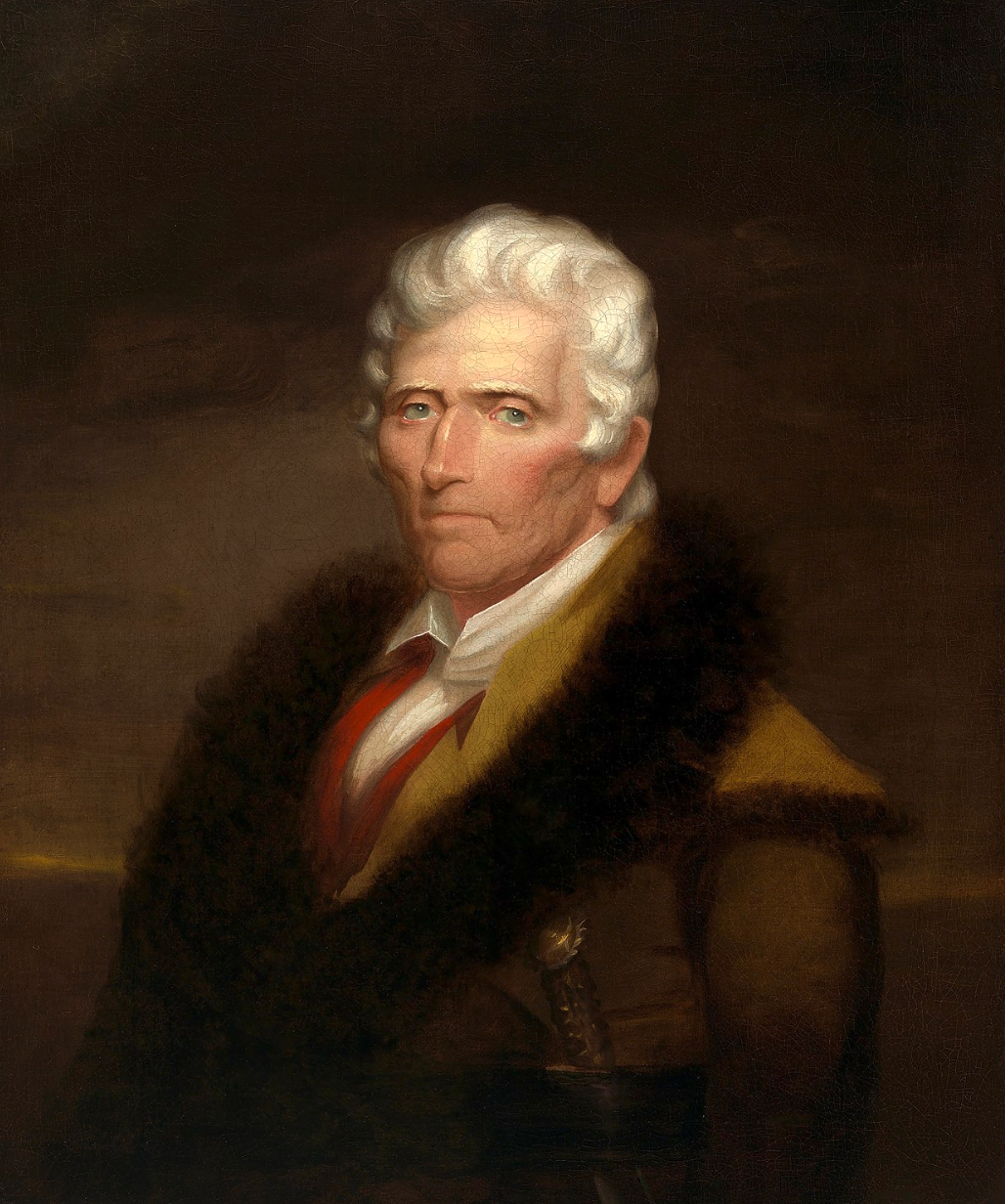
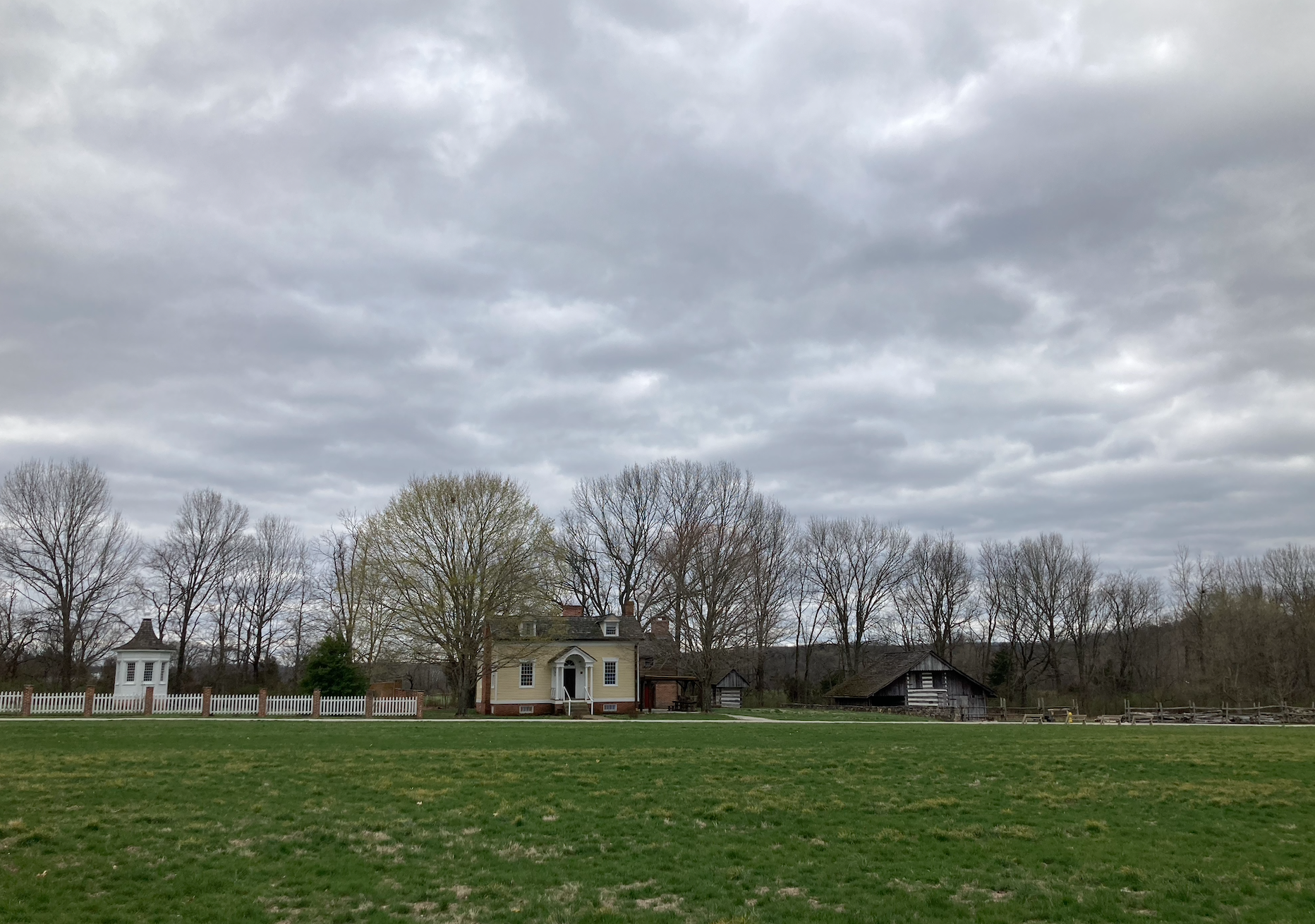
On Saturday daughter #1 and I took part in a DAR “field trip” to the historic Daniel Boone home in the rolling hills of wine country overlooking the beautiful Femme Osage Valley. I had been to the house back in the 1960s when I was a child and again in the 1990s when my own children were small. It is a lovely 1810 home built of native limestone.

I was surprised to find that the nearly 300-acre site now includes not only the historic Daniel Boone home, but the adjoining Village historic site, and surrounding property which was given to the people of St. Charles County by Lindenwood University in 2016. I’m sure I knew that but I had forgotten. The home and property now is called The Historic Daniel Boone Home at Lindenwood Park. The dozen buildings in the village were moved there, originating from within 50 miles of the property, and include several other houses, a general store, a schoolhouse, a church, and a grist mill. It is extremely well done.

Unfortunately, as you can see from these photos, it was an unexpectedly cold, gloomy and very windy morning! Boy, were we cold!

After our tour, we all hustled to our cars and drove down the road to the Defiance Ridge Winery where we had reservations for lunch. We warmed up and enjoyed a convivial time. As always at mid-MO wineries there was live entertainment and a happy crowd.

I also enjoyed becoming reacquainted with the legendary frontiersman who really was quite the exceptional guy. And as you know, this is a kind of guy that really appeals to me.

Boone spent his final years in Missouri, moving here in 1799 when it was still part of Spanish Louisiana and a pretty wild place. He lived here for twenty years and died on September 26, 1820, in the home of his son Nathan Boone on Femme Osage Creek which we visited.  (How he lived to the ripe old age of 85, leading such a life as he did, is amazing.)

Boone was buried next to his wife Rebecca, who had died on March 18, 1813.The graves, which were unmarked until the mid-1830s, were near Jemima (Boone) Callaway’s home about two miles from present-day  Marthasville, Missouri. In 1845, the Boones’ remains were disinterred and reburied in Frankfort, Kentucky. Resentment in Missouri about the disinterment grew over the years, and a legend arose that Boone’s remains never left Missouri. According to this story, Boone’s tombstone in Missouri had been inadvertently placed over the wrong grave, but no one had corrected the error. Boone’s Missouri relatives, displeased with the Kentuckians who came to exhume Boone, kept quiet about the mistake and allowed the Kentuckians to dig up the wrong remains. No contemporary evidence indicates this actually happened, but in 1983, you may recall, a forensic anthropologist examined a crude plaster cast of Boone’s skull made before the Kentucky reburial and announced it might be the skull of an African American. Both the Frankfort Cemetery in Kentucky and the Old Bryan Farm graveyard in Missouri claim to have Boone’s remains. But as our guide said, the Boones are both in heaven, so what does it matter?

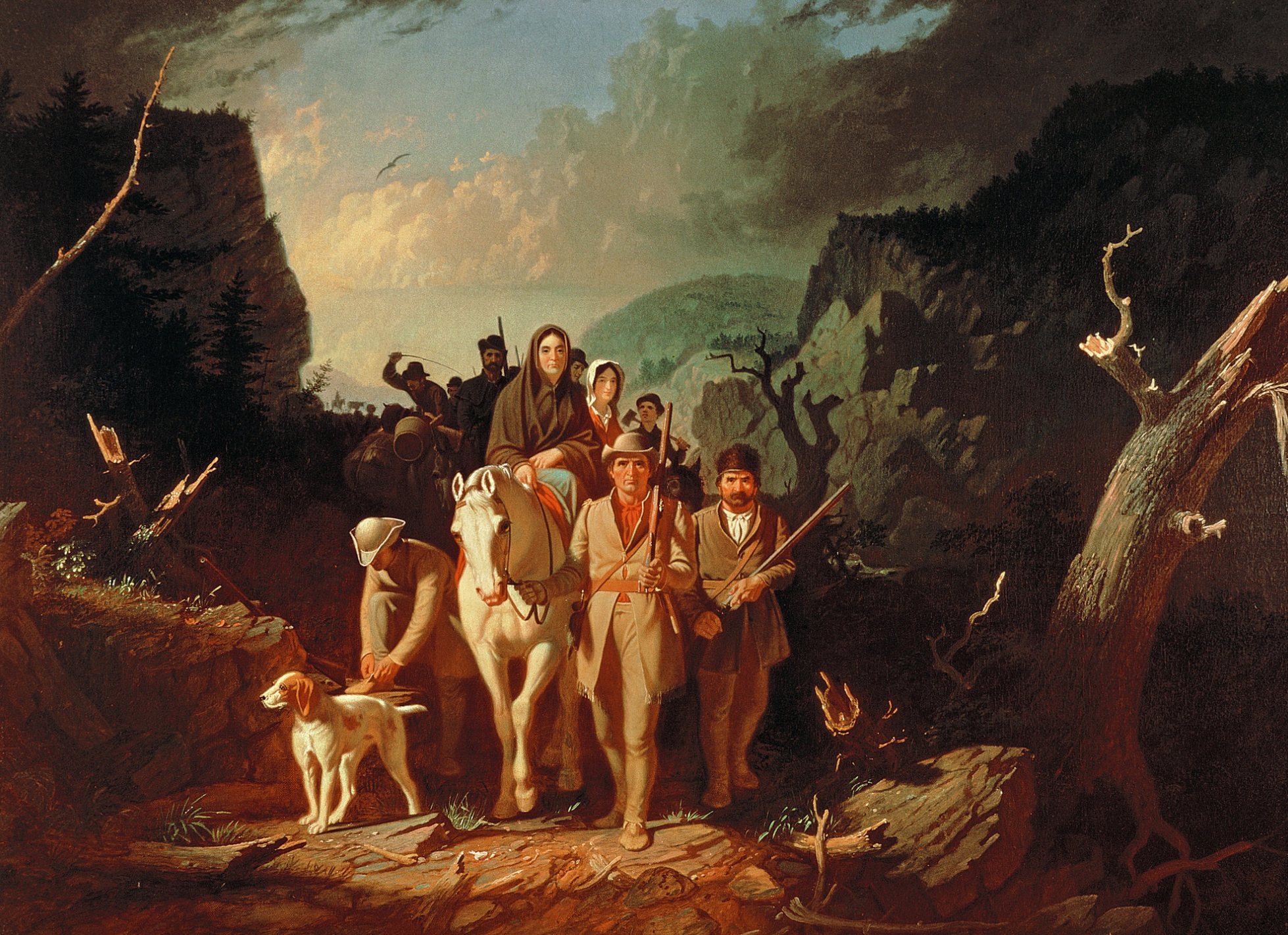
(“Daniel Boone escorting settlers through the Cumberland Gap” by George Caleb Bingham, collection of Washington University)

Yesterday, of course, was Palm Sunday.

“There was a vast multitude crying ‘Hosanna’ … But Christ at that time had but few true disciples; and all this was at an end when he stood bound, having a mock robe put on, and a crown of thorns; when he was derided, spit upon, scourged, condemned, and executed. Indeed, there was a loud outcry respecting him among the multitude then, as well as before; but of a very different kind: it was not ‘Hosanna, hosanna,’ but ‘crucify him, crucify him.’” (Jonathan Edwards)

Onward to Easter.

This and that

by chuckofish
Today we honor the first president of the United States, George Washington on his 291st birthday.
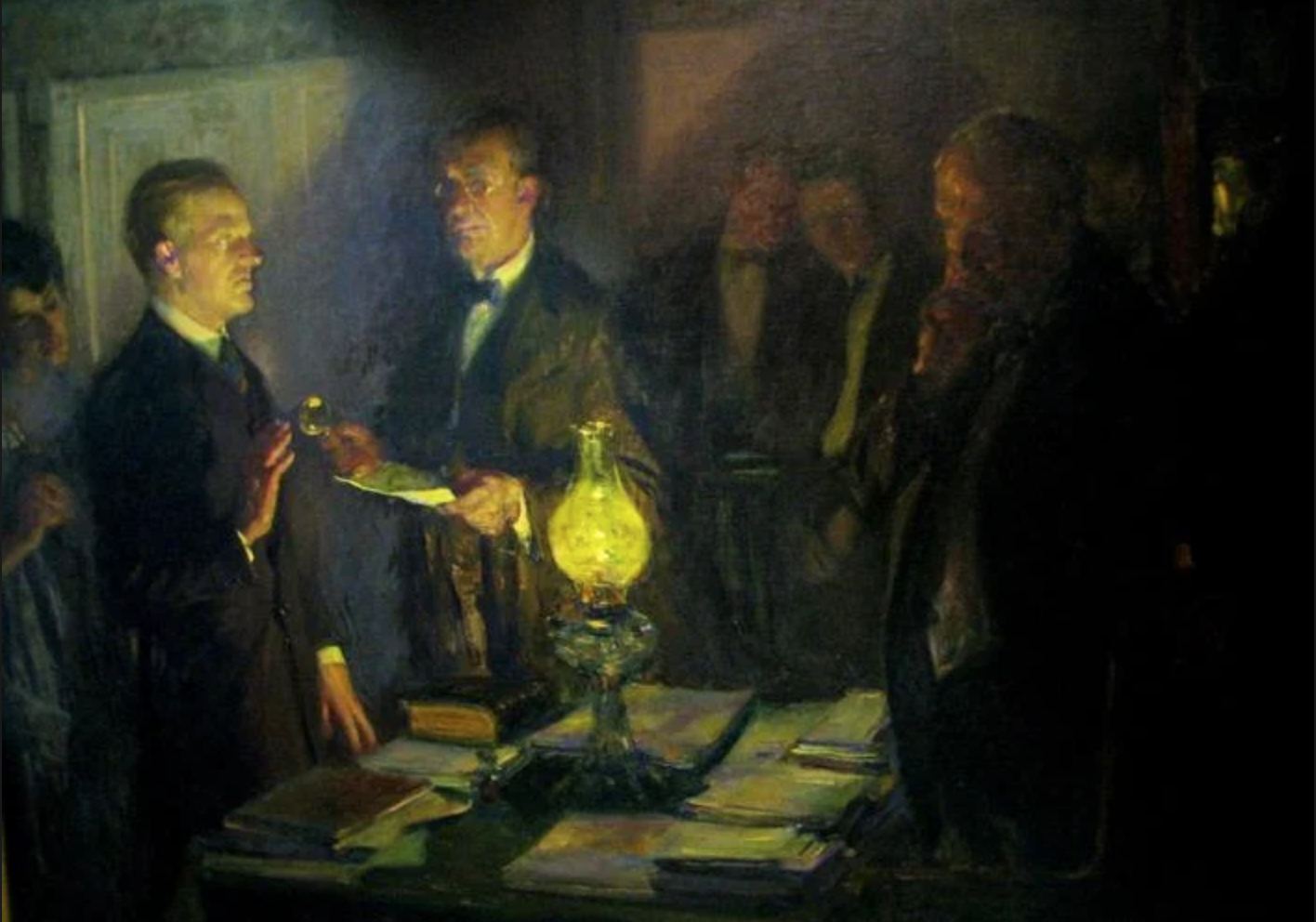
We will also toast the artist Rembrandt Peale, who was also born on this day in 1778. In 1795 at the age of 17 he painted the above portrait of Washington. Impressive, I think.

Today is also the birthday of actor/producer Sheldon Leonard (1907-1997) who you would recognize immediately by his heavy New York accent. He played Nick the bartender in It’s a Wonderful Life (1946)…

…along with countless gangsters, various Damon Runyon types, the occasional American Indian, and even J. Edgar Hoover before becoming a very successful television producer of shows like The Andy Griffith Show, Gomer Pyle, U.S.M.C., I Spy and so on.

As far as I know, he never played George Washington, although he did bear a certain resemblance to him.

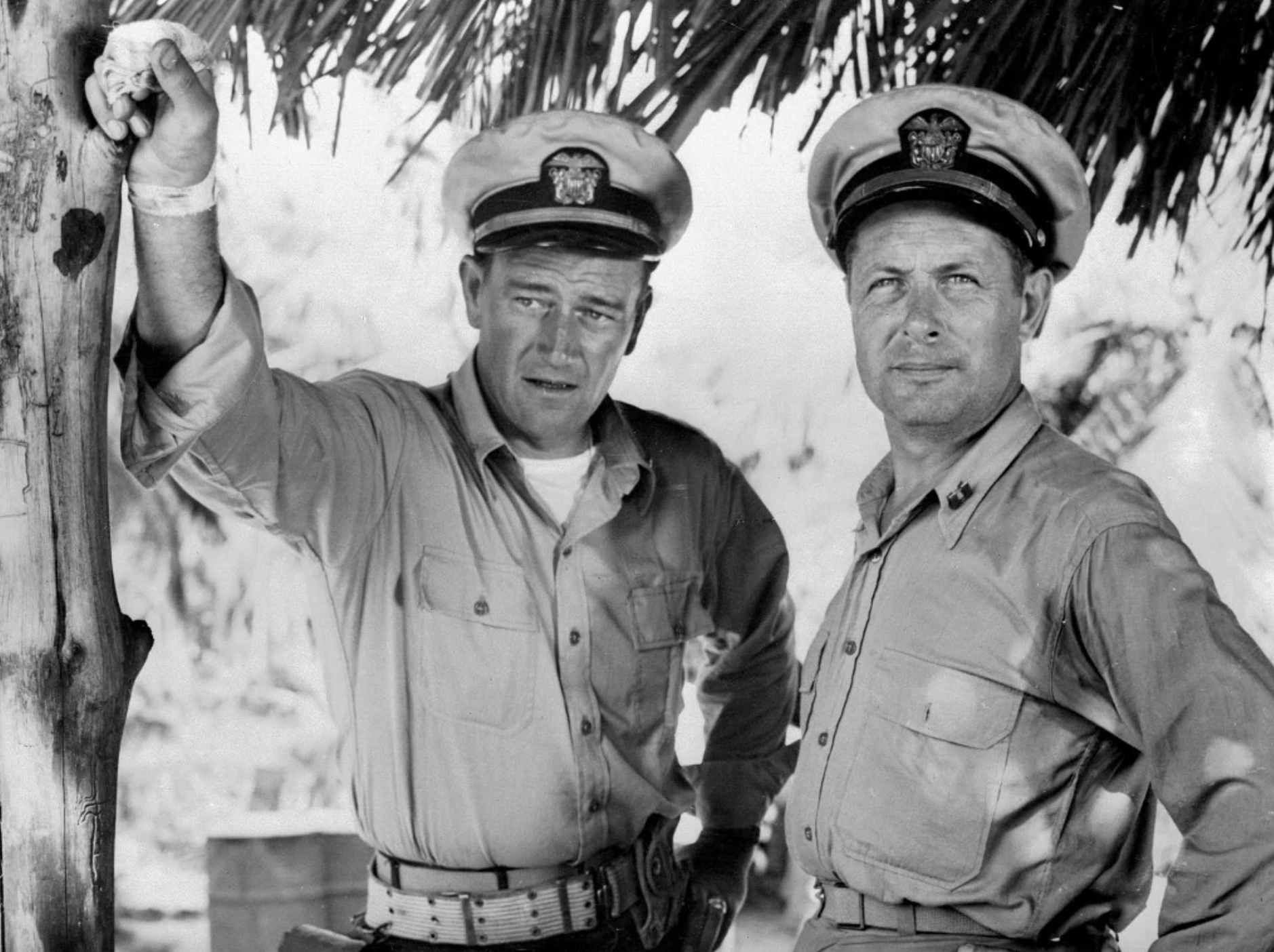
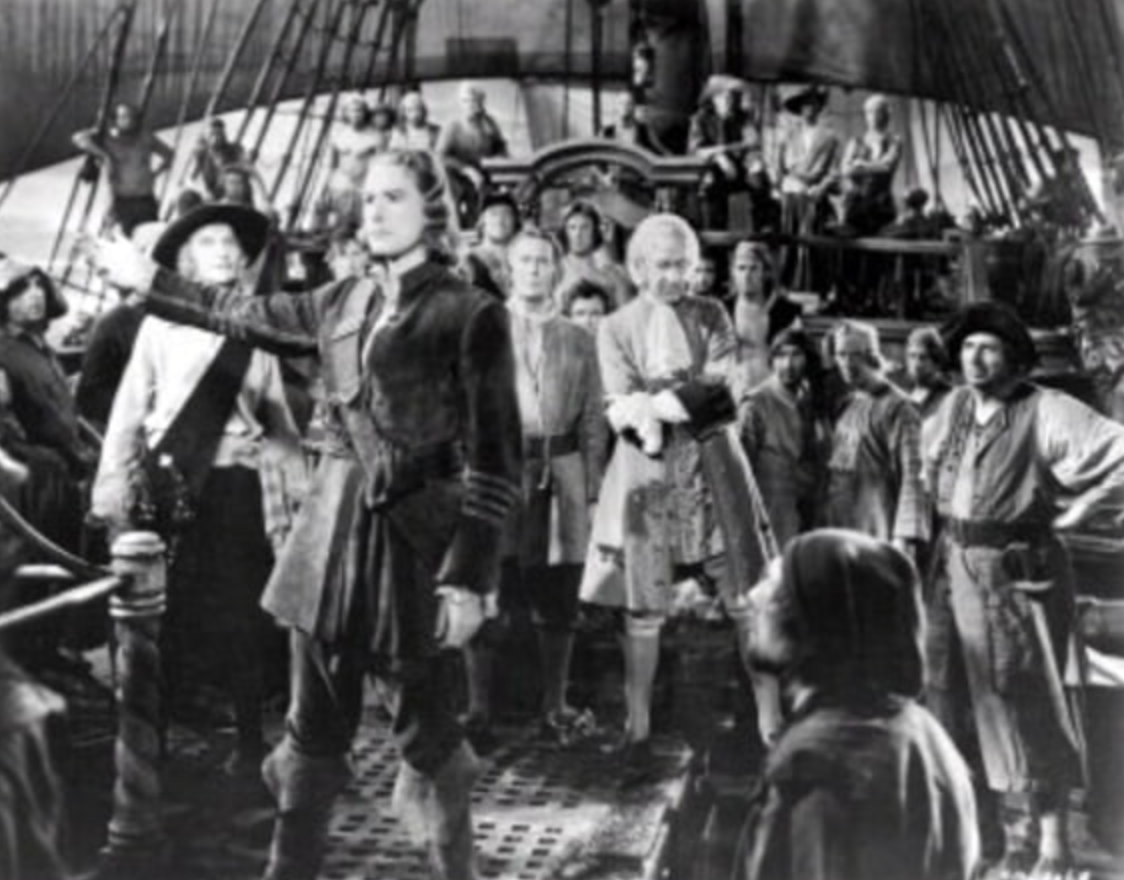
Maybe I’ll watch To Have and Have Not (1944) in which Leonard plays Lt. Coyo (in the boater)…

Well, a toast is in order for all three men, especially G.W., the father of our great country.

And for Jimmy Carter, 39th president and Sunday School teacher, we offer this prayer:

Be near me when I am dying,

O show thy cross to me;

And for my succor flying,

Come, Lord, to set me free:

These eyes, new faith receiving,

From Jesus shall not move;

For he who dies believing,

Dies safely, through thy love.

–Medieval poem, translated by Paul Gerhardt (1607-1676) and James W. Alexander (1804-1859)

“We’re about John Wayne, Johnny Cash and John Deere.”

by chuckofish

Today we celebrate the birthday of John Deere (1804-1886), American blacksmith, inventor and manufacturer, who founded Deere and Company. Deere hailed from Vermont and attended Middlebury College. He moved to Illinois and invented the first commercially successful steel plow in 1837 by fashioning a Scottish steel saw blade into a plow.

(Early John Deere plow, circa 1845, made in Grand Detour, Illinois, displayed at the Henry Ford Museum)

Prior to Deere’s steel plow, most farmers used iron or wooden plows to which the rich Midwestern soil stuck, so they had to be cleaned frequently. The smooth-sided steel plow solved this problem and greatly aided migration into the American Great Plains in the 19th and early 20th centuries.

By 1855, Deere’s factory had sold more than 10,000 such plows. It became known as “The Plow that Broke the Plains” and is commemorated in a historic place marker in Middlebury, Vermont.

Deere & Company ranked No. 84 in the 2022 Fortune 500 list of the largest United States corporations.

The John Deere tractor has, of course, become an icon of a certain way of life and has been glorified in many great country songs by the likes of Kenny Chesney, Vince Gill, Brad Paisley, Keith Urban, and Joe Diffie. But I like this one by Josh Thompson–“Way Out Here”:

(Thompson co-wrote the song with David Lee Murphy and Casey Beathard.)

We won't take a dime if we ain't earned it
When it comes to weight, brother we pull our own
If it's our backwoods way of living you're concerned with
Well you can leave us alone
Cause we're about John Wayne, Johnny Cash and John Deere
Way out here

So let’s toast John Deere tonight and my people Way Out Here.

Be of good comfort

by chuckofish

Less than two weeks til Christmas! I have a lot still to do on my ‘to do’ list, but at least I wrote my Christmas letter and put my cards in the mail! Also my packages are mailed, so now I just need to wrap, wrap, wrap. And I don’t have as much to wrap as in years past. However, the OM seems to be making up for all the cutting back I have attempted to do. Mysterious packages continue to arrive daily.

In Instagram news, John Piper shared a poem he wrote about the martyrdom of John Bradford:

I like it, don’t you? English reformer John Bradford was burned at the stake for “stirring up a mob” (i.e. preaching) by Queen “Bloody” Mary in 1555. Bradford is commemorated at the Marian Martyrs’ Monument in Smithfield, London. Lest we forget.

This is a thoughtful piece about the obstacles in life that ultimately are instructive: “But we are a people who don’t like to be hemmed in, held back, inconvenienced. Yet how many times are those the very things that carve beauty in our souls? How many opportunities would we pass by in our haste if we hadn’t been slowed down and forced to consider our way?”

And here’s a poem shared by Don: “Poetry for Supper”

‘Listen, now, verse should be as natural
As the small tuber that feeds on muck

And grows slowly from obtuse soil

To the white flower of immortal beauty.’

‘Natural, hell! What was it Chaucer

Said once about the long toil

That goes like blood to the poem’s making?

Leave it to nature and the verse sprawls,

Limp as bindweed, if it break at all

Life’s iron crust. Man, you must sweat

And rhyme your guts taut, if you’d build
Your verse a ladder.’


‘You speak as though
No sunlight ever surprised the mind
Groping on its cloudy path.’

‘Sunlight’s a thing that needs a window

Before it enter a dark room.

Windows don’t happen.’


So two old poets,

Hunched at their beer in the low haze

Of an inn parlour, while the talk ran
Noisily by them, glib with prose

–R.S. Thomas, Welsh poet and Anglican priest

Have a good day. Read some poetry, wrap some presents, contemplate the brightness of the truth.

“Let us cross over the river and rest under the shade of the trees.”*

by chuckofish

It is October again and time to toast our parents (tomorrow) on the anniversary of their marriage in 1950. I am grateful that they had it together enough to have three children in those post-war years and to stay together to raise them. It is more than a lot of people have, especially these days.

I finished S.C. Gwynne’s great book “Rebel Yell” about Stonewall Jackson. Although I am no fan of the Confederacy, I always admired Jackson a great deal.

The “Chancellorsville Portrait” taken seven days before Jackson was mortally wounded.

It was a terrible thing for the South when he died in 1863; but the whole country mourned his death. It is interesting to note how many strong men were moved to tears, openly sobbing in some cases, from the lowliest soldier to Robert E. Lee. Like U.S. Grant, he was not much of a success before the war. He was an unpopular professor at VMI and only came into his own when commanding men on the battlefield. When he did, he did so with a vengeance. He was a devout Christian, a Presbyterian, who believed completely in God’s providence. He knew that whatever happened, it happened because God willed it. This made him extremely courageous. He died knowing where he was bound.

Gwynne writes: “The most famous Northern view of Jackson came from the celebrated poet John Greenleaf Whittier, whose poem ‘Barbara Frietchie,’ published in 1864, became a national sensation. It described an almost entirely mythological incident from September 1862, when Jackson’s troops were passing through Frederick, Maryland, on their way to the battles of Harpers Ferry and Antietam. As Whittier told it, after Jackson’s troops had taken down all the American flags, the elderly Frietchie had retrieved one and flown it from her attic window. Seeing it, Jackson ordered his men to shoot it down, but Frietchie caught it as it fell and held it forth, crying, ‘Shoot, if you must, this old gray head/But spare your country’s flag.’ Jackson’s reaction followed:

A shade of sadness, a blush of shame,

Over the face of the leader came;

The nobler nature within him stirred

To life at that woman’s deed and word:

“Who touches a hair of yon gray head

Dies like a dog! March on!” he said.

All day long through Frederick street

Sounded the tread of marching feet:

All day long that free flag tost

Over the heads of the rebel host.

Ever its torn folds rose and fell

On the loyal winds that loved it well;

And through the hill-gaps sunset light

Shone over it with a warm good-night.

“None of this ever happened. But to the Northern nation–the wartime nation–the incident was as good as documented fact. What it said to them was that Jackson was a gentleman and a Christian and a decent person in spite of his role in killing and maiming tens of thousands of their young men. But it also said that he was, fundamentally, an American. It was his Americanness that had ‘stirred’ in him and redeemed him.”

Americans today have a hard time understanding that an enemy can be a good person, a noble person. And that being an American is a great thing.

We were sad to hear that beautiful Loretta Lynn had passed away at age ninety but we rejoice in her long, eventful life.

Loretta was the real deal who wrote songs about real people and how they felt about real things. She was a hillbilly and proud of it. This is a good article about her.

And here is a classic Loretta song, which she wrote in 1966:

Into paradise may the angels lead thee, Loretta, and at thy coming may the martyrs receive thee, and bring thee into the holy city Jerusalem. (BCP, Burial of the Dead)

And let’s not forget all those devastated people in Florida. “God is our helper who’s always with us in times of trouble. Trouble comes and goes. Hurricanes pass. But our helper never changes or leaves us. Even when our future is uncertain and our lives have been completely overturned, we know these things about God. He is almighty; he is eternal; and he loves us.”

This was a hard one!

*General Jackson’s last words.

Thou from the prairies*

by chuckofish

Last Saturday was the anniversary of the death of President Ulysses S. Grant in 1885. To me, he was a great man and one of the qualities that made him great, was his humility. His humble nature shines through in his Memoirs.

There are many men who would have done better than I did under the circumstances in which I found myself. If I had never held command, if I had fallen, there were 10,000 behind who would have followed the contest to the end and never surrendered the Union.

Debatable. Think of General McClellan, his predecessor as general-in-chief of all the Union armies. He thought he “could do it all” but he could not. And he blamed everyone else for his failure.

President Lincoln put his trust in Grant and was well served. And Grant was humble in victory.

General Lee was dressed in a full uniform which was entirely new, and was wearing a sword of considerable value, very likely the sword which had been presented by the State of Virginia; at all events, it was an entirely different sword from the one that would ordinarily be worn in the field. In my rough traveling suit, the uniform of a private with the straps of a lieutenant-general, I must have contrasted very strangely with a man so handsomely dressed, six feet high and of faultless form. But this was not a matter that I thought of until afterwards.

–Memoirs

I love that he wore “a soldier’s blouse for a coat, with the shoulder straps of my rank to indicate to the army who I was.”

Walt Whitman revered Grant and wrote a poem about the former president when he returned from his world tour.

What best I see in thee,
is not that where thou mov’st down history’s great highways,
Ever undimm’d by time shoots warlike victory’s dazzle,
Or that thou sat’st where Washington say, ruling the land in peace,
Or thou the man whom feudal Europe feted, venerable Asia swarm’d upon,
Who walk’d with kings with even pace the round world’s promenade;
But that in foreign lands, in all thy walks with kings
Those prairie sovereigns of the West, Kansas, Missouri, Illinois,
Ohio’s, Indiana’s millions, comrades, farmers, soldiers, all to the front,
Invisibly with thee walking with kings with even pace the round world’s promenade,
Were all so justified.

Here’s an article about Whitman and Grant if you’re interested.

A few weeks ago the wee laddie came up to me holding this little framed picture he had found in the living room:

“Who’s this, Mamu?” he asked.

“That’s Cousin Ulysses,” I said. “Some day I’ll tell you all about him.”

*Walt Whitman

“Tune my heart to sing thy grace”

by chuckofish

The heat has been turned up and they are forecasting that our flyover high will hit over 100 degrees today. Yippee.

Daughter #1 returned from her conference in San Antonio and I picked her up at the airport. She stayed for the weekend because she has a work thing today, so we were able to indulge in a good bit of patio sitting and a few estate sales over the weekend. We also attended the home and garden tour presented every June by Historic Saint Louis. There are 25 homes on the tour and this year we picked two we had never visited.

First we visited the Hawken House in Webster Groves. It was the home of Christopher Hawken, the great-grandson of Niclaus Hachen (Hawken) who came to America from Switzerland about 1750, settling in York County, Pennsylvania.  His father, Jacob, came to St. Louis in 1807, where he began crafting the famous Hawken Rifle in a shop on the Mississippi Riverfront. 

You will recall that the coveted Hawken Rifle was the “gun that settled the west,” since it was prized by so many famous westward explorers and trappers, including Daniel Boone, Davy Crockett, Kit Carson, John Fremont, Jim Bridger, and Robert Campbell, the famous St. Louis fur trader.

Anyway, Christopher’s wife, Mary Ann Kinkead Eads, was the eldest of three daughters of Granville O. Eads and Lucinda Sappington. Lucinda was the only child of Thomas Sappington (of the Sappington House) and his first wife Mary Ann Kinkead. They built the Hawken House in 1857.

The beautiful home was moved (intact) about half a mile to its present site when it was threatened with demolition in 1970. It was the first home in Missouri to receive federal funds for restoration, which matched the amount raised by the citizens of Webster Groves and is listed on the National Historic Register.

The informal parlor where (allegedly) Ulysses Grant played cards with Mr. Hawken.

Next we ventured to Overland to visit their historic circa 1850 Log House…

…which was likewise moved from another location (in Wildwood) under threat of demolition. This small group of local preservation enthusiasts, however, moved the cabin piece by piece and rebuilt it on the present site themselves! This project took eight years to complete. I was very impressed. The museum features exhibits of Overland and the Overland Trail, displays of antique toys, accessories, and firearms. As Overland is part of the Ritenour School District, the OHS displays memorabilia from the district.

The two historical societies with homes we visited could not be more different. Webster Groves is a large, prosperous town with a lot of privileged residents, while Overland in North County is a small, working class municipality. However, both have residents who are interested in history and actively work to promote its preservation. I find this heartening and I salute them!

In other news, I stayed after church again to help set up for VBS and to have a tour of the campus so I will know where I am going on Monday. There were over a hundred volunteers–men, women, teenagers! My dread was somewhat assuaged, but I tell you, I am kind of freaking out. At first I was just worried about being too old and decrepit to do this, but now I am wondering if I am even up to leading my eight ten-year olds in devotion time. I tell myself that until recently I was the director of an institute at a large university for many years, and I can handle this…but can I?

Well, we’ll find out.

*Hymn # 457, Robert Robinson, 1758

Fun facts to know and tell

by chuckofish

This week marks the anniversary of a great barbecue held in honor of Daniel Webster in 1837, the highlight of the statesman’s visit to St. Louis.

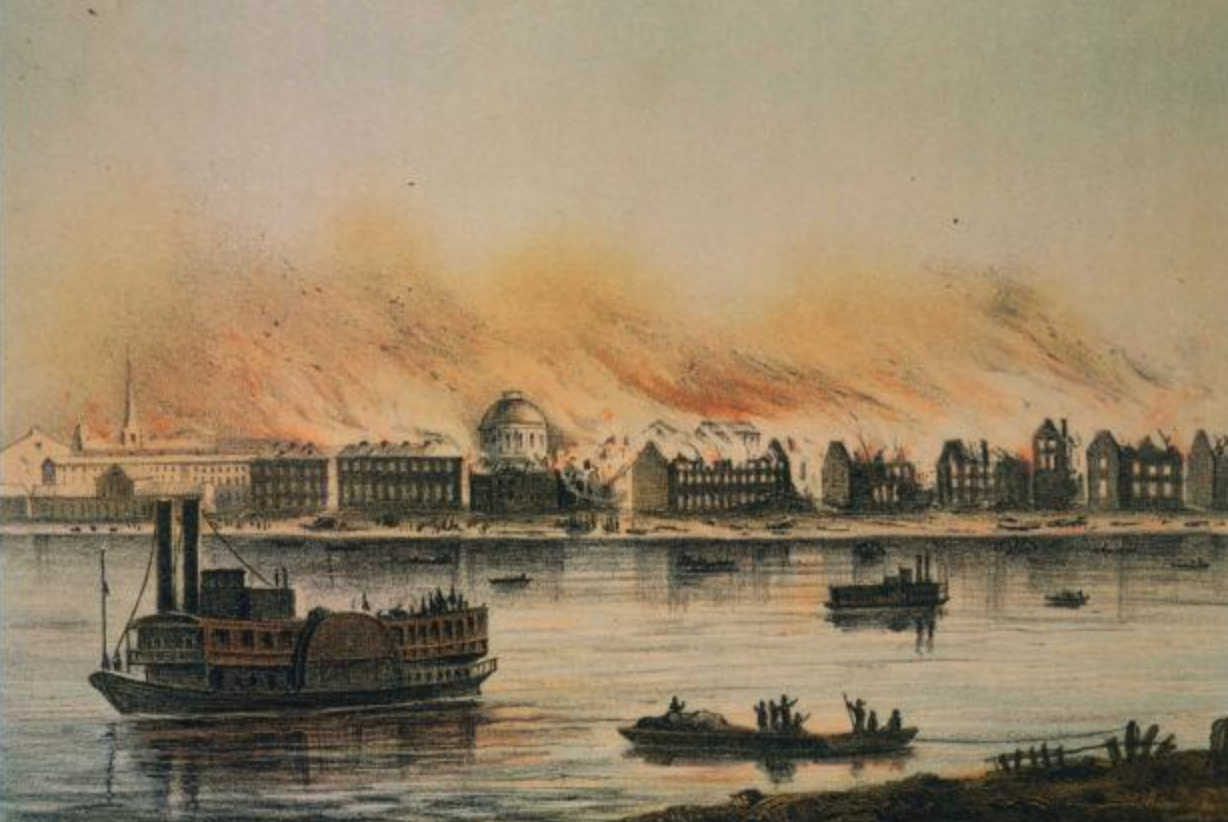
When news of Webster’s proposed visit reached St. Louis, arrangements for his reception were made at a meeting in the Masonic hall. A boat, the H. L. Kenney, was chartered to meet the steamer Robert Morris on which the Webster party was journeying through the West. The two boats met a little below Jefferson Barracks, and the committee of welcome boarded Webster’s steamer to greet the orator. The boats passed by the St. Louis wharf to give the visitors an opportunity to view the city and then returned to the Market street landing. Webster and his family stayed at the National Hotel during their stay in St. Louis.

A crowd of about 5000 gathered to hear the “God-like” Daniel speak on the day of the barbecue. A long procession of citizens, led by Charles Keemle as marshal of the day and accompanied by “a choice band of music,” escorted Webster to the site of the barbecue, a grove owned by Judge J. B. C. Lucas. After the barbecue, Webster delivered his address, which lasted an hour and forty minutes.

Although most contemporary historians and newspapers praised his speech, the Missouri Argus, voice of the Jacksonian Democrats, stated that Webster as an orator was “almost below mediocrity, or else at this city he made a most miserable and complete failure.” This attack was “probably more partisan than truthful”–gee, do you think?–the editor fearing the political effect of Webster’s visit and hoping to neutralize it. (You will recall that Webster joined with other Jackson opponents in forming the Whig Party, and unsuccessfully ran in the 1836 presidential election.)

Other writers praised the speech highly. Elihu Shepard wrote “…the great orator rose amid the acclamations of thousands and enchained their rapturous attention for eighty minutes”…. J. T. Scharf called the admiration expressed for Webster “one of the grandest demonstrations that ever took place in this country in honor of any public man.”

Shall we not, in all honesty and sincerity, with pure and disinterested love of country, as Americans, looking back to the renown of our ancestors and looking forward to the interests of our posterity, here, tonight, pledge our mutual faith to hold on to the last to our professed principles, to the doctrines of true liberty, and to the Constitution of the country, let who will prove true, or who will prove miscreant?

–Reception at New York, 1837

I must admit that I did not know that Daniel Webster ever visited St. Louis. Traveling to St. Louis back in the 1830s was, after all, quite an undertaking. Indeed, Francis Parkman did not visit until 1846. I’d love to know more, wouldn’t you? What did they serve I wonder?

All the past we leave behind;

We debouch upon a newer, mightier world, varied

Fresh and strong the world we seize, world of labor,

and the march,  Pioneers! O pioneers!

–Walt Whitman

(Information about the barbecue from St. Louis Day By Day by Frances Hurd Stadler)

Fun facts to know and tell

by chuckofish

Yes, the Christmas cactus is throwing out buds again! I mean really. Wow.

In other news, today marks the 175th anniversary of the Battle of Buena Vista in 1847, fought between the US invading forces, largely volunteers, under General Zachary Taylor, and the much larger Mexican Army under General Santa Anna.

Santa Anna had chosen the day of battle, not apparently aware that it was George Washington’s birthday, which galvanized patriotic sentiment among the U.S. forces.  The outcome of the battle was ambiguous, with both sides claiming victory. Santa Anna’s forces withdrew leaving the field to the surprised American forces, who had expected there to be another day of hard fighting. Since the American forces were largely volunteers rather than regular army, it increased Buena Vista’s popularity in the public imagination. The volunteers were characterized as raw citizen-soldiers who had defeated the far larger Mexican army, seen as a professional military force.

Ulysses Grant, writing about Buena Vista in his Personal Memoirs, said:

General Taylor’s victory at Buena Vista…with an army composed almost entirely of volunteers who had not been in battle before, and over a vastly superior force numerically, made his nomination for the Presidency by the Whigs a foregone conclusion. He was nominated and elected in 1848. I believe that he sincerely regretted this turn in his fortunes, preferring the peace afforded by a life free from abuse to the honor of filling the highest office in the gift of any people, the Presidency of the United States.

I wonder if perhaps USG didn’t feel the same way.

I bet you didn’t know that Buena Vista County, Iowa was named in honor of the battle, as was Buena Vista Township in Michigan’s Saginaw County. Cities named after the battle include Buena Vista in Virginia, Colorado, Oregon, New Jersey, Alabama, Mississippi, and Georgia.

Today is also the birthday of the English actor John Mills (1908-2005). He was in a lot of good movies. Recently I watched Tiger Bay (1959) which I had never seen. It also stars John’s daughter, Hayley Mills, in her first movie. She was twelve. It is a British crime drama and also stars Horst Buchholz as a Polish sailor who commits a murder which Hayley witnesses. It takes place in Cardiff and is an interesting piece of post-war social commentary. I enjoyed it and you might too. It is available on Youtube.

Have a good week! We are expecting another round of rain, sleet and snow. Ho hum.

A few toasts and a birthday

by chuckofish

Today is the 248th anniversary of the Boston Tea Party. You remember–when members of the Sons of Liberty dressed up like Mohawk Indians and dumped hundreds of crates of tea into Boston harbor as a protest against the Tea Act. A toast to these domestic terrorists of yore!

It is also the 210th anniversary of the first two in a series of four severe earthquakes which occurred in the vicinity of New Madrid, Missouri. The New Madrid zone experienced four of the largest North American earthquakes in recorded history, with moment magnitudes estimated to be as large as 7.0 or greater, all occurring within a 3-month period between December 1811 and February 1812. At New Madrid, trees were knocked down and riverbanks collapsed. This event shook windows and furniture in Washington, DC, rang bells in Richmond, Virginia, sloshed well water and shook houses in Charleston, South Carolina, and knocked plaster off of houses in Columbia, South Carolina. In Jefferson, Indiana, furniture moved, and in Lebanon, Ohio, residents fled their homes. There was renewed concern in the 1990s of imminent earthquake activity and I remember putting away my antique china for fear it might be broken. We may have had some water in reserve in the basement too as a precaution…but nothing happened and I don’t worry about such things anymore.

Today is also the birthday of George Santayana (1863-1952), philosopher, essayist, novelist, poet, and legendary Harvard professor. Here is one of his poems, A Toast, in keeping with the situation:

See this bowl of purple wine,

Life-blood of the lusty vine!

All the warmth of summer suns

In the vintage liquid runs,

All the glow of winter nights

Plays about its jewel lights,

Thoughts of time when love was young

Lurk its ruby drops among,

And its deepest depths are dyed

With delight of friendship tried.

Worthy offering, I ween,

For a god or for a queen,

Is the draught I pour to thee,–

Comfort of all misery,

Single friend of the forlorn,

Haven of all beings born,

Hope when trouble wakes at night,

And when naught delights, delight.

Holy Death, I drink to thee;

Do not part my friends and me.

Take this gift, which for a night

Puts dull leaden care to flight,

Thou who takest grief away

For a night and for a day.

I will be toasting my dual personality on Saturday, because it is her birthday.

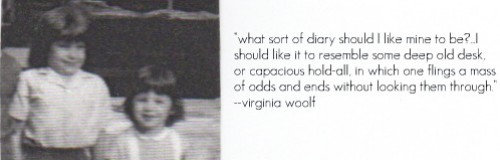
Here is a snapshot of the siblings a week after her 2nd birthday on Christmas morning. Our brother is 9, she is 2 and I am 4 1/2. I loved the dress I was wearing. Another girl in my class had it and I felt very cool. In fact, there might have been three of us in my small junior kindergarten class with that dress. It was red. The things that stay in your mind!

Anyway, here’s to my lovely and much-loved sister on her birthday.

(Long distance toasting!)

Now it’s time for tree-trimming…

The painting at the top is by Ernest Lawson (1873 – 1939) who studied at the Art Students League, New York, with J. Alden Weir and John Twachtman, and later in Paris at the Académie Julien. Upon his return to the United States he produced his famous impressionistic urban landscapes that linked him to the Ashcan school.