dual personalities

Tag: History

Fun facts to know and tell

by chuckofish

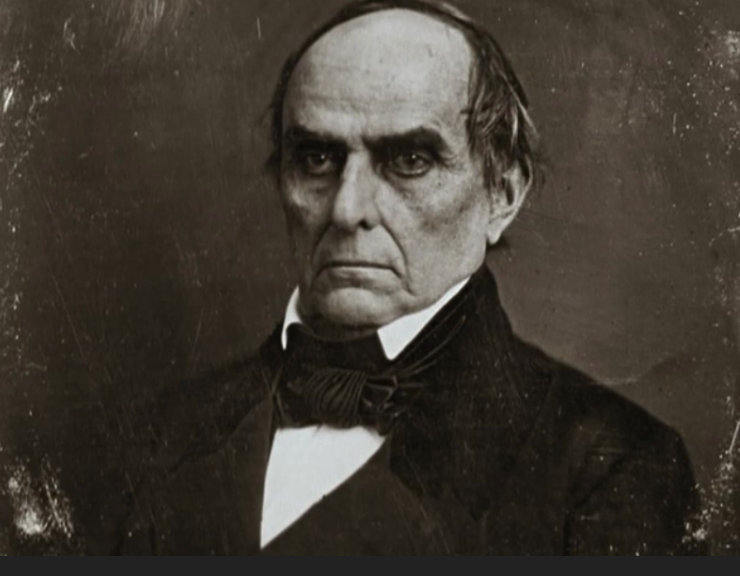
This week marks the anniversary of a great barbecue held in honor of Daniel Webster in 1837, the highlight of the statesman’s visit to St. Louis.

When news of Webster’s proposed visit reached St. Louis, arrangements for his reception were made at a meeting in the Masonic hall. A boat, the H. L. Kenney, was chartered to meet the steamer Robert Morris on which the Webster party was journeying through the West. The two boats met a little below Jefferson Barracks, and the committee of welcome boarded Webster’s steamer to greet the orator. The boats passed by the St. Louis wharf to give the visitors an opportunity to view the city and then returned to the Market street landing. Webster and his family stayed at the National Hotel during their stay in St. Louis.

A crowd of about 5000 gathered to hear the “God-like” Daniel speak on the day of the barbecue. A long procession of citizens, led by Charles Keemle as marshal of the day and accompanied by “a choice band of music,” escorted Webster to the site of the barbecue, a grove owned by Judge J. B. C. Lucas. After the barbecue, Webster delivered his address, which lasted an hour and forty minutes.

Although most contemporary historians and newspapers praised his speech, the Missouri Argus, voice of the Jacksonian Democrats, stated that Webster as an orator was “almost below mediocrity, or else at this city he made a most miserable and complete failure.” This attack was “probably more partisan than truthful”–gee, do you think?–the editor fearing the political effect of Webster’s visit and hoping to neutralize it. (You will recall that Webster joined with other Jackson opponents in forming the Whig Party, and unsuccessfully ran in the 1836 presidential election.)

Other writers praised the speech highly. Elihu Shepard wrote “…the great orator rose amid the acclamations of thousands and enchained their rapturous attention for eighty minutes”…. J. T. Scharf called the admiration expressed for Webster “one of the grandest demonstrations that ever took place in this country in honor of any public man.”

Shall we not, in all honesty and sincerity, with pure and disinterested love of country, as Americans, looking back to the renown of our ancestors and looking forward to the interests of our posterity, here, tonight, pledge our mutual faith to hold on to the last to our professed principles, to the doctrines of true liberty, and to the Constitution of the country, let who will prove true, or who will prove miscreant?

–Reception at New York, 1837

I must admit that I did not know that Daniel Webster ever visited St. Louis. Traveling to St. Louis back in the 1830s was, after all, quite an undertaking. Indeed, Francis Parkman did not visit until 1846. I’d love to know more, wouldn’t you? What did they serve I wonder?

All the past we leave behind;

We debouch upon a newer, mightier world, varied

Fresh and strong the world we seize, world of labor,

and the march,  Pioneers! O pioneers!

–Walt Whitman

(Information about the barbecue from St. Louis Day By Day by Frances Hurd Stadler)

Fun facts to know and tell

by chuckofish

Yes, the Christmas cactus is throwing out buds again! I mean really. Wow.

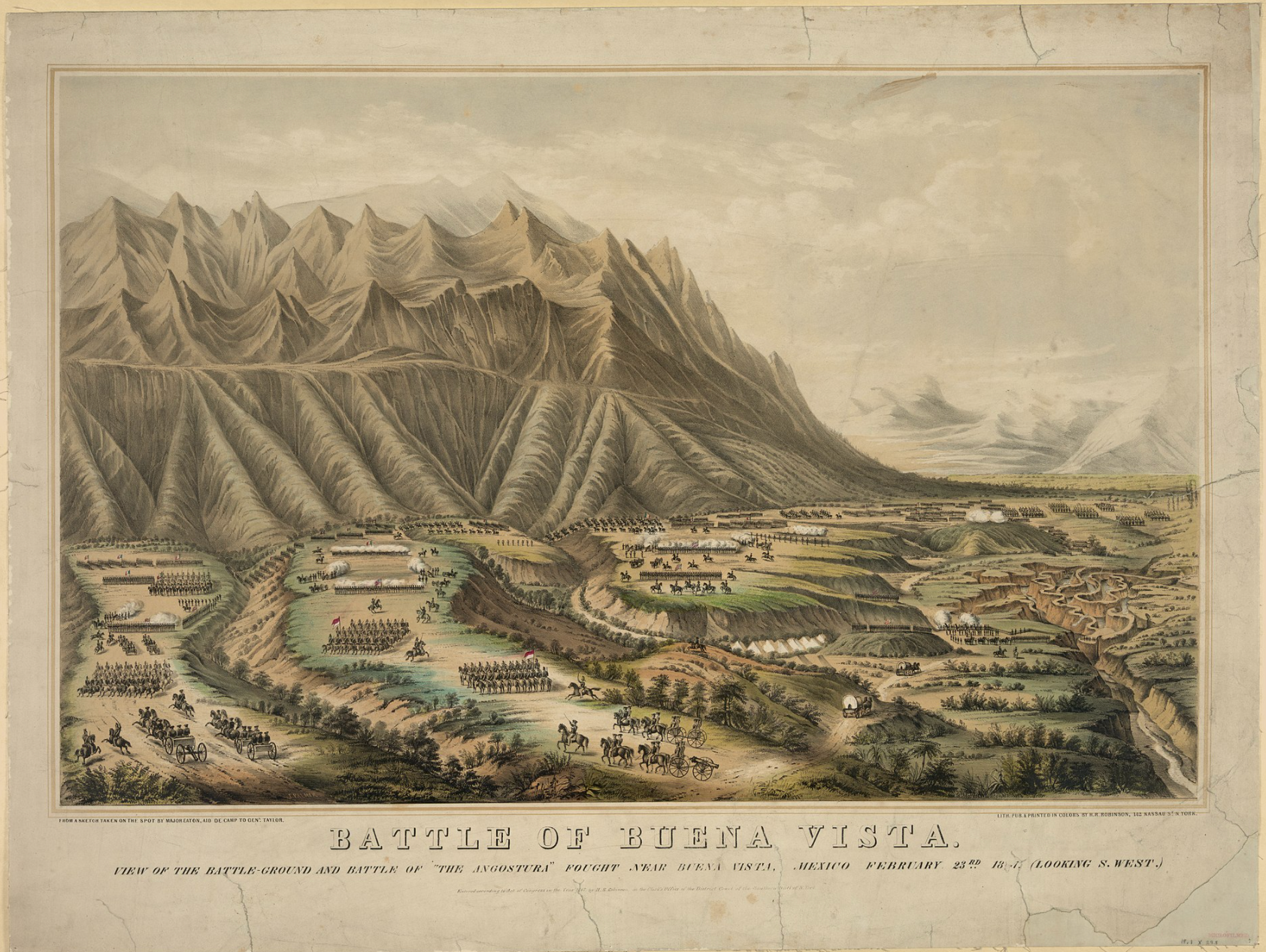
In other news, today marks the 175th anniversary of the Battle of Buena Vista in 1847, fought between the US invading forces, largely volunteers, under General Zachary Taylor, and the much larger Mexican Army under General Santa Anna.

Santa Anna had chosen the day of battle, not apparently aware that it was George Washington’s birthday, which galvanized patriotic sentiment among the U.S. forces.  The outcome of the battle was ambiguous, with both sides claiming victory. Santa Anna’s forces withdrew leaving the field to the surprised American forces, who had expected there to be another day of hard fighting. Since the American forces were largely volunteers rather than regular army, it increased Buena Vista’s popularity in the public imagination. The volunteers were characterized as raw citizen-soldiers who had defeated the far larger Mexican army, seen as a professional military force.

Ulysses Grant, writing about Buena Vista in his Personal Memoirs, said:

General Taylor’s victory at Buena Vista…with an army composed almost entirely of volunteers who had not been in battle before, and over a vastly superior force numerically, made his nomination for the Presidency by the Whigs a foregone conclusion. He was nominated and elected in 1848. I believe that he sincerely regretted this turn in his fortunes, preferring the peace afforded by a life free from abuse to the honor of filling the highest office in the gift of any people, the Presidency of the United States.

I wonder if perhaps USG didn’t feel the same way.

I bet you didn’t know that Buena Vista County, Iowa was named in honor of the battle, as was Buena Vista Township in Michigan’s Saginaw County. Cities named after the battle include Buena Vista in Virginia, Colorado, Oregon, New Jersey, Alabama, Mississippi, and Georgia.

Today is also the birthday of the English actor John Mills (1908-2005). He was in a lot of good movies. Recently I watched Tiger Bay (1959) which I had never seen. It also stars John’s daughter, Hayley Mills, in her first movie. She was twelve. It is a British crime drama and also stars Horst Buchholz as a Polish sailor who commits a murder which Hayley witnesses. It takes place in Cardiff and is an interesting piece of post-war social commentary. I enjoyed it and you might too. It is available on Youtube.

Have a good week! We are expecting another round of rain, sleet and snow. Ho hum.

A few toasts and a birthday

by chuckofish

Today is the 248th anniversary of the Boston Tea Party. You remember–when members of the Sons of Liberty dressed up like Mohawk Indians and dumped hundreds of crates of tea into Boston harbor as a protest against the Tea Act. A toast to these domestic terrorists of yore!

It is also the 210th anniversary of the first two in a series of four severe earthquakes which occurred in the vicinity of New Madrid, Missouri. The New Madrid zone experienced four of the largest North American earthquakes in recorded history, with moment magnitudes estimated to be as large as 7.0 or greater, all occurring within a 3-month period between December 1811 and February 1812. At New Madrid, trees were knocked down and riverbanks collapsed. This event shook windows and furniture in Washington, DC, rang bells in Richmond, Virginia, sloshed well water and shook houses in Charleston, South Carolina, and knocked plaster off of houses in Columbia, South Carolina. In Jefferson, Indiana, furniture moved, and in Lebanon, Ohio, residents fled their homes. There was renewed concern in the 1990s of imminent earthquake activity and I remember putting away my antique china for fear it might be broken. We may have had some water in reserve in the basement too as a precaution…but nothing happened and I don’t worry about such things anymore.

Today is also the birthday of George Santayana (1863-1952), philosopher, essayist, novelist, poet, and legendary Harvard professor. Here is one of his poems, A Toast, in keeping with the situation:

See this bowl of purple wine,

Life-blood of the lusty vine!

All the warmth of summer suns

In the vintage liquid runs,

All the glow of winter nights

Plays about its jewel lights,

Thoughts of time when love was young

Lurk its ruby drops among,

And its deepest depths are dyed

With delight of friendship tried.

Worthy offering, I ween,

For a god or for a queen,

Is the draught I pour to thee,–

Comfort of all misery,

Single friend of the forlorn,

Haven of all beings born,

Hope when trouble wakes at night,

And when naught delights, delight.

Holy Death, I drink to thee;

Do not part my friends and me.

Take this gift, which for a night

Puts dull leaden care to flight,

Thou who takest grief away

For a night and for a day.

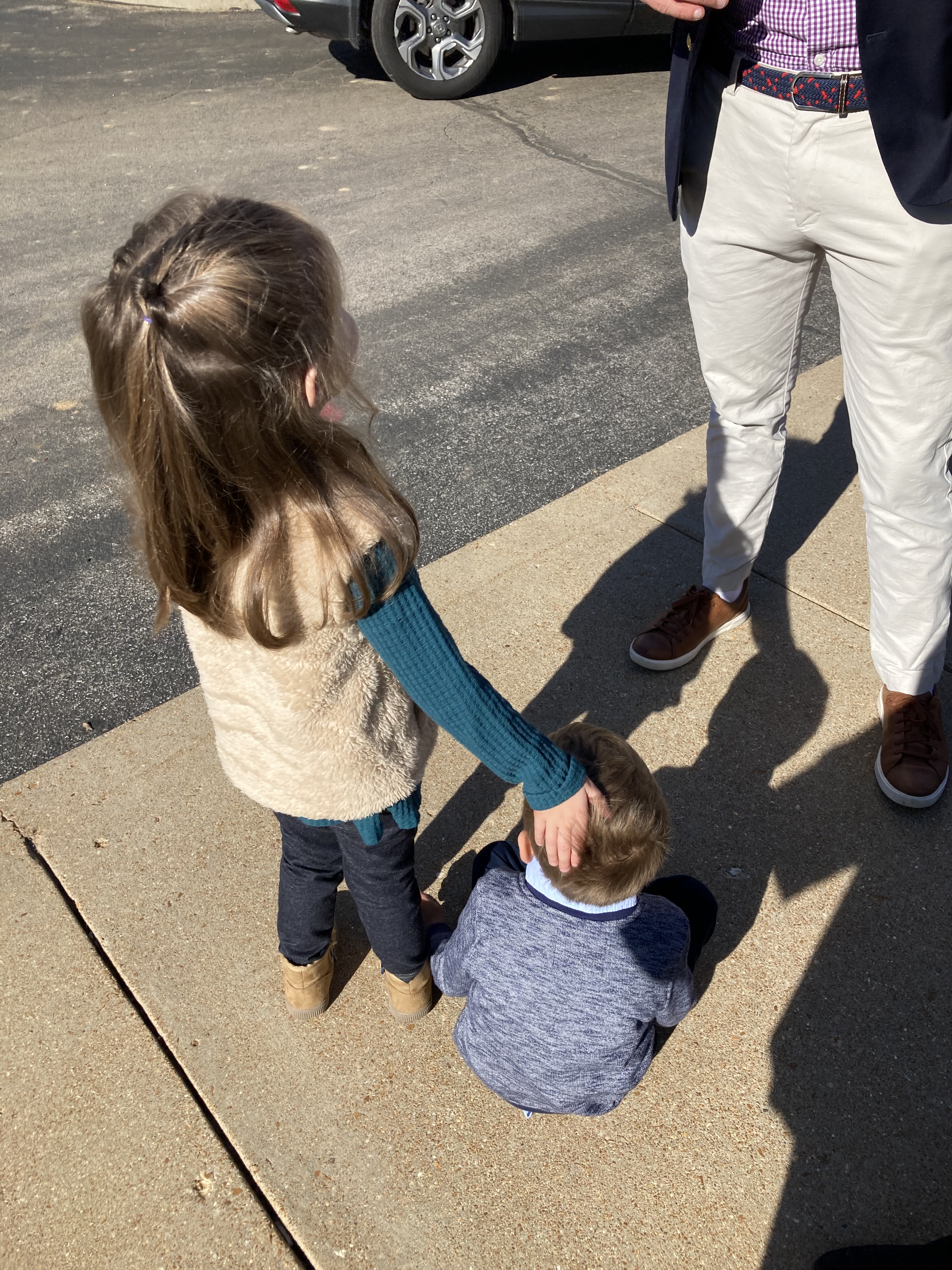
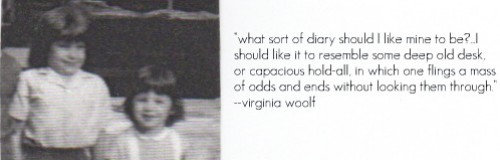
I will be toasting my dual personality on Saturday, because it is her birthday.

Here is a snapshot of the siblings a week after her 2nd birthday on Christmas morning. Our brother is 9, she is 2 and I am 4 1/2. I loved the dress I was wearing. Another girl in my class had it and I felt very cool. In fact, there might have been three of us in my small junior kindergarten class with that dress. It was red. The things that stay in your mind!

Anyway, here’s to my lovely and much-loved sister on her birthday.

(Long distance toasting!)

Now it’s time for tree-trimming…

The painting at the top is by Ernest Lawson (1873 – 1939) who studied at the Art Students League, New York, with J. Alden Weir and John Twachtman, and later in Paris at the Académie Julien. Upon his return to the United States he produced his famous impressionistic urban landscapes that linked him to the Ashcan school.

Eat, drink and be merry–in keeping with the situation

by chuckofish

Thursday again and another weekend approaches. Two weeks until Christmas and the wee twins turn five on Saturday!

(Social distancing with Santa in 2021–good grief!)

We do not have a particularly busy holiday schedule. Gone are the days of multiple Christmas parties to attend and work festivities and school events. And that’s okay with me.

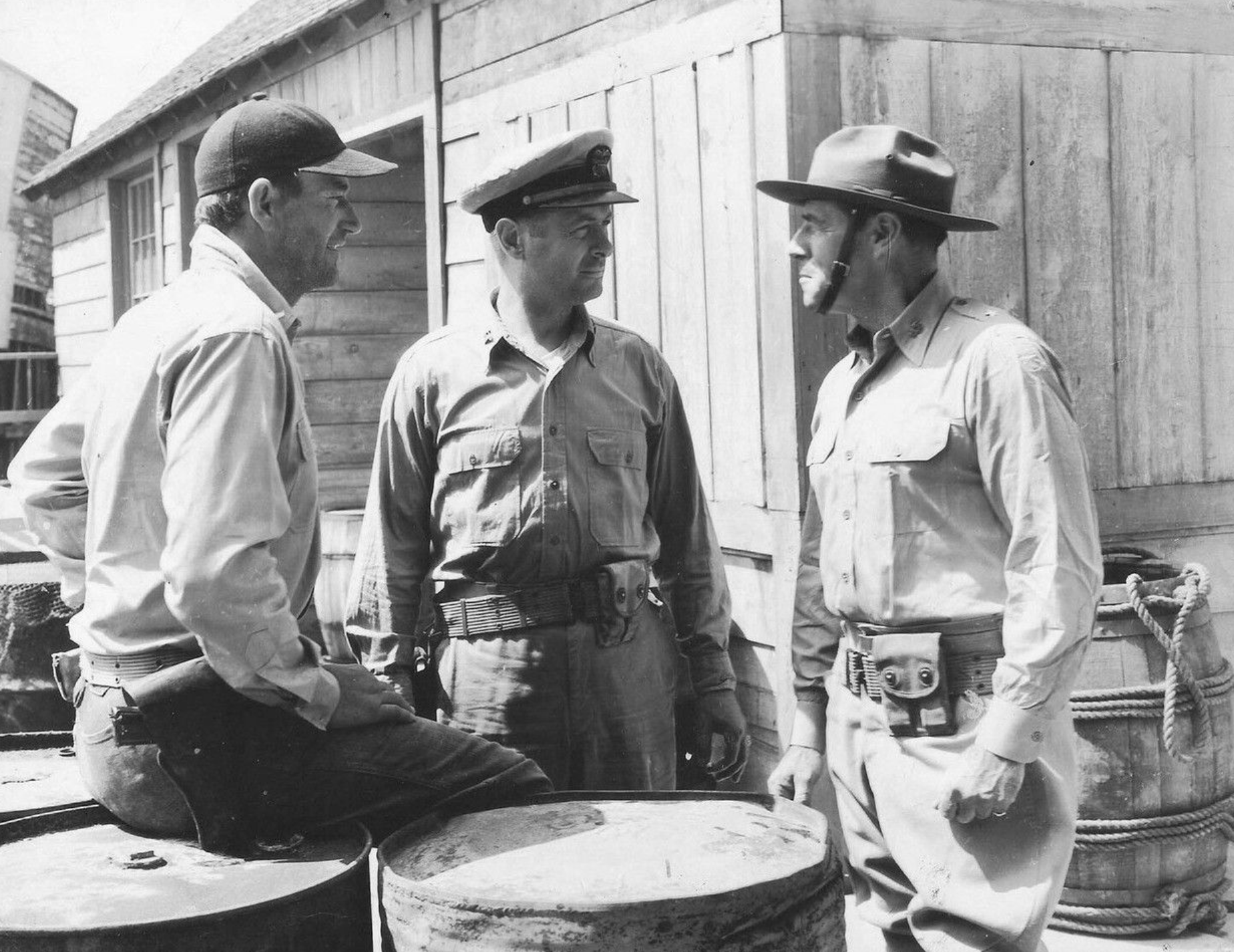
TCM showed They Were Expendable (1945) on December 7 and I watched it even though I had seen it on Memorial Day. It is such a great movie and one of the very best war movies, in part because it is not about winning and glory, but about losing and going on, about learning to be part of a team and making sacrifices for the team. (For the record, there are brave women in this movie, but they are not the ones getting their ankles blown off.)

There is a lot of talk these days about “toxic masculinity” and frequently John Wayne’s name is bandied about as an example of that, probably by morons who have never seen one of his movies. This is a real trigger for me, and this movie exemplifies exactly what is not toxic about masculinity and Robert Montgomery and John Wayne are perfect as the heroes of the film.

Author William L. White based his novel “They Were Expendable” on the experience of Squadron 3 in the Philippines, who, among other things, evacuated Gen. Douglas MacArthur, his family and staff by night from the island of Corregidor, where U.S. forces were trapped by the Japanese army, to Mindanao, the southernmost of the Philippine Islands, on March 11, 1942. John Wayne played the part of Capt. John Kelly (Rusty Ryan in the movie). Robert Montgomery played the part of Lt. John D. Bulkeley (John Brickley in the movie), who won a Medal of Honor for his service as commander of the squadron. By the way, William L. White was the son of the famous William Allen White, long-time Editor/Publisher of the Emporia (Kansas) Gazette, whom he succeeded from 1944-1973.

I also watched Damn Yankees (1958) which is available on Prime now. I had not seen it in forever (if indeed ever.) I was curious to see the Bob Fosse choreography and his muse Gwen Verdon, who did not make many movies. As musicals go, it is pretty thin, but I enjoyed “You Gotta Have Heart,” which transported me back to my senior year in high school when I had to sing it in Class Day. I was in key about half the time.

This is an interesting perspective. “For what it’s worth (and, to be clear, I’m not saying you have to do as I do), Christmas is effectively a secular festival for me. It has nothing to do with the church and isn’t demanded of Christian people in the Bible. But it is fun and I like it. What is more, I am always glad to have an opportunity to think more about Jesus.”

John Piper is so right, as usual. “I risk a generalization to warn you: people who are exercised and preoccupied with such things, as how the star worked and how the Red Sea split and how the manna fell and how Jonah survived the fish and how the moon turns to blood, are generally people who have what I call a mentality for the marginal.”

And I have been wondering about this for a long time, haven’t you?

The Lord bless thee, and keep thee:

The Lord make his face shine upon thee, and be gracious unto thee:

The Lord lift up his countenance upon thee, and give thee peace.

–Numbers 6: 24-26

Grace abounding

by chuckofish

Well, we are experiencing some beautiful fall weather and I am grateful. The weekend was beautiful.

On Saturday I gave a talk on the history of the Santa Fe Trail to a group of DAR ladies. Daughter #1 accompanied me and provided tech support, because as I’ve learned in my years in academia, one always needs tech support (plus multiple back-ups, several PowerPoint versions of your talk, dongles, thumb drives etc. etc. etc.)

Everything went smoothly and I guess the ladies enjoyed it. I was pinch-hitting for someone in Kansas City in the Missouri River Outfitters chapter of the Santa Fe Trail Association of which I am a member–obviously I’m the only chapter member who lives in St. Louis!

This experience did motivate me to look into the National Society of the Daughters of the American Revolution. My maternal grandmother was a pillar of the DAR and now that I am retired, it might be something I could get interested in. It was the DAR, after all, who originally took on the important task of preserving the Santa Fe Trail and placing markers along the way, thus saving the trail from literally blowing away in the wind. The DAR in Kansas began the monumental task of marking the Trail in Kansas in 1902.  Soon chapters of the DAR in Missouri, Colorado, and New Mexico followed suit and marked the Trail in their respective states. Pink granite markers were placed where one could see the original ruts or swales, or where traders still living indicated the location of the route. Four Madonna of the Trail statues honor the women who traveled the trail. Just another example of private citizens (and women at that) organizing a project, raising money and seeing it through to completion.

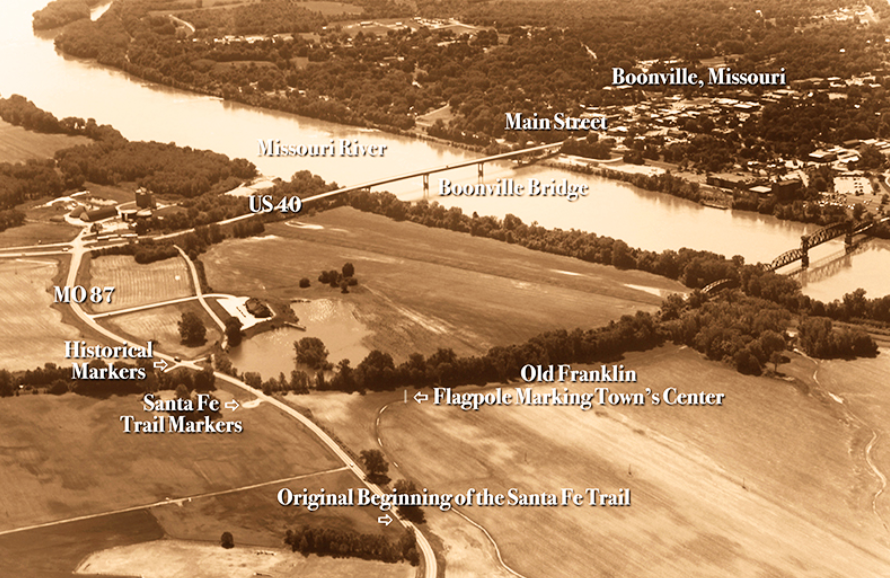
We are hoping to make the trek soon to Franklin, Missouri, the original site of the beginning of the trail…

…that is, before Franklin was washed away by a flood in 1827. Then the trailhead moved west to Westport Landing.

We got up early on Sunday and made a Tater Tot breakfast casserole before going to church to meet the boy and the wee babes for the 6th week in a row! They are really enjoying Sunday School. Lottie corrected my pronunciation of Naaman. (You remember him. He was the commander of the Syrian army who was healed of his leprosy by Elijah.) After brunch, daughter #1 headed back to JC and the twins went home to wreck havoc there.

We did get to FaceTime with our precious Katiebelle who is also (obviously) brilliant:

It was a nice quiet weekend.

Now as the week progresses, remember what the @madcapcottage boys say: “Be optimistic. Be happy. Don’t live with fear. Act like a kid. Create new chapters. Ditch the pessimists in your life. And always wear bunny ears whenever the opportunity arises.” Hear, hear!

In God we still trust

by chuckofish

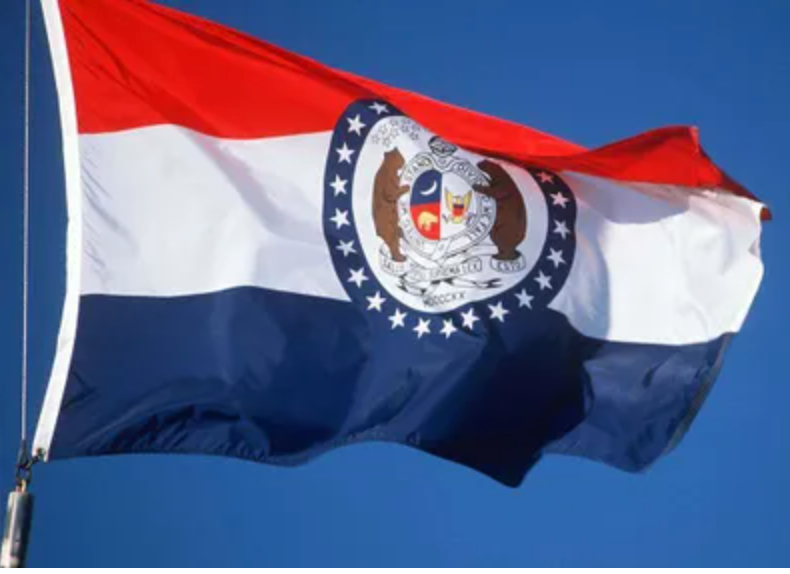
Today is the actual 200th anniversary of the day Missouri was admitted as the 24th state. Part of the 1803 Louisiana Purchase by the United States, Missouri earned the nickname Gateway to the West because it served as a significant departure point for expeditions and settlers heading to the West during the 19th century.

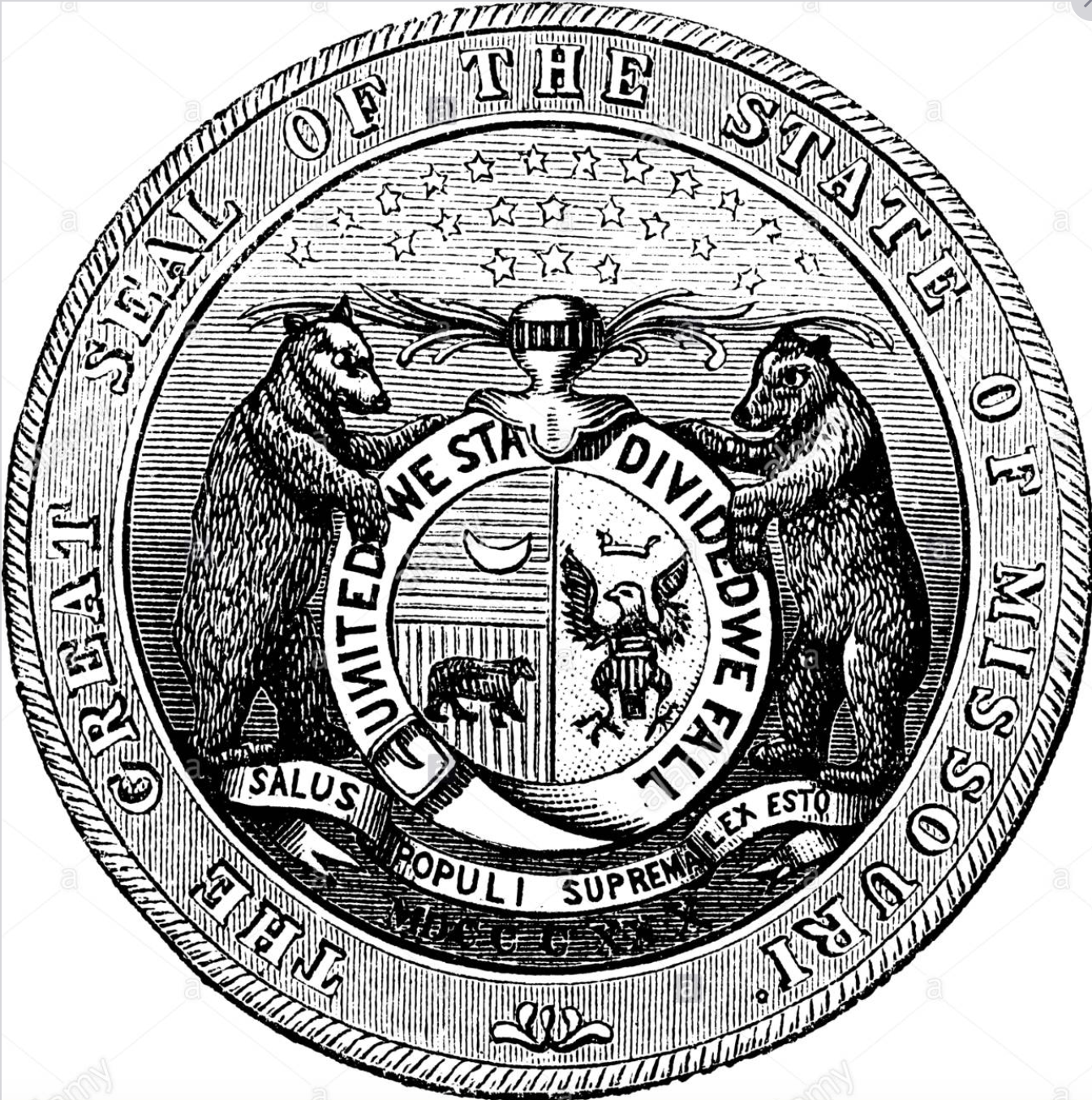
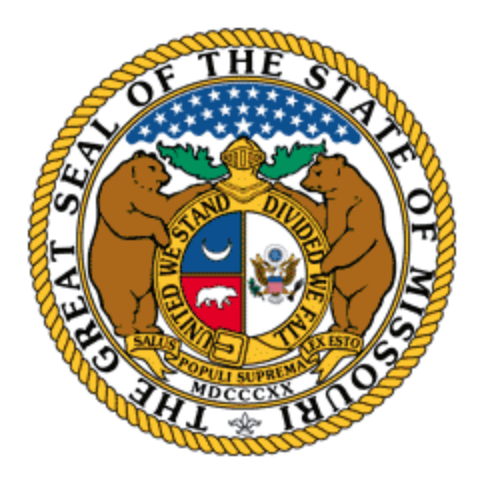
In case you were wondering, the Great Seal was designed by Judge Robert William Wells and adopted by the Missouri General Assembly on January 11, 1822.

The center of the state seal is composed of two parts. On the right is the United States coat-of-arms containing the bald eagle. In its claws are arrows and olive branches, signifying that the power of war and peace lies with the U.S. federal government. On the left side of the shield, the state side, are a grizzly bear and a silver crescent moon. The crescent symbolizes Missouri at the time of the state seal’s creation, a state of small population and wealth which would increase like the new or crescent moon; it also symbolizes the “second son,” meaning Missouri was the second state formed out of the Louisiana Territory.

This shield is encircled by a belt inscribed with the motto, “United we stand, divided we fall,” which indicates Missouri’s advantage as a member of the United States. The two grizzlies on either side of the shield symbolize the state’s strength and its citizens’ bravery. The bears stand atop a scroll bearing the state motto, “Salus Populi Suprema Lex Esto,” which means, “Let the welfare of the people be the supreme law.” Below this scroll are the Roman numerals for 1820, the year Missouri began its functions as a state.

The helmet above the shield represents state sovereignty, and the large star atop the helmet surrounded by 23 smaller stars signified Missouri’s status as the 24th state. The cloud around the large star indicates the problems Missouri had in becoming a state. The whole state seal is enclosed by a scroll bearing the words, “The Great Seal of the State of Missouri.” (RSMo.10.060)

You have to admit that our state flag is one of the coolest.

Trivia question: What other state flag features a bear? (Yes, California, but we have two bears–technically three bears–and California only has one.)

So today the Missouri Bicentennial Commemoration and U.S. Naturalization Ceremonies will be livestreamed at missouri2021.org/statehood-day-livestreams.

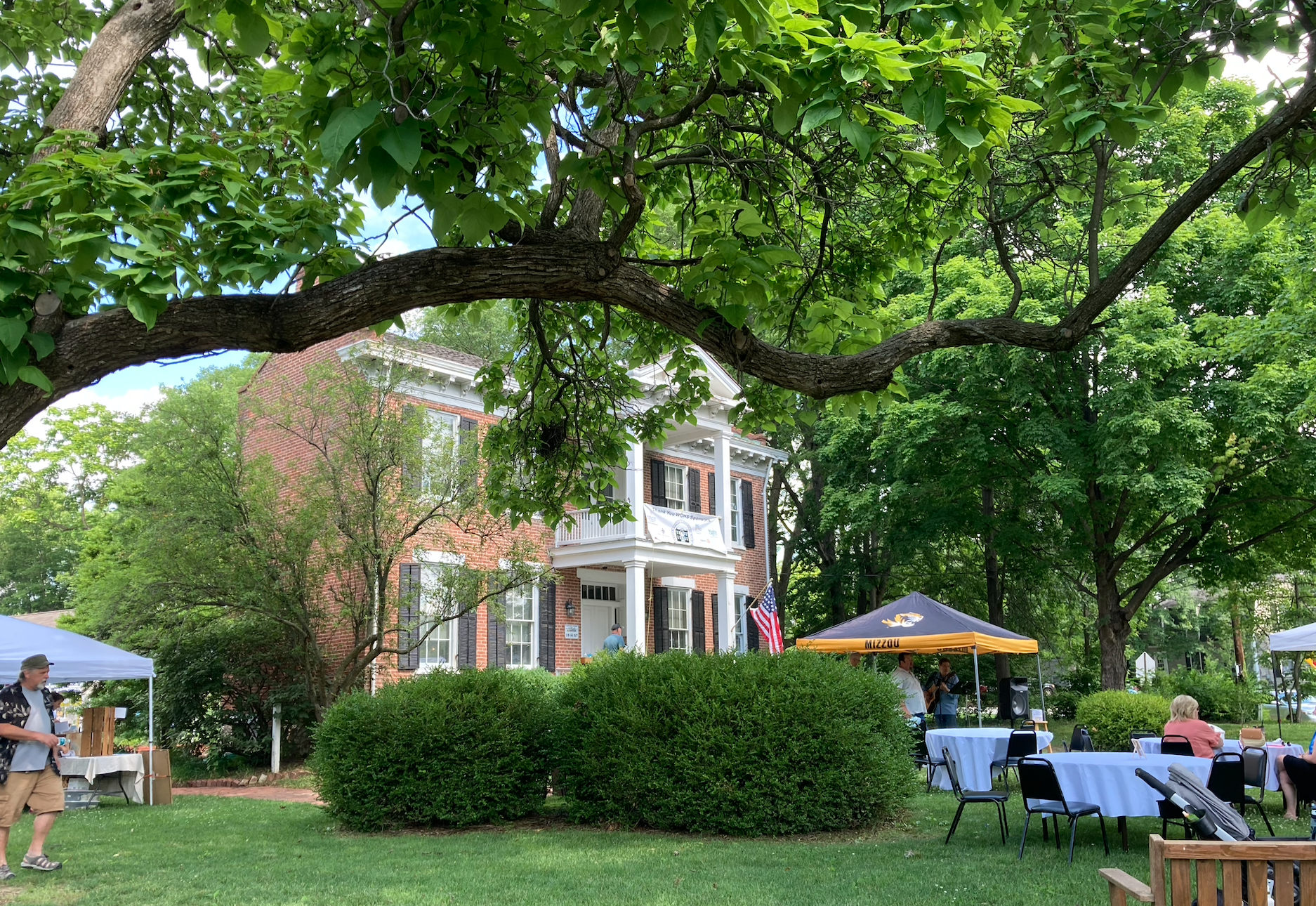
Also note that Missouri 2021 is encouraging communities across the state to commemorate Statehood Day with an ice cream social, which is a most appropriate way to celebrate Missouri, since the ice cream cone is the official state dessert. In my flyover town the historical society is inviting all members to bring their families to Mudd’s Grove for ice cream and I am planning to go, of course.

The Missouri State Fair is coming up in a few days and I am sorry I won’t be able to attend. However, daughter #1 will and she’ll report back. Gee, I hope she gets to see The Missourians who will be performing on August 21-22.

Let’s all just take a moment. And maybe make a toast to the great state of Missouri.

The following are the toasts raised at the grand dinner and ball in St. Louis celebrating the return of Lewis and Clark on September 23, 1806:

  1. The president of the United States—The friend of science, the polar star of discovery, the philosopher and the patriot.
  2. The Heads of Department—The pillars that support the world’s best hope.
  3. The Missouri expedition—May the knowledge of the newly explored regions of the West, be the least benefit that we may derive from this painful and perilous expedition.
  4. The hardy followers of Captains Lewis and Clark—May they be rewarded by the esteem of their fellow citizens.
  5. The United States—Whilst they tolerate a spirit of enquiry, may never forget, that united they stand – but divided they fall.
  6. The Territory of Louisiana—Freedom without bloodshed, may her actions duly appreciate the blessing.
  7. The memory of Christopher Columbus—May those who imitate his hardihood, perseverence [sic] and merit, never have, like him, to encounter public ingratitude.
  8. The Federal Constitution—may the Eagle of America convey it to the remotest regions of the globe; and whilst they read they cannot but admire.
  9. The memory of the illustrious Washington, the father of America—May his guardian spirit still watch over us, and prove a terror to the engines of despotism.
  10. The Capitol of the United States—May the goddess of liberty, never cease to preside there.
  11. Peace with all nations; but submission to none.
  12. The Commerce of the United States—The basis for the political elevation of America.
  13. Agriculture and Industry—The farmer is the best support of government.
  14. Our fathers who shed their blood and laid down their lives to purchase our independence—May we emulate their actions, and inherit their virtues.
  15. The Missouri—Under the auspices of America, may it prove a vehicle of wealth to all the nations of the world.
  16. Our National Council—May the baneful influence of private ambition and political intrigue, be ever expelled thence by the genuine spirit of republicanism.
  17. The fair daughters of Louisiana—May they ever bestow their smiles on hardihood and virtuous valor.

18. Captains Lewis and Clark—Their perilous services endear them to every American heart.

Whoopee ti yi yo, git along little dogies

by chuckofish

Well, the summer is meandering along and soon will be over! We seem to do the same things over and over. Time like an ever rolling stream…

Anyway, it is a good time to re-read Thoreau’s A Walk to Wachusett, which he recorded on July 19, 1842.

It was at no time darker than twilight within the tent, and we could easily see the moon through its transparent roof as we lay; for there was the moon still above us, with Jupiter and Saturn on either hand, looking down on Wachusett, and it was a satisfaction to know that they were our fellow-travelers still, as high and out of our reach as our own destiny. Truly the stars were given for a consolation to man.

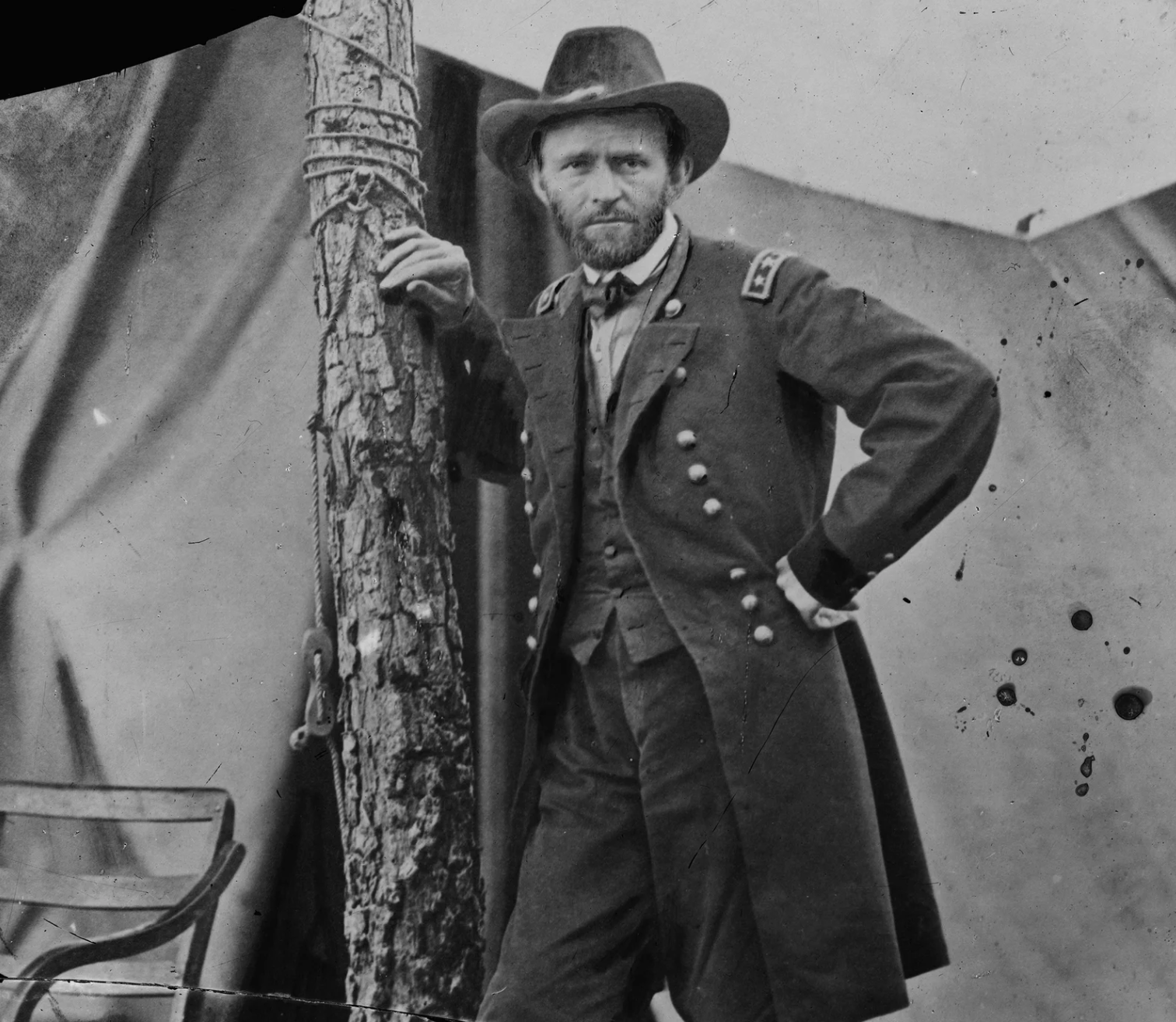
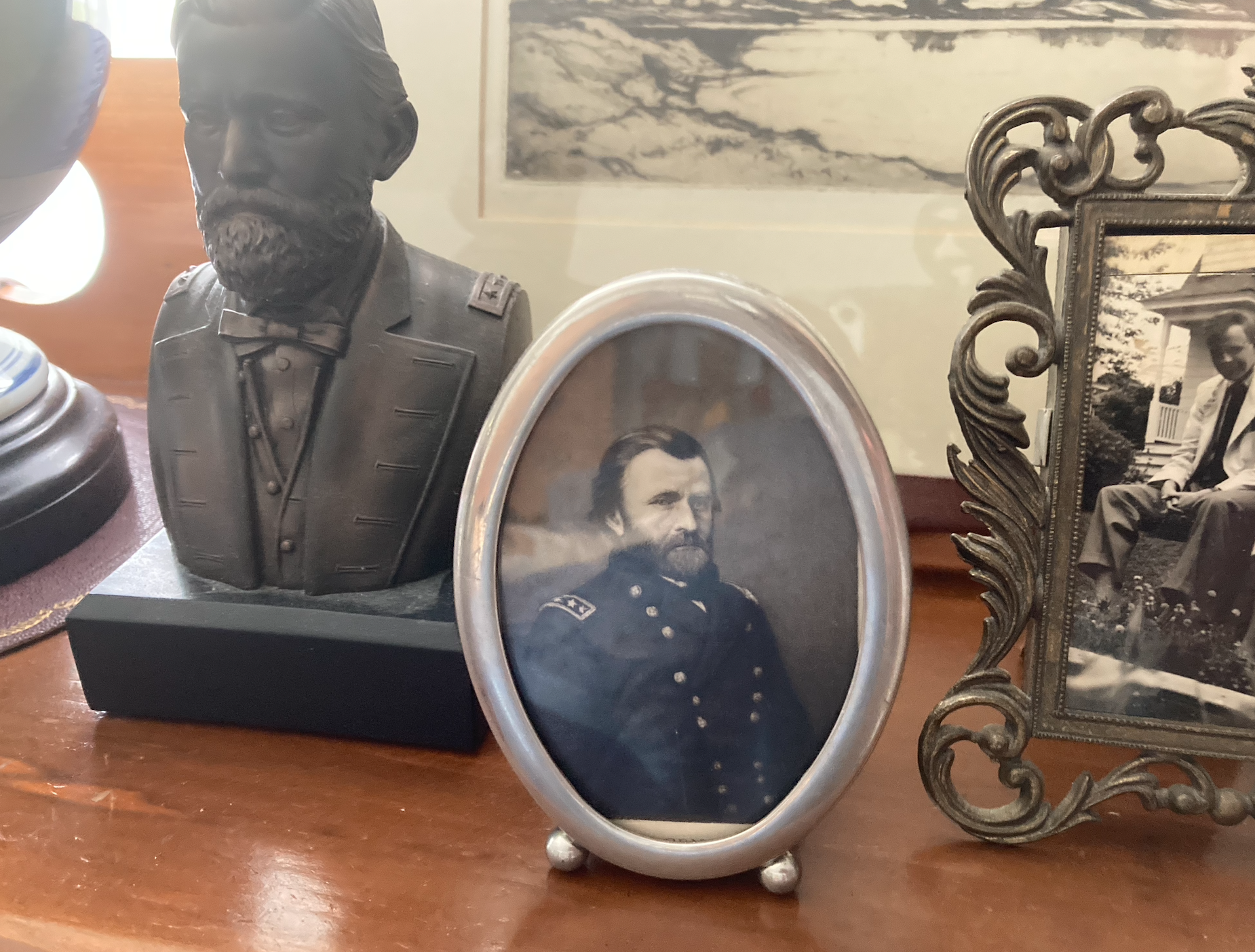
Tomorrow is the anniversary of the death of Ulysses Grant in 1885. Let’s all take a moment to remember our 18th president. His funeral in New York City demonstrated the great love and admiration the country felt for their former president and Civil War hero. He was respected not only by comrades in arms but also by former enemies. Marching as pallbearers beside the Union generals William Tecumseh Sherman and Philip Sheridan were two Confederate generals, Joe Johnston and Simon Buckner.

The column of mourners who accompanied Grant was seven miles long. (This is an interesting thread with photos of all the honorary pall bearers.)

Placed in a “temporary” tomb in Riverside Park, Grant’s body stayed there for nearly 12 years, while supporters raised money for the construction of a permanent resting place. In what was then the biggest public fundraising campaign in history, some 90,000 people from around the world donated over $600,000 to build Grant’s Tomb. A million people, including President William McKinley, attended the tomb’s dedication on April 27, 1897, 10 days after Grant’s body had been moved there. Grant’s Tomb was — and is —the largest tomb in North America.

I’ll also remind you that Saturday is the National Day of the Cowboy. Celebrate it in appropriate style!

As Emerson Hough wrote in his “Passing of the Frontier,” the time of the Cattle Kings, though short, was

…a wild, strange day…There never was a better life than that of the cowman who had a good range on the Plains and cattle enough to stock his range. There never will be found a better man’s country in all the world than that which ran from the Missouri up to the low foothills of the Rockies.

I plan, of course, to watch some good cowboy movies, including (but not limited to) Red River (1948), as is my tradition.

You might also want to read up on some of your favorite western artists or just look at some great western art…

They’ll be celebrating in Oklahoma City at the National Cowboy and Western Heritage Museum with numerous events, but we can all plan our own party. Life is a banquet and most poor suckers are starving, as Auntie Mame said. So heat up some beans and join me in watching Red River!

By the way, last night we watched The Best of Times (1986), a movie I have a great fondness for, in memory of Robin Williams. You will recall that it is about re-playing a high school football game played in the fall of 1972, which was a disaster for the characters played by Robin Williams and Kurt Russell. (The OM was playing football that year and so it always resonates with him.) It’s a classic and I highly recommend it.

Bits and Bobs

by chuckofish

Today is the anniversary of the passing of the Antiquities Act which was signed into law by President Theodore Roosevelt on June 8, 1906. This law gives the President of the United States the authority to create national monuments from federal lands to protect significant natural, cultural, or scientific features. The first use of the Act protected a large geographic feature, Devils Tower National Monument. The Act has been used more than a hundred times since its passage, but only once in Missouri. We have the site preserving, by act of Congress in 1943, Moses Carver’s farm, which was the boyhood home of George Washington Carver, who, you will recall, developed many uses for peanuts. It was the first national monument dedicated to an African American and the first to a non-president. It is in Diamond, MO in southwest Missouri, south of Joplin.

I’ll add it to my growing list of places to visit.

If you were wondering, I did get to experience the cicada invasion in Maryland.

It was really special and extremely loud, but I seem to remember that when we had the same thing happen here at home twenty years ago, it was even more intense.

Here’s something great–Tim Allen (another former Episcopalian) giving a commencement address at Hillsdale College this year. Watch the whole thing. There’s more to Buzz Lightyear than you might think.

This article was written by a woman I went to school with, oh, so many years ago. “Parents, we get to pray—with the body of Christ. We are not meant to parent without community. The members of a church congregation are called to help one another raise up the next generations to know and serve the Lord.”

And I know everyone wants an update on the bear sighting situation in my neighborhood, so here you go.

Look up! Here’s an awesome video about cloud formations. I enjoyed looking down at the clouds on my plane rides last week.

May the Lord bless and keep you today.

“Every field wears a bonnet/ With some spring daisies on it”*

by chuckofish

Is it Friday? I was sick most of the week with a cold, coming up for air between doses of Dayquil to go to Zoom meetings as needed. Fun City.

I am not sure how I caught a cold. It must have been that Mother’s Day kiss from the boy…(You will recall that he was sick last weekend)…

Anyway, I will be taking it easy this weekend. Hopefully I’ll get to see the wee twins; they do liven up my rather dull existence. Not that I don’t rejoice in my drab life. (I certainly do.)

In history news–U.S. Army Captain Meriwether Lewis and his partner William Clark officially departed from St. Charles, Missouri on May 22 in 1804. It might be time to dust off The Far Horizons (1955) with Charlton Heston and Fred MacMurray as the explorers and Donna Reed realistically cast as Sacajawea.

In other news, Dr. Jane Goodall, DBE, founder of the Jane Goodall Institute, UN Messenger of Peace and world-renowned ethologist and conservationist, was announced as the winner of the 2021 Templeton Prize. Established by the late global investor and philanthropist Sir John Templeton, it is given “to honor those who harness the power of the sciences to explore the deepest questions of the universe and humankind’s place and purpose within it. Unlike Goodall’s past accolades, the Templeton Prize specifically celebrates her scientific and spiritual curiosity. The Prize rewards her unrelenting effort to connect humanity to a greater purpose and is the largest single award that Dr. Goodall has ever received.”

She got that right–quoting 1 Corinthians 13:12.

And I love this writer. A broom and a tax collector, indeed.

So anyway, have a nice day, if you like that sort of thing.

*Johnny Mercer, “Spring, Spring, Spring”

“Toiling,—rejoicing,—sorrowing, Onward through life he goes”*

by chuckofish

It snowed on Wednesday–not much–just enough to be pretty.

Look at that blue sky for a change! We haven’t seen much of that blue sky this winter.

This is good information for those of us who worry about such things.

Wednesday was the 100th birthday of Donna Reed. Iowa’s governor, Kim Reynolds, proclaimed it “Donna Reed Day“–wasn’t that nice? Indeed, it is surprising to note how many of my favorite movies featured her back in the day, notably They Were Expendable (1945).

Her big scene is so well done, so understated, but powerful. Note that she is wearing her U.S. Navy jumpsuit, but has put on pearls for this big “dinner party” on the temporary island base. She won an Academy Award for playing against type in From Here to Eternity (1953) and she deserved it, but no one was better at playing to type, the fresh-faced Iowa girl.

This article on “the standing orders of the gospel” (“Rejoice always, pray without ceasing, give thanks in all circumstances”) is worth your time to read. 

It is the will of God for us to rejoice always. But obedience to this command is not accomplished by an act of the will. It is only accomplished by faith in Christ. The believer’s unceasing rejoicing is the will of God for us “in Christ Jesus.” This is the key to the life of rejoicing. Unsaved people do not rejoice in God, pray to God, or give thanks to God. Religious people rejoice sometimes, pray when they feel like it, and give thanks when things are going well. But Christians rejoice always, pray without ceasing, and give thanks in all circumstances. This is not the believer’s response because we are impervious to life’s dangers, toils, and snares. It is our response to life because we are in Christ Jesus.

And I really liked this from the Almost Daily Devotional:

The term “obeisance” means to acknowledge another’s superiority or importance.  I love the way it is used in this provocative article in the UK’s The Guardian. “Even with the smartphone’s on-purpose designed-in distraction notification architecture, our prostration at their non-human feet is the real issue. Our obeisance demotes the advanced human, and we pretend it doesn’t. We don’t take charge of our attention. Our little robots do. And we caress them.”

Of course, our obsession with our phone is not the problem; it is a manifestation of the deeper problem. Sin – or in current terms, self-interested distractibility – is our problem. Our attention and obeisance rightly belong to our Lord. Single-mindedly, St. Paul says, “For I resolved to know nothing among you except Jesus Christ and him crucified.” (1 Corinthians 2:2)

While we may worship our Lord each day and in all kinds of settings, our current inability to worship Him in church is what truly “demotes the advanced human.” Worship, especially corporate worship, is a reset – it pulls our bent down heads and fixated eyes from our phone (or you name it) up to gaze at the cross. We are brought out of ourselves to, ironically, be ourselves, for we were made by God and for God – to love, worship, and obey Him.

Help us, Lord!

Tonight we will toast our other ancestor with a January birthday, John Wesley Prowers, on his 182nd birthday. Born in Missouri in 1838, you will recall that he became a trader, cattle rancher, legislator, and businessman in the territory and state of Colorado.

Speaking of ancestors and descendants, I hope we get to see the wee babes this weekend…

…and talk to these twinsies…

Indeed, I plan to take it easy this weekend–it was a long, hard week!–I’ll toast J.W. Prowers, watch a Donna Reed movie, do some needlepoint, talk on the phone with my loved ones (and then put my phone down for the duration), and get out of the house to do something.

And rejoice!

*”The Village Blacksmith” by Henry Wadsworth Longfellow–read the whole poem here.