dual personalities

Tag: History

Happy Leif Erikson* Day!

by chuckofish

There were giants in the earth in those days; and also after that, when the sons of God came in to the daughters of men, and they bore children to them: the same became mighty men, who were of old, men of renown. (Genesis 6:4)

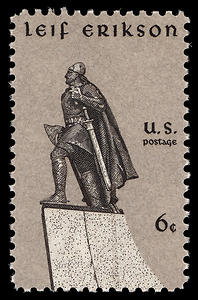
LeifErikson1968stamp

Leif Erikson was a Norse explorer who is regarded as the first European to land in North America (excluding Greenland), nearly 500 years before Christopher Columbus.

In 1929 the Wisconsin Legislature passed a bill to make October 9 “Leif Erikson Day” in the state. That date was not chosen to commemorate any event in the life of the explorer, but rather, it marked the first organized immigration from Norway to the United States. The ship carrying these first immigrants arrived in New York Harbor on October 9, 1825. In 1964 the United States Congress authorized and requested the president to proclaim October 9 of each year as “Leif Erikson Day”.

My best friend in graduate school was a young woman whose father was a Lutheran minister and college professor at Augustana College. She was half Swedish and half Danish and a descendent of those 19th century immigrants who settled in the Midwest. She looked a lot like Loni Anderson. Many of my fellow (female) historians hated her because she was so gorgeous. (She was smart too.) I never held her looks against her.

bridesmaids2

She was a bridesmaid in my wedding and her parents drove down from Rock Island, Illinois to attend the festivities. They gave me a very Swedish-looking trivet which I have used ever since in all my kitchens. It reminds me of my friend and her Scandinavian parents every day.

IMGP0440

Trevlig dag!

* Sometimes spelled Ericson; sometimes spelled Erickson. Zut alors! Someone please make up your mind!

Good grief, Charlie Brown

by chuckofish

The comic strip Peanuts was introduced on October 2, 1950 and ran for nearly 50 years. The final original strip ran on February 14, 2000.

First_Peanuts_comic

According to Wikipedia, Peanuts is the most popular and influential strip in the history of the comic strip, with 17,897 strips published in all. At its peak, Peanuts ran in over 2,600 newspapers, with a readership of 355 million in 75 countries, and was translated into 21 languages. It helped to cement the four-panel gag strip as the standard in the United States, and together with its merchandise earned Schulz more than $1 billion. Reprints of the strip are still syndicated and run in almost every U.S. newspaper.

Calvin and Hobbes creator Bill Watterson wrote:

“Peanuts pretty much defines the modern comic strip, so even now it’s hard to see it with fresh eyes. The clean, minimalist drawings, the sarcastic humor, the unflinching emotional honesty, the inner thoughts of a household pet, the serious treatment of children, the wild fantasies, the merchandising on an enormous scale — in countless ways, Schulz blazed the wide trail that most every cartoonist since has tried to follow.”

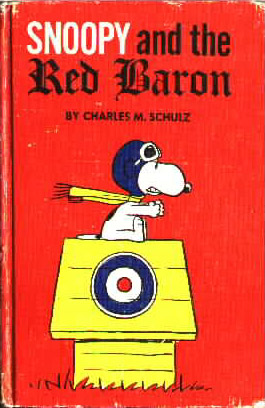
As a child, I was a great fan of Peanuts. My 5th grade friends always compared me to Lucy, but I definitely related to the misfit Charlie Brown who didn’t get invited to parties and never got Valentines, and to the spiritual, but uncertain, Linus who sucked his thumb and had a blanket. So had I. I kept a scrapbook of clippings and had many books and several stuffed Peanuts character dolls. My brother once made me a balsa wood dog house for a Snoopy figure. It was painted to look like his WWI doghouse-fighter plane.

snoopy

It was probably the nicest present he ever gave me.

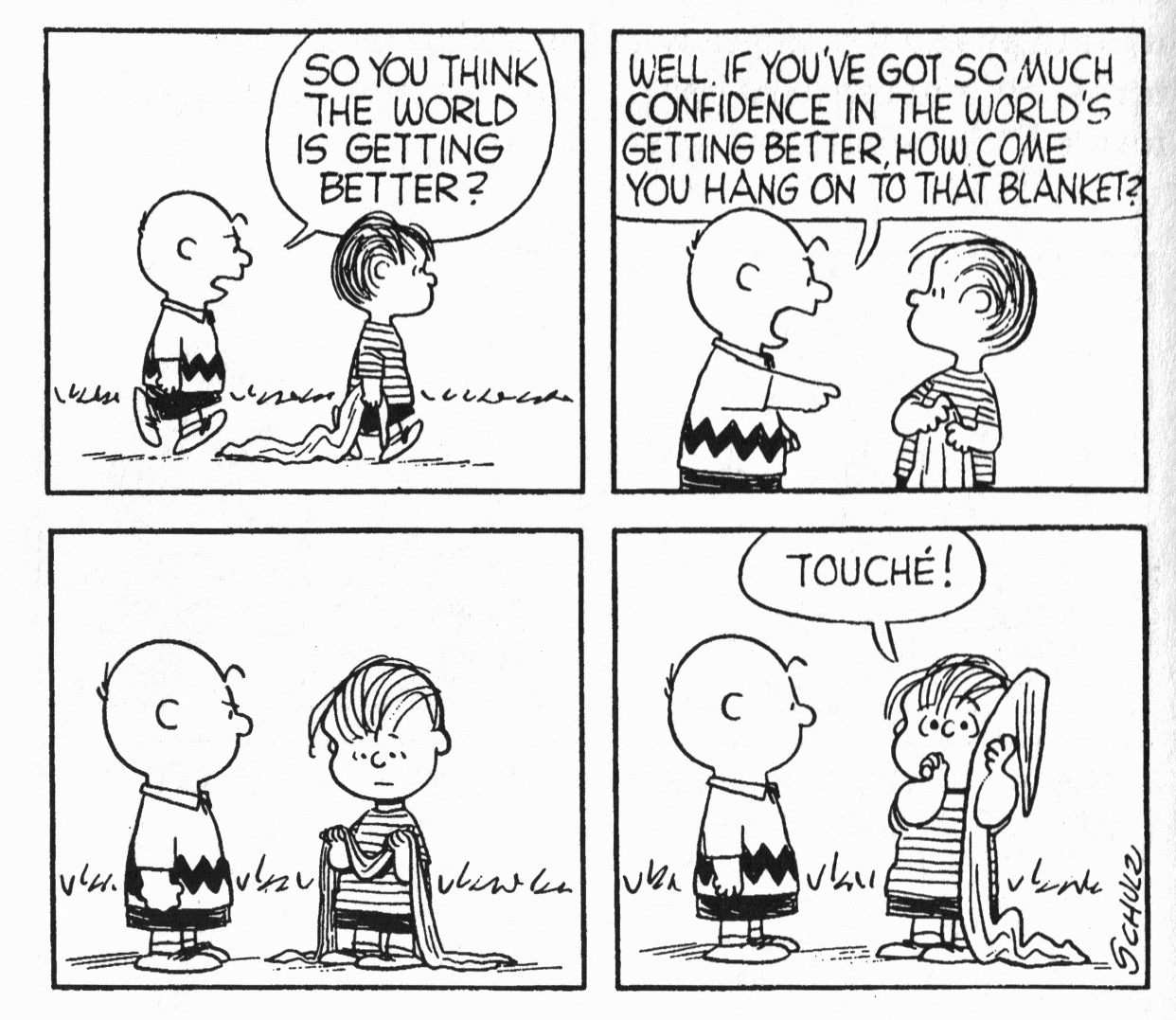
Although a “comic” strip, I always had the sense that it was inherently sad. Life is sad and the knowledge of that is what ultimately binds us together. Clearly Charles Monroe Schulz (November 26, 1922 – February 12, 2000), even with a nickname like Sparky, understood that too.

peanuts1

Toot! Toot!

by chuckofish

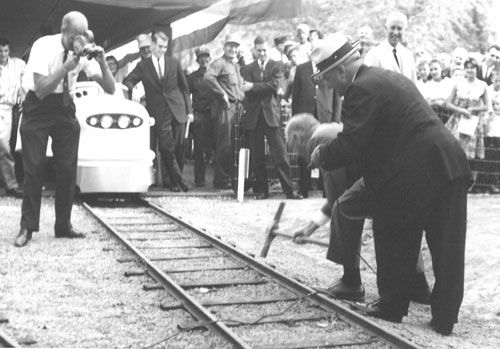
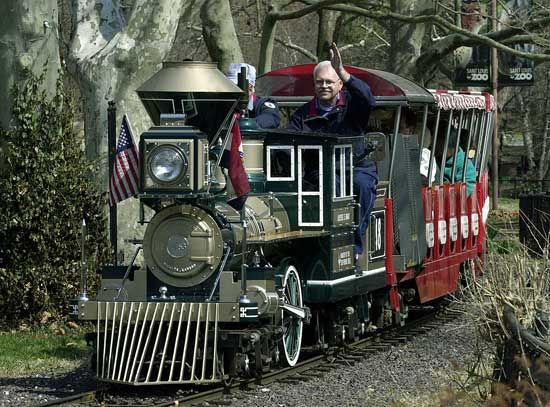
Yesterday was the 50th anniversary of the Zooline Railroad at our famous flyover zoo.

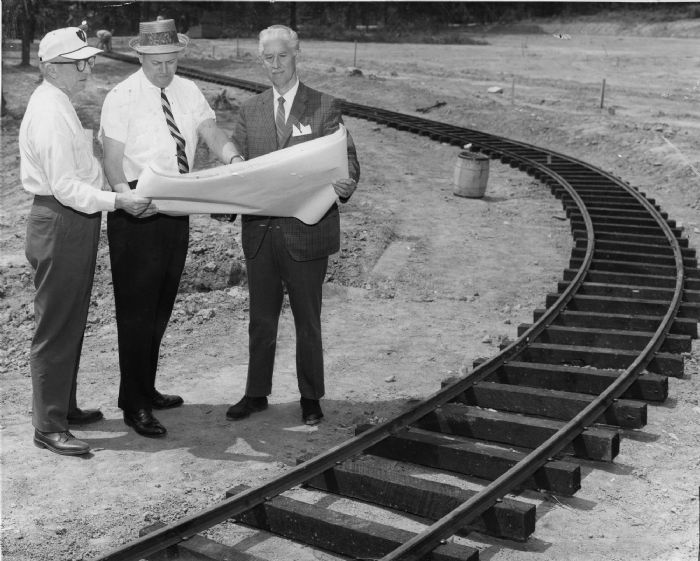
Director Marlin Perkins looks at the plans in 1963.

Director Marlin Perkins looks at the plans in 1963.

A golden spike is driven into the ground on August 29, 1963.

A golden spike is driven into the ground on August 29, 1963.

Our Zoo is one of the biggest (and the best) zoos in the country and our summers are famously hot and humid. The Zoo train offers a comfortable way to get around the 90-acre Zoo campus. For your $5 these days (the cost was 30 cents in 1963) you get a 20-minute narrated tour weaving through tunnels and past favorite animal exhibits on a 1½-mile round trip. The Zooline Railroad has transported more than 35 million visitors since 1963 and it is still one of the most popular attractions there. (The railroad operates year-round, weather permitting.)

zootrain

My mother loved the Zoo train. It was one of the few things she was gladly willing to pay for back in the day. We loved it too. After she died, I always insisted on riding the train with my own children, and I still feel close to my mother as I ride around the familiar route.

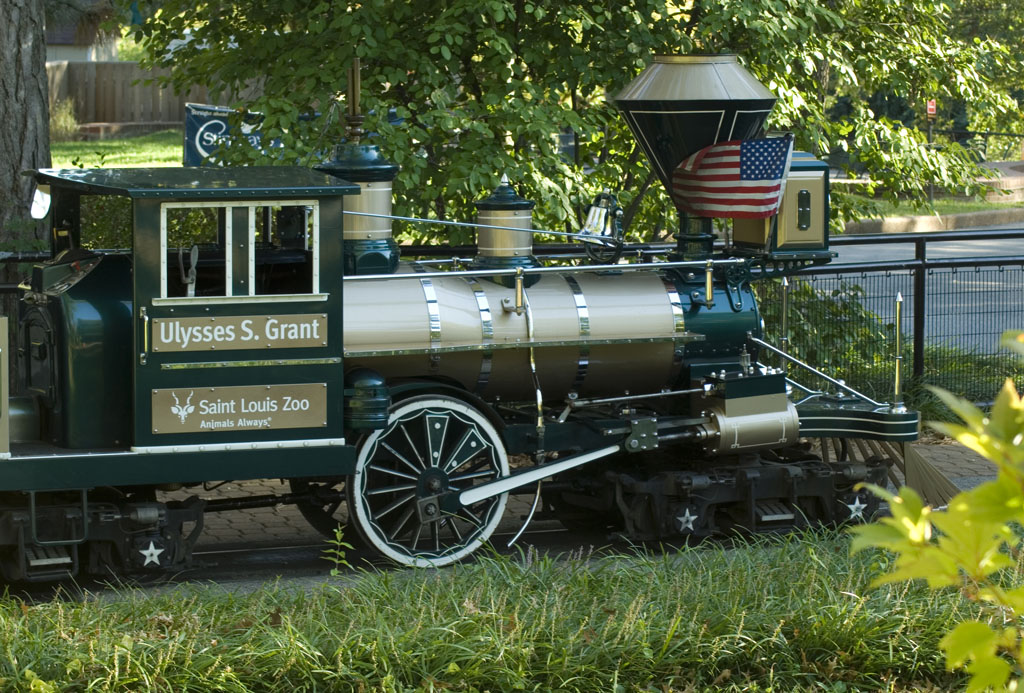
Our favorite engine for obvious reasons.

Our favorite engine for obvious reasons.

I wish I had a picture of my mother on the Zoo train, but, alas, I do not. Instead, here’s a picture of Captain Kangaroo visiting the Zoo! Perhaps this was on the opening day–I’m not sure. (All pictures are from the Zoo website.)

captainkanga

Have a nice weekend!

History beckons or “YOLO is just Carpe Diem for stupid people”*

by chuckofish

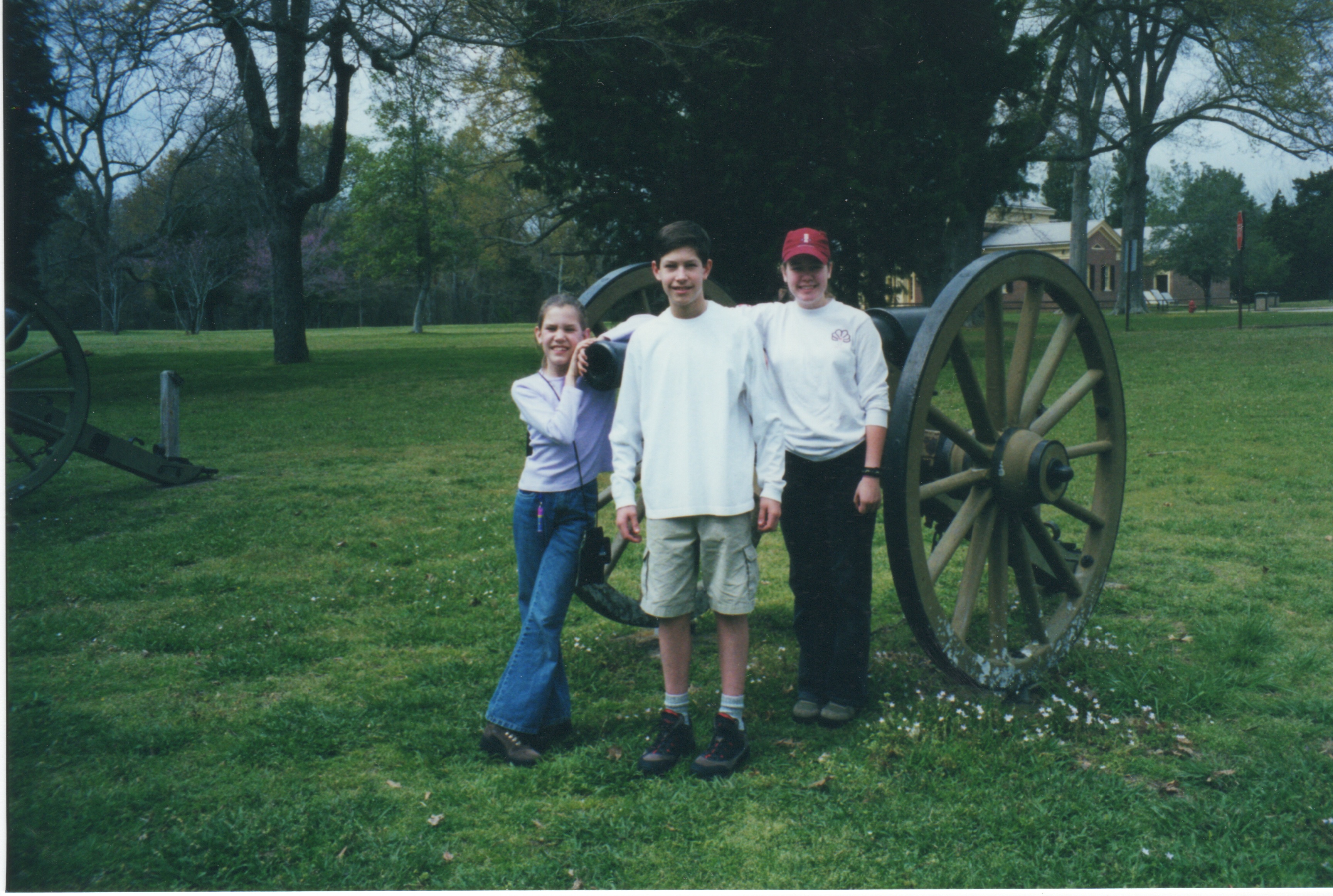
Somewhere in the Shiloh National Military Park...

Somewhere in the Shiloh National Military Park…

My children give me a lot of way too much grief about the vacations we took when they were youngsters. Excuse me, every trip did not involve a Civil War battlefield. (A lot did but what of it?) Just because they did not spend spring breaks in Destin or Orlando does not make them deprived children. Educational trips are the best, right?

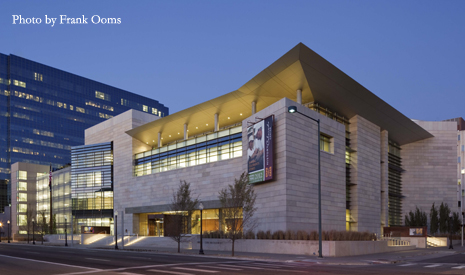
Anyway, daughter #2 is coming home today for a few days and we are taking a little “educational” side trip to Denver, Colorado to do some family research at the Stephen H. Hart Library and Research Center at the brand new History Colorado Center.

HCC_sm_header_MG_0182a copy

I have been curious to see what is included in the archive pertaining to my ancestors John Simpson Hough and John Wesley Prowers, about whom I have written on this blog. John Hough’s son Frank Baron Hough died suddenly while dancing the Charleston in the 1920s (I kid you not) and his widow left all the family letters, documents, manuscripts, photographs, etc. to the state of Colorado. I have been meaning to make this trip for years, but something always prevented me–lack of time, lack of funds, no one to go with me. In the meantime, the old museum was torn down and this new shining edifice was constructed. Determined not to put it off another year, I am going at long last!

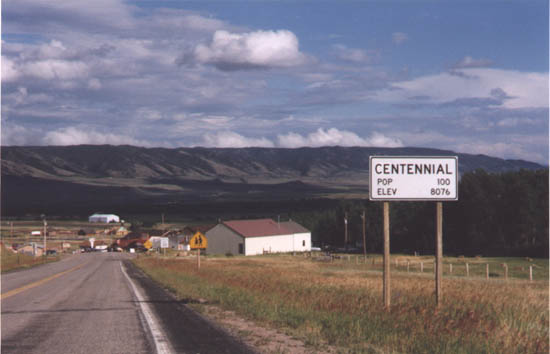
While we are out there we are also planning to drive up to Wyoming for a few days to visit an old friend–something else I have been meaning to do for years.

wy-130_wb_centennial_01

Wish us luck!

“You must live in the present, launch yourself on every wave, find your eternity in each moment. Fools stand on their island of opportunities and look toward another land. There is no other land; there is no other life but this.”

― Henry David Thoreau

*Jack Black

You took the words right out of my mouth

by chuckofish

“I want less love of money, less judging others, less tattling, less dependence upon external appearance. I want to see more fruit of the Spirit in all things, more devotion of heart, more spirit of prayer, more real cultivation of mind, more enlargement of heart towards all; more tenderness towards delinquents, and above all more of the rest, peace and liberty of the children of God.”

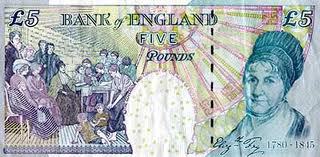
Elizabeth Fry (21 May 1780 – 12 October 1845) was an English prison reformer, social reformer and, and a prominent Quaker of her day. She had many admirers, among them Queen Victoria, who granted her an audience a few times and contributed money to her cause. Another admirer was Robert Peel who passed several acts to further her cause including the Gaols Act 1823.

elizabeth-fry-c2a35-note

Since 2001 Fry has been depicted on the reverse of £5 notes issued by the Bank of England. She is shown reading to prisoners at Newgate Prison. The design also incorporates a key, representing the key to the prison which was awarded to Fry in recognition of her work. However, as of 2016, Fry’s image on these notes will be replaced by that of Winston Churchill.

Let us have peace

by chuckofish

Today we remember Ulysses S. Grant, 18th President of the United States, who died on this day in 1885 at age 63. (I have blogged previously about cousin Lyss here and here.)

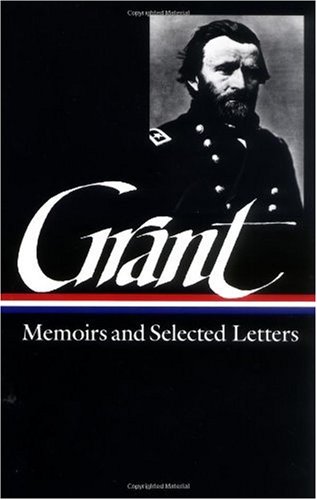
I admit that I am a big fan of Ulysses. He was a great general, a military genius and a President whose civil rights record could put to shame those of some modern politicians who like to talk the talk. He was a devoted husband and a good father. Furthermore, he was a really good writer, arguably the best of the Presidents in that regard.

biographies_memoirs_41y2BtnNxLSL

You might want to add this to your summer reading list.

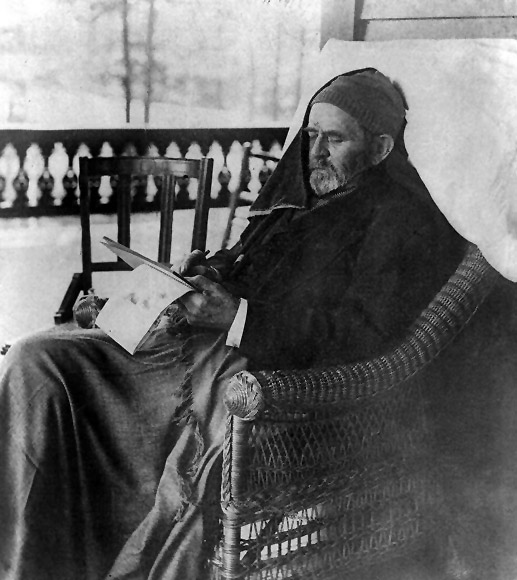
As I have mentioned before, the act of writing his memoirs (without help or ghost writers or even a secretary) in order to provide for his nearly destitute family while dying of throat cancer was heroic with a capital “H”. He died a few days after completing them.

jb_nation_grant_2_e (1)

In the end, the Personal Memoirs of Ulysses S. Grant was published to great acclaim by his friend Mark Twain, and Grant’s widow Julia received about $450,000.

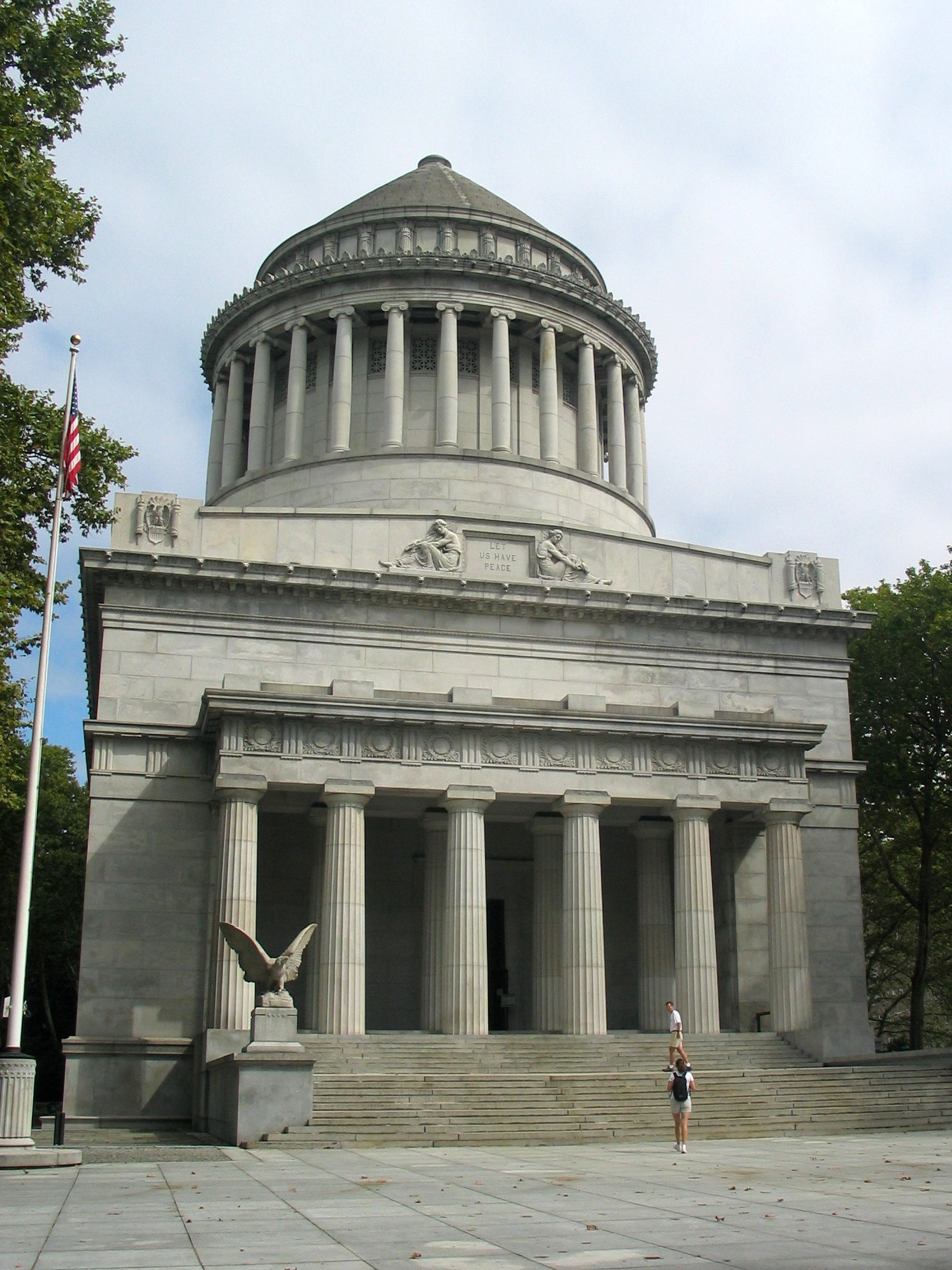
General Grant National Monument, known as "Grant's Tomb"

General Grant National Monument, known as “Grant’s Tomb”

Millions of people viewed his New York City funeral procession in 1885 and attended Grant’s Tomb 1897 Manhattan dedication. And that wasn’t on television.

Let us toast him tonight with his own “perfect speech,” which he used time and again beginning in 1865:

“I rise only to say that I do not intend to say anything. I thank you for your hearty welcomes and good cheers.”

We come in peace

by chuckofish

On this day in 1969, Apollo 11 went into Moon orbit. The following day, July 20, Americans Neil Armstrong and Buzz Aldrin landed on the Moon at 20:18 UTC. I remember watching on a small black and white television and thinking it all had such a surreal quality to it.

Of course, we joked about the whole thing being faked on some soundstage somewhere.

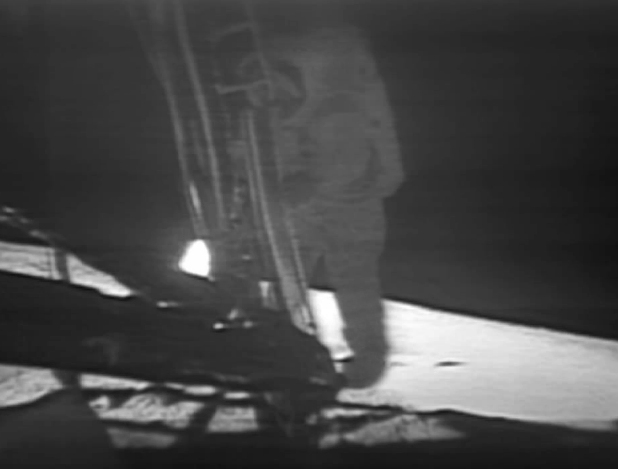
One small step for man...

One small step for man…

I mean really, doesn’t this have the look of a bad fifties movie? But our joking masked our worry and the strain of witnessing such an amazing event. It was incredibly stressful watching it. Disaster was always imminent.

After about 2 1/2 hours on the lunar surface and seven hours of rest, the crew lifted off and headed home.

A group of British scientists interviewed as part of the 40th anniversary events reflected on the significance of the Moon landing:

It was carried out in a technically brilliant way with risks taken… that would be inconceivable in the risk-averse world of today… The Apollo programme is arguably the greatest technical achievement of mankind to date… nothing since Apollo has come close [to] the excitement that was generated by those astronauts – Armstrong, Aldrin and the 10 others who followed them.

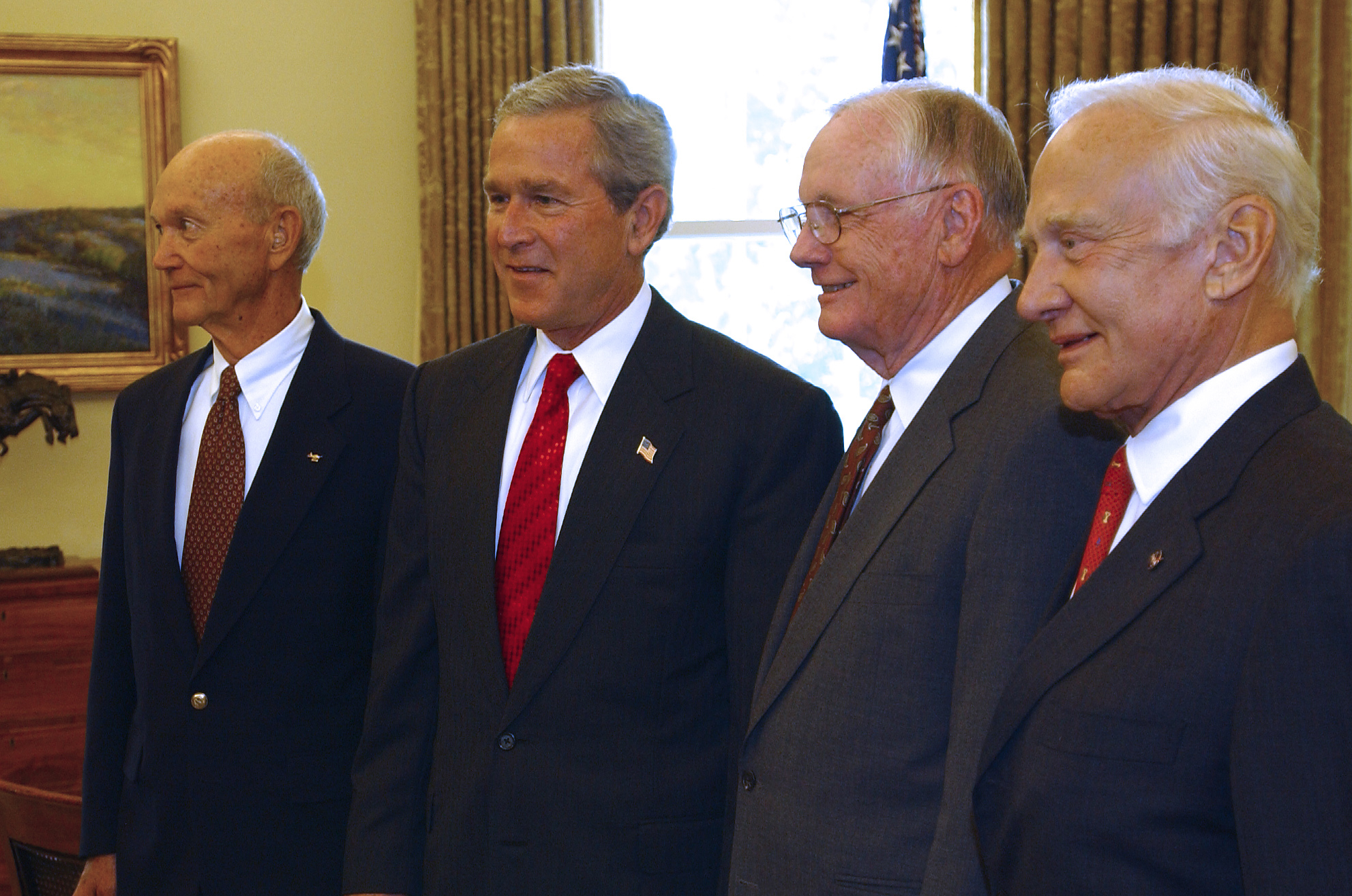
On August 7, 2009, an act of Congress awarded the three astronauts a Congressional Gold Medal, the highest civilian award in the United States.

Apollo 11 crew at the White House in 2004 with President Bush

Apollo 11 crew at the White House in 2004 with President Bush

Yes, the summer of 1969 was quite a summer. Besides the moon landing, these important events took place within a few weeks of each other:

July 25: Sen. Ted Kennedy received a slap on the wrist (a 2-month suspended sentence) for leaving the scene of a fatal accident at Chappaquiddick, MA.

August 9-10: The Manson murders were perpetrated during a two-night rampage.

August 15-18: Nearly 400,000 people showed up at a farm in Bethel, New York, for a music festival–Woodstock.

August 17: Over 250 people were killed when Hurricane Camille struck the U.S. mainland.

And after all that, our brother headed off to college at the University of Vermont.

Our mother must have been a basket case. At the beginning of eighth grade, I was mostly oblivious.

This other Eden

by chuckofish

RIchard II, King of England

RIchard II, King of England

Richard II (6 January 1367 – ca. 14 February 1400) was King of England from 1377 until he was deposed in 1399. Richard, a son of Edward, the Black Prince, was born during the reign of his grandfather, Edward III. Richard was the younger brother of Edward of Angoulême; upon the death of this elder brother, Richard—at four years of age—became second in line to the throne after his father. Upon the death of Richard’s father prior to the death of Edward III, Richard, by agnatic succession, became the first in line for the throne. With Edward III’s death the following year, Richard succeeded to the throne at the age of ten. (Read more about him here.)

If you are wondering why you are reading about Richard II, it is because today is the anniversary of his coronation in 1377. Huzzah! The history major in me likes to remind you of these important facts which I fear you may have forgotten. (I had.) And I am always happy to dig out a good Shakespeare quote, especially this one, which conjures up images, not of Sir John Gielgud and Derek Jacobi, but of Leslie Howard as the Scarlet Pimpernel!

“This royal throne of kings, this sceptered isle,
This earth of majesty,
this seat of Mars,
This other Eden, demi-paradise,
This fortress built by Nature for herself
Against infection and the hand of war,
This happy breed of men, this little world,
This precious stone set in the silver sea,
Which serves it in the office of a wall
Or as a moat defensive to a house,
Against the envy of less happier lands,–
This blessed plot, this earth, this realm, this England.”

― William Shakespeare, Richard II, Act 2, Scene 1

You remember Leslie Howard at the end of the movie, reciting these lines to Raymond Massey, don’t you?

scarletP

You felt that he meant every word and he did. No one loved England more than he. He proved it a few years later by dying for his country during WWII. (I blogged about that previously here.)

Well, this post is further proof that I can bring just about any reference around to a movie. Who, sir? Me, sir? Yes, sir. You, sir.

Long remember

by chuckofish

This week marks the 150th anniversary (July 1–3, 1863) of the battle of Gettysburg in Pennsylvania. The battle involved the largest number of casualties of the entire war (Antietam had the most in a single day) and is often described as the war’s turning point.

Last year I read Long Remember written in 1934 by Mackinlay Kantor.
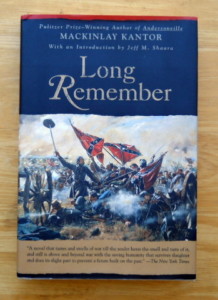
long remember

It is considered the first “realistic” novel about the Civil War. I guess that means it does not glorify it or romanticize it in any way. It deals with the residents of the town of Gettysburg and how the battle affected them.

“She had never thought that war could be like this, with such a desperate casualness about it. War was fought in fields: there was the field of Shiloh, the field of Antietam, the field of Fredericksburg. She knew; she had read the papers. The papers mentioned nothing of people running across back yards and knocking down the clothes-props as they went.”

I liked it very much and highly recommend it.

I have also read The Killer Angels by Michael Shaara, the Pulitzer Prize-winning novel of 1975.
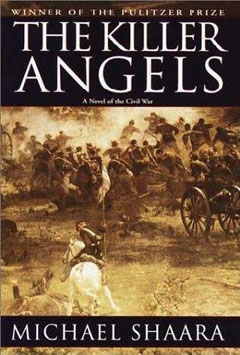
Killer Angels

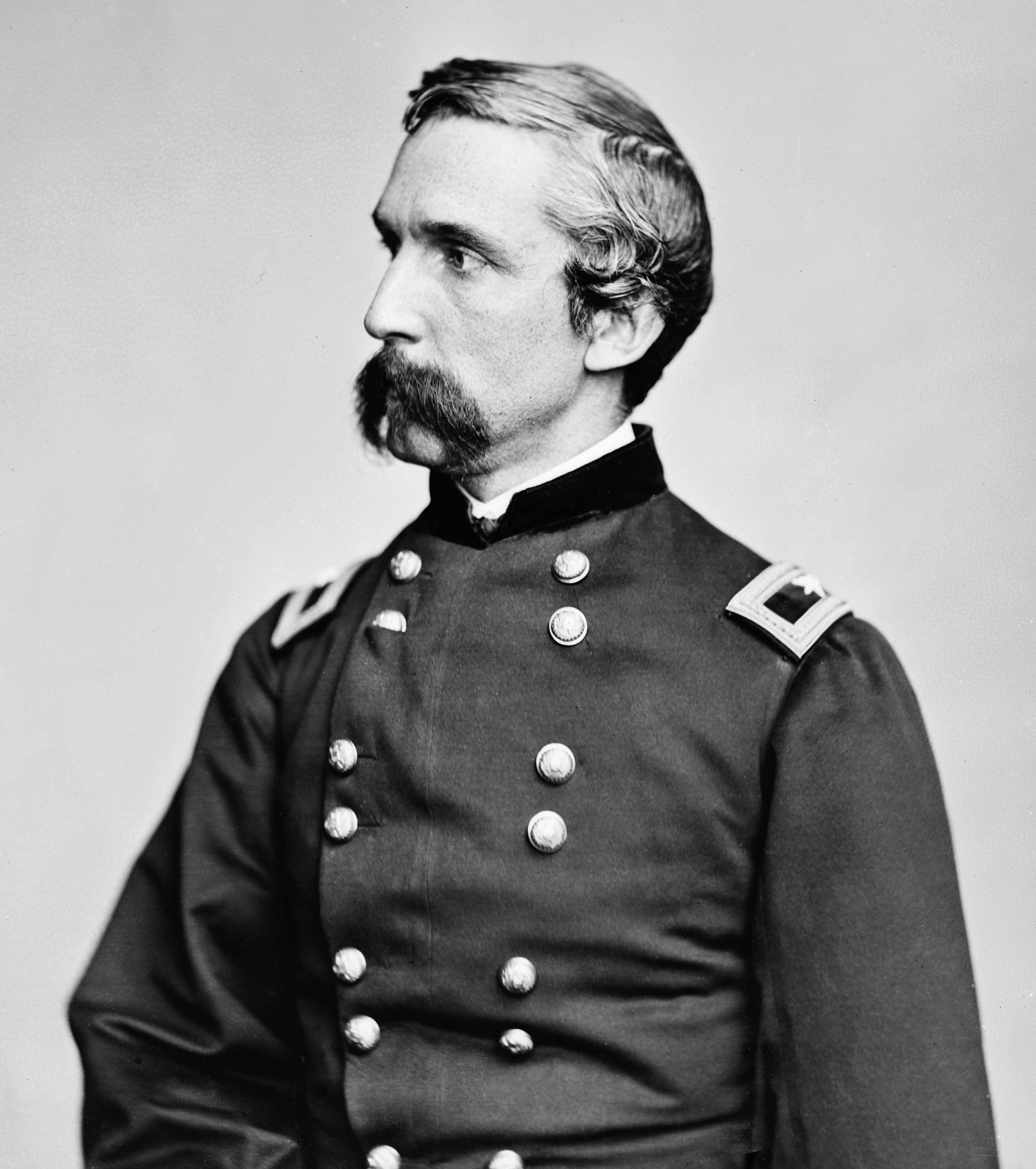
This novel introduces you to all the main players on both sides in the battle of Gettysburg. My favorite, of course, is Joshua Lawrence Chamberlain, who, though we share a surname, I cannot claim as a relative.

Col. Joshua Chamberlain of the 20th Maine Infantry, awarded the Medal of Honor, Governor of Maine and President of Bowdoin College

Col. Joshua Chamberlain of the 20th Maine Infantry, awarded the Medal of Honor, Governor of Maine and President of Bowdoin College

Col. Chamberlain was, of course, a Chamberlain from Maine, while our Chamberlins (sans “a”) hailed from Vermont. You will recall that my dual personality blogged about our other non-relative at Gettysburg, Waldo Farrar here.

They broke the mold when they made old Joshua Chamberlin. A devout Congregationalist and choir member, he was a college professor when the Civil War began. Chamberlain believed the Union needed to be supported by “all those willing” against the Confederacy. Of his desire to serve in the War he wrote to Maine’s Governor Israel Washburn, Jr., “I fear, this war, so costly of blood and treasure, will not cease until men of the North are willing to leave good positions, and sacrifice the dearest personal interests, to rescue our country from desolation, and defend the national existence against treachery.” Chamberlain put his money where his mouth was and joined up.

For his “daring heroism and great tenacity in holding his position on the Little Round Top against repeated assaults, and carrying the advance position on the Great Round Top”, Chamberlain was awarded the Medal of Honor.

In early 1865, Chamberlain was given command of the 1st Brigade of the 1st Division of V Corps, and he continued to act with courage and resolve. On March 29, 1865, his brigade participated in a major skirmish on the Quaker Road during Grant’s final advance that would finish the war. Despite losses, another wound (in the left arm and chest that almost caused amputation), and nearly being captured, Chamberlain was successful and brevetted to the rank of major general by President Abraham Lincoln. Chamberlain gained the name “Bloody Chamberlain” at Quaker Road. Chamberlain kept a bible and framed picture of his wife in his left front “chest” pocket. A confederate shot at Chamberlain. The bullet went through his horse’s neck, hit the picture frame, entered under Chamberlain’s skin in the front of his chest, traveled around his body under the skin along the rib, and exited his back. To all observers Union and Confederate, it appeared that he was shot through his chest. He continued to encourage his men to attack. All sides cheered his valiant courage, and the union assault was successful.

In all, Chamberlain served in 20 battles and numerous skirmishes, was cited for bravery four times, had six horses shot from under him, and was wounded six times.

Chamberlain left the army soon after the war ended, going back to his home state of Maine. Due to his immense popularity he served as Governor of Maine for four one-year terms after he won election as a Republican. His victory in 1866 set the record for the most votes and the highest percentage for any Maine governor by that time. He would break his own record in 1868.

After leaving political office, he returned to Bowdoin College. In 1871, he was appointed president of Bowdoin and remained in that position until 1883, when he was forced to resign due to ill health from his war wounds.

Chamberlain died of his lingering wartime wounds in 1914 at Portland, Maine, age 85, and is buried in Pine Grove Cemetery in Brunswick, Maine. He was the last Civil War veteran to die as a result of wounds from the war.

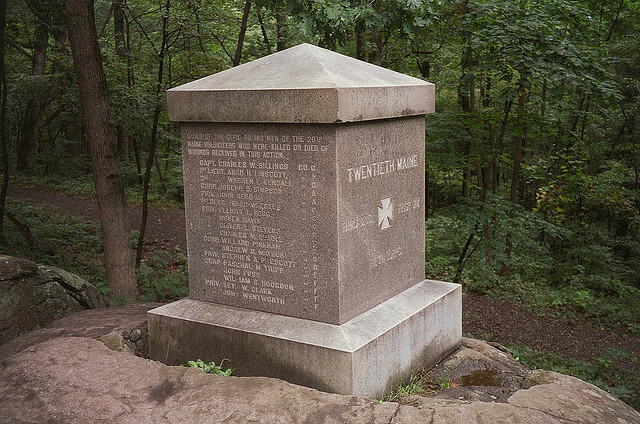
Well, I seem to have gotten off the subject of Gettysburg here, but Col. Chamberlain has that effect on me. We should all toast Col. Chamberlain tonight and all those brave souls who fought during those bloody July days in Gettysburg. Going to the Gettysburg National Military Park is on my bucket list. One of these days.

20thmaine9402_47bb034d2f_z

“The faith itself was simple; he believed in the dignity of man. His ancestors were Huguenots, refugees of a chained and bloody Europe. He had learned their stories in the cradle. He had grown up believing in America and the individual and it was a stronger faith than his faith in God. This was the land where no man had to bow. In this place at last a man could stand up free of the past, free of tradition and blood ties and the curse of royalty and become what he wished to become. This was the first place on earth where the man mattered more than the state. True freedom had begun here and it would spread eventually over all the earth. But it had begun HERE. The fact of slavery upon this incredibly beautiful new clean earth was appalling, but more even than that was the horror of old Europe, the curse of nobility, which the South was transplanting to new soil. They were forming a new aristocracy, a new breed of glittering men, and Chamberlain had come to crush it. But he was fighting for the dignity of man and in that way he was fighting for himself. If men were equal in America, all the former Poles and English and Czechs and blacks, then they were equal everywhere, and there was really no such thing as foreigner; there were only free men and slaves. And so it was not even patriotism but a new faith. The Frenchman may fight for France, but the American fights for mankind, for freedom; for the people, not the land.”

― Michael Shaara, The Killer Angels
A blast from the past

by chuckofish

On this day in 1960 The Fantasticks opened at the Sullivan Street Playhouse, a small off-Broadway theatre in New York City’s Greenwich Village. A musical with music by Harvey Schmidt and lyrics by Tom Jones, it tells an allegorical story, loosely based on the play “The Romancers” (“Les Romanesques”) by Edmond Rostand, concerning two neighboring fathers who trick their children, Luisa and Matt, into falling in love by pretending to feud. The show’s original off-Broadway production ran a total of 42 years (!) and 17,162 performances, making it the world’s longest-running musical.

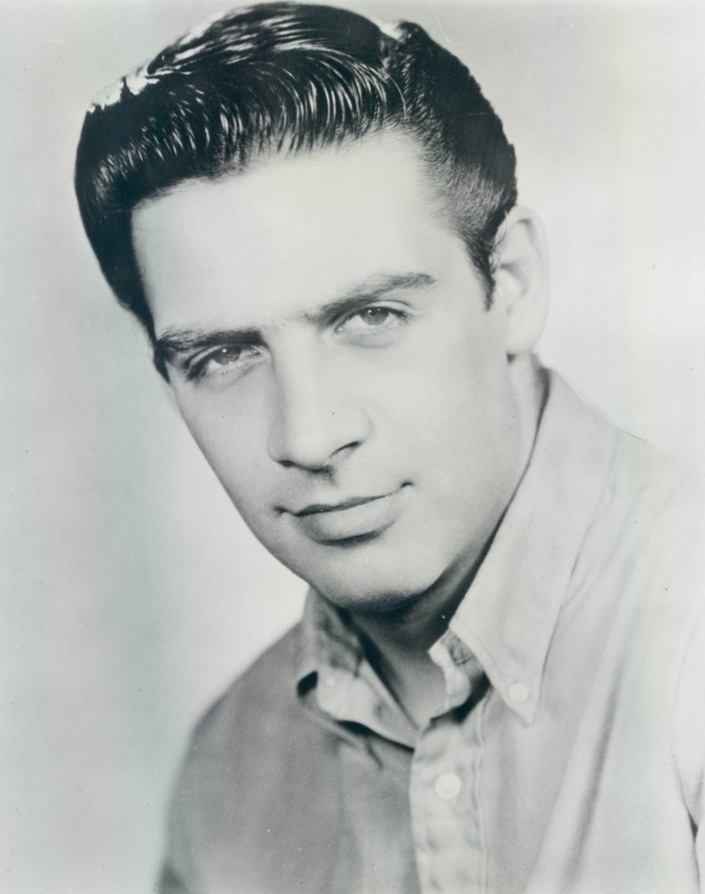
Hard to believe I know, but I have never seen The Fantasticks! I know the famous song Try to Remember–I mean how many people sang that song in Talent Shows in the 1960s? And I know that the original cast included one of our favorites, Jerry Orbach, alias “Lenny”.

Jerry_Orbach_1965_press_photo

Here he is singing Try to Remember.

Interesting side note: Jerry was born to a Jewish father and a Catholic mother and raised Catholic. However, he died an Episcopalian and is buried at Trinity Church Cemetery (located in Upper Manhattan between Broadway and Riverside Drive, at the Church of the Intercession, New York) along with Clement Clark Moore, John James Audubon, and many members of New York’s social elite. Way to go, Jerry!