dual personalities

Tag: Henry Wadsworth Longfellow

A little brimstone

by chuckofish

Today is the 217th birthday of the great American poet Henry Wadsworth Longfellow. Like most of our mid-19th century poets, Longfellow is not much appreciated these days. Eric Metaxas writes in his book If You Can Keep It that part of this is due to the fact that since roughly the 1960s “public expressions of the heroic, whether in stories or other artworks have effectively disappeared. America decided that it made more sense to be suspicious of heroes than to venerate them.” So we don’t want to read about Paul Revere or the like anymore. This is a shame.

Well, I don’t know about you, but I’m going to go on reading Longfellow.

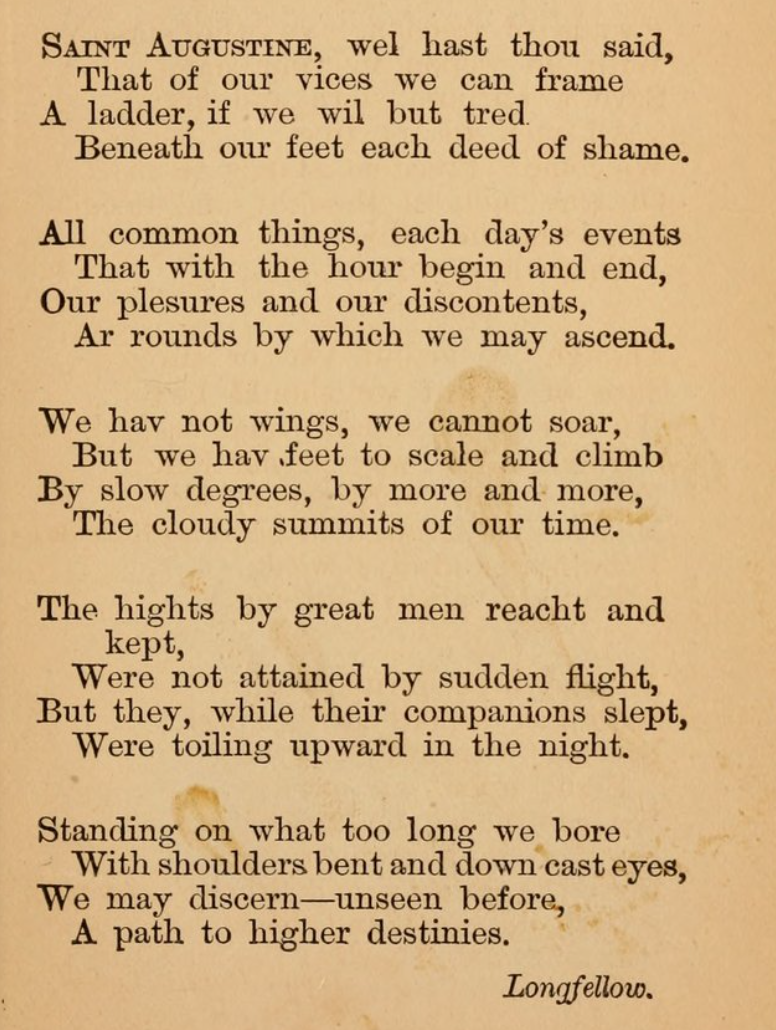
Here’s a poem, “The Ladder of Saint Augustine”, which was adapted into a hymn.

You can read the whole poem here.

And here’s a really good sermon on Revelation 14:6-7 by Kevin DeYoung that offers some more brimstone. “Fear God and give Him glory, because the hour of His judgment has come, and worship Him who made heaven and earth, the sea and the springs of water.” Read the whole thing: it’s long–like all PCA sermons–but it’s worth it.

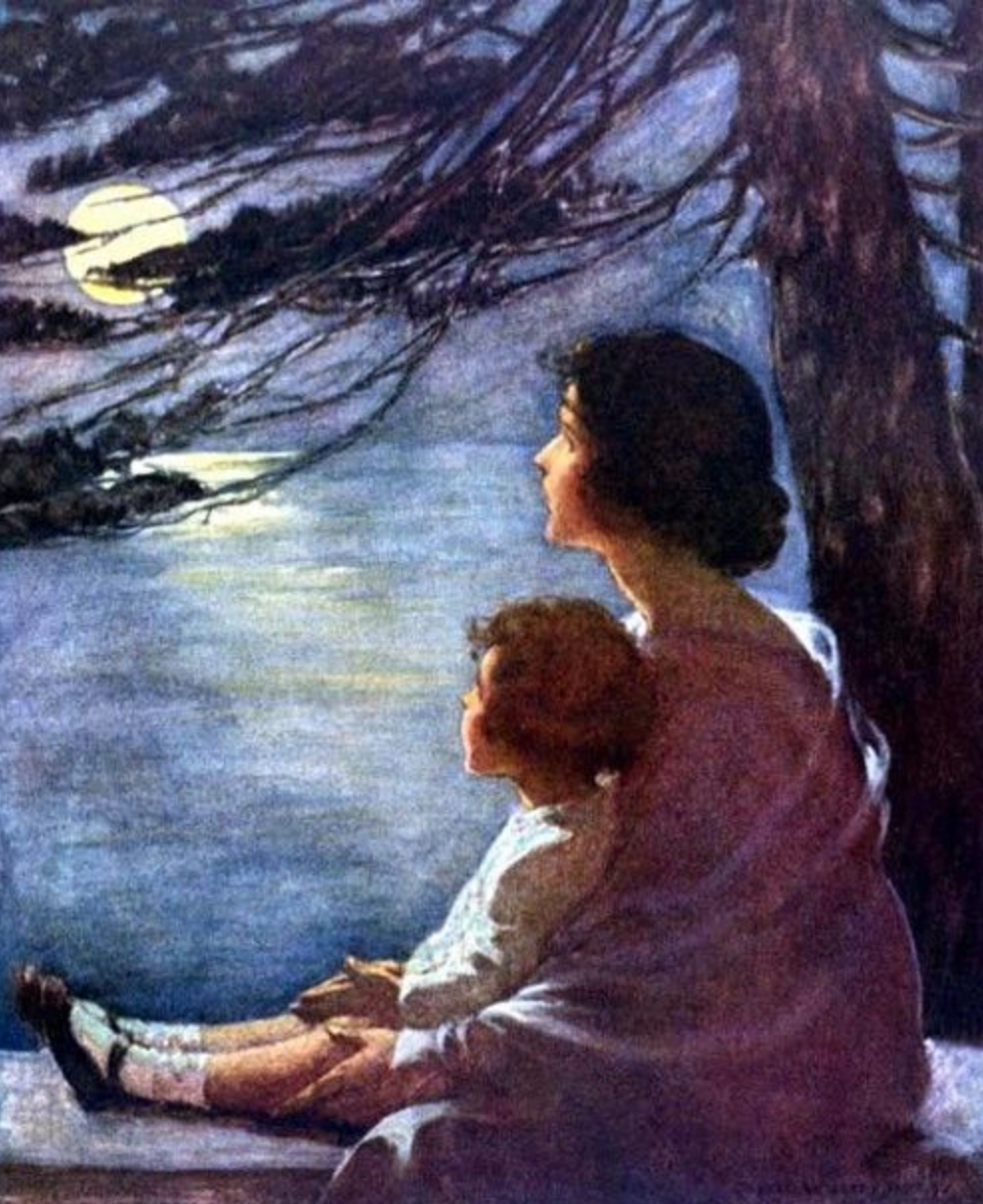
Like the new moon thy life appears

by chuckofish

–Henry Wadsworth Longfellow

The painting is by Jessie Wilcox Smith.

BTW, an adumbration is an “imperfect representation; something that suggests by resemblance, or shadows forth; a foreshadowing.” I looked it up.

Many are the plans in the mind of a man,
    but it is the purpose of the Lord that will stand.

–Proverbs 19:21

The hopes of youth fall thick in the blast

by chuckofish

I have not watched the Academy Awards in over ten years and this year was no different. I haven’t seen one movie that was nominated. Not one. Hollywood always had its Sodom and Gomorrah aspects, but now it is truly a “wretched hive of scum and villainy.”*

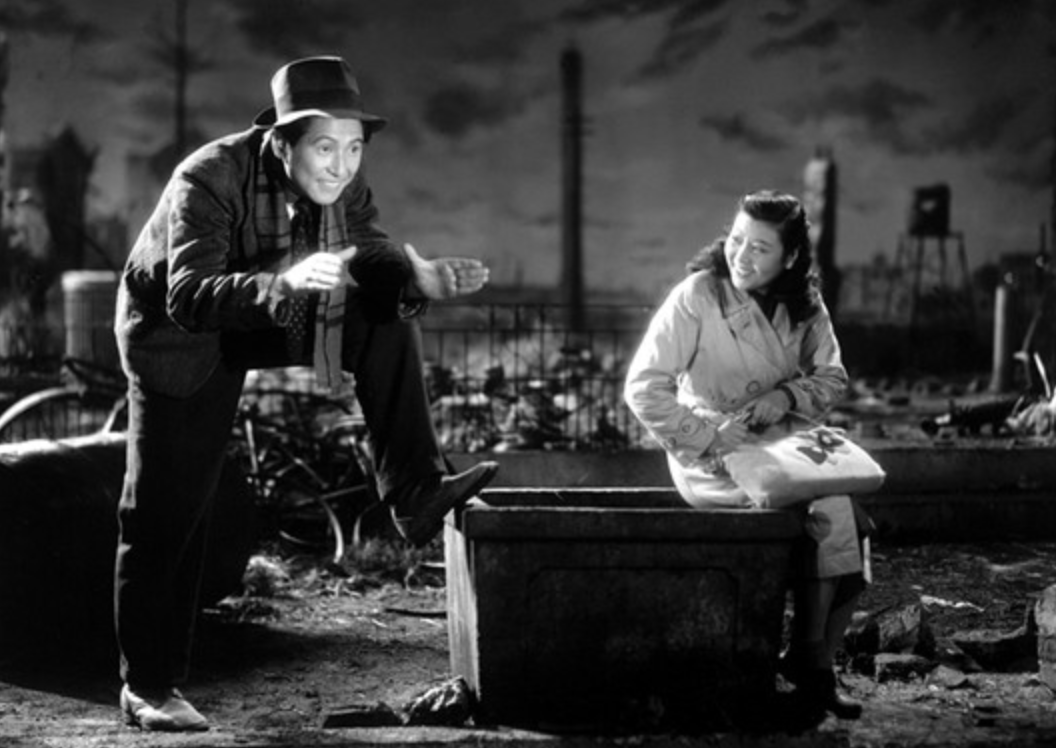
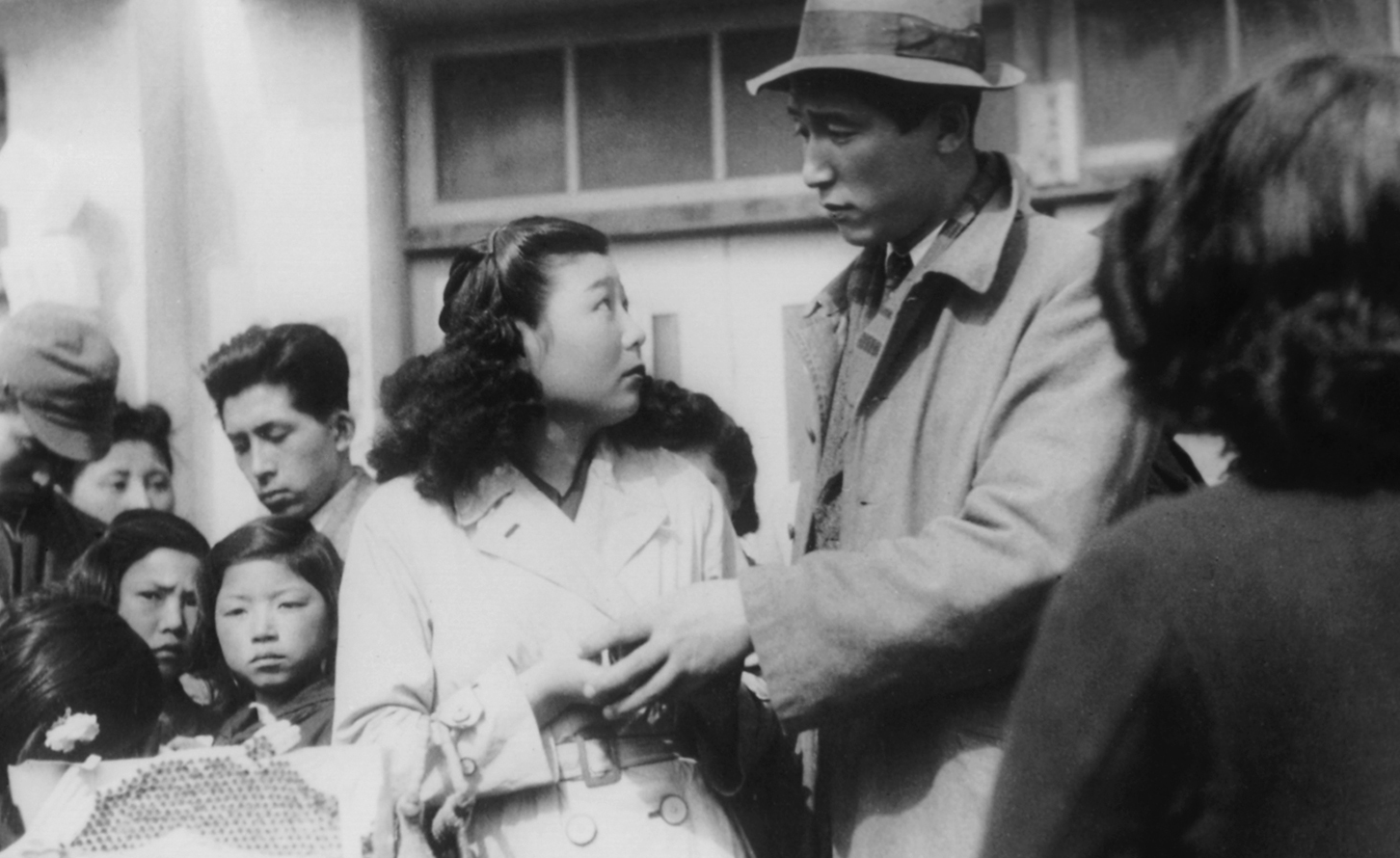
Anyway, I watched a really good movie instead–One Wonderful Sunday (1947), co-written and directed by the great Akira Kurosawa.

One of Kurosawa’s first post-war pictures, it explores the challenges of Japanese society after losing World War II. Two young people spend their Sunday together in Tokyo, pooling their meager spending money and battling the rain. (Kurosawa does love rain.)

Bad things happen and there are many references to the cost of the war with regards to the protagonists, especially Yuzo, the veteran. It reminded me in some ways of Bicycle Thieves (1948)–the loss of hope in the future, but the finding of grace in simple pleasures.

The two main actors–Isao Numasaki and Chieko Nakakita–are excellent and very appealing. It is a simple, human story, told without frills, but it packs quite a punch. I have the Criterion Collection DVD, but you can watch it here.

Speaking of rainy days and dark imagery, here’s a poem from the forgotten Henry Wadsworth Longfellow, which though familiar, you might enjoy reading again:

The day is cold, and dark, and dreary;
It rains, and the wind is never weary;
The vine still clings to the mouldering wall,
But at every gust the dead leaves fall,
And the day is dark and dreary.

My life is cold, and dark, and dreary;
It rains, and the wind is never weary;
My thoughts still cling to the mouldering Past,
But the hopes of youth fall thick in the blast,
And the days are dark and dreary.

Be still, sad heart! and cease repining;
Behind the clouds is the sun still shining;
Thy fate is the common fate of all,
Into each life some rain must fall,
Some days must be dark and dreary.

And this is a good article, sort of on the same subject. We’re living in a broken world. God hasn’t promised freedom from suffering in this life. “[W]e were raised on a steady diet of self-esteem; we’ve been graded on a generous curve; we’ve been told if we pursue our dreams, anything is possible. ‘You are going to change the world.’ And then we become adults and discover life is hard, we’re not all that special, and this world is a vicious place.”

*Obi-Wan-Kenobi

Song

by chuckofish

IMG_2487.JPG

Stay, stay at home, my heart, and rest;

Home-keeping hearts are happiest,

For those that wander they know not where

Are full of trouble and full of care;

To stay at home is best.


Weary and homesick and distressed,

They wander east, they wander west,

And are baffled and beaten and blown about

By the winds of the wilderness of doubt;

To stay at home is best.


Then stay at home, my heart, and rest;

The bird is safest in its nest;

O’er all that flutter their wings and fly

A hawk is hovering in the sky;

To stay at home is best.

–Henry Wadsworth Longfellow

Looking forward to staying home this weekend, but in the meantime, enjoy Thursday, hawks and all.

With gladness and singleness of heart

by chuckofish

tumblr_p1tor8DgP51vgfusao1_1280.jpg

Let us, then, labor for an inward stillness,–

An inward stillness and an inward healing;

That perfect silence where the lips and heart

Are still, and we no longer entertain

Our own imperfect thoughts and vain opinions,

But God alone speaks in us and, we wait

In singleness of heart, that we may know

His will, and in the silence of our spirits,

That we may do His will and do that only!

~Henry Wadsworth Longfellow, from Christus: A Mystery

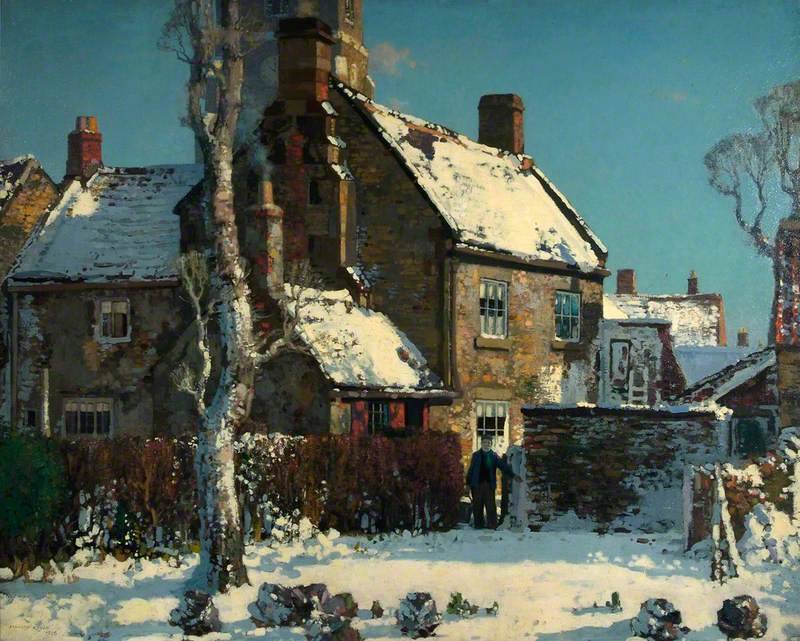
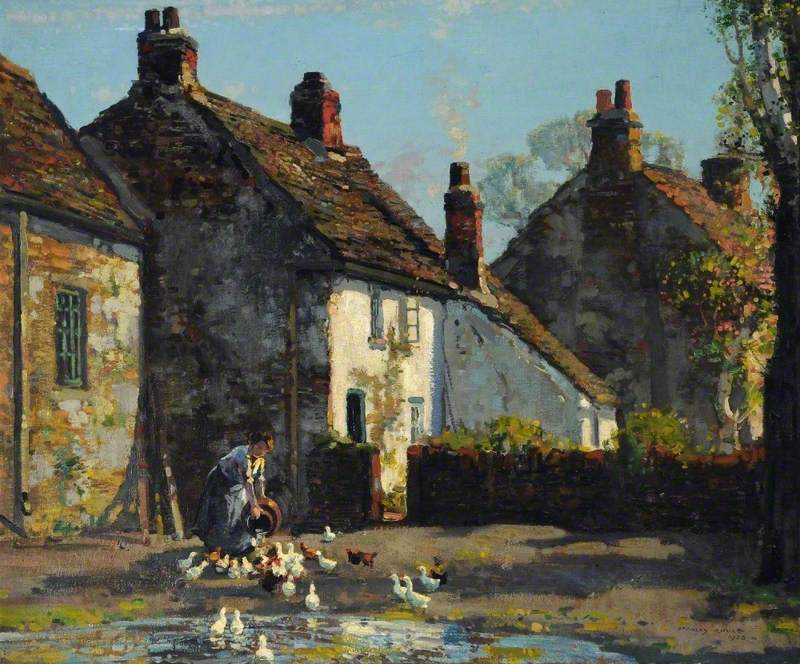
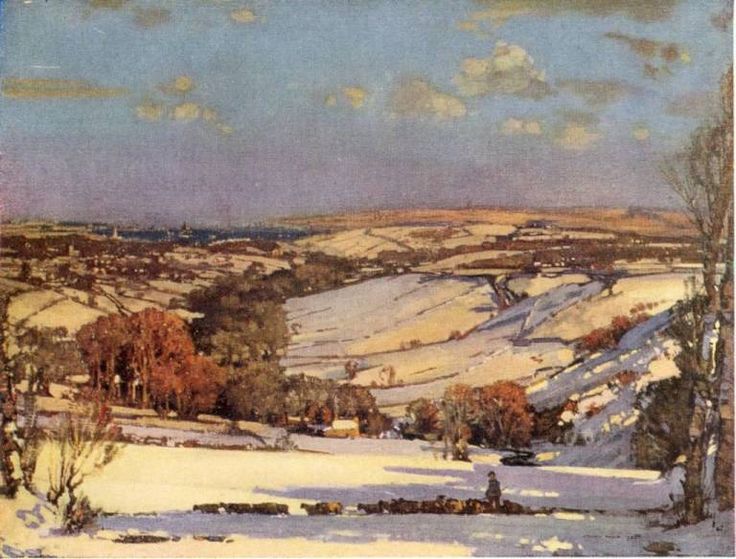
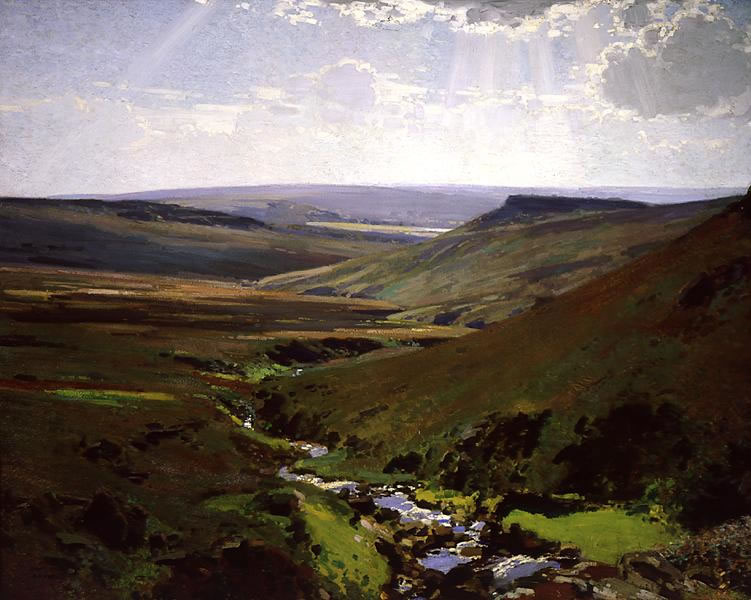
The painting is by Stanley Royle (1888–1961). Don’t you like it? That winter light is perfect.

SHEF_MSH_VIS_2886.jpg

28b09c010a693b2d49ee042b553e4665--landscape-art-landscape-paintings.jpg

dd6e12c91dbc29c06cb1a61b780f486e.jpg

Boy, isn’t he great?

The thing to do or Ewa-yea! my little owlet!

by chuckofish

a1b37e48335d670173b40d9cebd6d37c.jpgLast week when daughter #1 was home for a few days and we were sitting out in the Florida room on an unseasonably cool evening, we saw a huge owl swoop down and fly through our yard. He perched on the neighbor’s basketball hoop and we sat and watched him.

After awhile he swooped down again into the grass where he sat for a bit. We couldn’t see if he had caught some poor unfortunate creature. From a distance and in the near dark he looked like a big chicken on the ground. We went outside to get a closer look, but he flew off.

It was an awesome experience. I have been out several evenings since then but I haven’t seen the owl again. I have heard some hooting, but that is all. Anyway, this all reminded me of this bit from Hiawatha’s Childhood:

When he heard the owls at midnight,

Hooting, laughing in the forest,

‘What is that?” he cried in terror,

“What is that,” he said, “Nokomis?”

And the good Nokomis answered:

“That is but the owl and owlet,

Talking in their native language,

Talking, scolding at each other.

Then the little Hiawatha

Learned of every bird its language,

Learned their names and all their secrets,

How they built their nests in Summer,

Where they hid themselves in Winter,

Talked with them whene’er he met them,

Called them “Hiawatha’s Chickens.”

–Henry Wadsworth Longfellow
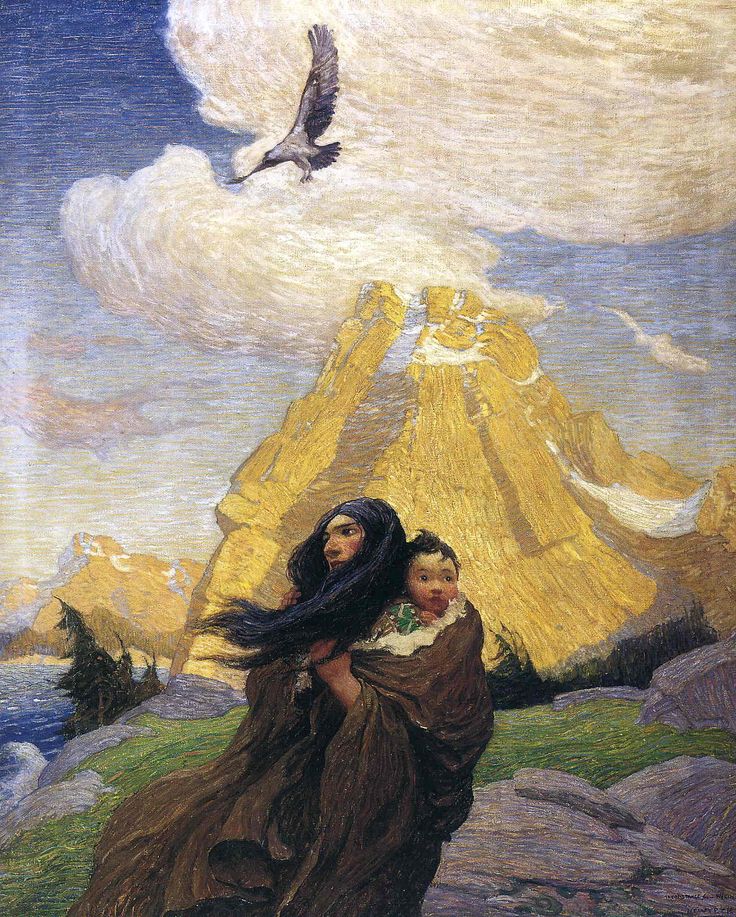
5b9bac467ff172215771c32147147800--n-c-nc-wyeth.jpgThis is how my mind works.

By the way, on the way home from work yesterday I had to stop my car as a doe bounded across Warson Road. Three little fawns came crashing out of the woods following their mother one after the other.  None of them stopped to look both ways.

So much nature in such a short time!

At the door on summer evenings
Sat the little Hiawatha;
Heard the whispering of the pine-trees,
Heard the lapping of the waters,
Sounds of music, words of wonder;
‘Minne-wawa!” said the pine-trees,
Mudway-aushka!” said the water.
Saw the fire-fly, Wah-wah-taysee,
Flitting through the dusk of evening,
With the twinkle of its candle
Lighting up the brakes and bushes,
And he sang the song of children,
Sang the song Nokomis taught him:
“Wah-wah-taysee, little fire-fly,
Little, flitting, white-fire insect,
Little, dancing, white-fire creature,
Light me with your little candle,
Ere upon my bed I lay me,
Ere in sleep I close my eyelids!”

The illustration from Hiawatha’s Childhood is by N.C. Wyeth.)
“Who thinks the all-encircling sun Rises and sets in his back yard?”

by chuckofish

John_James_Audubon_1826.jpg

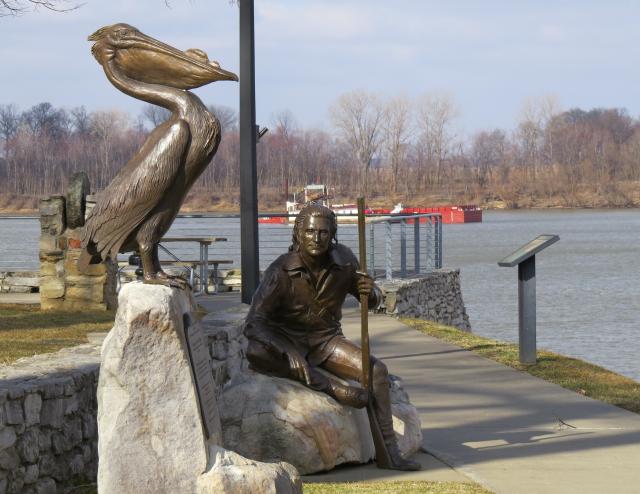
Today is the birthday of the artist John James Audubon (1785 – 1851). Audubon came to America in 1803 to avoid conscription in the Napoleonic Wars. He became an ornithologist, naturalist, and painter, notable for his extensive studies documenting all types of American birds and for his detailed illustrations that depicted the birds in their natural habitats

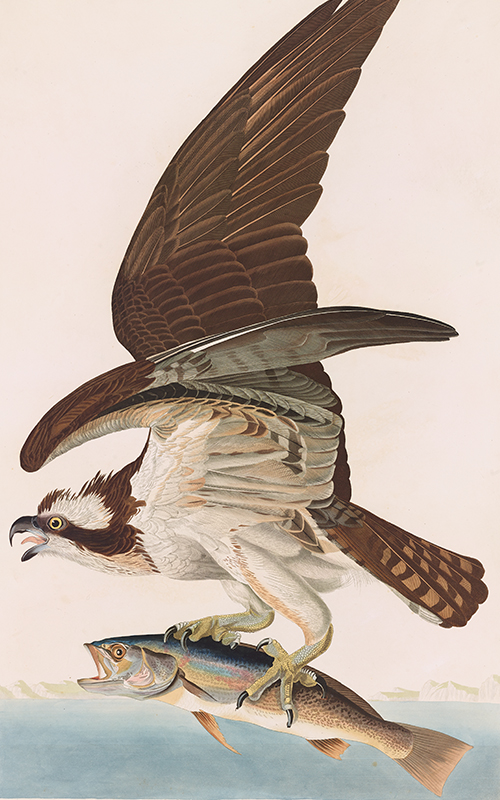
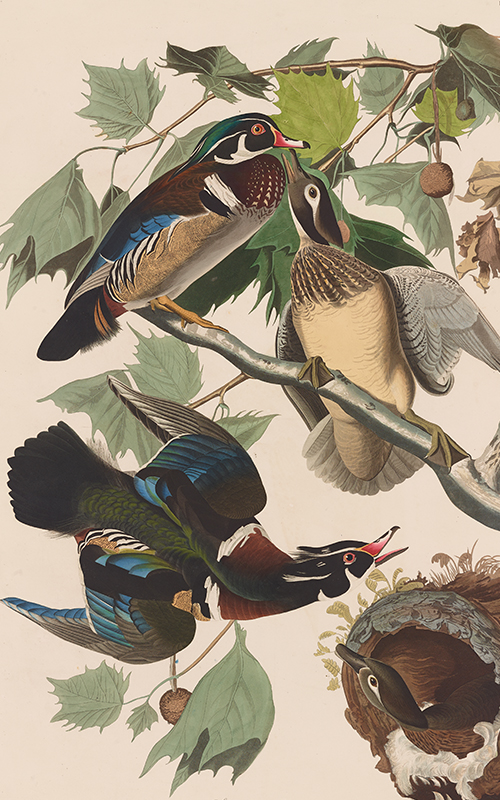
Here are a few examples of his great avian art, courtesy of the John James Audubon Center at Mill Grove in Audubon, Pennsylvania, and the Montgomery County Audubon Collection.

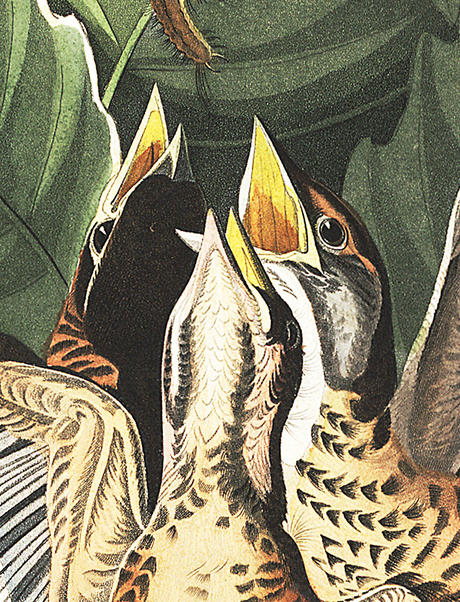
Plate-131-American-Robin-final.jpg

American Robin

Plate-432-Burrowing-Owl.jpg

Burrowing Owl

audubon03.jpg

Osprey

audubon06.jpg

Wood ducks

What an amazing life full of travel, science and art!

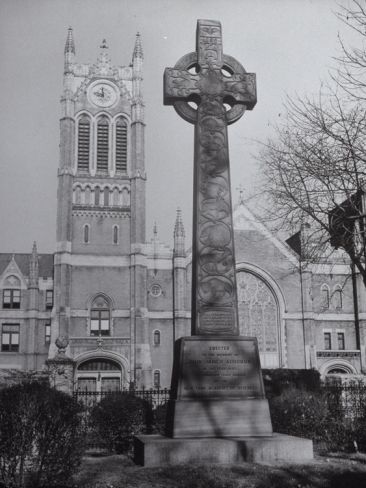
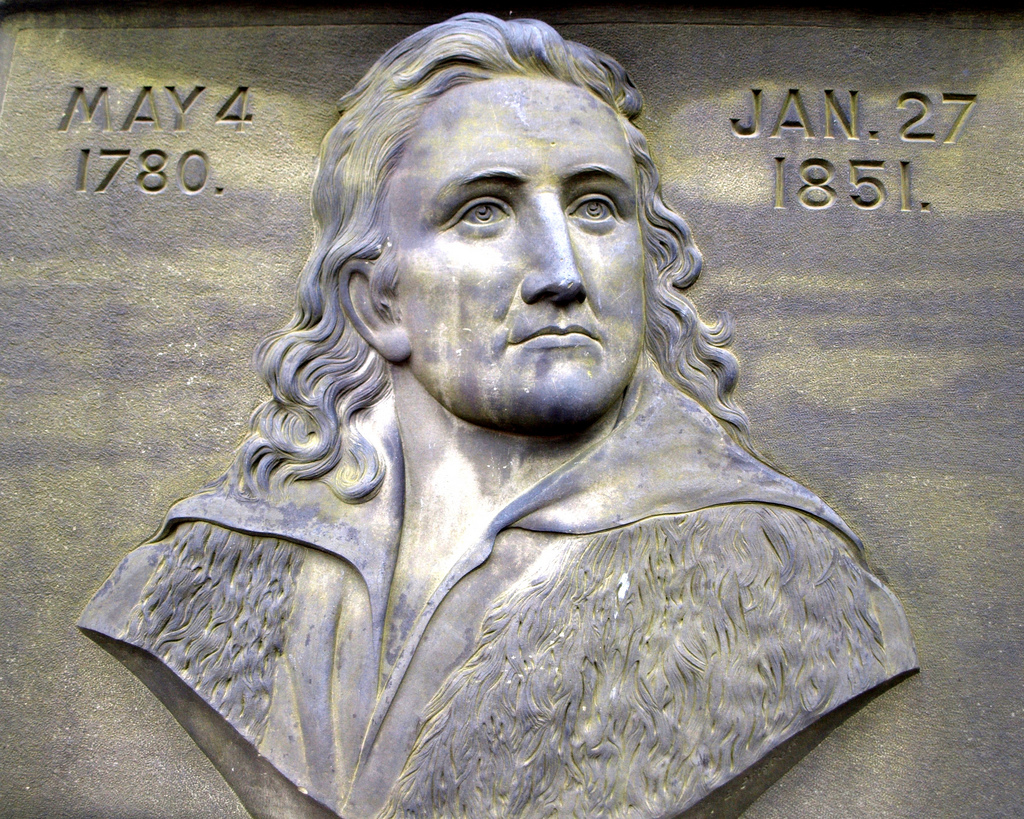
By the way, Audubon is buried in the graveyard at the Episcopal Church of the Intercession in the Trinity Church Cemetery and Mausoleum at 155th Street and Broadway near his home, Minnie’s Land. He spent the last nine years of his life on this thirty-five acre property, which is now upper Manhattan, facing the Hudson River.

1b4ae42ec1359f471e03170b9356cf2b.jpg

Trinity Cemetery

Trinity Church.jpg

Detail of Trinity monument

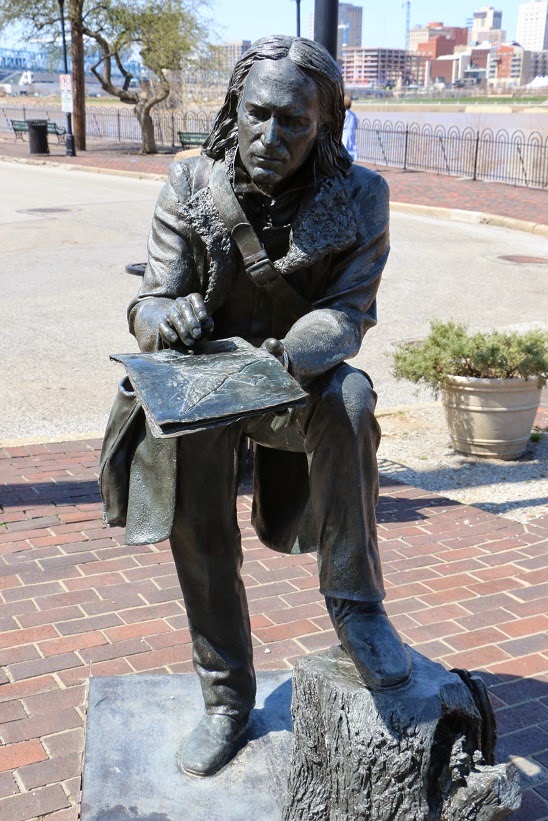
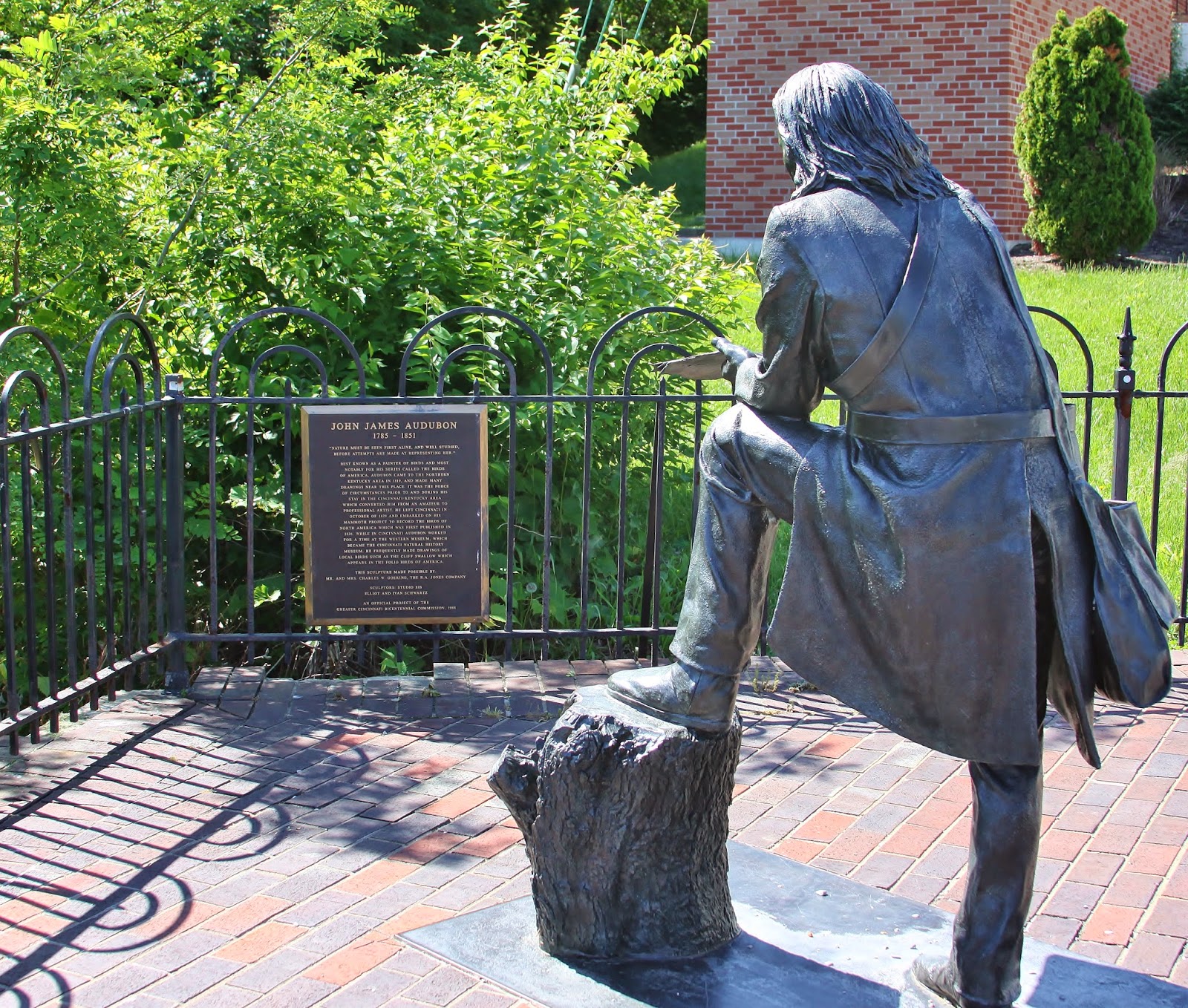
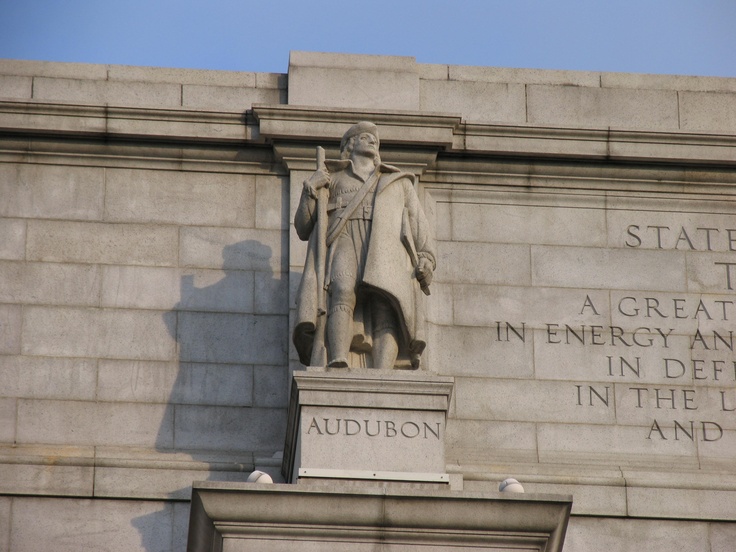
There are statues of Audubon all over the country!

cinci11.jpg

Covington KY.JPG

Covington, Kentucky

Henderson.jpg

Henderson, Kentucky

2010122230 NO LA Audubon Statue.jpg

Audubon Zoo in New Orleans, Louisiana

audubon, IA.JPG

Audubon, Iowa

museum of natural history NYC.jpg

Museum of Natural History, NYC

You could make quite an interesting road trip following the path leading to all of the John James Audubon statues!

“All praise and honor! I confess
That bread and ale, home-baked, home-brewed
Are wholesome and nutritious food,
But not enough for all our needs;
Poets-the best of them-are birds
Of passage; where their instinct leads
They range abroad for thoughts and words
And from all climes bring home the seeds
That germinate in flowers or weeds.
They are not fowls in barnyards born
To cackle o’er a grain of corn;
And, if you shut the horizon down
To the small limits of their town,
What do you but degrade your bard
Till he at last becomes as one
Who thinks the all-encircling sun
Rises and sets in his back yard?”

–Henry Wadsworth Longfellow

Tonight I long for rest

by chuckofish

Arthur_Hacker-Fire_Fancies__1865

Here’s a great poem, “The Day is Done,” from the forgotten Henry Wadsworth Longfellow. Read the whole thing.

The day is done, and the darkness
Falls from the wings of Night,
As a feather is wafted downward
From an eagle in his flight.

I see the lights of the village
Gleam through the rain and the mist,
And a feeling of sadness comes o’er me
That my soul cannot resist:

A feeling of sadness and longing,
That is not akin to pain,
And resembles sorrow only
As the mist resembles the rain.

Come, read to me some poem,
Some simple and heartfelt lay,
That shall soothe this restless feeling,
And banish the thoughts of day.

Not from the grand old masters,
Not from the bards sublime,
Whose distant footsteps echo
Through the corridors of Time,

For, like strains of martial music,
Their mighty thoughts suggest
Life’s endless toil and endeavor;
And tonight I long for rest.

Read from some humbler poet,
Whose songs gushed from his heart,
As showers from the clouds of summer,
Or tears from the eyelids start;

Who, through long days of labor,
And nights devoid of ease,
Still heard in his soul the music
Of wonderful melodies.

Such songs have a power to quiet
The restless pulse of care,
And comes like the benediction
That follows after prayer.

Then read from the treasured volume
The poem of thy choice,
And lend to the rhyme of the poet
The beauty of thy voice.

And the night shall be filled with music,
And the cares, that infest the day,
Shall fold their tents, like the Arabs,
And as silently steal away.

–Henry Wadsworth Longfellow (1807-1882

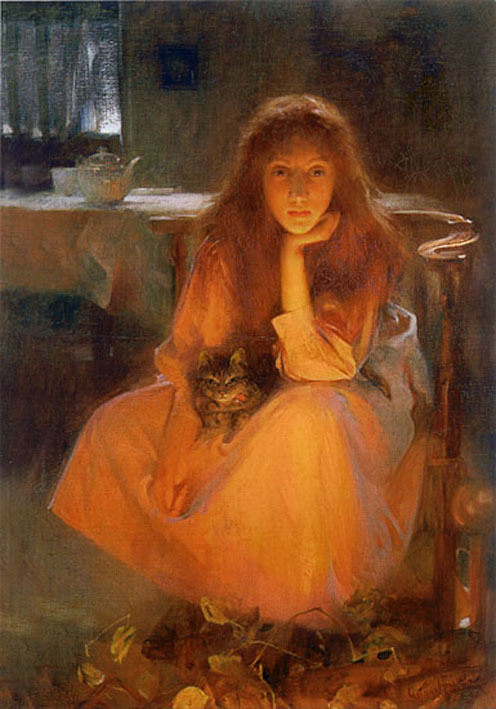
The painting is “Fire Fancies” by Arthur Hacker, 1865

“God is not dead, nor doth He sleep”*

by chuckofish

Screen shot 2015-12-09 at 11.24.02 AM

As you know, I sometimes usually listen to a Christian radio station driving into work in the morning. They are playing a lot of Christmas music now and here’s a new one that I like, which is loosely based on the famous poem written by Henry Wadsworth Longfellow in 1863. (It takes a lot of liberties.)

Here’s the poem. It’s rather timely I think.

I heard the bells on Christmas day
Their old familiar carols play,
And wild and sweet the words repeat
Of peace on earth, good will to men.

I thought how, as the day had come,
The belfries of all Christendom
Had rolled along th’unbroken song
Of peace on earth, good will to men.

And in despair I bowed my head:
‘There is no peace on earth, ‘ I said
‘For hate is strong, and mocks the song
Of peace on earth, good will to men.’

Then pealed the bells more loud and deep:
‘God is not dead, nor doth He sleep;
The wrong shall fail, the right prevail,
With peace on earth, good will to men.’

Till, ringing, singing on its way,
The world revolved from night to day
A voice, a chime, a chant sublime,
Of peace on earth, good will to men.

Here’s a version of the older arrangement by the Civil Wars–I like it, although it’s a little breathy for my taste.

And here’s the version I remember from a Christmas record we had when I was a child.

Did you listen to them all? Which one did you like best?

It’s Friday–enjoy your weekend!

November rain

by chuckofish

Screen shot 2015-11-17 at 11.17.45 AM

The day is cold, and dark, and dreary;
It rains, and the wind is never weary;
The vine still clings to the mouldering wall,
But at every gust the dead leaves fall,
And the day is dark and dreary.

My life is cold, and dark, and dreary;
It rains, and the wind is never weary;
My thoughts still cling to the mouldering past,
But the hopes of youth fall thick in the blast,
And the days are dark and dreary.

Be still, sad heart, and cease repining;
Behind the clouds is the sun still shining;
Thy fate is the common fate of all,
Into each life some rain must fall,
Some days must be dark and dreary.

–Henry Wadsworth Longfellow

November rain, when it goes on for days, cannot help but bring a person’s spirits down. But I like old Longfellow’s thinking on this subject. When did we stop reading him? He’s kind of great.

Henry_Wadsworth_Longfellow_by_Southworth_&_Hawes_c1850_restored

Henry was one of those handsome mid-century American writers we are so fond of. Read more about this poet here.

Anyway, please note that there is a slight chance of snow on Saturday! It won’t be long until the weather media is whipping us up into a stock-up-on-bread-and-milk frenzy.