dual personalities

Tag: Henry Van Dyke

The camp-fires of the past

by chuckofish
Screen Shot 2018-08-29 at 10.32.19 AM.png
A soft veil dims the tender skies,
And half conceals from pensive eyes
The bronzing tokens of the fall;
A calmness broods upon the hills,
And summer’s parting dream distills
A charm of silence over all.The stacks of corn, in brown array,
Stand waiting through the placid day,
Like tattered wigwams on the plain;
The tribes that find a shelter there
Are phantom peoples, forms of air,
And ghosts of vanished joy and pain.

At evening when the crimson crest
Of sunset passes down the West,
I hear the whispering host returning;
On far-off fields, by elm and oak,
I see the lights, I smell the smoke,–
The Camp-fires of the Past are burning.

–“Indian Summer” by Henry Van Dyke

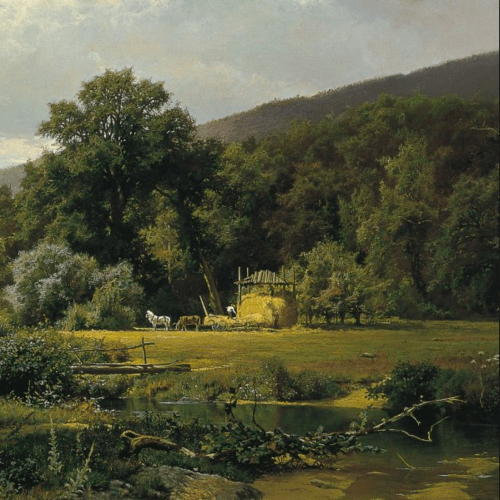
The painting is “Summer in the Blue Ridge” by Hugh Bolton Jones. Hugh Bolton Jones (1848-1927) was an American landscape painter. He grew up in Baltimore, Maryland, where he received his early training as an artist. While studying in New York he was strongly influenced by Frederic Edwin Church of the Hudson River School.

Lead me to the rock that is higher than I*

by chuckofish

Screen Shot 2016-02-29 at 3.54.19 PM

A new month, a new calendar page. The year is zooming by.

And March is going to be very busy, but I am not going to be overwhelmed by it.

We have fallen so much into the habit of being always busy that we know not how or when to break it off with firmness. Our business tags after us into the midst of our pleasures, and we are ill at ease beyond the reach of the telegraph and the daily newspaper.

–Henry Van Dyke, 1899

What would old Henry think of our iPhones and our personal computers? Zut alors!

I am trying to turn off the electronics an hour or two before I turn in at night. It seems like a good idea.

*Psalm 61:2

“Arise, shine; for your light has come”*

by chuckofish

7d2ef65247923ae672436798884cb7da

“He knew that all was well, because he had done the best that he could, from day to day. He had been true to the light that had been given to him. He had looked for more. And if he had not found it, if a failure was all that came out of his life, doubtless that was the best that was possible. He had not seen the revelation of “life everlasting, incorruptible and immortal.” But he knew that even if he could live his earthly life over again, it could not be otherwise than it had been.”

–Henry Van Dyke, The Story of the Other Wise Man

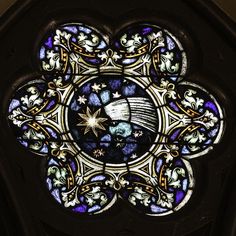
Today is the feast of Epiphany, celebrating the ‘shining forth’ or revelation of God to mankind in human form, in the person of Jesus Christ. The observance had its origins in the eastern Christian church, and included the birth of Jesus Christ, the visit of the three Magi who arrived in Bethlehem, and all of Jesus’ childhood events, up to his baptism in the Jordan by John the Baptist. The visit of the Magi is traditionally interpreted as symbolic of God’s revelation of himself to the Gentiles.

I think I will re-read the short book The Story of the Other Wise Man written in 1896 by Henry Van Dyke, Presbyterian minister and Princeton graduate. It was a great favorite of our mother. It is a wonderful of story of the fourth wise man, who sets out to see the newborn king, carrying treasures to give as gifts–a sapphire, a ruby, and a “pearl of great price.”  But he gets side-tracked on the way to Bethlehem. His journey lengthens and he finally finds Jesus as he is crucified.

“I do not know where this little story came from,” said Van Dyke, “out of the air, perhaps. One thing is certain, it is not written in any other book, nor is it to be found among the ancient lore of the East. And yet I have never felt as if it were my own. It was a gift, and it seemed to me as if I knew the Giver.”

*Isaiah 60:1