dual personalities

Tag: Henry David THoreau

The snow levels all things

by chuckofish

Well, the sun came out yesterday and we enjoyed blue skies. Unfortunately the temperature peaked in the mid-twenties and nothing melted. Our driveway did get plowed on Tuesday night so we were free to leave, but I was not moved to do so.

I read Thoreau’s A Winter Walk.

But now, while we have loitered, the clouds have gathered again, and a few straggling snow-flakes are beginning to descend. Faster and faster they fall, shutting out the distant objects from sight. The snow falls on every wood and field, and no crevice is forgotten; by the river and the pond, on the hill and in the valley. Quadrupeds are confined to their coverts, and the birds sit upon their perches this peaceful hour. There is not so much sound as in fair weather, but silently and gradually every slope, and the gray walls and fences, and the polished ice, and the sere leaves, which were not buried before, are concealed, and the tracks of men and beasts are lost. With so little effort does nature reassert her rule and blot out the traces of men. Hear how Homer has described the same. “The snow-flakes fall thick and fast on a winter’s day. The winds are lulled, and the snow falls incessant, covering the tops of the mountains, and the hills, and the plains where the lotus-tree grows, and the cultivated fields, and they are falling by the inlets and shores of the foaming sea, but are silently dissolved by the waves.” The snow levels all things, and infolds them deeper in the bosom of nature, as, in the slow summer, vegetation creeps up to the entablature of the temple, and the turrets of the castle, and helps her to prevail over art.

Inspired by HDT, I donned my winter wear and sallied forth to walk around my yard. Not a whole lot going on. Saw some rabbit tracks. I came back in and then struggled mightily to get my Hunter boots off. Good grief, Charlie Brown.

In winter we lead a more inward life. Our hearts are warm and cheery, like cottages under drifts, whose windows and doors are half concealed, but from whose chimneys the smoke cheerfully ascends. The imprisoning drifts increase the sense of comfort which the house affords, and in the coldest days we are content to sit over the hearth and see the sky through the chimney top, enjoying the quiet and serene life that may be had in a warm corner by the chimney side, or feeling our pulse by listening to the low of cattle in the street, or the sound of the flail in distant barns all the long afternoon. No doubt a skilful physician could determine our health by observing how these simple and natural sounds affected us. We enjoy now, not an oriental, but a boreal leisure, around warm stoves and fireplaces, and watch the shadow of motes in the sunbeams.
“We can never have enough of nature.”*

by chuckofish

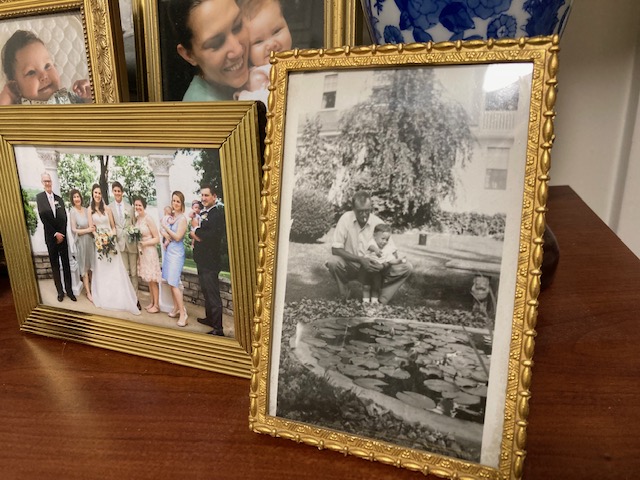
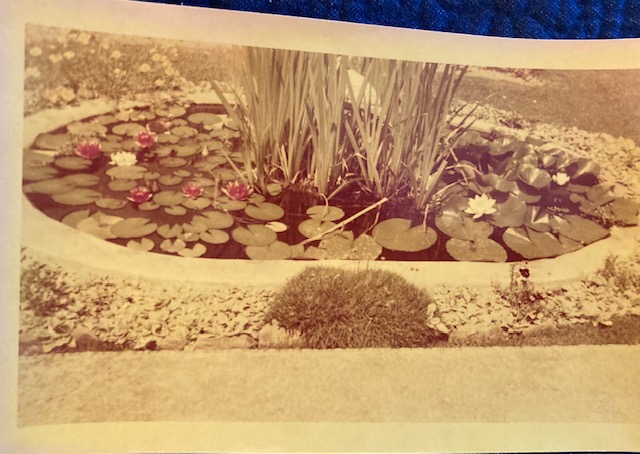
My cousin Steve recently sent me a box of treasures–old newspaper clippings and photographs of our maternal grandparents. Among them were some pictures of their house and yard, which I remember fondly. They had a fish pond.

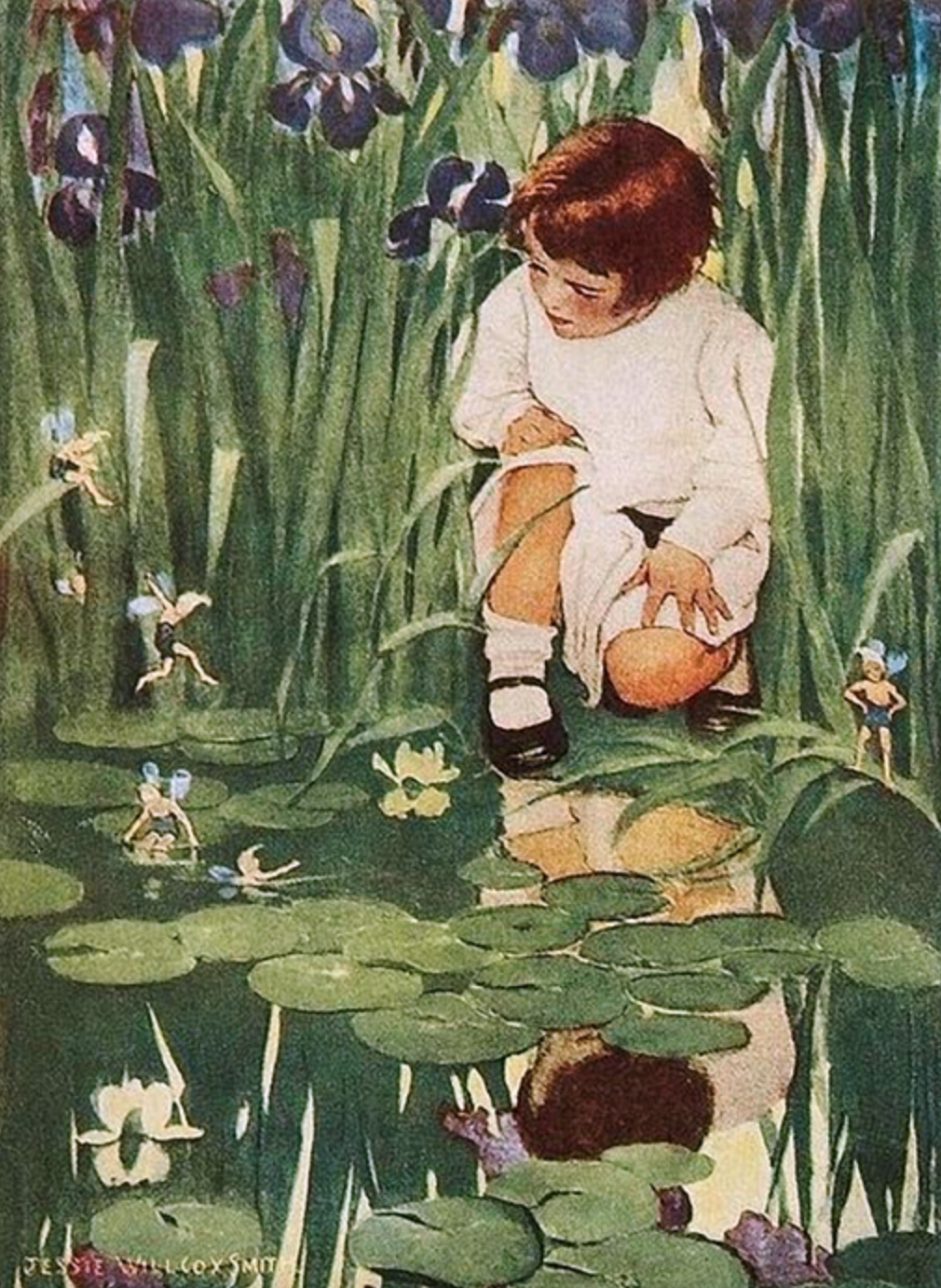
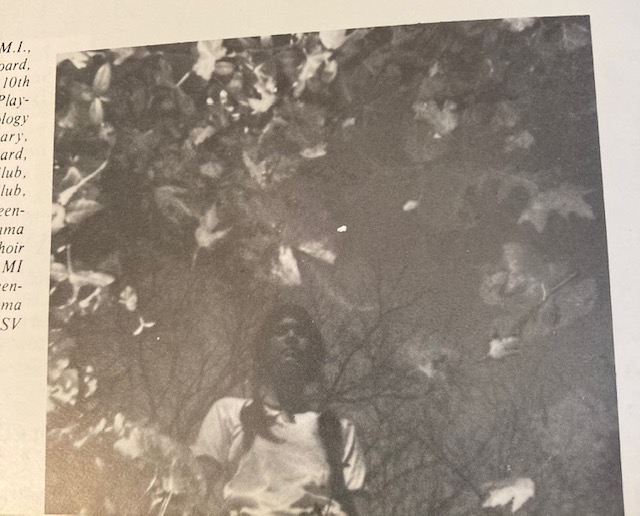
This made me think of the fish pond we had in the backyard of our house growing up. The yard had been professionally landscaped back in the 1920s or 30s, but by the 1960s when we moved in, it had seen better days. My mother discovered the pond, which had been filled in, and excavated it, bringing it back to life. It even had a working waterfall, but the unfiltered water killed the fish, so we never turned it on. I could not find a picture of the pond in my archive–only this artsy one of my reflection in it which graced my senior yearbook page. (Ye gods!)

My mother loved to sit in the sunroom and look out at the backyard and the fish pond. Sometimes a neighbor’s cat would come by and sit by the edge of the pond gazing down at the fish. If he got too close, she would bang on the window.

“Sometimes, in a summer morning, having taken my accustomed bath, I sat in my sunny doorway from sunrise till noon, rapt in a revery, amidst the pines and hickories and sumachs, in undisturbed solitude and stillness, while the birds sing around or flitted noiseless through the house, until by the sun falling in at my west window, or the noise of some traveller’s wagon on the distant highway, I was reminded of the lapse of time. I grew in those seasons like corn in the night, and they were far better than any work of the hands would have been. They were not time subtracted from my life, but so much over and above my usual allowance. I realized what the Orientals mean by contemplation and the forsaking of works. For the most part, I minded not how the hours went. The day advanced as if to light some work of mine; it was morning, and lo, now it is evening, and nothing memorable is accomplished.”

–Henry David Thoreau, Walden

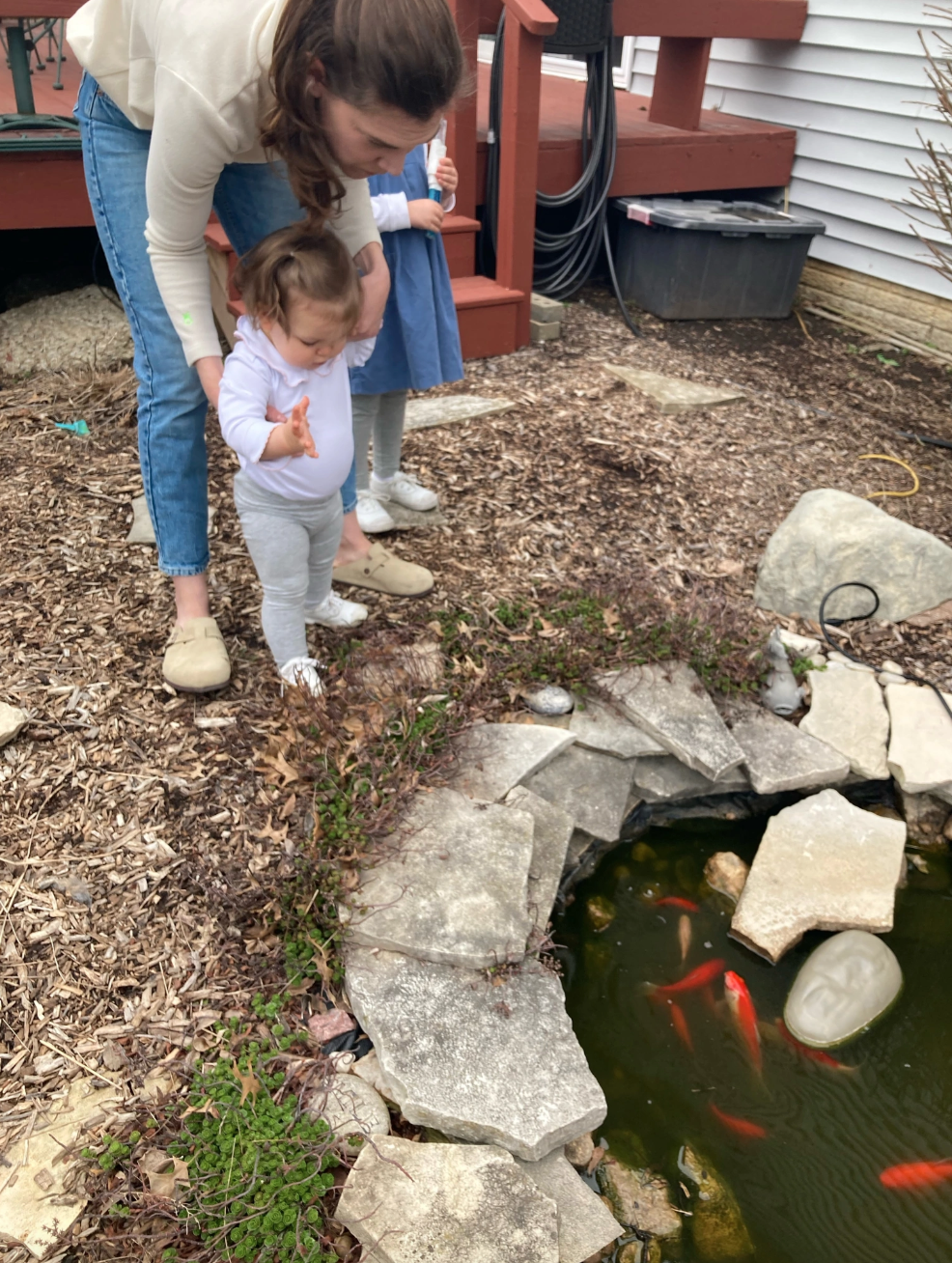
You may have noted that daughter #2 has a fish pond in the backyard of her house.

Three generations of fish ponds! Interesting.

Look out the window. Have a contemplative day. Don’t feel guilty about it.

*Henry David Thoreau, Walden

Right on schedule

by chuckofish

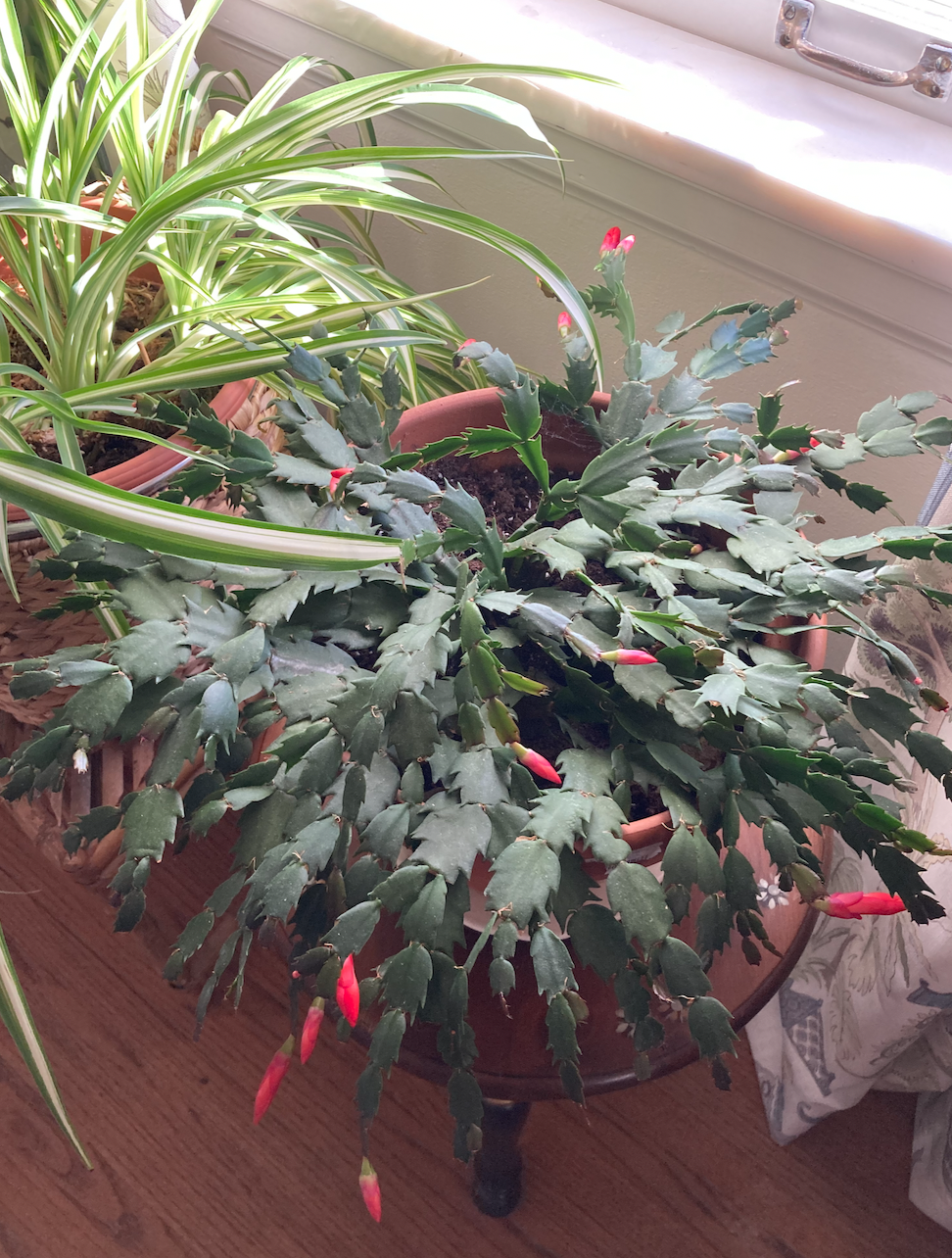
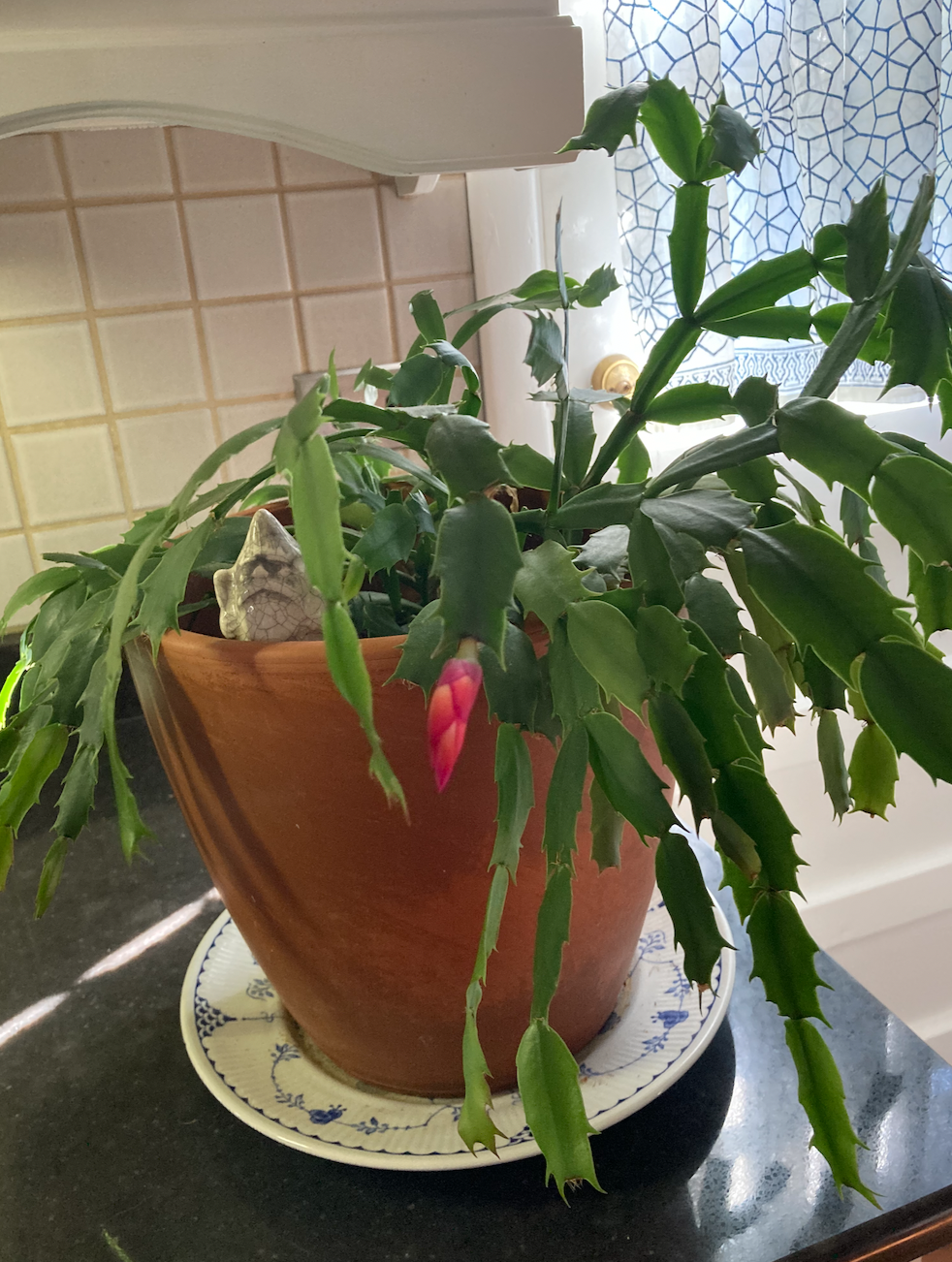
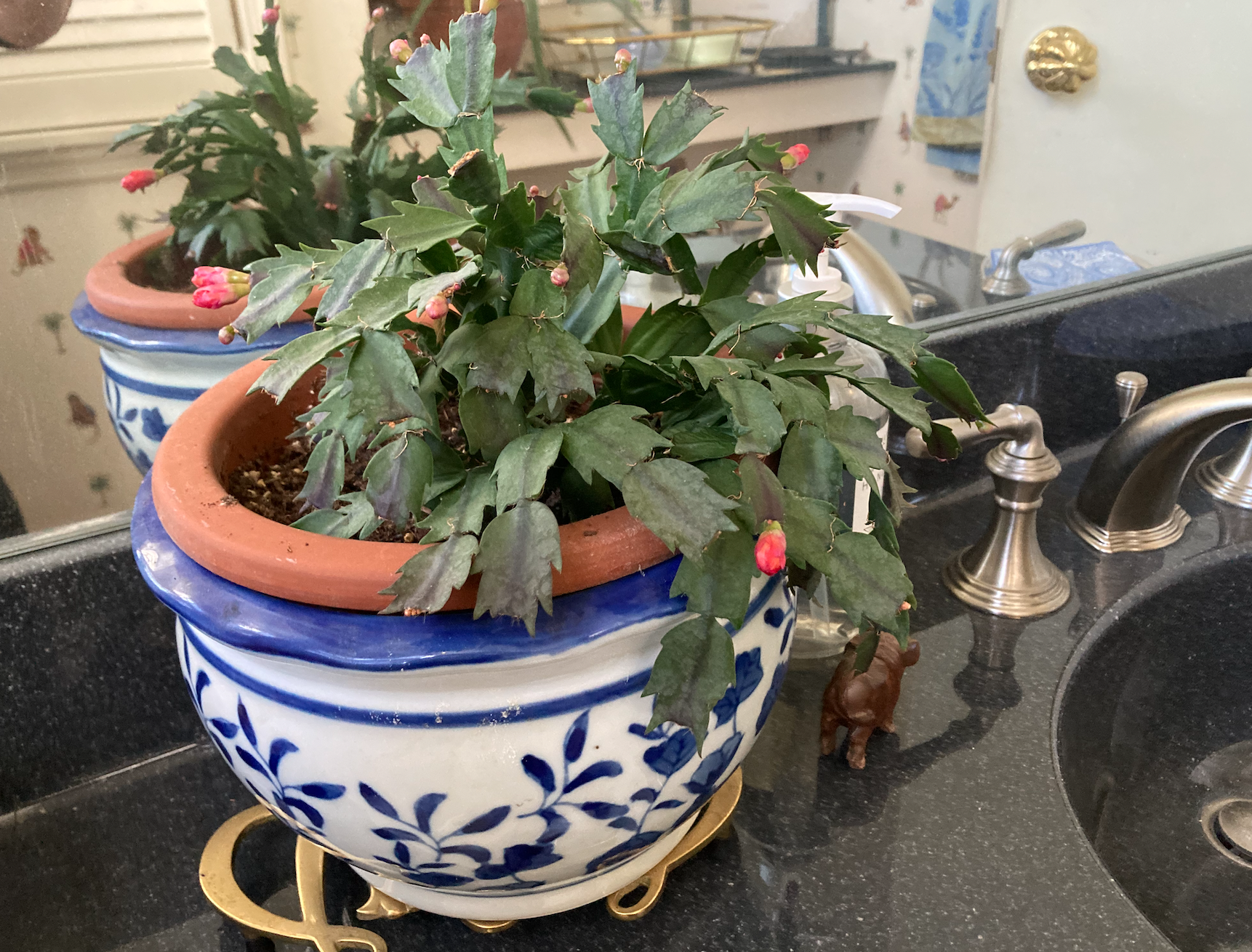
The Christmas cactus is budding!

Well, as Emerson said, “Adopt the pace of nature: her secret is patience.”

This is sage advice indeed. I am an old lady so I have slowed down considerably and I do not think that is a bad thing.

We must learn to reawaken and keep ourselves awake, not by mechanical aids, but by an infinite expectation of the dawn, which does not forsake us in our soundest sleep. I know of no more encouraging fact than the unquestionable ability of man to elevate his life by a conscious endeavor. It is something to be able to paint a particular picture, or to carve a statue, and so to make a few objects beautiful; but it is far more glorious to carve and paint the very atmosphere and medium through which we look, which morally we can do. To affect the quality of the day, that is the highest of arts. Every man is tasked to make his life, even in its details, worthy of the contemplation of his most elevated and critical hour. If we refused, or rather used up, such paltry information as we get, the oracles would distinctly inform us how this might be done.

(Henry David Thoreau, Walden)

So elevate your life!

“Keep your accounts on your thumb nail”*

by chuckofish

Yesterday was National Simplicity Day so here’s some Thoreau:

When it was proposed to me to go abroad, rub oft some rust, and better my condition in a worldly sense, I fear lest my life will lose some of its homeliness. If these fields and streams and woods, the phenomena of nature here, and the simple occupations of the inhabitants should cease to interest and inspire me, no culture or wealth would atone for the loss.—Henry David Thoreau, Journal, 11 March 1856

I concur. What do you think?

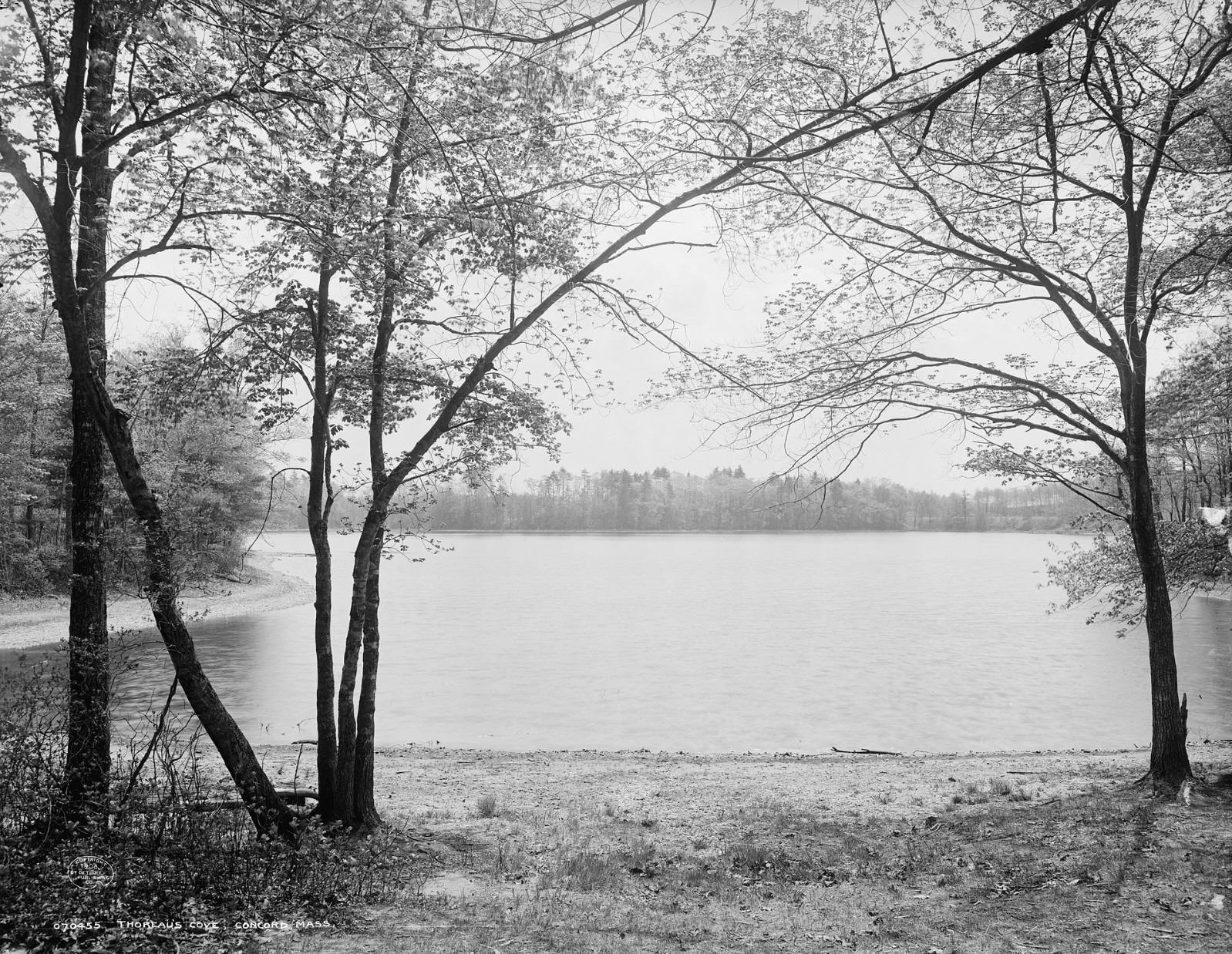
[The photo is Thoreau’s Cove in 1908. U.S. Library of Congress]

“Whate’er we leave to God, God does/And blesses us.”*

by chuckofish

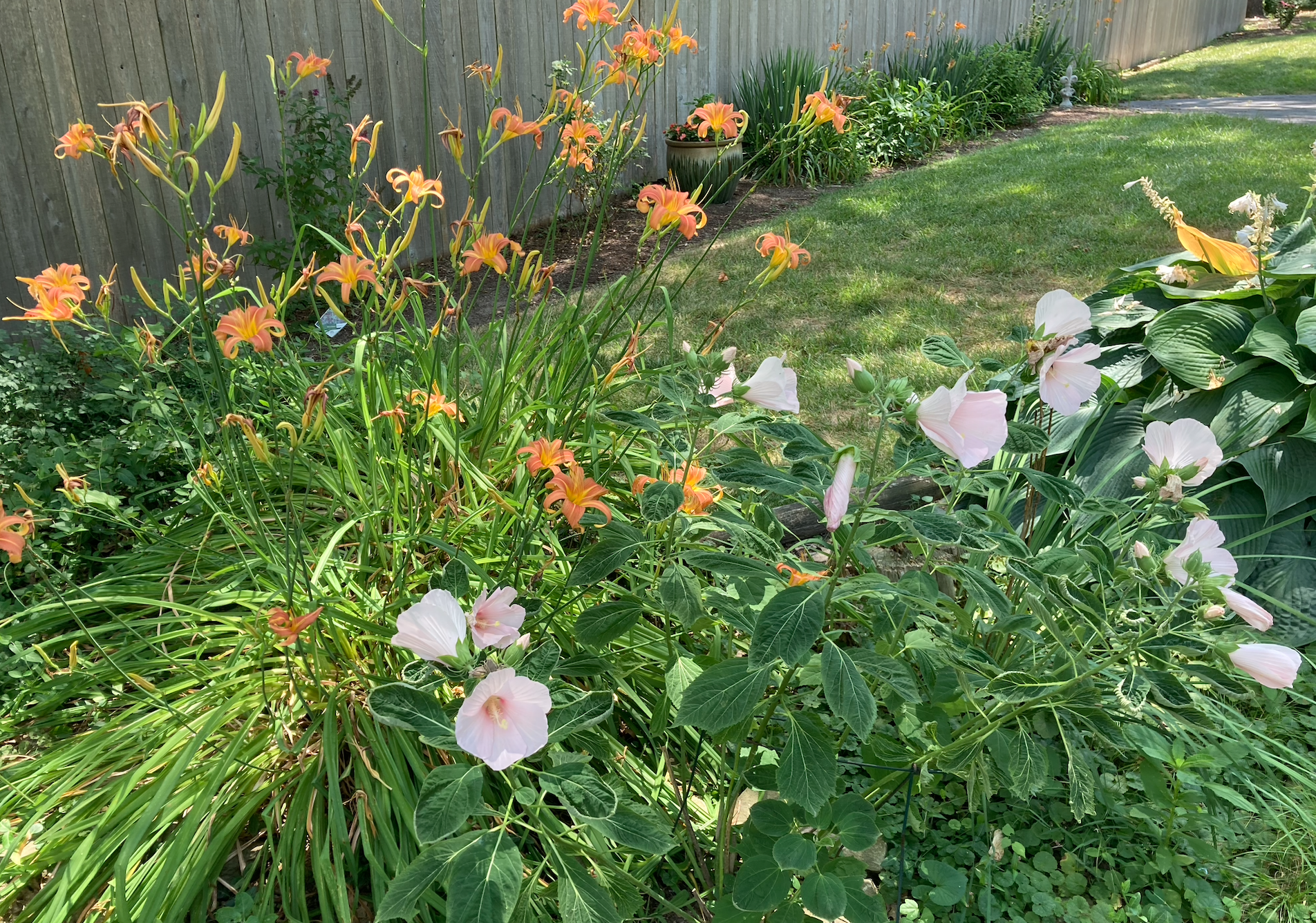
We are deep into summer here in flyover country. The Hibiscus is blooming!

This is always thrilling to me because this plant has grown from seeds harvested from a friend’s yard which I planted years ago. Yay Hibiscus!

Today we note the birthday of Henry David Thoreau (1817-1862).

Thoreau was an intriguing character, even to his contemporaries, but particularly to a whole generation of Americans who grew up in the 1950s and became hippies in the 1960s. I always think of Rockwell Gray, who was an adjunct professor of English at my university and who I knew and liked. He was a certain type of WASP, highly intelligent and very kind, who would have preferred to be Jewish or at least Irish so he could just relax and be a square peg. He loved Thoreau. Like so many others, he felt he was a kindred soul. And don’t we all, to some extent.

Perhaps I am more than usually jealous with respect to my freedom. I feel that my connection with and obligation to society are still very slight and transient. Those slight labors which afford me a livelihood, and by which it is allowed that I am to some extent serviceable to my contemporaries, are as yet commonly a pleasure to me, and I am not often reminded that they are a necessity. So far I am successful. But I foresee, that, if my wants should be much increased, the labor required to supply them would become a drudgery. If I should sell both my forenoons and afternoons to society, as most appear to do, I am sure, that, for me, there would be nothing left worth living for. I trust that I shall never thus sell my birthright for a mess of pottage. (Life Without Principle)

*Henry David Thoreau, “Inspiration”

Whoopee ti yi yo, git along little dogies

by chuckofish

Well, the summer is meandering along and soon will be over! We seem to do the same things over and over. Time like an ever rolling stream…

Anyway, it is a good time to re-read Thoreau’s A Walk to Wachusett, which he recorded on July 19, 1842.

It was at no time darker than twilight within the tent, and we could easily see the moon through its transparent roof as we lay; for there was the moon still above us, with Jupiter and Saturn on either hand, looking down on Wachusett, and it was a satisfaction to know that they were our fellow-travelers still, as high and out of our reach as our own destiny. Truly the stars were given for a consolation to man.

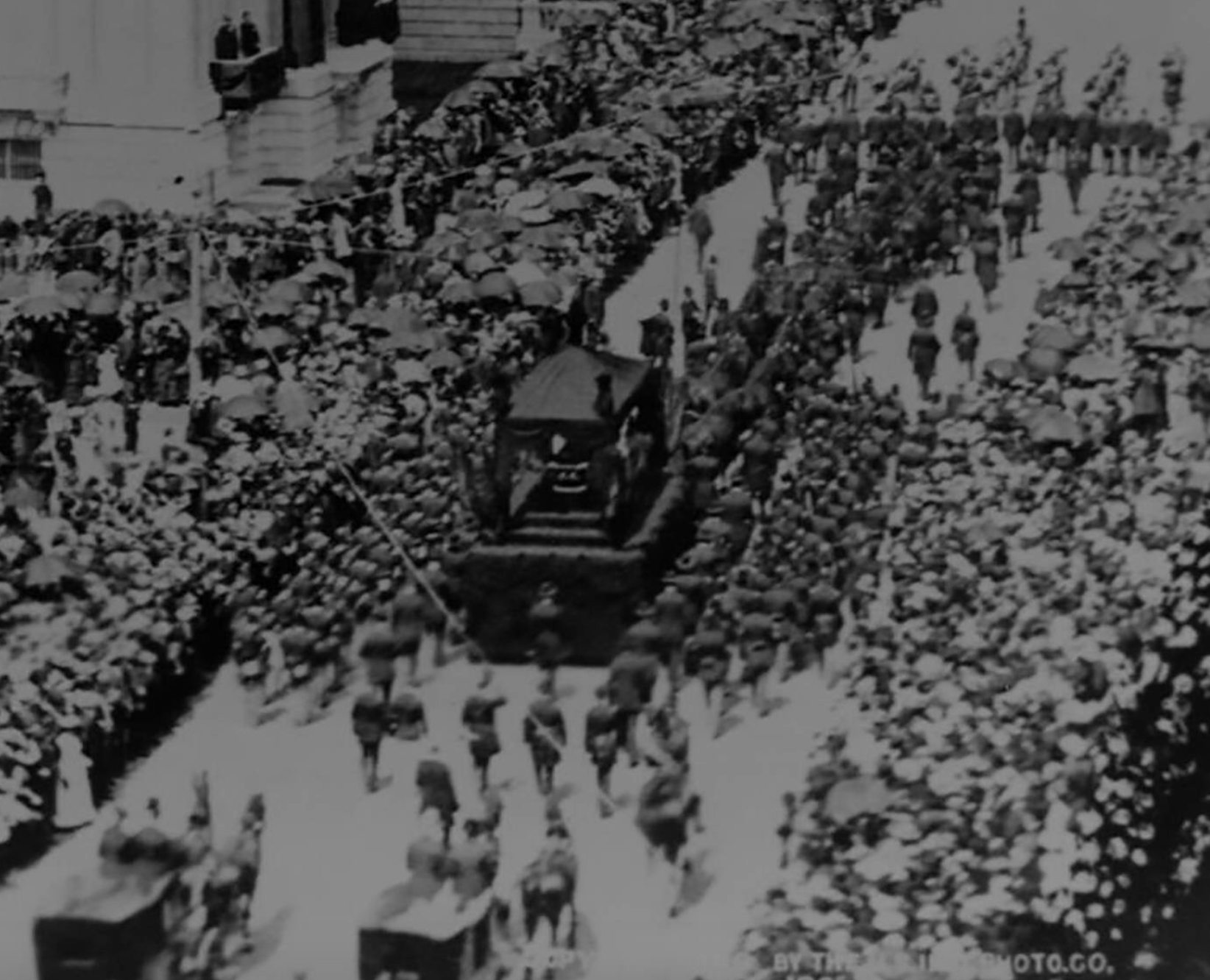
Tomorrow is the anniversary of the death of Ulysses Grant in 1885. Let’s all take a moment to remember our 18th president. His funeral in New York City demonstrated the great love and admiration the country felt for their former president and Civil War hero. He was respected not only by comrades in arms but also by former enemies. Marching as pallbearers beside the Union generals William Tecumseh Sherman and Philip Sheridan were two Confederate generals, Joe Johnston and Simon Buckner.

The column of mourners who accompanied Grant was seven miles long. (This is an interesting thread with photos of all the honorary pall bearers.)

Placed in a “temporary” tomb in Riverside Park, Grant’s body stayed there for nearly 12 years, while supporters raised money for the construction of a permanent resting place. In what was then the biggest public fundraising campaign in history, some 90,000 people from around the world donated over $600,000 to build Grant’s Tomb. A million people, including President William McKinley, attended the tomb’s dedication on April 27, 1897, 10 days after Grant’s body had been moved there. Grant’s Tomb was — and is —the largest tomb in North America.

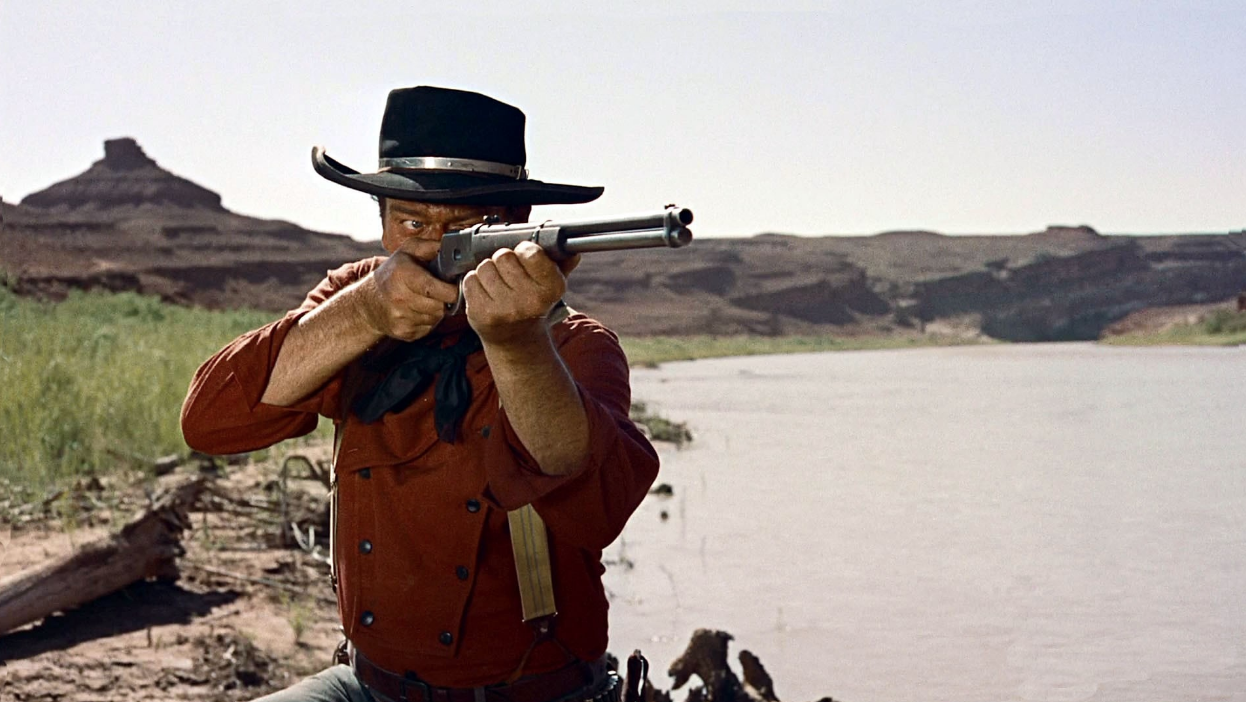
I’ll also remind you that Saturday is the National Day of the Cowboy. Celebrate it in appropriate style!

As Emerson Hough wrote in his “Passing of the Frontier,” the time of the Cattle Kings, though short, was

…a wild, strange day…There never was a better life than that of the cowman who had a good range on the Plains and cattle enough to stock his range. There never will be found a better man’s country in all the world than that which ran from the Missouri up to the low foothills of the Rockies.

I plan, of course, to watch some good cowboy movies, including (but not limited to) Red River (1948), as is my tradition.

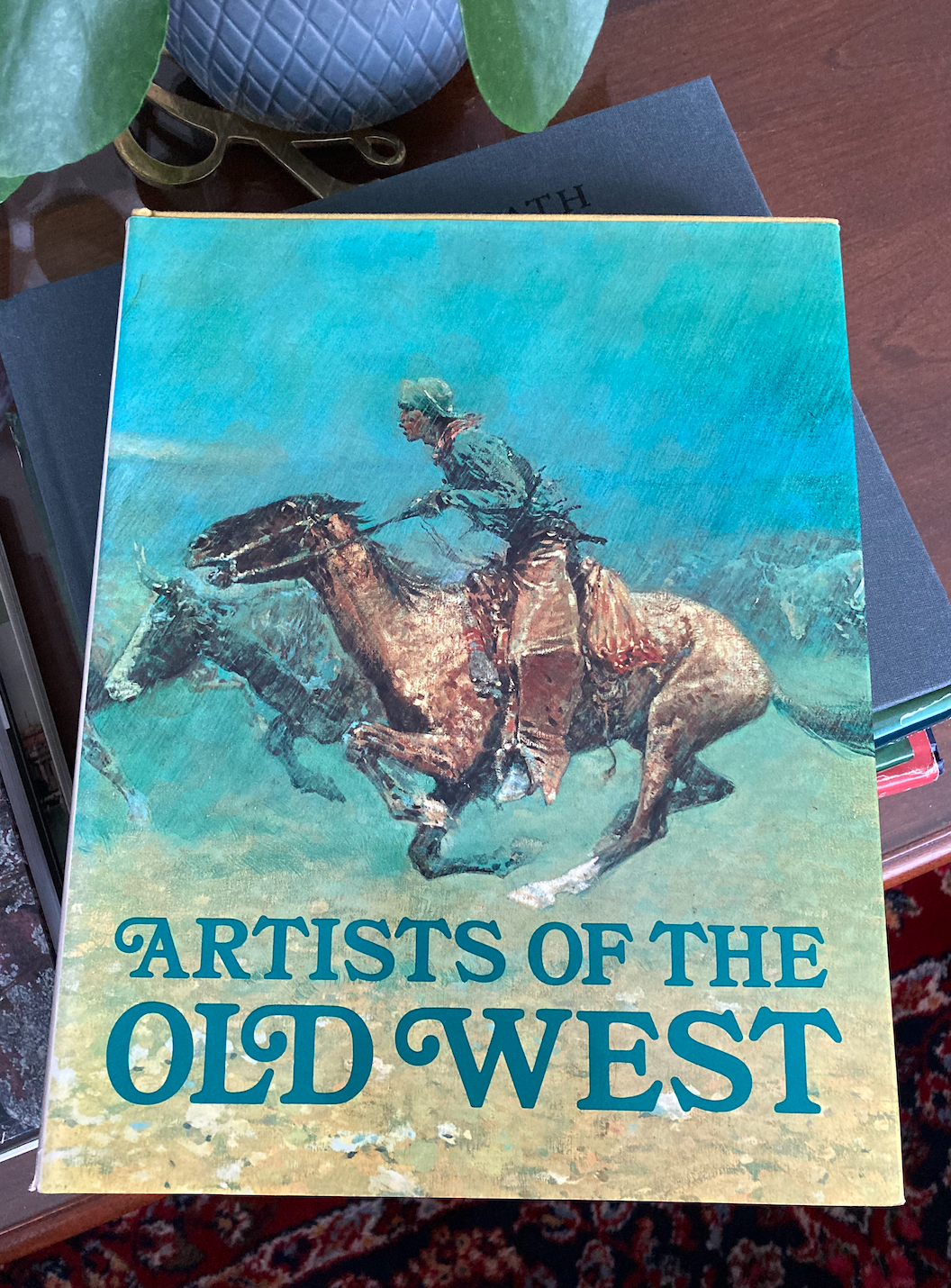
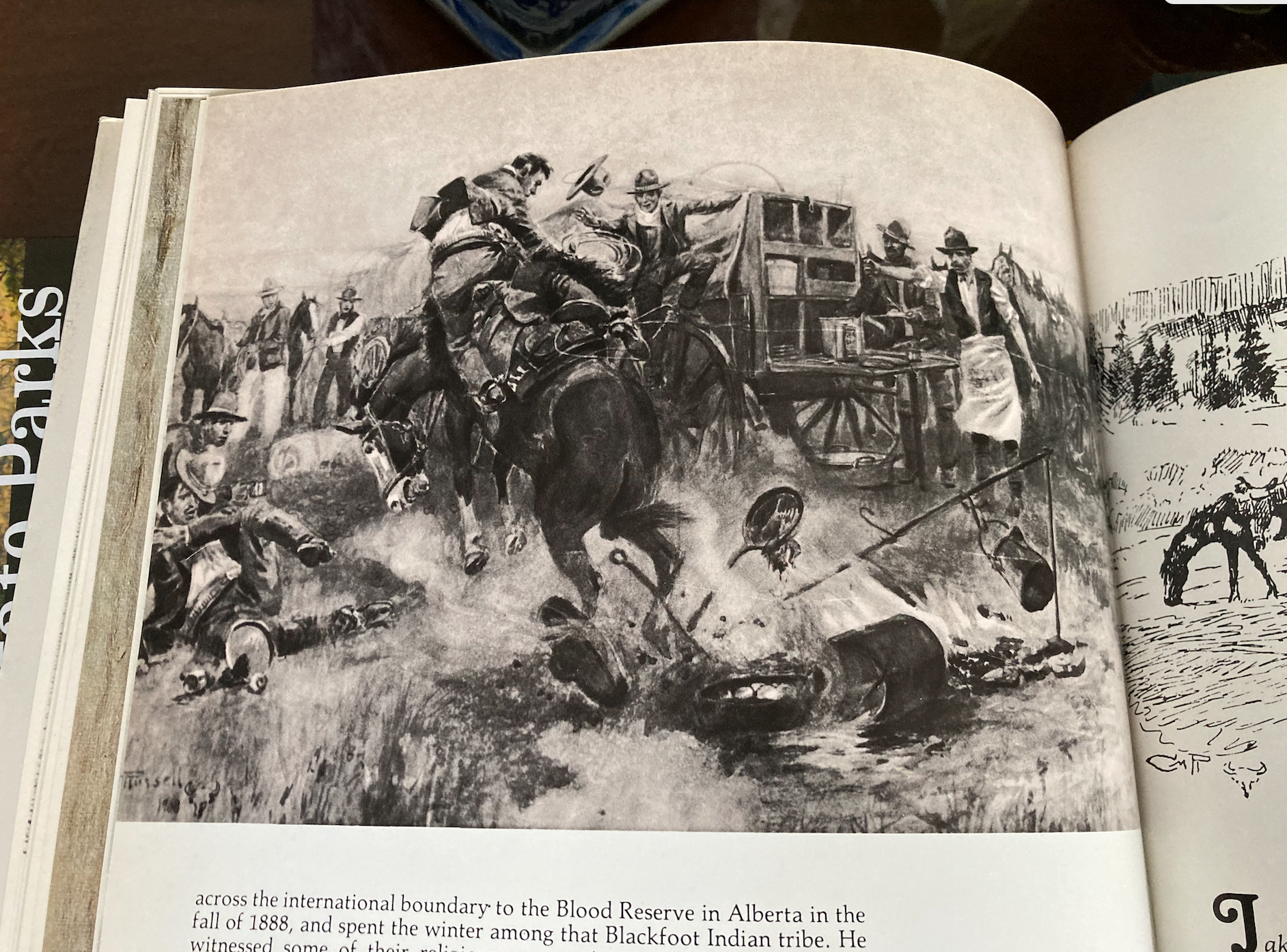
You might also want to read up on some of your favorite western artists or just look at some great western art…

They’ll be celebrating in Oklahoma City at the National Cowboy and Western Heritage Museum with numerous events, but we can all plan our own party. Life is a banquet and most poor suckers are starving, as Auntie Mame said. So heat up some beans and join me in watching Red River!

By the way, last night we watched The Best of Times (1986), a movie I have a great fondness for, in memory of Robin Williams. You will recall that it is about re-playing a high school football game played in the fall of 1972, which was a disaster for the characters played by Robin Williams and Kurt Russell. (The OM was playing football that year and so it always resonates with him.) It’s a classic and I highly recommend it.

“In the long run, you hit only what you aim for.”*

by chuckofish

Well, my hard week is almost over, but next week doesn’t look much better.😩

C’est la vie.

I  plan to have a restorative weekend. We all have our personal self-comforting techniques and I will utilize all of mine.Screen Shot 2019-03-28 at 5.37.41 PM.png

T.G.I.F. Enjoy your weekend.

*Henry David Thoreau


This is the day

by chuckofish

Good morning! There’s nothing like some Mandisa to start your day off right! And it is important to start your day off right.

This is the day which the Lord has made;
    let us rejoice and be glad in it.

(Psalm 118:24)

My mother, who was not one to scold or correct, did tell me once, when I was grousing about something as an adolescent, that this is the day which the Lord has made, and you ought not to complain about it, but, indeed, rejoice about it. And for Pete’s sake, don’t waste it! That advice struck a cord in me and I never forgot it.

IT IS A MOMENT of light surrounded on all sides by darkness and oblivion. In the entire history of the universe, let alone in your own history, there has never been another just like it and there will never be another just like it again. It is the point to which all your yesterdays have been leading since the hour of your birth. It is the point from which all your tomorrows will proceed until the hour of your death. If you were aware of how precious it is, you could hardly live through it. Unless you are aware of how precious it is, you can hardly be said to be living at all.

“This is the day which the Lord has made,” says the 118th Psalm. “Let us rejoice and be glad in it.” Or weep and be sad in it for that matter. The point is to see it for what it is because it will be gone before you know it. If you waste it, it is your life that you’re wasting. If you look the other way, it may be the moment you’ve been waiting for always that you’re missing.

All other days have either disappeared into darkness and oblivion or not yet emerged from them. Today is the only day there is.

– Frederick Buechner, Whistling in the Dark

“If the day and the night are such that you greet them with joy, and life emits a fragrance like flowers and sweet-scented herbs, is more elastic, more starry, more immortal- that is your success. All nature is your congratulation, and you have cause momentarily to bless yourself. The greatest gains and values are farthest from being appreciated. We easily come to doubt if they exist. We soon forget them. They are the highest reality. Perhaps the facts most astounding and most real are never communicated by man to man. The true harvest of my daily life is somewhat as intangible and indescribable as the tints of morning or evening. It is a little star-dust caught, a segment of the rainbow which I have clutched.”

― Henry David Thoreau, Walden 

“Write it on your heart
that every day is the best day in the year.
He is rich who owns the day, and no one owns the day
who allows it to be invaded with fret and anxiety.

Finish every day and be done with it.
You have done what you could.
Some blunders and absurdities, no doubt crept in.
Forget them as soon as you can, tomorrow is a new day;
begin it well and serenely, with too high a spirit
to be cumbered with your old nonsense.

This new day is too dear,
with its hopes and invitations,
to waste a moment on the yesterdays.”

― Ralph Waldo Emerson, Collected Poems and Translations 

I may have said all this before, but it bears repeating. Write it on your heart.

And here’s a little Stephen Stills on the subject:

Rejoice, rejoice, we have no choice…

Deep thoughts

by chuckofish

Screen Shot 2019-02-04 at 1.23.05 PM.png

I am grateful for what I am and have. My thanksgiving is perpetual. It is surprising how contented one can be with nothing definite — only a sense of existence. Well, anything for variety. I am ready to try this for the next 1000 years, and exhaust it. How sweet to think of! My extremities well charred, and my intellectual part too, so that there is no danger of worm or rot for a long while. My breath is sweet to me. O how I laugh when I think of my vague indefinite riches. No run on my bank can drain it — for my wealth is not possession but enjoyment.

–Henry David Thoreau, Letter to Harrison Gray Otis Blake (December 1856), as published in The Correspondence of Henry David Thoreau (1958)

Thankfulness is an essential guardian of the soul, and therefore we should guard ourselves with gratitude. Evidently we are fair game for the devil when we don’t abound with thanksgiving. Unless the song of thanksgiving is being sung in our hearts the enemy outside will deceive his way into the city of our soul, and the enemy sympathizers within will make his job easy. So for the sake of your own safety, strive to fill your heart with thanksgiving! Guard yourselves with gratitude!

–John Piper

Almighty God, Father of all mercies, we, thine unworthy servants, do give thee most humble and hearty thanks for all thy goodness and loving-kindness to us, and to all men. We bless thee for our creation, preservation, and all the blessings of this life; but above all, for thine inestimable love in the redemption of the world by our Lord Jesus Christ; for the means of grace, and for the hope of glory. And, we beseech thee, give us that due sense of all thy mercies, that our hearts may be unfeignedly thankful; and that we show forth thy praise, not only with our lips, but in our lives, by giving up our selves to thy service, and by walking before thee in holiness and righteousness all our days; through Jesus Christ our Lord, to whom, with thee and the Holy Ghost, be all honor and glory, world without end. Amen.

–A General Thanksgiving, BCP

(The painting is J. Alden Weir, 1859-1919, American Impressionist painter)

A thrill of delight

by chuckofish

Screen Shot 2019-01-14 at 6.29.48 PM.png

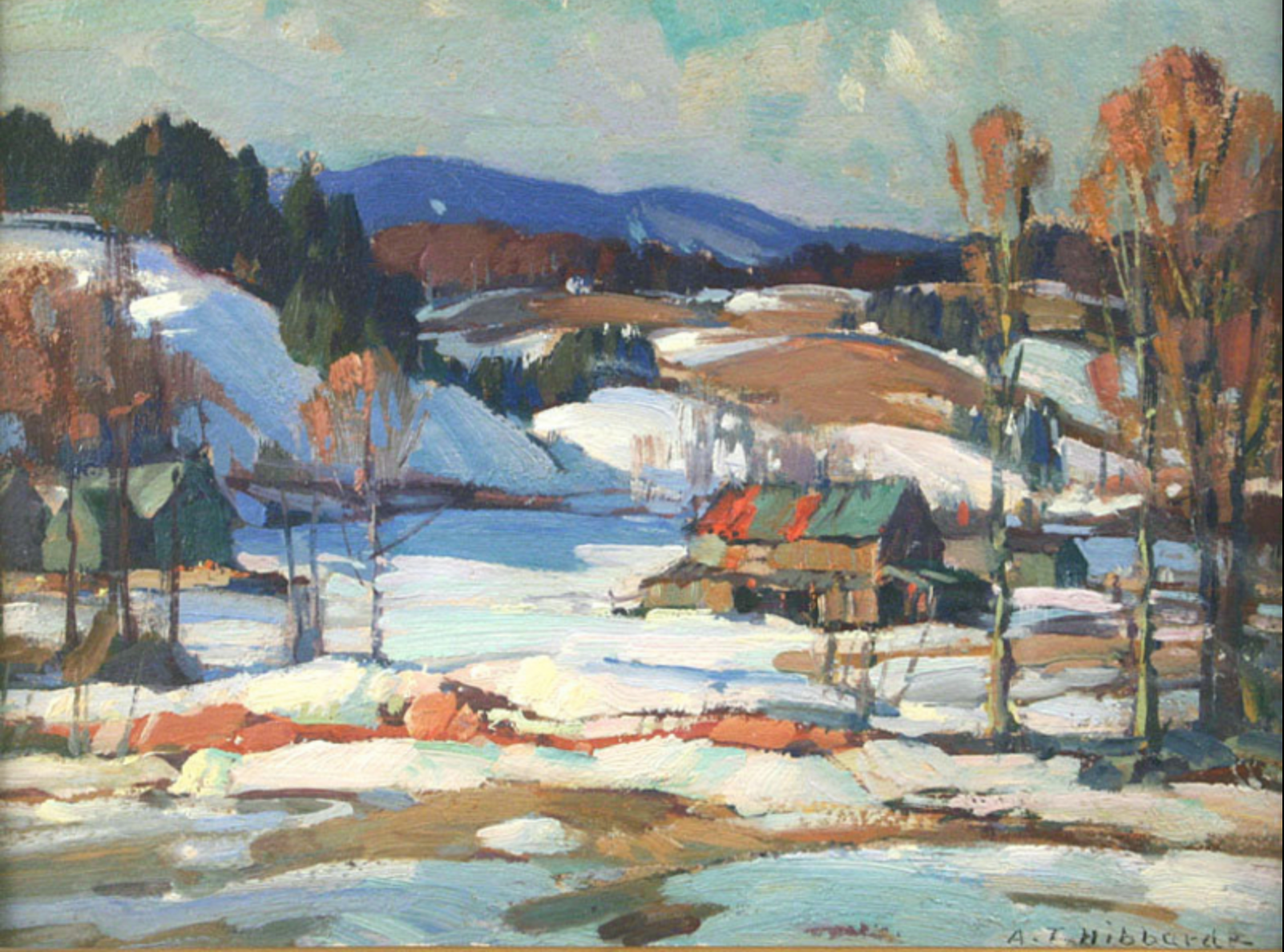
Books of natural history make the most cheerful winter reading. I read in Audubon with a thrill of delight, when the snow covers the ground, of the magnolia, and the Florida keys, and their warm sea breezes; of the fence-rail, and the cotton-tree, and the migrations of the rice-bird; of the breaking up of winter in Labrador, and the melting of the snow on the forks of the Missouri; and owe an accession of health to these reminiscences of luxuriant nature.

—Henry David Thoreau, “Natural History of Massachusetts”

Here’s to some cheerful winter reading!

The painting is “Vermont Valley Farm – Winter” by Aldro Thompson Hibbard (American, 1886-1972)