dual personalities

Tag: Frederick Buechner

“I keep an inventory of wonders”*

by chuckofish

We think a lot about the passing of time and this was a shocker:
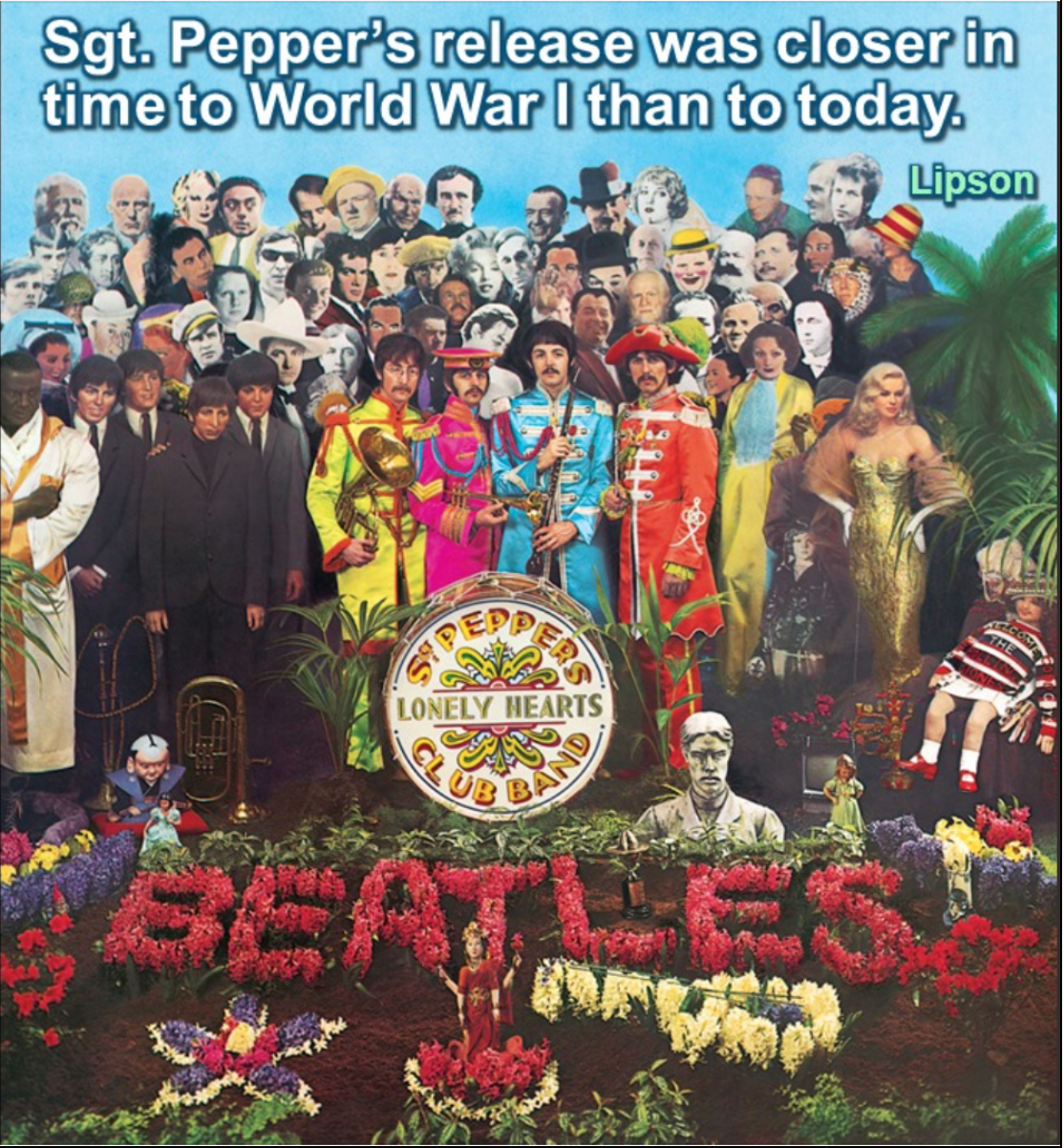
Yes, the album was released on May 26, 1967–54 years ago. And WWI was only 50 years before that. Western culture had changed a lot in those 50 years, but think about how much it’s changed in the past 54 years.

As usual, I am trying to escape our crumbling culture by reading something uplifting. Currently I am re-reading Hannah Coulter by Wendell Berry. This novel has much to say about the passage of time and people living in community.

As I have told it over, the past visible again in the present, the dead living still in their absence, this dream of time seems to come to rest in eternity. My mind, I think, has started to become, it is close to being, the room of love where the absent are present, the dead are alive, time is eternal, and all the creatures prosperous. The room of love is the love that holds us all, and it is not ours. It goes back before we were born. It goes all the way back. It is Heaven’s. Or it is Heaven, and we are in it only by willingness. By whose love, Andy Catlett, do we love this world and ourselves and one another? Do you think we invented it ourselves? I ask with confidence, for I know you know we didn’t.

Frederick Buechner calls it “the Room called Remember.”

The past and the future. Memory and expectation. Remember and hope. Remember and wait. Wait for him whose face we all of us know because somewhere in the past we have faintly seen it, whose life we all of us thirst for because somewhere in the past we have seen it lived, have maybe even had moments of living it ourselves. Remember him who himself remembers us as he promised to remember the thief who died beside him. To have faith is to remember and wait, and to wait in hope is to have what we hope for already begin to come true in us through our hoping. Praise him.

Anyway, I highly recommend both Wendell Berry and Frederick Buechner.

And, of course, there’s always Jorge Luis Borges…

In the golden afternoon, or in
a serenity the gold of afternoon
might symbolize,
a man arranges books
on waiting shelves
and feels the parchment, the leather, the cloth,
and the pleasure bestowed
by looking forward to a habit
and establishing an order.
Here Stevenson and Andrew Lang, the other Scot,
will magically resume
their slow discussion
which seas and death cut short,
and surely Reyes will not be displeased
by the closeness of Virgil.
(In a modest, silent way,
by ranging books on shelves
we ply the critic’s art.)
The man is blind, and knows
he won’t be able to decode
the handsome volumes he is handling,
and that they will never help him write
the book that will justify his life in others’ eyes;
but in the afternoon that might be gold
he smiles at his curious fate
and feels that peculiar happiness
which comes from loved old things.
June, 1968

*Wendell Berry, Sabbaths 2016

“We will feast in the house of Zion”*

by chuckofish

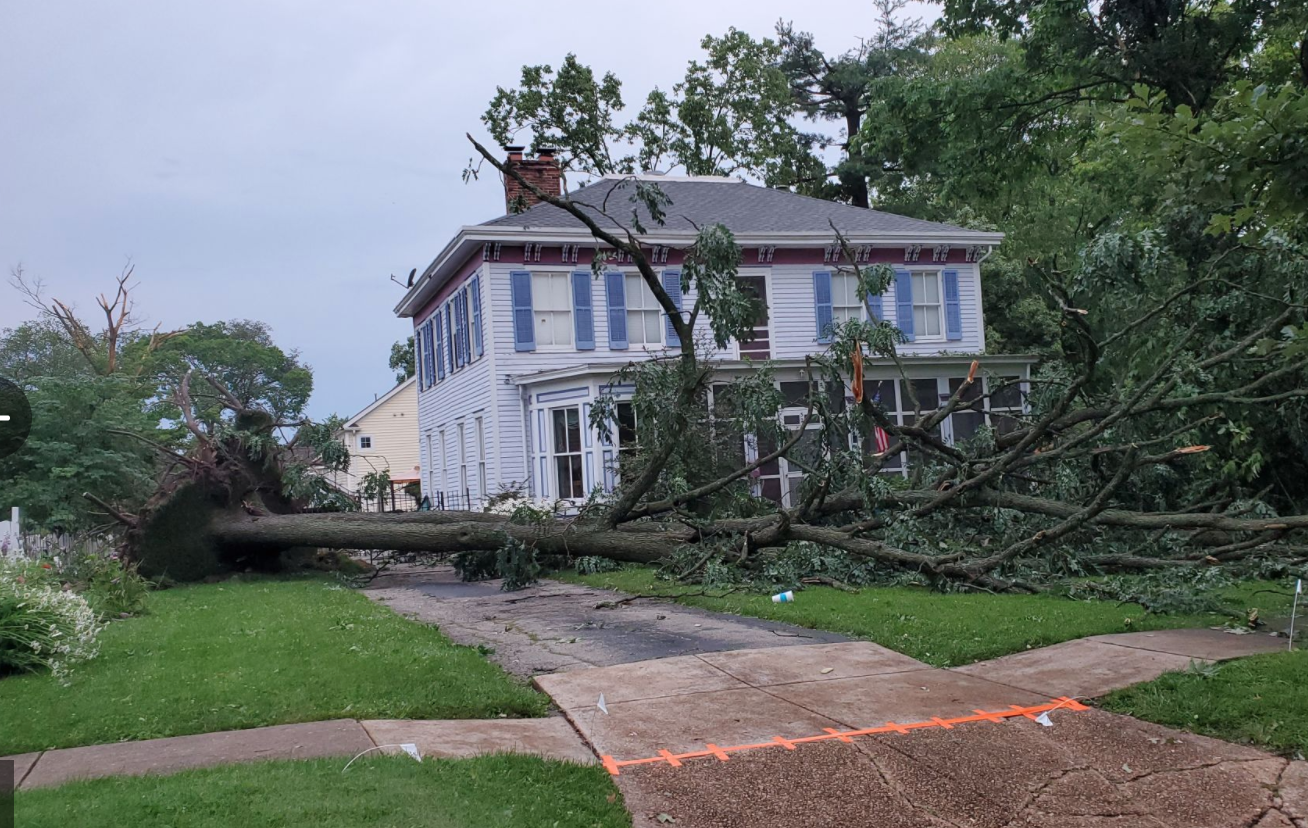
Well, we had quite a three-day weekend–lots of drama and some severe weather thrown in for good measure.

The OM and I drove over to Jeff City on Friday where we bought a new car. We have a habit of thinking about a thing for two years and then, on what appears to be the spur of the moment, doing something big. This is what happened once again this week. Inspired by the video daughter #1 produced about the Riley Brothers car dealership in JC (the ones who sustained huge damage two years ago in the JC tornado), the OM finally made a decision re replacing his old Honda Accord.

While he dealt with finalizing and picking up the car, I went home with daughter #1 to her apartment and tried to put together a new bed which had been delivered that morning. We also talked for several hours about the pros and cons of a big job offer she got. This was a lot of drama for one day. I won’t go into the details, but we finally threw our hands up into the air, abandoned the bed unfinished, left her apartment in disarray, and drove home to St. Louis. The OM followed in his new car.

That night we drank two bottles of wine, listened to music and discussed more pros and cons of the job offer. Then we slept through a huge storm in which 60-70 mph winds downed big trees and power lines and left us without electricity.

Photo from KSDK.com

(The steeple was blown off this 150 year old church (STL PD photo)–Zut alors!)

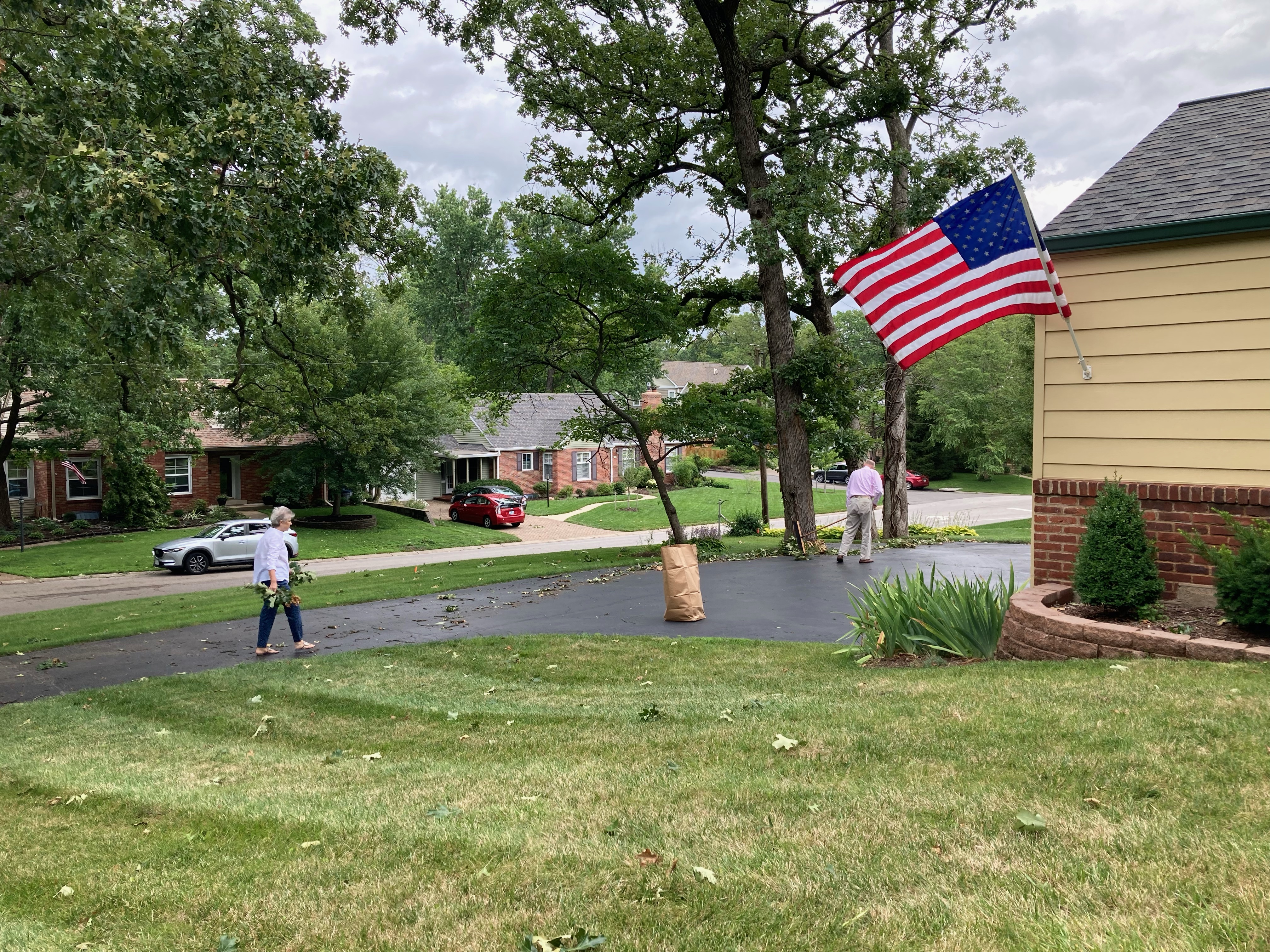
We wanted the wee twins to come over the next day and help us pick up sticks and other detritus in our yard, but they had to go to a birthday party, so we had to do it ourselves.

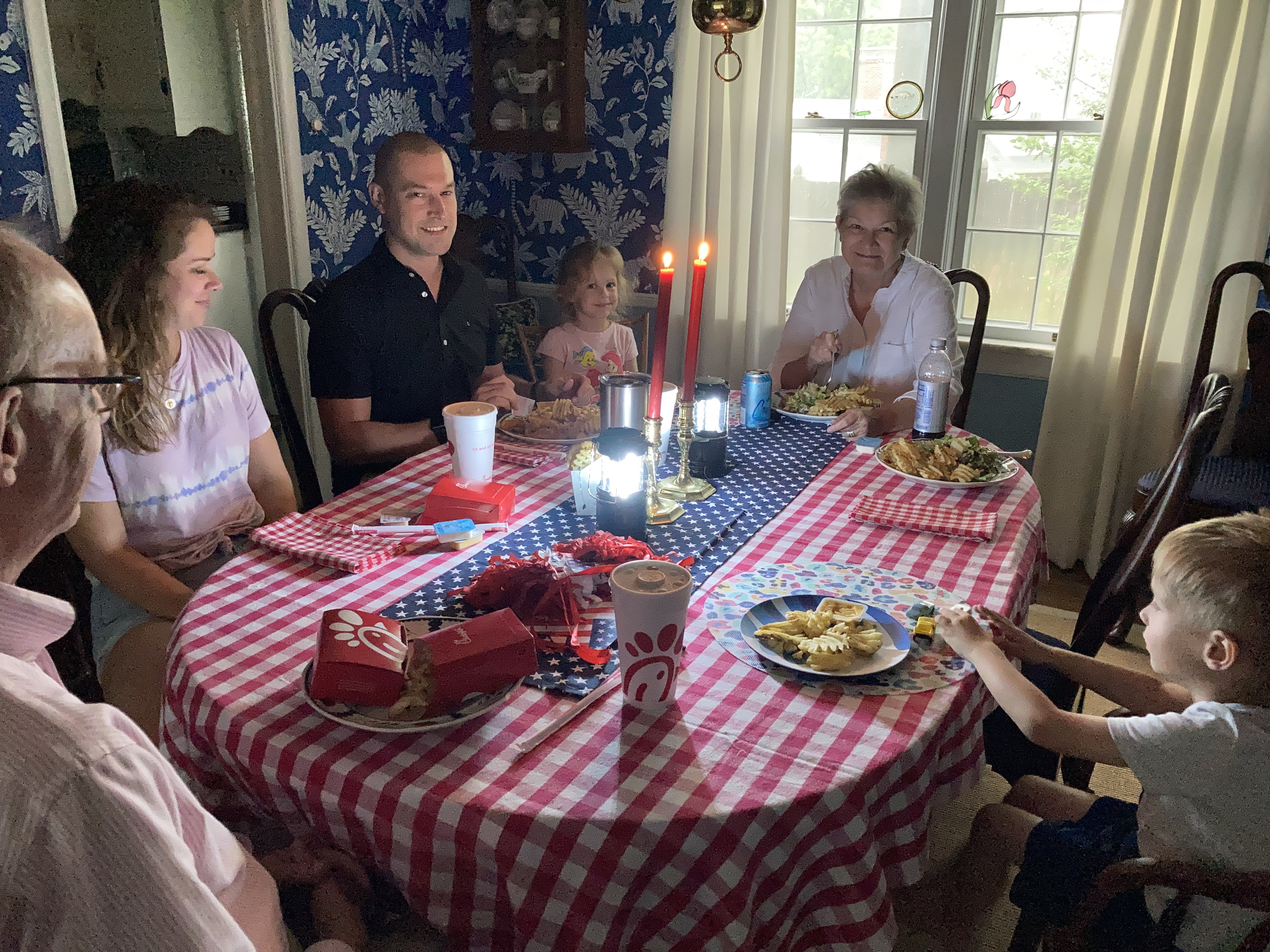
The boy and his famille came over after the party to check out the OM’s new car.

The wee laddie said, “Pappy has a cool Caddy!” and set his seal of approval. (My “Cooper” is still his favorite.)

We ate a late lunch from Chick fil-A by candlelight.

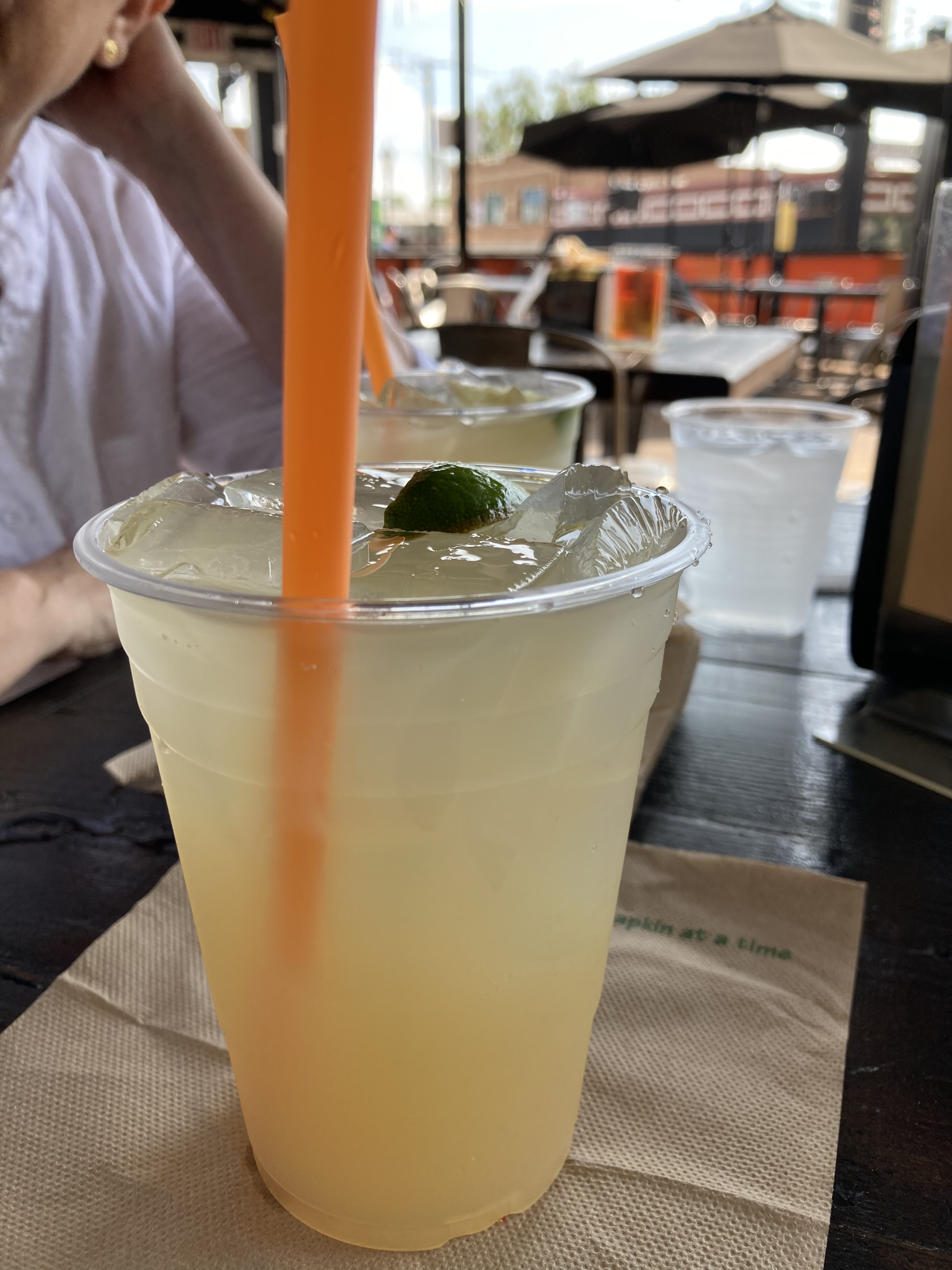
After they went home, daughter #1 and I headed over to Club Taco to hang out on the patio…

The OM texted us when the electricity came back on (17 hours later) and we went home with a big sigh of relief.

After church on Sunday morning, daughter #1 headed home to put her chaotic apartment back in order. I caught up on the phone with my DP and daughter #2 and then the OM and I took a ride through Lone Elk Park. We saw this raccoon and her three kits…

…and a few lazy elk, but not much was going on there. Then I watched some PGA on TV and settled in for the evening, grateful for electricity, fair weather, family, and friends.

“I SHALL NOT WANT,” the psalm says. Is that true? There are lots of things we go on wanting, go on lacking, whether we believe in God or not. They are not just material things like a new roof or a better paying job, but things like good health, things like happiness for our children, things like being understood and appreciated, like relief from pain, like some measure of inner peace not just for ourselves but for the people we love and for whom we pray. Believers and unbelievers alike we go on wanting plenty our whole lives through. We long for what never seems to come. We pray for what never seems to be clearly given. But when the psalm says “I shall not want,” maybe it is speaking the utter truth anyhow. Maybe it means that if we keep our eyes open, if we keep our hearts and lives open, we will at least never be in want of the one thing we want more than anything else. Maybe it means that whatever else is withheld, the shepherd never withholds himself, and he is what we want more than anything else. 

–Frederick Buechner, The Clown in the Belfry

*Sandra McCracken

The harmonies and disharmonies and counterpoint of all that happens

by chuckofish

Happy new year and all that jazz.

I am going to try to be a better, lest judgmental neighbor (see here) but it is hard. Case in point: Last week I noted that our neighbor had left the side door of her minivan wide open (dome light on) after returning from visiting grandparents over Christmas. I waited a few hours and, when the door was still open, texted her that she had left her minivan door open. She texted back, “Oh my gosh, I didn’t notice! Thank you so much!” Eight hours later the door was still open and it was dark. [Insert shrug emoji.]

Anyway, wish me luck. In the meantime daughter #1 and I worked very hard on New Year’s Day and the day after to put everything Christmas away. It is much easier and less depressing to do this with someone and I am grateful to have had help with this arduous task. We listened to show tunes and classic 70s rock and the hours flew by.

She delayed her drive back to mid-MO a day because of icy weather conditions and we organized the TV room and all the CDs and LPs which were in a state of serious disarray due to many dance parties and DJ sessions.

She even alphabetized the CDs! The boy stopped by after work on Saturday and helped take the extra leaf out of the dining room table and carry it down to the basement. We ate salsa and chips and had a round of margaritas. Thus endeth the 2020 cleaning up ritual. Oh, later that night we watched Rio Bravo (1959) which kicks off my end-of-the-holidays John Wayne marathon of sadness alleviation.

John Wayne and the often overlooked Pedro Gonzalez Gonzalez

On a more serious note, here’s some Frederick Buechner to start the year off:

IF GOD SPEAKS anywhere, it is into our personal lives that he speaks. Someone we love dies, say. Some unforeseen act of kindness or cruelty touches the heart or makes the blood run cold. We fail a friend, or a friend fails us, and we are appalled at the capacity we all of us have for estranging the very people in our lives we need the most. Or maybe nothing extraordinary happens at all—just one day following another, helter-skelter, in the manner of days. We sleep and dream. We wake. We work. We remember and forget. We have fun and are depressed. And into the thick of it, or out of the thick of it, at moments of even the most humdrum of our days, God speaks. But what do I mean by saying that God speaks?

He speaks not just through the sounds we hear, of course, but through events in all their complexity and variety, through the harmonies and disharmonies and counterpoint of all that happens. As to the meaning of what he says, there are times that we are apt to think we know. Adolf Hitler dies a suicide in his bunker with the Third Reich going up in flames all around him, and what God is saying about the wages of sin seems clear enough. Or Albert Schweitzer renounces fame as a theologian and musician for a medical mission in Africa, where he ends up even more famous still as one of the great near-saints of Protestantism; and again we are tempted to see God’s meaning as clarity itself. But what is God saying through a good man’s suicide? What about the danger of the proclaimed saint’s becoming a kind of religious prima donna as proud of his own humility as a peacock of its tail? What about sin itself as a means of grace? What about grace, when misappropriated and misunderstood, becoming an occasion for sin? To try to express in even the most insightful and theologically sophisticated terms the meaning of what God speaks through the events of our lives is as precarious a business as to try to express the meaning of the sound of rain on the roof or the spectacle of the setting sun. But I choose to believe that he speaks nonetheless, and the reason that his words are impossible to capture in human language is of course that they are ultimately always incarnate words. They are words fleshed out in the everydayness no less than in the crises of our own experience.

–The Sacred Journey

Let’s all take a moment and think about the fact that God made you a human being and not a chair. Be a good one. Glorify God.

I drove my Cooper

by chuckofish

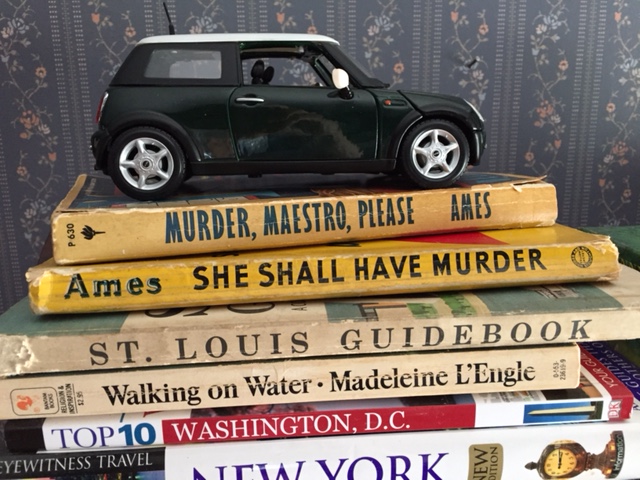
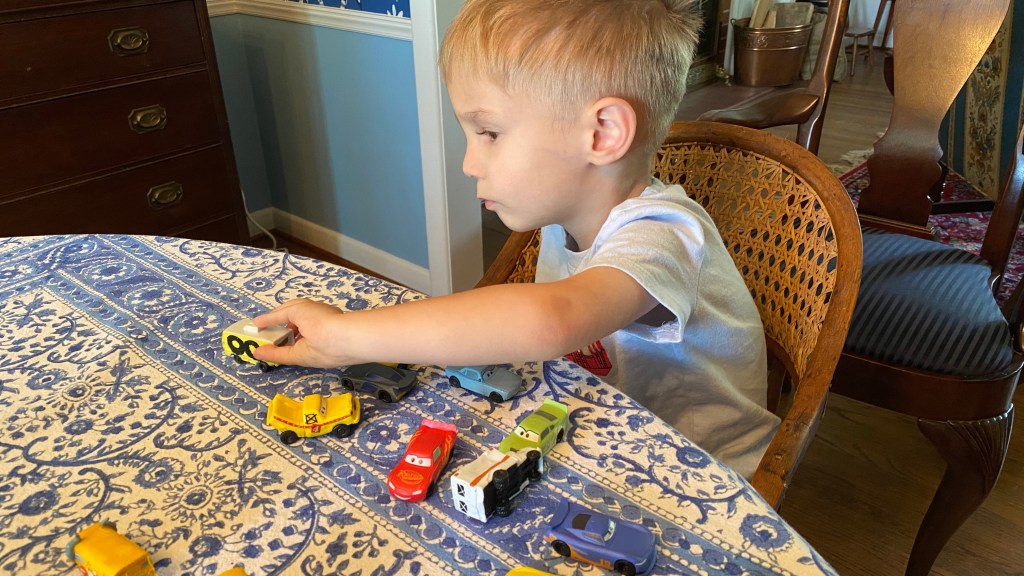
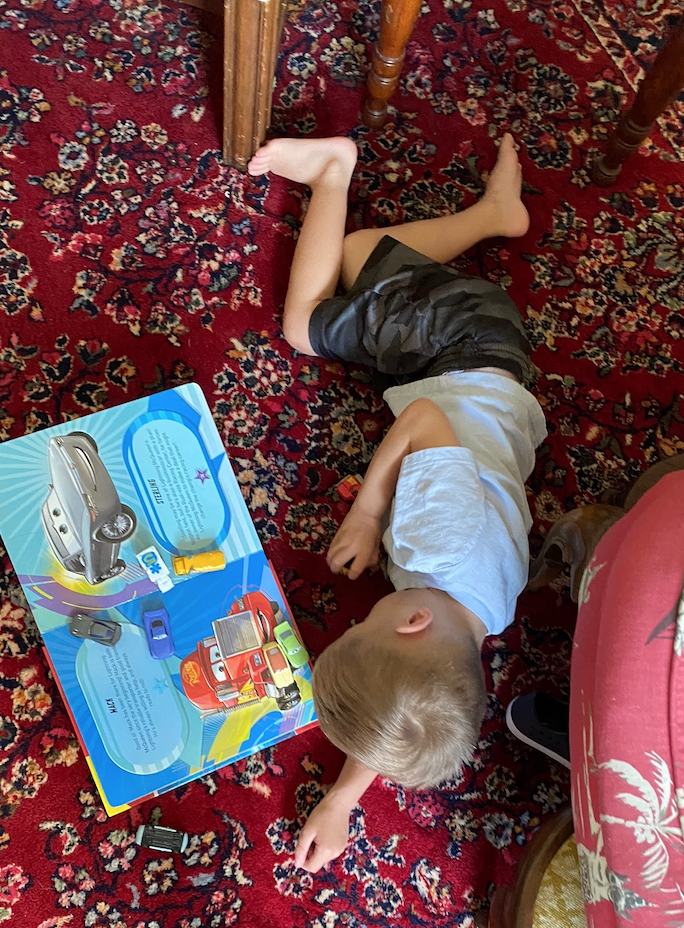
This weekend the wee babes came over to play while their Mommy went to the sofa store and the wee laddie found my toy Mini Cooper high up on a bookshelf (quelle eagle eye.) No amount of telling him that it was off limits would prevail, so I said, fine, play with it. (Am I becoming a push-over?) He played with “my Cooper,” along with his “special cars”…

…and his “special book”.

When it was time to go home, however, he made quite a scene when told the Mini Cooper had to stay at Mamu’s house. (I am not a complete push-over.) He was tired, but he put up quite a fight. Later when his Dad got home from work and asked him what he had done that day, he told him all about “my Cooper.” His Dad asked if he played with the Beanie Babies etc and he said, “Yeah, and I drove my Cooper. I love that car.”

I was glad that daughter #1 had come home for happy hour, so that she could help wrangle the nutballs. We deserved those margaritas we had when they left.

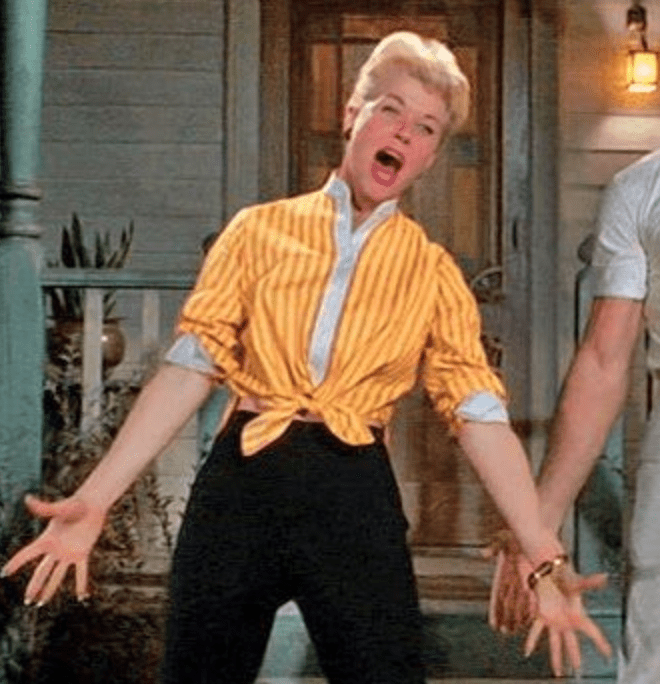
Later the OM ordered take out from Amigo’s and we watched The Pajama Game (1957) and sang along with Doris Day and John Raitt.

On Sunday morning I drove my Cooper to an estate sale where I got some needlepoint coasters (can a person ever have too many coasters?) and a book. Daughter #1 found some sewing paraphernalia. She headed back to mid-Mo soon thereafter.

I FaceTimed with the infant and her Mommy. Life is quiet and our joys are simple.

I leave you with these thoughts about Life from Frederick Buechner:

The Temptation is always to reduce it to size. A bowl of cherries. A rat race. Amino acids. Even to call it a mystery smacks of reductionism. It is the mystery. As far as anybody seems to know, the vast majority of things in the universe do not have whatever life is. Sticks, stones, stars, space—they simply are. A few things are and are somehow alive to it. They have broken through into Something, or Something has broken through into them. Even a jellyfish, a butternut squash. They’re in it with us. We’re all in it together, or it in us.

Life is it. Life is with. After lecturing learnedly on miracles, a great theologian was asked to give a specific example of one. “There is only one miracle,” he answered. “It is life.” 

Have you wept at anything during the past year? 

Has your heart beat faster at the sight of young beauty? 

Have you thought seriously about the fact that someday you are going to die? 

More often than not, do you really listen when people are speaking to you instead of just waiting for your turn to speak? 

Is there anybody you know in whose place, if one of you had to suffer great pain, you would volunteer yourself? 

If your answer to all or most of these questions is no, the chances are that you’re dead.

Sackcloth and ashes

by chuckofish

Daughter #1 usually posts on Wednesdays, but since she is on the road, traveling around the state, I am pressed into service.

IMG_4166.JPG

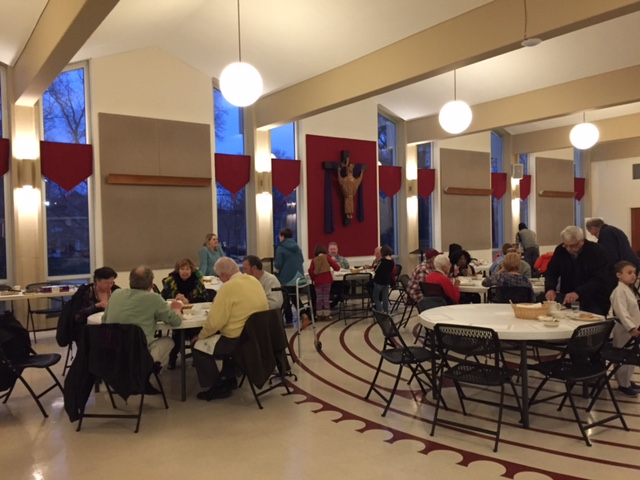
The OM and I went to the pancake supper at church last night as we usually do on Shrove Tuesday. No wild parties for us. Just pancakes–good times.

Now, on to Lent.

Screen Shot 2020-02-25 at 7.45.51 PM.png

Here are some wise words from Frederick Buechner to get us thinking for the 40 days of Lent:

In many cultures there is an ancient custom of giving a tenth of each year’s income to some holy use. For Christians, to observe the forty days of Lent is to do the same thing with roughly a tenth of each year’s days. After being baptized by John in the river Jordan, Jesus went off alone into the wilderness, where he spent forty days asking himself the question what it meant to be Jesus. During Lent, Christians are supposed to ask one way or another what it means to be themselves.

If you had to bet everything you have on whether there is a God or whether there isn’t, which side would get your money and why?

When you look at your face in the mirror, what do you see in it that you most like and what do you see in it that you most deplore?

If you had only one last message to leave to the handful of people who are most important to you, what would it be in twenty-five words or less?

Of all the things you have done in your life, which is the one you would most like to undo? Which is the one that makes you happiest to remember?

Is there any person in the world or any cause that, if circumstances called for it, you would be willing to die for?

If this were the last day of your life, what would you do with it?

To hear yourself try to answer questions like these is to begin to hear something not only of who you are, but of both what you are becoming and what you are failing to become. It can be a pretty depressing business all in all, but if sackcloth and ashes are at the start of it, something like Easter may be at the end.

Whistling in the Dark

Well, there’s some food for thought.

Hanging out

by chuckofish

IMG_0763.jpeg

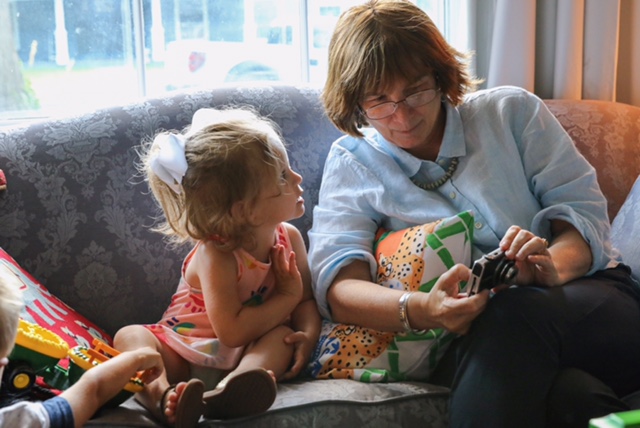
Which DP is that? It must be “Great-Aunt Sarah”!

Well, the dual personalities have been hanging out and gabbing away for several days now…

IMG_0761.jpeg

…talking over the events and people of our shared lives. We haven’t dined out or visited any points of interest or gone shopping or anything.

IMG_0719.JPEG

And now, on to another round of chemo.

The question is not whether the things that happen to you are chance things or God’s things because, of course, they are both at once. There is no chance thing through which God cannot speak — even the walk from the house to the garage that you have walked ten thousand times before, even the moments when you cannot believe there is a God who speaks at all anywhere. He speaks, I believe, and the words he speaks are incarnate in the flesh and blood of our selves and of our own footsore and sacred journeys. We cannot live our lives constantly looking back, listening back, lest we be turned to pillars of longing and regret, but to live without listening at all is to live deaf to the fullness of the music. Sometimes we avoid listening for fear of what we may hear, sometimes for fear that we may hear nothing at all but the empty rattle of our own feet on the pavement. But be not affeard, says Caliban, nor is he the only one to say it. “Be not afraid,” says another, “for lo, I am with you always, even unto the end of the world.” He says he is with us on our journeys. He says he has been with us since each of our journeys began. Listen for him. Listen to the sweet and bitter airs of your present and your past for the sound of him.

–Frederick Buechner, from The Sacred Journey 

A mighty heart was broken

by chuckofish

Screen Shot 2019-04-18 at 2.24.55 PM.png

“GOD SO LOVED THE WORLD,” John writes, “that he gave his only son, that whoever believes in him should not perish but have eternal life.” That is to say that God so loved the world that he gave his only son even to this obscene horror; so loved the world that in some ultimately indescribable way and at some ultimately immeasurable cost he gave the world himself. Out of this terrible death, John says, came eternal life not just in the sense of resurrection to life after death but in the sense of life so precious even this side of death that to live it is to stand with one foot already in eternity. To participate in the sacrificial life and death of Jesus Christ is to live already in his kingdom. This is the essence of the Christian message, the heart of the Good News, and it is why the cross has become the chief Christian symbol. A cross of all things—a guillotine, a gallows—but the cross at the same time as the crossroads of eternity and time, as the place where such a mighty heart was broken that the healing power of God himself could flow through it into a sick and broken world. It was for this reason that of all the possible words they could have used to describe the day of his death, the word they settled on was “good.” Good Friday.

– Frederick Buechner, The Faces of Jesus

Have a blessed Easter weekend. Go to church!

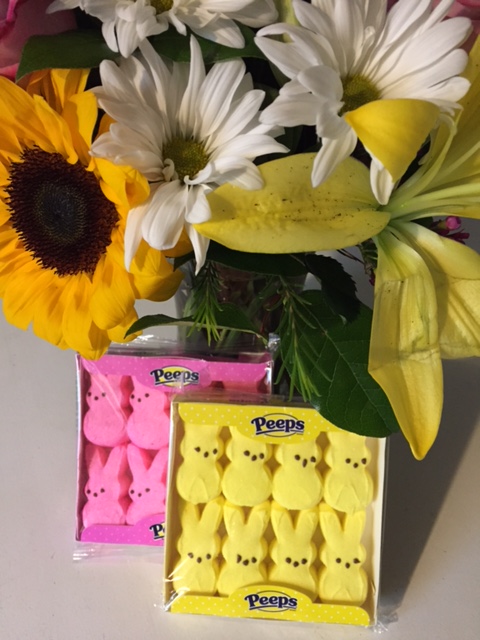
We will celebrate with our little family at church, brunch and with peeps.

IMG_3936.JPG

Screen Shot 2019-04-18 at 8.49.40 PM.png

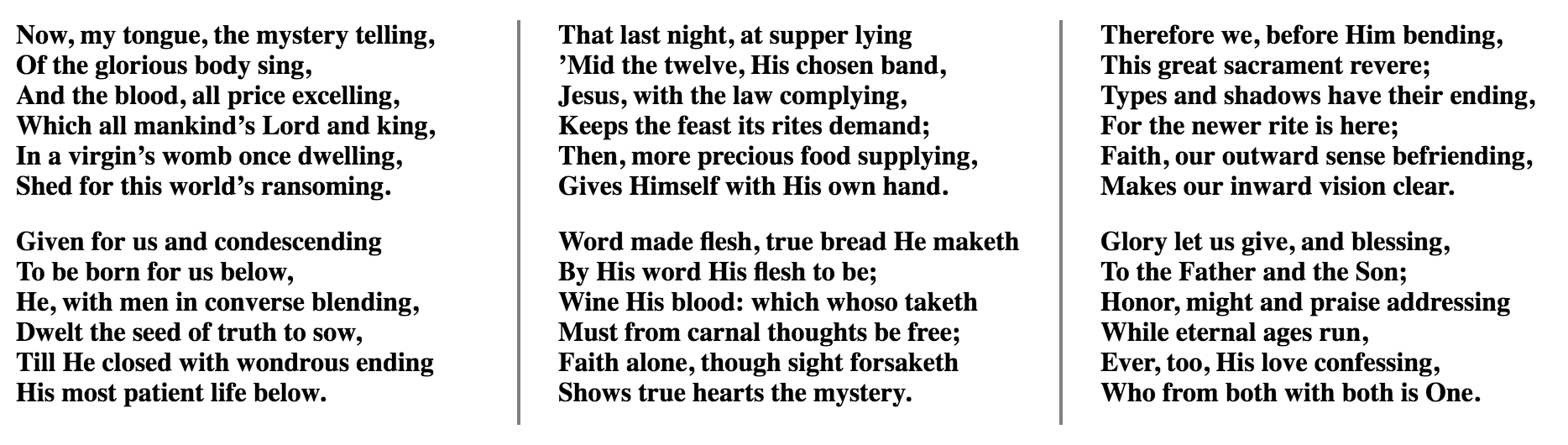
–Thomas Aquinas, translated from Latin to English by Edward Caswall and the compilers of Hymns Ancient and Modern, 1861

(The Crucifixion stained glass window by J. Gordon Guthrie, Saint Bartholomew’s Episcopal Church, New York City)

This is the day

by chuckofish

Good morning! There’s nothing like some Mandisa to start your day off right! And it is important to start your day off right.

This is the day which the Lord has made;
    let us rejoice and be glad in it.

(Psalm 118:24)

My mother, who was not one to scold or correct, did tell me once, when I was grousing about something as an adolescent, that this is the day which the Lord has made, and you ought not to complain about it, but, indeed, rejoice about it. And for Pete’s sake, don’t waste it! That advice struck a cord in me and I never forgot it.

IT IS A MOMENT of light surrounded on all sides by darkness and oblivion. In the entire history of the universe, let alone in your own history, there has never been another just like it and there will never be another just like it again. It is the point to which all your yesterdays have been leading since the hour of your birth. It is the point from which all your tomorrows will proceed until the hour of your death. If you were aware of how precious it is, you could hardly live through it. Unless you are aware of how precious it is, you can hardly be said to be living at all.

“This is the day which the Lord has made,” says the 118th Psalm. “Let us rejoice and be glad in it.” Or weep and be sad in it for that matter. The point is to see it for what it is because it will be gone before you know it. If you waste it, it is your life that you’re wasting. If you look the other way, it may be the moment you’ve been waiting for always that you’re missing.

All other days have either disappeared into darkness and oblivion or not yet emerged from them. Today is the only day there is.

– Frederick Buechner, Whistling in the Dark

“If the day and the night are such that you greet them with joy, and life emits a fragrance like flowers and sweet-scented herbs, is more elastic, more starry, more immortal- that is your success. All nature is your congratulation, and you have cause momentarily to bless yourself. The greatest gains and values are farthest from being appreciated. We easily come to doubt if they exist. We soon forget them. They are the highest reality. Perhaps the facts most astounding and most real are never communicated by man to man. The true harvest of my daily life is somewhat as intangible and indescribable as the tints of morning or evening. It is a little star-dust caught, a segment of the rainbow which I have clutched.”

― Henry David Thoreau, Walden 

“Write it on your heart
that every day is the best day in the year.
He is rich who owns the day, and no one owns the day
who allows it to be invaded with fret and anxiety.

Finish every day and be done with it.
You have done what you could.
Some blunders and absurdities, no doubt crept in.
Forget them as soon as you can, tomorrow is a new day;
begin it well and serenely, with too high a spirit
to be cumbered with your old nonsense.

This new day is too dear,
with its hopes and invitations,
to waste a moment on the yesterdays.”

― Ralph Waldo Emerson, Collected Poems and Translations 

I may have said all this before, but it bears repeating. Write it on your heart.

And here’s a little Stephen Stills on the subject:

Rejoice, rejoice, we have no choice…

Just a reminder

by chuckofish

Screen Shot 2019-02-18 at 2.53.45 PM.png

One of the great causes of sadness in human life is the collision between expectation and what actually happens. The New Testament, therefore, for our joy, is relentlessly helping us to lower our expectations for this life and raise our expectations for the next.⠀

For example, in 1 Peter 4:12, it says, “Don’t be surprised at the fiery ordeal when it comes upon you as though something strange were happening to you.” In other words, get it fixed in your head that it is not strange to have life go bad for you as a Christian. Paul, in Romans 8, said, “Even we who have the Holy Spirit groan inwardly as we wait for our adoption as children, the redemption of our body.” Even those in this life who have the Holy Spirit will experience all the rheumatism and cancer and accidents and horror that the world does. “Many are the afflictions of the righteous, but the Lord delivers him out of them all” (Psalm 34:19).⠀

The constant lowering of expectations now is accompanied with a raising of expectations later: “Blessed be the God and Father of our Lord Jesus Christ, who caused us to be born again to a living hope through the resurrection of Jesus Christ from the dead to an inheritance that is undefiled, unfading, imperishable, kept in heaven for you who by God’s power are being guarded through faith for a salvation ready to be revealed in the last time. In this you rejoice” (1 Peter 1:3–6).⠀

Now, we know it’s going to be hard. Many are the afflictions of the righteous, but oh, how the New Testament raises higher and higher and higher our expectations of the life to come. Live in hope and embrace what God gives you in this life in love.⠀

–John Piper (Read more at desiringGod.org.)

Yes, God has a plan for you, but that plan is not for you to be happy, fulfilled, rich and famous. His plan is for you to be holy and content. It is easy to lose sight of that.

“Christ never promises peace in the sense of no more struggle and suffering. Instead, he helps us to struggle and suffer as he did, in love, for one another. Christ does not give us security in the sense of something in this world, some cause, some principle, some value, which is forever. Instead, he tells us that there is nothing in this world that is forever, all flesh is grass. He does not promise us unlonely lives. His own life speaks loud of how, in a world where there is little love, love is always lonely. Instead of all these, the answer that he gives, I think, is himself. If we go to him for anything else, he may send us away empty or he may not. But if we go to him for himself, I believe that we go away always with this deepest of all our hungers filled.”
― Frederick Buechner, Listening to Your Life: Daily Meditations with Frederick Buechner 

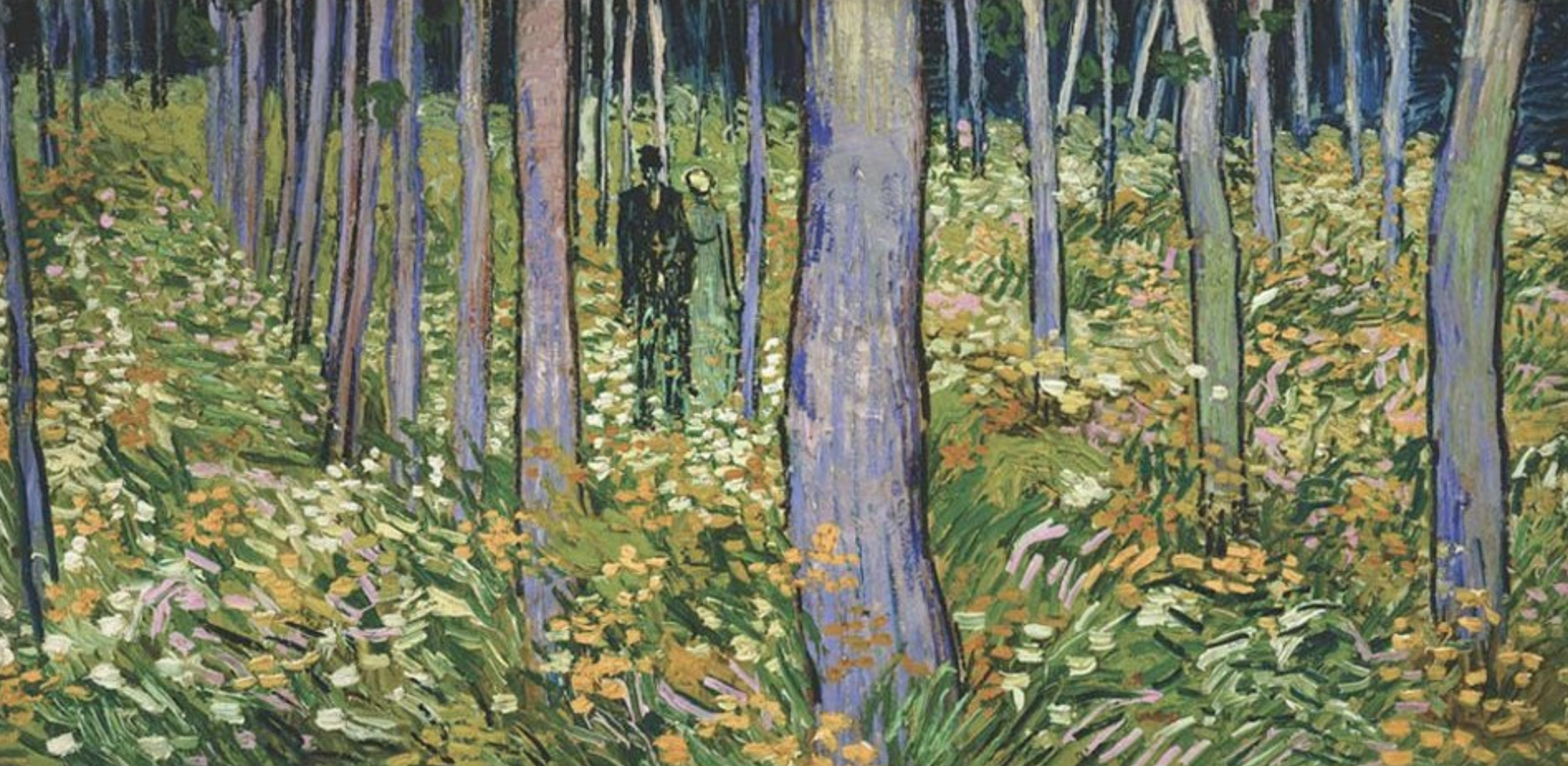
(The painting is by Van Gogh)

At the movies

by chuckofish

VICTOR LASZLO leading the patrons of Rick’s Cafe in the “Marseillaise” to drown out the Nazis’ “Wacht am Rhine” under the direction of Major Strasser—possibly that moment in Casablanca had as much impact on the World War II generation as the news of Pearl Harbor or the eloquence of Winston Churchill.

Or the African Americans in the Alabama courthouse gallery rising to their feet as Atticus Finch passes by below. Or Dolly Levi sashaying down the grand staircase of the Harmonia Gardens to find Louis Armstrong at the bottom radiant as the sun at noon. Or John Travolta lithe as a panther in his white suit and pompadour dancing in Brooklyn. Or Jimmy Stewart being bailed out by his friends in the last moments of It’s a Wonderful Life.

In a world where there are no longer books we have almost all of us read, the movies we have almost all of us seen are perhaps the richest cultural bond we have. They go on haunting us for years the way our dreams go on haunting us. In a way they are our dreams. The best of them remind us of human truths that would not seem as true without them. They help to remind us that we are all of us humans together.

–Frederick Buechner, Beyond Words

I agree with FB, don’t you? We all know those movie moments that haunt you and make you watch the same movie over and over, right? Sadly, I don’t think many people even know how to watch a movie anymore–not focused from beginning to end–giving it all it deserves. Well, I won’t go into that now, but here are some other moments like the ones Buechner describes. Unfortunately, most people nowadays haven’t seen a movie over twenty years old, but maybe you have…

I just watched The Searchers (1956) again for the umpteenth time. Definitely one of the greats. Iconic scenes abound. Here’s one.

Robin Hood (1938)–“I’ll organize a revolt…”

The Great Escape (1963)–“You’re the first American officer I’ve met…”

Life Is Beautiful (1997)–“Camp rules”

The Professionals (1967)–“Lost causes”

My Darling Clementine (1947)–Sunday go to meeting

Awakenings (1990)–“The simplest things”

Ben-Hur (1959)–“No water for him!”

Chariots of Fire (1982) “Where does the power come from?”

I could go on…and on, but I will cease and desist. Turn up the sound, watch them all. You’ll be glad you did.

Oh, here’s one more: The World of Henry Orient (1964)–“Splitsing!”