dual personalities

Tag: England

“And you, good yeoman, Whose limbs were made in England”*

by chuckofish

Today is the feast day of Saint George, a Roman officer of Greek descent from Cappadocia, who was martyred in one of the pre-Constantinian persecutions. George is a very popular saint, honored all over the world, but especially in England where he is the patron saint. (“Once more unto the breach, dear friends, once more, or close the wall up with our English dead. … cry God for Harry, England, and St George!”)

Here is Donatello’s famous statue in Florence…
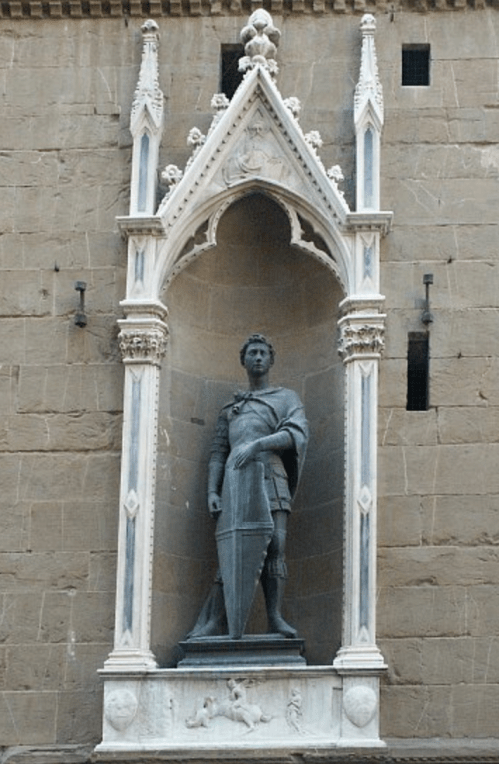
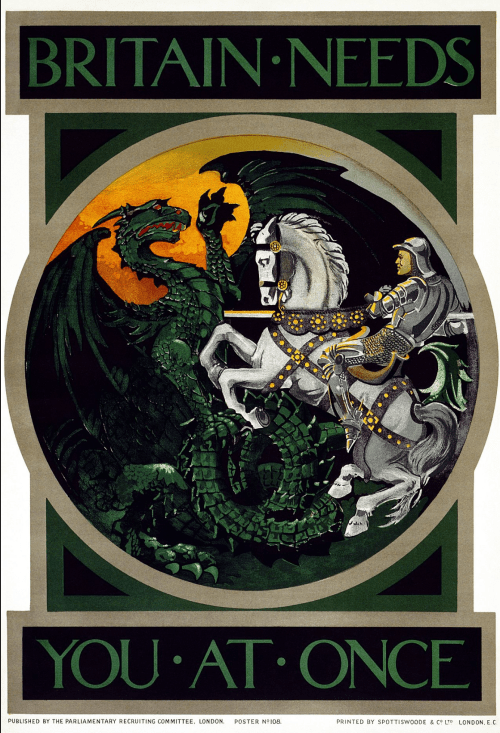
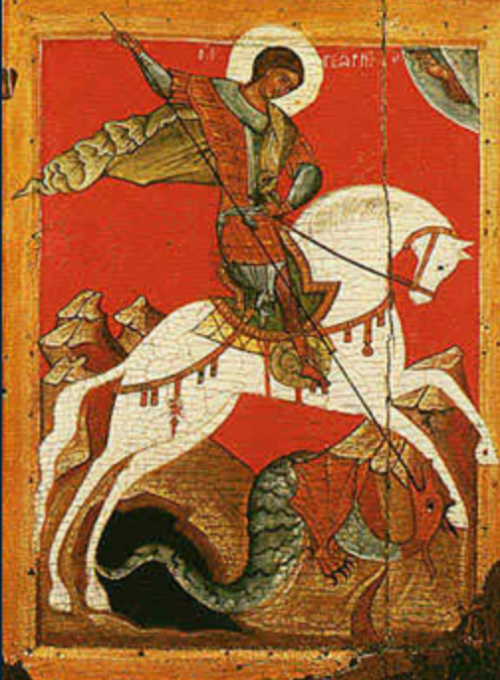
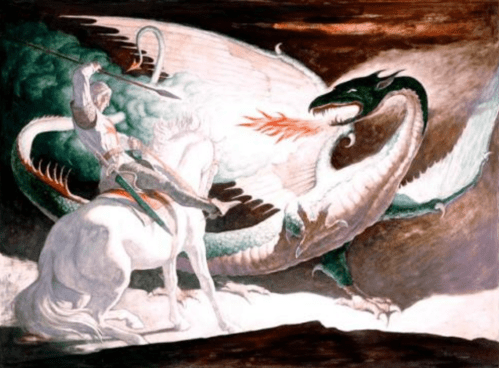
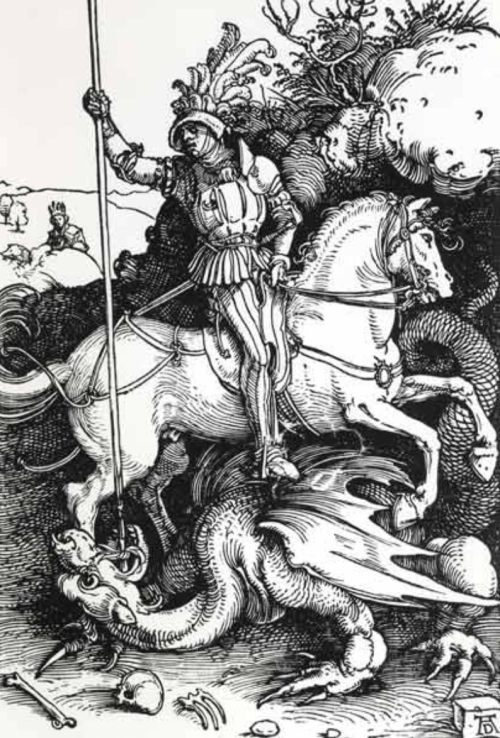
Screen Shot 2019-04-22 at 1.37.07 PM.png…but something’s missing! Where’s the dragon?Screen Shot 2019-04-22 at 1.24.04 PM.pngScreen Shot 2019-04-22 at 12.00.35 PM.pngScreen Shot 2019-04-22 at 1.16.19 PM.pngScreen Shot 2019-04-22 at 1.27.30 PM.pngThe slaying of the dragon is definitely an integral and important part of this saint’s universal appeal.
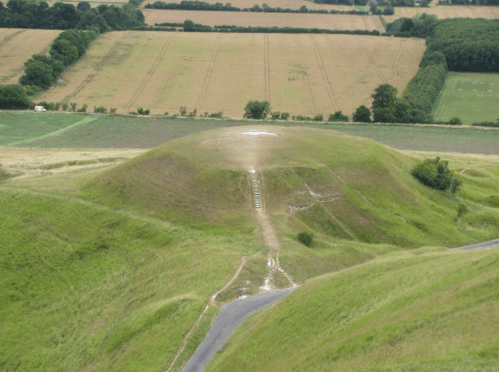
Here is Dragon Hill, a small hillock immediately below the Uffington White Horse in the county of Oxfordshire in England. It is a natural chalk hill with an artificially flattened top. According to legend, Saint George slew the dragon here.
Screen Shot 2019-04-22 at 12.49.37 PM.png

A bare patch of chalk upon which no grass will grow is purported to be where the dragon’s blood spilled.

A traditional custom on St George’s day is to fly or adorn one’s home or business with the St George’s Cross flag. Pubs in particular can be seen festooned with garlands of St George’s crosses on April 23. It is also customary for the hymn “Jerusalem” to be sung in cathedrals, churches and chapels on St George’s Day. All of the above sound like good ideas to me.

Screen Shot 2019-04-22 at 1.46.46 PM.png

Lord Jesus Christ, whose cross didst seal thy servant George: Grant that we, strengthened by his example and prayers, may triumph to the end over all evils, to the glory of thy Name; for with the Father and Holy Spirit thou livest and reignest, one God, for ever and ever. Amen.

*Shakespeare, Henry V, Act 3, scene one

(The artwork is, from top to bottom: Donatello, Albrecht Durer, an English WWI recruitment poster, a Russian icon, N.C. Wyeth)
Give the devil his due*

by chuckofish

clapper bridge

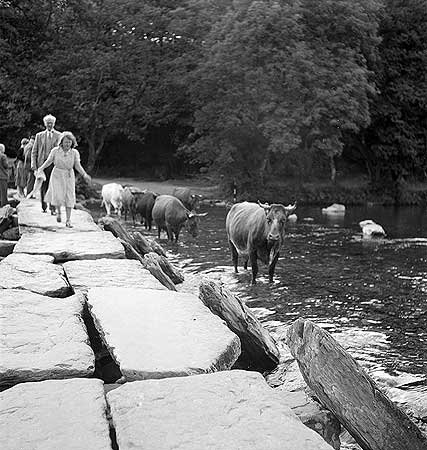
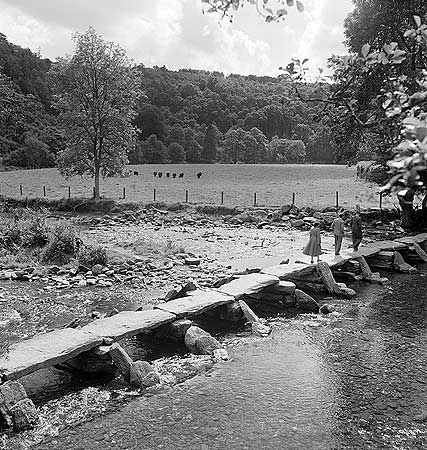
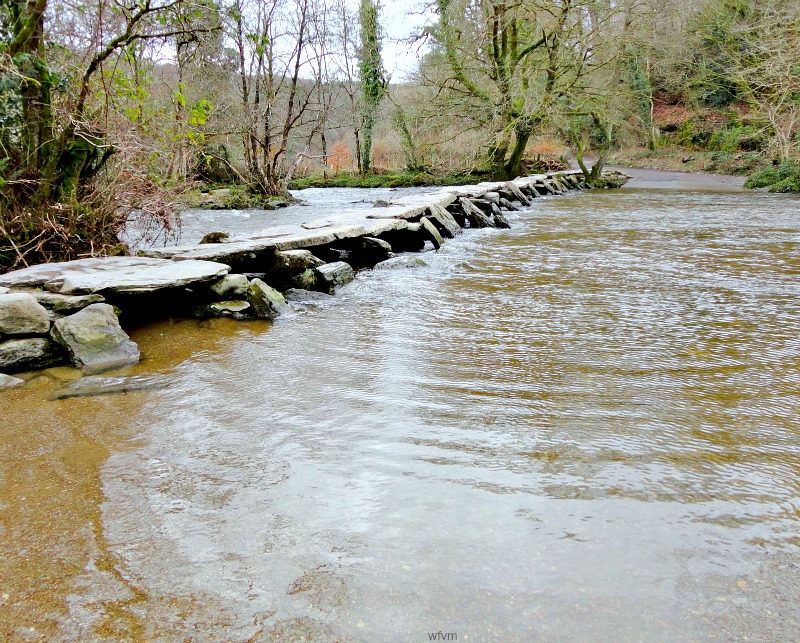
Have you ever heard of this clapper bridge, Tarr Steps, over the River Barle in Exmoor? I first came upon it here. (There are many more good pictures, so check it out.)

clapper 2

This is so cool! I mean the bridge may date to around 1000 BC! (Its age is unknown–several theories claim that Tarr Steps dates from the Bronze Age, but others date it from around 1400 AD.)  A clapper bridge, you will recall, is an ancient form of bridge found on the moors of Devon (Dartmoor and Exmoor) and in other upland areas of the United Kingdom.

The stone slabs weigh up to 1-2 tons apiece. How were they moved? According to local legend, they were placed by the devil to win a bet. The bridge is 180 feet (55 m) long and has 17 spans. Half of this bridge was washed away by the river during heavy rains in December 2012. Thankfully the bridge has now been re-assembled.

The aforementioned myth has it that the Devil built the bridge at Tarr Steps and still has sunbathing rights on its stones. Supposedly the devil swore he would kill anyone who tried to cross his bridge. The terrified locals got the parson to face him. A cat was sent over the Bridge but was vaporised in a puff of smoke. The parson then set off and met the Devil midway. The Devil swore and intimidated him but the parson reciprocated equally and finally the Devil conceded to let people pass except when he wants to sunbathe.

Photo by John Gay, 1953

These photos were taken in 1953 by John Gay. You can see more here.

John Gay 53

car in river

I’ve no doubt that my dual personality has probably been to Tarr Steps, but this provincial girl has not. If I ever get back to merry old England, I will definitely try to check out Exmoor’s National Park!

Wonderful.

*English proverb

Strengthen such as do stand

by chuckofish

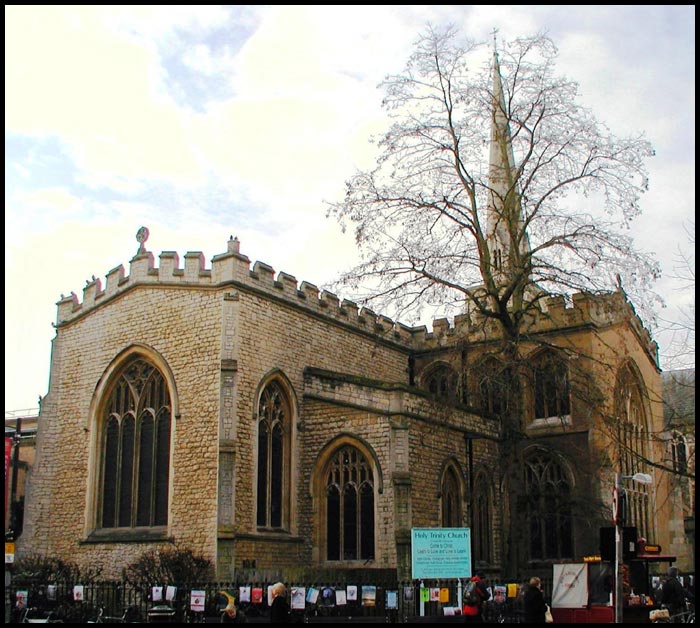
Today is the lesser feast day of evangelical Anglican Charles Simeon (1759–1836) on the Episcopal calendar. Simeon is best known for serving Holy Trinity Church, Cambridge, and Cambridge University for 54 years, practicing and popularizing biblical, expository preaching and pioneering on-campus discipleship among university students. He is also credited with starting the evangelical revival in the Church of England.

Two hundred years ago students at the English Universities were required to attend church regularly, and to receive the Holy Communion at least once a year. This latter requirement often had bad effects, in that it encouraged hypocrisy and an irreverent reception of the sacrament. Occasionally, however, it had a very good effect, as with the Cambridge student Charles Simeon. He wrote: “On 29 January 1779 I came to college. On 2 February I understood that at division of term I must attend the Lord’s Supper. The Provost absolutely required it. Conscience told me that, if I must go, I must repent and turn to God.”

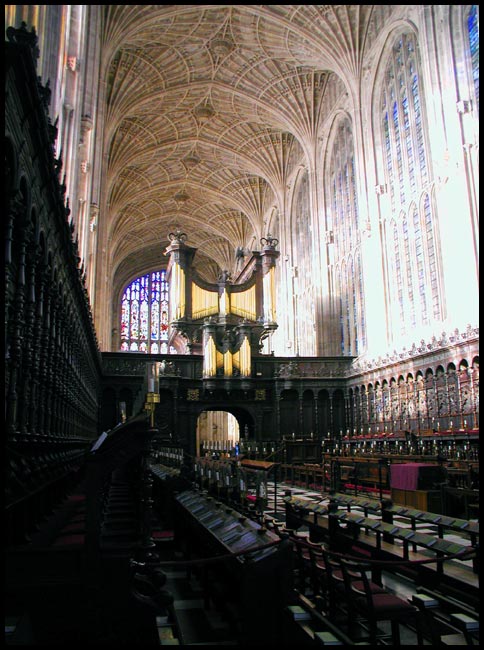
Kings College Chapel

Kings College Chapel

By this experience his life was transformed. Upon finishing his college work he was ordained, and shortly appointed chaplain of Holy Trinity, Cambridge, where he remained for 55 years, until shortly before his death on 12 November 1836. His ministry helped to transform the lives of many undergraduates, of whom we may mention two in particular. Henry Martyn inspired by Simeon, abandoned his intention of going into law and instead devoted his life and his considerable talents to preaching the Gospel in India and Persia. William Wilberforce, also led in part by Simeon’s ministry of teaching and example, devoted his life to the abolition of slavery throughout the British Empire. Simeon’s enthusiasm and zeal brought him much ridicule and abuse, which he bore uncomplainingly. Though he himself remained in one place, his influence extended through the Anglican world. (Lectionary Home Page)

Holy Trinity, Cambridge

Holy Trinity, Cambridge

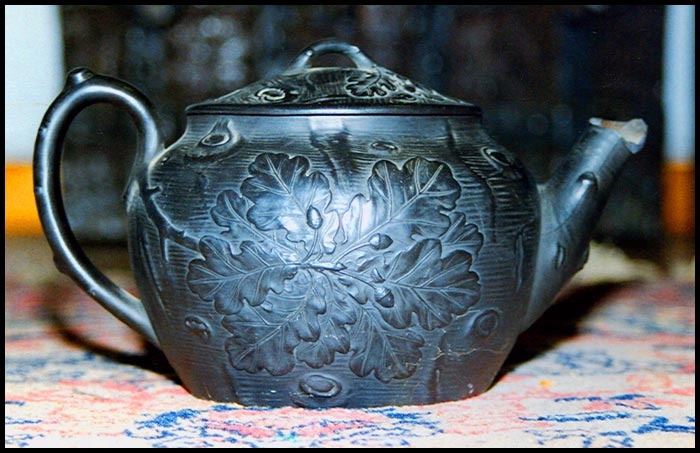
Simeon's black Wedgewood teapot used at his Friday night Conversation Parties

Simeon’s black Wedgewood teapot used at his Friday night Conversation Parties

Simeon's preaching Bible

Simeon’s preaching Bible

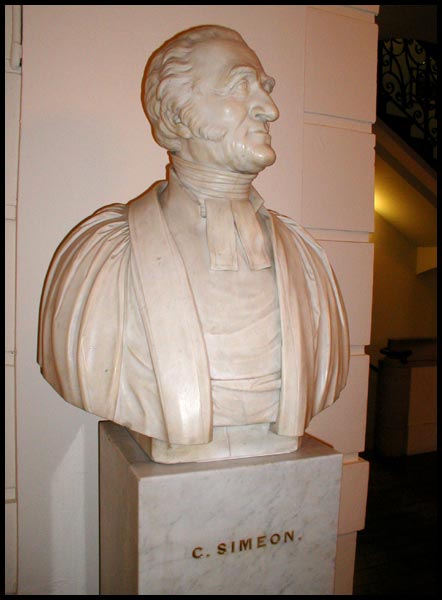
Bust of Simeon just outside the entrance to the Gonville and Caius Library.

Bust of Simeon just outside the entrance to the Gonville and Caius Library.

Simeon prayed the following prayer each Sunday before delivering his sermon:

“O God, who hast caused all Holy Scriptures to be written for our hearing, be with us now to sanctify unto us the truths that shall be delivered from them.
“Be with us especially to enlighten our minds by the Holy Spirit; and by the mighty working of thy power, bring in to the way of truth all such as have erred and are deceived.
“Be pleased also O Lord, to strengthen such as do stand, and comfort and help the weak hearted, and raise up them that fall, and finally to beat down Satan under all our feet.
“All this we humbly ask in the name and for the sake of Jesus Christ our Lord. Amen.”

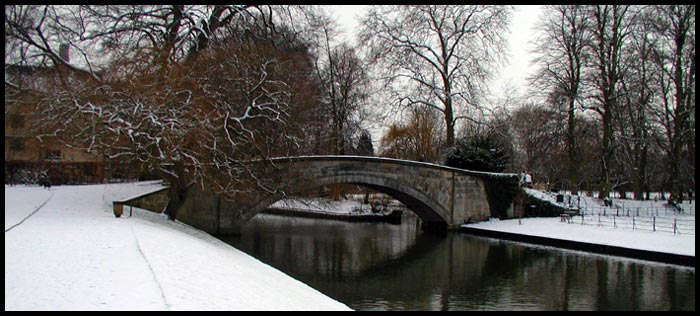
Looking south, down the River Cam, is Simeon's Bridge. In 1816 Simeon financed the major portion of this bridge connecting King's College property on both sides of The Backs. This is also the river into which Simeon threw a guinea (coin) as a self-prescribed punishment for not rising at the hour to which he had committed himself for Bible reading and prayer.

Looking south, down the River Cam, is Simeon’s Bridge. In 1816 Simeon financed the major portion of this bridge connecting King’s College property on both sides of The Backs. This is also the river into which Simeon threw a guinea (coin) as a self-prescribed punishment for not rising at the hour to which he had committed himself for Bible reading and prayer.

I like that prayer. And I want to go to there.

Photos are from the Charles Simeon website.


Note to self

by chuckofish

I was casting about recently, as I am wont to do, trying to find something to read. I have plenty of books at home and usually can come up with something rather easily. And I did.

I started re-reading Civil to Strangers by Barbara Pym, which I had read back in the 1980s when I went through a Pym period. She had recently been re-discovered by the English-speaking world after the biographer David Cecil and the poet Philip Larkin both nominated her as the most underrated writer of the century.

Anyway, I thoroughly enjoyed my re-introduction to Pym.

Her books are very English, full of very English characters.

‘I suppose every author gets stuck occasionally,’ said Mrs. Gower.

‘The inspiration flows less easily,’ interposed Mrs. Wilmot, thinking that it was a more suitable phrase.

Cassandra smiled at both of them. ‘That’s just it,’ she said, making each woman feel that she had said exactly the right thing. ‘It’s so nice of you to ask after Adam’s book,’ she said, turning to Janie. ‘People are so kind,’ she added vaguely, almost as if her husband were an invalid who needed sympathetic enquiries.

I’m sure you know what I mean. Alexander McCall Smith even likens her to Jane Austen: “Like Jane Austen, Pym painted her pictures on a small square of ivory, and covered much the same territory as did her better-known predecessor: the details of smallish lives led to places that could only be in England. Neither used a megaphone; neither said much about the great issues of their time.”

So I have ordered Excellent Women, her most well-known novel, from Amazon and am eagerly awaiting its arrival.

‘I wonder, when you are working here, have you ever given a thought to all those who have died in Bodley’s Library, or as a result of working there?’

Adam was forced to admit that he had not.

‘You should, you know, it is quite an education.’

‘It would surely do one more good to concentrate on one’s work,’ said Adam austerely.

‘That is my work,’ said the clergyman simply. ’I am writing a thesis on that subject for the degree of Bachelor of Letters.’

Adam said nothing, but looked at him in some surprise.

‘Since my wife died,’ said the clergyman, ‘I have thought much of death. And your wife?’ He looked suddenly at Adam. ’You have a wife?’

‘She is not with me here,’ said Adam, hypnotised by the old man.

‘No, she is not with you here. But,’ his voice rose, ‘you must believe that you will meet again, that she will be waiting for you, in that other life, perhaps?’

‘She is in Budapest,’ said Adam shortly.

‘Oh, well, that’s another pair of shoes, isn’t it?’ said the clergyman surprisingly.

— Civil to Strangers

So if you are casting about for something to read, and the thought of the London Olympics ending makes you sad, I suggest you try Barbara Pym. You’ll be glad you did.

God be in my head

by chuckofish

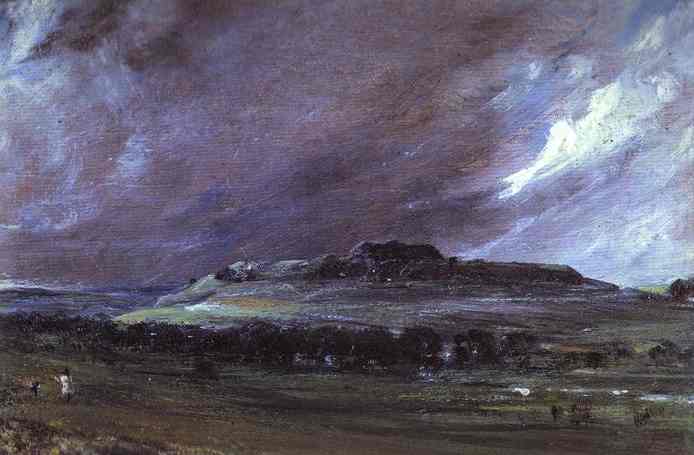
"Old Sarum" by John Constable

God Be in My Head
Anonymous
(from a 1506 Sarum Book of Hours)

God be in mihede And in min vnder ston dyng
God be in myn hyyesse And in min lokeyng
God be in mi movthe And in myspekeyng
God be in my hart And in my thovgvt
God be at myneyende And ad myde partying

God be in my head
And in my understanding;
God be in mine eyes
And in my looking;
God be in my mouth
And in my speaking;
God be in my heart
And in my thinking;
God be at mine end,
And at my departing.

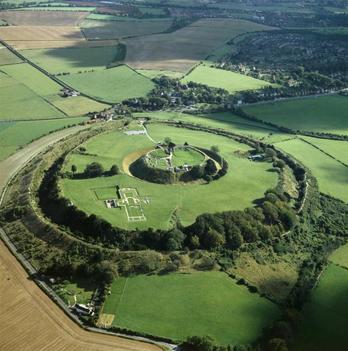
Old Sarum as it looks today.

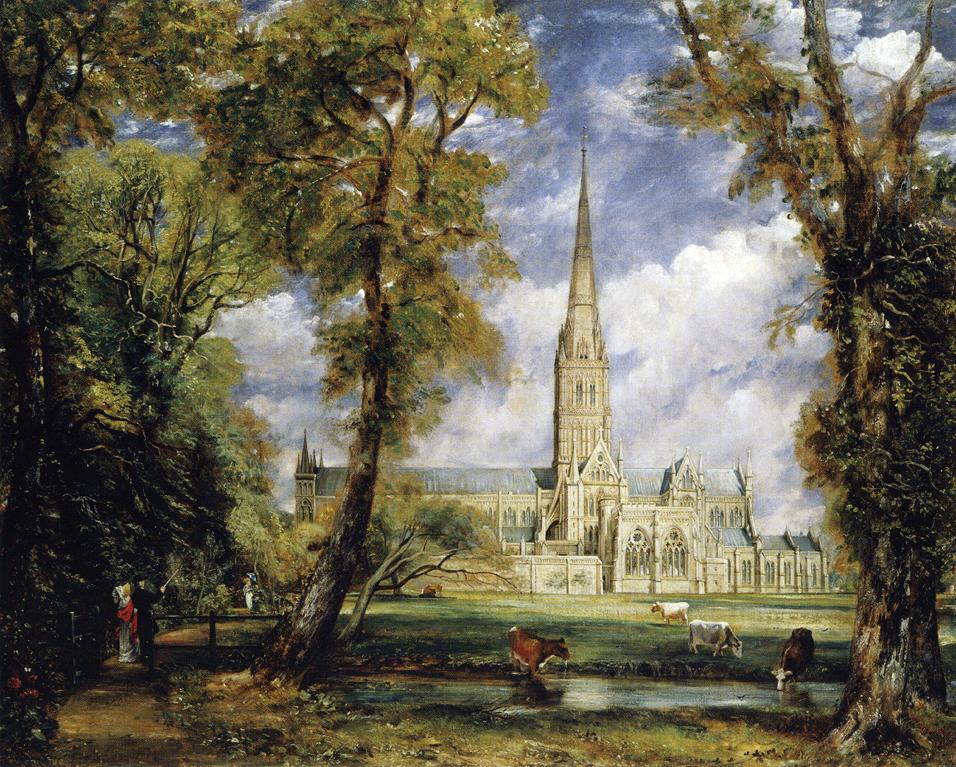
And here’s a picture of the “New Sarum” also by John Constable.