dual personalities

Tag: Civil War

Today in history: death in the deep woods

by chuckofish
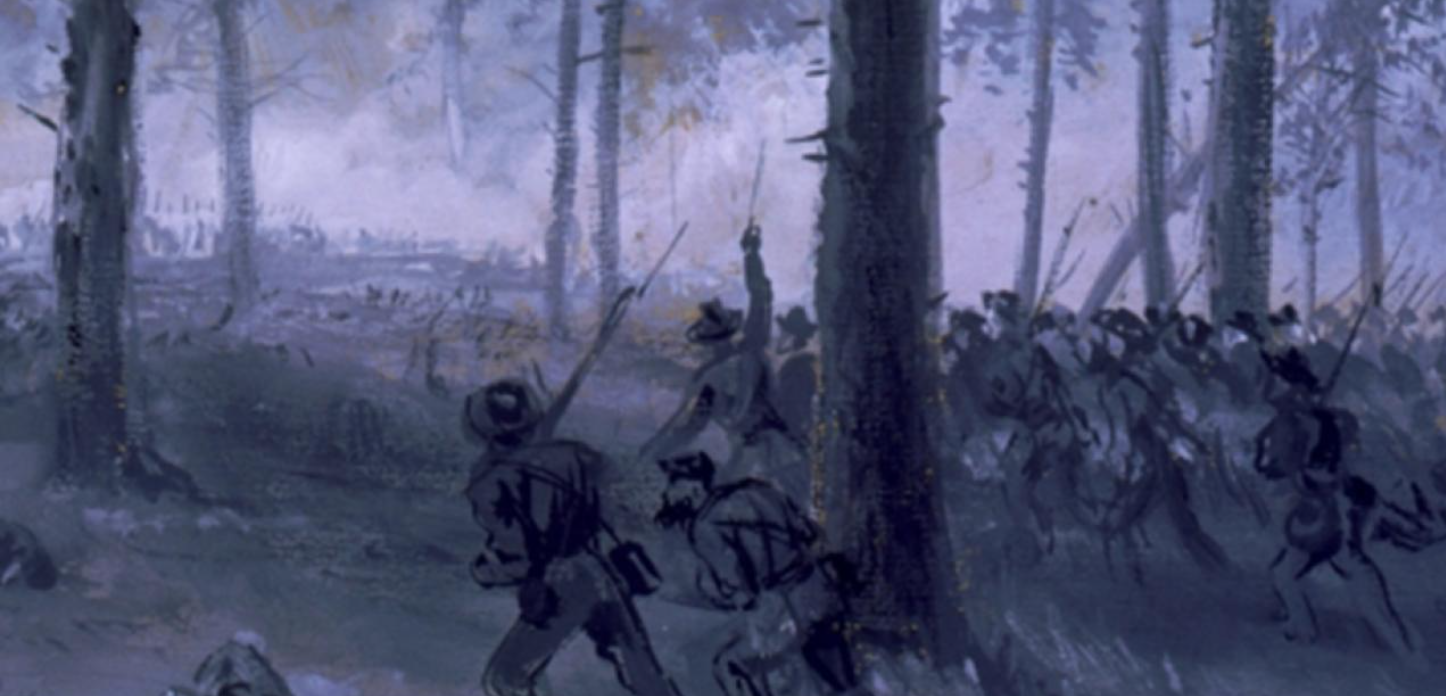
I had not heard of the Battle of Iuka, nor of Iuka, Mississippi for that matter, until yesterday. Before the Civil War the town boasted an all-female college, a boys’ military academy and a fine hotel. The Civil War brought widespread devastation when a major engagement took place on September 19, 1862.

Major General Ulysses Grant brought two armies to confront Sterling Price in a double envelopment: Rosecrans’s Army of the Mississippi approaching Iuka from the southwest, and three divisions of his own Army of the Tennessee under Maj. General Edmund Ord, approaching from the northwest. Although Grant and Ord planned to attack in conjunction with Rosecrans when they heard the sound of battle, an acoustic shadow suppressed the sound and prevented them from realizing that the battle had begun.

Now hold the phone, what is an acoustic shadow?!

“An acoustic shadow is an area through which sound waves fail to propagate, due to topographical obstructions or disruption of the waves via phenomena such as wind currents, buildings, or sound barriers.”

I looked up in his Memoirs to see what Grant had to say about this:

“During the 19th the wind blew in the wrong direction to transmit sound either towards the point where Ord was, or to Burnsville where I had remained…A couple of hours before dark on the 19th…the wind was hard and in the wrong direction to transmit sound either to Ord or to me. Neither he nor I nor any one in either command heard a gun that was fired upon the battle-field. After the engagement Rosecrans sent me a dispatch announcing the result. This was brought by a courier. There is no road between Burnsville and the position then occupied by Rosecrans and the country was impassable for a man on horseback. The courier bearing the message was compelled to move west nearly to Jacinto before he found a road leading to Burnsville.”

Boy, the things we take for granted in our tech world today.

Anyway, I thought that was very interesting. And now we know what an acoustic shadow is.

Today is also the anniversary ( in 1863 ) of the first day of the Battle of Chickamauga, in northwestern Georgia, the bloodiest two-day battle of the conflict, and the only significant Confederate victory in the war’s Western Theater. You will recall the short story by Ambrose Bierce about the deaf-mute boy who wanders onto the battlefield.

One sunny autumn afternoon a child strayed away from its rude home in a small field and entered a forest unobserved. It was happy in a new sense of freedom from control, happy in the opportunity of exploration and adventure; for this child’s spirit, in bodies of its ancestors, had for thousands of years been trained to memorable feats of discovery and conquest—victories in battles whose critical moments were centuries, whose victors’ camps were cities of hewn stone. From the cradle of its race it had conquered its way through two continents and passing a great sea had penetrated a third, there to be born to war and dominion as a heritage.

A very grim read, to be sure.

September 19 was also the first day of the Battle of the Hürtgen Forest in 1944, which was the longest battle on German ground during World War II. It is the second longest single battle the U.S. Army has ever fought after The Battle of Bataan. The Battle of Hürtgen Forest has been referred to as a stalemate that consumed large amounts of resources on both sides. Many men died in the freezing cold. The Americans suffered 33,000 casualties during the course of the battle which ranged up to 55,000 casualties, including 9,000 non-combat losses, and represented a 25 percent casualty rate.
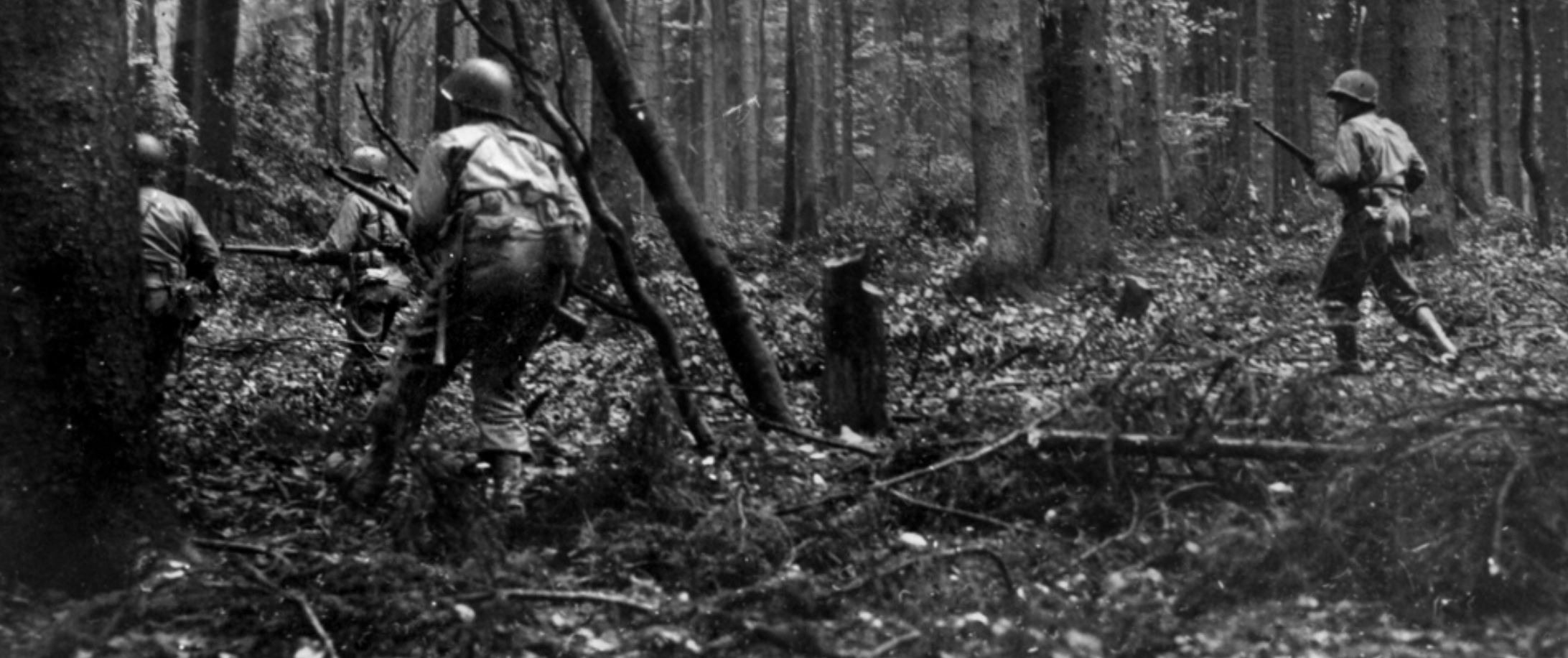
J.D. Salinger was there. And I always think of a girl I knew in college whose father was there in the Hürtgen Forest and who returned home after the war and became a mailman in Worcester, MA.

He who dwells in the shelter of the Most High
    will abide in the shadow of the Almighty.
I will say to the Lord, “My refuge and my fortress,
    my God, in whom I trust.”

For he will deliver you from the snare of the fowler
    and from the deadly pestilence.
He will cover you with his pinions,
    and under his wings you will find refuge;
    his faithfulness is a shield and buckler.
You will not fear the terror of the night,
    nor the arrow that flies by day,
nor the pestilence that stalks in darkness,
    nor the destruction that wastes at noonday.

A thousand may fall at your side,
    ten thousand at your right hand,
    but it will not come near you.
You will only look with your eyes
    and see the recompense of the wicked.

Because you have made the Lord your dwelling place—
    the Most High, who is my refuge —
10 no evil shall be allowed to befall you,
    no plague come near your tent.

11 For he will command his angels concerning you
    to guard you in all your ways.
12 On their hands they will bear you up,
    lest you strike your foot against a stone.
13 You will tread on the lion and the adder;
    the young lion and the serpent you will trample underfoot.

14 “Because he holds fast to me in love, I will deliver him;
    I will protect him, because he knows my name.
15 When he calls to me, I will answer him;
    I will be with him in trouble;
    I will rescue him and honor him.
16 With long life I will satisfy him
    and show him my salvation.”

(Psalm 91)
“Civil War skeletons in their graves”*

by chuckofish

How was your weekend? Mine was a quiet one, mostly spent hanging out at home. Although it was chilly, we could sit out on the patio and soak up some vitamin D on Saturday.

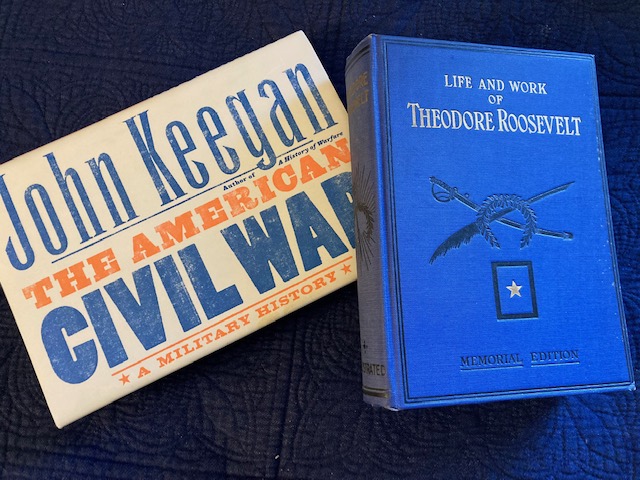
I went to a few estate sales and picked up two books.

I am reading the Keegan now and really enjoying it. I am no scholar, but I find it accessible and readable. And I love reading about all those guys, especially my heroes: Grant and Sherman.

There is much to be learned from them.

Church was held outside on Sunday morning and luckily it was not raining, although it was chilly, overcast and windy. I dressed appropriately and I enjoyed it. We started a new sermon series on Paul’s letter to Titus, having finished the gospel of Mark, and our new young (29 years old) lead pastor gave a good sermon. He does not cut and paste from the internet, but gives a good exegesis of the text, in this case Titus 1:1-4. Stonewall Jackson would have approved–it was all about the doctrine of election.

Meanwhile Anne “enjoyed the astonishing delight of getting to see my name in Not the Bee underneath the Andrew Walker tweet that went viral.” Take heart, not all the news is terrible. As the Bee says:

We’re here, and we’re fine.

Growing up Baptist and going to VBS didn’t hurt anyone.

There’s no book because this is how normal, well-adjusted, salt-of-the-earth Christian men and women are raised. Nothing is extraordinary about this story. And that’s the point – God uses the weak and mundane and insignificant things in the world’s eyes to shame the things that the world considers #StunningAndBrave.

Amen, brother.

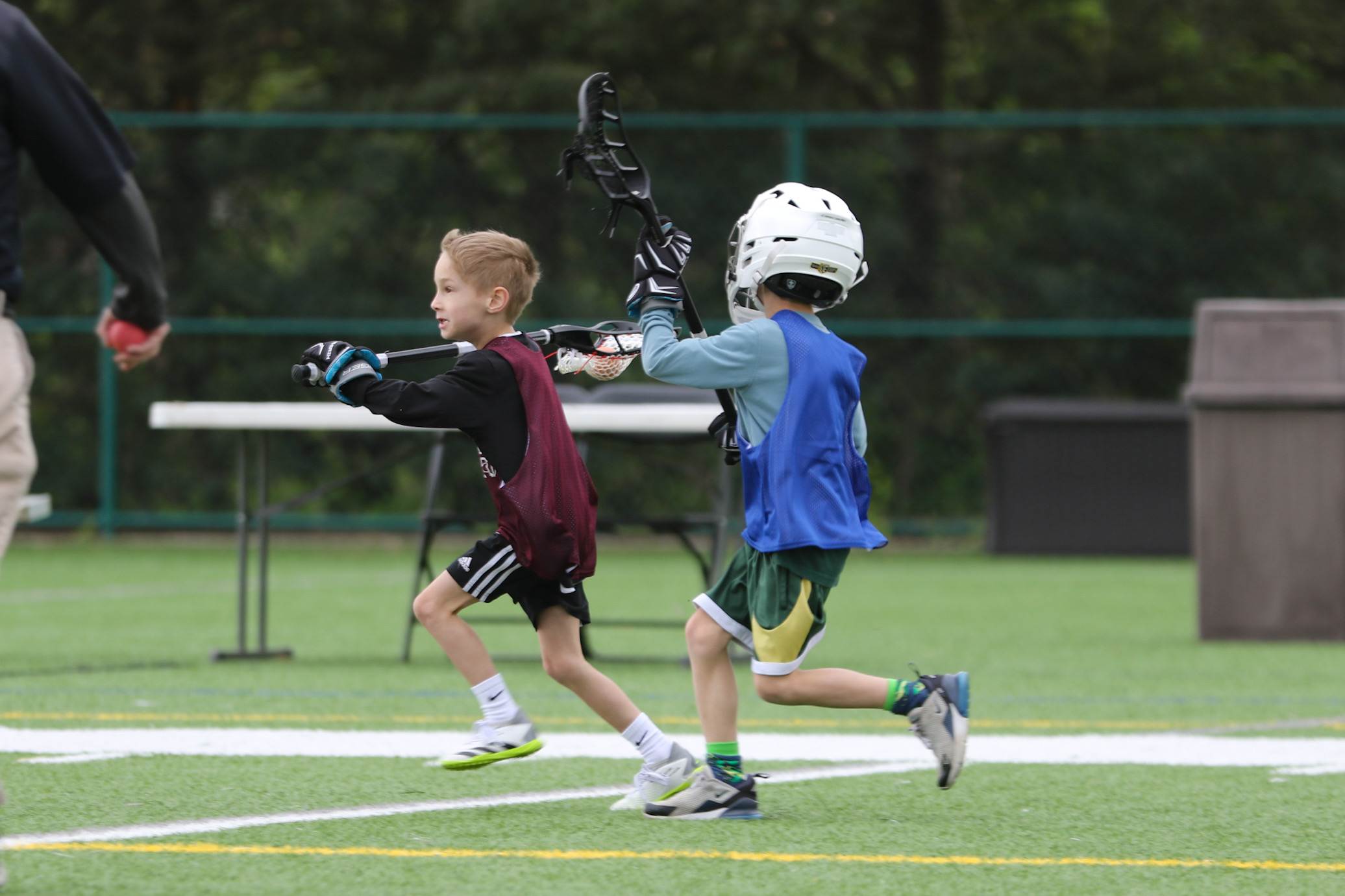
The young bud played in his first lacrosse game and was, by all accounts, a scrappy competitor.

*And here’s a blast from the past which has new meaning for us since Decatur is just up the road now from daughter # 2 et famille.

I am told it is Katie’s favorite song right now and she always sings along to the line, “Sangamon river it overflowed.”

Now go in peace to love and serve the Lord.

“A spirit in my feet said ‘Go,’ and I went.”*

by chuckofish

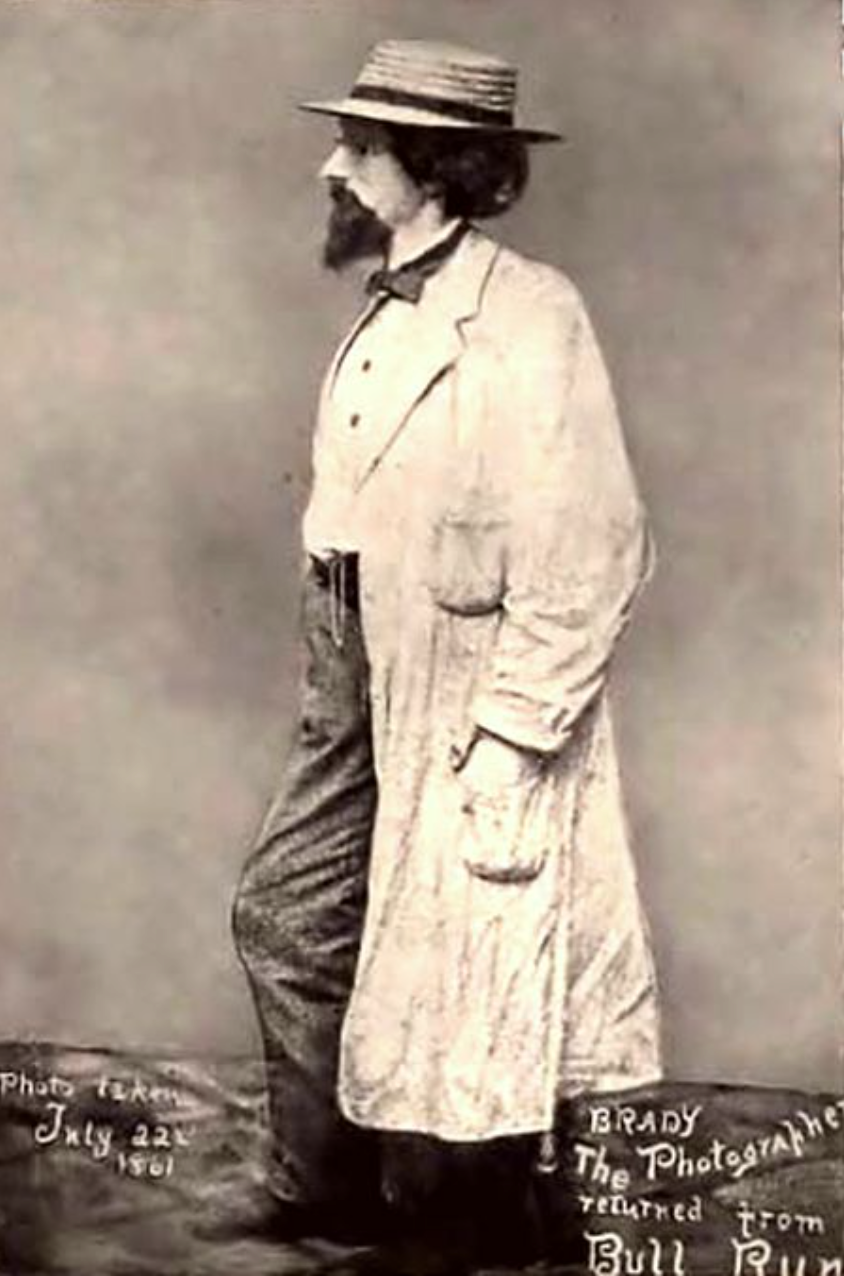
Today we toast the most famous photographer of the 19th century, Mathew Brady (1822-1896). (His birthday was yesterday.) Best known for his scenes of the Civil War, he studied under inventor Samuel F.B. Morse, who pioneered the daguerreotype technique in America. Brady opened his own studio in New York City in 1844, and photographed every U.S. president from John Q. Adams through McKinley (except Harrison, who died 31 days after taking office) and myriad public figures throughout the century.  

Wonderful faces!

When the Civil War started, he set out to use his innovative mobile studio and darkroom to document the war, enabling the taking of vivid battlefield photographs that brought home the reality of war to the public.

Thousands of war scenes were captured, as well as portraits of generals and politicians on both sides of the conflict, producing a remarkable pictorial history of the war. (Many of these photos were taken by his assistants, rather than by Brady himself.)

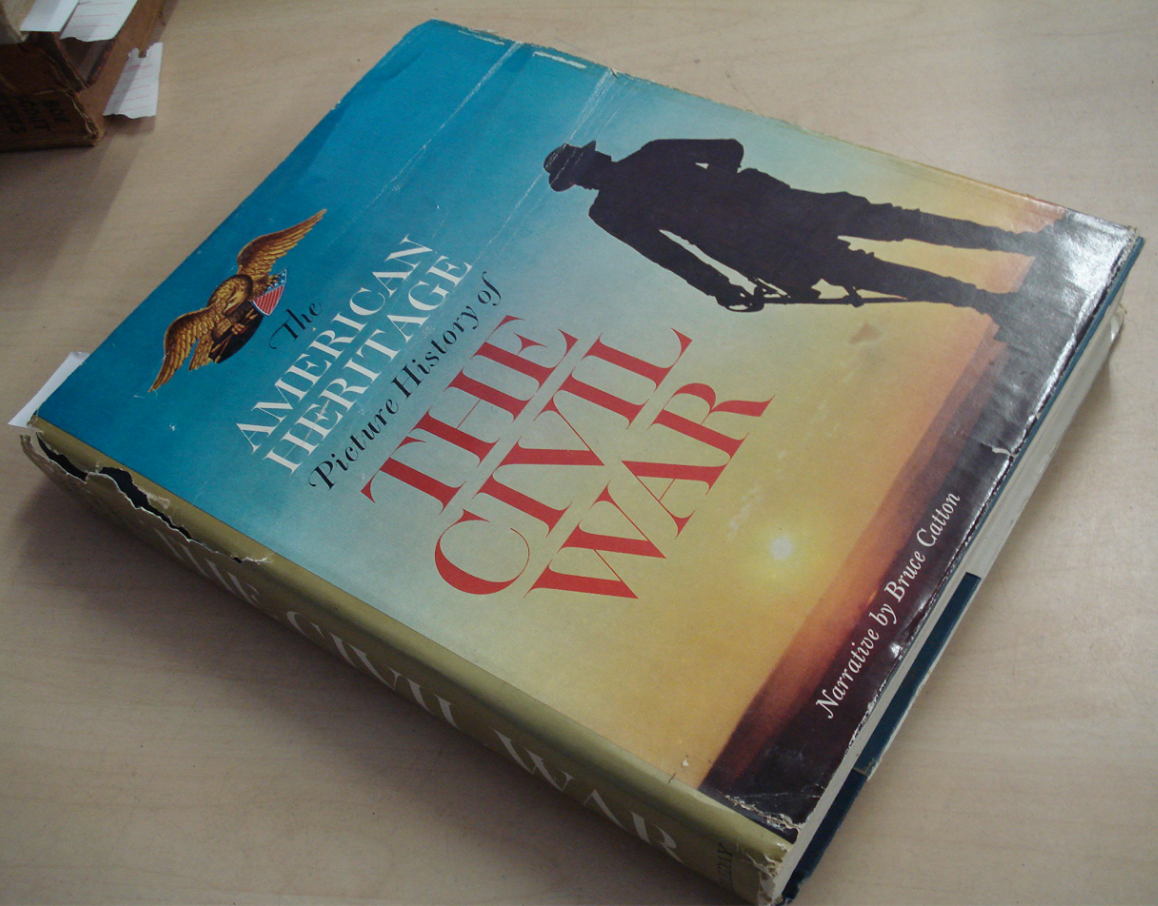
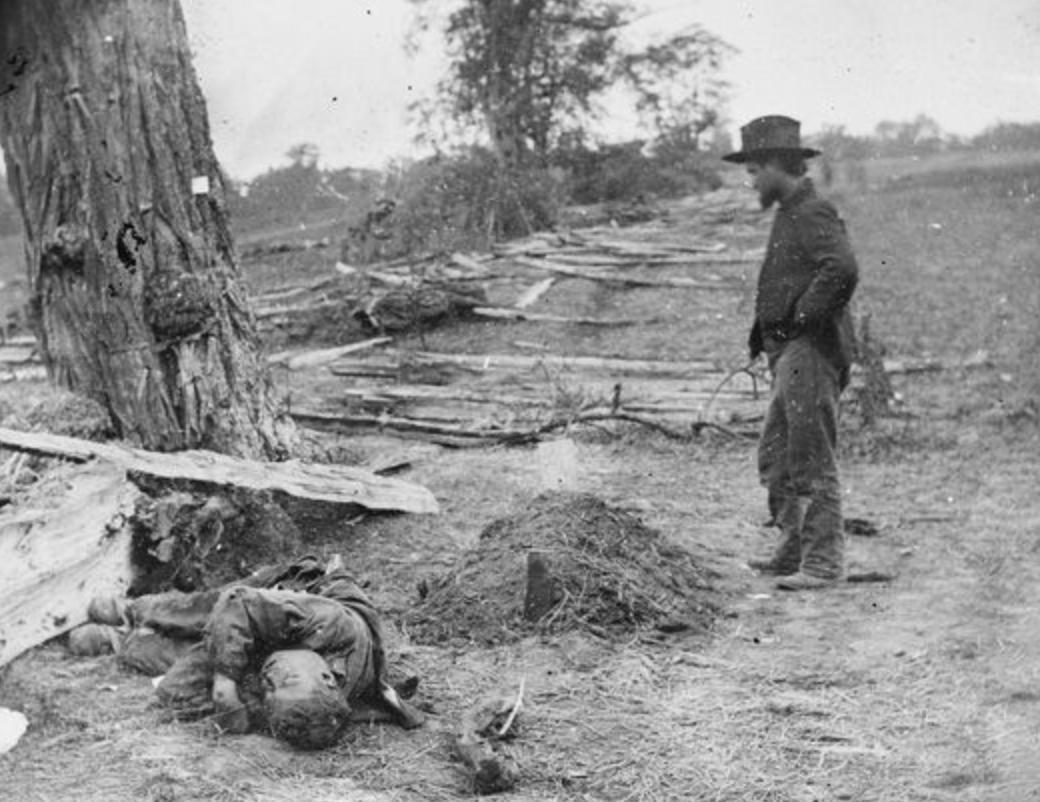
This short video from the Smithsonian is “age-restricted” because it includes photos of dead bodies on the battlefields of the Civil War. We did not restrict the boy (when a mere child) from spending hours pouring over the pages of the American Heritage pictorial history of the Civil War. This big book included many photos taken by Mathew Brady.

I was likewise fascinated by those photos in that book at an early age. They were definitely more graphic than anything I had ever scene, but I don’t think I was scarred by the experience. No more than I should have been anyway. Some scarring is warranted.

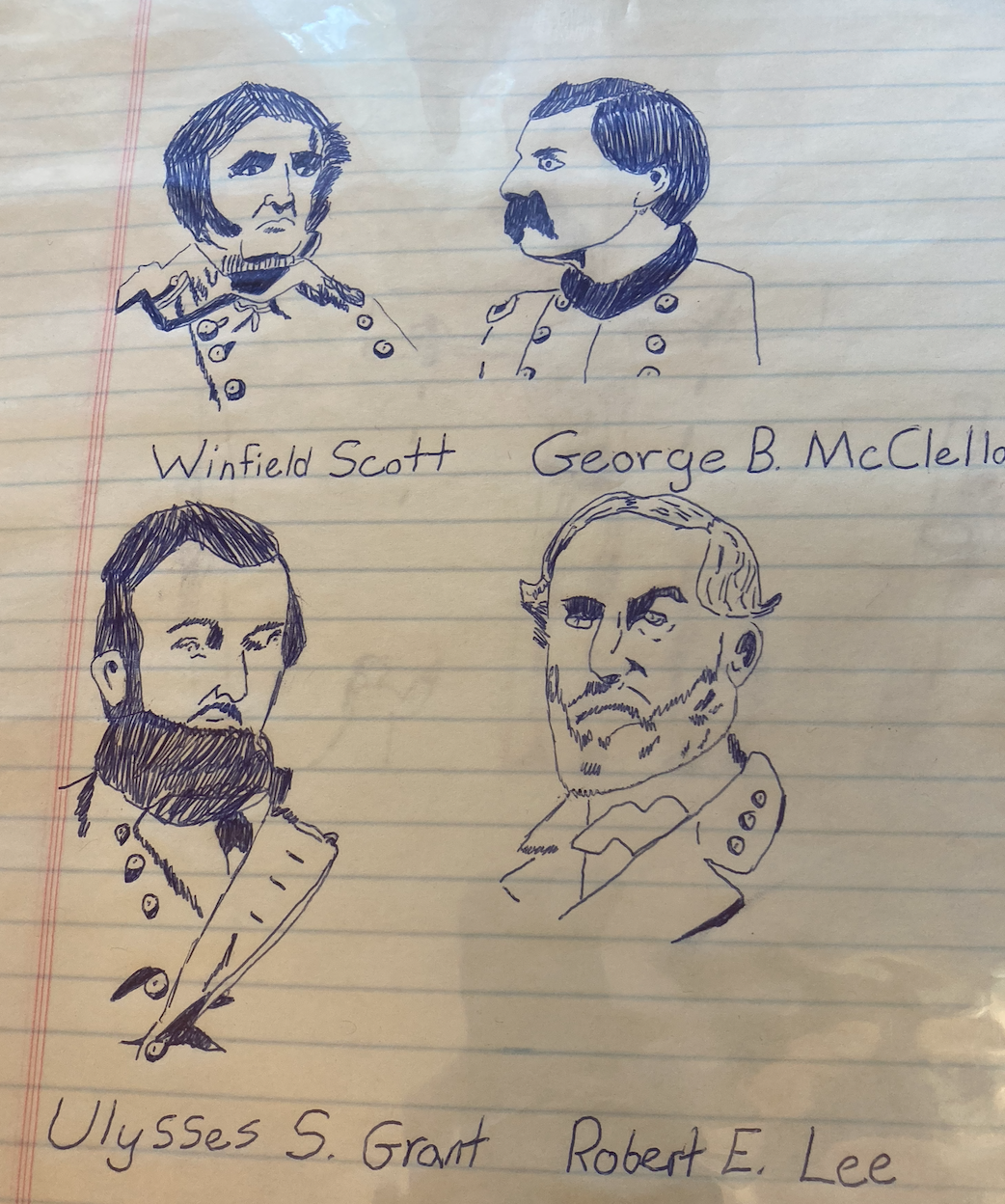
The boy then made many of his own drawings of battles and soldiers.

The U.S. National Archives has most of Brady’s original photographs.  You can see them:  just click here.

P.S. I did something the other day that was life-changing. I switched out the light bulbs in my bedside table lamp and the lamp on the desk in my office for ones with a higher wattage. Amazing. I can see! Praise Jesus. It’s the little things, am I right?

Also, I am feeling this: a new way to exercise. (Turn on the sound and watch the whole workout.)

Does the word ‘gentleman’ still mean anything today? Here’s why it should.

And, finally, I hear this:

*Mathew Brady

“Let us cross over the river, and rest under the shade of the trees.”*

by chuckofish

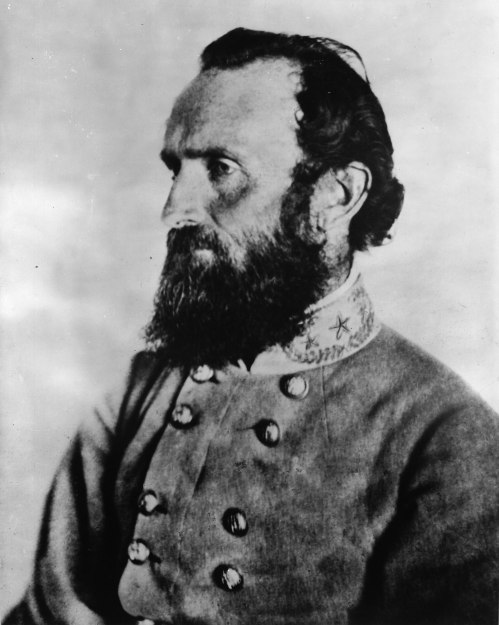
Today is the 153rd anniversary of the death of General Thomas “Stonewall” Jackson (age 39) following the Battle of Chancellorsville, when he was shot by friendly fire on the moonlit night of May 2, 1863.

"Chancellorsville" portrait, taken at a Spotsylvania County farm on April 26, 1863, seven days before he was wounded.

“Chancellorsville” portrait, taken at a Spotsylvania County farm on April 26, 1863, seven days before he was wounded. What a face!

Here he is younger and beardless. Pretty dreamy.

stonewall-young

I have always admired Stonewall Jackson as an exemplar of the Scotch-Irish Protestants who came to this country in the eighteenth century, many of them as indentured servants, and worked and fought hard to make a home here. In fact his paternal great-grandparents (John Jackson and Elizabeth Cummins) met on the prison ship from London and fell in love. They married six years later when they gained their freedom.

The family migrated west across the Blue Ridge Mountains to settle near Moorefield, Virginia in 1758. In 1770, they moved farther west to the Tygart Valley. They began to acquire large parcels of virgin farming land near the present-day town of Buckhannon, including 3,000 acres in Elizabeth’s name. John and his two teenage sons fought in the Revolutionary War; John finished the war as a captain. While the men were in the army, Elizabeth converted their home to a haven for refugees from Indian attacks known as “Jackson’s Fort.”

Yes, the Jacksons were awesome.

Furthermore, Stonewall was a profoundly religious man and a deacon in the Presbyterian Church. One of his many nicknames was “Old Blue Lights,” a term applied to a military man whose evangelical zeal burned with the intensity of the blue light used for night-time display. He disliked fighting on Sunday, although that did not stop him from doing so after much personal debate.

Here is a poem by Herman Melville that pretty well sums up my feelings about the great Stonewall:

Mortally Wounded at Chancellorsville

The Man who fiercest charged in fight,
Whose sword and prayer were long –
Stonewall!
Even him who stoutly stood for Wrong,
How can we praise? Yet coming days
Shall not forget him with this song.

Dead is the Man whose Cause is dead,
Vainly he died and set his seal –
Stonewall!
Earnest in error, as we feel;
True to the thing he deemed was due,
True as John Brown or steel.

Relentlessly he routed us;
But we relent, for he is low –
Stonewall!
Justly his fame we outlaw; so
We drop a tear on the bold Virginian’s bier,
Because no wreath we owe.

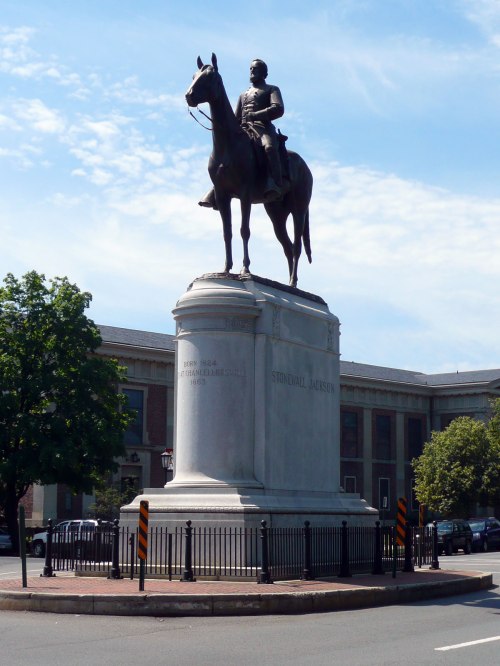
Monument Avenue in Richmond, VA

Monument Avenue in Richmond, VA

*Stonewall Jackson’s dying words–beautiful!

The old, self-contained stock

by chuckofish

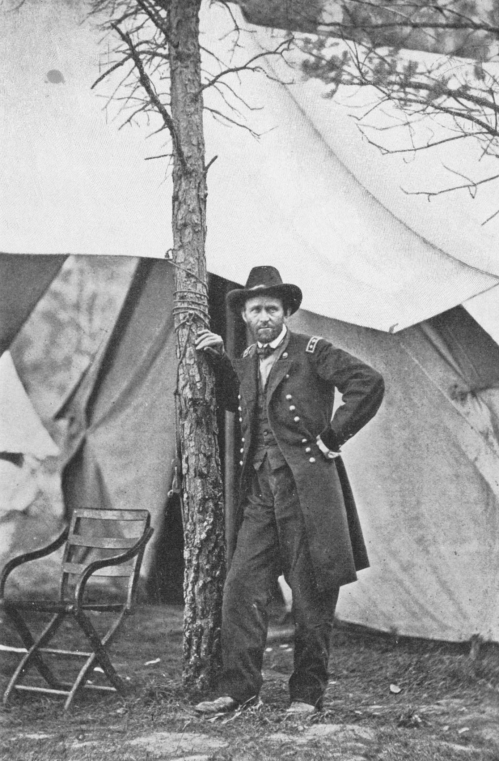
Today we note the birthday of Ulysses S. Grant (April 27, 1822 – July 23, 1885) who was the 18th President of the United States (1869–77) and the Commanding General of the U.S. (1864–69). He is certainly a favorite of mine.

Screen Shot 2016-04-26 at 10.48.56 AM

“In four years he had risen, without political favor, from the bottom to the very highest command, — not second to any living commander in all the world! His plans were large, his undiscouraged will was patient to obduracy… In all this career he never lost courage or equanimity. With a million men, for whose movements he was responsible, he yet carried a tranquil mind, neither depressed by disasters nor elated by success. Gentle of heart, familiar with all, never boasting, always modest, Grant came of the old, self-contained stock, men of a sublime force of being, which allied his genius to the great elemental forces of nature, — silent, invisible, irresistible. When his work was done, and the defeat of Confederate armies was final, this dreadful man of blood was tender toward his late adversaries as a woman toward her son. He imposed no humiliating conditions, spared the feelings of his antagonists, sent home the disbanded Southern men with food and with horses for working their crops.”

– Henry Ward Beecher,  Eulogy on Grant

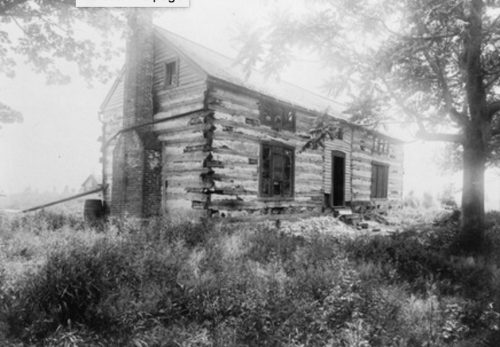
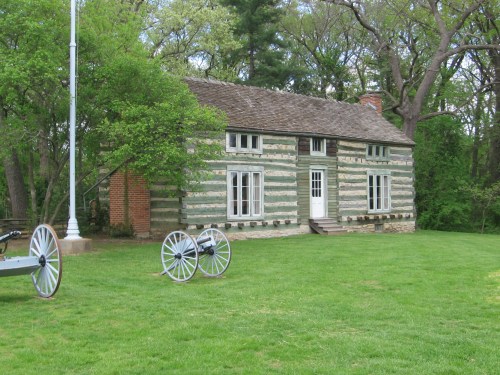
Makes me want to go visit his home “Hardscrabble,”

Screen Shot 2016-04-26 at 11.18.36 AM

which is down the road a bit here in flyover country.

hardscrabble-5-3-08

I like a president who has built a home with his own hands. Cheers and huzzah to Cousin Lyss.

I am now, by the way, reading The March by E.L. Doctorow, which is a novel about General Sherman’s March to the Sea (November 15 to December 21, 1864). I am enjoying it very much and am pleasantly surprised, having never read anything by Doctorow and having assumed that I wouldn’t like anything he had written. The author has a good historical grasp of the period and his characters act appropriately. This is certainly not always the case with historical fiction. Authors make stupid mistakes which can drive me crazy.

Curious, I went back and read the review in 2005 by John Updike in The New Yorker, and funnily enough, he says just that.

His splendid new novel, “The March”…pretty well cures my Doctorow problem. A many-faceted recounting of General William Tecumseh Sherman’s famous, and in some quarters still infamous, march of sixty-two thousand Union soldiers, in 1864-65, through Georgia and then the Carolinas, it combines the author’s saturnine strengths with an elegiac compassion and prose of a glittering, swift-moving economy. The novel shares with “Ragtime” a texture of terse episodes and dialogue shorn, in avant-garde fashion, of quotation marks, but has little of the older book’s distancing jazz, its impudent, mocking shuffle of facts; it celebrates its epic war with the stirring music of a brass marching band heard from afar, then loud and up close, and finally receding over the horizon. Reading historical fiction, we often itch, our curiosity piqued, to consult a book of straight history, to get to the facts without the fiction. But “The March” stimulates little such itch; it offers an illumination, fitful and flickering, of a historic upheaval that only fiction could provide. Doctorow here appears not so much a reconstructor of history as a visionary who seeks in time past occasions for poetry.

Well, there you go.

All is hushed at Shiloh

by chuckofish

One hundred and fifty-three years ago, on April 7, 1862, Union forces led by Gen. Ulysses S. Grant defeated the Confederates at the battle of Shiloh in Tennessee. The day before, however, was a terrible day for Grant.

ulysses-s-grant-civiltree

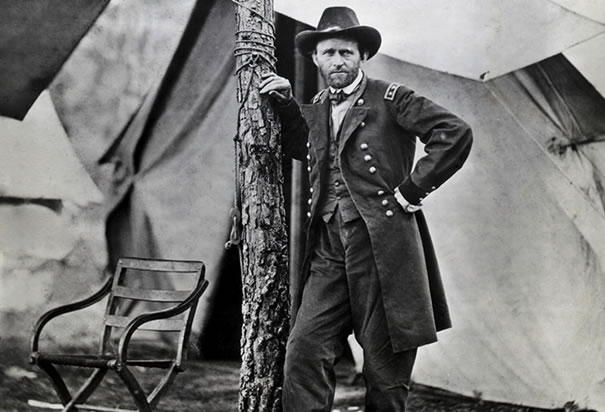
In his memoirs Grant describes the night of April 6:

During the night rain fell in torrents and our troops were exposed to the storm without shelter. I made my headquarters under a tree a few hundred yards back from the river bank. My ankle was so much swollen from the fall of my horse the Friday night preceding, and the bruise was so painful, that I could get no rest. The drenching rain would have precluded the possibility of sleep without this additional cause. Some time after midnight, growing restive under the storm and the continuous pain, I moved back to the loghouse under the bank. This had been taken as a hospital, and all night wounded men were being brought in, their wounds dressed, a leg or an arm amputated as the case might require, and everything being done to save life or alleviate suffering. The sight was more unendurable than encountering the enemy’s fire, and I returned to my tree in the rain.

Historian Bruce Catton (Grant Moves South) describes a meeting between Sherman and Grant that night:

Late that night…Sherman came to see him. Sherman had found himself, in the heat of the enemy’s fire that day, but now he was licked; as far as he could see, the important next step was to “put the river between us and the enemy, and recuperate,” and he hunted up Grant to see when and how the retreat could be arranged. He came on Grant, at last, at midnight or later, standing under the tree in the heavy rain, hat slouched down over his face, coat-collar up around his ears, a dimly-glowing lantern in his hand, cigar clenched between his teeth. Sherman looked at him; then, “moved,” as he put it later, “by some wise and sudden instinct” not to talk about retreat, he said: “Well, Grant, we’ve had the devil’s own day, haven’t we?”

Grant said “Yes,” and his cigar glowed in the darkness as he gave a quick, hard puff at it, “Yes. Lick ’em tomorrow, though.”

And they did.

Among the enlisted men fighting that day were a young Ambrose Bierce of the Ninth Indiana and 21-year old Henry Morton Stanley (who later discovered Dr. Livingstone in Africa) of the 6th Arkansas Infantry.  Major General Lew Wallace (who later wrote Ben Hur) was there as well.

Herman Melville was not present at Shiloh, but he wrote a poem about it which I like very much:

Skimming lightly, wheeling still,
The swallows fly low
Over the field in clouded days,
The forest-field of Shiloh–
Over the field where April rain
Solaced the parched ones stretched in pain
Through the pause of night
That followed the Sunday fight
Around the church of Shiloh–
The church so lone, the log-built one,
That echoed so many a parting groan
And natural prayer
Of dying foeman mingled there–
Foeman at morn, but friends at eve–
Fame or country least their care:
(What like a bullet can undeceive!)
But now they lie low,
While over them the swallows skim
And all is hushed at Shiloh.

–Herman Melville, “Shiloh: A Requiem”

Let’s all just take a moment.

Sesquicentennial news

by chuckofish

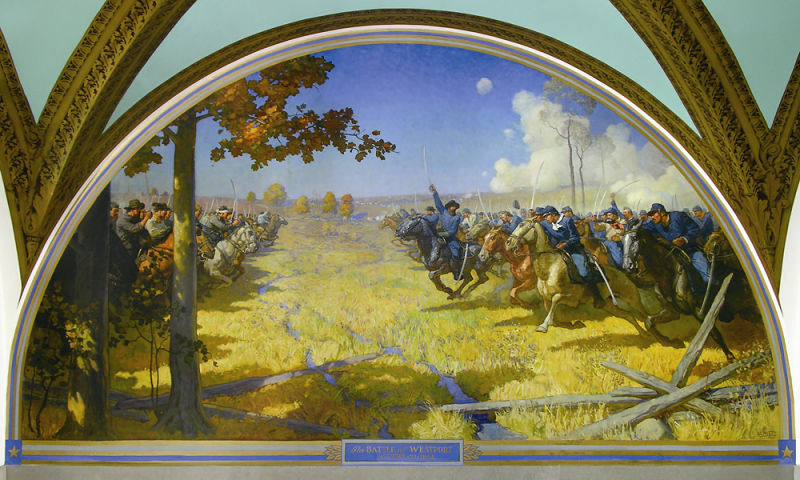
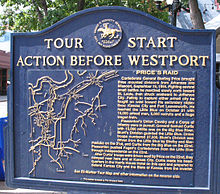
Today is the 150th anniversary of the Battle of Westport–sometimes referred to as the Gettysburg of the West–on October 23, 1864.

N.C. Wyeth mural of the Battle of Westport at the MO State Capitol

N.C. Wyeth mural of the Battle of Westport at the MO State Capitol

Union forces under Major Samuel R. Curtis decisively defeated an outnumbered Confederate force under Major Sterling Price. This engagement was the turning point of Price’s Missouri Expedition, forcing his army to retreat and ending the last significant Confederate operation west of the Mississippi River. This battle was one of the largest ever to be fought west of the Mississippi River, with over 30,000 men engaged. Buffalo Bill Cody, Wild Bill Hickcock (a scout for Gen. Curtis), Frederick Benteen, and Jeremiah Johnson all fought in this battle.

I am definitely adding this trip to my “To Do” list. I have been meaning to visit Westport, Missouri (now called Kansas City) where my ancestors were among the first pioneers to settle. And now I find that there was a major Civil War battle fought there? Where have I been?

220px-Westport-plan

Unfortunately, I will have to miss the reenactment, but, as you know, I am more of the self-guided-tour type anyway.

Road trip, anyone?

Trivia question: What famous movie character had a cat named after Gen. Sterling Price?  What movie?

June continues to bust out all over

by chuckofish

We have enjoyed a really nice June in our flyover state–relatively cool and lots of rain. This is certainly not always the case! So it is good to take a moment and think about how nice it is.

The grass looks great and has not started to burn up yet.

grass

The flowers are happy.

yellowfleur

crys

And the tiger lilies are starting to pop!

lilies

We can enjoy open toe espadrilles

feet

and more hours of daylight. Lately it has been cool enough to actually work in the yard after dinner.

And here’s a fun fact: The Horse Soldiers (1959) was released to movie theaters 55 years ago yesterday.

Horse_Soldiers_(1959)x01

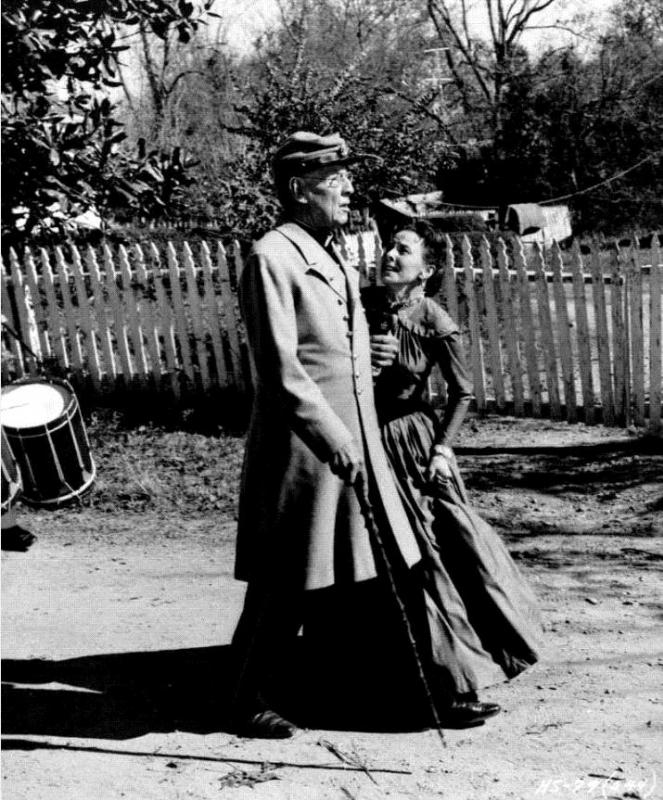
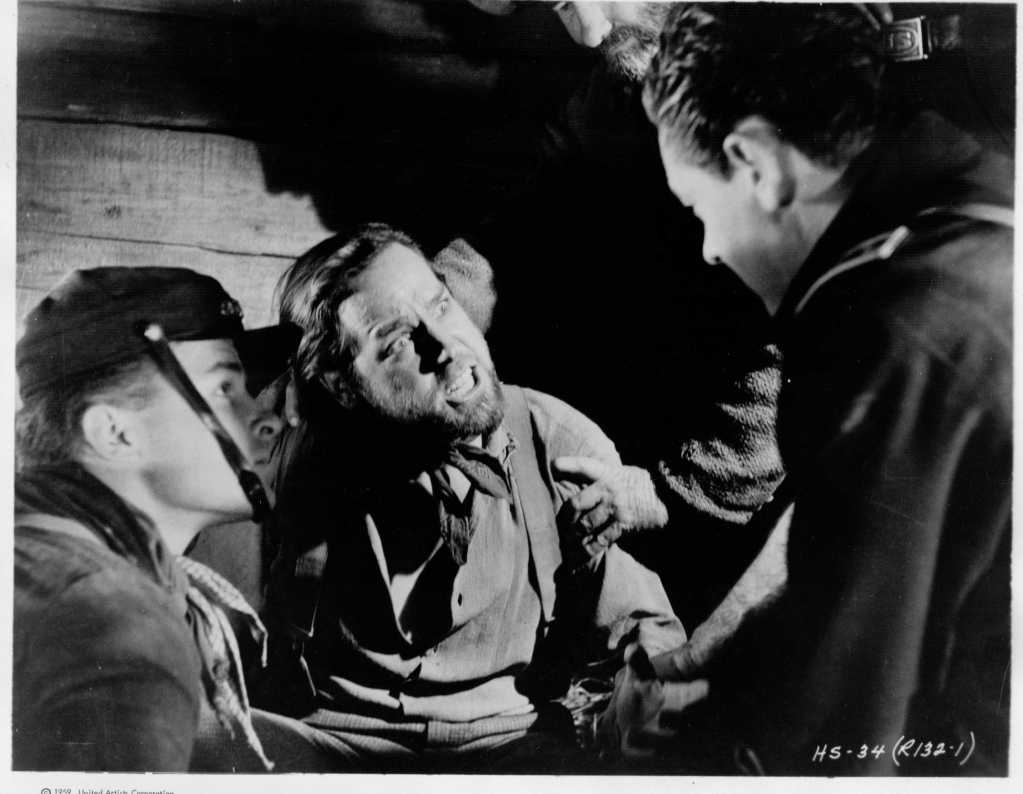
This is one of my favorite John Ford movies. It’s the one where a Union Cavalry outfit sets out from northern Mississippi and rides several hundred miles behind confederate lines in April 1863 to destroy a rail/supply center. Based on a true story, the raid was as successful as it was daring, and remarkably bloodless. The Horse Soldiers was filmed on location in Natchitoches Parish Louisiana along the banks of Cane River Lake and in and around Natchez, Mississippi. The locations give it a real sense of place and authenticity that Civil War movies don’t always have. The plantation house, for instance, where Towers’ character lives, is a real antebellum house and not Tara.

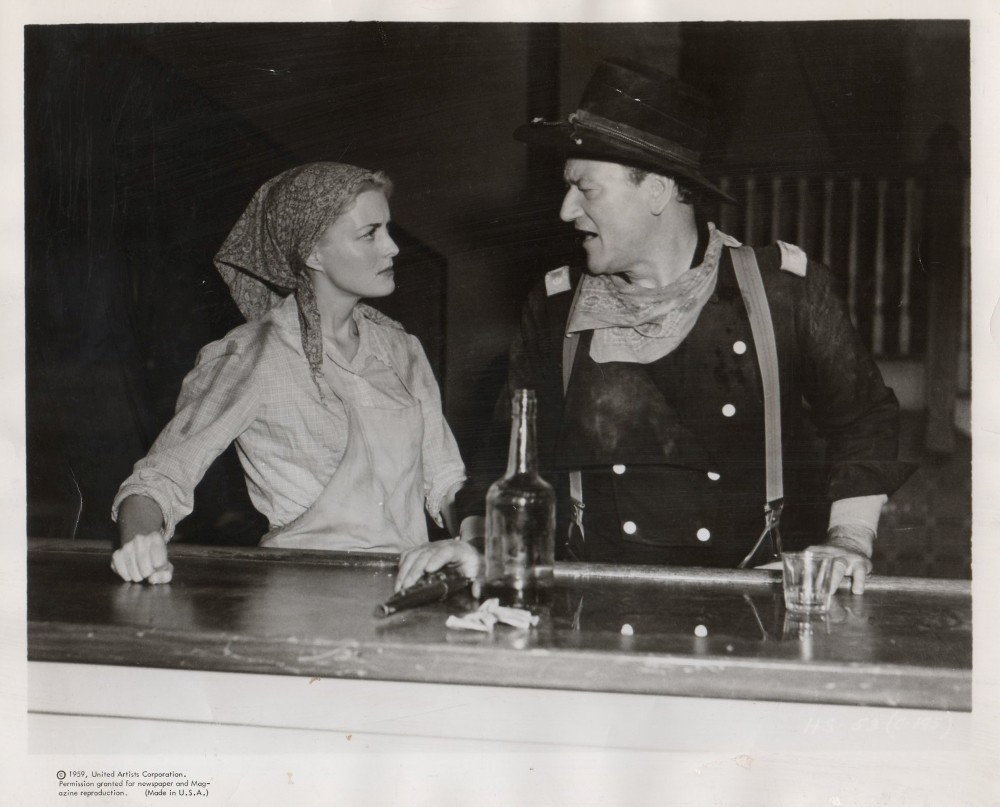
William Holden plays a doctor who immediately comes into conflict with the commander of the mission (John Wayne). The officers are overheard discussing their secret plan by a clever southern belle (Constance Towers) who must then be taken along to assure her silence. Holden is a great foil for Wayne, who, in my opinion, gives one of his best performances. He has a couple of really memorable scenes, such as the one where he explains to Hannah Hunter why he hates doctors. Nobody could break whiskey glasses like John Wayne.

wayne254

It should also be noted that the Duke is very sexy in this movie and the sophisticated William Holden never has a chance with the leading lady.

The main female character is also a refreshingly good one. She has some depth–she is smart and spunky and well-played by Towers.

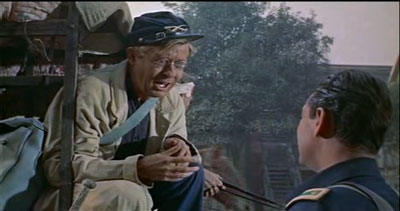
The Horse Soldiers also includes a large number of great Ford character actors–from Anna Lee to Hoot Gibson, Strother Martin, Denver Pyle, Ken Curtis, Hank Worden, and even the always bizarre O.Z. Whitehead–all playing clearly defined people.

6559

These characters are but one aspect that sets apart Ford’s films from the vast majority of run-of-the-mill movies made over the years. But this aspect is huge. All the minor characters have a line or two and all are memorable.

HorseSoldiers18_zps13757f49

You remember them all: the officers, including Major Gray, an actor quoting Tennyson (“Blow, bugle, blow”) and Colonel Secord, almost a senator (“This would look great on my record”), as well as the enlisted men (“You told us it was all right as long as we could see the top of her head.”), the deserters (“We’re confederate, but we ain’t hostile–honest”) to Lukey, Hannah’s devoted slave (“Contraband? That’s me, ain’t it?”). The Horse Soldiers also includes the leg-amputating scene with Bing Russell (Kurt’s father) which traumatized me as a child.

File13_zpsb1da73a4

Anyway, The Horse Soldiers is my Friday movie pick. Sure, it’s another reminder that they don’t make ’em like this anymore, but c’est la vie.