“He took her face in his hands and kissed it, and she saw that he was laughing. “When you’re an old maid in mittens down at Helford, you’ll remember that,” he said, “and it will have to last you to the end of your days. ‘He stole horses,’ you’ll say to yourself, ‘and he didn’t care for women; and but for my pride I’d have been with him now.”
― Daphne du Maurier, Jamaica Inn
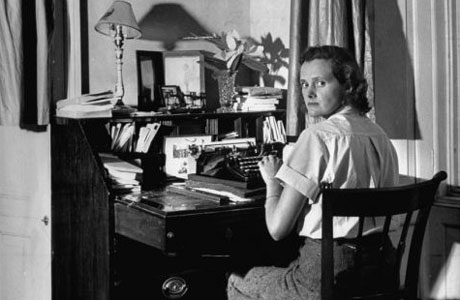
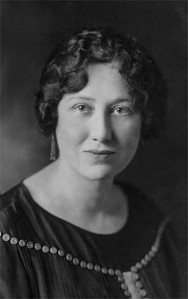
Happy birthday to Dame Daphne du Maurier (13 May 1907 – 19 April 1989)!
According to IMDB, “Daphne Du Maurier was one of the most popular English writers of the 20th Century, when middle-brow genre fiction was accorded a higher level of respect in a more broadly literate age. For her services to literature, she was made a Dame Commander of the Order of the British Empire in 1969, the female equivalent of a knighthood.” In other words, they don’t write them like she did anymore.
Yes, it may be time to dust off Jamaica Inn or Frenchman’s Creek. I wish they would do justice to her books on film, but I haven’t seen any that really come close to her prose power. The Birds maybe. I must say, they keep trying. Check out all the versions here.
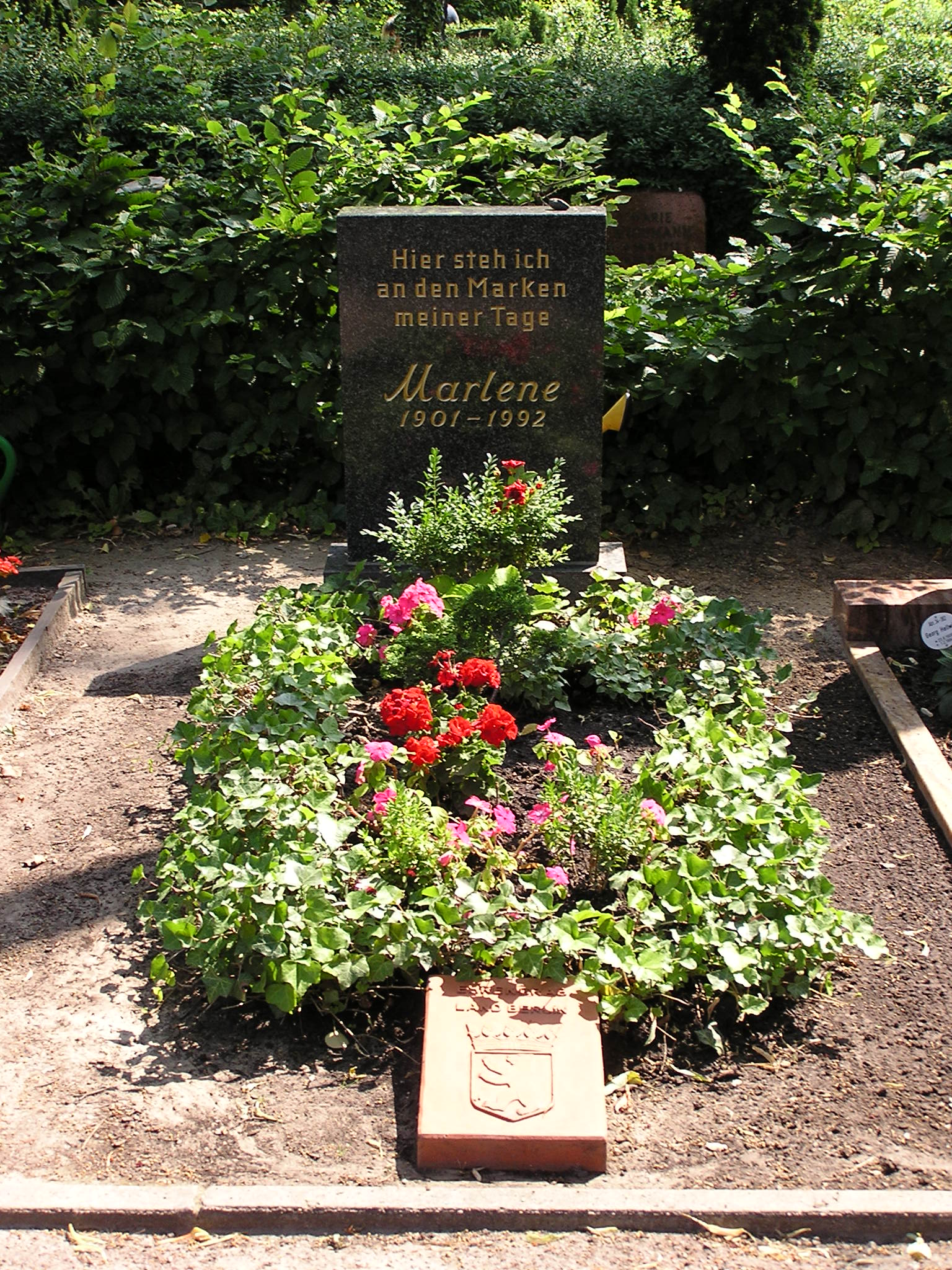
On this day in 1992 Marlene Dietrich died. She was 91 and had lived quite a life.
[Dietrich’s gravestone in Berlin. The inscription reads “Hier steh ich an den Marken meiner Tage“–“Here I stand at the milestone of my days”.]
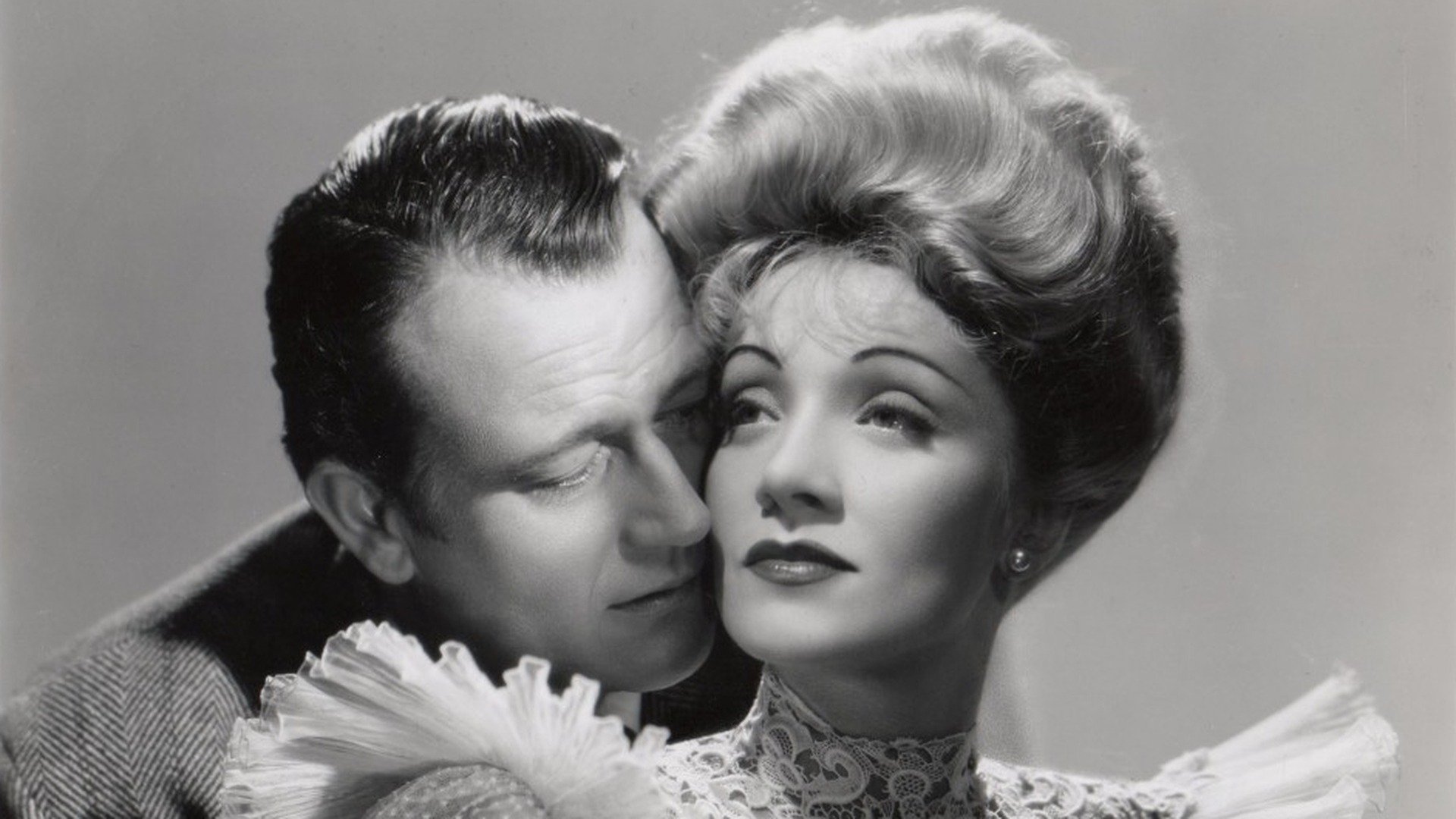
Marlene Dietrich stands out in the history of film as one of the few German actresses who attained international significance. I just watched her recently in the 1942 version of The Spoliers with John Wayne and Randolph Scott. She really steals the show, even with John Wayne opposite. She is exotic, beautiful, smart, and likable–not always the case with the femme fatale type.
Dietrich, a staunch anti-Nazi, became an American citizen in 1939. The U.S. Government awarded Dietrich the Medal of Freedom for her war work. Dietrich has been quoted as saying this was the honor of which she was most proud in her life. They also awarded her the Operation Entertainment Medal. The French Government made her a Chevalier (later upgraded to Commandeur) of the Legion d’Honneur and a Commandeur of the Ordre des Artes et des Lettres. Her other awards include the Medallion of Honor of the State of Israel, the Fashion Foundation of America award and a Chevalier de L’ordre de Leopold.
Yes, she was quite a gal and deserves a toast tonight. Here she is singing “Lili Marlene” in german. I seem to recall my pater getting weepy over this one.
*See What the Boys in the Back Room Will Have by Frank Loesser from Destry Rides Again
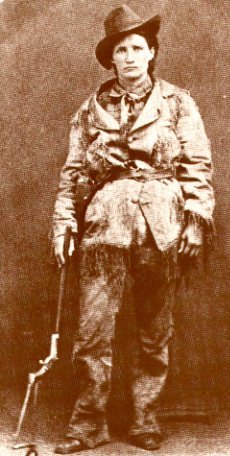
Martha Jane Canary (May 1, 1852 – August 1, 1903) was born today in 1852. She is, of course, better known as Calamity Jane.
Born in Mercer County, Missouri, Canary was the oldest of many siblings. Her father was a farmer. After some legal wrangling over land, the family sold their property and left Missouri in the early 1860s, heading for Montana gold. But they fell on hard times; her mother died in a mining camp in Blackfoot City, Montana, when Canary was about 9. After taking the children to Salt Lake City, her father died soon after.
Her life, already a hard one, became at that point the stuff of legend. As she became a dime-novel heroine and stage performer, she enlarged her myth with every new story. It is nearly impossible to know where the truth lies and who she really was. Well, she was and still is an intriguing oddity that fires the imagination.
Not surprisingly Calamity Jane has been portrayed by myriad actresses on the large and small screen. In the movies she has been played by Jean Arthur, Jane Russell, Yvonne De Carlo, Doris Day, Catherine O’Hara, Ellen Barkin–to name a few. On television Stephanie Powers, Anjelica Huston and Jane Alexander have attempted to represent her.
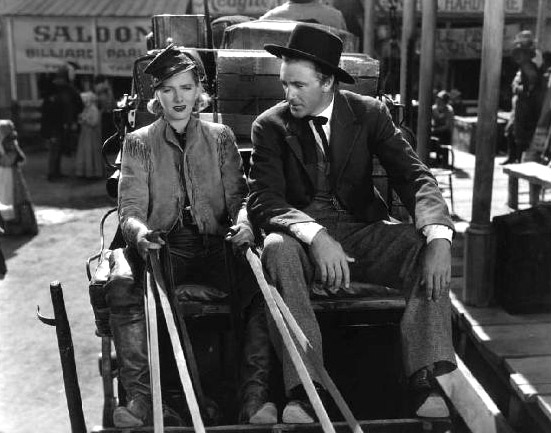
Of the movies I like The Plainsman (1936) with Jean Arthur as Calamity and Gary Cooper as Wild Bill Hickok.
Directed by Cecil B. DeMille, it is a very exciting movie and Arthur and Cooper are well matched. I’m sure the plot has practically no basis in reality, but it is a good movie and Jean Arthur is no glamour girl. Cooper, as usual, is adorable.
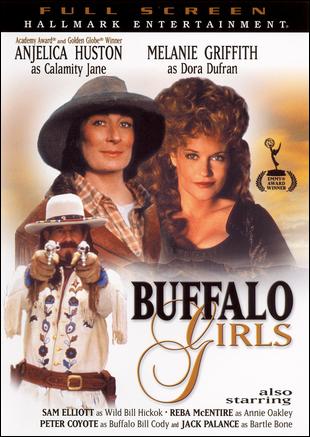
I also like Anjelica Huston as Calamity in the 1995 TV mini-series Buffalo Girls, an adaption of the book by Larry McMurtry. Physically, she is the most like the real Martha Jane–tall and somewhat manly and with (we hope) a heart of gold.
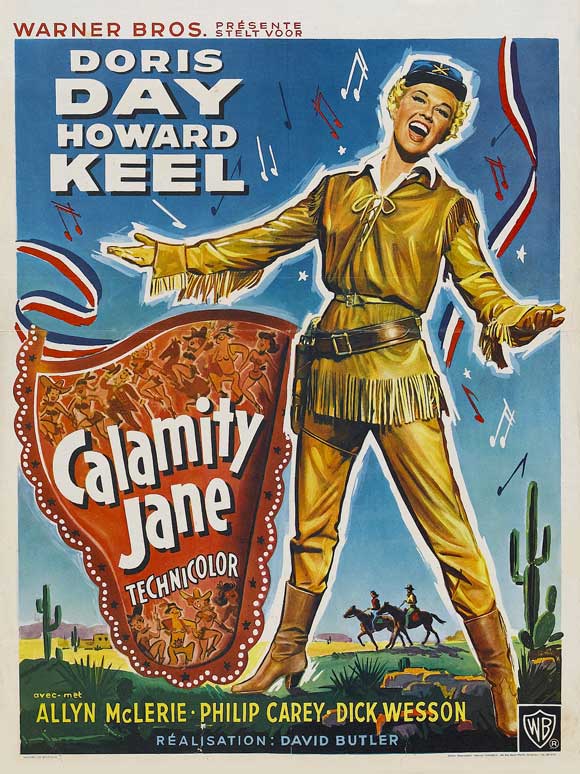
One of the most ridiculous presentations of Calamity Jane’s life is that put forth in the1953 musical Calamity Jane, starring Doris Day.
But one can not help but love this rendition and Doris Day who always gives 110%. This film focuses on the relationship between Jane and Wild Bill (Howard Keel) and Doris gets to sing lyrics like: “At last my heart’s an open door / And my secret love’s no secret any more.” Yikes. The song won the Academy Award for Best Song that year, and with Doris singing, why wouldn’t it?
I think I will watch Doris in Calamity Jane because I DVR’d it when it was on TCM on her birthday a few weeks ago. Here’s a little something to whet your appetite:
So let’s raise a glass to Martha Jane Canary on her birthday, the American legend and the real woman, whoever she was.
Maud Hart Lovelace (April 25, 1892—March 11, 1980) was an American author best known for the 10-book Betsy-Tacy series.
Maud Palmer Hart was born in Mankato, Minnesota. She was the middle child; her sisters were Kathleen (Julia in the Betsy-Tacy books) and Helen (book character, Margaret). Maud reportedly started writing as soon as she could hold a pencil.
Shortly before Maud’s fifth birthday a “large merry Irish family” moved into the house directly across the street. Among its many children was a girl Maud’s age, Frances, nicknamed Bick, who was to be Maud’s best friend and the model for Tacy Kelly.
Baptized in a Baptist church, she joined the Episcopal church as a teenager. She went on to the University of Minnesota but took a leave of absence to go to California to recover from an appendectomy at her maternal grandmother’s home. It was while in California that she made her first short story sale. She returned to the university and worked for the Minnesota Daily, but did not graduate.
While spending a year in Europe in 1914, she met Paolo Conte, an Italian musician (who later inspired the character Marco in Betsy and the Great World). She married Delos Lovelace when she was twenty-five years old. Delos and Maud met in April 1917 and were married on Thanksgiving Day the same year.
Lovelace began the Betsy-Tacy series in 1938, having told stories about her childhood to her own daughter Merian. The first book in the series, Betsy-Tacy, was published in 1940, and the last book, Betsy’s Wedding, was published in 1955. The first four books increase in reading difficulty so that a child can grow up along with Betsy-Tacy. The Betsy-Tacy books take place mostly in the fictional town of Deep Valley, Minnesota, which is based on Mankato.
Daughters #1 and #2 were (and are) both big fans of the Betsy-Tacy books. They read and re-read them when they were growing up. Occasionally they pick one up even now.
Betsy and Tacy were the original BFFs.
“She thought of the library, so shining white and new; the rows and rows of unread books; the bliss of unhurried sojourns there and of going out to a restaurant, alone, to eat.”
I hope she is having a lovely day in Maryland, wined and dined by her friends and colleagues. Hopefully the sun is shining, the birds are singing and she is wearing something new and pretty.
But I sure miss her and wish we could celebrate her 24th birthday together. C’est la vie.
Watercolor-photo collage by Carlos Nunez
Well, even though her tresses are not raven, I always think of this poem by Lord Byron when I think of the “belle”:
She walks in beauty, like the night
Of cloudless climes and starry skies;
And all that’s best of dark and bright
Meet in her aspect and her eyes;
Thus mellowed to that tender light
Which heaven to gaudy day denies.
One shade the more, one ray the less,
Had half impaired the nameless grace
Which waves in every raven tress,
Or softly lightens o’er her face;
Where thoughts serenely sweet express,
How pure, how dear their dwelling-place.
And on that cheek, and o’er that brow,
So soft, so calm, yet eloquent,
The smiles that win, the tints that glow,
But tell of days in goodness spent,
A mind at peace with all below,
A heart whose love is innocent!
Happy birthday–we’ll be toasting you (and missing you) tonight!
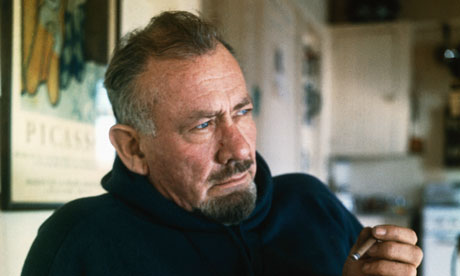
John Steinbeck, author, Nobel Prize winner and Episcopalian, was born on this day in 1902 in Salinas, California.
A writer out of loneliness is trying to communicate like a distant star sending signals. He isn’t telling or teaching or ordering. Rather he seeks to establish a relationship of meaning, of feeling, of observing. We are lonesome animals. We spend all life trying to be less lonesome. One of our ancient methods is to tell a story begging the listener to say—and to feel—
“Yes, that’s the way it is, or at least that’s the way I feel it. You’re not as alone as you thought.”
So tonight I will lift my glass of wine in a toast to the memory of the great Steinbeck! Why don’t you join me?
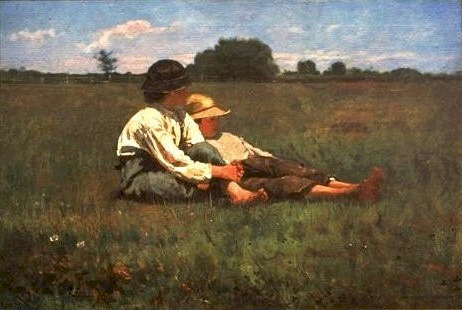
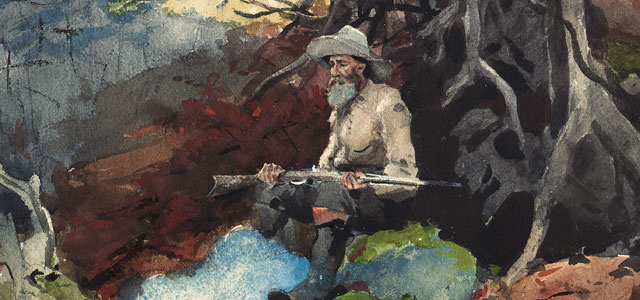
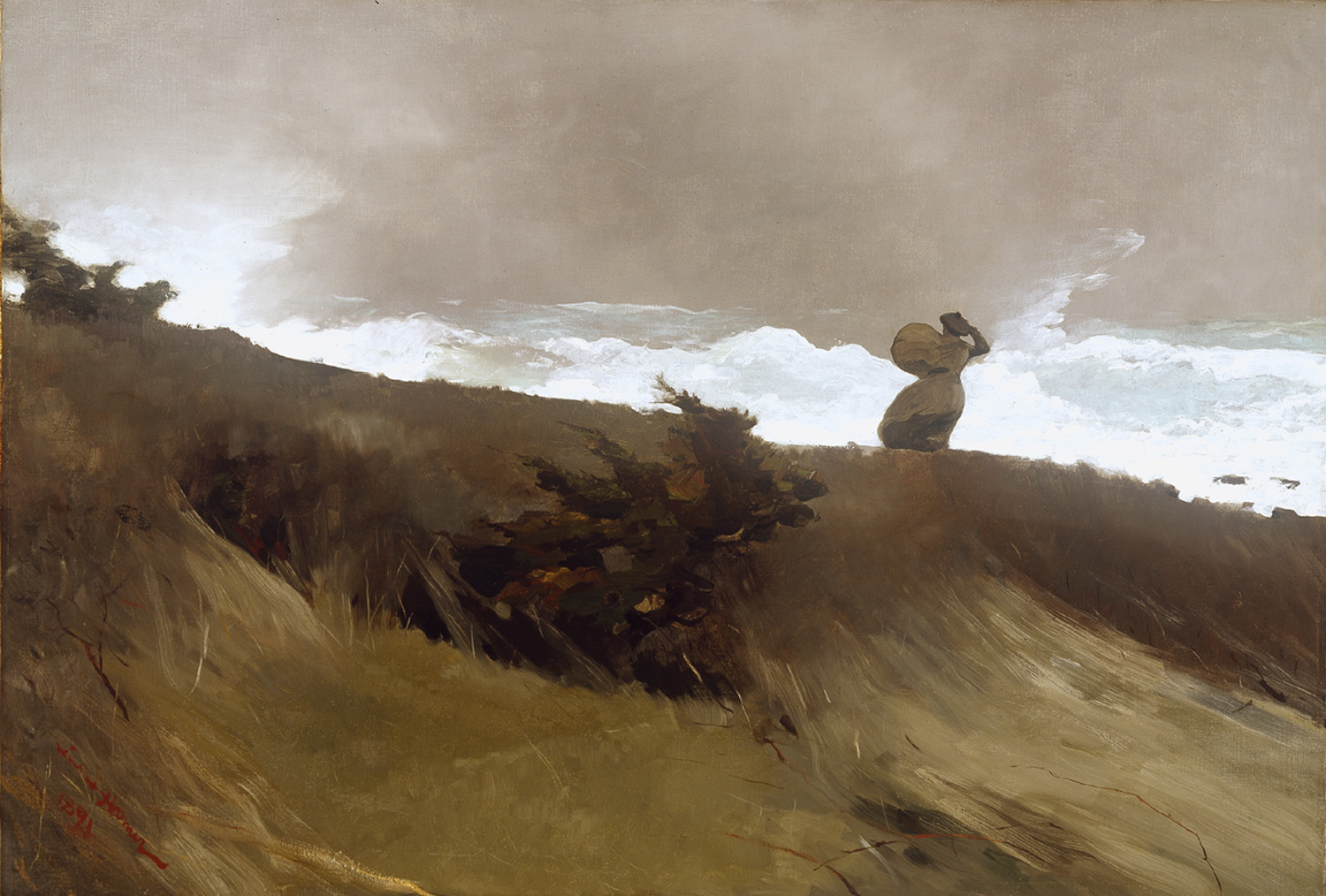
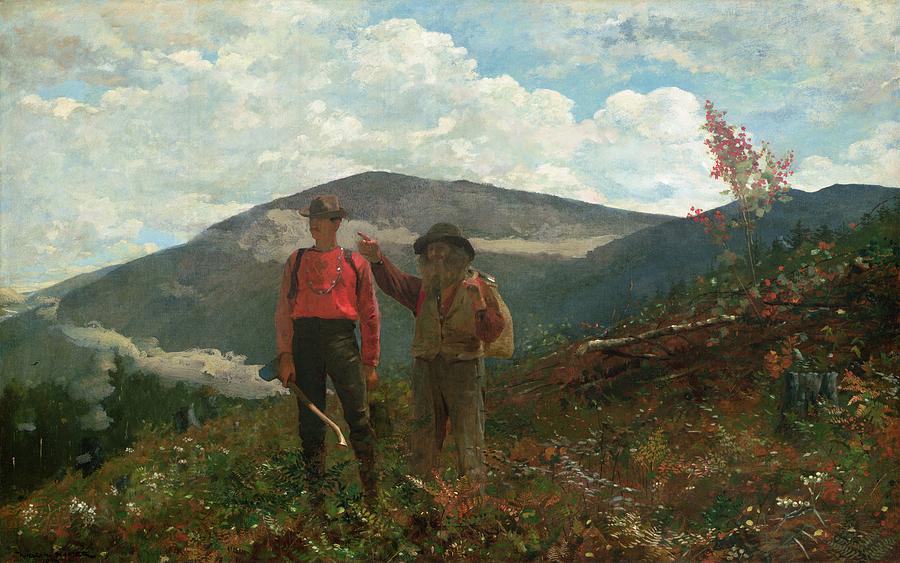
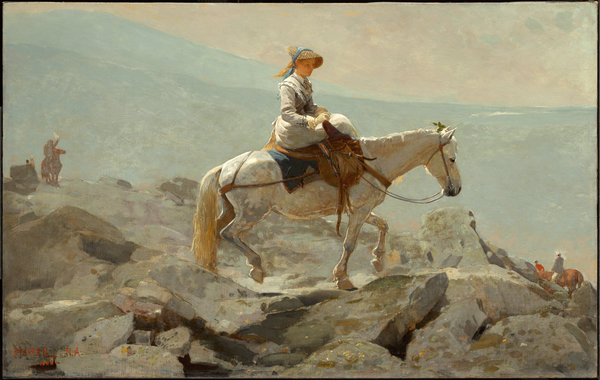
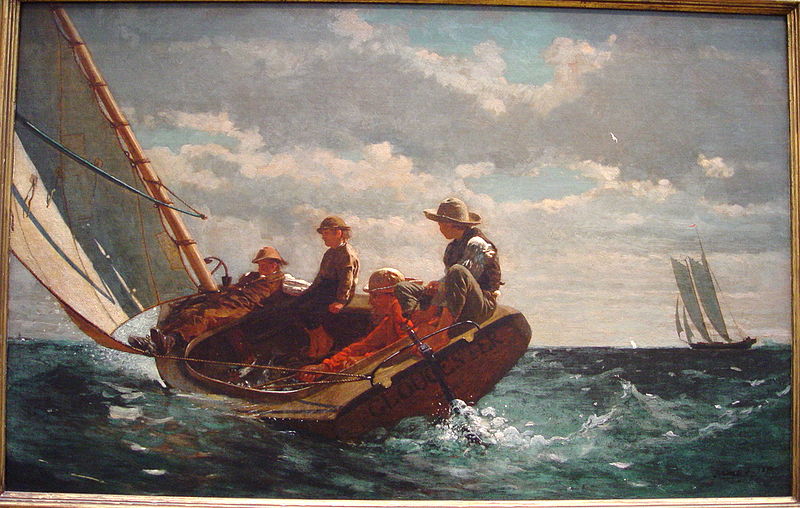
Monday was the birthday of Winslow Homer (February 24, 1836 – September 29, 1910) whom readers of this blog know has always been one of my favorite artists. Like me, he came from a long line of New Englanders and so the landscapes he painted are both familiar and dear to me. Our mother was also a great admirer of Homer and we were introduced to his art at an early and impressionable age. What is not to like?
Here are a few of my favorites.
A print of this painting hung on my dorm room wall in college. It can be seen on the bottom of this blog.
My kind of guy
The West Wind
Two Guides
This painting hangs in the Sterling and Francine Clark Art Institute in Williamstown, MA and I stared at it a lot in college.
Breezing Up
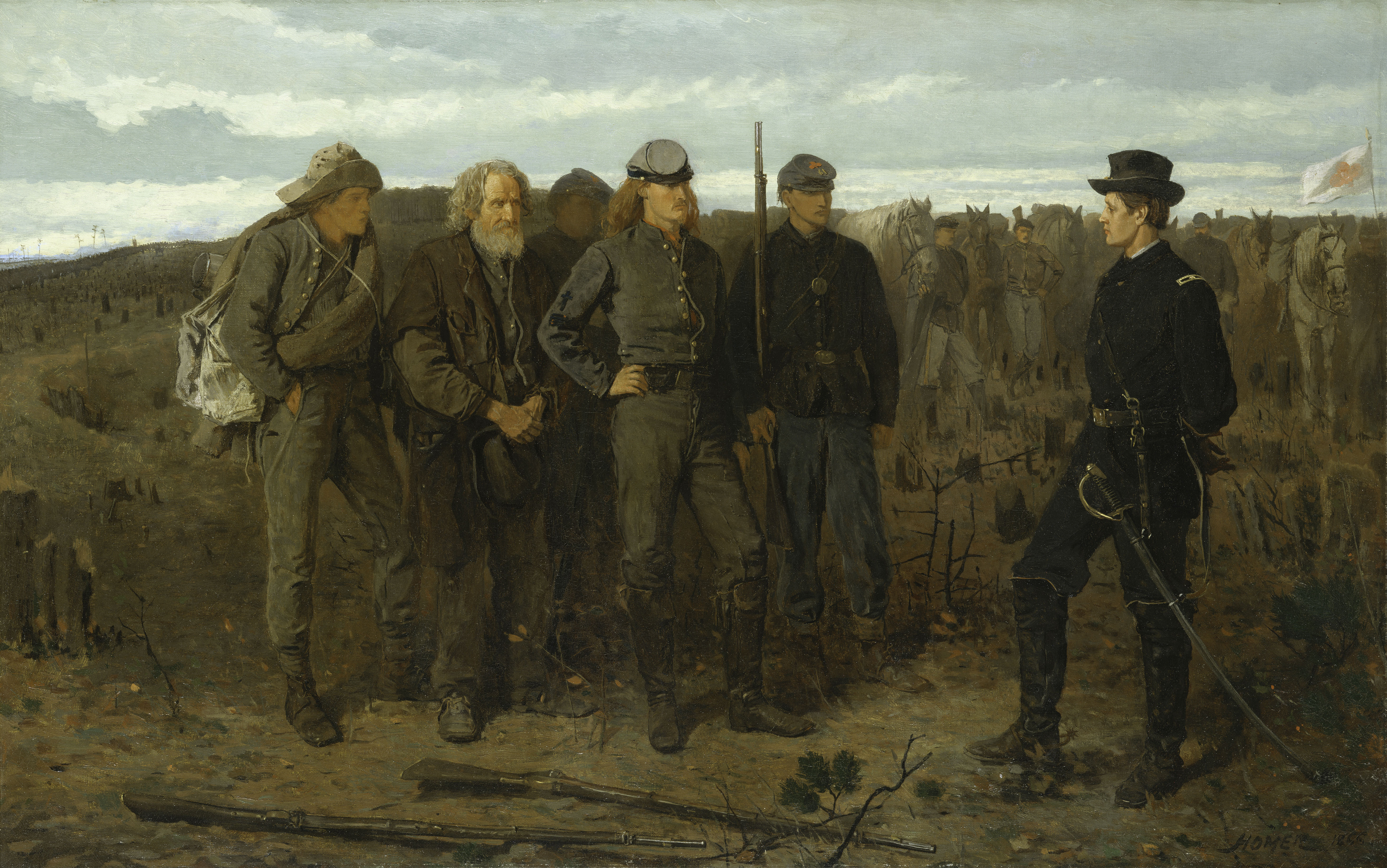
Prisoners From the Front–I always loved this picture.
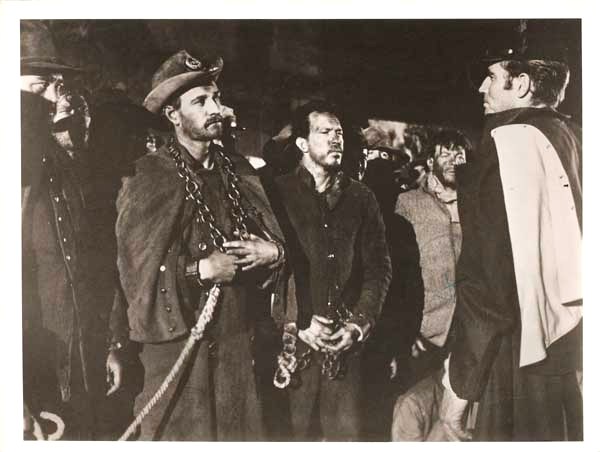
I think they were going for that same look in this movie. (By the way, this is a terrible movie, but the stars did look great.)
Richard Harris and Charlton Heston in “Major Dundee” (1965)
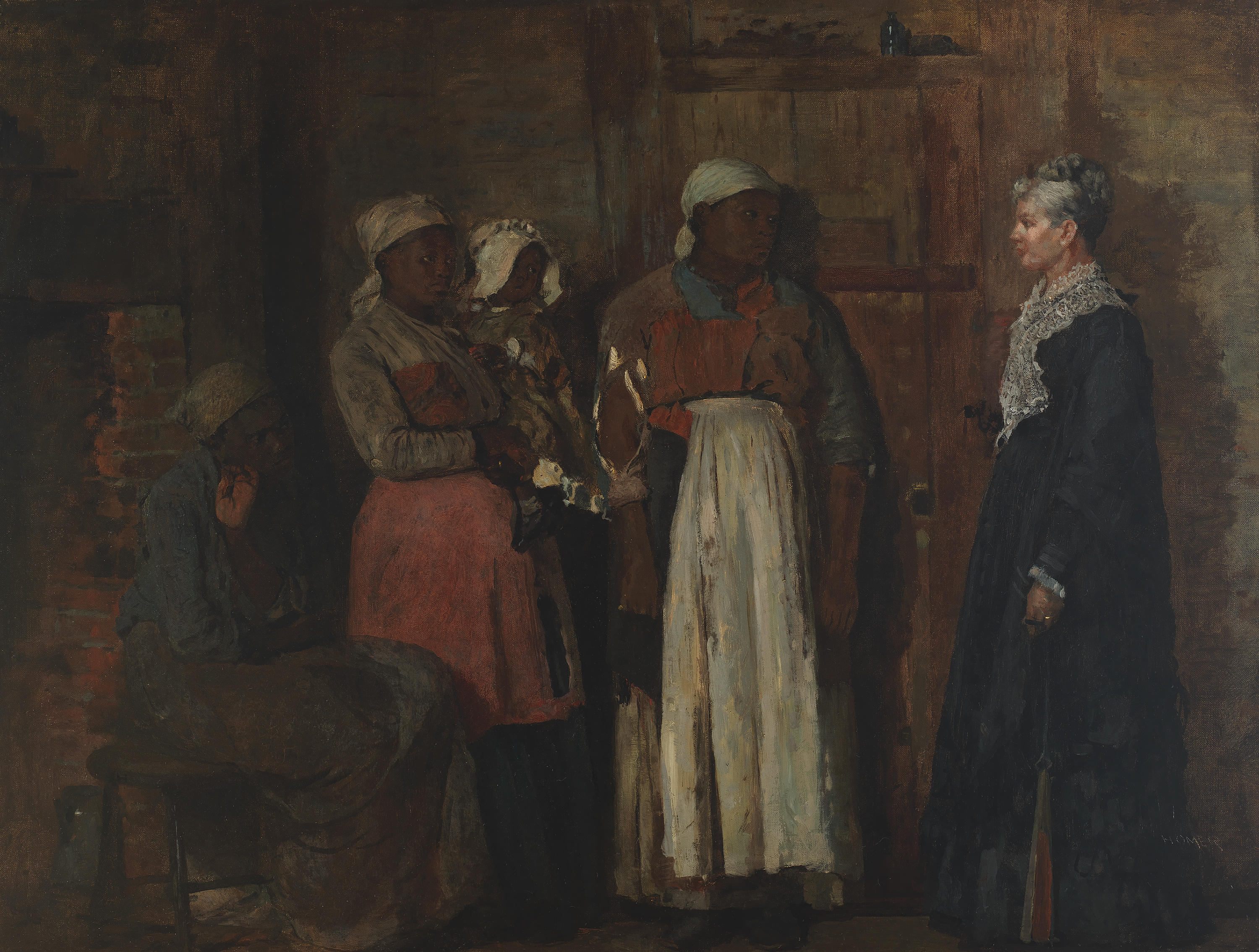
A Visit From the Old Mistress, which mirrors the composition of the Prisoners From the Front painting
For more pictures, here is a good slideshow from the National Gallery of Art.
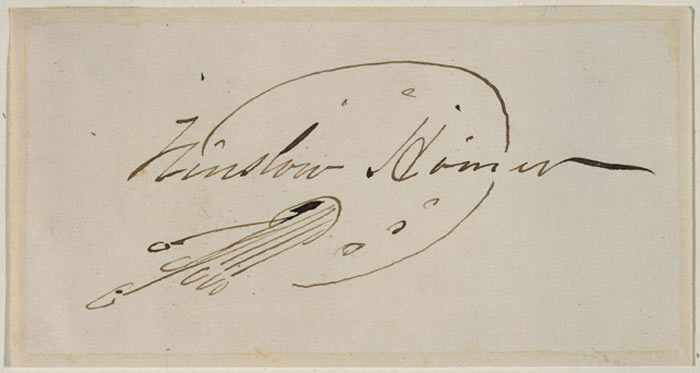
* Good advice for artists (and others) from Winslow Homer
William Butler Yeats, famous Irish poet and playwright, who won the Nobel Prize for literature in 1923, was 73 years old when he died on this day in 1939.
The Lake Isle of Innisfree
I will arise and go now, and go to Innisfree,
And a small cabin build there, of clay and wattles made:
Nine bean-rows will I have there, a hive for the honey-bee;
And live alone in the bee-loud glade.
And I shall have some peace there, for peace comes dropping slow,
Dropping from the veils of the morning to where the cricket sings;
There midnight’s all a glimmer, and noon a purple glow,
And evening full of the linnet’s wings.
I will arise and go now, for always night and day
I hear lake water lapping with low sounds by the shore;
While I stand on the roadway, or on the pavements grey,
I hear it in the deep heart’s core.