dual personalities

Category: Spirituality

Better to wear out than to rust out

by chuckofish

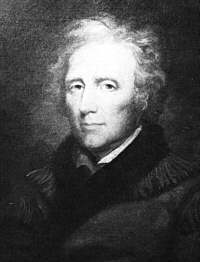
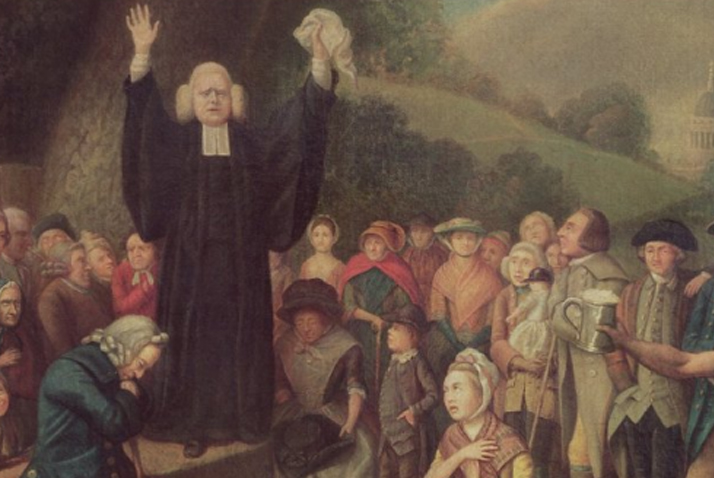
No, that isn’t a saying originated by Neil Young (“it’s better to burn out than to fade away”). Indeed, this aphorism is attributed to quite a few people, but one of those people who firmly believed it was George Whitefield (1714–1770), an 18th century Anglican clergyman who was one of the founders of Methodism and the evangelical movement, “The Great Awakening.”
george-whitefield

It is said that Whitefield preached at least 18,000 times to perhaps 10 million listeners in Great Britain and the American colonies.  Impressive.

He is honored today, together with Francis Asbury, with a (lesser) feast day on the liturgical calendar of the Episcopal Church.

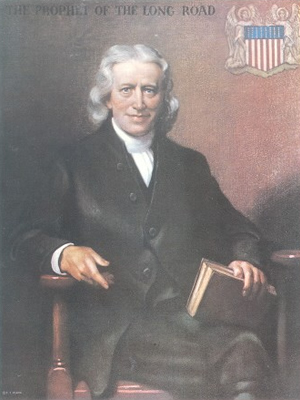
Francis Asbury (1745 – 1816) was one of the first two bishops of the Methodist Episcopal Church in the United States. In 1784 John Wesley named Asbury and Thomas Coke as co-superintendents of the work in America. This marks the beginning of the “Methodist Episcopal Church of the USA.”
francisasbury

For the next thirty-two years, Asbury led all the Methodists in America. Like Wesley, Asbury preached in all sorts of places: courthouses, public houses, tobacco houses, fields, public squares, wherever a crowd assembled to hear him. For the remainder of his life he rode an average of 6,000 miles each year, preaching virtually every day and conducting meetings and conferences. Under his direction, the church grew from 1,200 to 214,000 members and 700 ordained preachers.

Holy God, who didst so inspire Francis Asbury and George Whitefield with evangelical zeal that their faithful proclamation of the Gospel caused a Great Awakening among those who heard them: Inspire us, we pray, by thy Holy Spirit, that, like them, we may be eager to share thy Good News and lead many to Jesus Christ, in whom is eternal life and peace; and who liveth and reigneth with thee and the Holy Spirit, one God, now and for ever. Amen.

Boy oh boy, both the Episcopal Church and the Methodist Church could really use these two today.

“And the love of God is broader Than the measure of our mind”*

by chuckofish

This was a busy weekend pour moi. I went to the rummage sale at the Episcopal Church I attended growing up. I went to a funeral at Grace, to see “Steel Magnolias” performed by the local theatre guild, and back to church on Sunday.

The boy accompanied me to the funeral because it was for a member of the church choir and he knew him from back in his choir days. (It is sometimes necessary to remind the young the importance of attending funerals. I remind myself as well.) It was sad because the deceased was relatively young (with one son still in college) but it was a lovely Rite I service and the members of two church choirs sang.

We went out to dinner after the funeral, and then the OM and I went to the theatre. You will recall that “Steel Magnolias” is a play about six southern women and it takes place in a beauty parlor in Chinquapin, Louisiana in the 1980s.

Our friend was playing Ouiser, the “Shirley MacLaine part.”

0001_bad-mood

As Ouiser says at one point: “I do not see plays, because I can nap at home for free…” I tend to agree, but I am a good friend.

I was a reader at church on Sunday. I read St. Paul and got to say: “Brothers and sisters, do not be weary in doing what is right.” And what is doing right? Well, Paul says, Do your  work quietly and earn your own living. 

I talked to my DP and she told me about this:

Amen, brother.

*Maurice Bevan (1921-2006)

Let the people say Amen

by chuckofish

188036ae22545a6058eaf38f0436f299
Wait on the Lord: be of good courage, and he shall strengthen thine heart: wait, I say, on the Lord.
–Psalm 27:14

“Love your enemies, do good to those who hate you…”

by chuckofish

On Sunday our rector came the closest to giving a political sermon he has ever come. And by that I mean he quoted from The Wall Street Journal. He didn’t mention the gospel lesson which was amazingly appropriate for the Sunday before our national election day.

“But I say to you that hear, Love your enemies, do good to those who hate you, 28 bless those who curse you, pray for those who abuse you. 29 To him who strikes you on the cheek, offer the other also… 31 And as you wish that men would do to you, do so to them.” (Luke 6: 27-31)

I will be turning the other cheek a lot this week. Which is what I think our rector was getting at. We’re all in this together, now let’s be nice. Jesus said it better.

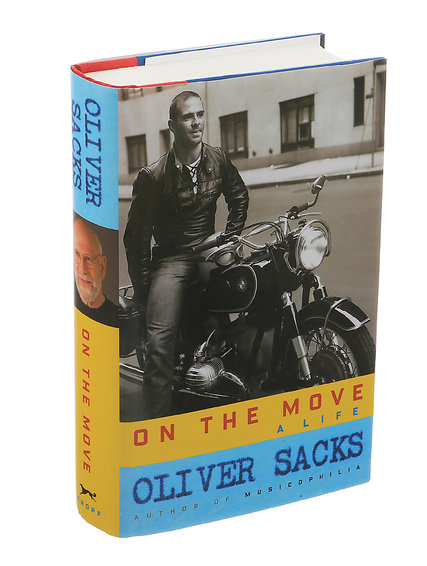
Meanwhile, I am reading On the Move: A Life by Oliver Sacks, the doctor and neurologist who was also a best-selling author.

28sacks-sub-blog427-v3

He wrote Awakenings, which was adapted into one of my favorite movies in 1990. Anyway, I am enjoying his autobiography immensely. It is so well-written! (I watched Awakenings on Sunday night–so good!) Remember this:

Wonderful.

The warm weather has encouraged last year’s Chrysanthemums to re-bloom,

img_2238 and the roses to keep coming.

img_2241

There’s a lesson in there somewhere for all of  us. Keep going.

“Even if I knew that tomorrow the world would go to pieces, I would still plant my apple tree.”

–Martin Luther

“We could be confidantes. Confiding confidentially.”*

by chuckofish

It is November, but it doesn’t feel like it, that’s for sure!

screen-shot-2016-11-01-at-9-00-56-am

I mean really.

We had a quiet Halloween. No one knocked at our door. I watched the Halloween episode of Angel, season 5–“Life of the Party”–the one where Lorne works around the clock to throw the ultimate Halloween party at Wolfram & Hart, but problems arise when he has his sleep removed. Then I watched two more episodes for the heck of it. Not a bad way to spend Halloween.

img_2202

I guess it is time to put away my festive (and very vintage) Halloween candles.

I should note that today is the birthday of the great American pioneer Daniel Boone (1734-1820)

boone_by_audubonwho…

Of all men, saving Sylla, the man-slayer,
Who passes for in life and death most lucky
Of the great names which in our faces stare,
The General Boon, back-woodsman of Kentucky,
Was happiest amongst mortals any where;
For killing nothing but a bear or buck, he
Enjoyed the lonely vigorous, harmless days
Of his old age in wilds of deepest maze.

Lord Byron wrote those lines in Don Juan, Canto 8. Old Dan’l was a pretty famous guy! Anyway, I will remind you that Boone spent those latter days in my flyover state in the appropriately named town of Defiance.

As Boone said, “I firmly believe it requires but a little philosophy to make a man happy in whatsoever state he is. This consists in a full resignation to the will of Providence; and a resigned soul finds pleasure in a path strewed with briars and thorns.”

I concur. Discuss among yourselves.

*Fred in the “Life of the Party” episode of Angel, season 5

The portrait of Boone is by John James Audubon.

Rescued from oblivion

by chuckofish

3fb3a4cf3388ec7871fa4f7f753cf10b

Even the most cursory of diaries can be of incalculable value. What the weather was doing. Who we ran into on the street. The movie we saw. The small boy at the dentist’s office. The dream.

Just a handful of the barest facts can be enough to rescue an entire day from oblivion — not just what happened in it, but who we were when it happened. Who the others were. What it felt like back then to be us.

“Our years come to an end like a sigh . . . ” says Psalm 90, “so teach us to number our days that we may get a heart of wisdom” (w. 9,12).

It is a mark of wisdom to realize how precious our days are, even the most uneventful of them. If we can keep them alive by only a line or so about each, at least we will know what we’re sighing about when the last of them comes.

~ Frederick Buechner, Beyond Words

img_2225

The illustration of parked cars on a residential street is from This is New York by Miroslav Sasek.

Alive and well somewhere

by chuckofish

7368efff67e1bbf2ff541d92abd8238f

“What do you think has become of the young and old men?
And what do you think has become of the women and children?

They are alive and well somewhere,
The smallest sprout shows there is really no death,
And if ever there was it led forward life, and does not wait at the
end to arrest it,
And ceas’d the moment life appear’d.

All goes onward and outward, nothing collapses,
And to die is different from what any one supposed, and luckier.”

― Walt Whitman, Song of Myself 

I went to a memorial service yesterday at the Unitarian Church on “Holy Corners” in the Central West End.

first_unitarian

You can see the Christian Scientist and Methodist churches in the background, built in better days around the turn of the 20th century.

first_unitarian102

The Unitarian Church was built on a more humble scale and added to accordingly. It turns out it was the church of William Greenleaf  Eliot, the founder of my flyover university and also of the girls’ school I attended. Not that he would recognize this congregation.

Anyway, I had never been to a Unitarian memorial service before. The music was pretty bad and there was only one scripture reading–a terrible translation of Psalm 39–and one prayer. (We never even said the Lord’s Prayer.) The minister gave a long homily about the mystery of life and how everything dies, and a  long eulogy about the deceased, and the husband of the deceased gave a long eulogy. Like her parents, she was a lifelong member of the church and a serious Unitarian and social justice warrior. She and her husband were also big supporters of their partner church in Transylvania–yes, there are Unitarians in Transylvania! They are the second largest group of Unitarians in the world!  It is amazing what one doesn’t know about people.

Well, it all got me thinking about old Walt Whitman’s lines about death in Song of Myself, which seem very Unitarian in spirit to me but are more meaningful than anything I heard in the service. I like to think that my friend is alive and well somewhere, although I guess that’s not what she expected.

*The painting is “Moonlight” by Fausto Zonaro (1854 – 1929)

On the way to knowing

by chuckofish

4ef9ad6caac765ce9e1a42315c59196b

I always think that the best way to know God is to love many things. Love a friend, a wife, something–whatever you like–you will be on the way to knowing more about Him; that is what I say to myself. But one must love with a lofty and serious intimate sympathy, with strength, with intelligence; and one must always try to know deeper, better, and more. That leads to God, that leads to unwavering faith.

–Vincent Van Gogh

To be a fool

by chuckofish

kansas

Today is the birthday of the great Quaker John Woolman (1720–1782).

I find that to be a fool as to worldly wisdom, and commit my cause to God, not fearing to offend men, who take offence at the simplicity of truth, is the only way to remain immoved by the sentiments of others. The fear of man brings a snare; by halting in our duty, and going back in the time of trial, our hands grow weaker, our spirits get mingled with the people, our ears grow dull as to hearing the language of the True Shepherd; that when we look at the way of the righteous, it seems as though it was not for us to follow them.

There is a love clothes my mind, while I write, which is superior to all expressions; and I find my heart open to encourage a holy emulation, to advance forward in Christian firmness. Deep humility is a strong bulwark; and as we enter into it, we find safety. The foolishness of God is wiser than  man, and the weakness of God is stronger than man. Being unclothed of our own wisdom and knowing the abasement of the creature, therein we find that power to arise which gives health and vigor to us.

–Journal, 1774

Celebrate accordingly.

“Hold Thou Thy cross before my closing eyes, Shine through the gloom and point me to the skies”

by chuckofish

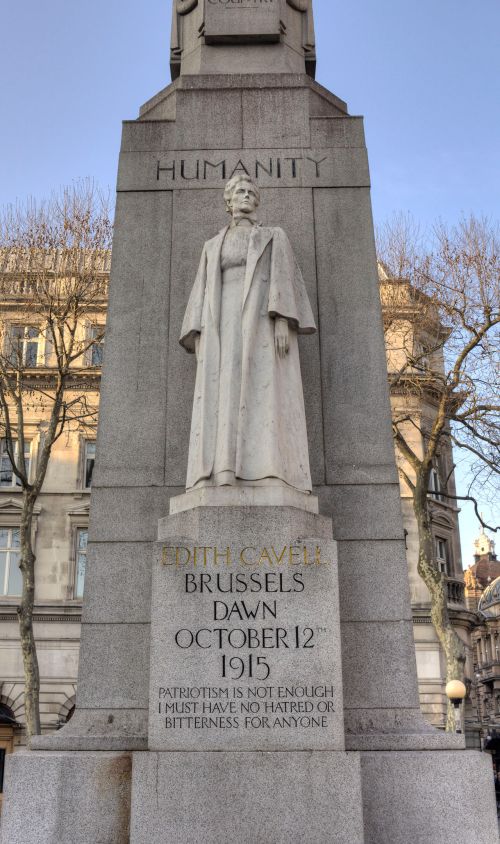
edith_cavel_memorial_-_statue

This is the day Nurse Edith Cavell was executed in 1915 by the Germans during WWI.

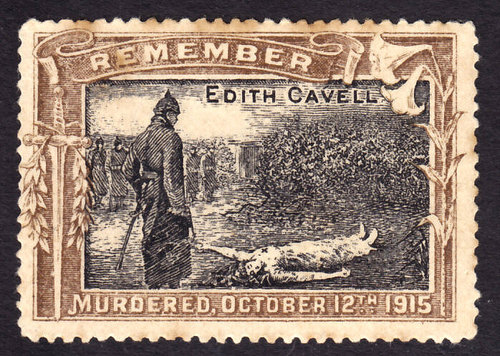
c-_1916_edith_cavell_propaganda_stamp

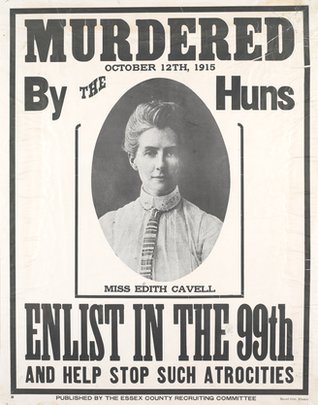
Accused of treason, i.e. helping British and French soldiers to cross the border and eventually enter Britain, Edith was found guilty by a court-martial and sentenced to death. Despite international pressure for mercy, she was shot by a German firing squad. Her execution received worldwide condemnation and extensive press coverage. While the First Geneva Convention ordinarily guaranteed protection of medical personnel, the German authorities justified prosecution merely on the basis of the German law and the interests of the German state. What were they thinking?

In the months and years following Edith’s death, countless newspaper articles, pamphlets, images, and books publicized her story. Her execution was represented as an act of German barbarism and moral depravity. (As it turned out, they weren’t wrong on that count.) The Allies claimed Edith as a martyr and she became an iconic propaganda figure for military recruitment in Britain. Within eight weeks of her death, enlistment into the British Army had doubled.

_74270819_iwm_pst_012217_iwm_highres

Edith, aged 49, was executed by firing squad just outside Brussels on October 12, 1915. Permission was given for the English Chaplain, the Rev. Stirling Gahan, to visit her the night before she died and together they repeated the words to the hymn Abide With Me. It was also to Gahan that Edith made her famous comment that “patriotism is not enough”. Her strong Anglican beliefs propelled her actions and so the Church of England commemorates her in their calendar of saints on October 12.  Although we do not commemorate Edith Cavell on our Episcopal calendar, I think it is fitting that we recognize her here.

Martyrs never regret
what they have done
having done it.
Amazing too
they never frown.
It is all so mysterious
the way they remain
above us
beside us
within us;
how they beam
a human sunrise
and are so proud.

–Alice Walker