dual personalities

Category: Spirituality

Teach me, my God and King, in all things thee to see*

by chuckofish

Screen Shot 2017-02-05 at 1.47.32 PM.png

Got to hold this little nugget this weekend. It felt real good.

I also gabbed on the phone with my dual personality and two daughters. I got my hair cut and put together two Valentine boxes to mail to the aforementioned daughters. I worked in the yard on Sunday when the temperatures soared into the fifties.

The boy came over and helped me take down one twin bed in his old room and haul it and the mattress down to the basement. Then, after carrying the pieces upstairs, he put together the antique double bed I bought at an estate sale last fall (remember?). He is one busy boy and I appreciate his coming over to help his old mother. We didn’t even give him dinner; he was headed somewhere afterwards.

I continued to read The Transit of Venus by Shirley Hazzard–really such a treat.

The cicatrice of stitching on her gloves was an imprint on his brain. Earrings of pearl stared, white-eyed as fish. There was a streak of flowered scarf, inane, and the collar blue. Grief had a painter’s eye, assigning arbitrary meaning at random–like God.

We watched two  movies that are practically antiques–The Scarlet Pimpernel (1934) and Captain Blood (1935)–but which, in all the years since they were made, have never been surpassed on so many levels of cinematic effort. We watched a bit of the Super Bowl because the OM wanted to. Truly, I haven’t cared about football since Kurt Warner was traded to Arizona. (Except for Peyton Manning and he retired.)

I felt very happy sitting in church on Sunday. Nothing/no one annoyed me. I will try to hold on to this feeling and carry it into the work week.

Go in peace to love and serve the Lord.

*George Herbert, hymn #592
God direct my thinking today

by chuckofish

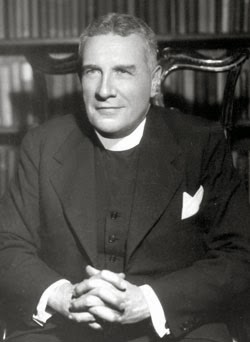
Yesterday on the Episcopal Church calendar was the lesser feast day of Sam Shoemaker, (1893-1963), who was an Episcopal priest instrumental in the Oxford Group and founding principles of Alcoholics Anonymous.

Shoemaker.jpg

Lest we forget, Dr. Samuel Moor Shoemaker was the rector of the Calvary Church in New York City, which was the U.S. headquarters of the Oxford Group. Bill Wilson attended Oxford Group meetings at the Calvary Church and Sam was instrumental in assisting Bill Wilson with the writing of the book Alcoholics Anonymous (nickname: The Big Book).

In 1917 Sam Shoemaker was sent to China to start a branch of the YMCA and to teach at the Princeton-in-China Program. Feeling discouraged there in 1918, he first met Frank Buchman, who told him of the four absolutes, honesty, purity and unselfishness and love. Shoemaker would later speak of the meeting as a major influence for the start of his ministry, that being the time when he decided to let go of self and let God guide his life.

Bill Wilson would later give credit to Sam Shoemaker whom he referred to as a co-founder of AA.

” It was from Sam Shoemaker, that we absorbed most of the Twelve Steps of Alcoholics Anonymous, steps that express the heart of AA’s way of life. Dr. Silkworth gave us the needed knowledge of our illness, but Sam Shoemaker had given us the concrete knowledge of what we could do about it, he passed on the spiritual keys by which we were liberated. The early AA got its ideas of self-examination, acknowledgement of character defects, restitution for harm done, and working with others straight from the Oxford Group and directly from Sam Shoemaker, their former leader in America, and from nowhere else.”

Rev. Shoemaker wrote over thirty books, at least half of which were circulating before AA’s 12 Steps were first published in the Big Book in 1939. Shoemaker’s contributions and service to Alcoholics Anonymous and as a minister of the Anglican Communion and Episcopal Church of America have had a worldwide effect. The philosophy that Shoemaker codified, in conjunction with Bill Wilson, is used in almost every country around the world to treat alcoholism.

God bless these amazing guys who started AA! Truly their coming together and working out the AA system was a miracle.

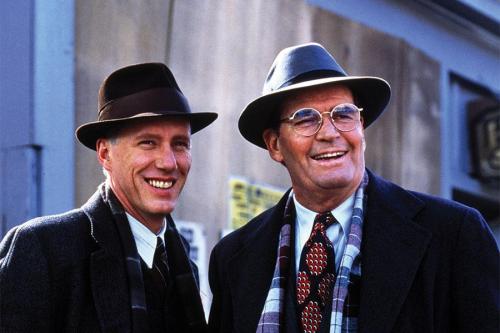
There is, by the way, a good made-for-tv movie called My Name is Bill W. (1989 Hallmark Hall of Fame) starring James Woods and James Garner. It is based on the true story of William Griffith Wilson and Dr. Robert Holbrook Smith, M.D.,  the co-founders of AA.

promise-1-900x600.jpg

James Woods won an Emmy for his portrayal of Wilson. I don’t remember if Sam Shoemaker is featured as a character–they no doubt soft-pedaled the spiritual side of the story. I think I will see if I can find it to watch. I remember thinking it was excellent at the time.

Holy God, we give thanks to thee for the vision of Samuel Shoemaker, who labored for the renewal of all people: Grant, we pray, that we may follow his example to help others find salvation through the knowledge and love of Jesus Christ our Savior; who with thee and the Holy Spirit liveth and reigneth, one God, for ever and ever. Amen.

A lot of material for this post is lifted from http://www.satucket.com/lectionary/sam_shoemaker.htm

Grant us strength and courage

by chuckofish

Quelle busy weekend! The weather was beautiful on Saturday (72 degrees!) so everyone, including me, was out and about.

Grandpappy and I visited the wee babes at the hospital.

Lottie.jpg

Lottie is now big enough to fit into preemie clothes!

IMG_0452.jpg

Little boy is over 3 lbs! It won’t be long before he can wear pants too.

IMG_0423.jpg

On the social side we went out to dinner with old friends. I attended my church’s annual meeting and stayed for the service following. Afterwards I had lunch with my pal Carla.

In between all these activities I managed to work in the yard and go to an estate sale,  but there was not much time for puttering around the house.

IMG_2384.JPG

Having finished The Thin Man, I  moved into deeper water and started to re-read the wonderful A Testament of Devotion by Thomas R. Kelly, a hero among Quakers and in the larger world of Christian mystics.

To this extraordinary life I call you–or He calls you through me–not as a lovely ideal, a charming pattern to aim at hopefully, but as a serious, concrete program of life, to be lived here and now, in industrial America, by you and by me.

This is something wholly different from mild, conventional religion which, with respectable skirts held back by dainty fingers, anxiously tries to fish the world out of the mudhole of its own selfishness. Our churches, our meeting houses are full of such respectable and amiable people. We have plenty of Quakers to follow God the first half of the way. Many of us have become as mildly and as conventionally religious as were the church folk of three centuries ago, against whose mildness and mediocrity and passionlessness George Fox and his followers flung themselves with all the passion of a glorious and a new discovery and with all the energy of dedicated lives. In some, says William James, religion exists as a dull habit, in others as an acute fever. Religion as a dull habit is not that for which Christ lived and died.

The weekend sped by and now it is Monday once again. I’m off to the salt mine. Enjoy your day, okay?

*BCP, Post-Communion Prayer

By the way

by chuckofish

Screen Shot 2017-01-11 at 8.59.18 AM.png

Thank you, Billy Graham, for reminding us.

50e97854f7e4b3a8e5408b04df00e067.jpg

Some of us seem to have forgotten this.

And also let’s try:

Screen Shot 2017-01-11 at 3.47.05 PM.pngThank you, Instagram!

Have a good Thursday. We are bracing for a winter storm/ice storm–oh, boy! We’ll do our best to keep calm and carry on.

Incarnate words

by chuckofish

c27680bed2c1e89b93a9c348781deb04.jpg

If God speaks anywhere, it is into our personal lives that he speaks. Someone we love dies, say. Some unforeseen act of kindness or cruelty touches the heart or makes the blood run cold. We fail a friend, or a friend fails us, and we are appalled at the capacity we all of us have for estranging the very people in our lives we need the most. Or maybe nothing extraordinary happens at all — just one day following another, helter-skelter, in the manner of days. We sleep and dream. We wake. We work. We remember and forget. We have fun and are depressed. And into the thick of it, or out of the thick of it, at moments of even the most humdrum of our days, God speaks. But what do I mean by saying that God speaks? He speaks not just through the sounds we hear, of course, but through events in all their complexity and variety, through the harmonies and disharmonies and counterpoint of all that happens. As to the meaning of what he says, there are times that we are apt to think we know. Adolf Hitler dies a suicide in his bunker with the Third Reich going up in flames all around him, and what God is saying about the wages of sin seems clear enough. Or Albert Schweitzer renounces fame as a theologian and musician for a medical mission in Africa, where he ends up even more famous still as one of the great near-saints of Protestantism; and again we are tempted to see God’s meaning as clarity itself. But what is God saying through a good man’s suicide? What about the danger of the proclaimed saint’s becoming a kind of religious prima donna as proud of his own humility as a peacock of its tail? What about sin itself as a means of grace? What about grace, when misappropriated and misunderstood, becoming an occasion for sin? To try to express in even the most insightful and theologically sophisticated terms the meaning of what God speaks through the events of our lives is as precarious a business as to try to express the meaning of the sound of rain on the roof or the spectacle of the setting sun. But I choose to believe that he speaks nonetheless, and the reason that his words are impossible to capture in human language is of course that they are ultimately always incarnate words. They are words fleshed out in the everydayness no less than in the crises of our own experience.

–Frederick Buechner, The Sacred Journey

 The painting is  The Black Sea at Night by Ivan Aivazovsky

Yea, amen! let all adore thee*

by chuckofish

It was a busy week. Daughter #2 came home and between going to work, trips to the NICU at the hospital and an ice storm, we managed to trim the big tree

img_2312

and watch Miracle on 34th Street (1947) and Edward Scissorhands (1990). We even made several fires in the fireplace without the aid of our Eagle Scout who did come and help us wrangle the tree into the tree stand. Merci beaucoup.

img_2311

Daughter #2 graded 29 papers and the OM gassed up the cars.

We went to church yesterday, the fourth Sunday in Advent, and sang the rest of the advent hymns. The rector gave us all high fives for showing up. In fact, a lot of churches were closed because of the weather and very cold temperatures. This is a new thing. On Saturday night you see the names of church closings scrolling on the bottom of your television screen, just like school closings during the week. [Insert eye roll here.] Please.

Today we will go back to work for a few days and visit the hospital and get ready for daughter #1’s arrival on Friday. And we will “rejoice! rejoice!” because, you know, “Emmanuel shall come to thee, O Israel!”

Have a good week and stay calm.

*Hymn 57, Charles Wesley

“I am excessively diverted.”*

by chuckofish

Today on the Episcopal calendar of saints we commemorate two Episcopal architects and an Episcopal artist: Ralph Adams Cram, Richard Upjohn and John La Farge.

Upjohn (22 January 180216 August 1878) was an English-born architect who emigrated to the United States and became most famous for his Gothic Revival churches.

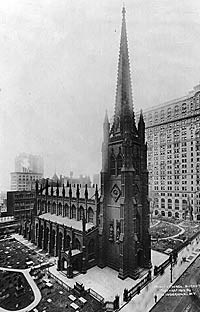
His family initially settled in New Bedford, Massachusetts and then moved on to Boston in 1833, where he worked in architectural design. He had relocated to New York by 1839 where he worked on alterations to Trinity Church. The alterations were later abandoned and he was commissioned to design a new church, completed in 1846.

trinity_church_ny

Trinity then and now…

trinity_church_nyc_004b

He published his extremely influential book, Upjohn’s rural architecture: Designs, working drawings and specifications for a wooden church, and other rural structures, in 1852.

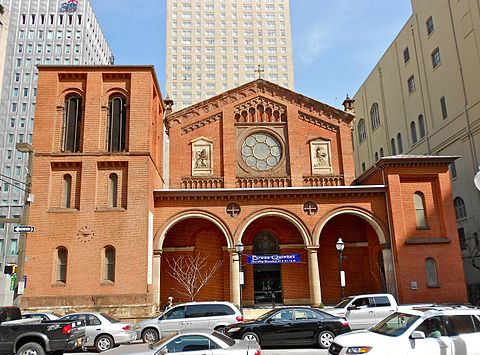
Upjohn designed many buildings in a variety of styles–such as St. Paul’s Episcopal Church in Baltimore which combines 12th-century Italian elements on the exterior and Romanesque elements on the interior–

st_pauls_baltimore

but he is most identified with Gothic Revival Episcopal churches.

600px-church_of_the_holy_comforter_poughkeepsie_ny

Episcopal Church of the Holy Comforter in Poughkeepsie, NY

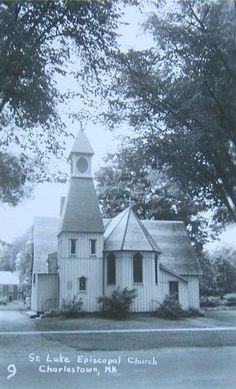
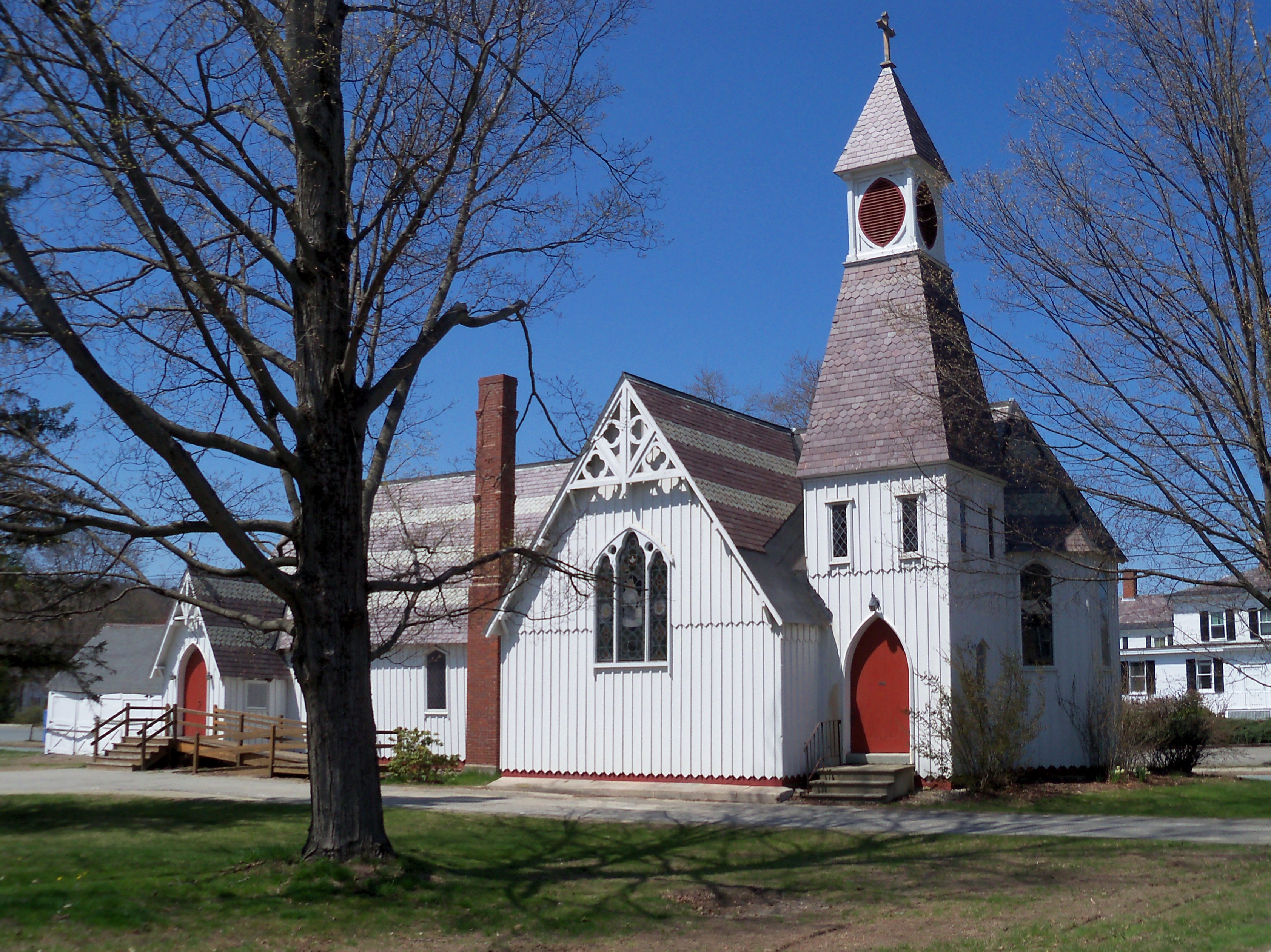
However, he also designed the much more humble and very charming Gothic Revival St. Luke’s Episcopal Church in North Charlestown, New Hampshire where our ancestors the Rands were members. I’d love to know the backstory on this!

6d89fbcb257e850ad92bdcefec7d9b0e

A small country church with a cruciform plan sheathed in board and batten siding with zigzag bottom edges. Its nave runs in an east/west direction, bisected by transepts and ending in a polygonal apse at the east end. A shed addition abuts the north end of the apse. The placement of a square tower at the southeast corner dominates the otherwise symmetrical plan. The first-floor tower window is a small peaked rectangular window with entry through a pointed arch doorway on the south side. Second-story windows are rectangular. Apse windows have a low pointed shape with label molds. Above the two-story base, the tower is capped by a steeply pitched truncated hip roof sheathed in hexagonal and regular slate shingles, capped by a smaller square stage with a louvered. almond shaped opening on each side and surmounted by a pyramidal roof topped by a cross. Remaining roof surfaces are sheathed in alternating bands of green and purple slate. Each of the transept ends features a tripart trefoil arch window. Rafters support the projecting eaves with a collar tie adorned by four cutout quatrefoil designs. The nave is four bays wide with small peaked rectangular windows. A small steeply pitched gable vestibule extends from the rear of the south side. Located in the rear of the nave is a six-part circular stained glass window capped by a collar tie similar to those in the transepts.

The church was designed in 1863 by Richard Upjohn, a prominent New York ecclesiastical architect and is New Hampshire’s only wooden church by Upjohn. Ground broken July 4, 1863; completed December 10, 1863; consecrated December 11, 1863. The church was enlarged in 1869 by the architect’s son, Richard M. Upjohn, by moving the nave back 22 feet and building transepts, a tower and steeple. (National Register Nomination Information)

89431211

So hats off and a toast to Ralph, John and especially Richard, saints of the Church, and a prayer too:

Gracious God, we thank you for the vision of Ralph Adams Cram, John LaFarge and Richard Upjohn, whose harmonious revival of the Gothic enriched our churches with a sacramental understanding of reality in the face of secular materialism; and we pray that we may honor your gifts of the beauty of holiness given through them, for the glory of Jesus Christ; who lives and reigns with you and the Holy Spirit, one God, in glory everlasting. Amen.

*Jane Austen, Pride and Prejudice

Lighten up

by chuckofish

unknown-2

“I hear that in many places something has happened to Christmas; that it is changing from a time of merriment and carefree gaiety to a holiday which is filled with tedium; that many people dread the day and the obligation to give Christmas presents is a nightmare to weary, bored souls; that the children of enlightened parents no longer believe in Santa Claus; that all in all, the effort to be happy and have pleasure makes many honest hearts grow dark with despair instead of beaming with good will and cheerfulness.”

–Julia Peterkin, “A Plantation Christmas,” 1934

Today is the first day of  December. Let’s try not to get all stressed out.

Remember that Jesus is the reason for the season–not some unattainable perfection of decorating or entertaining. Relax. Pay attention. Have fun.

And listen to this:

I feel better. Don’t you?

Faithful soldiers and servants

by chuckofish

77093bd7e81f23008c43156a19051dfb

Blessed Lord, who wast tempted in all things like as we are, have mercy upon our frailty. Out of weakness give us strength; grant to us thy fear, that we may fear thee only; support us in time of temptation; embolden us in time of danger; help us to do thy work with good courage, and to continue thy faithful soldiers and servants unto our life’s end.

–Brooke Foss Westcott, British bishop, biblical scholar and theologian, serving as Bishop of Durham from 1890 until his death in 1901

7cm511

f4054a10a2606770539c938c24d947a7

h0062-l73179769

70f0d15aa8727a408c200dc4a2d8fe19

These woodcuts are by Frances Hammell Gearhart (b. 1869-1958), California artist known for her color woodcuts of the Sierras, the Pacific Coast, and the area around Big Bear Lake. Aren’t they wonderful?

“Dream sweet dreams. Maybe we are both dreaming. Maybe this is all a dream, and in the morning, Mommy will wake us up with milk and cookies.”*

by chuckofish

Earlier in the week I read this interesting blogpost about when God speaks to you directly through a movie. The author says that God spoke to him in Little Boy (2015)

mv5bmtu5mjmyodcxmf5bml5banbnxkftztgwmziwmdm2nde-_v1_uy1200_cr8506301200_al_

in which an eight-year-old boy (“Little Boy”) is willing to do whatever it takes to end World War II so his father can come home. Of course, I had to see this highly-recommended movie!

God, however, did not speak to me through this movie. (Nor did I expect him to.) It was a good movie, but I found it disappointing and even mildly irritating. A well-meaning priest gives the boy a list of things he must do to prove his faith before he can “move a mountain”. When he completes the list, he actually “moves” the local mountain when there is an earthquake. Then (spoiler alert!) the U.S. drops the “Little Boy” atomic bomb on Hiroshima, which eventually does bring his father home. Well, well. To me, this is marred theology.

But I get it. I totally understand what the author means when he says God spoke to him personally through a movie (any movie) and the blogpost got me thinking about when/if this had been my experience.

For me, the movie that comes immediately to mind is Life Is Beautiful (1997) which was written and directed by Roberto Benigni, who also starred in it.

vitaebella

When I saw that movie, I finally comprehended the absurdity and horror of the Holocaust, and God opened my heart to the Jewish people.

Perhaps that is the key: our frozen hearts can be melted by a film and God speaks to us. Can you think of when this happened to you? Has a movie ever changed you?

Discuss among yourselves.

By the way, if you are in the mood for a “feel good” movie, I recommend Eddie the Eagle (2016) about the British ski jumper and Olympian Eddie Edwards. It actually made me feel good and I enjoyed watching Hugh Jackman as Eddie’s American “Coach” Bronson Peary.

267b84ff00000578-2989705-big_day_on_tuesday_hugh_cheerily_announced_that_filming_had_offi-a-8_1426110465401

Have a good weekend.

*Guido in Life Is Beautiful (1997)