dual personalities

Category: Poetry

The moon is mine

by chuckofish
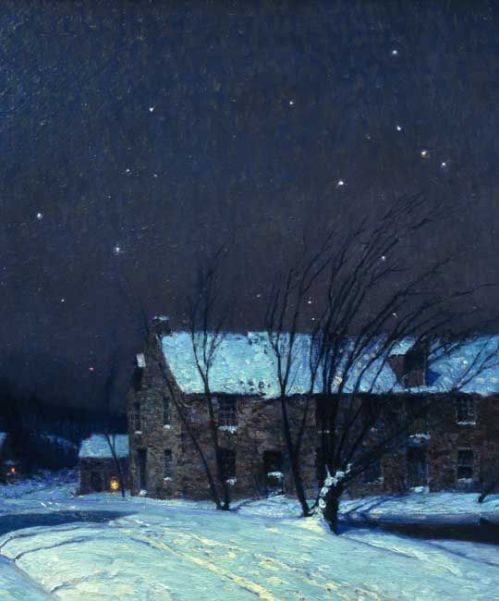
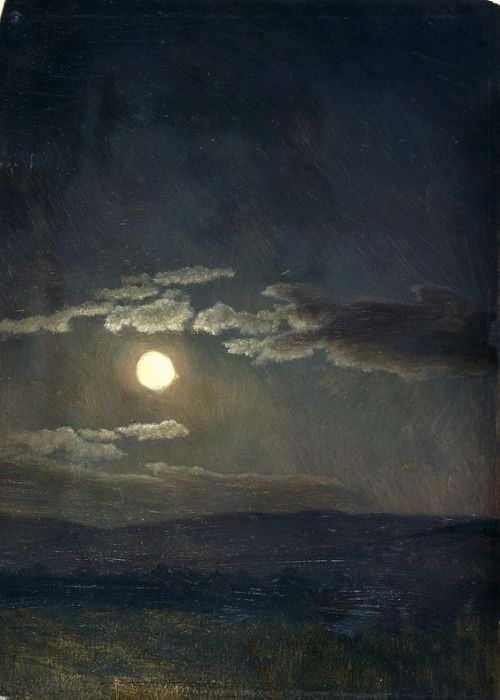
George Sotter (1879-1953)

I have a compact to commune
A monthly midnight with the Moon;
Into its face I stare and stare,
And find sweet understanding there.

As quiet as a toad I sit
And tell my tale of days to it;
The tessellated yarn I’ve spun
In thirty spells of star and sun.

And the Moon listens pensively,
As placid as a lamb to me;
Until I think there’s just us two
In silver world of mist and dew.

In all of spangled space, but I
To stare moon-struck into the sky;
Of billion beings I alone
To praise the Moon as still as stone.

And seal a bond between us two,
Closer than mortal ever knew;
For as mute masses I intone
The Moon is mine and mine alone.

–Robert Service, from “Moon-Lover”

In case you have forgotten, a tessellation of a flat surface is the tiling of a plane using one or more geometric shapes, called tiles, with no overlaps and no gaps. In mathematics, tessellations can be generalized to higher dimensions and a variety of geometries. A periodic tiling has a repeating pattern.

(I’ll admit, I had to look it up.)

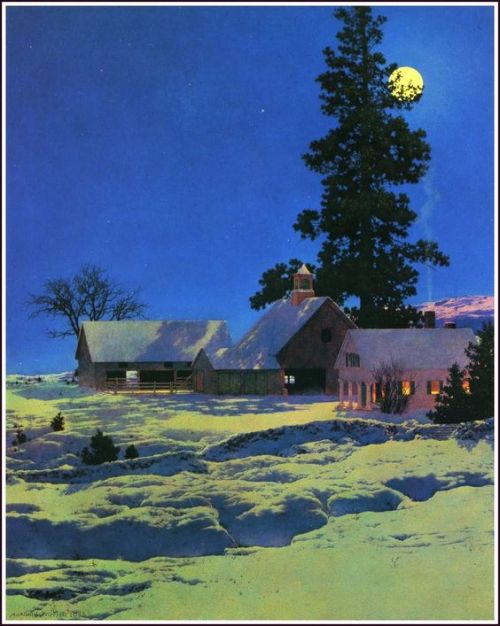
The painting above (“Silent Night” c. 1923) is by George Sotter (1979-1952). The paintings that follow are by Maxfield Parrish, Bertha Lum and Albert Bierstadt.

e9c8e643777bab76efe6db2d1496f0b4.jpg

46c419dbea0e3d2945be715133263b10.jpg

fb74b07596c1d312091892baaf87b01c.jpg

All photos from Pinterest.

Against the arrows of the coming sun

by chuckofish

12914607_G.jpg

Within the circuit of this plodding life
There enter moments of an azure hue,
Untarnished fair as is the violet
Or anemone, when the spring stew them
By some meandering rivulet, which make
The best philosophy untrue that aims
But to console man for his grievences.
I have remembered when the winter came,
High in my chamber in the frosty nights,
When in the still light of the cheerful moon,
On the every twig and rail and jutting spout,
The icy spears were adding to their length
Against the arrows of the coming sun,
How in the shimmering noon of winter past
Some unrecorded beam slanted across
The upland pastures where the Johnwort grew;
Or heard, amid the verdure of my mind,
The bee’s long smothered hum, on the blue flag
Loitering amidst the mead; or busy rill,
Which now through all its course stands still and dumb
Its own memorial, – purling at its play
Along the slopes, and through the meadows next,
Until its youthful sound was hushed at last
In the staid current of the lowland stream;
Or seen the furrows shine but late upturned,
And where the fieldfare followed in the rear,
When all the fields around lay bound and hoar
Beneath a thick integument of snow.
So by God’s cheap economy made rich
To go upon my winter’s task again.

–Henry David Thoreau

12909748_G.jpg

Flyover photos via KMOV.com

The old broken links of affection restored

by chuckofish

8268e3b3ba484ed5694736ba1f29165d

Another fine poem by John Greenleaf Whittier:

Oh, greenly and fair in the lands of the sun,

The vines of the gourd and the rich melon run,

And the rock and the tree and the cottage enfold,

With broad leaves all greenness and blossoms all gold,

Like that which o’er Nineveh’s prophet once grew,

While he waited to know that his warning was true,

And longed for the storm-cloud, and listened in vain

For the rush of the whirlwind and red fire-rain.


On the banks of the Xenil the dark Spanish maiden

Comes up with the fruit of the tangled vine laden;

And the Creole of Cuba laughs out to behold

Through orange-leaves shining the broad spheres of gold;

Yet with dearer delight from his home in the North,

On the fields of his harvest the Yankee looks forth,

Where crook-necks are coiling and yellow fruit shines,

And the sun of September melts down on his vines.


Ah! on Thanksgiving day, when from East and from West,

From North and from South comes the pilgrim and guest;

When the gray-haired New Englander sees round his board

The old broken links of affection restored,

When the care-wearied man seeks his mother once more,

And the worn matron smiles where the girl smiled before,

What moistens the lip and what brightens the eye?

What calls back the past, like the rich Pumpkin pie?


Oh, fruit loved of boyhood! the old days recalling,

When wood-grapes were purpling and brown nuts were falling!

When wild, ugly faces we carved in its skin,

Glaring out through the dark with a candle within!

When we laughed round the corn-heap, with hearts all in tune,

Our chair a broad pumpkin,—our lantern the moon,

Telling tales of the fairy who travelled like steam

In a pumpkin-shell coach, with two rats for her team!


Then thanks for thy present! none sweeter or better

E’er smoked from an oven or circled a platter!

Fairer hands never wrought at a pastry more fine,

Brighter eyes never watched o’er its baking, than thine!

And the prayer, which my mouth is too full to express,

Swells my heart that thy shadow may never be less,

That the days of thy lot may be lengthened below,

And the fame of thy worth like a pumpkin-vine grow,

And thy life be as sweet, and its last sunset sky

Golden-tinted and fair as thy own Pumpkin pie!

thanksgivingpeanuts

Thanks—joyful thanks!

by chuckofish

Here we are halfway through November and Thanksgiving is a week from today! Let’s get serious about having thankful thoughts! Here’s some Walt Whitman to help with that.

342d59d96c2bbe073a06030dc4929af6

Thanks in old age—thanks ere I go,

For health, the midday sun, the impalpable air—for life, mere
life,

For precious ever-lingering memories, (of you my mother dear
—you, father—you, brothers, sisters, friends,)

For all my days—not those of peace alone—the days of war the
same,

For gentle words, caresses, gifts from foreign lands,

For shelter, wine and meat—for sweet appreciation,

(You distant, dim unknown—or young or old—countless, un-
specified, readers belov’d,

We never met, and ne’er shall meet—and yet our souls embrace,
long, close and long;)

For beings, groups, love, deeds, words, books—for colors, forms,

For all the brave strong men—devoted, hardy men—who’ve for-
ward sprung in freedom’s help, all years, all lands,

For braver, stronger, more devoted men—(a special laurel ere I
go, to life’s war’s chosen ones,

The cannoneers of song and thought—the great artillerists—the
foremost leaders, captains of the soul:)

As soldier from an ended war return’d—As traveler out of
myriads, to the long procession retrospective,

Thanks—joyful thanks!—a soldier’s, traveler’s thanks.

–Walt Whitman, 1888-89

bruce-yardley
patrick-william-adam
mark-oneill

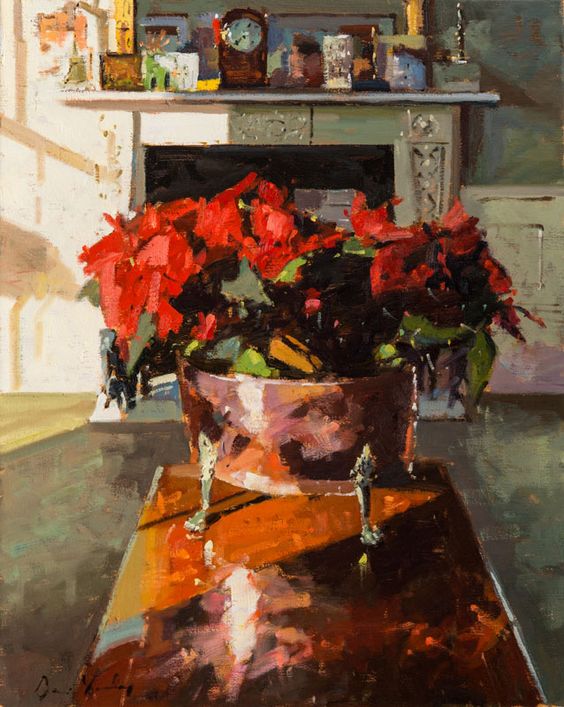
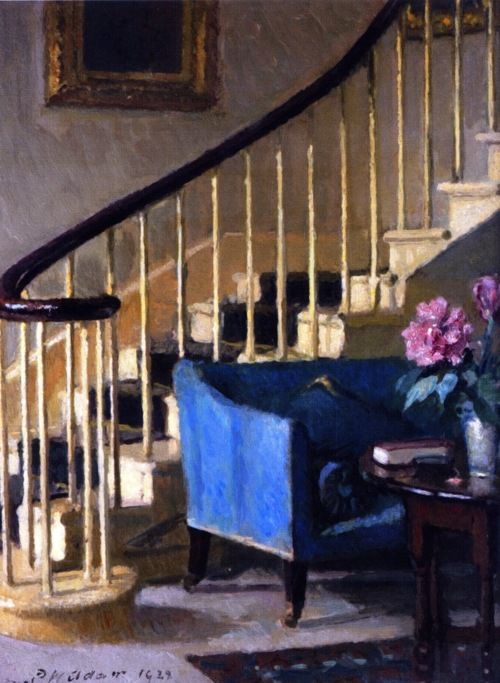
The paintings are by John McCartin, Patrick William Adam, Bruce Yardley, and Mark O’Neill. Pretty pictures always help, right?

Variations on a theme

by chuckofish

Photo courtesy of the Missouri Dept. of Conservation

Photo courtesy of the Missouri Dept. of Conservation

“We pray for the big things and forget to give thanks for the ordinary, small (and yet really not small) gifts.”

–Dietrich Bonhoeffer, Life Together

We’ve quoted Bonhoeffer before on the subject of thankfulness, but can we ever say it often enough? Probably not. It is so central to our well-being.

November is a good month to take a look at the things for which we are thankful, so I plan to do that.

Meanwhile, here’s a poem by W.S. Merwin:

Thank you my life long afternoon
late in this spring that has no age
my window above the river
for the woman you led me to
when it was time at last the words
coming to me out of mid-air
that carried me through the clear day
and come even now to find me
for old friends and echoes of them
those mistakes only I could make
homesickness that guides the plovers
from somewhere they had loved before
they knew they loved it to somewhere
they had loved before they saw it
thank you good body hand and eye
and the places and moments known
only to me revisiting
once more complete just as they are
and the morning stars I have seen

And I am thankful for the flyover view.

“Grumbling and gratitude are, for the child of God, in conflict. Be grateful and you won’t grumble. Grumble and you won’t be grateful.”
―Billy Graham

You can do it!

by chuckofish

screen-shot-2016-09-28-at-6-50-38-pm

This made me LOL.

Also it got me thinking about support and encouragement, which are all very well and good, but lest we forget, here’s a word from Ralph Waldo Emerson on self-reliance:

“Whatever you do, you need courage. Whatever course you decide upon, there is always someone to tell you that you are wrong. There are always difficulties arising that tempt you to believe your critics are right. To map out a course of action and follow it to an end requires some of the same courage that a soldier needs. Peace has its victories, but it takes brave men and women to win them.”

And a poem by Mary Oliver to get you moving:

THE FOURTH SIGN OF THE ZODIAC (PART 3)

I know, you never intended to be in this world.
But you’re in it all the same.

So why not get started immediately.

I mean, belonging to it.
There is so much to admire, to weep over.

And to write music or poems about.

Bless the feet that take you to and fro.
Bless the eyes and the listening ears.
Bless the tongue, the marvel of taste.
Bless touching.

You could live a hundred years, it’s happened.
Or not.
I am speaking from the fortunate platform
of many years,
none of which, I think, I ever wasted.
Do you need a prod?
Do you need a little darkness to get you going?
Let me be as urgent as a knife, then,
and remind you of Keats,
so single of purpose and thinking, for a while,
he had a lifetime.

Have a good weekend. October will be here tomorrow! The last quarter of the year is upon us. Let us make good use of it.

Within our inward temple

by chuckofish

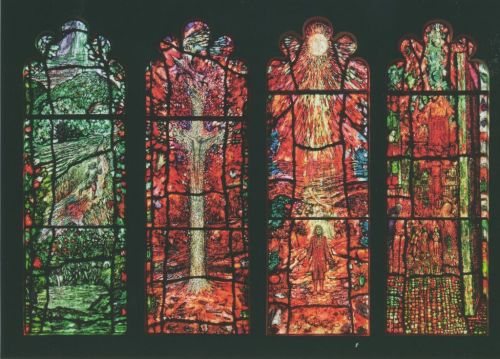
stained_glass_in_the_cathedral_-_geograph-org-uk_-_615756

What powerful Spirit lives within!
What active Angel doth inhabit here!
What heavenly light inspires my skin,
Which doth so like a Deity appear!
A living Temple of all ages, I
Within me see
A Temple of Eternity!
All Kingdoms I descry
In me.

An inward Omnipresence here
Mysteriously like His within me stands,
Whose knowledge is a Sacred Sphere
That in itself at once includes all lands.
There is some Angel that within me can
Both talk and move,
And walk and fly and see and love,
A man on earth, a man
Above.

Dull walls of clay my Spirit leaves,
And in a foreign Kingdom doth appear,
This great Apostle it receives,
Admires His works and sees them, standing here,
Within myself from East to West I move
As if I were
At once a Cherubim and Sphere,
Or was at once above
And here.

The Soul’s a messenger whereby
Within our inward Temple we may be
Even like the very Deity
In all the parts of His Eternity.
O live within and leave unwieldy dross!
Flesh is but clay!
O fly my Soul and haste away
To Jesus’ Throne or Cross!
Obey!

–Thomas Traherne, An Hymn Upon St. Bartholomew’s Day

In commemoration of his poems and spiritual writings, Thomas Traherne is included in the anglican calendar of saints. Today is his feast day (in the Episcopal Church) and this is the collect for the day:

“Creator of wonder and majesty, who didst inspire thy poet Thomas Traherne with mystical insight to see thy glory in the natural world and in the faces of men and women around us: Help us to know thee in thy creation and in our neighbors, and to understand our obligations to both, that we may ever grow into the people thou hast created us to be; through our Savior Jesus Christ, who with thee and the Holy Spirit liveth and reigneth, one God, in everlasting light. Amen.”

The stained glass window is one of the four Traherne Windows in Audley Chapel, Hereford Cathedral, created by stained-glass artist Tom Denny in 2007.

thomas-traherne-stained-glass-1

And I just thought this was really nice:

Poetry amid the jarring notes of day

by chuckofish

440px-john_greenleaf_whittier_bpl_ambrotype_c1840-60-crop
John Greenleaf Whittier (1807 – September 7, 1892) was an American Quaker poet and Abolitionist. One of the “Fireside Poets” of the 19th century, he is hardly read anymore, of course. Whittier, California is named after him and also Whittier College. (Please note: The school mascot is “The Poet.”)

A number of his poems have been turned into hymns, including  Dear Lord and Father of Mankind, taken from his poem “The Brewing Soma”.  You may recall that Whittier was also one of the founding contributors of the magazine Atlantic Monthly and was supportive of women writers, including Sarah Orne Jewett, who dedicated one of her books to him.

You probably know more of his poems than you think. Remember–“Blessings on thee, little man, Barefoot boy, with cheek of tan!”

And how about Barbara Frietchie?

“Up from the meadows rich with corn,
Clear in the cool September morn,

The clustered spires of Frederick stand
Green-walled by the hills of Maryland.”

Here is a favorite of mine; read the entire thing and enjoy.

I mourn no more my vanished years
Beneath a tender rain,
An April rain of smiles and tears,
My heart is young again.

The west-winds blow, and, singing low,
I hear the glad streams run;
The windows of my soul I throw
Wide open to the sun.

No longer forward nor behind
I look in hope or fear;
But, grateful, take the good I find,
The best of now and here.

I plough no more a desert land,
To harvest weed and tare;
The manna dropping from God’s hand
Rebukes my painful care.

I break my pilgrim staff, I lay
Aside the toiling oar;
The angel sought so far away
I welcome at my door.

The airs of spring may never play
Among the ripening corn,
Nor freshness of the flowers of May
Blow through the autumn morn.

Yet shall the blue-eyed gentian look
Through fringed lids to heaven,
And the pale aster in the brook
Shall see its image given;–

The woods shall wear their robes of praise,
The south-wind softly sigh,
And sweet, calm days in golden haze
Melt down the amber sky.

Not less shall manly deed and word
Rebuke an age of wrong;
The graven flowers that wreathe the sword
Make not the blade less strong.

But smiting hands shall learn to heal,–
To build as to destroy;
Nor less my heart for others feel
That I the more enjoy.

All as God wills, who wisely heeds
To give or to withhold,
And knoweth more of all my needs
Than all my prayers have told.

Enough that blessings undeserved
Have marked my erring track;
That wheresoe’er my feet have swerved,
His chastening turned me back;

That more and more a Providence
Of love is understood,
Making the springs of time and sense
Sweet with eternal good;–

That death seems but a covered way
Which opens into light,
Wherein no blinded child can stray
Beyond the Father’s sight;

That care and trial seem at last,
Through Memory’s sunset air,
Like mountain-ranges overpast,
In purple distance fair;

That all the jarring notes of life
Seem blending in a psalm,
And all the angles of its strife
Slow rounding into calm.

And so the shadows fall apart,
And so the west-winds play;
And all the windows of my heart
I open to the day.

(1859)

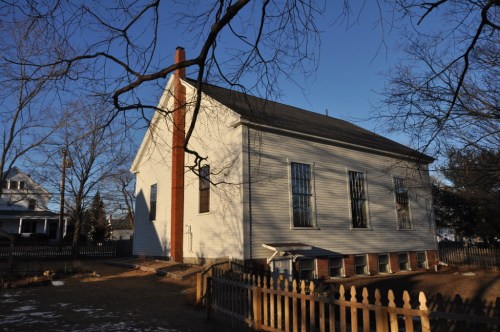
Lovely, lovely, lovely. Also lovely is the Amesbury, MA Friends Meeting House. The simple 1.5 story wood frame building was constructed in 1850, with our poet Whittier serving on the building committee. We are told it is currently a thriving congregation, with Meeting for Worship every Sunday at 10 a.m. The facing bench displays a small plaque that reads, “Whittier’s Bench.”

amesburyma_friendsmeetinghouse_1

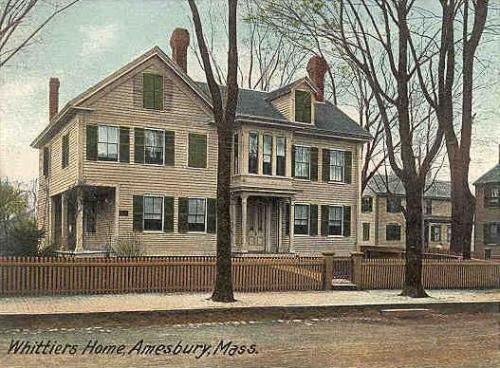
I have never been to Amesbury, but it appears to be a nice place.

whittiers_home_amesbury_ma

Besides Whittier, our ancestor Josiah Bartlett lived there,

josiah_bartletts_statue_amesbury_ma

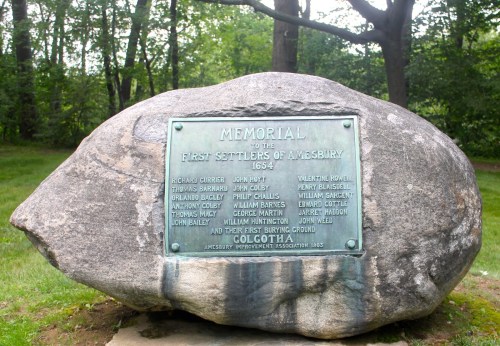
as did Mary Baker Eddy and Robert Frost. And there is this:

amesbury

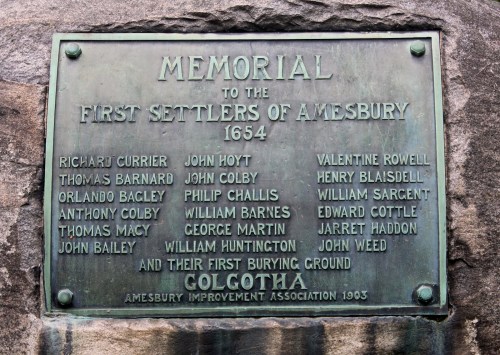
amesbury-first-settlers

I need to check this place out. Have a good Thursday.

“When summer’s end is nighing”*

by chuckofish

IMG_2135

Today I have a big, stressful work event. But when it is over, I will breath a huge sigh of relief and go home and get ready for daughter #1’s arrival tomorrow.

Pray hard that Southwest Airlines comes through and all is smooth “sailing” for daughter #1 (not like last time, hem hem)…

Screen Shot 2016-08-31 at 10.58.39 AM

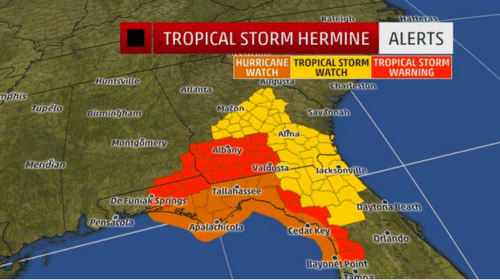
and that Hurricane Hermine doesn’t adversely affect her flight.

Screen Shot 2016-08-31 at 7.38.02 PM

Zut alors! There’s always something.

*A.E. Houseman, When Summer’s End is Nighing

The second photo is via Country Living

“The days of wine and roses”*

by chuckofish

This made me laugh.Screen Shot 2016-08-01 at 9.11.00 AM

Well, it is AUGUST! We are on the downward slide of the year.

IMG_2091

On TCM it is Summer Under the Stars month and every day the schedule features the movies of one star. Today, for instance, they are showcasing the films of Lucille Ball. So check it out and set your DVR accordingly. Personally, I am looking forward to August 27 when it is James Garner day.

Screen Shot 2016-08-01 at 11.55.27 AM

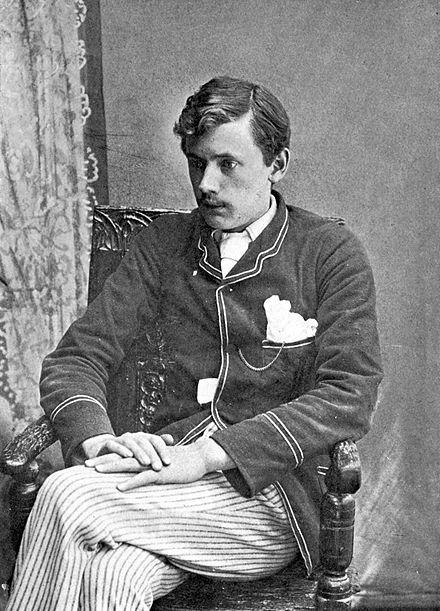
In other news, today is the birthday of Ernest Dowson (2 August 1867 – 23 February 1900), English poet.

440px-Ernest_Dowson

He is famous for the phrases, “days of wine and roses” and “gone with the wind” and “faithful to thee in my fashion”. Here’s his poem Non Sum Qualis Eram Bonae Sub Regno Cynarae:

Last night, ah, yesternight, betwixt her lips and mine
There fell thy shadow, Cynara! thy breath was shed
Upon my soul between the kisses and the wine;
And I was desolate and sick of an old passion,
Yea, I was desolate and bowed my head:
I have been faithful to thee, Cynara! in my fashion.

All night upon mine heart I felt her warm heart beat,
Night-long within mine arms in love and sleep she lay;
Surely the kisses of her bought red mouth were sweet;
But I was desolate and sick of an old passion,
When I awoke and found the dawn was gray:
I have been faithful to thee, Cynara! in my fashion.

I have forgot much, Cynara! gone with the wind,
Flung roses, roses riotously with the throng,
Dancing, to put thy pale, lost lilies out of mind;
But I was desolate and sick of an old passion,
Yea, all the time, because the dance was long:
I have been faithful to thee, Cynara! in my fashion.

I cried for madder music and for stronger wine,
But when the feast is finished and the lamps expire,
Then falls thy shadow, Cynara! the night is thine;
And I am desolate and sick of an old passion,
Yea, hungry for the lips of my desire:
I have been faithful to thee, Cynara! in my fashion.

If you prefer, you can listen to Richard Burton reciting it:

Poor Ernest led a sad life (see above photo). Both his parents committed suicide and he died at age 32. After Dowson’s death, Oscar Wilde wrote: “Poor wounded wonderful fellow that he was, a tragic reproduction of all tragic poetry, like a symbol, or a scene. I hope bay leaves will be laid on his tomb and rue and myrtle too for he knew what love was.” Oh brother.

On that note, try to enjoy your Tuesday.

*Ernest Dowson, from “Vitae Summa Brevis” (1896)