dual personalities

Category: Poetry

Beside the big river

by chuckofish

On this day in 1888 Thomas Stearns Eliot was born in St. Louis, Missouri.

Thomas_Stearns_Eliot_by_Lady_Ottoline_Morrell_(1934).jpg

His family had its roots in New England, but his paternal grandfather, William Greenleaf Eliot moved to St. Louis soon after finishing his graduate studies at Harvard Divinity School in 1834. He established a Unitarian Christian church there, the Church of the Messiah, which was the first Unitarian church west of the Mississippi River. Today it is called the First Unitarian Church of Saint Louis. When Ralph Waldo Emerson visited St. Louis, he met Eliot and called him “the Saint of the West.”
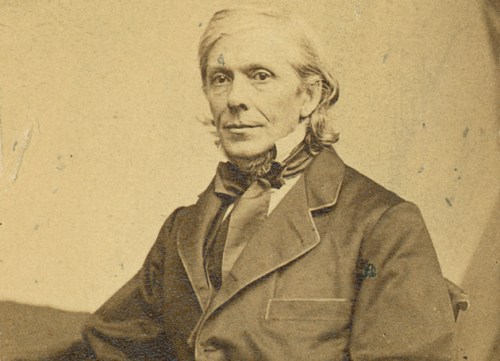
Eliot Portrait 1.jpg

It is good to take a moment to remember that the 1830s in St. Louis were the early days. For years Protestants had been conducting services in their homes, but it was not until after the Louisiana Purchase that Protestant churches were built. In 1818 Baptist missionary John Mason Peck organized the First Baptist Church. This was followed by a Methodist, Presbyterian, and Episcopal church (founded in 1825 when Thomas Horrell became the first rector of the Christ Church Episcopal Church). So Eliot was quite a pioneer.

William Greenleaf Eliot was also a benefactor of educational institutions in St. Louis and co-founded my flyover university with his good friend Wayman Crow in 1853. Originally named Eliot Seminary, the name was eventually changed to Washington University.
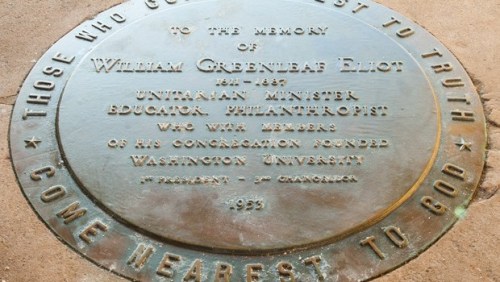
eliot_plaque-620x350.jpg

Eliot became chancellor in 1871 and was associated with the university for the rest of his life.

I have fond memories of growing up next to Washington University back in the days when small children were free to roam and even cross big streets without adult supervision. In the early sixties my siblings and I used to walk up to the campus and play “army” heavily armed with toy guns. (We were big fans of the television show Combat! and so we were continually fighting the Battle of the Bulge.) I’m sure this would be considered quite inappropriate these days–small gun-toting children wandering on campus–but, boy, did we have fun. My older brother was the captain, I was the lieutenant and our little sister (and DP) was the sargeant. (Her middle name is Sargent, so it seemed especially appropriate.)

We knew (or should I say, our brother) knew our way around campus. We also knew where all the candy machines were.

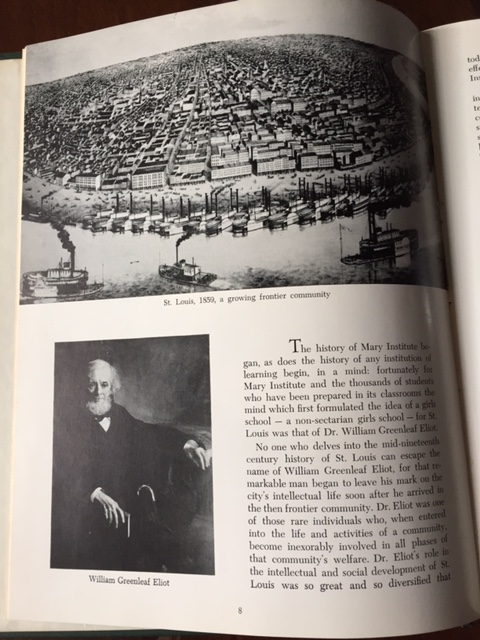
Eliot also founded my Alma Mater Mary Institute in 1859, a school for girls which he named after his daughter, Mary Rhodes Eliot, who died at age 17.

T.S. Eliot spoke at Mary Institute’s centennial in 1959. Our father was a teacher there at the time and so he met the great man. ANC III also wrote the centennial history of Mary Institute.FullSizeRender.jpg
Well, I digress.

T.S. Eliot once said:

It is self-evident that St. Louis affected me more deeply than any other environment has ever done. I feel that there is something in having passed one’s childhood beside the big river, which is incommunicable to those people who have not. I consider myself fortunate to have been born here, rather than in Boston, or New York, or London.

I have to agree. I have probably mentioned already that there is something about growing up in a town on a river that is different. You always have your bearings for one thing. You know North and South because you know where the river is.

When Eliot visited M.I. in 1959, he gave a lecture and at the end he read “The Dry Salvages” (one of the Four Quartets) in its entirety. Here is the first stanza.

I do not know much about gods; but I think that the river
Is a strong brown god – sullen, untamed and intractable,
Patient to some degree, at first recognised as a frontier;
Useful, untrustworthy, as a conveyor of commerce;
Then only a problem confronting the builder of bridges.
The problem once solved, the brown god is almost forgotten
By the dwellers in cities – ever, however, implacable.
Keeping his seasons, and rages, destroyer, reminder
Of what men choose to forget. Unhonoured, unpropitiated
By worshippers of the machine, but waiting, watching and waiting.
His rhythm was present in the nursery bedroom,
In the rank ailanthus of the April dooryard,
In the smell of grapes on the autumn table,
And the evening circle in the winter gaslight.

Not waving but drowning

by chuckofish

f2af0497430d6de5459b77d83b5c9d38.jpg
Nobody heard him, the dead man,
But still he lay moaning:
I was much further out than you thought
And not waving but drowning.
Poor chap, he always loved larking
And now he’s dead
It must have been too cold for him his heart gave way,
They said.
Oh, no no no, it was too cold always
(Still the dead one lay moaning)
I was much too far out all my life
And not waving but drowning.

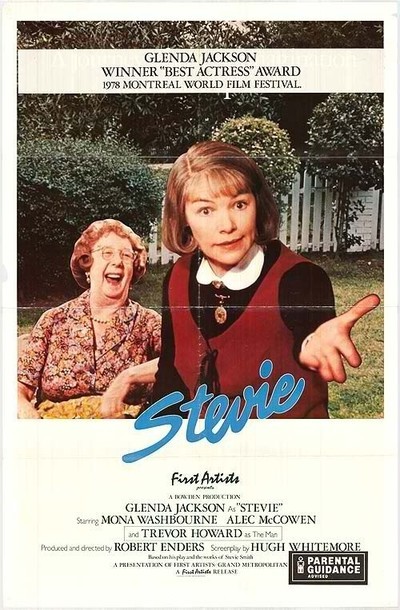
Today is the birthday of English poet and novelist Stevie Smith (1902–1971). I remember going to go see the movie Stevie (1978) based on the play about her by Hugh Whitemore. I went with my mother and she was deeply affected by it. She sometimes reacted very emotionally to sad things and this always deeply affected me. It made me worry that we (her children) had no idea how sad and lonely she really was. But I suppose that is true for most children.

large_o9V5tp1mszGjjqj17UkET5Hdkd8.jpg

The movie is available on YouTube, so maybe I’ll check it out. Anyway, a toast to Stevie Smith seems in order.

The painting is “Beyond the Sea 6” by Paul Bennett

Life is what we make it

by chuckofish

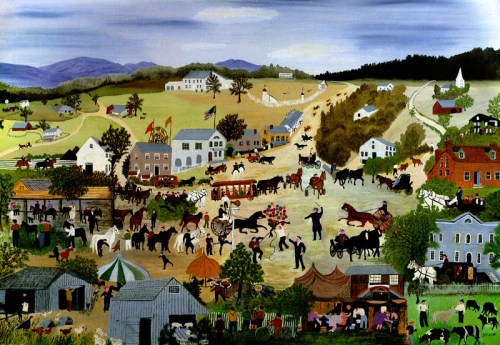
country-fair-1950.jpg

“I look back on my life like a good day’s work, it was done and I feel satisfied with it. I was happy and contented, I knew nothing better and made the best out of what life offered. And life is what we make it, always has been, always will be.”

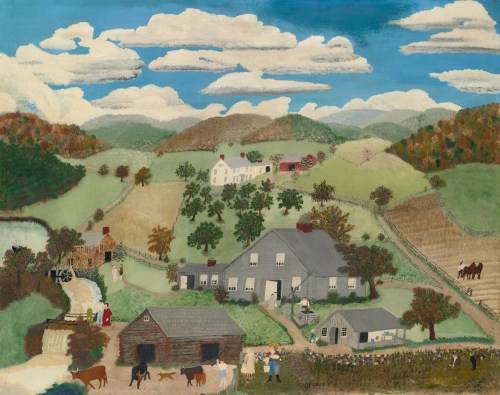
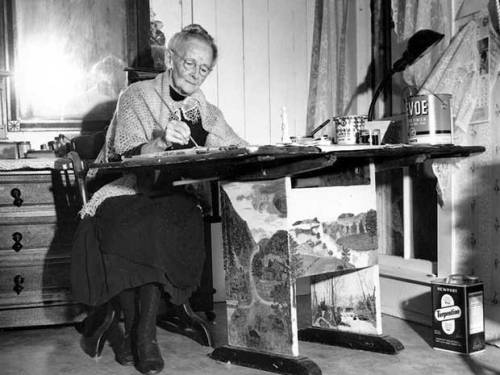
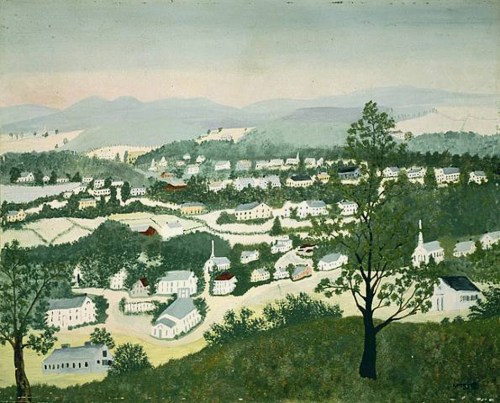
Wise words from Grandma Moses, who was born Anna Mary Robertson on this day in 1860. She died in 1961 at the age of 101. Having worked hard all her life, she then became famous as a renowned folk artist in her seventies. You can read her obituary here.

073N08911_5SB28.jpg

anna-mary-robertson-moses-better-known-as-grandma-moses-began-her-prolific-painting-career-at-78-in-2006-one-of-her-paintings-sold-for-12-million.jpg

Grandma Moses, In Green Mountains 1946.jpg

P.S. In looking around the internet, I found that everyone from Eleanor Roosevelt and Marilyn Monroe to Hannah Montana are credited with saying, “Life is what you make it!” Several books have been written with this title. I guess cliches are like that.

Well, anyway, here’s a poem from Mary Oliver:

Who made the world?

Who made the swan, and the black bear?

Who made the grasshopper?

This grasshopper, I mean-

the one who has flung herself out of the grass,

the one who is eating sugar out of my hand,

who is moving her jaws back and forth instead of up and down-

who is gazing around with her enormous and complicated eyes.

Now she lifts her pale forearms and thoroughly washes her face.

Now she snaps her wings open, and floats away.

I don’t know exactly what a prayer is.

I do know how to pay attention, how to fall down

into the grass, how to kneel down in the grass,

how to be idle and blessed, how to stroll through the fields,

which is what I have been doing all day.

Tell me, what else should I have done?

Doesn’t everything die at last, and too soon?

Tell me, what is it you plan to do

with your one wild and precious life?

Discuss among yourselves.

Some poetry and art for Wednesday

by chuckofish

tumblr_moydbch6wR1qid0gbo1_1280.jpg

When summer’s end is nighing
And skies at evening cloud,
I muse on change and fortune
And all the feats I vowed
When I was young and proud.

The weathercock at sunset
Would lose the slanted ray,
And I would climb the beacon
That looked to Wales away
And saw the last of day.

From hill and cloud and heaven
The hues of evening died;
Night welled through lane and hollow
And hushed the countryside,
But I had youth and pride.

And I with earth and nightfall
In converse high would stand,
Late, till the west was ashen
And darkness hard at hand,
And the eye lost the land.

The year might age, and cloudy
The lessening day might close,
But air of other summers
Breathed from beyond the snows,
And I had hope of those.

They came and were and are not
And come no more anew;
And all the years and seasons
That ever can ensue
Must now be worse and few.

So here’s an end of roaming
On eves when autumn nighs:
The ear too fondly listens
For summer’s parting sighs,
And then the heart replies.

–AE Housman, XXXIX (from Last Poems)

August is nearly over–can you stand it? It is getting darker earlier and the sunrise is later. Have you noticed?

We have had lovely weather this month–amazing for August! I feel kind of guilty enjoying it with all that is going on in Houston. Our prayers go out to everyone down there and to all those teams of disaster relief volunteers who are heading to Texas. Vaya con Dios.

Screen Shot 2017-08-29 at 7.25.09 PM.pngStill, enjoy these last days of summer if you can. Maybe these paintings will help!
b19b6e8d3c05ea76d60dfb2417f2671d.jpg

5e1c73421d93857d7373fb84bd2159af.jpg

Wessel, Herman Henry (1878-1969) a summer afternoon.jpg

769309c141407391c6175cc6700c0f93.jpg

Blog-Seurat-Sunday-Afternoon.jpg

On-the-Beach-1875-xx-Winslow-Homer.JPG

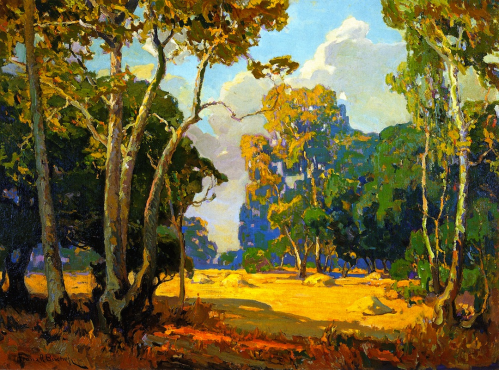
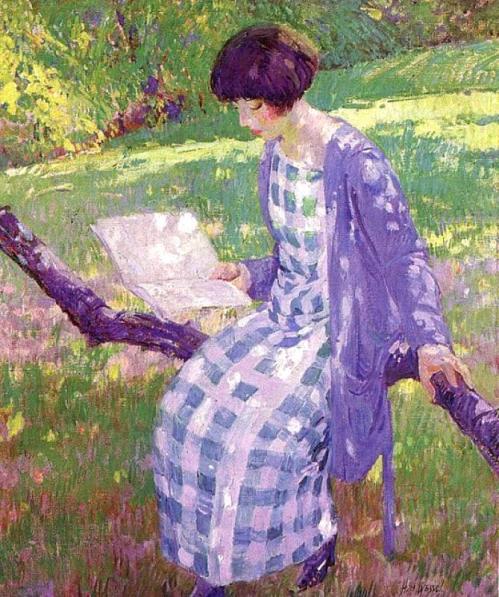
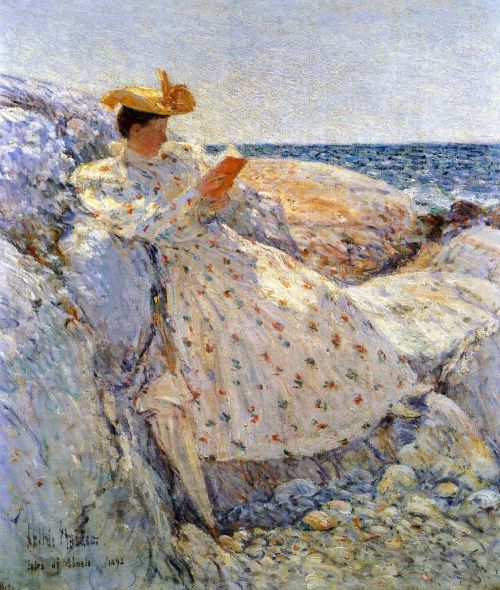
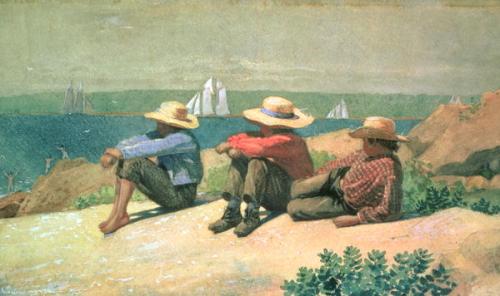
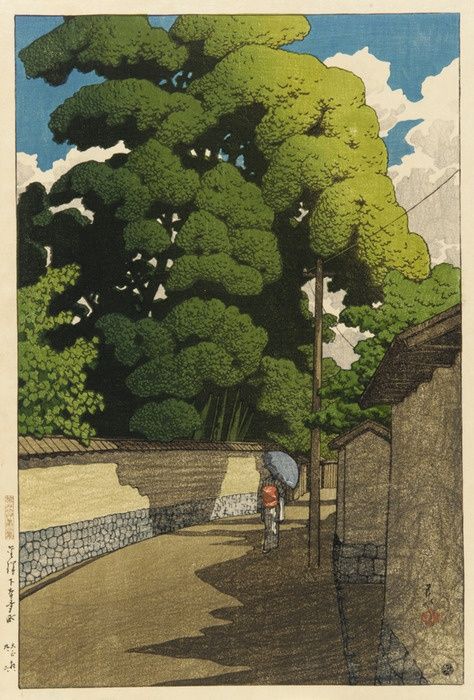
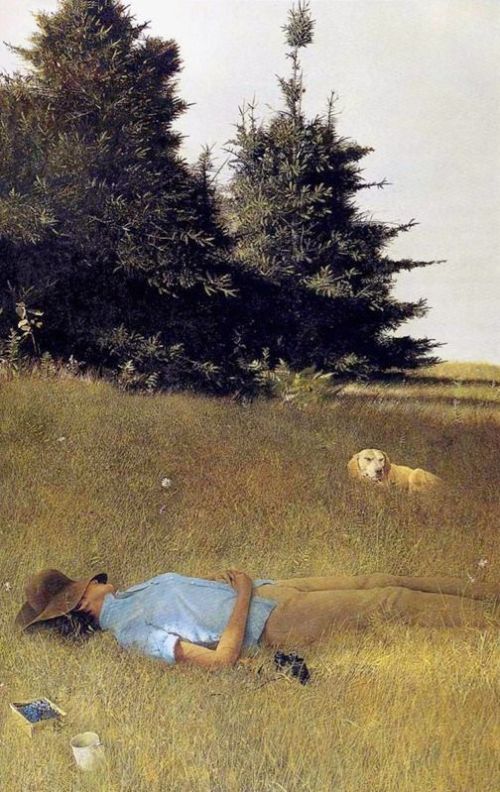
Paintings of summer afternoons are (from the top) by: Franz Bischoff, Kawase Hasui, Andrew Wyeth, Herman Henry Wessel, Childe Hassam, Georges Seurat, Winslow Homer.

Throwback Thursday

by chuckofish

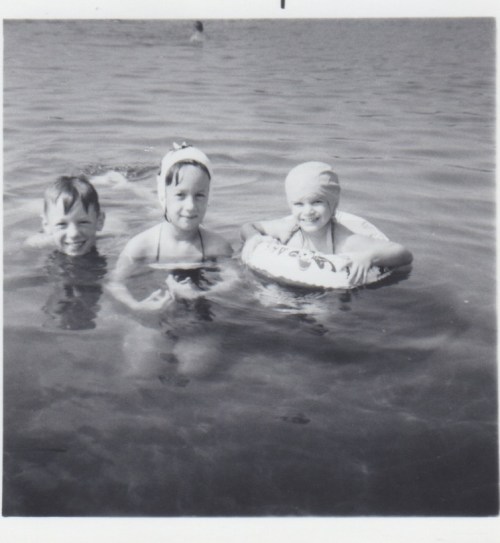
Well, the dog-days of summer are upon us. Oh, to be back east in a nice cool lake. In this snapshot one little dual personality is treading water with two older cousins in Massachusetts back in the early 1960s.

summer.jpegGood times.

Sabrina fair,

Listen where thou art sitting

Under the glassy, cool, transluscent wave,

In twisted braids of lilies knitting

The loose train of thy amber-dropping hair;

Listen for dear honour’s sake,

Goddess of the silver lake,

Listen and save!

–John Milton, from Comus

By the way, I did watch Under the Rainbow (1981) the other night., As expected, it was not a great movie. A young subdued Chevy Chase and a skinny Carrie Fisher were under-whelming to say the least and the movie was amateurish, but there were some very funny sight gags involving “little people”–not to mention Asians–which today would be considered politically incorrect and definitely inappropriate. I have to admit, I laughed out loud once or twice.


Each mocking day

by chuckofish

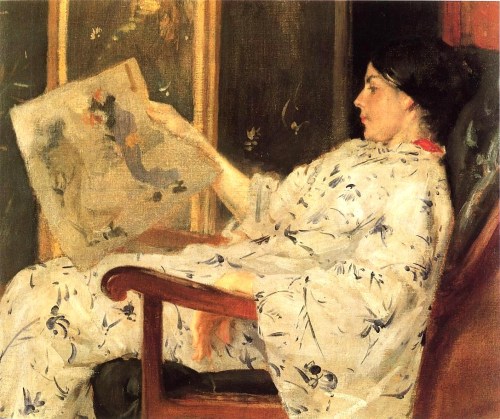
Japonisme. William Merritt Chase (1849 - 1916) Japanese Print 1898

Silence again. The glorious symphony
Hath need of pause and interval of peace.
Some subtle signal bids all sweet sounds cease,
Save hum of insects’ aimless industry.
Pathetic summer seeks by blazonry
Of color to conceal her swift decrease.
Weak subterfuge! Each mocking day doth fleece
A blossom, and lay bare her poverty.
Poor middle-agèd summer! Vain this show!
Whole fields of golden-rod cannot offset
One meadow with a single violet;
And well the singing thrush and lily know,
Spite of all artifice which her regret
Can deck in splendid guise, their time to go!

–Helen Hunt Jackson, August

The painting is by William Merritt Chase (1849 – 1916)– “Japanese Print” (1898)

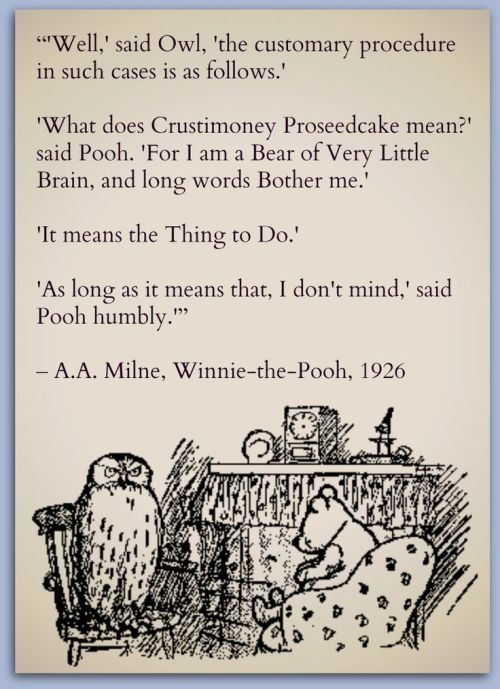
The thing to do or Ewa-yea! my little owlet!

by chuckofish

a1b37e48335d670173b40d9cebd6d37c.jpgLast week when daughter #1 was home for a few days and we were sitting out in the Florida room on an unseasonably cool evening, we saw a huge owl swoop down and fly through our yard. He perched on the neighbor’s basketball hoop and we sat and watched him.
After awhile he swooped down again into the grass where he sat for a bit. We couldn’t see if he had caught some poor unfortunate creature. From a distance and in the near dark he looked like a big chicken on the ground. We went outside to get a closer look, but he flew off.

It was an awesome experience. I have been out several evenings since then but I haven’t seen the owl again. I have heard some hooting, but that is all. Anyway, this all reminded me of this bit from Hiawatha’s Childhood:

When he heard the owls at midnight,

Hooting, laughing in the forest,

‘What is that?” he cried in terror,

“What is that,” he said, “Nokomis?”

And the good Nokomis answered:

“That is but the owl and owlet,

Talking in their native language,

Talking, scolding at each other.

Then the little Hiawatha

Learned of every bird its language,

Learned their names and all their secrets,

How they built their nests in Summer,

Where they hid themselves in Winter,

Talked with them whene’er he met them,

Called them “Hiawatha’s Chickens.”

–Henry Wadsworth Longfellow

5b9bac467ff172215771c32147147800--n-c-nc-wyeth.jpgThis is how my mind works.

By the way, on the way home from work yesterday I had to stop my car as a doe bounded across Warson Road. Three little fawns came crashing out of the woods following their mother one after the other.  None of them stopped to look both ways.

So much nature in such a short time!

At the door on summer evenings
Sat the little Hiawatha;
Heard the whispering of the pine-trees,
Heard the lapping of the waters,
Sounds of music, words of wonder;
‘Minne-wawa!” said the pine-trees,
Mudway-aushka!” said the water.
Saw the fire-fly, Wah-wah-taysee,
Flitting through the dusk of evening,
With the twinkle of its candle
Lighting up the brakes and bushes,
And he sang the song of children,
Sang the song Nokomis taught him:
“Wah-wah-taysee, little fire-fly,
Little, flitting, white-fire insect,
Little, dancing, white-fire creature,
Light me with your little candle,
Ere upon my bed I lay me,
Ere in sleep I close my eyelids!”

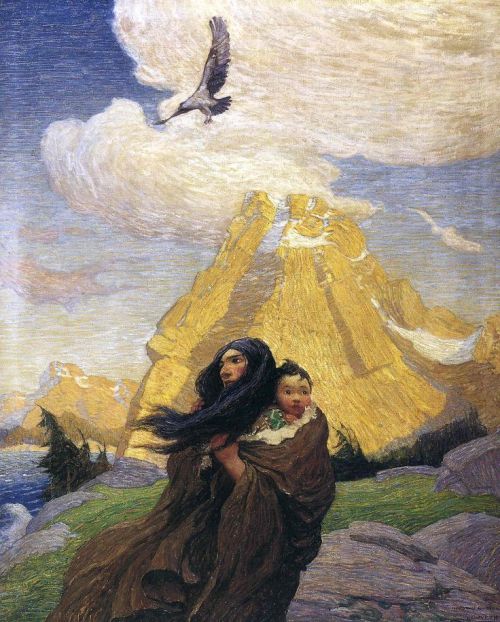
The illustration from Hiawatha’s Childhood is by N.C. Wyeth.)

Very star-like

by chuckofish

tumblr_me6nr3mJSO1qc6wuio1_r2_500.png

Here come real stars to fill the upper skies,

And here on earth come emulating flies,

That though they never equal stars in size,

(And they were never really stars at heart)

Achieve at times a very star-like start.

Only, of course, they can’t sustain the part.

–Robert Frost

John_Singer_Sargent_-_Carnation,_Lily,_Lily,_Rose_-_Google_Art_Project.jpg

We are currently experiencing the dog days of a flyover summer with daily temperatures soaring to 100+ degrees. There is still much to enjoy. I hope you are enjoying your summer!

The first picture is Fireflies at Ochanomizu, 1880, by Kobayashi Kiyochika; the second is John Singer Sargent, Carnation, Lily, Rose.

Two better hemispheres

by chuckofish

Screen Shot 2017-06-27 at 11.30.59 AM.png

The Good-Morrow

I wonder, by my troth, what thou and I
Did, till we loved? Were we not weaned till then?
But sucked on country pleasures, childishly?
Or snorted we in the Seven Sleepers’ den?
’Twas so; but this, all pleasures fancies be.
If ever any beauty I did see,
Which I desired, and got, ’twas but a dream of thee.

And now good-morrow to our waking souls,
Which watch not one another out of fear;
For love, all love of other sights controls,
And makes one little room an everywhere.
Let sea-discoverers to new worlds have gone,
Let maps to other, worlds on worlds have shown,
Let us possess one world, each hath one, and is one.

My face in thine eye, thine in mine appears,
And true plain hearts do in the faces rest;
Where can we find two better hemispheres,
Without sharp north, without declining west?

Whatever dies, was not mixed equally;
If our two loves be one, or, thou and I
Love so alike, that none do slacken, none can die.


–John Donne

I am off for a week of wedding merry-making! Check back next week for photos of the Big Day.  L’chaim!

“God, the best maker of all marriages,
Combine your hearts in one.”
—King Henry V, Act V

Time flies

by chuckofish

Can you believe it is JUNE already?!

84c313707dfe30dbb2f831512252ea07.jpg

Daffodils Contre Jour, Bruce Yardley (b. 1962)

She wore her yellow sun-bonnet,
She wore her greenest gown;
She turned to the south wind
And curtsied up and down.
She turned to the sunlight
And shook her yellow head,
And whispered to her neighbor:
“Winter is dead.”

–A.A. Milne