dual personalities

Category: Poetry

Mid-week meditation

by chuckofish

StoneWall

September’s Baccalaureate
A combination is
Of Crickets—Crows—and Retrospects
And a dissembling Breeze

That hints without assuming—
An Innuendo sear
That makes the Heart put up its Fun
And turn Philosopher.

–Emily Dickinson

Yes, September is here.

DSCN1507And I have a very cute calendar page for this month, don’t I?

How rewarding to know Mr. Smith

by chuckofish

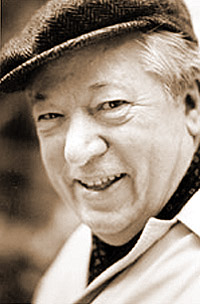
Well, here’s something interesting. William Jay Smith, the author of more than fifty books of poetry, translation, children’s books, and literary criticism, has died. He was 97 and had had a distinguished career spanning fifty-two years.

smith_wj

He served in the US Naval Reserves during World War II, and afterward met and married the poet Barbara Howes and completed graduate study at Columbia University, at Oxford University as a Rhodes Scholar, and at University of Florence. He taught and lectured at many colleges and universities, including Williams and Hollins. He served as Consultant in Poetry to the Library of Congress (the position now called Poet Laureate) from 1968 to 1970, and he had been a member of the Academy of Arts and Letters since 1975.

Furthermore, he grew up outside St. Louis and graduated from Washington University! I am ashamed to say I had never heard of him until I got the email about a distinguished alum dying.

So here in his honor is a poem he wrote about “Mr. Smith”

How rewarding to know Mr. Smith,
Whose writings at random appear!
Some think him a joy to be with
While others do not, it is clear.

His eyes are somewhat Oriental,
His fingers are notably long;
His disposition is gentle,
He will jump at the sound of a gong.

His chin is quite smooth and uncleft,
His face is clean-shaven and bright,
His right arm looks much like his left,
His left leg it goes with his right.

He has friends in the arts and the sciences;
He knows only one talent scout;
He can cope with most kitchen appliances,
But in general prefers dining out.

When young he collected matchboxes,
He now collects notebooks and hats;
He has eaten roussettes (flying foxes),
Which are really the next thing to bats!

He has never set foot on Majorca,
He has been to Tahiti twice,
But will seldom, no veteran walker,
Take two steps when one will suffice.

He abhors motorbikes and boiled cabbage;
Zippers he just tolerates;
He is wholly indifferent to cribbage,
And cuts a poor figure on skates.

He weeps by the side of the ocean,
And goes back the way that he came;
He calls out his name with emotion–
It returns to him always the same.

It returns on the wind and he hears it
While the waves make a rustle around;
The dark settles down, and he fears it,
He fears its thin, crickety sound.

He thinks more and more as time passes,
Rarely opens a volume on myth.
Until mourned by the tall prairie grasses,
How rewarding to know Mr. Smith!

Happy Thursday, y’all!

Dog days

by chuckofish

winslow-homer-fishing-1268

The Old Farmer’s Almanac lists the traditional period of the Dog Days as the 40 days beginning July 3 and ending August 11, coinciding with the ancient heliacal (at sunrise) rising of the Dog Star, Sirius.

Well, we are certainly in the middle of them now! And they will not be over come August 11. But as I have said before, I have come to appreciate the summer–even the dog days–and enjoy the slower pace. Nobody’s in a hurry around here in August.

Summer is a good time to read old favorites:

“Maycomb was a tired old town, even in 1932 when I first knew it. Somehow, it was hotter then. Men’s stiff collars wilted by nine in the morning. Ladies bathed before noon and after their three o’clock naps. And by nightfall were like soft teacakes with frosting from sweating and sweet talcum. The day was twenty-four hours long, but it seemed longer.” (Harper Lee, To Kill a Mockingbird)

It is a good time to read poetry:

Now I will do nothing but listen,
To accrue what I hear into this song, to let sounds contribute toward it.
I hear bravuras of birds, bustle of growing wheat, gossip of flames, clack of sticks cooking my meals,
I hear the sound I love, the sound of the human voice,
I hear all sounds running together, combined, fused or following,
Sounds of the city and sounds out of the city, sounds of the day and night,
Talkative young ones to those that like them, the loud laugh of work-people at their meals,
The angry base of disjointed friendship, the faint tones of the sick,
The judge with hands tight to the desk, his pallid lips pronouncing a death-sentence,
The heave’e’yo of stevedores unlading ships by the wharves, the refrain of the anchor-lifters,
The ring of alarm-bells, the cry of fire, the whirr of swift-streak-
ing engines and hose-carts with premonitory tinkles and color’d lights,
The steam-whistle, the solid roll of the train of approaching cars,
The slow march play’d at the head of the association marching two and two,
(They go to guard some corpse, the flag-tops are draped with black muslin.)
I hear the violoncello, (’tis the young man’s heart’s complaint,)
I hear the key’d cornet, it glides quickly in through my ears,
It shakes mad-sweet pangs through my belly and breast.
I hear the chorus, it is a grand opera,
Ah this indeed is music—this suits me. (Walt Whitman, Song of Myself, 26)

And it is a good time to read history:

On the receipt of Mr. Dana’s dispatch Mr. Stanton sent for me. Finding that I was out he became nervous and excited, inquiring of every person he met, including guests of the house, whether they knew where I was, and bidding them find me and send me to him at once. About eleven o’clock I returned to the hotel, and on my way, when near the house, every person met was a messenger from the Secretary, apparently partaking of his impatience to see me. I hastened to the room of the Secretary and found him pacing the floor rapidly in his dressing-gown. Saying that the retreat must be prevented, he showed me the dispatch. I immediately wrote an order assuming command of the Military Division of the Mississippi, and telegraphed it to General Rosecrans. I then telegraphed to him the order from Washington assigning Thomas to the command of the Army of the Cumberland; and to Thomas that he must hold Chattanooga at all hazards, informing him at the same time that I would be at the front as soon as possible. A prompt reply was received from Thomas, saying, “We will hold the town till we starve.” I appreciated the force of this dispatch later when I witnessed the condition of affairs which prompted it. It looked, indeed, as if but two courses were open: one to starve, the other to surrender or be captured.

On the morning of the 20th of October I started, with my staff, and proceeded as far as Nashville. At that time it was not prudent to travel beyond that point by night, so I remained in Nashville until the next morning. Here I met for the first time Andrew Johnson, Military Governor of Tennessee. He delivered a speech of welcome. His composure showed that it was by no means his maiden effort. It was long, and I was in torture while he was delivering it, fearing something would be expected from me in response. I was relieved, however, the people assembled having apparently heard enough. At all events they commenced a general hand-shaking, which, although trying where there is so much of it, was a great relief to me in this emergency. (U.S. Grant, Personal Memoirs, Ch 40)

So try to enjoy these dog days of summer. And remember: This is the day which the Lord hath made; let us rejoice and be glad in it!

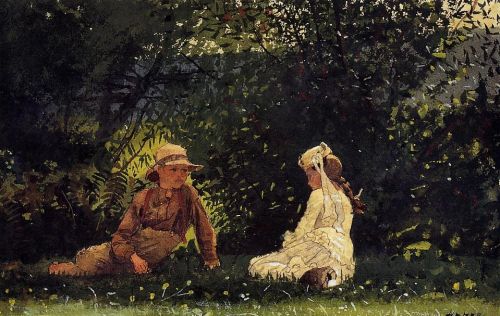
Scene-at-Houghton-Farm-Painting-by-Winslow-Homer

*The paintings are by Winslow Homer, of course.

Fun facts to know and tell (and a poem)

by chuckofish

Today is the anniversary of the death of 12th U.S. President Zachary Taylor (November 24, 1784 – July 9, 1850) who, you will recall, died in office. Millard Fillmore succeeded him as president.

“Old Rough and Ready” was born in Virginia to a prominent family of planters, a descendent as well of a signer of the Mayflower Compact. He was elected on the strength of his impressive military career. He was an Episcopalian.

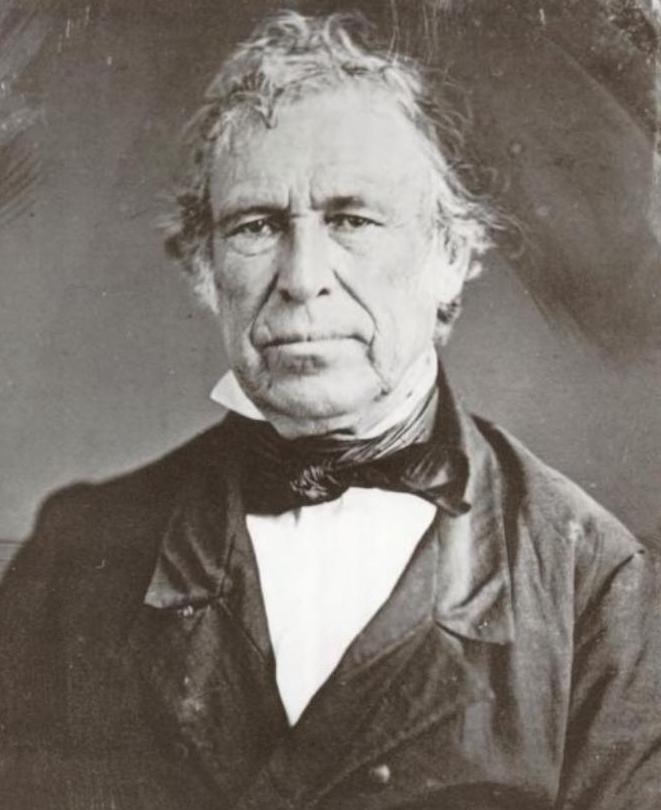
Zachary_Taylor-circa1850

He has a good face. Clearly those 19th century presidents were not overly vain–Taylor neither combed his hair or straightened his tie for this portrait.

I had forgotten that one of his daughters, Sarah Knox Taylor, was married briefly to Jefferson Davis, who later became President of the Confederate States. She was twenty-one when she died.

Taylor had five daughters and (finally) one son, Richard Scott Taylor (1826–1879), who was a Confederate General in the Civil War.

Zachary Taylor is buried in the family mausoleum in Louisville, Kentucky.

????????????????????????????????????

Eight presidents have died while in office. William Henry Harrison was the first–he had only been president for 31 days when he died of pneumonia in 1841.

Zachary Taylor was next in 1850 when he died of acute gastroentiritis.

Three assassinations followed: Lincoln (1865), Garfield (1881) and McKinley (1901).

Then Warren G. Harding died of a heart attack in 1923, followed by FDR with a cerebral hemorrhage in 1945. JFK was assassinated in 1963.

Well. Here’s a poem that seems appropriate.

When great trees fall,
rocks on distant hills shudder,
lions hunker down
in tall grasses,
and even elephants
lumber after safety.

When great trees fall
in forests,
small things recoil into silence,
their senses
eroded beyond fear.

When great souls die,
the air around us becomes
light, rare, sterile.
We breathe, briefly.
Our eyes, briefly,
see with
a hurtful clarity.
Our memory, suddenly sharpened,
examines,
gnaws on kind words
unsaid,
promised walks
never taken.

Great souls die and
our reality, bound to
them, takes leave of us.
Our souls,
dependent upon their
nurture,
now shrink, wizened.
Our minds, formed
and informed by their
radiance,
fall away.
We are not so much maddened
as reduced to the unutterable ignorance
of dark, cold
caves.

And when great souls die,
after a period peace blooms,
slowly and always
irregularly. Spaces fill
with a kind of
soothing electric vibration.
Our senses, restored, never
to be the same, whisper to us.
They existed. They existed.
We can be. Be and be
better. For they existed.”

–Maya Angelou

This and that: ‘Your arm’s too short to box with God’*

by chuckofish

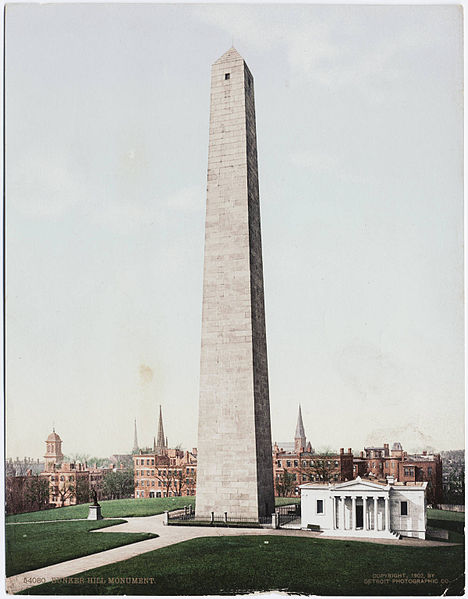
bunkerhillmonument

Today is the 240th anniversary of the Battle of Bunker Hill, fought on June 17, 1775 on Breed’s Hill.

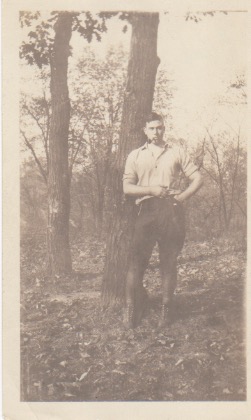
It is also the birthday of our maternal grandfather Daniel “Bunker” Cameron (1900-1968) about whom I have written before. He was quite the guy and his great-grandson, the boy, is kind of the spitting image of him.

Bunk Cameron 1921

‘Bunk’ Cameron 1921

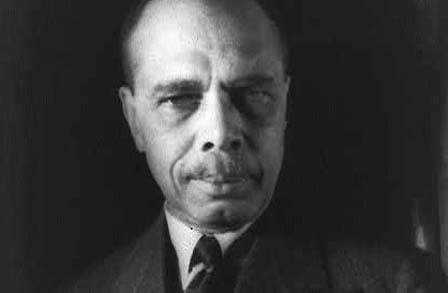
Also born on this day was James Weldon Johnson (1871–1938)–

james-weldon-johnson

American author, poet, educator, early civil rights activist, and prominent figure in the Harlem Renaissance. I was introduced to his poetry by a former rector of our church who was African-American and who gave great sermons that occasionally included dramatic poetry recitations similar to the following:

https://www.youtube.com/watch?v=gQYrF2g_48o

Did  you listen to the whole thing? Here’s another one to get you going this morning:

O Lord, we come this morning
Knee-bowed and body-bent
Before Thy throne of grace.
O Lord–this morning–
Bow our hearts beneath our knees,
And our knees in some lonesome valley.
We come this morning–
Like empty pitchers to a full fountain,
With no merits of our own.
O Lord–open up a window of heaven,
And lean out far over the battlements of glory,
And listen this morning.

Lord, have mercy on proud and dying sinners–
Sinners hanging over the mouth of hell,
Who seem to love their distance well.
Lord–ride by this morning–
Mount Your milk-white horse,
And ride-a this morning–
And in Your ride, ride by old hell,
Ride by the dingy gates of hell,
And stop poor sinners in their headlong plunge.

And now, O Lord, this man of God,
Who breaks the bread of life this morning–
Shadow him in the hollow of Thy hand,
And keep him out of the gunshot of the devil.
Take him, Lord–this morning–
Wash him with hyssop inside and out,
Hang him up and drain him dry of sin.
Pin his ear to the wisdom-post,
And make his words sledge hammers of truth–
Beating on the iron heart of sin.
Lord God, this morning–
Put his eye to the telescope of eternity,
And let him look upon the paper walls of time.
Lord, turpentine his imagination,
Put perpetual motion in his arms,
Fill him full of the dynamite of Thy power,
Anoint him all over with the oil of Thy salvation,
And set his tongue on fire.

And now, O Lord–
When I’ve done drunk my last cup of sorrow–
When I’ve been called everything but a child of God–
When I’m done traveling up the rough side of the mountain–
O–Mary’s Baby–
When I start down the steep and slippery steps of death–
When this old world begins to rock beneath my feet–
Lower me to my dusty grave in peace
To wait for that great gittin’-up morning–Amen.

–James Weldon Johnson

Have a good Wednesday and let’s toast Bunker and James and prodigal sons tonight!

*”The Prodigal Son” by James Weldon Johnson

A poem for Tuesday

by chuckofish

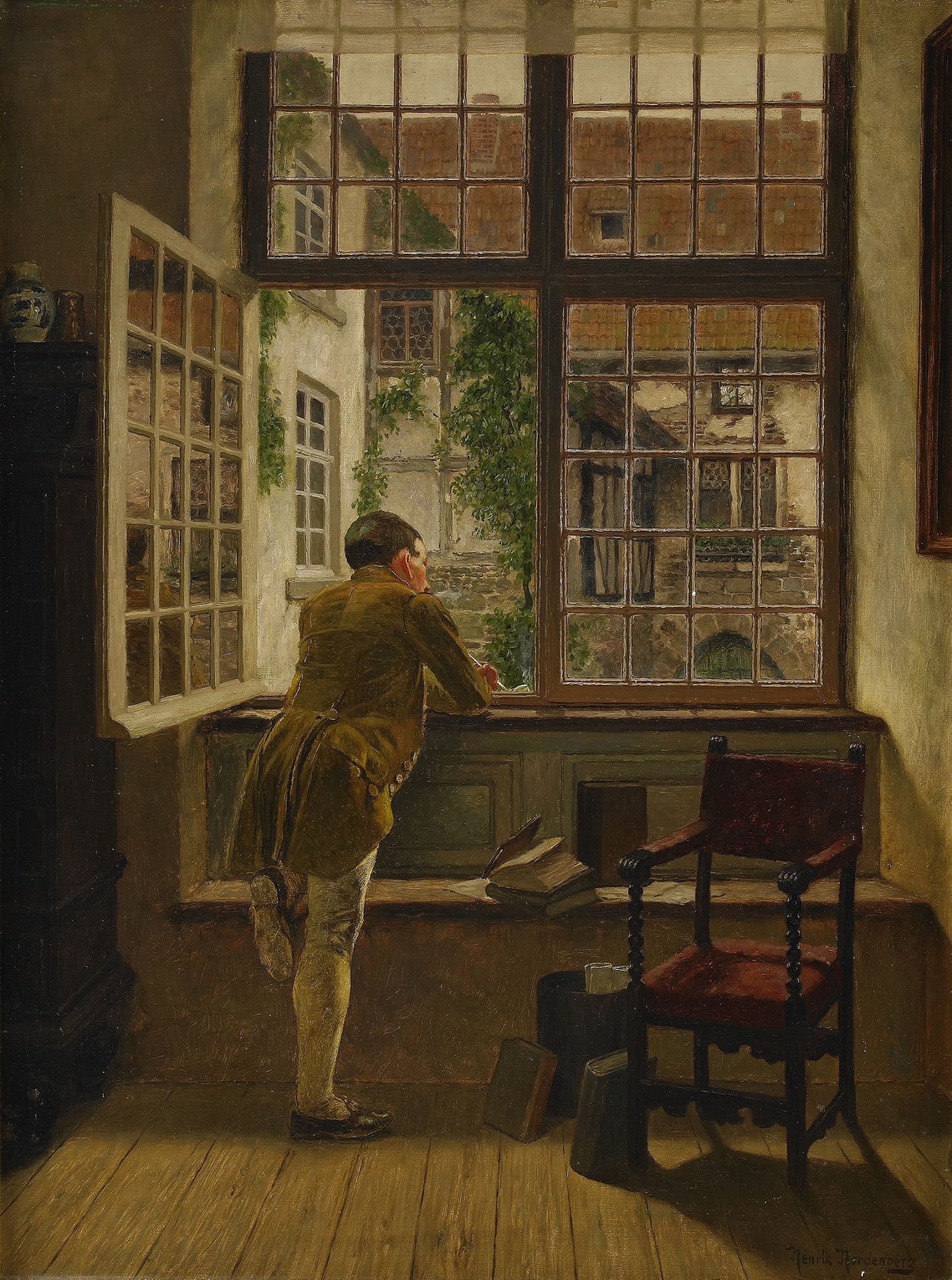
Henrik_Nordenberg_3-

Once more the cauldron of the sun
Smears the bookcase with winy red,
And here my page is, and there my bed,
And the apple-tree shadows travel along.
Soon their intangible track will be run,
And dusk grow strong
And they have fled.

Yes: now the boiling ball is gone,
And I have wasted another day….
But wasted-wasted, do I say?
Is it a waste to have imagined one
Beyond the hills there, who, anon,
My great deeds done,
Will be mine alway?

–Thomas Hardy (1840-1928) whose birthday is today. A toast to thee, Mr. Hardy, and to Swedish artist Henrik Nordenberg (1857-19280) whose paintings also appear here.

henrik nordenberg 2

henrik norderberg 1

Have a great day!

Windows open

by chuckofish

May is white clouds behind pine trees

Puffed out and marching upon a blue sky.

May is green as no other,

May is much sun through small leaves,

May is soft earth,

And appleblossoms,

and windows open to a south wind.

–Amy Lowell

I found this poem torn out of a magazine and stuck in my mother’s notebook about gardens where she had painstakingly copied out poems about gardens and bible quotations and other quotes.

Also stuck in it was this photo:

farm family

You can click on it to enlarge the picture.

Her mother and grandfather are on the right. They are visiting their relatives (the Wheeler-Rand-Smiths) who owned the farm. My mother is the little dark-haired girl with the baby carriage and her older sister Susanne is to the right. I don’t know whose baby my grandmother is holding, because her youngest daughter was born in 1933 and this must be 1928-29, judging from my mother’s age (3?). The other women and the blonde children are members of the family (the Frohawks) who lived on the farm and farmed it.

My mother spent her summers on this farm in North Charlestown, N.H. and, boy, did she love it and the Frohawks. At that time, the farm had been in her family for 150 years. We heard about it all the time growing up. I would have liked to spend my summers there, but it had been sold after the war and was gone with the wind.

Sigh.

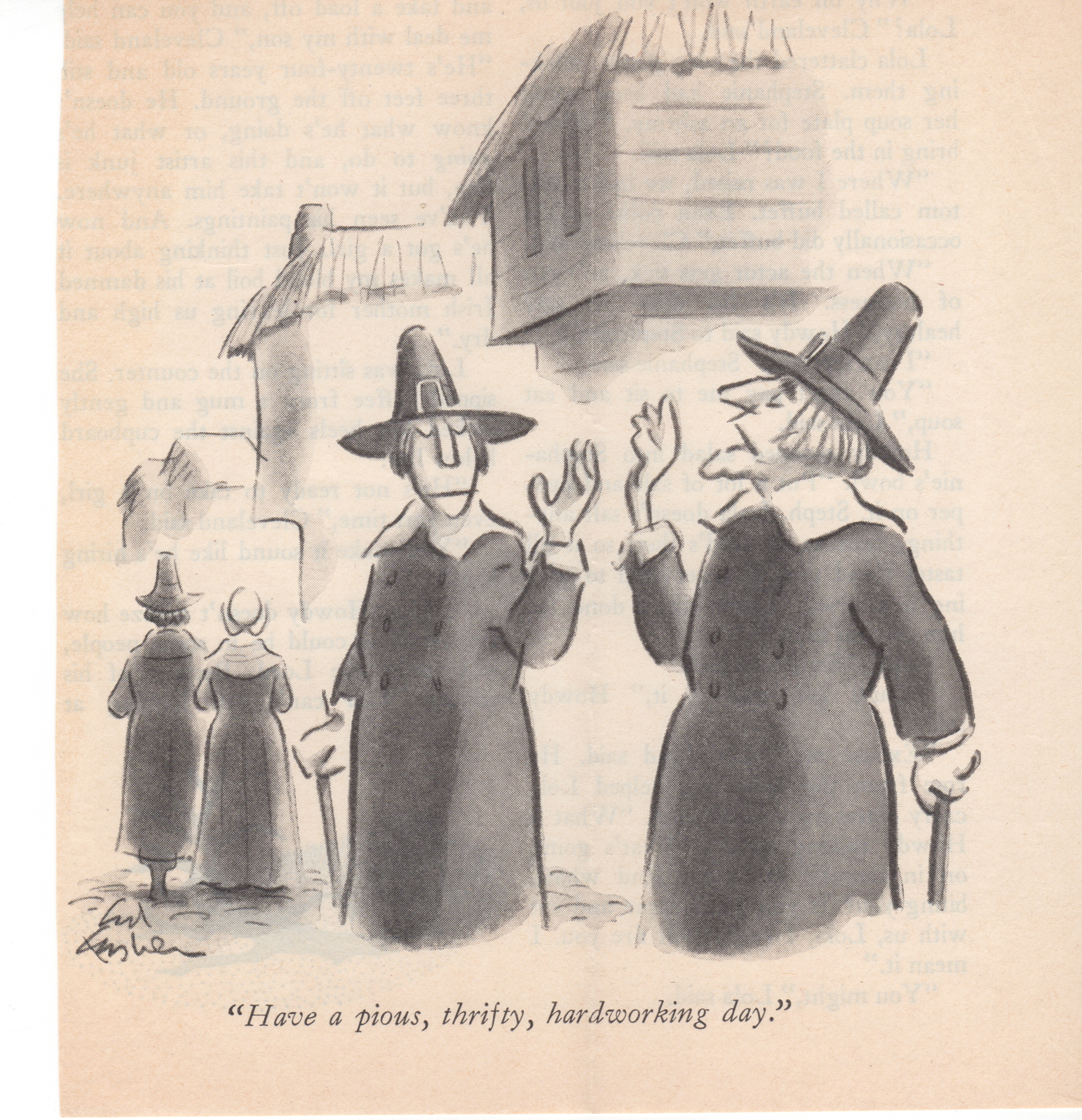
Anyway, also tucked into the notebook was this cartoon, which I am sure I had sent her.

puritans 1

It is still my mantra. So have a pious, thrifty, hardworking day…and weekend!

Festina lente

by chuckofish

Fred Ndercher, 1922, "Spring Landscape" in the St. Louis Mercantile Library collection

Nothing is so beautiful as Spring –

When weeds, in wheels, shoot long and lovely and lush;

Thrush’s eggs look little low heavens, and thrush

Through the echoing timber does so rinse and wring

The ear, it strikes like lightnings to hear him sing;

The glassy peartree leaves and blooms, they brush

The descending blue; that blue is all in a rush

With richness; the racing lambs too have fair their fling.

What is all this juice and all this joy?

A strain of the earth’s sweet being in the beginning

In Eden garden. – Have, get, before it cloy,

Before it cloud, Christ, lord, and sour with sinning,

Innocent mind and Mayday in girl and boy,

Most, O maid’s child, thy choice and worthy the winning.

“Spring” by Gerard Manley Hopkins

A friend at work brought this poem to my attention by stopping by my office and quoting, “What is all this juice and all this joy?” He was alluding to the beautiful spring day of course. We have certainly enjoyed an exceptionally beautiful spring with long strings of crisp, clear days in the high 60s. Carpe diem, I say–but I am glued to a desk. Sigh.

Anyway, it is also the birthday today of Sir Thomas Beecham (29 April 1879 – 8 March 1961) who, you will recall, was an English conductor and impresario best known for his association with the London Philharmonic and the Royal Philharmonic orchestras.
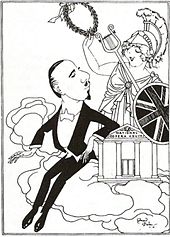
170px-Thomas_Beecham_1919_cartoon

From the early 20th century until his death, Beecham was a major influence on the musical life of Britain and, according to the BBC, was Britain’s first international conductor. If you are like me and my dual personality, you were brought up on Sir Thomas Beecham’s recordings. True, some may have considered him low-brow for saying things like, “I would give the whole of Bach’s Brandenburg Concertos for Massenet’s Manon, and would think I had vastly profited by the exchange.” But I can’t say I disagree with him.

I remember in particular an LP titled “Beecham Bon-Bons” which included popular favorites by Faure, Delius, Sibelius, Ralph Vaughan Williams and the like.
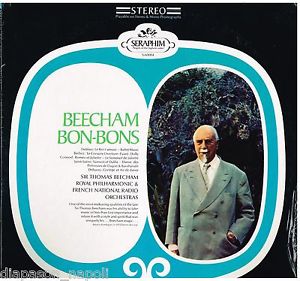
beecham

I wiled away many an hour with Beecham’s music in the background. So a toast to Sir Thomas Beecham! And I think I’ll look him up on eBay and see what I can find.

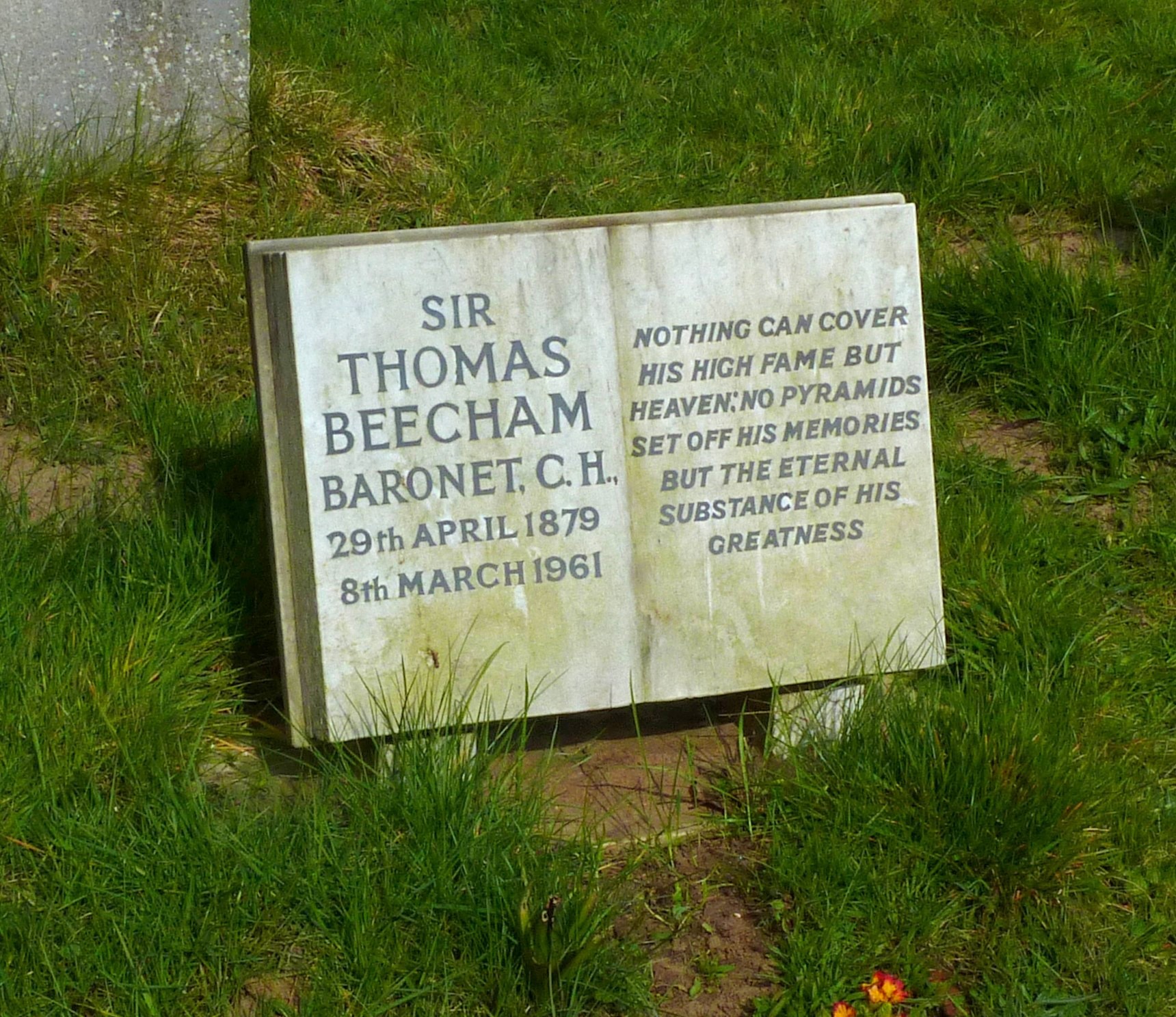
Beecham's grave in

Beecham’s grave in Surrey

By the way, the painting at the top of the page is by St. Louis artist Frank Nudercher (July 19, 1880 – October 7, 1959)–“Spring Landscape” in the St. Louis Mercantile Library collection. Nudercher is sometimes referred to as the “dean of St. Louis artists.” You can read about him here.

All is hushed at Shiloh

by chuckofish

One hundred and fifty-three years ago, on April 7, 1862, Union forces led by Gen. Ulysses S. Grant defeated the Confederates at the battle of Shiloh in Tennessee. The day before, however, was a terrible day for Grant.

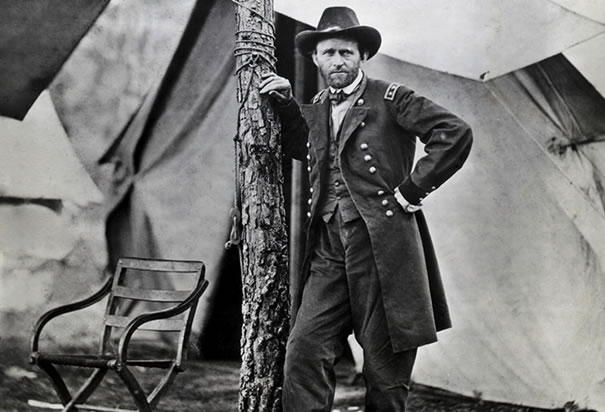
ulysses-s-grant-civiltree

In his memoirs Grant describes the night of April 6:

During the night rain fell in torrents and our troops were exposed to the storm without shelter. I made my headquarters under a tree a few hundred yards back from the river bank. My ankle was so much swollen from the fall of my horse the Friday night preceding, and the bruise was so painful, that I could get no rest. The drenching rain would have precluded the possibility of sleep without this additional cause. Some time after midnight, growing restive under the storm and the continuous pain, I moved back to the loghouse under the bank. This had been taken as a hospital, and all night wounded men were being brought in, their wounds dressed, a leg or an arm amputated as the case might require, and everything being done to save life or alleviate suffering. The sight was more unendurable than encountering the enemy’s fire, and I returned to my tree in the rain.

Historian Bruce Catton (Grant Moves South) describes a meeting between Sherman and Grant that night:

Late that night…Sherman came to see him. Sherman had found himself, in the heat of the enemy’s fire that day, but now he was licked; as far as he could see, the important next step was to “put the river between us and the enemy, and recuperate,” and he hunted up Grant to see when and how the retreat could be arranged. He came on Grant, at last, at midnight or later, standing under the tree in the heavy rain, hat slouched down over his face, coat-collar up around his ears, a dimly-glowing lantern in his hand, cigar clenched between his teeth. Sherman looked at him; then, “moved,” as he put it later, “by some wise and sudden instinct” not to talk about retreat, he said: “Well, Grant, we’ve had the devil’s own day, haven’t we?”

Grant said “Yes,” and his cigar glowed in the darkness as he gave a quick, hard puff at it, “Yes. Lick ’em tomorrow, though.”

And they did.

Among the enlisted men fighting that day were a young Ambrose Bierce of the Ninth Indiana and 21-year old Henry Morton Stanley (who later discovered Dr. Livingstone in Africa) of the 6th Arkansas Infantry.  Major General Lew Wallace (who later wrote Ben Hur) was there as well.

Herman Melville was not present at Shiloh, but he wrote a poem about it which I like very much:

Skimming lightly, wheeling still,
The swallows fly low
Over the field in clouded days,
The forest-field of Shiloh–
Over the field where April rain
Solaced the parched ones stretched in pain
Through the pause of night
That followed the Sunday fight
Around the church of Shiloh–
The church so lone, the log-built one,
That echoed so many a parting groan
And natural prayer
Of dying foeman mingled there–
Foeman at morn, but friends at eve–
Fame or country least their care:
(What like a bullet can undeceive!)
But now they lie low,
While over them the swallows skim
And all is hushed at Shiloh.

–Herman Melville, “Shiloh: A Requiem”

Let’s all just take a moment.

“The thorn tree had a mind to Him, when into the woods He came.”*

by chuckofish

palmcrosses

Did I not tell you this would happen? Here is the picture I tore the house apart looking for–daughter #1 making palm crosses in the fifth or sixth grade…I found it on Sunday, sitting peacefully in a shoe box on a shelf…C’est la vie.

10345927_829780087076609_4276875660709212410_n

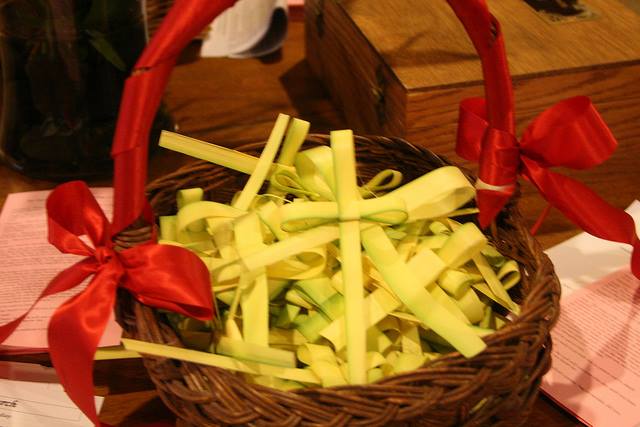
A basket of palm crosses at Grace this year.

In church on Palm Sunday we read the Passion of our Lord Jesus Christ according to Saint Mark in place of the Gospel reading. The layreaders took the parts. I was a “Bystander”, which, as my friend Carla explained to my seat-mate, is a step up for me. Usually I am a “Servant Girl”. Carla was a “Witness” and her husband was Judas–who only has two lines, one of which is “Rabbi!” His Method Acting was impressive.  My favorite part was when Peter says, “I do not know or understand what you are talking about” and I really think the reader was a bit lost. There is a lot of jockeying for position around the microphone. Since only three of us showed up for practice last week, some confusion is understandable and, although quite avoidable, again par for the course.

And so we enter Holy Week. I’m afraid I have not kept a good Lent. And by that I mean that The Robe (1950) is the only movie on my Lenten movie list that I have watched! I plan to make up for it this week with non-stop biblical epic-watching, culminating, of course, with Ben Hur on Good Friday. I can do this! However, you will not catch me watching A.D. The Bible Continues on Easter. Nosiree, Bob. I will be watching Wolf Hall on Masterpiece Theatre/PBS that night. I advise you to mark your calendars and do the same! It was a huge hit in Britain and I hope that means they did a good job turning this great book into a mini series. We’ll see.

In other news, this weekend there was a three-day estate sale across the street at our neighbor’s house. I got to experience first-hand the annoyance of having hundreds of strangers coming and going and parking all over the place. The shoe was on the other foot and it was weird. The estate sale company put up “No Parking” signs in front of our house and beside it, so we didn’t really have anything to complain about. At least the OM didn’t get into a fight with anyone, which is always a possibility when he comes in contact with the public. Now we will just have to deal with the house being for sale. Whatever.

We had the boy and daughter #3 and some friends over for dinner on Sunday night to hear the highlights of their recent trips to NYC. It was super fun and then the weekend was over.

Have a good Monday.

*Sidney Lanier, A Ballad of the Trees and the Master. Check this out.