dual personalities

Category: Literature

“Everything passes, only the truth remains.”*

by chuckofish

According to some sources, Fyodor Dostoyevsky was born on this day in 1821.
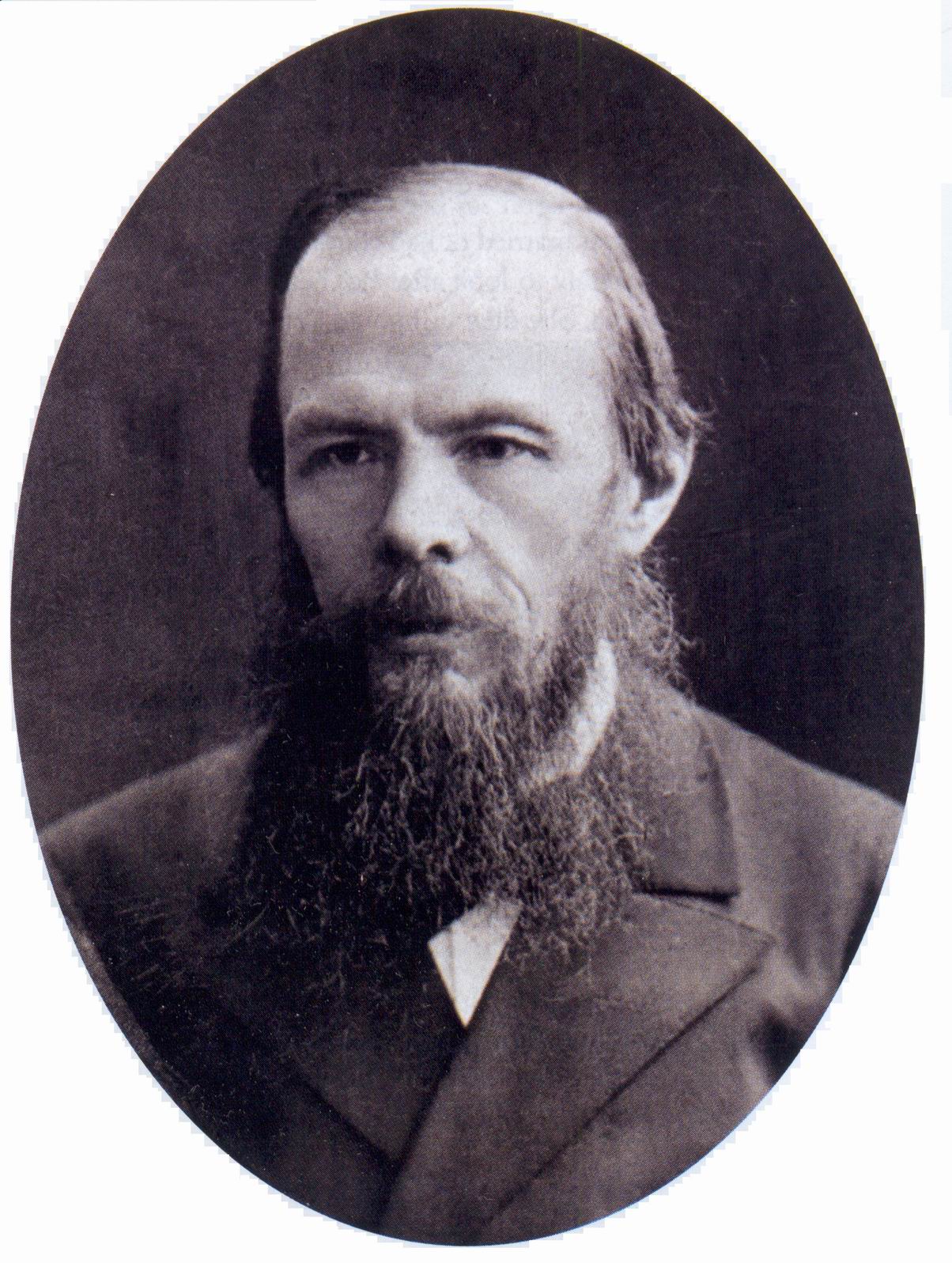
Dostoevsky

Russian novelist, short story writer, essayist, journalist, and philosopher, Dostoyevsky was also, Malcolm Muggeridge wrote, “a God-possessed man if ever there was one, as is clear in everything he wrote and in every character he created.”

“What’s mystery? Everything’s mystery, my friend, everything is God’s mystery. There’s mystery in every tree, in every blade of grass. When a little bird sings or all those many, many stars shine in the sky at night–it’s all mystery, the same one. But the greatest mystery is what awaits man’s soul in the world beyond, and that’s the truth, my boy….

…No, my friend, you’ve got me wrong; I’ve always respected science since I was a boy and, although I can’t understand it myself, that’s all right: science may be beyond my ken, but it is within the ken of other men. And it’s best that way because then everyone has what comes to him, and not everyone is made to understand science…”

–Fyodor Dostoyevsky, The Adolescent

Fyodor and I are on the same page.

I have read Crime and Punishment and a wonderful book of excerpts edited by the Bruderhof, The Gospel in Dostoyevsky. I think it is time for me to tackle The Brothers Karamazov this winter. I have read parts, but never the whole thing.

So a toast to the great Dostoyevsky! Поехали! (Let’s get started!)

* Father Zossima in The Brothers Karamazov 
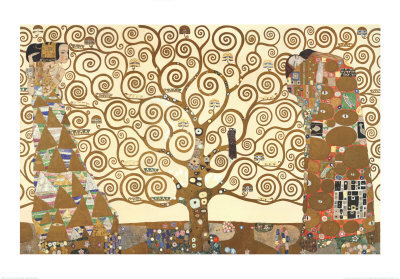
Here is the deepest secret nobody knows

by chuckofish

"The Tree of Life", 1909, Gustav Klimt

“The Tree of Life”, 1909, Gustav Klimt

Yesterday was the birthday of e.e. cummings, the poet, essayist, author,  playwright, and Unitarian (October 14, 1894 – September 3, 1962). So I thought I’d share this famous poem of his which I like very much.

i carry your heart with me(i carry it in
my heart) i am never without it(anywhere
i go you go, my dear; and whatever is done
by only me is your doing, my darling)
                                                      i fear
no fate (for you are my fate, my sweet) i want
no world (for beautiful you are my world, my true)
and it’s you are whatever a moon has always meant
and whatever a sun will always sing is you

here is the deepest secret nobody knows

(here is the root of the root and the bud of the bud
and the sky of the sky of a tree called life; which grows
higher than soul can hope or mind can hide)
and this is the wonder that’s keeping the stars apart

i carry your heart (i carry it in my heart)

If you want to read more about Cummings, here’s an interesting article  by Susan Cheever.

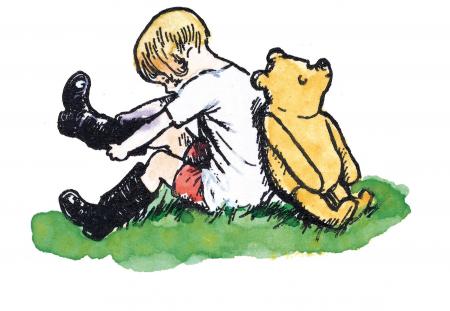
“When you see someone putting on his Big Boots, you can be pretty sure that an Adventure is going to happen.”

by chuckofish

Mottisfont - Winnie the Pooh, -® The E.H.Shepard Trust reproduced with permission of Curtis Brown Group

On this day in 1926 Winnie-the-Pooh by A.A. Milne was published in England.

As I have mentioned before, our pater was a big fan of Winnie-the-Pooh, and, therefore, so were we. No one read A.A. Milne’s stories and poems better than our father. This ability was one of his most endearing qualities.

So in honor of old A.A. Milne, maybe we should put on our Big Boots and have an adventure! But first we need some of these I guess.

Side note: It has been raining cats and dogs here for days on end. Big Boots have been on my mind.

“Shake your business up and pour it. I don’t have all day.”

by chuckofish

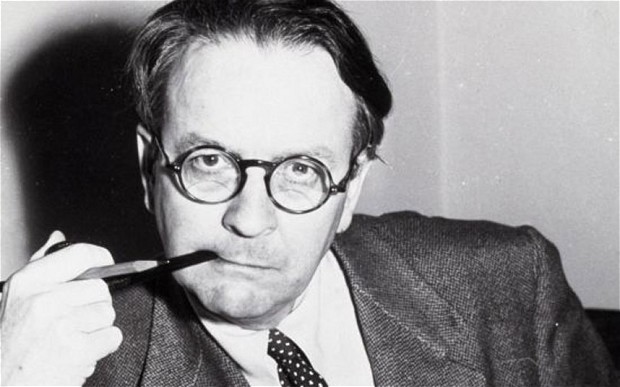
This past weekend I finished a mystery that was recommended to me by someone at work whose opinion I respect. The book was okay. I mean I read the whole thing and that is saying something. It was well-written and engaging enough, but as mysteries go, it just wasn’t Raymond Chandler.

So I decided to re-read, for the umpteenth time, The Big Sleep.

And, omg, on the first page you are greeted with

I was neat, clean, shaved and sober, and I didn’t care who knew it. I was everything the well-dressed private detective ought to be. I was calling on four million dollars.

And a few pages later, Philip Marlowe says, in reply to Mrs. Regan saying she doesn’t like his manners:

“I’m not crazy about yours,” I said. “I didn’t ask to see you. You sent for me. I don’t mind your ritzing me or drinking your lunch out of a Scotch bottle. I don’t mind your showing me your legs. They’re very swell legs and it’s a pleasure to make their acquaintance. I don’t mind if you don’t like my manners. They’re pretty bad. I grieve over them during the long winter evenings. But don’t waste my time trying to cross-examine me.”

Nobody writes like Raymond Chandler. He is just the  best. And as I’ve said before, Philip Marlowe is one of the great characters in fiction. Right up there with Hamlet and Holden Caulfield, if you ask me.

chandler_2624086b

And R.C. was an Episcopalian. I know we would have been best friends.

“The only books that influence us are those for which we are ready…”

by chuckofish

While it’s true that the internet abounds with unnecessary top-ten lists, they persist because they are fun and cause us to reflect a little as we compose our own. Recently I came across one that inspired me to think about the books that influenced me most — the ones that, to finish the quote above, “have gone a little farther down our particular path than we have yet got ourselves.” So here they are — hopefully without repeating too much from earlier posts about books —  in no particular order.

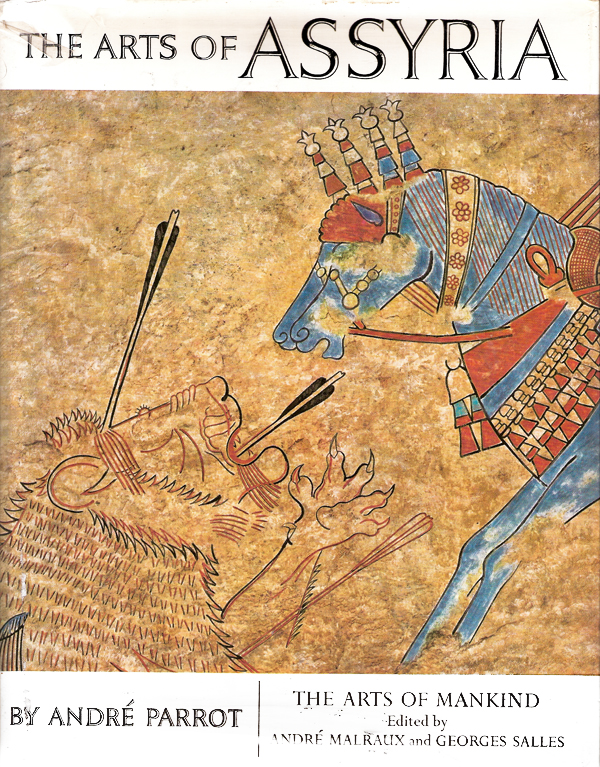
1.  I don’t know how or why my parents (or was it my brother?) had a copy of this book, but as soon as I opened it, I was smitten. In many ways, this book inspired me to become an Assyriologist. I still have it.

arts_assyria_bookcover

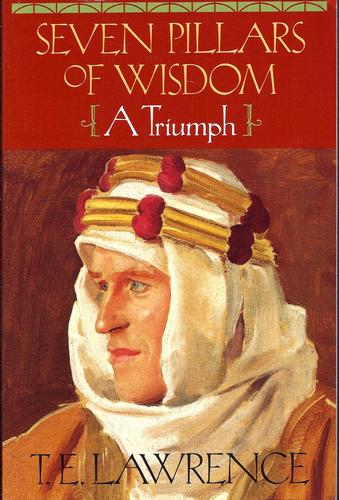
2.   I’ve blogged about Seven Pillars before, so won’t add too much here. Suffice it to say that reading this just added to my fascination with the Near East, which was, after all, so much more exotic than St. Louis. And besides, camel-riding sounded like it would be fun.

7 pillars

3. My fourth grade Sunday school teacher was Mrs. Roeder, whom I revered. She was beautiful and oh, so kind. She made me want to go to church and that was also the year we received our Bibles. I read all of the Gospels. It kind of freaked me out (more than once I figured I was headed to hell), but it had a big impact.

bible

4. Sometimes when I couldn’t decide what to read or just didn’t feel like undertaking a whole book, I would just dip into the Oxford Book of English Verse or its American counterpart. Thus, I not only became acquainted with the major poets, but developed some taste (of a decidedly adolescent nature I’m sure, but taste nonetheless).

oxford book of engllsh vers


5. Sometimes I didn’t feel like reading at all, so I just looked at pictures. That’s probably why I picked up the Assyrian Art book in the first place. Looking at pictures gave me an appreciation of art and an abiding love of buildings, especially ruined ones. The last book my mother ever gave me (birthday 1987) was a book on the Chateau of the Loire Valley. She always knew what I would love.

loire

There are many books I’ve  discussed in other posts and still more I should mention, but I think I’ll stop here for now. I hope that you will reflect a little on your own reading history and then share your top most influential books in a comment.

Enjoy your weekend!

Another turned page

by chuckofish

dual pumpkins

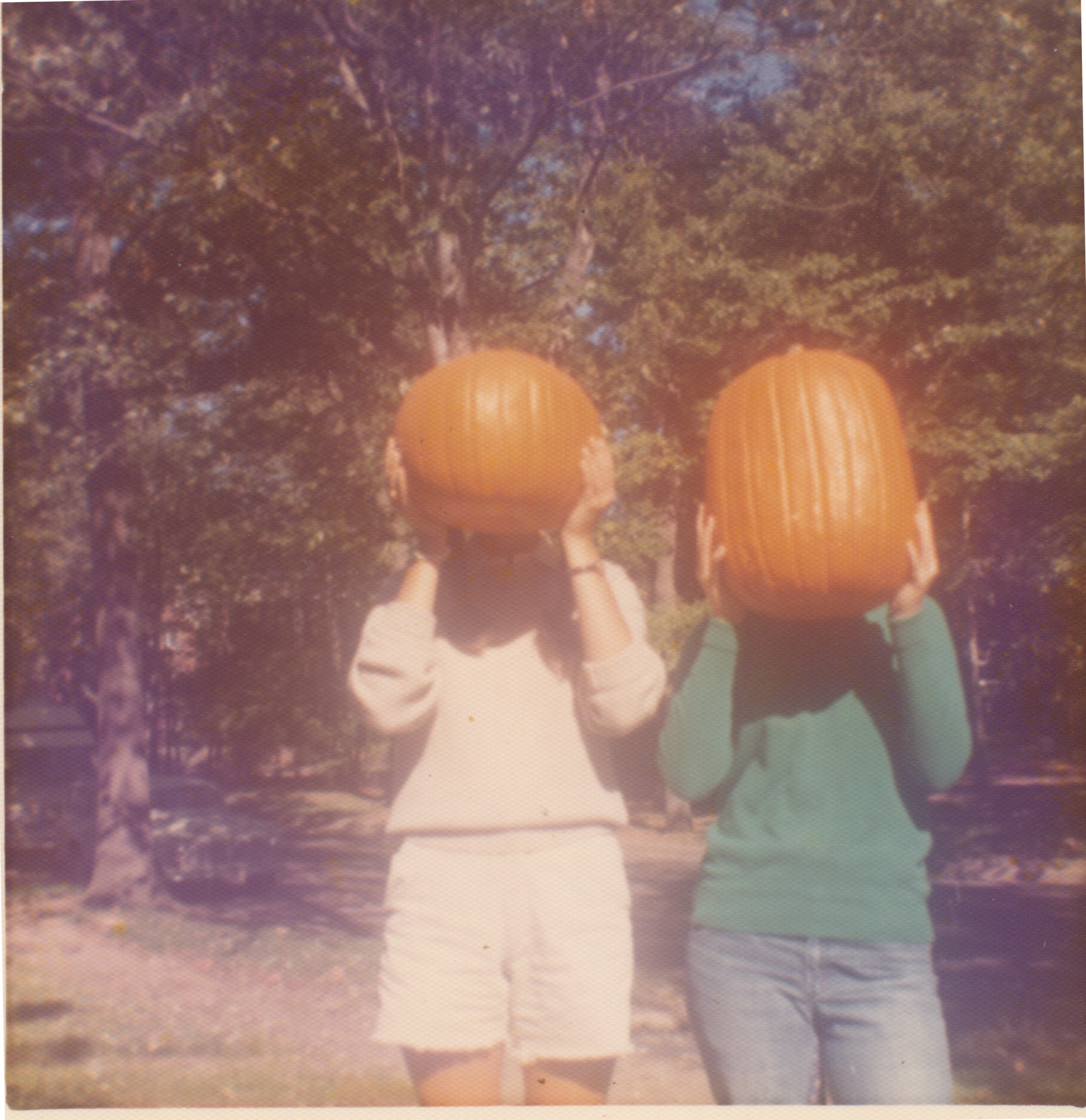
Fall is in the air. I wore black tights for the first time yesterday. Away we go!

“[T]hat old September feeling, left over from school days, of summer passing, vacation nearly done, obligations gathering, books and football in the air … Another fall, another turned page: there was something of jubilee in that annual autumnal beginning, as if last year’s mistakes had been wiped clean by summer.”

–Wallace Stegner, Angle of Repose

What are you reading?

by chuckofish

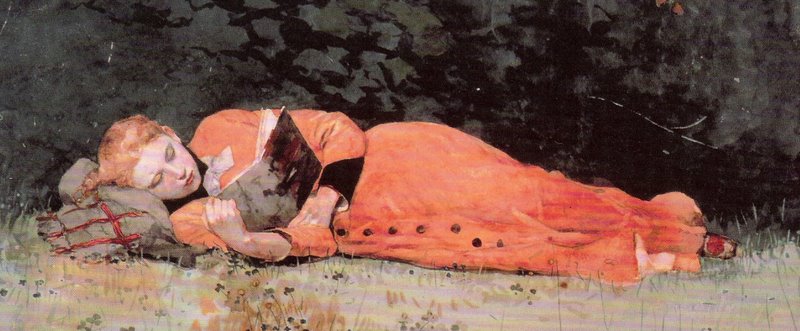
girl-reading-758651

“These days, Clarissa believes, you measure people first by their kindness and their capacity for devotion. You get tired, sometimes, of wit and intellect; everybody’s little display of genius.”

–Michael Cunningham, The Hours

This is so true, don’t you think?  The Hours, which I read over the weekend, is full of such truth. I liked it very much.

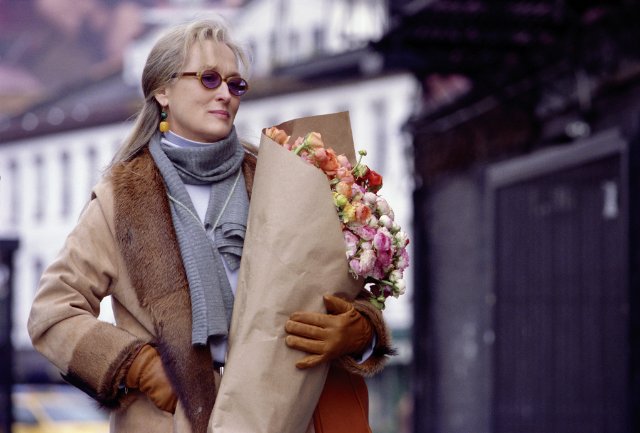
I remember going to see the movie when it came out back in 2002 and liking it very much. There was some major mis-casting, but I liked Meryl Streep as Clarissa a lot.

meryl

“Mrs. Dalloway said she would buy the flowers herself.”

Not surprisingly, I liked the book better.

Indeed, there are not many instances where the movie is an improvement over the book. Ben-Hur (1959) comes to mind.

Some movies actually measure up to the book: To Kill a Mockingbird (1962) does. And although the author did  not think so, I think Breakfast at Tiffany’s (1961) is as good as the book.

This would make an interesting blogpost topic no doubt, but…back to what I’m reading.

I picked up Malcolm Cowley’s And I Worked at the Writer’s Trade off a shelf at home–I think it was my father’s copy from 1977–and started that. I like reading about writers. Cowley is one of those guys who knew everybody and has a lot to say about them. He spent most of his career as a literary critic and editor and never really made it as a fiction writer himself. He did win a National Book Award for this book, writing about other writers.

I seem to remember thinking that he had a little chip on his shoulder, that he always managed to cast some aspersion on whomever he is writing about, that he makes himself more important than he probably was. But I have not found that to be the case reading this book now. Perhaps I am thinking of Exiles Return which he wrote in 1933 and then revised in 1951. Perhaps he had mellowed by 1977 when he wrote And I Worked at the Writer’s Trade. We do tend to do that, don’t we?

So what are you reading?

The right instructions

by chuckofish

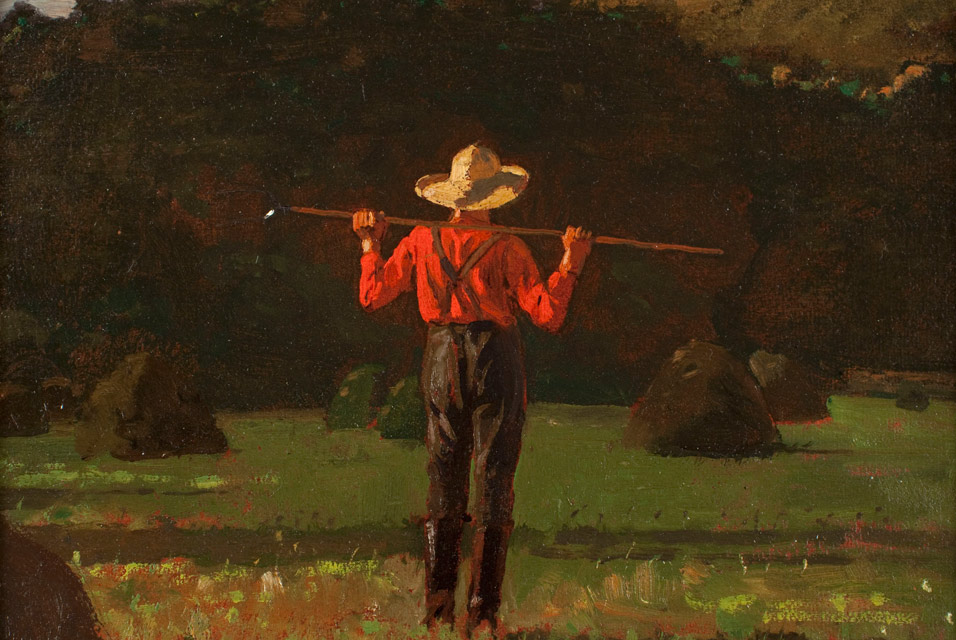
Farmer with a Pitchfork by Winslow Homer

Farmer with a Pitchfork by Winslow Homer


“You mustn’t wish for another life. You mustn’t want to be somebody else. What you must do is this:
‘Rejoice evermore.
Pray without ceasing.
In everything give thanks.’
I am not all the way capable of so much, but those are the right instructions.”

–Wendell Berry, Hannah Coulter

Happy Birthday, Wendell Berry  (born August 5, 1934)–American novelist, poet, environmental activist, and farmer!


I look down deep and do believe

by chuckofish

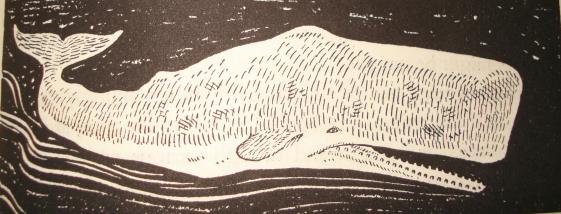
Moby Dick by Rockwell Kent

Moby Dick by Rockwell Kent

(Ahab) “Oh, grassy glades! oh, ever vernal endless landscapes in the soul; in ye,–though long parched by the dead drought of the earthly life,–in ye, men yet may roll, like young horses in new morning clover; and for some few fleeting moments, feel the cool dew of life immortal in them. Would to God these blessed calms would last. But the mingled, mingling threads of life are woven by warp and woff; calms crossed by storms, a storm for every calm. There is no stead unretracing progress in this life; we do not advance through fixed graduations, and at the last one pause:–through infancy’s unconscious spell, boyhood’s thoughtless faith, adolescence’s doubt (the common doom), then skepticism, then disbelief, resting at last in manhood’s pondering repose of If. But once gone through, we trace the round again; and are infants, boys, and men, and Ifs eternally. Where lies the final harbor, whence we unmoor no more? In what rapt ether sails the world, of which the weariest will never weary? Where is the foundling’s father hidden? Our souls are like those orphans whose unwedded mothers die in bearing them: the secret of our paternity lies in their grave, and we must there to learn it.”

And the same day, too, gazing far down from his boat’s side into that same golden sea. Starbuck lowly murmured:–“Loveliness unfathomable, as ever lover saw in his young bride’s eye!–Tell me not of thy teeth-tiered sharks, and thy kidnapping cannibal ways. Let faith oust fact; let fancy oust memory; I look deep down and do believe.”

Tomorrow is Herman Melville’s birthday, so take a break today and read some Moby-Dick!


What are you reading?

by chuckofish

girl-reading-758651

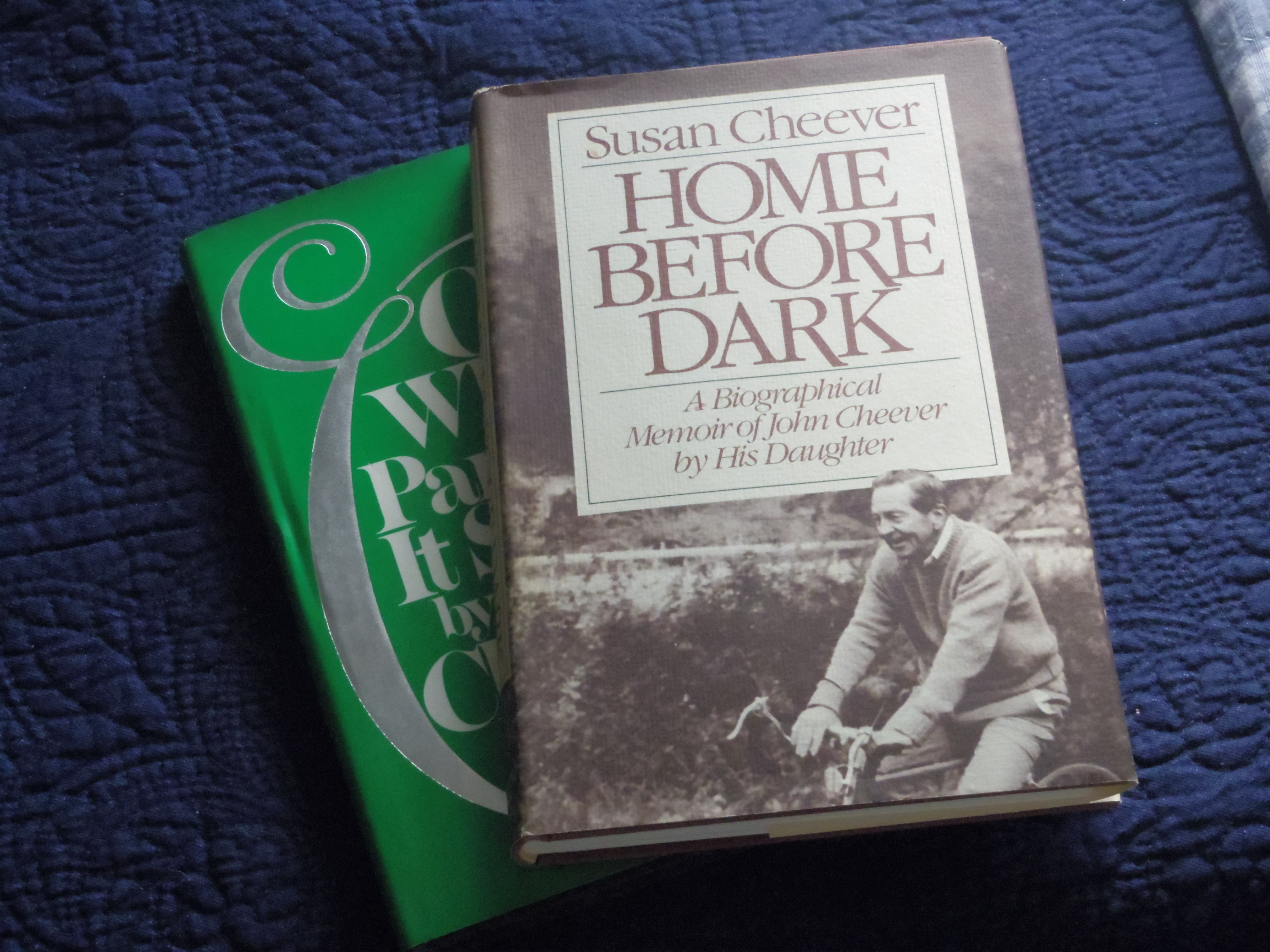
Once again I found myself casting about for something to read over the weekend. I picked Susan Cheever’s memoir of her father John Cheever (May 27, 1912 – June 18, 1982) from the bookshelf.  I received it as a Christmas present in 1984.

IMGP1065So I have been reading Home Before Dark again and enjoying it very much. Old John Cheever, the “influential twentieth century fiction writer affectionately known as ‘the Chekhov of the suburbs,'” is such a familiar type of dude to me–the waspy, literate Yankee gentleman who is also a terrible alcoholic.

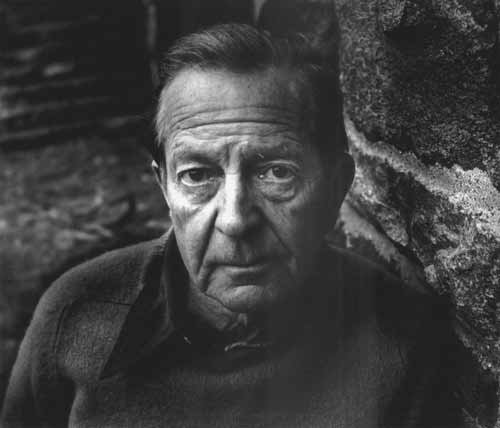
JohnCheever

I mean look at him in his shetland sweater. He was even a practicing Episcopalian who said grace before every meal! So familiar. Like my own pater, he made to age 70, but just barely.

It’s true that this “brilliant chronicler of American suburbia” led a tortured double life filled with sexual guilt, self-loathing and immense quantities of booze. Unfortunately his bad behavior went way beyond drinking too much. But I really think Susan Cheever could have stopped after writing her first memoir. Did she need to write another? Cheever’s son Ben has edited a collection of his letters. And they sold his journals in an auction. He has been turned inside out. Does anyone deserve this?

Anyway, I bought a used copy of The Stories of John Cheever and I will re-acquaint myself with his writing, which is what we should remember old Cheever for, right? I will resist reading Blake Baily’s 700-page Cheever: A Life which chronicles every sordid detail and secret of his life. Enough already.

An aged man is but a paltry thing, a tattered coat upon a stick, unless he sees the bright plumage of the bird called courage–Cardinalis virginius, in this case–and oh how his heart leapt.

–John Cheever, Oh What a Paradise it Seems