dual personalities

Category: History

“You come with me, we hunt buffalo, get drunk together! Hallelujah! Hallelujah!”*

by chuckofish

This November, we celebrate Native American Heritage Month, a time to honor the history, culture, and traditions of Native Americans past and present.

On September 28, 1915, President Calvin Coolidge issued a proclamation that resulted in the first Native American heritage celebration in the United States; he declared the second Saturday of each May as American Indian Day. In 1990, President George H. W. Bush approved a joint resolution designating November as National American Indian Heritage Month.

We will try to be more respectful in our celebrations this month than might be suggested from our entertaining, but culturally appropriative, singing of “Ugga Wugga Wigwam” to the wee babes the other night.

Perhaps we will watch the final season of Longmire, which premiers next Friday.

But I doubt it. Since reading all the books last summer, I am loathe to watch the show, because in my opinion, the video version and its ridiculous story lines do not compare positively to the books. I mean, there is no torture of people (Indian or white) in the books (see trailer)! There is no evil Indian bad guy in the books! And I’m sorry, Walt is a lot smarter in the books! Furthermore, Walt has a good relationship with the Cheyenne in the books, not the relationship fraught with drama portrayed on the tv series. All the racial unrest on the show is inserted to heighten the drama and that drives me crazy. Ugh.

We’ll have to think of something to do to celebrate Native American Heritage Month, such as visit one of the various American Indian sites throughout our state. There are several–for instance, I did not know there is a restored and authentically finished 1790-1815 French and Indian trading post and village, at Fort Charrette Village and Museum, 10 minutes east of Washington, Missouri. The fort includes five log houses, one of which is believed to be the oldest log house west of the Mississippi River. All are furnished with 1700s American antiques. There is even a winery nearby!

In the meantime, here is something beautiful and perceptive from Willa Cather:

“It was the Indian manner to vanish into the landscape, not to stand out against it. The Hopi villages that were set upon rock mesas were made to look like the rock on which they sat, were imperceptible at a distance. …

In the working of silver or drilling of turquoise the Indians had exhaustless patience; upon their blankets and belts and ceremonial robes they lavished their skill and pains. But their conception of decoration did not extend to the landscape. They seemed to have none of the European’s desire to “master” nature, to arrange and re-create. They spent their ingenuity in the other direction; in accommodating themselves to the scene in which they found themselves. This was not so much from indolence, the Bishop thought, as from an inherited caution and respect. It was as if the great country were asleep, and they wished to carry on their lives without awakening it; or as if the spirits of earth and air and water were things not to antagonize and arouse. When they hunted, it was with the same discretion; an Indian hunt was never a slaughter. They ravaged neither the rivers nor the forest, and if they irrigated, they took as little water as would serve their needs. The land and all that it bore they treated with consideration; not attempting to improve it, they never desecrated it.”

Death Comes for the Archbishop

Screen Shot 2017-11-08 at 11.31.28 AM.png

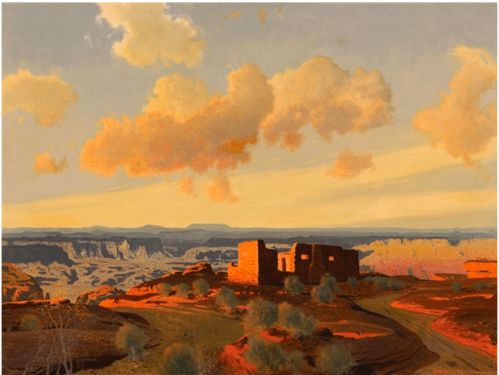
Ruins of Hopi Trading Post by James Swinnerton (1875–1974)
43e5bf44ad0298f0d8a498ee3f3c7b64.jpg

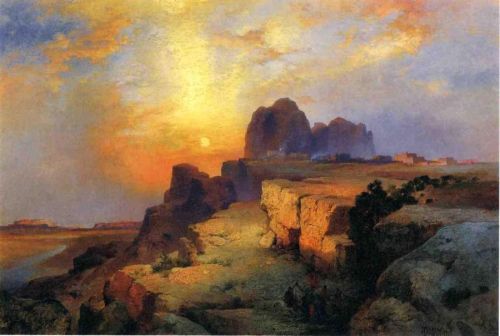
Thomas Moran (1837–1926)

06a1c5a60553a822961b4d062c1a12e8--southwest-art-landscape-paintings.jpg

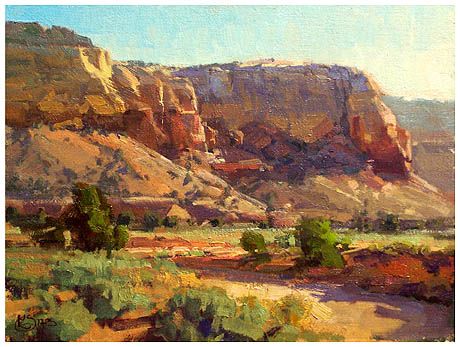
Thomas Moran (American, 1837 – 1926) -“Hopi Museum, Arizona”, 1916

*Pony That Walks in She Wore a Yellow Ribbon (1949)
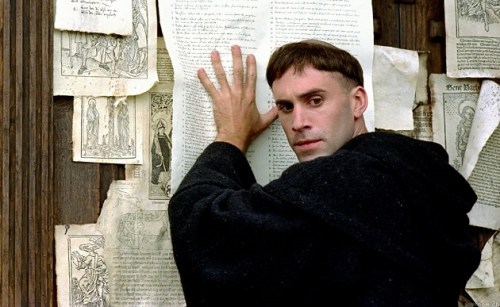
“A heretic! [What?] Someone throw me a bone. You forgot salvation comes through faith alone.” *

by chuckofish

58170d235524f_lutherfilm630.jpg
As you know, Protestants around the world are celebrating the start of the Reformation five centuries ago. It’s been 500 years!

On October 31, 1517, the day before the Feast of All Saints, the 33-year-old Martin Luther posted theses on the door of the Castle Church in Wittenberg. The door functioned as a bulletin board for various announcements related to academic and church affairs. The theses were written in Latin and printed on a folio sheet by the printer John Gruenenberg, one of the many entrepreneurs in the new print medium first used in Germany about 1450. Luther was calling for a “disputation on the power and efficacy of indulgences out of love and zeal for truth and the desire to bring it to light.” He did so as a faithful monk and priest who had been appointed professor of biblical theology at the University of Wittenberg.

Luther attacked the abuse of indulgence sales in sermons, in “counseling sessions,” and, finally, in the Ninety-Five Theses, which rang out the revolutionary theme of the Reformation: “When our Lord and Master Jesus Christ said, ‘Repent,’ He willed the entire life of believers to be one of repentance” (Thesis 1).

Here are all 95 Theses, #37 being particularly pertinent: Every true Christian, whether living or dead, has a share in all the benefits of Christ and the Church, for God has granted him these, even without letters of indulgence.

Tonight I plan to watch Luther (2003), which features Joseph Fiennes as ML, and toast the man who was perhaps the first figure in western history to resist visibly and publicly a political superpower (in his case, the papal authority in Rome) and live to tell the story. Indeed, his “Here I stand” moment before Emperor Charles V at the Diet of Worms in 1521 was an amazing act of courage and an astounding break in history.

While we’re at it, let’s include all those brave reformers of yore, and here is an appropriate prayer, which you might have missed back on October 13 when the Episcopal Church remembered Hugh Latimer and Nicholas Ridley, Bishops and Martyrs, 1555:

Keep us, O Lord, constant in faith and zealous in witness, that, like your servants William Latimer and Nicholas Ridley, we may live in your fear, die in your favor, and rest in your peace; for the sake of Jesus Christ your Son our Lord, who lives and reigns with you and the Holy Spirit, one God, now and forever. Amen.

*From The 95 Theses Rap (or, oh, the things you find on the internet…)

History lesson Friday

by chuckofish

Today is the 179th anniversary of a dark day in Missouri history–the day Gov. Lilburn Boggs

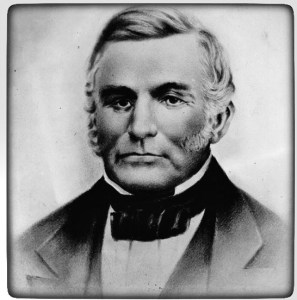
lilburn

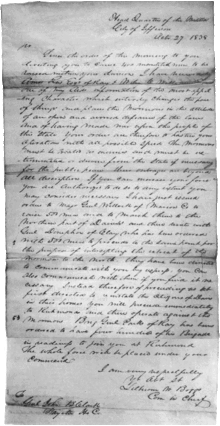
issued Missouri Executive Order 44, also known as the Extermination Order. This executive order, issued on October 27, 1838, claimed that Latter-day Saints had committed open and avowed defiance of the law and had made war upon the people of Missouri. Governor Boggs directed that “the Mormons must be treated as enemies, and must be exterminated or driven from the State if necessary for the public peace—their outrages are beyond all description.”

220px-Extermination_order.gif

Executive Order 44 was issued during the 1838 Mormon War,  which was caused by friction between the Mormons and their neighbors due to the economic and electoral growth of the Latter-day Saint community and Joseph Smith’s vocal opposition to slavery. In other words, the Mormons were too many and too affluent, and worst of all, they sided with the abolitionists.

The order was never rescinded–not until Missouri Governor Kit Bond did so in 1976–a mere 137 years after it was originally signed. Basically, for all that time, it was legal to murder Mormons! Bond expressed “on behalf of all Missourians our deep regret for the injustice and undue suffering which was caused by the 1838 order…” I should say so.

And now for our family connection…

Lilburn Wycliffe Boggs was born in 1797 in Lexington, Kentucky.  Boggs married his first wife Julia Ann Bent, a sister of the Bent brothers of “Bent’s Fort” fame, in 1816 in St. Louis.  They had two children, Angus and Henry. After she died at an early age, he married Panthea Grant Boone, granddaughter of Daniel Boone, in 1823 in Callaway County, Missouri. They had many children, the oldest being Thomas, born in 1824 in Bates County.

In 1840 Thomas Boggs went to what would eventually become the Colorado Territory to work with his father’s old in-laws, the Bent Brothers, at Bent’s Old Fort along the Arkansas River. In 1862, he settled along the Purgatoire (Picketwire) River south of present-day Las Animas and began a settlement known as Boggsville, which was the first white non-military outpost in that wild country.

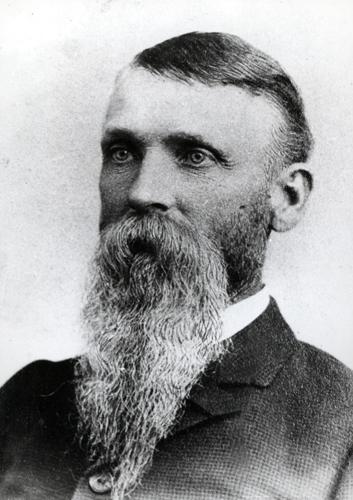
You will recall that the brother of our great-great-grandmother, Mary Prowers Hough–John Wesley Prowers–

JW Prowers.jpeg

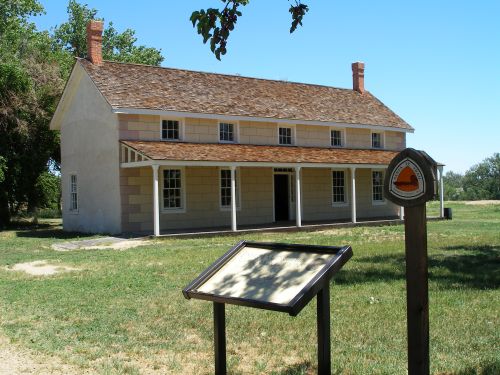
also lived in Boggsville with his family, and for awhile the Houghs lived there as well.

OLYMPUS DIGITAL CAMERA

The restored Prowers house in Boggsville.

Boggs raised sheep and Prowers raised cattle, separated by the Picketwire River in friendly fashion. Both ventures flourished on the land surrounding Boggsville during the 1860s and 1870s, and Boggsville thrived, serving as as a center of trade, agriculture, education and culture. It soon became an important stop on the Santa Fe Trail. In 1870, after the creation of Bent County, Boggsville became the county seat of Bent County. At it’s pinnacle, Boggsville boasted about 20 buildings, the first schoolhouse in Bent County, a stage stop and trading house. It was a hub of activity until 1873, when the Kansas Pacific Railroad established the town of Las Animas two miles north.

Boggsville was a very diverse settlement–in fact, our great-great-grandmother was the only “anglo” woman there in those early years. But even so, the name of the town may have turned off Mormons traveling west. Who could blame them?

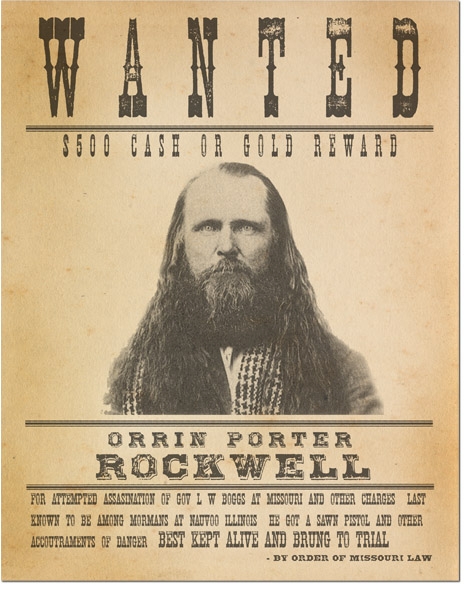
Interesting note (this is how my mind works): On May 6, 1842, Gov. Boggs was shot in the head through a window at his home. Boggs survived, but Mormons came under immediate suspicion. Orrin Porter Rockwell of the Mormon Danites was accused of the alleged assassination attempt.

11x14+FINAL+PORTER+ROCKWELL.jpg

Careful readers in the Longmire oeuvre will remember that Orrin Porter Rockwell is a character in A Serpent’s Tooth.

Have a great weekend–read some history!

“Isn’t it queer: there are only two or three human stories, and they go on repeating themselves as fiercely as if they had never happened before; like the larks in this country, that have been singing the same five notes over for thousands of years.”

Willa Cather, O Pioneers!

Tanto monta, monta tanto*

by chuckofish

I failed to make note yesterday that it was the OM’s and my 37th wedding anniversary. The OM was out of town at a conference, so no note was taken by us as well. However, thirty-seven years is nothing to sneeze at, and I’m sure we will raise a toast this weekend when all three children are in town.

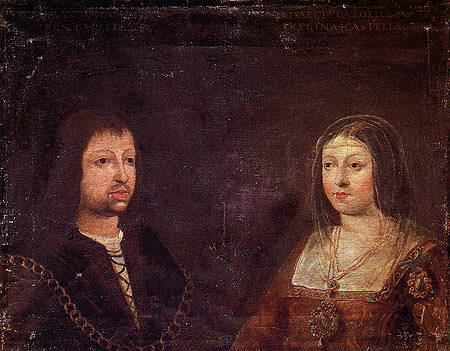
Funnily enough, today is the wedding anniversary of those lovable Catholic monarchs, Ferdinand and Isabella.

Fernando_e_Isabel

They were good looking too.

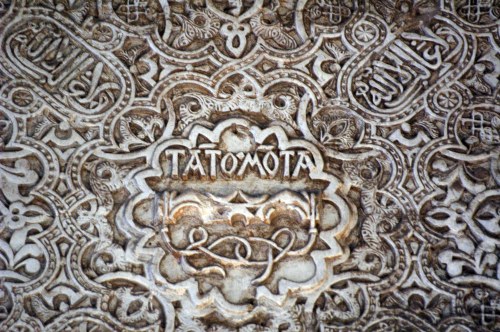
You recall that they were married with a clear prenuptial agreement on sharing power, and under the joint motto “tanto monta, monta tanto.”

Alhambra_Tato_mota.jpg

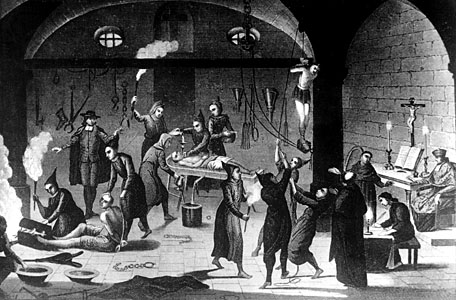
Ferdinand and Isabella proved to be a powerful team. They incorporated a number of independent Spanish dominions into their kingdom and in 1478 introduced the Spanish Inquisition, “a powerful and brutal force of homogenization in Spanish society.” (That’s one way to put it.) In 1492, the reconquest of Granada from the Moors was completed, and the crown ordered all Spanish Jews to convert to Christianity or face expulsion from Spain. Four years later, Spanish Muslims were handed a similar order. When the Reformation began to penetrate into Spain, the relatively few Spanish Protestants were eliminated by the Inquisition. Foreigners suspected of promoting Protestant faiths within Spain met similarly “violent ends.” After 300 years (!) the Spanish Inquisition was reluctantly suppressed in 1808, restored in 1814, suppressed in 1820, restored in 1823, and finally suppressed permanently in 1834. (Encyclopedia Britannica)

18910-004-7F8BCBE7.jpg

In 1492, Christopher Columbus, sponsored by Isabella and Ferdinand, discovered the New World for Europe and claimed the rich, unspoiled territory for Spain. Ferdinand and Isabella’s subsequent decision to encourage vigorous colonial activity in the Americas led to a period of great prosperity and imperial supremacy for Spain. The Inquisition, of course, was introduced in the colonies. The tribunals in Mexico and Peru were particularly “harsh.”

You may think times are tough now, but, just think, you might have been born in 15th century Spain.

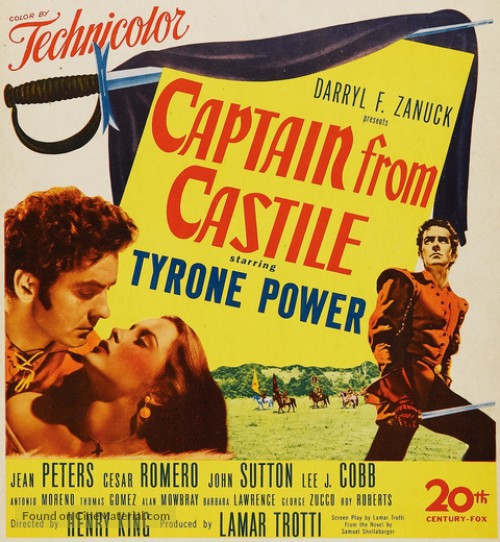
Makes me want to watch Captain From Castille (1947):

MV5BOGJhYTI0NDMtZGYwYy00YTBmLWI0ZjktNDkzMTFkYmMzMzQ2L2ltYWdlL2ltYWdlXkEyXkFqcGdeQXVyNjQzNDI3NzY@._V1_.jpg

Or not. Well, I digress again. Daughter #2 arrives in town today! The idea of waiting ’til Christmas to see the wee babes was too heinous, so she planned this quick visit to tide her over.

IMG_8791

Daddy stopped at Walgreens without the stroller–He’s not scared.

IMG_1680.jpg

“Don’t know how I got in here…don’t know how I’m going to get out…but I’m darned comfortable right now.”

Who can blame her? (I can’t wait to see her!)

*“They amount to the same” or “Equal opposites in balance”

“God save our old McGill!”*

by chuckofish

Today is the birthday of James McGill (October 6, 1744 – December 19, 1813) who was born in Scotland and educated at the University of Glasgow. Soon after graduating, McGill left for North America to explore the business opportunities there. By 1766, he was in Montreal where he entered the fur trade.  As a fur trader and land owner, he further diversified his activities into land speculation and the timber trade. At his death in 1813, he was one of the richest men in Montreal, leaving an estate well in excess of £100,000.

440px-Statue_de_James_McGill,_fondateur_Université_McGill,_Montréal

Statue of James McGill at McGill University

He bequeathed much of his estate to the founding of McGill University.

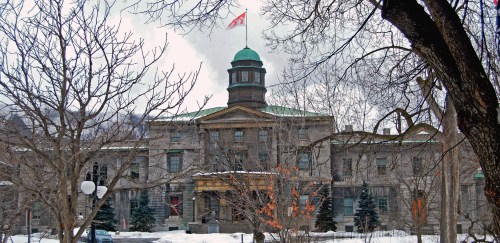
McGill_Arts_Building2

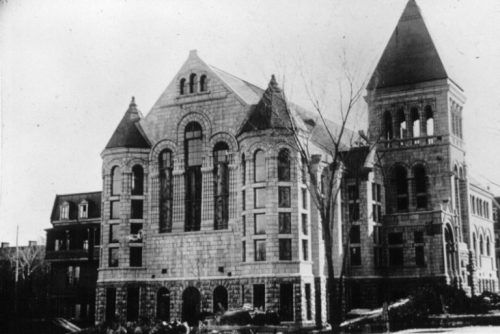
The Arts Building, the oldest building at McGill

McGill University is important to us personally because our mother and father met there as graduate students in 1948-49 or thereabouts.

archives-PR017256

Convocation procession from Roddick Gates, circa 1945 (McGill University photo archive)

PS034687-768x514

Redpath Library, 1891 (McGill University photo archive)

In those days McGill was a very “English” university and Montreal was a Commonwealth town. My parents enjoyed that and always liked all things English forever after.

Indeed, our father was always fond of Canada, which went back to his time at McGill. He even taught a class on Canadian History, which was rare back in the 1970s. My mother remembered McGill fondly and enjoyed being one of very few women in the mostly male History Department. She remembered Montreal as cold and bleak in the long winter and I recall her telling us how they would find a dead body or two every spring when the snow banks melted. Neither parent finished his/her degree–our father was called back to the Army–but something good came of their Canadian season–they were married in 1950. And the rest, as they say, is history.

Anyway, I am so ready for the weekend. I have plans for a fun outing with my friends, and daughter #1 is coming home for a quick visit on Saturday afternoon, so I am all set for a good time.

Screen Shot 2017-10-05 at 12.35.26 PM

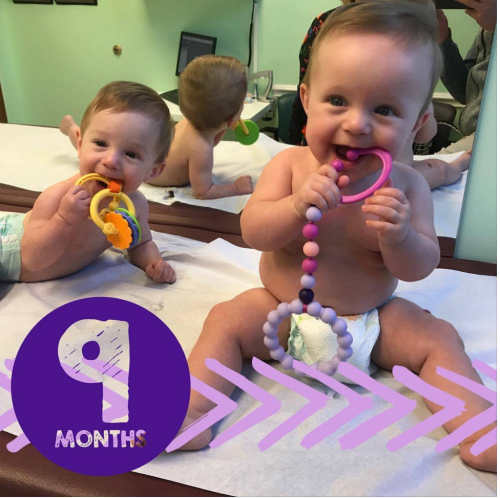
The wee babes had their 9-month check up and are doing really well, but you knew that!

Have a great weekend!

*God Save McGill by W.M. MacKeracher, Arts ’94

“To will and to work for his good pleasure”*

by chuckofish

I got to read both lessons in church on Sunday–I don’t know why–and that was super fun as they were good ones from Ezekiel and Philippians. I actually got to say, “Work out your own salvation with fear and trembling”! This gave me great joy–it’s the little things, right?

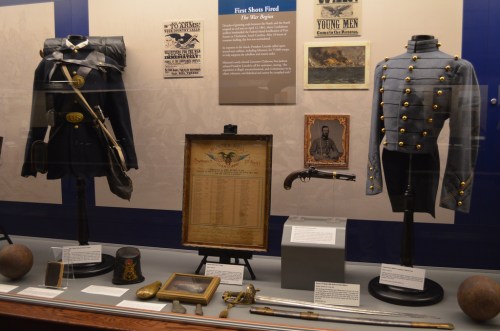
The weather was beautiful, so I convinced the OM to accompany me on a little outing on Saturday, the aforementioned trek down to Jefferson Barracks and the Missouri Civil War Museum. I had heard that it was a good museum, but we were still pleasantly surprised to find a very professionally appointed museum with interesting displays.12505902095_33d1b4f5f2_b.jpgUpon arriving we watched the typical opening video describing how the organization was incorporated in 2002 for the sole purpose of saving the historic Jefferson Barracks 1905 Post Exchange Building and converting it into a Civil War museum, library, and educational center. We learned that since opening in June 2013, it has become one of the largest Civil War Museums in the nation and will be one of the largest Civil War research libraries in the nation as well.  Its focus is entirely on Missouri’s role in the American Civil War.
Well done! I encourage you to support such small enterprises and to take your children to visit them. They survive on ticket sales and donor contributions. I know the boy would have loved this museum when he was a child. Hopefully, he will take the wee babes to visit when they are a little older. (BTW, two of their great-grandfathers are buried at Jefferson Barracks, so they could check that out as well.) Next on my list is the Museum of Missouri Military History in Jefferson City. They do not have a website, but they do have a very active Facebook page and it looks interesting!

Also, I finished Jan Karon’s To Be Where You Are, which I loved, and Jennifer Worth’s Call the Midwife.  Now I am back to asking the old question, “What to read now?”

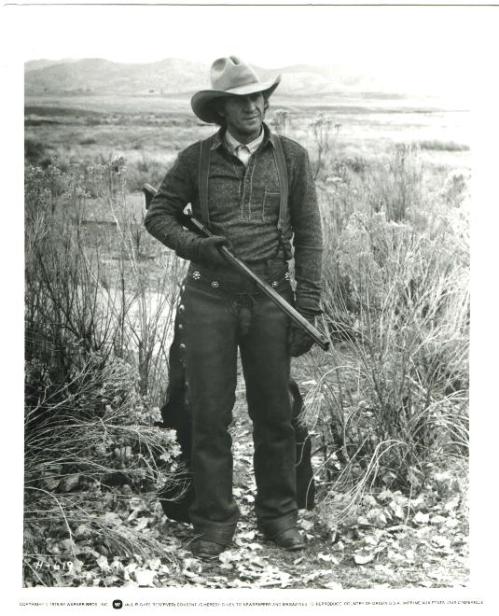
I watched the under-rated Tom Horn (1979) which I enjoyed very much.

762ad720a9ab0598e89b7d95cb2ef701.jpgIt is Steve McQueen’s final movie, so it is also sad to watch, but well worth it. Richard Farnsworth, another favorite of mine, has a big supporting role.
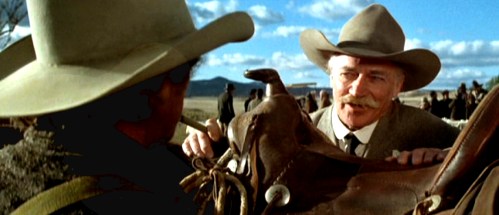
richard-farnsworth-in-tom-horn.jpgI went to one estate sale and rescued a needlepoint pillow.

Screen Shot 2017-10-01 at 2.16.04 PM.pngI trimmed the ivy on the patio and tidied the inside of my house. I did what my Aunt Susanne used to call “desk work.” And I got ready for a Sunday night visit from the wee babes and their parents.
IMG_1567.jpgHave a good week!

*Philippians 2:13

Beside the big river

by chuckofish

On this day in 1888 Thomas Stearns Eliot was born in St. Louis, Missouri.

Thomas_Stearns_Eliot_by_Lady_Ottoline_Morrell_(1934).jpg

His family had its roots in New England, but his paternal grandfather, William Greenleaf Eliot moved to St. Louis soon after finishing his graduate studies at Harvard Divinity School in 1834. He established a Unitarian Christian church there, the Church of the Messiah, which was the first Unitarian church west of the Mississippi River. Today it is called the First Unitarian Church of Saint Louis. When Ralph Waldo Emerson visited St. Louis, he met Eliot and called him “the Saint of the West.”

Eliot Portrait 1.jpg

It is good to take a moment to remember that the 1830s in St. Louis were the early days. For years Protestants had been conducting services in their homes, but it was not until after the Louisiana Purchase that Protestant churches were built. In 1818 Baptist missionary John Mason Peck organized the First Baptist Church. This was followed by a Methodist, Presbyterian, and Episcopal church (founded in 1825 when Thomas Horrell became the first rector of the Christ Church Episcopal Church). So Eliot was quite a pioneer.

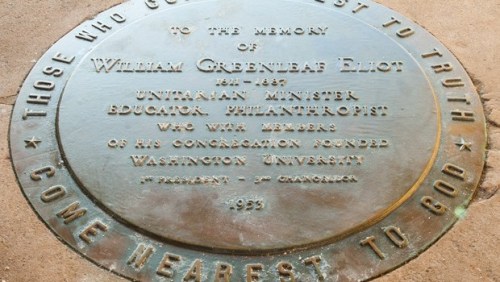
William Greenleaf Eliot was also a benefactor of educational institutions in St. Louis and co-founded my flyover university with his good friend Wayman Crow in 1853. Originally named Eliot Seminary, the name was eventually changed to Washington University.

eliot_plaque-620x350.jpg

Eliot became chancellor in 1871 and was associated with the university for the rest of his life.

I have fond memories of growing up next to Washington University back in the days when small children were free to roam and even cross big streets without adult supervision. In the early sixties my siblings and I used to walk up to the campus and play “army” heavily armed with toy guns. (We were big fans of the television show Combat! and so we were continually fighting the Battle of the Bulge.) I’m sure this would be considered quite inappropriate these days–small gun-toting children wandering on campus–but, boy, did we have fun. My older brother was the captain, I was the lieutenant and our little sister (and DP) was the sargeant. (Her middle name is Sargent, so it seemed especially appropriate.)

We knew (or should I say, our brother) knew our way around campus. We also knew where all the candy machines were.

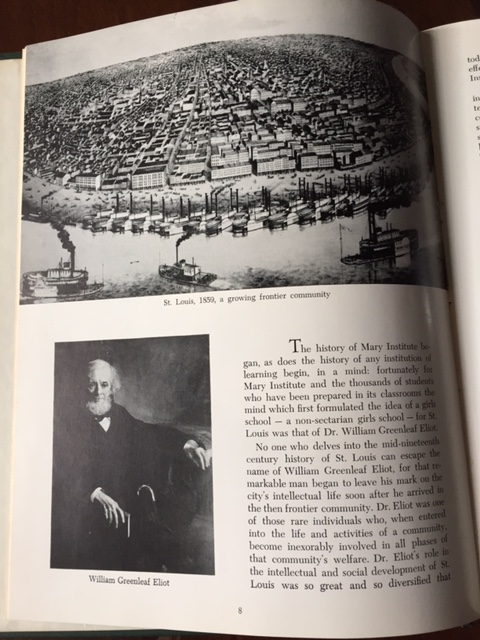
Eliot also founded my Alma Mater Mary Institute in 1859, a school for girls which he named after his daughter, Mary Rhodes Eliot, who died at age 17.

T.S. Eliot spoke at Mary Institute’s centennial in 1959. Our father was a teacher there at the time and so he met the great man. ANC III also wrote the centennial history of Mary Institute.FullSizeRender.jpg

Well, I digress.

T.S. Eliot once said:

It is self-evident that St. Louis affected me more deeply than any other environment has ever done. I feel that there is something in having passed one’s childhood beside the big river, which is incommunicable to those people who have not. I consider myself fortunate to have been born here, rather than in Boston, or New York, or London.

I have to agree. I have probably mentioned already that there is something about growing up in a town on a river that is different. You always have your bearings for one thing. You know North and South because you know where the river is.

When Eliot visited M.I. in 1959, he gave a lecture and at the end he read “The Dry Salvages” (one of the Four Quartets) in its entirety. Here is the first stanza.

I do not know much about gods; but I think that the river
Is a strong brown god – sullen, untamed and intractable,
Patient to some degree, at first recognised as a frontier;
Useful, untrustworthy, as a conveyor of commerce;
Then only a problem confronting the builder of bridges.
The problem once solved, the brown god is almost forgotten
By the dwellers in cities – ever, however, implacable.
Keeping his seasons, and rages, destroyer, reminder
Of what men choose to forget. Unhonoured, unpropitiated
By worshippers of the machine, but waiting, watching and waiting.
His rhythm was present in the nursery bedroom,
In the rank ailanthus of the April dooryard,
In the smell of grapes on the autumn table,
And the evening circle in the winter gaslight.

Yep

by chuckofish

709480d5cdf2a2760442d568e22b96a1.jpg

The Cheyenne Nation warmed to the old man. “What did you do? For a living.”

He gestured toward the book lying on the counter to our left, Herodotus’s The Histories. “I taught world history at Black Hills State.”

“‘Men trust their ears less than their eyes.'”

He nodded and looked sad. “He is rather one-sided, but he’s still the most reliable historian of the ancient world.” The old scholar considered me. “I find it hard to believe that a Wyoming sheriff quotes Herodotus.”

“It’s a magnificent book.”

He placed a wrinkled hand lovingly on the tome. “I read it periodically to convince myself that we live in more civilized times.”

“Yep.”

–Craig Johnson, An Obvious Fact

(The picture is of Virginia Woolf’s retreat at Monk’s House)

This and that and border ruffians

by chuckofish

Unknown-2.jpeg

Apparently ever since the little guy wore his Fredbird onesie the other day the Cardinals have been on a hitting streak.

Screen Shot 2017-08-09 at 12.30.45 PM.png

Coincidence? “If we could figure out what that key is, we’d never put the key away,” manager Mike Matheny said. “We’re fortunate to be riding it as long as we are, and there’s no reason to stop now.” (PD, 8/9/17)

Well, keep that onesie handy, Little Boy! The Cards are in second place!

Screen Shot 2017-08-10 at 6.51.42 AM

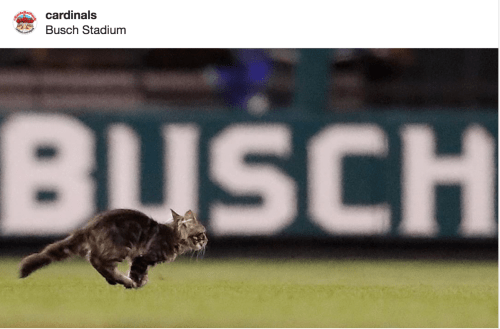
Onesie or RallyCat? You decide.

In memory of Glen Campbell, we thought we’d treat you to this montage of his variety show from the late sixties/early seventies. Remember The Glen Campbell Goodtime Hour? Steve Martin was one of the writers and the Smothers Brothers were frequent guests. It was pretty darn hip. I was a big fan.

I was in the eighth grade and I had a major crush (okay, minor crush) on Glen’s banjo player Larry McNeely, who was very shy and so cute.

He never spoke, but, boy, could he play!

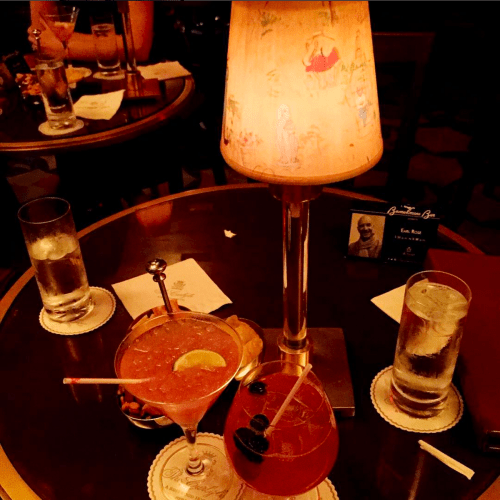
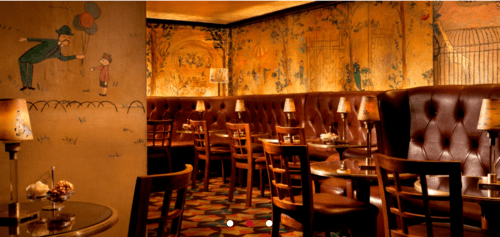
Daughter #1 is now back in flyover country. She bid farewell to NYC yesterday and had drinks at Bemelmans Bar at the Carlyle Hotel on Tuesday night.

Screen Shot 2017-08-09 at 2.09.41 PM.pngPerfect. You gotta love those Madeline murals, right?
Screen Shot 2017-08-09 at 2.12.41 PM.pngBy the way, on this day in 1821 President James Monroe issued a proclamation which concluded with the words: “The admission of the said State of Missouri into this Union is declared to be complete.” Behind that declaration lay years of struggle and a series of complicated maneuvers designed to maintain the delicate balance of power between the free states and those which permitted slavery.
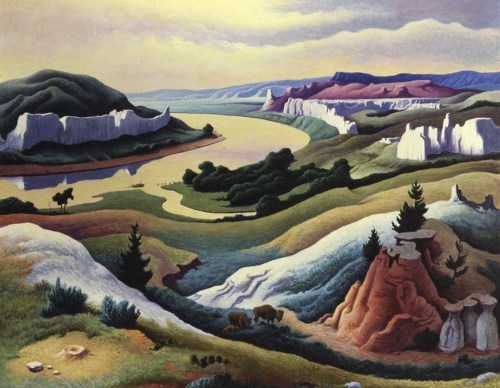
In case you were wondering, the state is named for the Missouri River, which was named after the indigenous Missouri Indians. They were called the ouemessourita (wimihsoorita), meaning “those who have dugout canoes”.

2cc75960a8ec6b7a6ffb6e45b7deb04f

Thomas Hart Benton, of course

So have a happy and productive Thursday! The weekend is almost here!

Away, you rolling river

by chuckofish

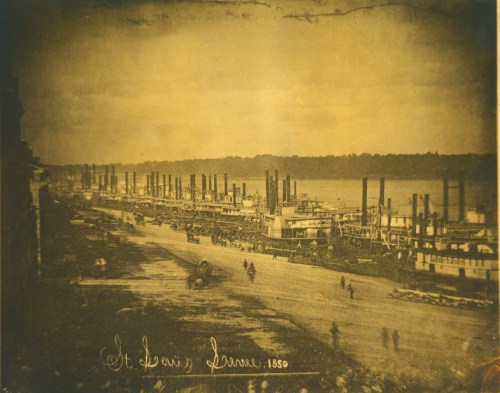
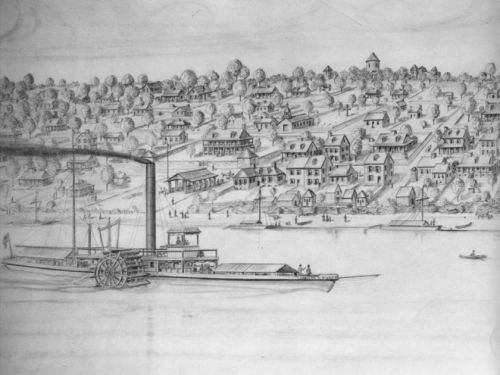
steamboat.jpgTwo hundred years ago the first steamboat arrived in St. Louis on (or around) July 27, 1817. The S.S. Zebulon M. Pike  was a small steamboat, and its underpowered engine needed help from old-fashioned poles in the hands of cordellers before it could tie up at the dock at the foot of Market Street.  This was on the natural riverbank. By the 1830s, the landing was paved with limestone. The red granite levee that still exists was built in 1868-69.
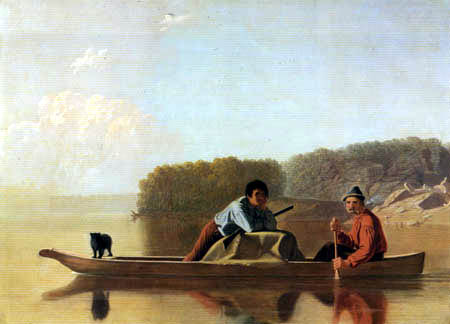
Built in Louisville, the Pike was the first steamboat to ascend the Mississippi River above the mouth of the Ohio River. Its voyage from Louisville took six weeks since the boat could run only in daylight. After the Pike’s arrival, no phase of life along the river was ever the same. Keelboats were instantly obsolete and the voyageurs who manned them soon passed from the scene.0334-0199_heimkehr_der_trapper.jpgTwo months later a second steamboat arrived, the S.S. Constitution. Then the following spring, the S.S. Independence fought its way up the more challenging Missouri River as far as Franklin, about half-way across the soon-to-be state of Missouri.  Next the S.S. Western Engineer, carrying the military/exploration party of Major Stephen Long, went up the Missouri as far as Council Bluffs.St._Louis_Levee._1850.jpgThus St. Louis was transformed into a bustling inland port.