dual personalities

Category: History

A day of remembrance

by chuckofish

Lord…
We thank you for your church, founded upon your Word, that challenges us to do more than sing and pray,
but go out and work as though the very answer to our prayers depended on us and not upon you.
Help us to realize that humanity was created to shine like the stars and live on through all eternity.
Keep us, we pray, in perfect peace.
Help us to walk together,
pray together,
sing together,
and live together
until that day when all God’s children
– Black, White, Red, Brown and Yellow –
will rejoice in one common band of humanity
in the reign of our Lord and of our God, we pray. Amen.
The Rev. Martin Luther King Jr.

Today we remember the tragic event that happened 50 years ago, the assassination of the Rev. Martin Luther King, Jr. in Memphis, Tennessee. Bells will toll at places of worship, college campuses and institutions 39 times across the nation “to honor the number of years Dr. King dwelled on this earth and to pay homage to his legacy.” Oddly, I see no mention of this on our cathedral’s website–only a link to the National Civil Rights Museum in Memphis.

I do not have many memories of this event. I was in the sixth grade and not terribly clued in to current events. I remember that it was our father’s birthday and we were focused on that. He turned 46. A pall was thrown over the day, much as a pall was thrown over daughter #1’s birthday years later on September 11 in 2001. The world intrudes.

anciii2.jpeg

My father had many shortcomings, but he was a gentleman of the old school. He treated everyone the same; he was kind and courteous, regardless of race, color or creed. I try to be like that as well. There is certainly not enough kindness or courtesy around these days.
Screen Shot 2018-03-30 at 10.05.27 AM.png

A little flyover history

by chuckofish

Screen Shot 2018-03-26 at 1.44.55 PM.png

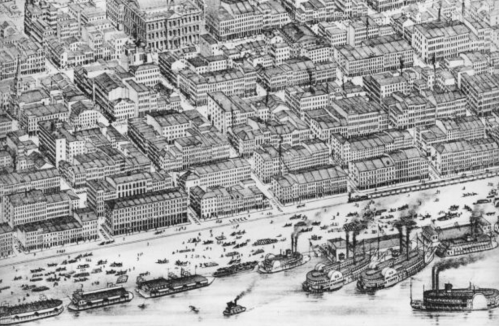
The first Washington University Law School class consisted of eight men in 1867. Two years after the Law School opened its doors, the class that entered had twenty-one students, and remarkably two were women: Lemma Barkeloo and Phoebe Couzins. They are believed by many to be the nation’s first women law students.

Yesterday marked the 147th anniversary of the day Lemma Barkeloo was admitted to the Missouri Bar, becoming the first woman allowed to practice law in St. Louis. A native of Brooklyn, New York, Barkeloo came west to study at Washington University because Columbia would not admit her. She joined the firm of prominent St. Louis attorney Lucien Eaton in 1870 and her future looked bright indeed.

However, Lemma Barkeloo died late that same year of typhoid fever, although one writer called it “over-mental exertion.” Please.

Studying law at Washington University with Barkeloo was Phoebe Wilson Couzins of St. Louis, who took and passed the Missouri Bar in 1871, making her Missouri’s second and the nation’s third or fourth licensed woman attorney. She later became the first woman admitted to the bar in Arkansas and Utah, and was also admitted to the bar in Kansas and the Dakota Territory. She was also the first woman to serve as a U.S. Marshal. When she died in 1913 she was buried in Bellefontaine Cemetery with her U.S. Marshal star pinned to her chest.

Discuss among yourselves.

Postcards from Virginia

by chuckofish

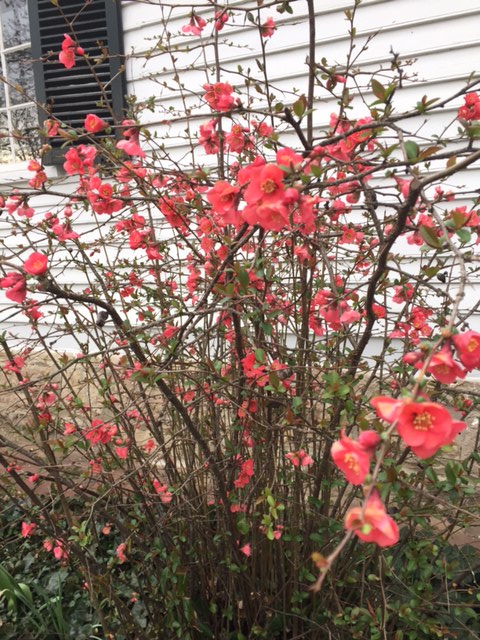
While I was visiting daughter #2 in Maryland and Virginia, spring was beginning to show its face…

Unknown-10.jpeg…but by the time I left on Tuesday, it was sleeting and promising worse.
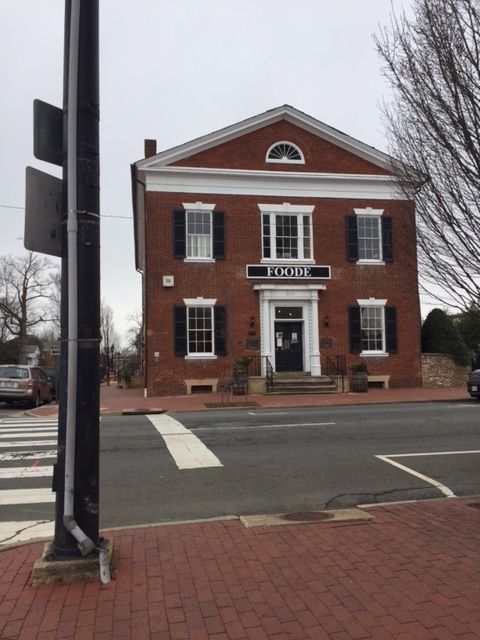
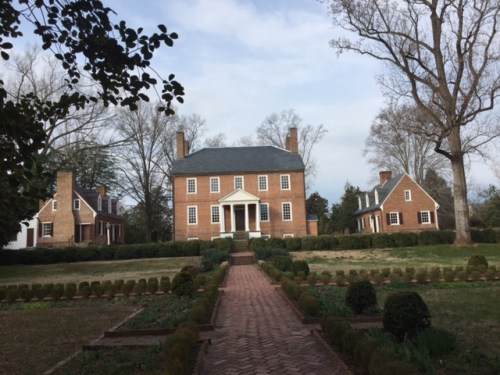
Nevertheless, we had a lovely time, starting off straight from the airport in Baltimore with a jaunt down to Fredericksburg, Virginia. Located near where the Rappahannock River crosses the Atlantic Seaboard fall line, it was a prominent port in Virginia during the colonial era. Today it is chock full of beautiful old buildings. We ate lunch at Foode, a hip restaurant in a historic bank building.

Unknown-9.jpegThere were plenty of historic buildings, etc to visit in the historic district in which our airbnb was located. This one was practically across the street.
Unknown-11.jpeg

Unknown-12.jpeg

Love this sign!

A few blocks away was the Episcopal Church…Unknown-14.jpegand the Presbyterian church…

Unknown-13.jpegIt was a handsome, vibrant town where we also did a lot of shopping in the numerous antique malls, which, not surprisingly, were far superior to our mid-west versions.
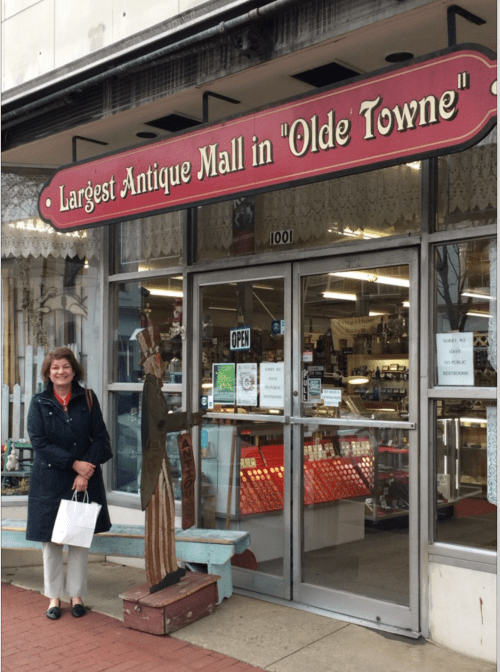
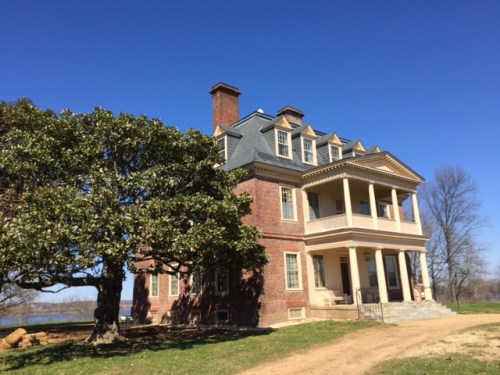
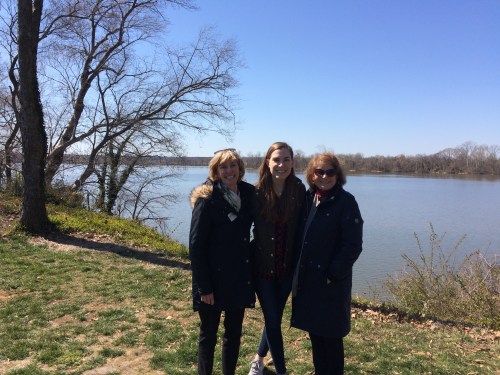
Screen Shot 2018-03-21 at 11.51.47 AM.pngOn Saturday we headed to Norfolk to visit my old friend, where we were wined and dined and talked non-stop. Then on Sunday, the three of us headed to Shirley Plantation, located on the north bank of the James River in Charles City County. We took a tour and walked around the grounds.
Unknown-7.jpeg

Unknown-6.jpegThen we headed to the Upper Shirley Winery for lunch and wine.
Unknown-5.jpeg

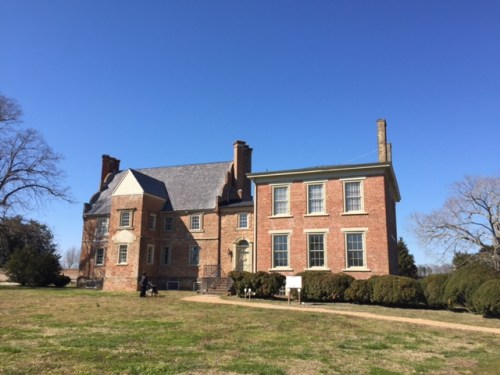
IMG_8638.JPGOn the way back to Norfolk, we stopped at Bacon’s Castle, the oldest documented brick dwelling in the U.S. Built in 1665, it is notable as an extremely rare example of Jacobean architecture in the New World.
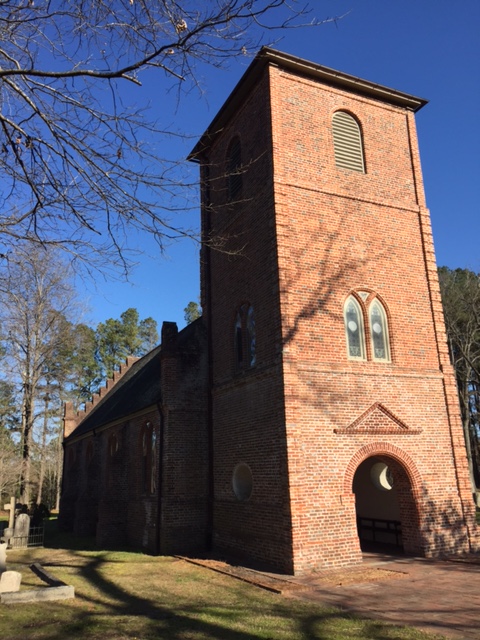
Unknown-4.jpegWe couldn’t resist stopping at St. Luke’s Church near Smithfield in Isle of Wight County. It is the oldest church in Virginia and the oldest church in British North America of brick construction. According to local tradition the structure was built in 1632.
Unknown-3.jpegIndeed, daughter #2 and I had a great time with our hôtesse élégante and her very nice husband!
Back in College Park, we were happy to be reunited with dear Nate (DN) and to spend some time with him. He is a great son-in-law and I much appreciated that he drove me to BWI in a sleet storm without so much as a grimace/eye roll.

Unknown-2.jpegAnyway, it was a super fun getaway.

Unknown-1.jpeg

It is always nice to get back home though, right? The OM had not burned the house down, but he had put the trash out two days early.

anigif_enhanced-3440-1432146894-2.gif

“A boy’s will is the wind’s will, And the thoughts of youth are long, long thoughts.”*

by chuckofish

Screen Shot 2018-03-06 at 11.45.23 AM.png

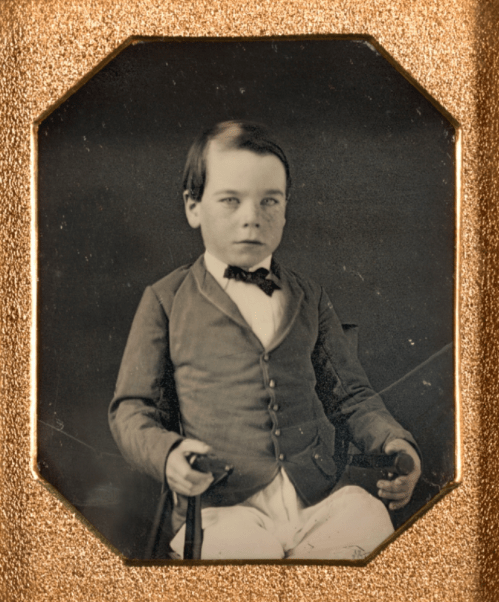
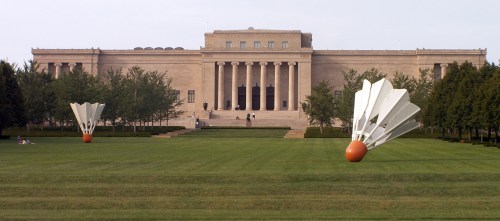
On this day in 1841 William Rockhill Nelson was born in Fort Wayne, Indiana. “He came,” we are told, “of builders of cities and states. His American ancestry reached back almost three centuries.” If you are interested in the man who owned and edited the Kansas City Star and was a co-founder of the Nelson-Atkins Museum of Art, you can read all about him here.

He was quite a fellow.

As a boy William was “exceedingly mischievous and difficult to manage.”

Screen Shot 2018-03-06 at 11.50.26 AM.png

He used to say that he “must have been a natural insurgent.” One of the first insurrections came when he was ten years old. A political speaker was making an open-air address at night. The boy and one or two of his friends, armed with eggs, plastered the speaker from behind trees. The next day placards were posted offering a reward for the arrest and conviction of the offenders.

“I could see myself behind the bars,” he said in telling about it, “and I was overwhelmed at the thought of the disgrace I would bring on the family. So I determined to run away. I got on board the train. But my father had heard of my plan from my brother and he came and took me off. He asked me and I told him the full truth about what I had done, and I shall never forget the note of satisfaction in his voice when he said: ‘Well, thank God, you are not a liar.'”

William sounds like a character out of a Booth Tarkington novel, don’t you think?

After many such incidents, William was sent off as a teenager to the college, now the University, of Notre Dame, a school at that time famous for its strictness of discipline. Years later a friend inquired how it happened that his father, a vestryman in an Episcopal Church, sent him to a Catholic School. “It was a sort of Botany Bay for bad boys,” he explained.  He was more than a match for the severe priests, however, and the they kicked him out and asked him not to return.

I like to think of Notre Dame as a Botany Bay for Bad Boys.

Anyway, Nelson became a lawyer. And a leading citizen of Kansas City.

Nelson-art-gallery1.jpg

If they ever make a movie about William Rockhill Nelson, I know who should play him.

Screen Shot 2018-03-06 at 1.50.53 PM.png

*Henry Wadsworth Longfellow, “My Lost Youth”

The Games of the III Olympiad

by chuckofish

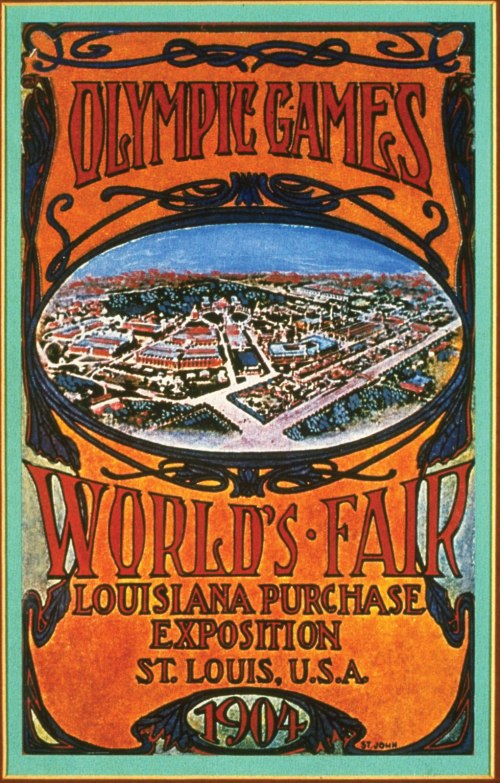
That’s right–the third Olympiad. Lest we forget–the 1904 Olympics were held here in my flyover town.

1904summerolympicsposter.jpg

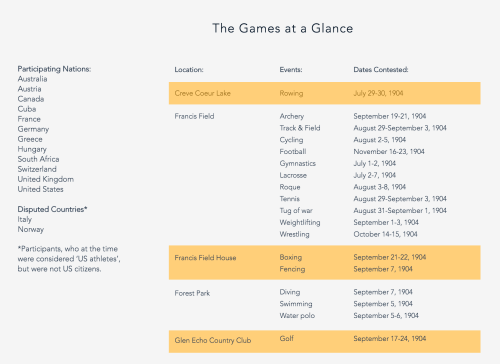
And that is pretty cool. We are, after all, one of only three cities in the U.S. — one of only 23 in the world — to host the Summer Games. And, of course, my flyover university–where most events of the third Olympiad took place–is going to “add another architectural jewel to its historic campus later this year when an Olympic Rings ‘Spectacular,’ a five-ring sculpture, is installed at the end of Olympian Way, on the southwest corner of the Danforth Campus.” Oh boy.

Screen Shot 2018-02-06 at 11.28.14 AM.png

But why did they ever get rid of the tug-of-war?

Screen Shot 2018-02-06 at 11.20.10 AM.png

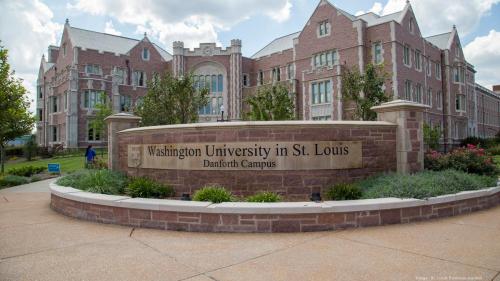
Well, things haven’t changed that much on campus. Still a lot of pink granite and ramparts.

https---blueprint-api-production.s3.amazonaws.com-uploads-card-image-159055-GettyImages-535789557.jpg

danforth-aerial.jpgwashusign0152014-1200xx1200-675-0-63.jpg

Here’s an article about the “St. Louis’ Olympic legacy” with a lot of pictures.

By the way, did you notice that lacrosse was one of the team events in 1904? Speaking of lacrosse, here’s the boy’s latest video featuring D2 Lindenwood University’s team.

(That was a smooth segue, right?) Still pretty chilly for lacrosse.

Let angels prostrate fall*

by chuckofish

Friday at last–what a long week it has been! The highlight of mine was when daughter #1 came home Wednesday night because she had business in town on Thursday.

Screen Shot 2018-01-25 at 10.27.31 AM.png

That was a fun, but short, diversion for me! Nothing like a mid-week wine & gab session.

A quiet weekend of puttering is fine with me. Hopefully we will see the wee babes for our usual Sunday night family dinner.

Unknown-3.jpeg

Miss Lottie looks so grown up with her four teeth!

Unknown-2.jpeg

The wee bud says, “I have a tooth too!”

I will note one historical milestone happening this weekend: Saturday is the anniversary of the dedication ceremonies of the New County Meeting House of the Ethical Society of St. Louis (designed by Harris Armstrong) in 1965.

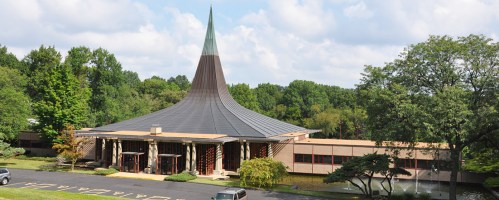
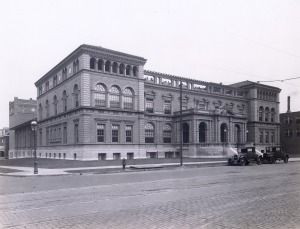
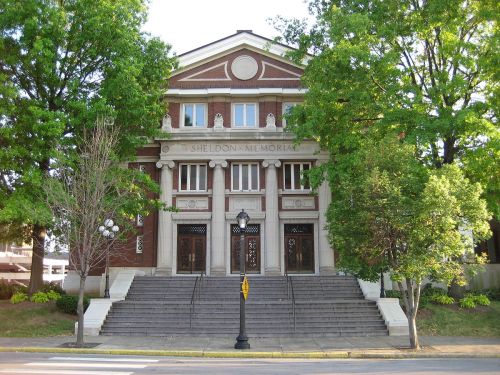
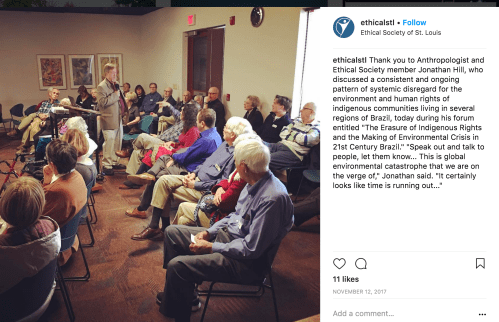
ethic4.jpgThe Ethical Society of St. Louis was organized in 1886 under the leadership of Walter L. Sheldon. Meetings, services and Sunday School were conducted in the Museum of Fine Arts at Nineteenth and Locust streets, where social and settlement work projects were also instituted. Under Sheldon’s direction the Self-Culture Hall Association came into being. (“Self-Culture”?) After his death, members of the Ethical Society erected the Sheldon Memorial in his name in 1912 and it served as the society’s meeting place until the move to the new Mid-Century Modern structure. In its heyday speakers such as Margaret Mead, Thurgood Marshall, R. Buckminster Fuller, Norman Cousins and Martha Gellhorn spoke from its stage and the St. Louis Chapter of the League of Women Voters was founded in The Sheldon’s Green Room. The Sheldon is now a concert venue and art gallery.1200px-Sheldonconcerthall.jpgToday the Ethical Society, located in an upscale neighborhood in west county, offers “Sunday School” and nursery school for children and adult education classes on various topics including a book of the month club, chorus, discussion on current events, ethical circles, ethical mindfulness meditation and other discussion groups. A Humanist congregation, they “affirm human dignity, celebrate reason, and work together for social change.” It is a “place where people come together to explore the biggest questions of life without reference to scripture, religion, or God.”

Screen Shot 2018-01-25 at 11.10.26 AM.png

I see from their Instagram that their congregation appears to be as old and gray as any mainline Christian group. LOL.

IMG_1575.jpeg

Phooey!

Well, in honor of the ethical humanists, I will go to church on Sunday and to our Annual Meeting.

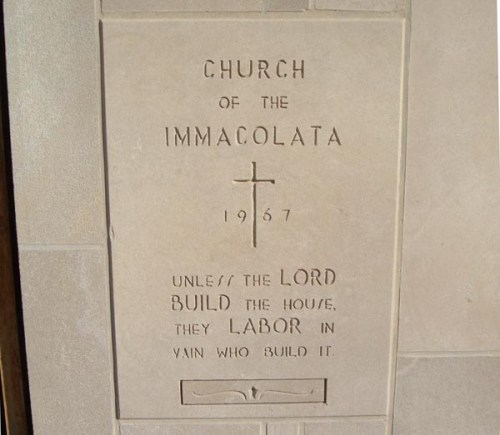
(It is interesting to note that the Church of the Immacolata, located across the street from the Ethical Society and built two years later, chose this scripture for their cornerstone:

church-of-immacolata13.jpg

In your face, ethical humanists!

Have a great weekend!

*”All Hail the Power of Jesus Name” by Edward Perronet (1779)

Throwback Thursday

by chuckofish

c5d3514d301ec159433f48686b4dbcb1

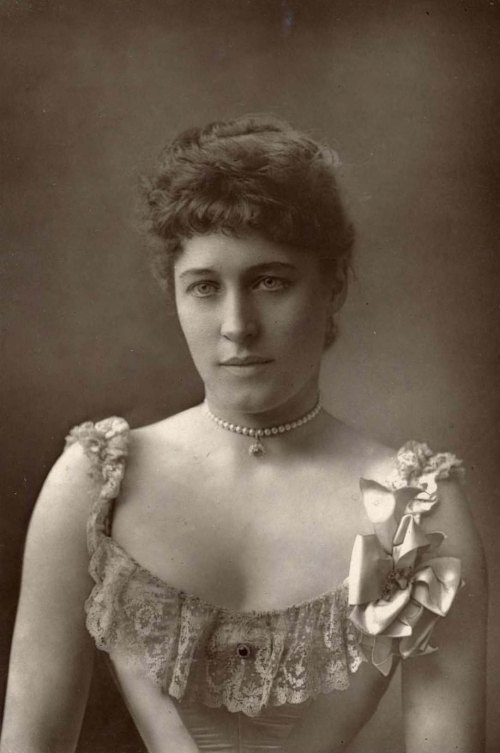
Did you know that Lillie Langtry visited St. Louis in January, 1883? Well, she did and she caused quite a stir. St. Louisans, we are told, were “agog over her presence” and why wouldn’t they be? Oscar Wilde, it was said, was inspired by her beauty to write Lady Windemere’s Fan. Daughter of  an Anglican dean, the Very Reverend William Corbet Le Breton, Langtry was one of the first international superstars.

When Col. A.B. Cunningham, an editor of the St. Louis Globe Democrat, was denied access to her quarters at the Southern Hotel for an interview, he stormed past her servants to find the lady breakfasting en negligee with Fred Gebhard, her manager. The Globe ran a scathing story about the actress, claiming that her success was due soley to her notoriety and urging St. Louisans to ban her stage performances as a protection to the city’s morals. Gebhard called Cunningham an infamous liar, whereupon Cunningham challenged him to a duel. After Lillie persuaded Fred not to accept, Cunningham posted placards around town denouncing him as a coward. The city’s other newspapers had a grand time writing of the whole affair, and Lillie’s performances were sold out.

Some things never change, right? Our expectations of the press certainly…

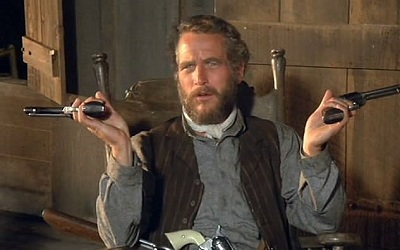
Anyway, all this talk of Lillie Langtry made me think of the The Life and Times of Judge Roy Bean (1972) which stars Paul Newman as the infamous Bean,

the life and times of judge roy bean 2.jpg

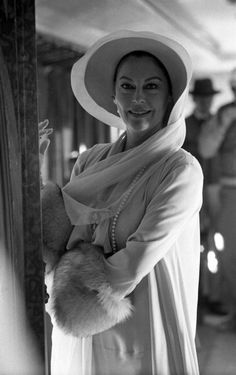
who is obsessed with “the Jersey Lilly”. Langtry is played by the beautiful Ava Gardner, who makes a cameo appearance at the end of the film.

3486e8e54f522e68e79f4cc1d96a8b11--the-life-and-times-ava-gardner.jpg

The movie, directed by John Huston, is a bit strange, but I saw it again recently and I enjoyed it. There is a lot of humor in the screenplay by John Milius, but the underlying  tone is sad and elegiac and the music by Maurice Jarre supports that. Paul Newman raises the bar once again. So if you are looking for something to watch, check it out.

Meanwhile I’ll raise a toast tonight to the lovely Lille Langtry.

(Information regarding Langtry’s visit to St. Louis from Frances Hurd Stadler, St. Louis Day By Day)

Mid-week look back

by chuckofish

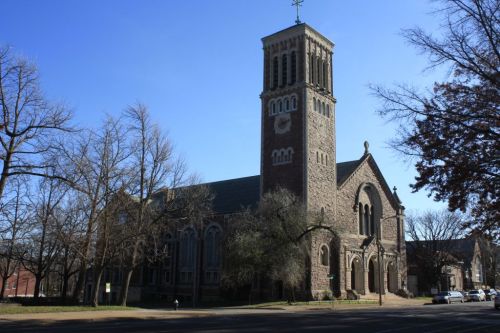
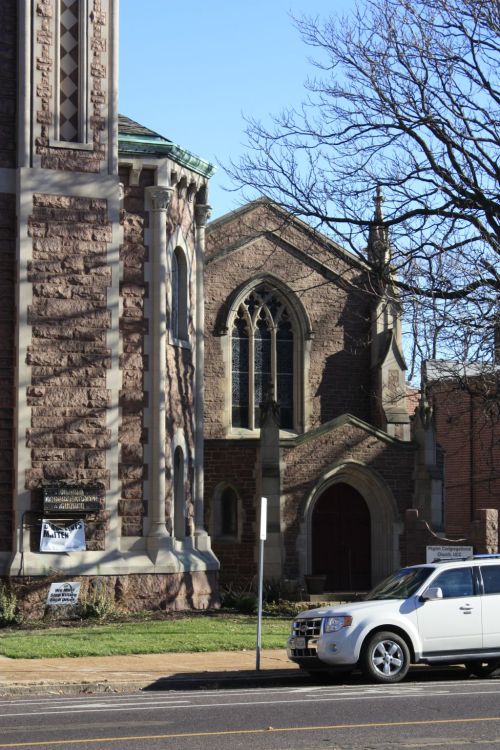
Back in December of 1866 a group of men and women met at the home of William H. Colcord to form a church which would become one of the largest and most influential independent Protestant churches in the city, Pilgrim Congregational Church.

A Gothic-style building was dedicated in 1872, but the growing congregation moved to its present location at Union and Kensington in 1907.

MG_6716.jpg

MG_6720-e1449467911896.jpg

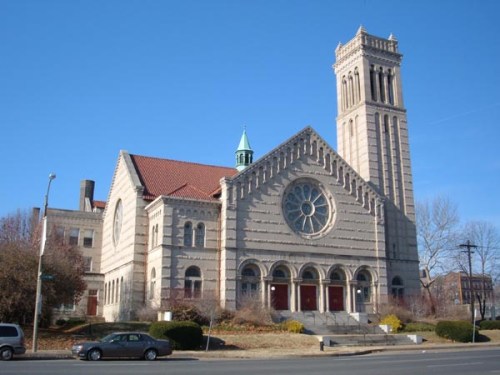
The “new” building, an imposing pink granite structure designed by Mauran, Russell and Garden, is not what I think of us as your typical Congregational church, but this is not New England. The OM’s grandmother attended church there, as did his  mother growing up. His parents were married there. I remember going there once. The OM says it was to hear John Anderson, the presidential candidate, speak in 1980, but I have no memory of that event.

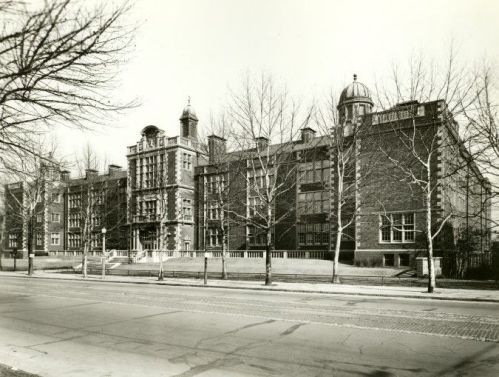
Anyway, the church still stands near other distinguished west-end institutions: Soldan High School, designed by William Ittner and attended by Tennessee Williams,

4b4f6dd72e99782ae1522f11799222da--boulevard-st-louis.jpg

Union Avenue Christian Church,

unionavenuechristian19.jpg

Westminster Presbyterian,

IMG_4101.JPG

and the former Young Men’s Hebrew Association headquarters.

e7bf45760efec5baaf564770712aa22b--st-louis-mo-built-environment.jpg

The neighborhood is much changed from its former heyday, but the churches keep going. Union Avenue Christian Church is now the home of the Union Avenue Opera, and the church is still vibrant with a strong commitment to remain as a faith community at their urban location.

O Lord Jesus, with whom we have passed another Christian year, following thee from thy birth in our flesh to thy sufferings and triumph, and listening to the utterances and counsels of thy Spirit: Even thus would we also end this year of grace, and stand complete in thee our Righteousness; humbly beseeching thee that we may evermore continue in thy faith and abide in thy love; who liveth and reigneth with the Father and the Holy Spirit, one God, world without end.

–Henry Alford

We all need to hang in there.

(The photos of Pilgrim Church are from Chris Naffziger, St. Louis Patina; the rest from google)

Thou my soul’s shelter, Thou my high tower: Raise Thou me heavenward, O power of my power*

by chuckofish

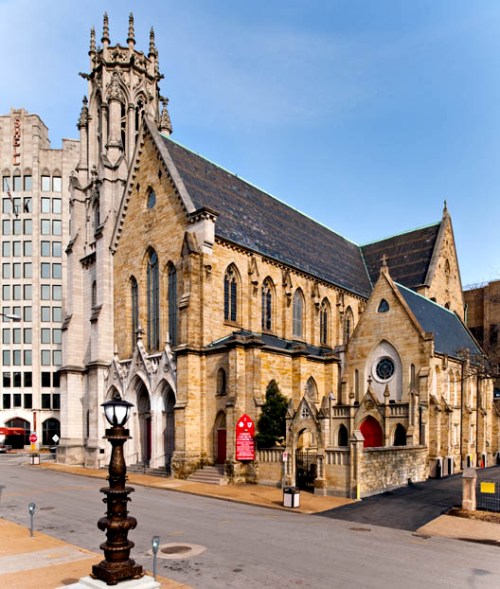
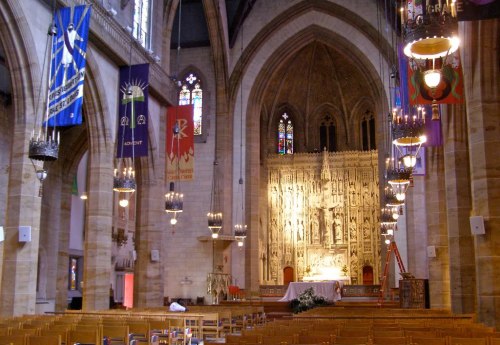
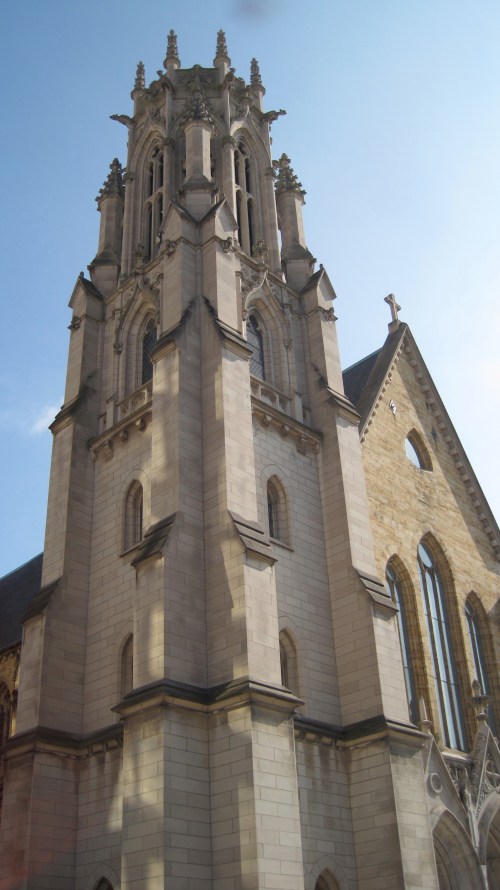
It is the last day in November and I have been meaning to mention this tidbit of flyover Episcopal church history all month…Four years before St. Louis was chartered as a city in 1823, Christ Church was organized by 26 people who assembled for a service in a building that previously had been a dance hall and a courtroom. That worship service on Oct. 24, 1819 was the first for an Episcopal-Anglican congregation west of the Mississippi River.

On November 1, 1819  a charter was circulated by Col. Thomas F. Riddick for the first Episcopal church west of the Mississippi. Almost 50 signatures were obtained for the document, including those of some of the city’s most prominent citizens–Gen. William Clark, Thomas Hart Benton, Alexander McNair, Frederick Dent, John O’Fallon, James Clemens, Jr., and William Carr Lane, who in 1823 would be elected first mayor of St. Louis.

Christ-Church.jpg

Nearly 50 years and two church buildings later, the growing congregation constructed a permanent church at their present location.  It was designated a National Historic Landmark by the U.S. Secretary of the Interior in 1994. Christ Church Cathedral is now headquarters of the Missouri diocese of the Episcopal Church and ranks among the finest English Gothic structures in the nation.

Screen Shot 2017-11-29 at 9.31.20 AM

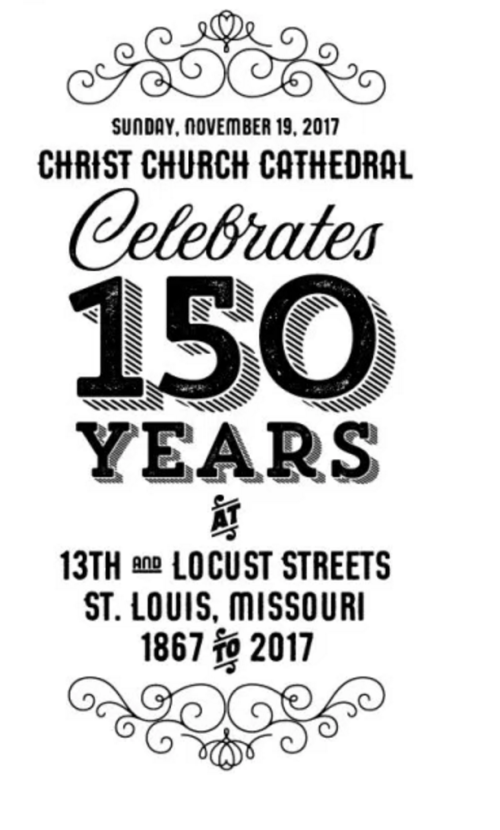
I was sorry to miss this special service and the “Chat N’ Chew” (!) in the Nave with Esley Hamilton, historian and preservationist, as guest speaker that followed. That was a busy weekend and I couldn’t pull it off.

34549227.jpg

Of course, there was nary a mention of this milestone in our local paper. 150 years! Oh well, I suppose they think no one cares about the history of a small (and shrinking) denomination like ours. And they are too busy feeding us headlines about Matt Lauer and Charlie Rose, et al.

Well, I certainly hope I am around in two years to celebrate the 200th anniversary of Episcopalians in this city!

img_02111.jpg

*Be Thou My Vision, hymn #488

“Be Thou our guard while troubles last, And our eternal home.”*

by chuckofish

samuel-seabury-1729-1796-granger.jpg

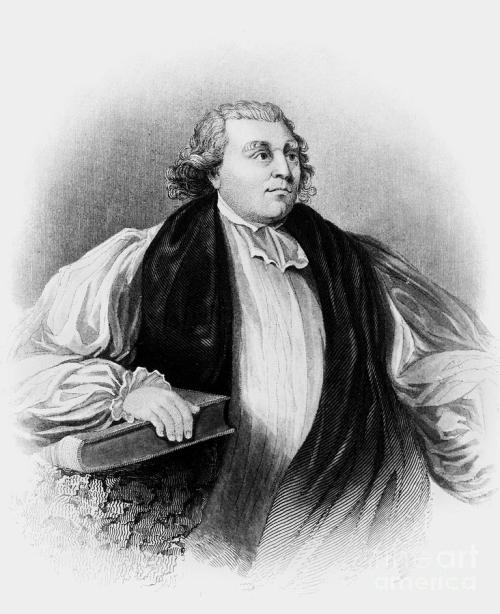
Today the Episcopal Church celebrates the feast day of Samuel Seabury (November 30, 1729 – February 25, 1796) who was the first American Episcopal bishop and the second Presiding Bishop of the Episcopal Church in the U.S.A.

seabury_2.jpg

In the years leading up to the American Revolution, Seabury earned a reputation as a staunch defender of the Church of England. During his participation in the founding of King’s College (Columbia University) his four Loyalist pamphlets from “A.W. Farmer” (or Letters from a Westchester Farmer) incurred the rage of American patriots.

Despite his anti-Revolutionary sentiments, Seabury became increasingly concerned that the Colonies needed a bishop. His adversaries, especially the Congregationalists, regarded such a move as a further encroachment of the Church of England, and thus the English Crown, upon the American Colonies. But Anglicans supportive of the American Revolution–George Washington among them–could no longer comfortably worship and take communion in a church officially tied with King George III. Thus, the Episcopal Church came into existence.

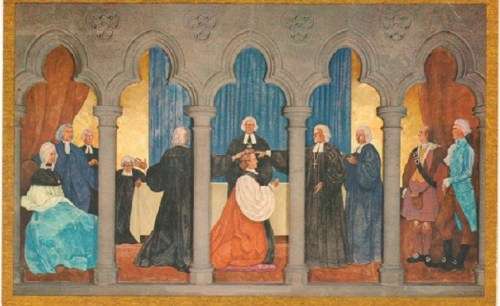
Seabury sailed for England in 1783 for his consecration, because even though the Episcopal Church was formally separate from the Church of England, it was still spiritually and theologically aligned. Another awkward situation, to say the least. So awkward, in fact, that the Anglican Church refused to consecrate Seabury. So Seabury turned to the Scottish Church, which granted his request. Bishop Seabury then returned to America to bolster and expand the Episcopal Church in the newly recognized United States of America.

You may recall that there used to be a seminary named in Seabury’s honor–Seabury-Western Seminary in Evanston, Illinois. However, it ceased operations as a residential seminary granting the Master of Divinity degree in May 2010, and in January 2012 it moved from Evanston to the Evangelical Lutheran Church in America headquarters. In 2013, it joined with Bexley Hall and became part of the Bexley Hall Seabury Western Theological Seminary Federation.

There are now ten accredited seminaries of the shrinking Episcopal Church. One can’t help but wonder what old Samuel Seabury would think of his turmoil-torn Church these days.

Eternal God, you blessed your servant Samuel Seabury with the gift of perseverance to renew the Anglican inheritance in North America: Grant that, joined together in unity with our bishops and nourished by your holy Sacraments, we may proclaim the Gospel of redemption with apostolic zeal; through Jesus Christ, who lives and reigns with you and the Holy Spirit, one God, for ever and ever. Amen.

As for this, no comment.

*Isaac Watts, O God, our help in ages past, Our hope for years to come, Be Thou our guard while troubles last, And our eternal home.