dual personalities

Category: History

Here in Missouri

by chuckofish

How was your weekend? The OM and I had an adventure–a roadtrip on Saturday over to Fulton in the rolling green hills of central Missouri to visit the Winston Churchill Memorial on the campus of Westminster College.

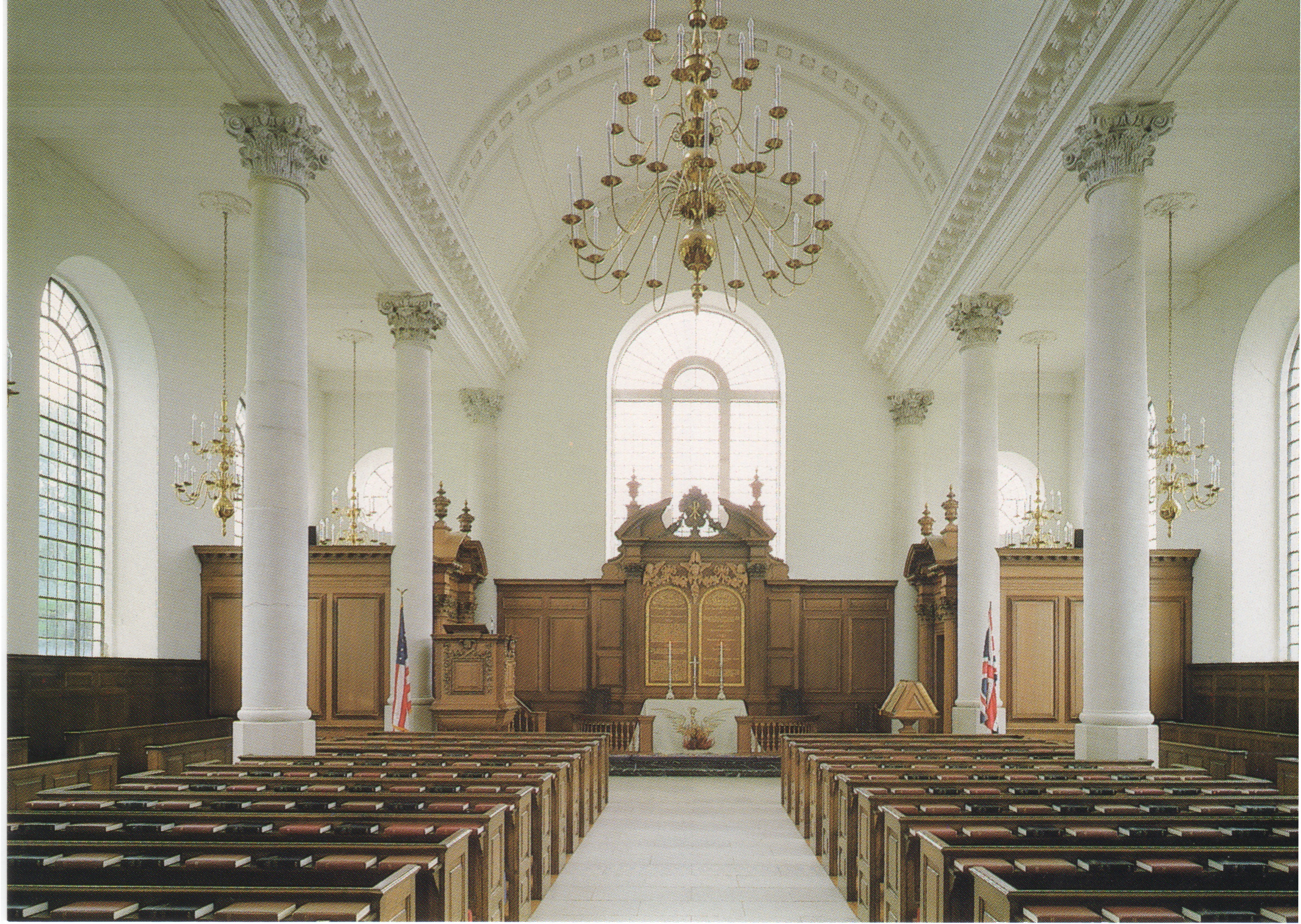
You will recall that in 1946 it was at Westminster College that Winston Churchill delivered one of the most significant speeches of his long and illustrious career–the “Iron Curtain” speech. In the 1960s Westminster College set out to mark what would be the 20th anniversary of Churchill’s visit. After due consideration of traditional modes of commemoration, Westminster College settled on the rather more ambitious notion of moving a Christopher Wren designed Church from London. This Church, St. Mary the Virgin Aldermanbury, had stood in London since 1677 when it replaced an earlier structure that had sat on the same site since the 12th century until it was destroyed in the great fire of 1666. This magnificent building, badly damaged during the London Blitz, was moved stone by stone to Westminster’s campus and rebuilt to Wren’s original specifications.

54016226

What an incredible undertaking! I had not been there since 1969 when it was dedicated. It is breathtaking.
stmarys

It is a popular venue for weddings, as you can imagine, and there was one about to take place when we ducked in, so this postcard view will have to suffice. It is my favorite type of church, reflecting the puritan branch of the Anglican church. I love those clear glass windows and brass chandeliers and the Ten Commandments behind the altar.
kneeler

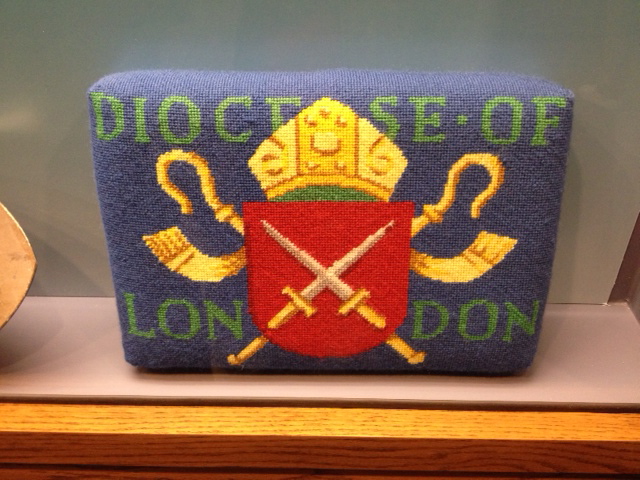
A needlepoint kneeler in the museum downstairs

The National Churchill Museum which opened in 2006 is downstairs under the church. I was quite impressed.
ANC III woud have approved

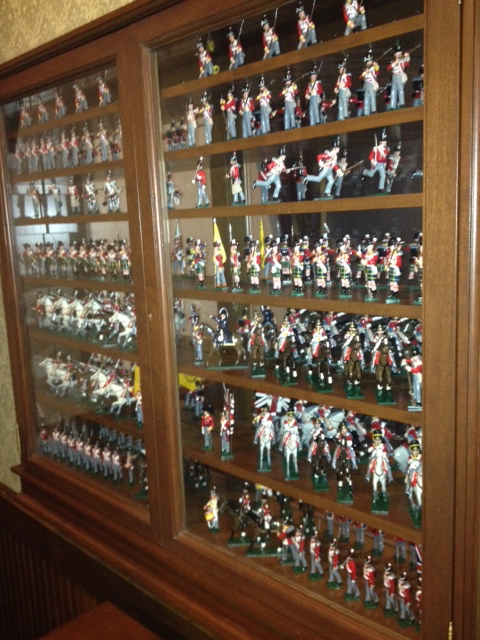
ANC III would have approved of these toy soldiers.
museuem

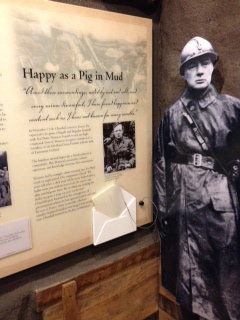
Indeed, ANC would have liked the museum as it illustrates the life and career of W.C.

window

Iron Curtain Speech sculpture

Iron Curtain Speech sculpture

Anyway, it is well-worth the trip to Fulton which is a nice college town, not unlike Greencastle, Indiana which we visited many times over the years when daughter #1 was a student at DePauw University. I like college towns and am always up for visiting one.

Sunday was All Saints Sunday and we had three baptisms in church. All three children, who ranged in age from infant to toddler, wailed for dear life. (Bill Baker who baptized daughter #1 and the boy always said that that was the devil leaving the child and not to worry.) Well, I always enjoy renouncing “Satan and all the spiritual forces of wickedness that rebel against God”, including “the evil powers of this world which corrupt and destroy the creatures of God”--especially a few days before an election.

Don’t forget to vote tomorrow!
Sesquicentennial news

by chuckofish

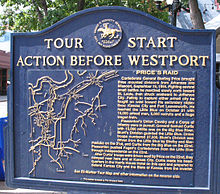
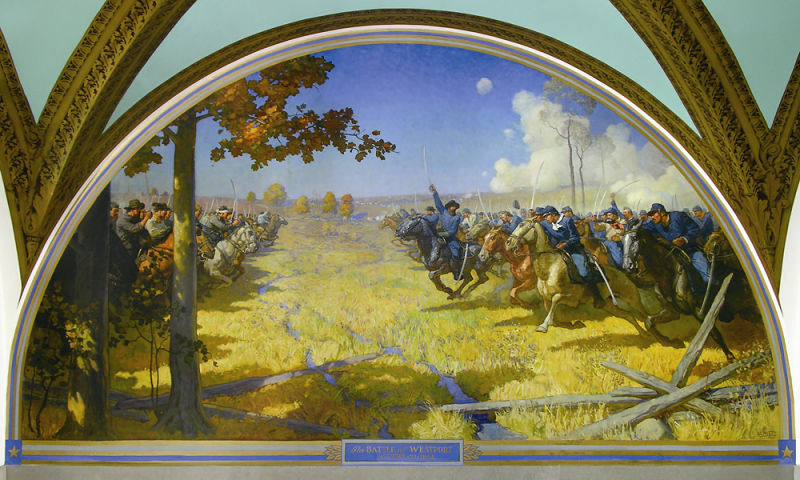
Today is the 150th anniversary of the Battle of Westport–sometimes referred to as the Gettysburg of the West–on October 23, 1864.

N.C. Wyeth mural of the Battle of Westport at the MO State Capitol

N.C. Wyeth mural of the Battle of Westport at the MO State Capitol

Union forces under Major Samuel R. Curtis decisively defeated an outnumbered Confederate force under Major Sterling Price. This engagement was the turning point of Price’s Missouri Expedition, forcing his army to retreat and ending the last significant Confederate operation west of the Mississippi River. This battle was one of the largest ever to be fought west of the Mississippi River, with over 30,000 men engaged. Buffalo Bill Cody, Wild Bill Hickcock (a scout for Gen. Curtis), Frederick Benteen, and Jeremiah Johnson all fought in this battle.

I am definitely adding this trip to my “To Do” list. I have been meaning to visit Westport, Missouri (now called Kansas City) where my ancestors were among the first pioneers to settle. And now I find that there was a major Civil War battle fought there? Where have I been?

220px-Westport-plan

Unfortunately, I will have to miss the reenactment, but, as you know, I am more of the self-guided-tour type anyway.

Road trip, anyone?

Trivia question: What famous movie character had a cat named after Gen. Sterling Price?  What movie?

“He will my shield and portion be”*

by chuckofish

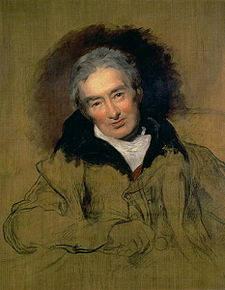
Today on the Episcopal Church calendar is the feast day of the worthy William Wilberforce, English politician, philanthropist and a leader of the movement to abolish the slave trade.

Unfinished portrait by Sir Thomas Lawrence

Unfinished portrait of Wilberforce by Sir Thomas Lawrence

He was born in 1759 and served in Parliament from 1780 to 1825. A turning point in his religious life came while on a tour of Europe. In the luggage of a travelling companion he saw a copy of William Law’s book, A Serious Call to a Devout and Holy Life. He asked his friend, “What is this?” and received the answer, “One of the best books ever written.” The two of them agreed to read it together on the journey, and Wilberforce embarked on a lifelong program of setting aside Sundays and an interval each morning on arising for prayer and religious reading. He considered his options, including the clergy, and was persuaded by Christian friends that his calling was to serve God through politics.

He was a major supporter of programs for popular education, overseas missions, parliamentary reform, and religious liberty. He is best known, however, for his untiring commitment to the abolition of slavery and the slave trade. He introduced his first anti-slavery motion in the House of Commons in 1788, in a three-and-a-half hour oration that concluded: “Sir, when we think of eternity and the future consequence of all human conduct, what is there in this life that shall make any man contradict the dictates of his conscience, the principles of justice and the law of God!”

The motion was defeated. Wilberforce brought it up again every year for eighteen years, until the slave trade was finally abolished on 25 March 1806. He continued the campaign against slavery itself, and the bill for the abolition of all slavery in British territories passed its crucial vote just four days before his death on July 29, 1833. A year later, on July 31, 1834, 800,000 slaves, chiefly in the British West Indies, were set free.

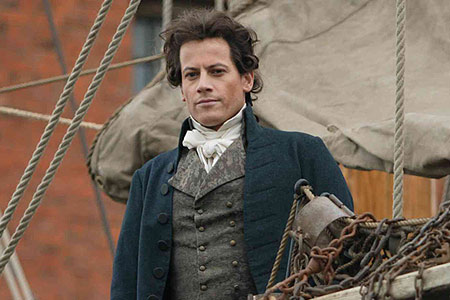
A movie of the life of William Wilberforce, Amazing Grace, was released in 2006. It stars Ioan Gruffudd as Wilberforce.

wilberAlso featured are Albert Finney as John Newton, Rufus Sewell as Thomas Clarkson and Benedict Cumberbatch as William Pitt. It is definitely worth watching for many reasons, not the least of which is that Mr. Gruffudd is so darn cute.

*Amazing Grace by John Newton

Information about Wilberforce from Christianitytoday.com.


Are you washed in the blood of the lamb?

by chuckofish

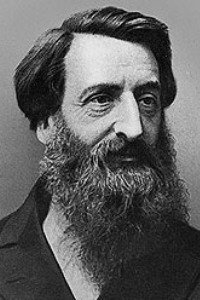
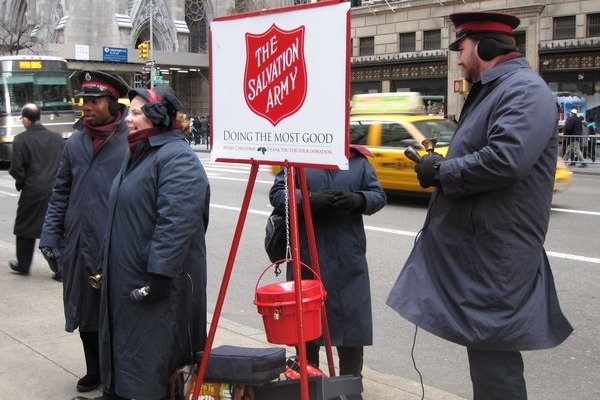
On this day in 1865 British revivalist preacher William Booth founded the Salvation Army.

william-booth

Originally a prominent Methodist evangelist, Booth felt constrained by the need to have a pastorate. Eventually he resigned from the ministry and began preaching to crowds of people in the streets of the East End of London. Soon he and his wife opened ‘The Christian Revival Society’ (later renamed The Christian Mission) where they held meetings every evening and on Sundays.

The Salvation Army, as the mission became known, was modeled after the military, with its own flag (or colors) and its own music, often with Christian words put to popular and folk tunes sung in the pubs. Booth and the other soldiers in “God’s Army” wore the Army’s own uniform, ‘putting on the armor’ for meetings and ministry work. He became the General and his other ministers were given appropriate ranks as officers. Other members became soldiers. During his lifetime, William Booth established Army work in 58 countries and colonies, traveling extensively and holding salvation meetings.

Today the Salvation Army is one of the largest and most popular charitable organizations in the world.

salvation-army

George Bernard Shaw wrote a three-act play Major Barbara about a Salvation Army member who becomes disillusioned when the charity accepts money from a arms maker and a whiskey distiller. In the preface to the play, however, Shaw derided the idea that charities should only take money from “morally pure” sources. He points out that donations can always be used for good, whatever their provenance, and he quotes a Salvation Army officer, “they would take money from the devil himself and be only too glad to get it out of his hands and into God’s”.

Vachel Lindsay wrote a poem about General Booth, General William Booth Enters Into Heaven. (You can read the whole poem here. )

And when Booth halted at the curb for prayer

He saw his Master thro’ the flag-filled air.

Christ came gently with a robe and crown

For Booth the soldier, while the throng knelt down.

He saw King Jesus. They were face to face,

And he knelt a-weeping in that holy place.

Are you washed in the blood of the Lamb?

On a lighter note, while toasting the Army tonight, we could all watch Guys and Dolls (1955).

313-Guys-And-Dolls

As you know, this is how my mind works…

“Though many brave unwritten tales were simply told in vapour trails”*

by chuckofish

Let’s take a moment to remember that the Battle of Britain began on July 10, 1940 as Nazi forces attacked shipping convoys in the English Channel. It was the first major assault by the Luftwaffe. Although heavily outnumbered, the British fighter pilots put up a fierce fight and succeeded in driving off the attackers.

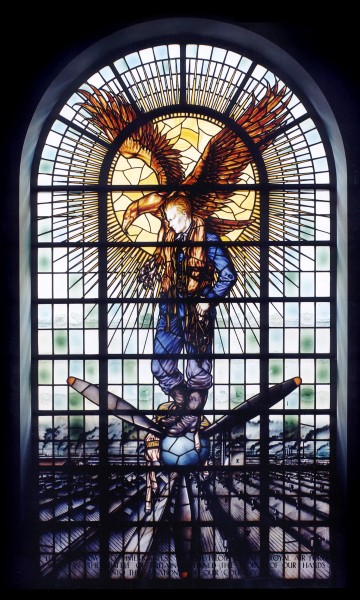
The Battle of Britain Memorial Window for Rolls-Royce, dedicated in 1947 in the Lady Chapel in Westminster Abbey

The Battle of Britain Memorial Window for Rolls-Royce, dedicated in 1947 in the Lady Chapel in Westminster Abbey

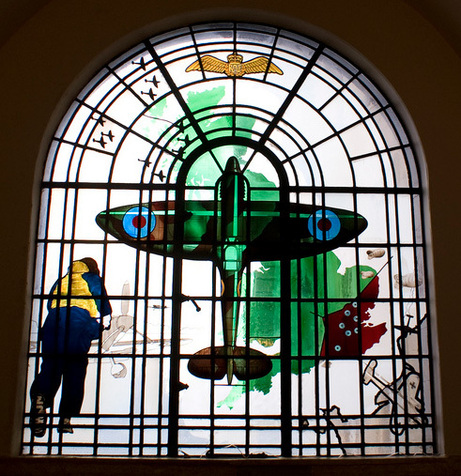
“Spitfire” window was created to honour all members of RAF Fighter Command. It’s located at the former RAF Bentley Priory, headquarters of Fighter Command during the Second World War

“Spitfire” window created to honor all members of RAF Fighter Command. It’s located at the former RAF Bentley Priory, headquarters of Fighter Command during the Second World War.

Battle of Britain Memorial in Kent, England

Battle of Britain Memorial in Kent, England

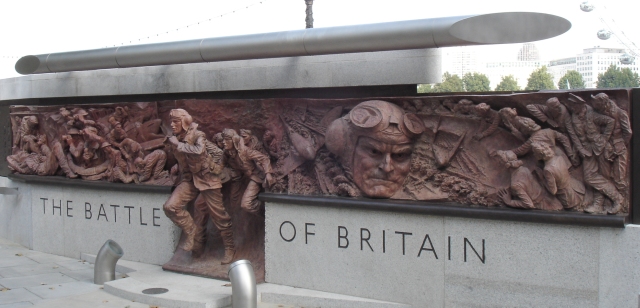
A section of the Battle of Britain Monument in London, England

A section of the Battle of Britain Monument in London, England

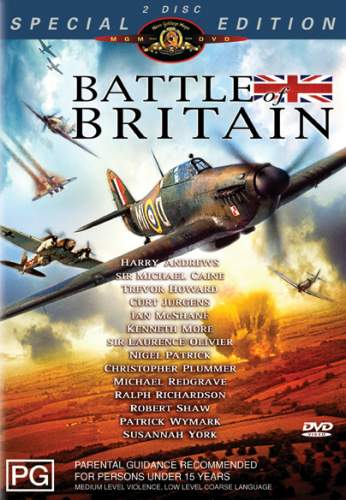
I might have to dust off my copy of The Battle of Britain (1969), an “historical reenactment of the air war in the early days of World War Two for control of the skies over Britain as the new Luftwaffe and the Royal Air Force determine whether or not an invasion can take place.”

10448

Directed by Guy Hamilton, there is a lot of aerial action by Spitfires and it boasts a who’s who of British actors, including Michael Caine, Trevor Howard, Ian McShane, Laurence Olivier, Michael Redgrave, Kenneth More, Ralph Richardson, and on and on.

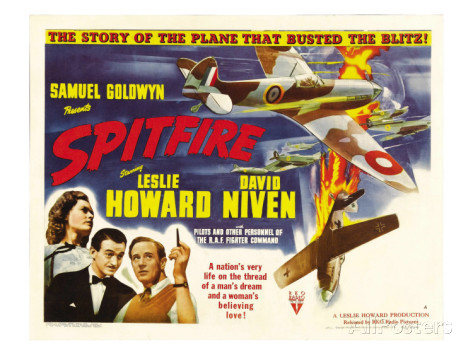
If I had not just recently seen Spitfire–The First of Few (1942) starring Leslie Howard and David Niven, I would certainly watch it.

spitfire-rosamund-john-david-niven-leslie-howard-1942

Leslie Howard is great as aircraft designer R.J. Mitchell and, as usual, he is doing his best to support the war effort in the best way he can.

It goes without saying that I will toast those few brave flyers who fought so valiantly to save so many. Will you join me?

* Lines from “Our Wall” by Flight Lieutenant William Walker, 616 Squadron, inscribed on a plaque next to the memorial wall in Kent.