dual personalities

Category: History

History is the open Bible

by chuckofish

History is the open Bible: we historians are not priests to expound it infallibly: our function is to teach people to read it and to reflect upon it for themselves.

(George Macaulay Trevelyan)

I had a wonderful time back east visiting daughter #2 in College Park, Maryland and driving all over the tri-state area. As planned we visited the Gettysburg National Military Park in Pennsylvania. It is awesome.

image01

We started our visit by viewing “A New Birth of Freedom,” narrated by (of course) Morgan Freeman, and the restored Gettysburg Cyclorama, which depicts Pickett’s Charge.  The film features wonderful graphics, which, for the first time, really gave me an idea of what was happening in the battle. There was also a lot of artillery noise and that made me think of the poor people who lived in the town of Gettysburg back in 1863 and how horrific it must have been for them. It would have been panic attack city for me locked in a basement or root cellar somewhere.  Anyway, after that emotional experience we trekked up to the Cyclorama, originally painted in the 1880s. It is really something to see.

We toured the park by car stopping frequently to check out particular spots.
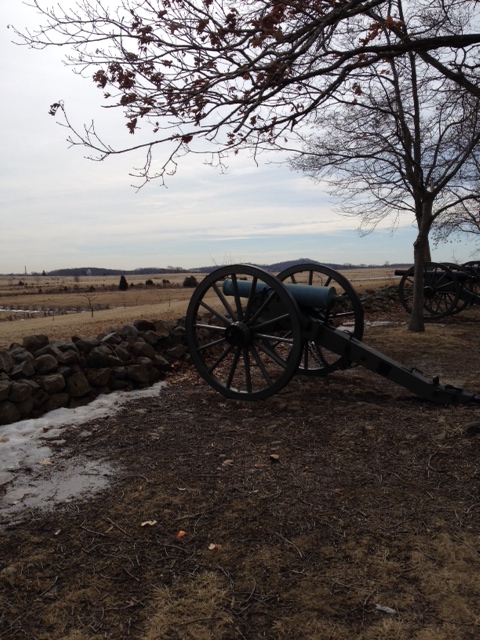
cannon

Daughter #2, not really a history person like her mother, was very indulgent. I think she enjoyed it all too.

photo 1

It was not at all crowded, but I can imagine in the summer it is. Spring break seems like a perfect time to visit.

The town of Gettysburg was very picturesque–lots of old buildings and a nice town square (which is now a circle/roundabout.) There is the college to see and also the Lutheran Seminary, which is part of the Gettysburg Battlefield’s “hallowed ground”–Seminary Ridge. We stayed at the Gettysburg Hotel on the circle (square), which I think is owned by the college and very nice.

The next day it was rainy so we drove to Frederick, Maryland, another lovely old town and had great luck at an antique mall where daughter #2 scored a great piece of vintage furniture. We had lunch in Frederick and then drove to Harper’s Ferry, another historic site and National Park, passing from Maryland to Virginia and West Virginia in a matter of minutes. It was thrilling to see the old town at the confluence of the Potomac and Shenandoah Rivers–very dramatic scenery and lots of greenschist metamorphic rock formations. My favorite!
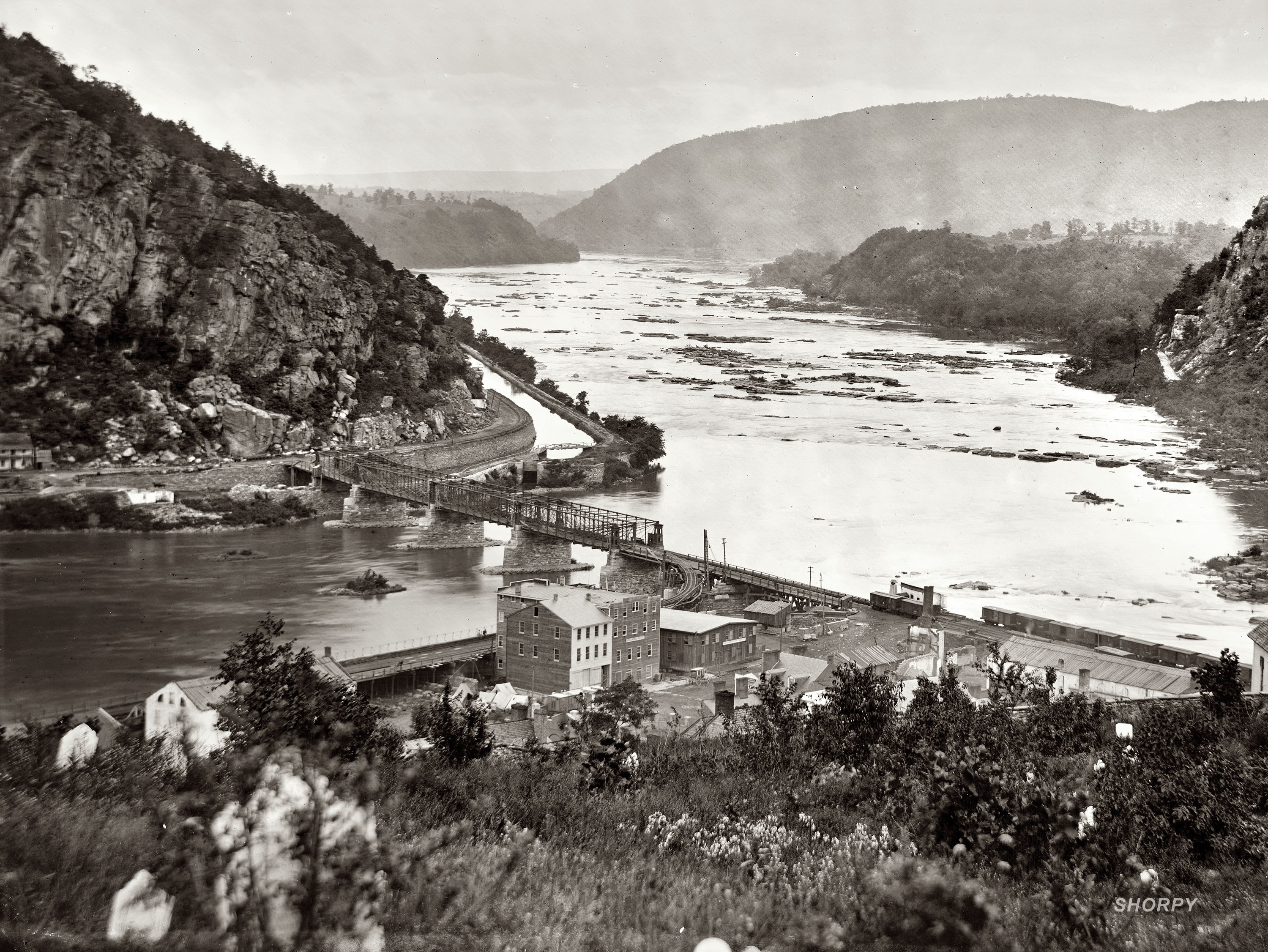
Harpers Ferry, c. 1865

Harper’s Ferry, c. 1865

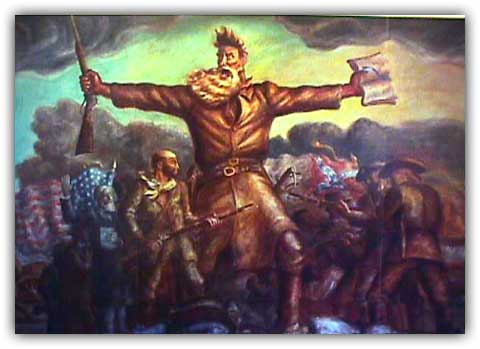
jonarms_bg

Seeing the site of John Brown’s raid on the arsenal at Harper’s Ferry, put me in the mood to watch Santa Fe Trail (1940) with Errol Flynn as Jeb Stuart and Raymond Massey as Brown. Of course, it is a highly fictionalized account of events, but very enjoyable fiction, and Raymond Massey is excellent as the zealous Brown. Maybe this weekend.

On Sunday we drove up to Baltimore with Nate to go to the Baltimore Art Museum which has a wonderful collection of American art and decorative arts, including some lovely export china.
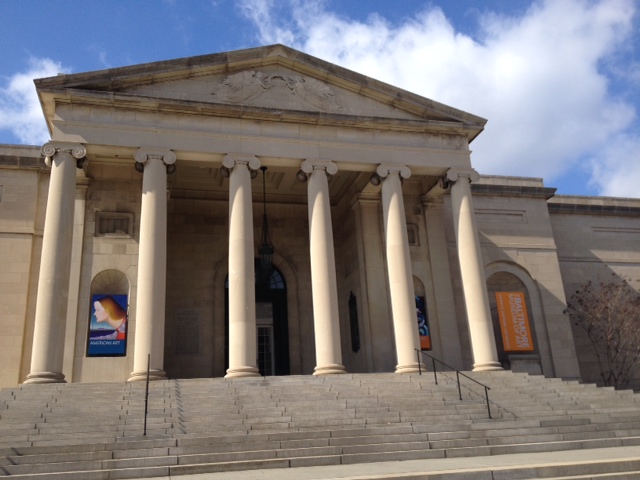
BMA

All right up my alley.

couple

We ate at the museum restaurant which was yummo. Nate drove me around Roland Park, which I have always wanted to do–I am after all a big Ann Tyler fan–and we saw a lot of Johns Hopkins and plenty of row houses. As Pigtown Design is always saying, “There is much more to Baltimore than The Wire!” We had forgotten that it was the St. Patrick’s Day weekend (curses) and the city was jammed with green-clad revelers, but we dealt.

So you can see my weekend included all the ingredients of a good time: historical sites, antique malls, college/university tours. And lunches at good restaurants. I had crab cakes twice!

For me the only downer was the stressful driving on congested east-coast highways, but daughter #2 has learned to be an aggressive, confident auto racer, so it was all okay.

P.S. Daughter #2 posted on our weekend and she covered everything and has better pictures than I, so check it out!

 

“It is something great and greatening…”*

by chuckofish

Mead

I’m back in flyover country and I’ll get back to the blog tomorrow. For now I’ll give you this photo of  General Mead at Gettysburg.

*Joshua Lawrence Chamberlain

“O hear us when we cry to thee For those in peril on the sea”*

by chuckofish

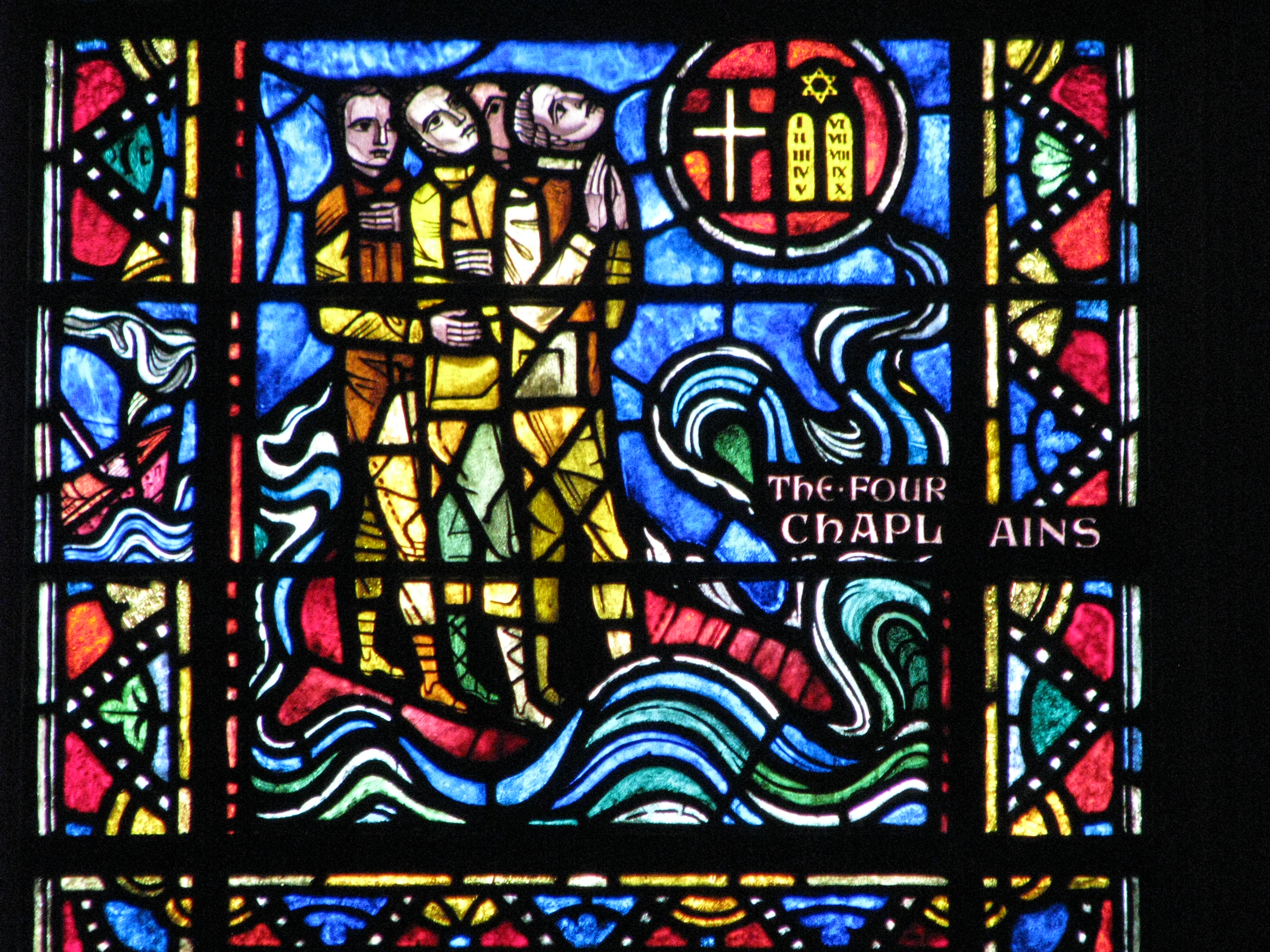
Today is the annual “Four Chaplains Day,” established by an act of Congress in 1988. It is also observed as a feast day on the liturgical calendar of the Episcopal Church.

four-chaplains

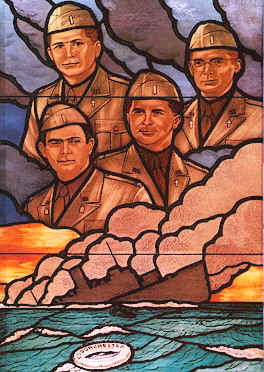
Four Chaplains Panel–Sacrifice for Freedom Window, Washington National Cathedral

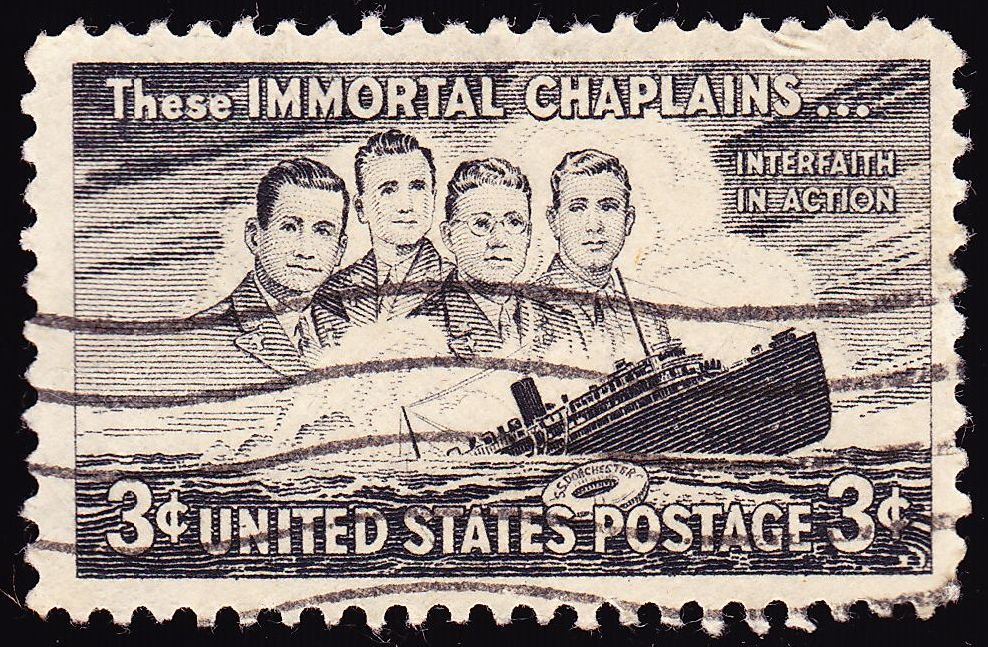
Who, pray tell, were the The Four Chaplains you ask?  Sometimes referred to as the “Immortal Chaplains” or the “Dorchester Chaplains,” they were four U.S. army chaplains during WWII who gave their lives to save other civilian and military personnel as the troop ship USAT Dorchester sank on February 3, 1943, having been torpedoed by a German U-boat. They helped other soldiers board lifeboats and gave up their own life jackets when the supply ran out. The chaplains joined arms, said prayers and sang hymns as they went down with the ship.

four chaplains 2

The Four were Lt. George Fox, a Methodist minister; Lt. Alexander Goode, a Jewish rabbi; Lt. John Washington, a Roman Catholic priest; and Lt. Clark Poling, a Dutch Reformed minister. Although their backgrounds, personalities and faiths were different,  it should be noted that Goode, Poling and Washington had all served as leaders in the Boy Scouts of America.

Immortal_Chaplains-3c

They died for God and Country and we salute them. You can read more about them here.

Four_Chaplains_glass1

Holy God, who didst inspire the Dorchester chaplains to be models of steadfast sacrificial love in a tragic and terrifying time: Help us to follow their example, that their courageous ministry may inspire chaplains and all who serve, to recognize thy presence in the midst of peril; through Jesus Christ our Savior, who livest and reignest with thee and the Holy Spirit, one God, for ever and ever. Amen.

*William Whiting


This and that

by chuckofish

Today we raise a toast to actor Victor Mature, born on this day in 1913 in Louisville, Kentucky.

Not really my type, but not bad

Not really my type, but not bad, right?

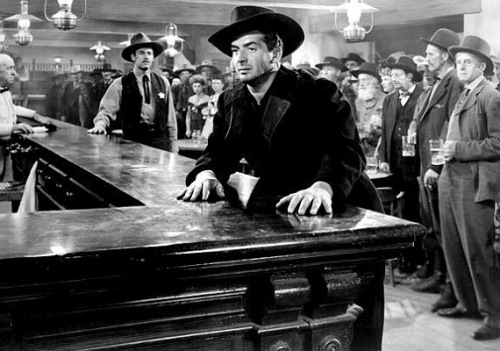
Victor is not one of my favorite actors, but funnily enough, he is in two of my favorite movies:

John Ford’s My Darling Clementine (1946)

He played Doc Holliday to Henry Fonda's Wyatt Earp

He played Doc Holliday to Henry Fonda’s Wyatt Earp

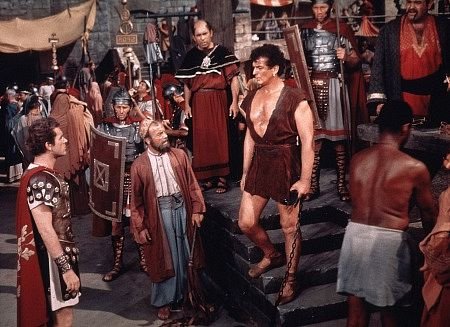
and The Robe (1953).

Here he is being bought as a slave by Richard Burton.

Richard Burton buys a slave–Demetrius, the Greek.

In both movies he was given wonderful opportunities to flex his acting muscles in memorable scenes, such as the “Hamlet” scene in Clementine and the “Jungle Animals” scene in The Robe. Indeed, when given the chance (and the right director), we can see that Victor was pretty darn good.

Today is also the birthday of one of our favorite St. Louis Rams, Aeneas Demetrius Williams. He turns 47.

aeneas

Aeneas Williams, you will recall, had an illustrious 14-year NFL career with the Arizona Cardinals and St. Louis Rams that included eight Pro Bowls and four All-Pro selections. Last year he was inducted into the Pro Football Hall of Fame. Williams is now a regular on local TV as a color commentator during the football season–but all is secondary to his job as Pastor of The Spirit Church here in town where he has garnered respect as a leader and role model because of his tireless and extensive outreach in the community. He is married and has four children: daughters Saenea (Aeneas spelled backward ), Tirzah, Cheyenne, and a son, Lazarus. Who doesn’t love Aeneas Williams?

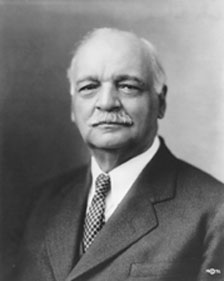
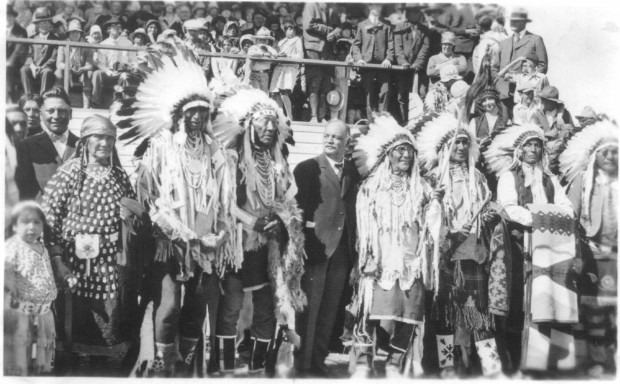
Today is also the anniversary of the day in 1907 when Charles Curtis became the first Native American U.S. Senator. A member of the Kaw Nation, Curtis served as a U.S. Representative and Senator from Kansas and then as Vice-President of the U.S. under Herbert Hoover.

curtisThe cool fact that a Native American has served as V.P. of the U.S. was news to me.

509eb16734e67.preview-620

Why do you suppose he is not held up as an icon–because he was a Republican?

Well, high fives all around for Victor, Aeneas and Charles! And have a great day.


Way Back Wednesday

by chuckofish

I think I mentioned that last weekend the OM and I planned to get started with our big basement clean-up. Well, we did!  We moved a lot of stuff out of the storage area into the “finished” area, so we could go through stuff in order to get rid of a lot of it.

You know how that works.

Anyway, I started going through boxes full of my children’s elementary school artwork. Enough time has gone by so that I can begin to be ruthless., separating the keepers

wrc shooting 4

from the we-can-live-without its.

wrc dare

Although that little vignette of the boy holding his hands up and saying, “No!” is pretty great…as is that “S” made out of a cigarette…

I have also been going through boxes of letters (remember those?) and cards. It is lovely to read them and remember the relatives and dear friends who took the time to take pen to paper to write. I’m keeping these this go-round.

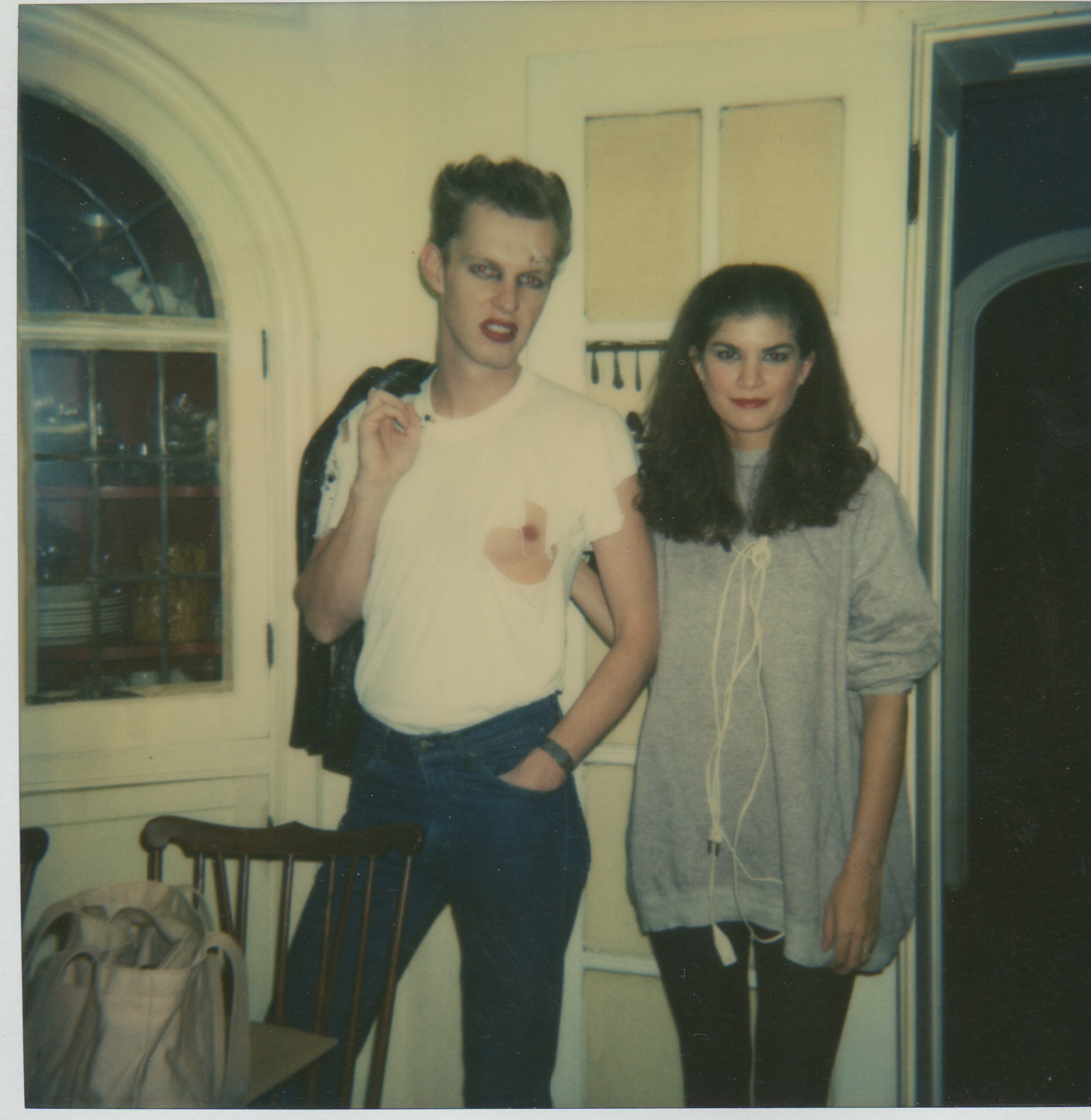
Also, a lot of snapshots have turned up–such as this classic from Halloween circa 1982.

punks

I mean, I’m pretty sure it was a Halloween party we were going to, right?

Anyway, you can look forward to more treasures like these in the future.

Friday movie pick: “I once was lost, but now am found”

by chuckofish

Considering that this is the long MLK weekend and we will be celebrating the birth of Martin Luther King, Jr. on Monday, I think an appropriate film to watch tonight is Amazing Grace (2006)–a really good movie about the wonderful British saint William Wilberforce, who headed the parliamentary campaign against the British slave trade for twenty-six years until the passage of the Slave Trade Act of 1807.  (I have blogged about him previously here.)

MV5BMTg3Nzc0MzIyMl5BMl5BanBnXkFtZTcwMzM3OTQ1MQ@@._V1__SX1429_SY843_

Directed by Michael Apted, it stars a bevy of British hotties, including Ioan Gruffudd as Wilberforce, Benedict Cumberbatch as William Pitt and scene-stealing Rufus Sewell as Thomas Clarkson. Former hottie Albert Finney is John Newton, who, you will recall, though once the captain of a slave ship, experienced a spiritual conversion, became an evangelical Anglican priest, and wrote the much-loved hymn “Amazing Grace.”

I watched it again the other night and was quite impressed with the screenplay, the beautiful production values and the acting. It is a rare movie where the Christians are the good guys!

P.S. It is interesting to note that everyone–from Alan Jackson to Celtic Thunder and everyone in between–has recorded the hymn “Amazing Grace.” I like it played on the bagpipes myself.

We had a piper at my mother’s funeral and he played “Amazing Grace.”

Have a good weekend!

“I hear the train a coming”*

by chuckofish

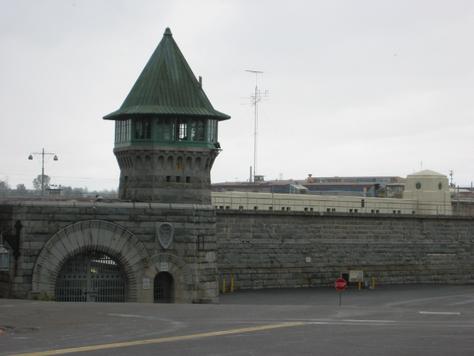
On this day in 1968 Johnny Cash, backed by June Carter, Carl Perkins and the Tennessee Three, gave two performances at the Folsom State Prison

folsomstate

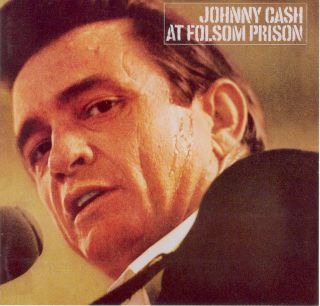
which were recorded and subsequently released as a live album–At Folsom Prison.

Johnny_Cash_At_Folsom_Prison

The album was a hit, reaching number one on the country charts and the top 15 of the national album chart. The lead single from the album, a live version of “Folsom Prison Blues,” was a top 40 hit, Cash’s first since 1964’s “Understand Your Man.” Indeed, the success of At Folsom Prison revitalized Cash’s career. According to Cash, “that’s where things really got started for me again.”

Hats off to the Man in Black! You were one of a kind. Awesome.


It is also the birthday of A.B. Guthrie, Jr. (1901–1991), the author of six historical novels that gave an unromanticized picture of the settling of the American West from 1830 to World War II. The most famous, “The Big Sky,” launched his career in 1947, and “The Way West,” published in 1949, won the Pulitzer Prize for fiction in 1950. He also wrote the screenplay for Shane (1953), my favorite movie of all time.

I recommend A.B. Guthrie, who is a really good writer and whose character, Dick Summers, is (in my opinion) one of the great ones of literature.

He tried to put himself in Brownie’s place, tried to put there the him that used to be, not the him of now, worn and hard and doubtful by the knocks of living. You couldn’t tell a boy how few were the things that mattered and how little was their mattering. You couldn’t say that the rest washed off in the wash of years so that, looking back, a man wanted to laugh except he couldn’t quite laugh yet. The dreams dreamed and the hopes hoped and the hurts felt and the jolts suffered, they all got covered by the years. They buried themselves in memory. Dug out of it, they seemed queer, as a dug-up bone with the flesh rotted off of it might seem queer to the dog that had buried it.

-The Way West

So a toast to Johnny Cash and to A.B. Guthrie–two favorites of mine.

“He was a good man. Make sure that it says so on the patrol report.”*

by chuckofish

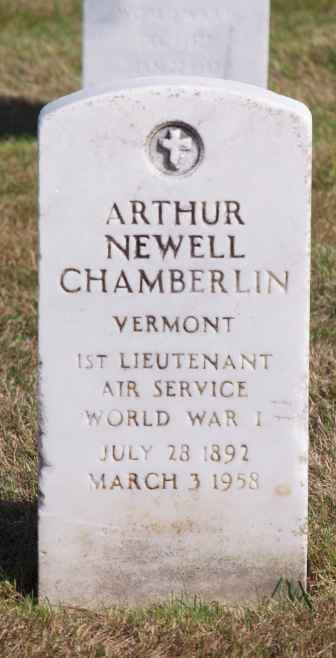
Arthur Newell Chamberlin grave

Our grandfather’s grave in San Francisco

Veterans Day was once known as Armistice Day. The term comes from an armistice between Germany and the Allied Nations on November 11, 1918. World War I actually ended on June 28, 1919, during the Treaty of Versailles. The first Armistice Day was acknowledged on November 11, 1919.

On June 1, 1954, Armistice Day had its named changed to Veterans Day, so that the veterans of WWII and all the men and women who have served in the U.S. Armed Forces would be honored.

So take some time today to think about your ancestors who served their country in the Armed Forces. A favorite fighting ancestor of mine is Moses Wheeler who fought in the French and Indian War. He was a soldier on the frontier as early as 1746,

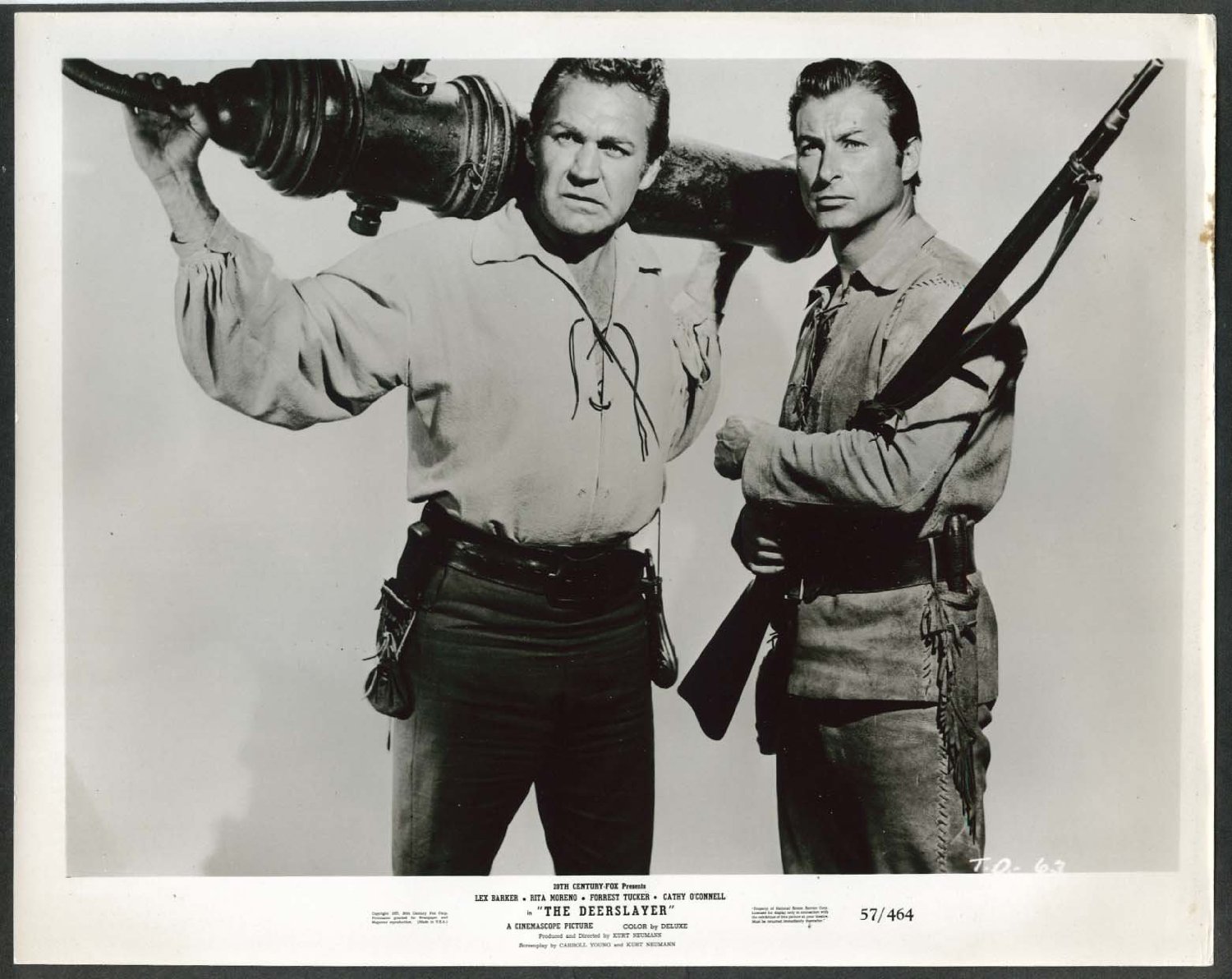
and was one of the company of Capt. Stevens in his celebrated defense of the Fort at No. 4…and was also with Hobbs in his terrible encounter with Sackett…[Wheeler] was a very large man, yet of good proportions, and was said to have been, in his prime, the strongest man in the cordon of forts on the frontier. One time Wheeler and five others were detailed to take a cannon to the top of Hoosac Mountain. It appeared to some of them a hard task and they stood around it a long time earnestly discussing the way in which it should be done. At length, tiring of their suggestions, Wheeler threw up his arms, at the same time exclaiming “Stand aside boys, I am going to take the cannon up the mountain myself,” and swinging it upon his shoulder bore it to the place which had been designated for it, pausing only once for rest upon the way.

It is related that the reason of his pausing as he did was to get a drink from a spring which he saw bubbling up beside his path. As soon as he saw this he flung his cannon from his shoulder and throwing himself flat on his stomach, the more readily to get at the water, he commenced drinking, as the soldiers expressed it, “like a horse.” Thinking he would kill himself they warned him to desist, but as he gave no heed to their admonition three of them seized one leg and two the other and drew him forcibly away. He thought it rather hard usage but concluded on the whole it was best to submit to it. After resting awhile he again resumed his cannon and bore it to its place, when he found that he had burst his shoes open which were new when he started from the foot of the mountain, and his pantaloons were such a wreck that they were good for nothing afterwards. The officers and soldiers were, however, so pleased with his exploit they they clubbed together and very generously more than made up the loss. After this he became quite a hero to the Indians, who, whenever they came where he was, always wanted to see “The Strong Man.”

(History of Charlestown, New-Hampshire by Rev. Henry H. Saunderson, 1876)

If this story sounds a bit familiar, it is because James Fenimore Cooper used some of Wheeler’s story to embellish a character in The Deerslayer. In the 1957 movie he was played by Forrest Tucker.

71SddV15GAL._SL1500_

Is it any wonder that 240 years later we named the boy after this ancestor?

If I had a copy of The Deerslayer, I would surely watch it tonight.  I’ll find something suitable. How about you?

*John Wayne in Operation Pacific

“As if someone fled from a lion, and was met by a bear”*

by chuckofish

Are you prepared for the day of the Lord? For whom would it be good news? (Matthew 25: 1-13) These were the questions asked in our sermon yesterday. They are good ones to ask yourself. My rector was not terribly helpful in answering them, but that’s par for the course. You have to work out your own salvation anyway, so c’est la vie. I’m still stuck on old Amos’ imagery from the OT reading anyway (see above).

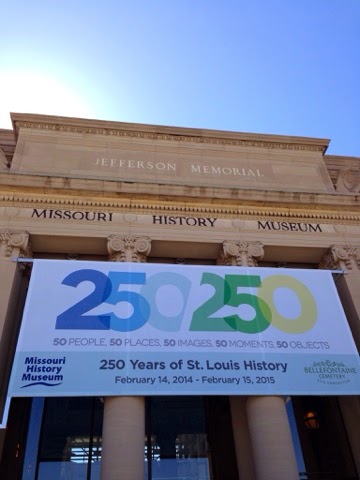
Well, the highlight of my weekend was an after-church jaunt to the Missouri History Museum with the OM. I had not been in years, but I had heard that the “250 in 250: A Yearlong Exhibit Commemorating the 250th Anniversary of the Founding of St. Louis” was not to be missed.

blogger-image-1915946725

This turned out to be an over-statement. “Through the stories of 50 People, 50 Places, 50 Images, 50 Moments, and 50 Objects we were invited to learn all about St. Louis.” This kind of display is not really my cup of tea, but it was okay.

Across the hall, however, was a very cool exhibit–“The Louisiana Purchase: Making St. Louis, Remaking America”.

2339_dt_detail

You will recall that in 1803 the United States agreed to pay France $15 million for the Louisiana Territory—828,000 square miles of land west of the Mississippi River. The United States doubled its size, expanding the nation westward. Beyond the geographic expansion, The Louisiana Purchase remade St. Louis into an American city—”and reshaped and redefined what it meant to be an American.” Featuring loans from the National Archives and documents and artifacts from the Missouri History Museum’s collections, the exhibition explores the complex negotiations related to The Louisiana Purchase and its after-effect on St. Louis. A highlight of the exhibition is the Treaty of Cession (in French), better known as The Louisiana Purchase Treaty. The Treaty was first drafted in French and then translated into English, so it can be said that the French text is the “original original.”

Anyway, the Museum has changed quite a lot since the days when we would visit with our mother. Nowhere in sight is the riverboat wheelhouse which was a favorite of mine and my dual personality’s as wee children. Also the gun collection, which made up a good part of the second floor exhibition space, is nowhere to be seen. Thankfully in moth balls is all the Veiled Prophet knick-knack-iture that also took up a lot of space in days gone by. Yes, it is all very 21st century and up-to-the-minute PC-wise, but I do miss the old-fashioned dusty taxidermy and Mark Twainia of the olden days.

Well, I’ve been there and done that now, but it is a good and mindful thing to be reminded of the wonderful and important part Missouri played in our national history.

There is a fancy restaurant in the museum, but we headed over to the Wildflower Cafe in the CWE for some eggs benedict. Yum.

How was your weekend?

*Amos 5:18 (Not Abraham Lincoln like you thought)

Smoting the Babylonian Dame

by chuckofish

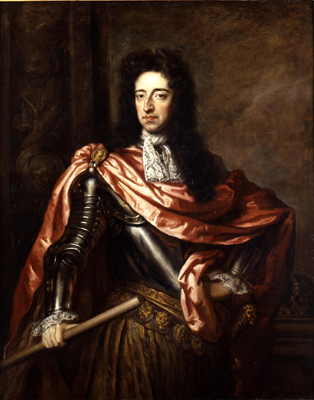
On this day in 1688, William of Orange invaded England in an action that ultimately deposed King James II and won him the crowns of England, Scotland and Ireland. Huzzah!

King_William_III_of_England,_(1650-1702)_(lighter)

William’s mother, Mary Stuart, was the oldest daughter of King Charles I and sister of King Charles II and King James II.  His wife was the daughter of King James II and his cousin. I can never keep all that royal genealogy straight, can you? I had forgotten that old William was the grandson of Charles I. It’s good to dust off the history books once in awhile, eh?

You will recall that the OM’s ancestor Henry Compton, the Bishop of London, crowned William King a few months later. He reigned jointly with his wife, Mary II, until her death in 1694–as William and Mary–and then alone until his death in 1702.

So a toast to William and Mary is definitely in order tonight, and to the Glorious Revolution when

Englands Church so much opprest
Of all its Rights now re-possest,
With all its Sacred Glories blest,
it shines in Heavenly splendor,
May it ever so endure,
And everlasting peace procure,
For him who keeps our Church secure,
and crush’d the Romish Grandieur.

(For the whole poem (ENGLANDS Triumph, OR, The Kingdoms Joy for the proclaiming of King William , and His Royal Consort, Queen Mary , in
the Throne of ENGLAND , on the 13th. of this instant February . 1688. To the Tune of, Thundering Cannons roar, click here.)