dual personalities

Category: History

Stir it up

by chuckofish

O God our Father, let us find grace in thy sight so as to have grace to serve thee acceptably with reverence and godly fear; and further grace not to receive thy grace in vain, nor to neglect it and fall from it, but to stir it up and grow in it, and to persevere in it unto the end of our lives; through Jesus Christ our Lord.

–Lancelot Andrewes

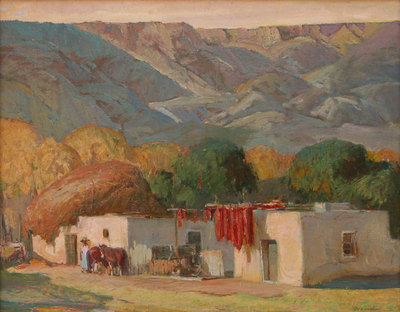
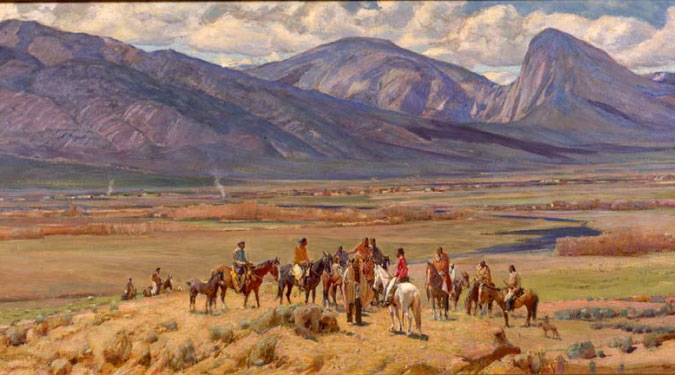
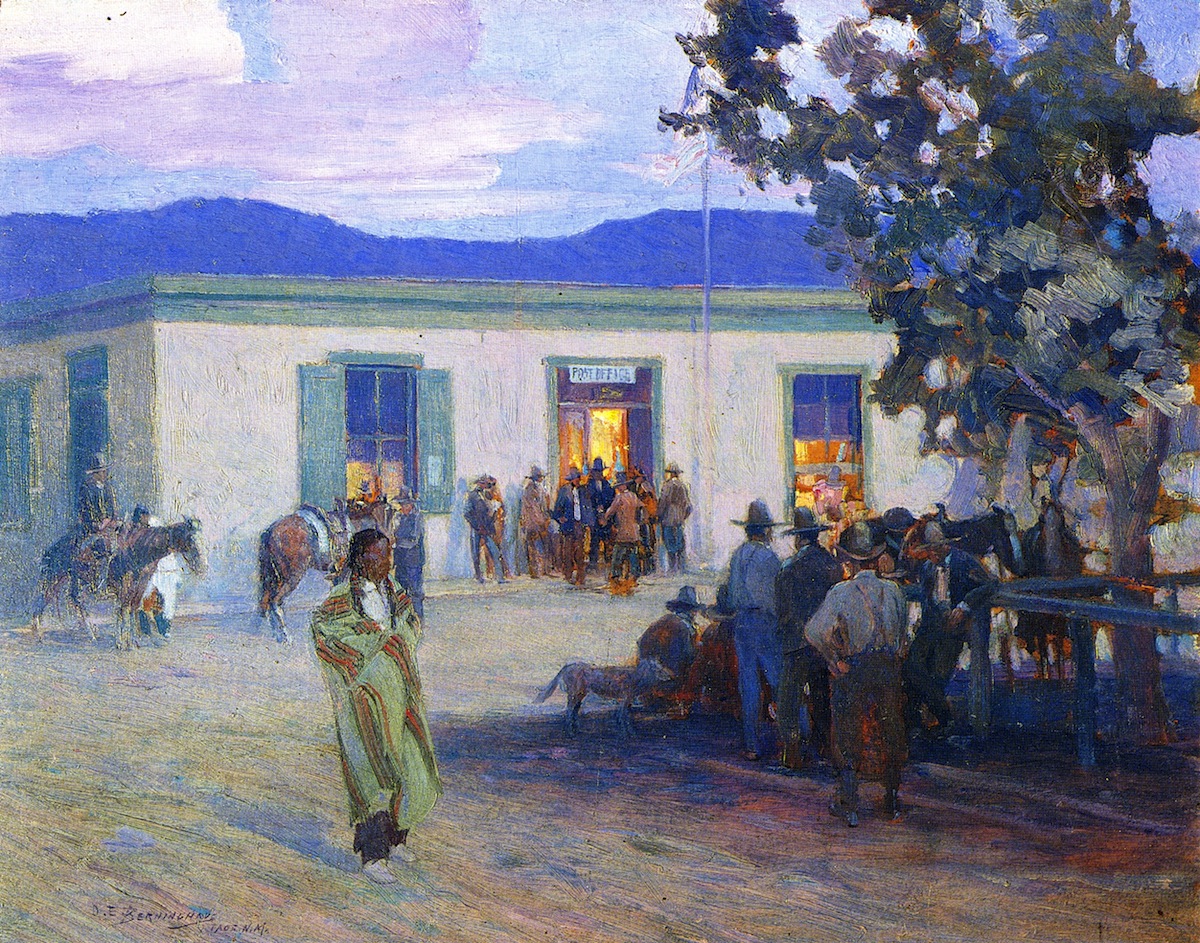
We have had rain, rain and more rain this week. June was the rainiest on record. I am not complaining, but I hope we see some sunshine this weekend. Here are some paintings by Oscar Edmund Berninghaus (2 October 1874 – 27 April 1952), who was an American artist and a founding member of the Taos Society of Artists, to help us imagine some drier, warmer air.
Oscar Berninghaus

berninghausen Taos PO

berninghaus-in-the-village-lavacita

He is best known for his paintings of Native Americans, New Mexico and the American Southwest.

And furthermore, Oscar Berninghaus, you will recall, was born in in St. Louis, Missouri. His father ran a lithography business, which stimulated an interest in watercolor painting in Oscar. Reading about Berninghaus, I found out that at sixteen he quit school and took a job with Compton and Sons, a local lithography company. 

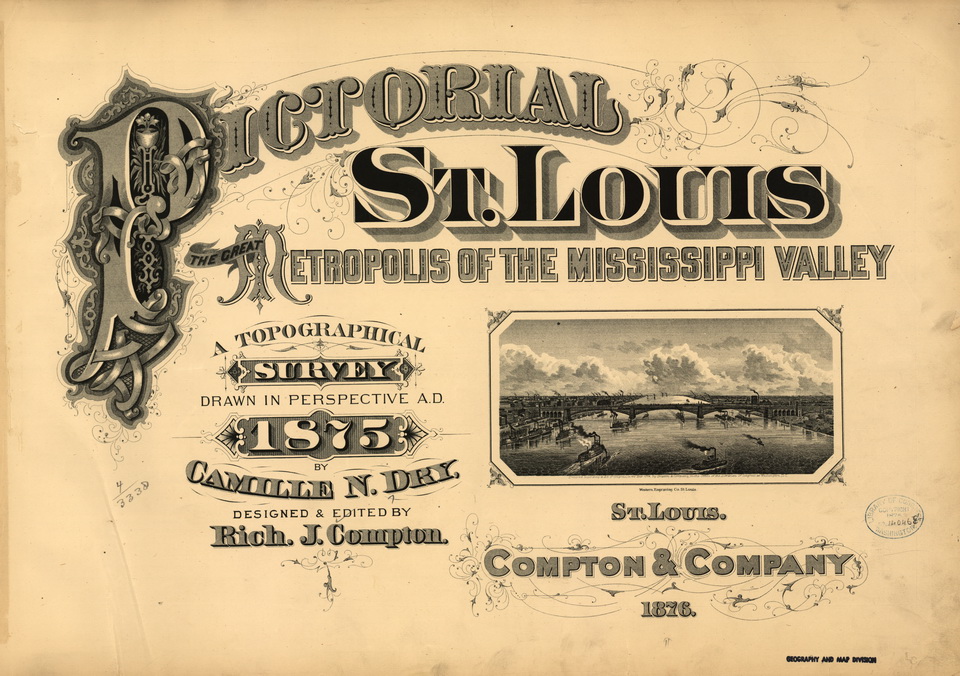
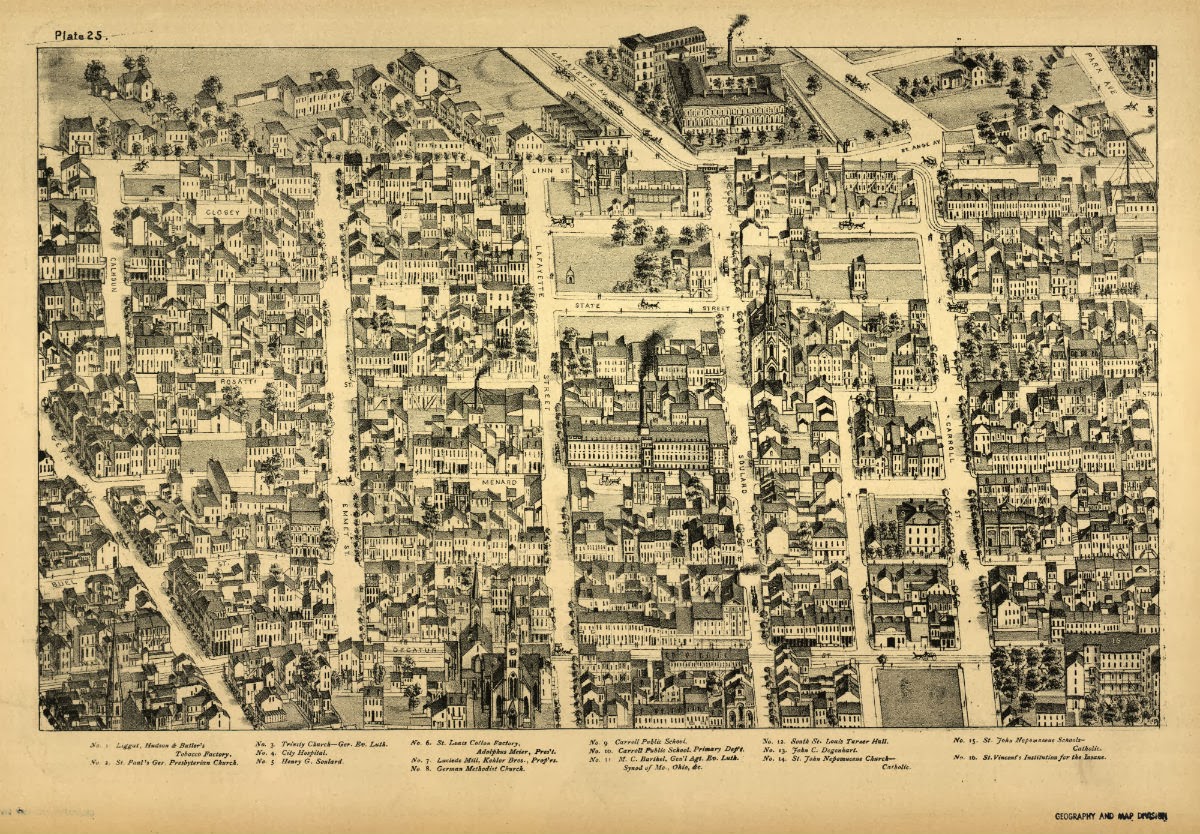
This made me remember that I had heard about a fantastic new exhibit titled “A Walk in 1875 St. Louis” at the Missouri History Museum. One of the most amazing maps of a city ever created was Compton & Dry’s “Pictorial St. Louis,” drawn in 1875 and published in 1876.
cd-cover

25

plate 77

Using this incredibly detailed cartographic masterpiece as its backdrop, the Missouri History Museum developed a 6,000 square-foot exhibition that explores the collective life of 1875 St. Louis through photographs, artifacts, news, writings and first hand accounts of the day.

I guess I’ll see if the OM would like to check it out this weekend. A museum, after all, is a good place to go on a rainy day.

This is how my mind works.

Have a good weekend!
Fun facts to know and tell (and a poem)

by chuckofish

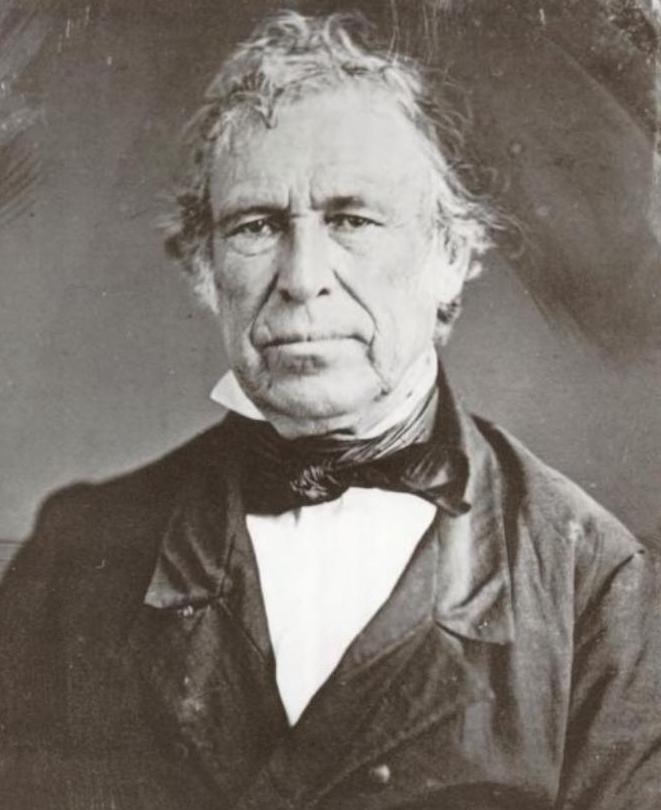
Today is the anniversary of the death of 12th U.S. President Zachary Taylor (November 24, 1784 – July 9, 1850) who, you will recall, died in office. Millard Fillmore succeeded him as president.

“Old Rough and Ready” was born in Virginia to a prominent family of planters, a descendent as well of a signer of the Mayflower Compact. He was elected on the strength of his impressive military career. He was an Episcopalian.

Zachary_Taylor-circa1850

He has a good face. Clearly those 19th century presidents were not overly vain–Taylor neither combed his hair or straightened his tie for this portrait.

I had forgotten that one of his daughters, Sarah Knox Taylor, was married briefly to Jefferson Davis, who later became President of the Confederate States. She was twenty-one when she died.

Taylor had five daughters and (finally) one son, Richard Scott Taylor (1826–1879), who was a Confederate General in the Civil War.

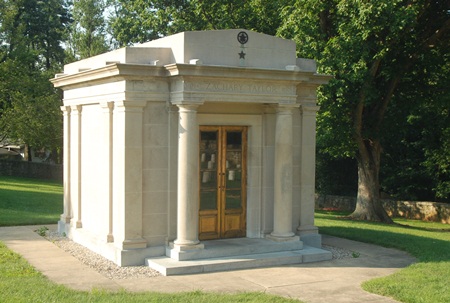
Zachary Taylor is buried in the family mausoleum in Louisville, Kentucky.

????????????????????????????????????

Eight presidents have died while in office. William Henry Harrison was the first–he had only been president for 31 days when he died of pneumonia in 1841.

Zachary Taylor was next in 1850 when he died of acute gastroentiritis.

Three assassinations followed: Lincoln (1865), Garfield (1881) and McKinley (1901).

Then Warren G. Harding died of a heart attack in 1923, followed by FDR with a cerebral hemorrhage in 1945. JFK was assassinated in 1963.

Well. Here’s a poem that seems appropriate.

When great trees fall,
rocks on distant hills shudder,
lions hunker down
in tall grasses,
and even elephants
lumber after safety.

When great trees fall
in forests,
small things recoil into silence,
their senses
eroded beyond fear.

When great souls die,
the air around us becomes
light, rare, sterile.
We breathe, briefly.
Our eyes, briefly,
see with
a hurtful clarity.
Our memory, suddenly sharpened,
examines,
gnaws on kind words
unsaid,
promised walks
never taken.

Great souls die and
our reality, bound to
them, takes leave of us.
Our souls,
dependent upon their
nurture,
now shrink, wizened.
Our minds, formed
and informed by their
radiance,
fall away.
We are not so much maddened
as reduced to the unutterable ignorance
of dark, cold
caves.

And when great souls die,
after a period peace blooms,
slowly and always
irregularly. Spaces fill
with a kind of
soothing electric vibration.
Our senses, restored, never
to be the same, whisper to us.
They existed. They existed.
We can be. Be and be
better. For they existed.”

–Maya Angelou

Note to self

by chuckofish

Today we are reminded again how tempus, indeed, fugits! TCM is celebrating the 100th anniversary of a company whose technology defined the look of movie color for decades. Technicolor™ was incorporated in 1915 by Herbert T. Kalmus, Daniel F. Comstock and W. Burton Wescott and offered the most widely used color process in Hollywood from 1922 to 1952.

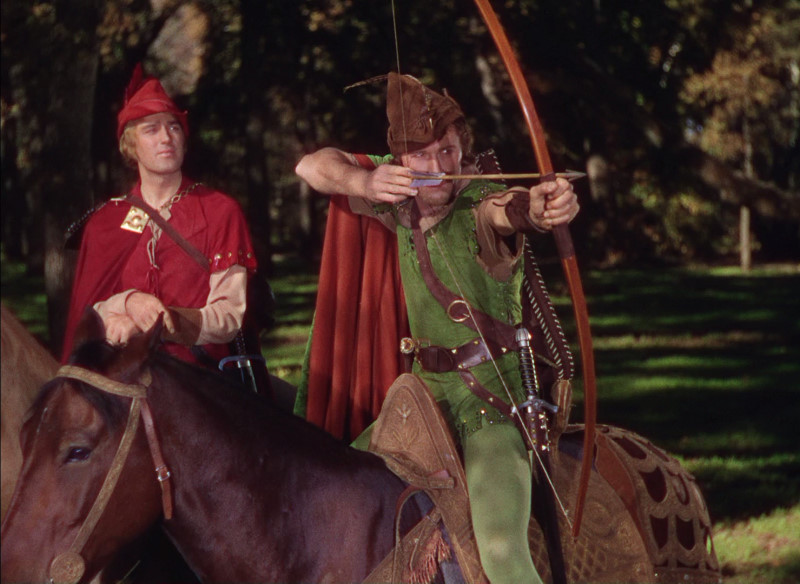
The 48-hour salute includes the greatest of all technicolor films, The Adventures of Robin Hood (1938), which will be shown today at 4:30 p.m. and again on August 2 at 8 p.m. so set your DVR.

800

She Wore a Yellow Ribbon (1949)–which I watched this past weekend–is on tomorrow night at 8 p.m.–don’t miss it! The color cinematography in this movie is fantastic. Luchino Visconti’s The Leopard (1963), a landmark of Italian cinema, is also on tomorrow at 3:30 a.m. Any movie with Claudia Cardinale is worth watching if you ask me.

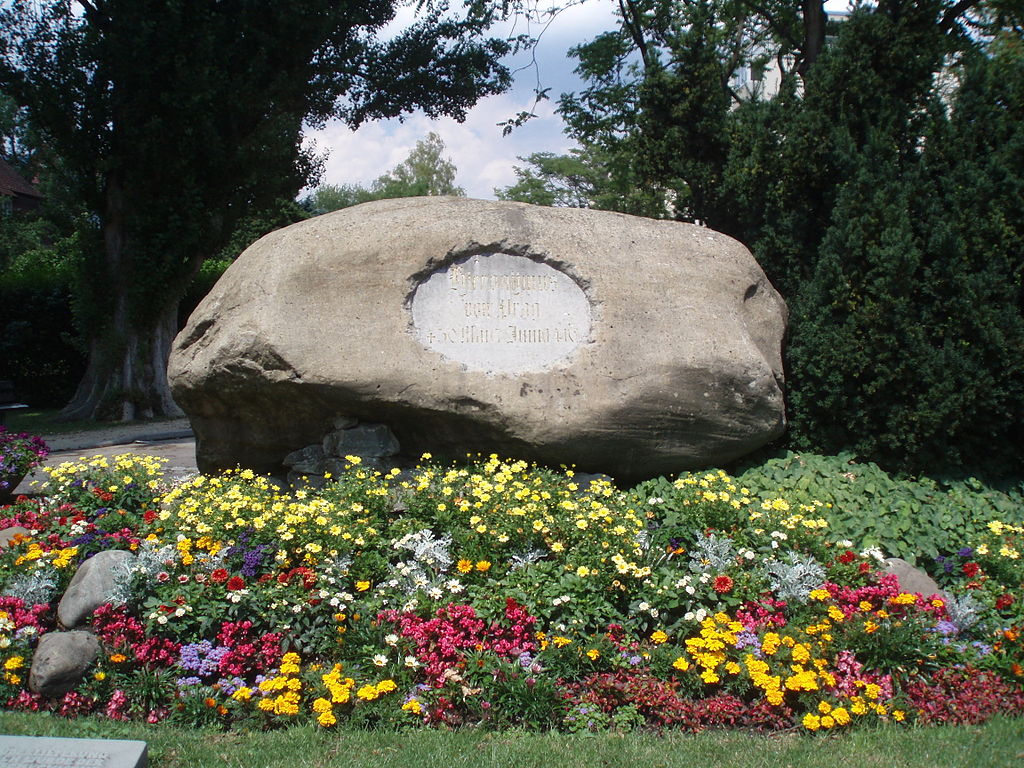
We must also note that 600 years ago yesterday (July 6, 1415) Jan Hus was burned at the stake for heresy by the Roman Catholic Church. Hus was a Czech priest, philosopher, early Christian reformer and Master at Charles University in Prague. He dared to preach in Czech and tried to reform the Church by calling out the moral failings of clergy, bishops, and even the papacy from his pulpit. In 1999 Pope John Paul II expressed regret for his death. Well.

The monument in Konstanz, where reformer Jan Hus was executed (1862)

The monument in Konstanz, where reformer Jan Hus was executed (1862)

Hus is honored with a feast day on the liturgical calendar of the Episcopal Church.

Faithful God, who didst give Jan Hus the courage to confess thy truth and recall thy Church to the image of Christ: Enable us, inspired by his example, to bear witness against corruption and never cease to pray for our enemies, that we may prove faithful followers of our Savior Jesus Christ; who liveth and reigneth with thee and the Holy Spirit, one God, for ever and ever. Amen.

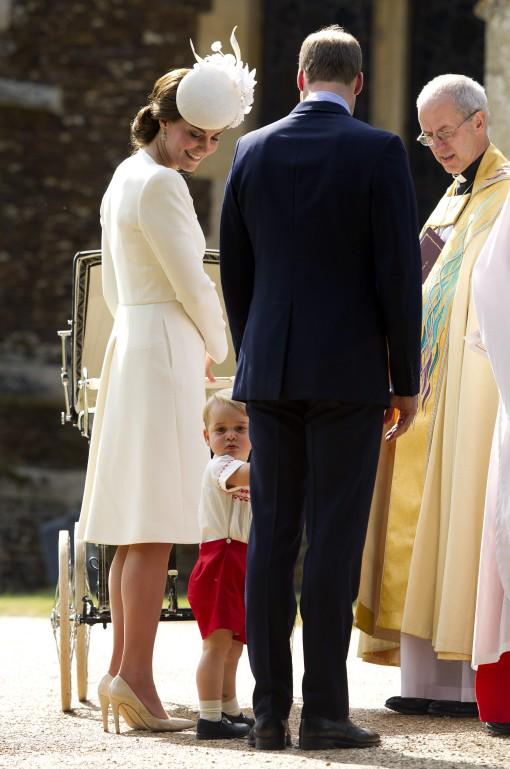
On Sunday the Archbishop of Canterbury, Justin Welby, conducted the baptism of Princess Charlotte at St. Mary Magdalene Church in Sandringham.

Baptism

Pretty darn cute.

And FYI: the Archbishop of Canterbury has a blog. You go, Glenn Coco.

This and that: ‘Your arm’s too short to box with God’*

by chuckofish

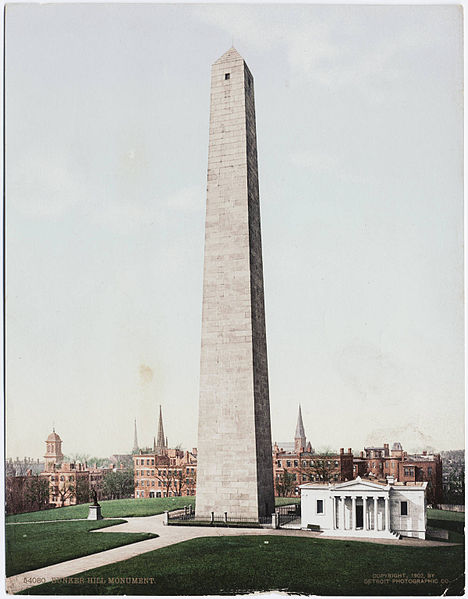
bunkerhillmonument

Today is the 240th anniversary of the Battle of Bunker Hill, fought on June 17, 1775 on Breed’s Hill.

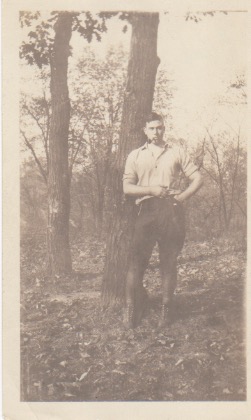
It is also the birthday of our maternal grandfather Daniel “Bunker” Cameron (1900-1968) about whom I have written before. He was quite the guy and his great-grandson, the boy, is kind of the spitting image of him.

Bunk Cameron 1921

‘Bunk’ Cameron 1921

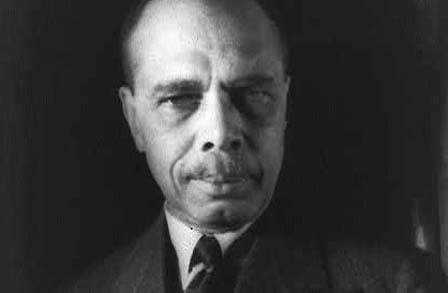
Also born on this day was James Weldon Johnson (1871–1938)–

james-weldon-johnson

American author, poet, educator, early civil rights activist, and prominent figure in the Harlem Renaissance. I was introduced to his poetry by a former rector of our church who was African-American and who gave great sermons that occasionally included dramatic poetry recitations similar to the following:

https://www.youtube.com/watch?v=gQYrF2g_48o

Did  you listen to the whole thing? Here’s another one to get you going this morning:

O Lord, we come this morning
Knee-bowed and body-bent
Before Thy throne of grace.
O Lord–this morning–
Bow our hearts beneath our knees,
And our knees in some lonesome valley.
We come this morning–
Like empty pitchers to a full fountain,
With no merits of our own.
O Lord–open up a window of heaven,
And lean out far over the battlements of glory,
And listen this morning.

Lord, have mercy on proud and dying sinners–
Sinners hanging over the mouth of hell,
Who seem to love their distance well.
Lord–ride by this morning–
Mount Your milk-white horse,
And ride-a this morning–
And in Your ride, ride by old hell,
Ride by the dingy gates of hell,
And stop poor sinners in their headlong plunge.

And now, O Lord, this man of God,
Who breaks the bread of life this morning–
Shadow him in the hollow of Thy hand,
And keep him out of the gunshot of the devil.
Take him, Lord–this morning–
Wash him with hyssop inside and out,
Hang him up and drain him dry of sin.
Pin his ear to the wisdom-post,
And make his words sledge hammers of truth–
Beating on the iron heart of sin.
Lord God, this morning–
Put his eye to the telescope of eternity,
And let him look upon the paper walls of time.
Lord, turpentine his imagination,
Put perpetual motion in his arms,
Fill him full of the dynamite of Thy power,
Anoint him all over with the oil of Thy salvation,
And set his tongue on fire.

And now, O Lord–
When I’ve done drunk my last cup of sorrow–
When I’ve been called everything but a child of God–
When I’m done traveling up the rough side of the mountain–
O–Mary’s Baby–
When I start down the steep and slippery steps of death–
When this old world begins to rock beneath my feet–
Lower me to my dusty grave in peace
To wait for that great gittin’-up morning–Amen.

–James Weldon Johnson

Have a good Wednesday and let’s toast Bunker and James and prodigal sons tonight!

*”The Prodigal Son” by James Weldon Johnson

“I want to ride to the ridge where the West commences And gaze at the moon till I lose my senses”*

by chuckofish

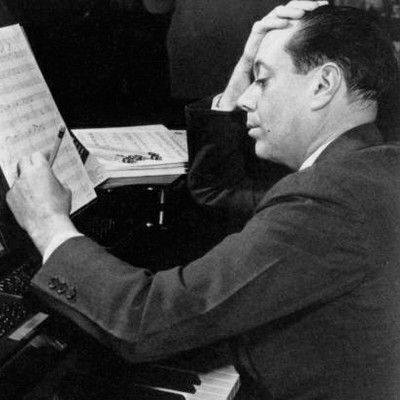
Today is Cole Porter’s birthday.

image_preview

This makes me want to SING!

Oh, give me land, lots of land under starry skies above
Don’t fence me in
Let me ride through the wide open country that I love
Don’t fence me in
Let me be by myself in the evenin’ breeze
And listen to the murmur of the cottonwood trees
Send me off forever but I ask you please
Don’t fence me in
Just turn me loose, let me straddle my old saddle
Underneath the western skies
On my cayuse, let me wander over yonder
Till I see the mountains rise
I want to ride to the ridge where the West commences
And gaze at the moon till I lose my senses
And I can’t look at hobbles and I can’t stand fences
Don’t fence me in
Oh, give me land, lots of land under starry skies
Don’t fence me in
Let me ride through the wide country that I love
Don’t fence me in

Why this song comes to mind and not one of a dozen more sophisticated ones–well, that’s just moi I guess. Love those internal rhymes!

It also makes me want to roadtrip to Peru, Indiana!

Seven Pillars natural rock formation in Miami County

Seven Pillars natural rock formation in Miami County

Peru, you will recall, is where Porter was born and raised. It is the county seat of Miami County and is located on the Wabash River. Among its many claims to fame is the fact that Public Enemy John Dillinger robbed the Peru police department armory in 1933. And did you know that Peru was the winter headquarters for several famous circuses, including Ringling Brothers, Hagenbeck-Wallace, Buffalo Bill’s Wild West Show, and others?  That is why for years it was called “The Circus Capital of the World.”

But you know Cole Porter is definitely the most famous son of Peru. His maternal grandfather was James Omar “J. O.” Cole, “the richest man in Indiana,” and he had plans for his grandson. Young Cole was sent to Worcester Academy, funnily enough, and it is reported that he brought an upright piano with him. This helped him win friends; he was always the life of the party. Although he seldom returned to Peru after going off to school, he is buried there in the Cole/Porter family plot.

portercole

Are these the strangest headstones ever?

So a toast to Cole Porter! And you can listen to old blue eyes while you do.


*Cole Porter, who else?

Oh, bury me not on the lone prairie

by chuckofish

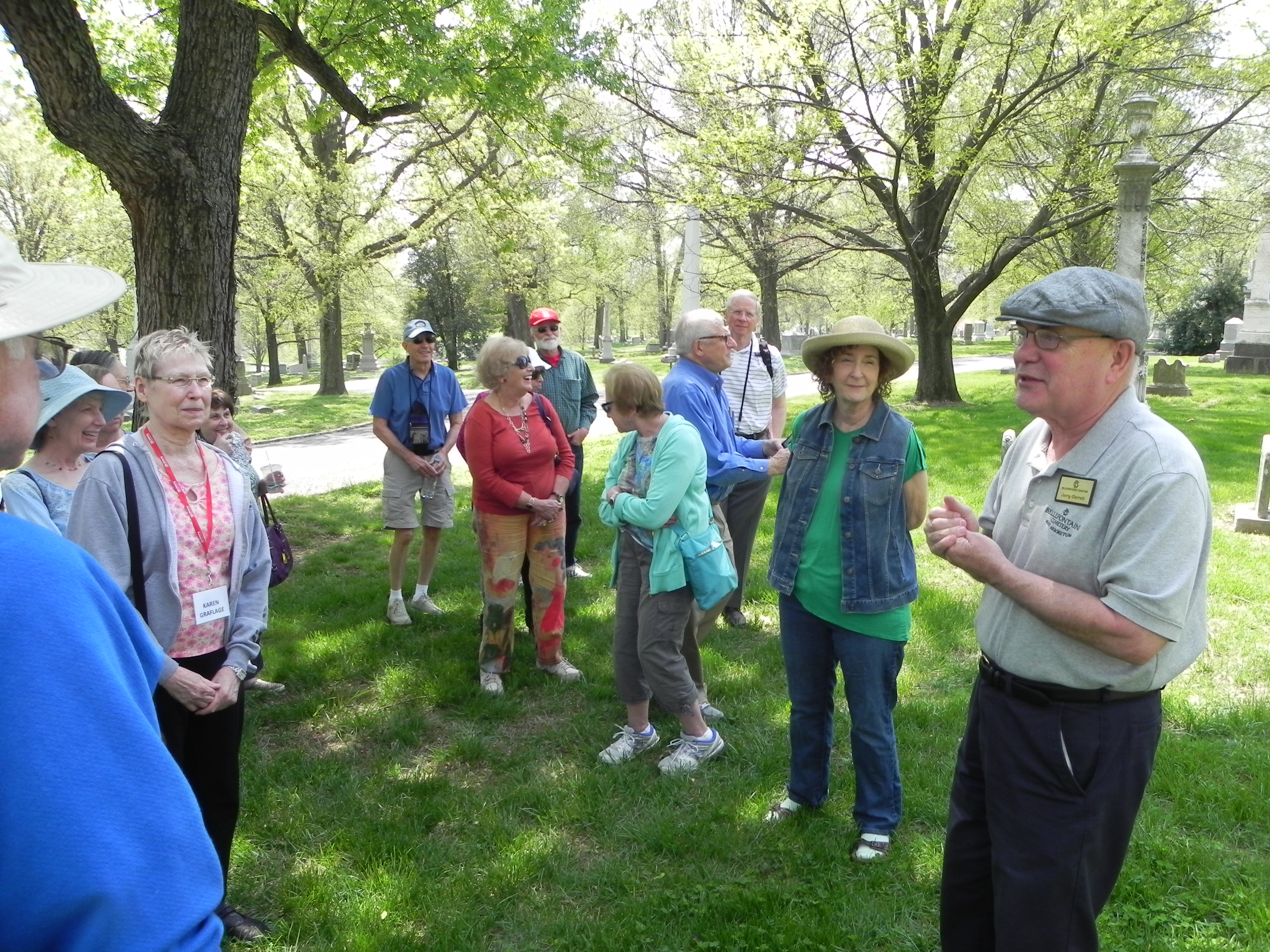
Last Friday I went along on a field trip with students at my flyover institute to historic Bellefontaine Cemetery. Founded in 1849 as a rural cemetery, Bellefontaine is home to a number of architecturally significant monuments and mausoleums. It is also an arboretum. Literally all of the prominent Protestant families in this town have a plot there. Additionally, a lot of famous local families like the Anheusers and the Buschs, who started off as Protestants, but are now Catholic, are buried there too.

We were driven there in this cute pseudo-trolley bus.

DSCN1351

We had a great docent (in cap on right) leading the tour who knew everything about all the famous residents and, by the way, has visited the grave of every U.S. President. He quizzed us as we went along to keep us on our toes. Chester Arthur was buried where? In Albany! 

DSCN1336

DSCN1337

DSCN1340

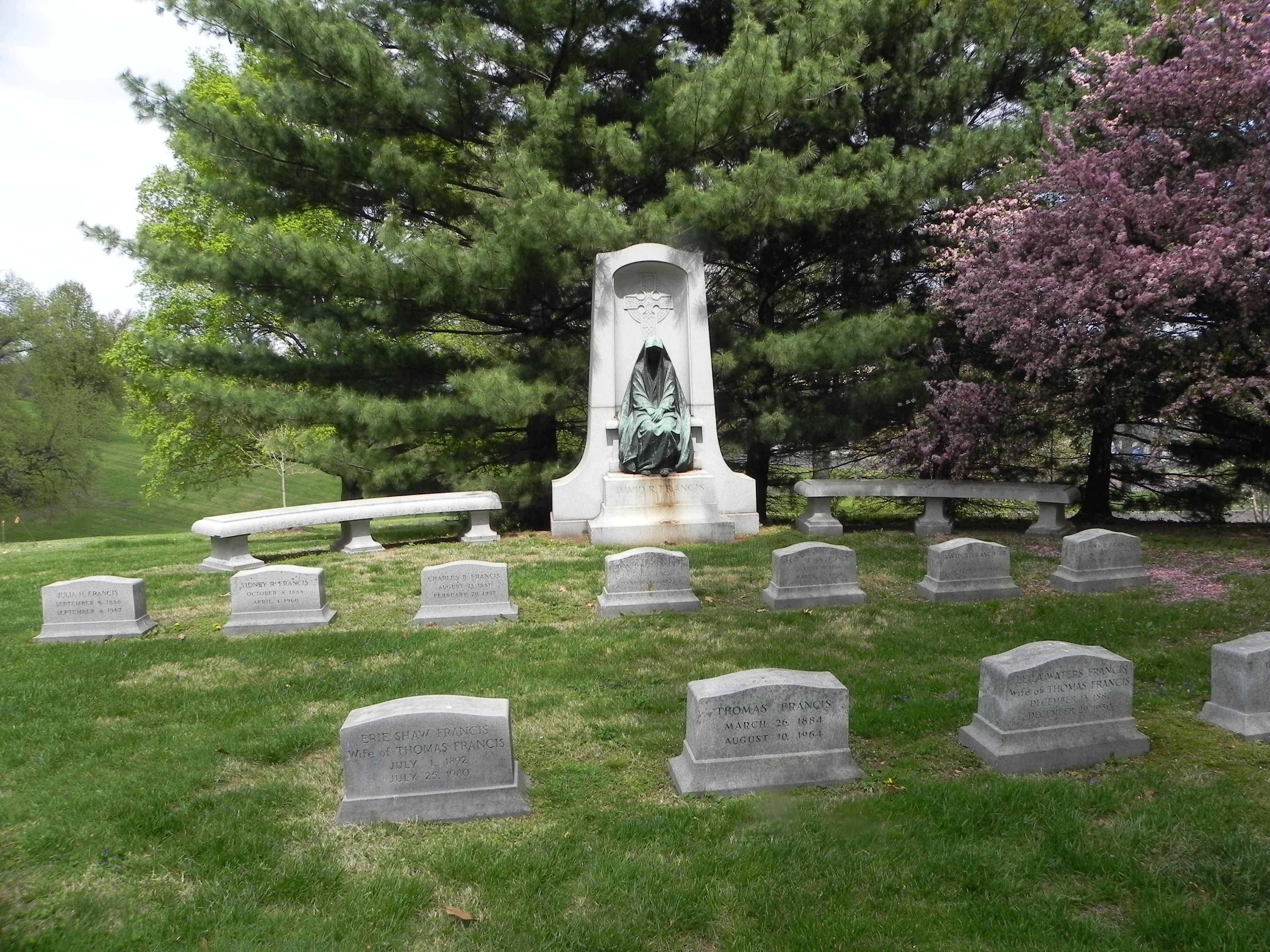
David R. Francis and family

The Wainwright mausoleum designed by Louis Sullivan.

The Wainwright mausoleum designed by Louis Sullivan.

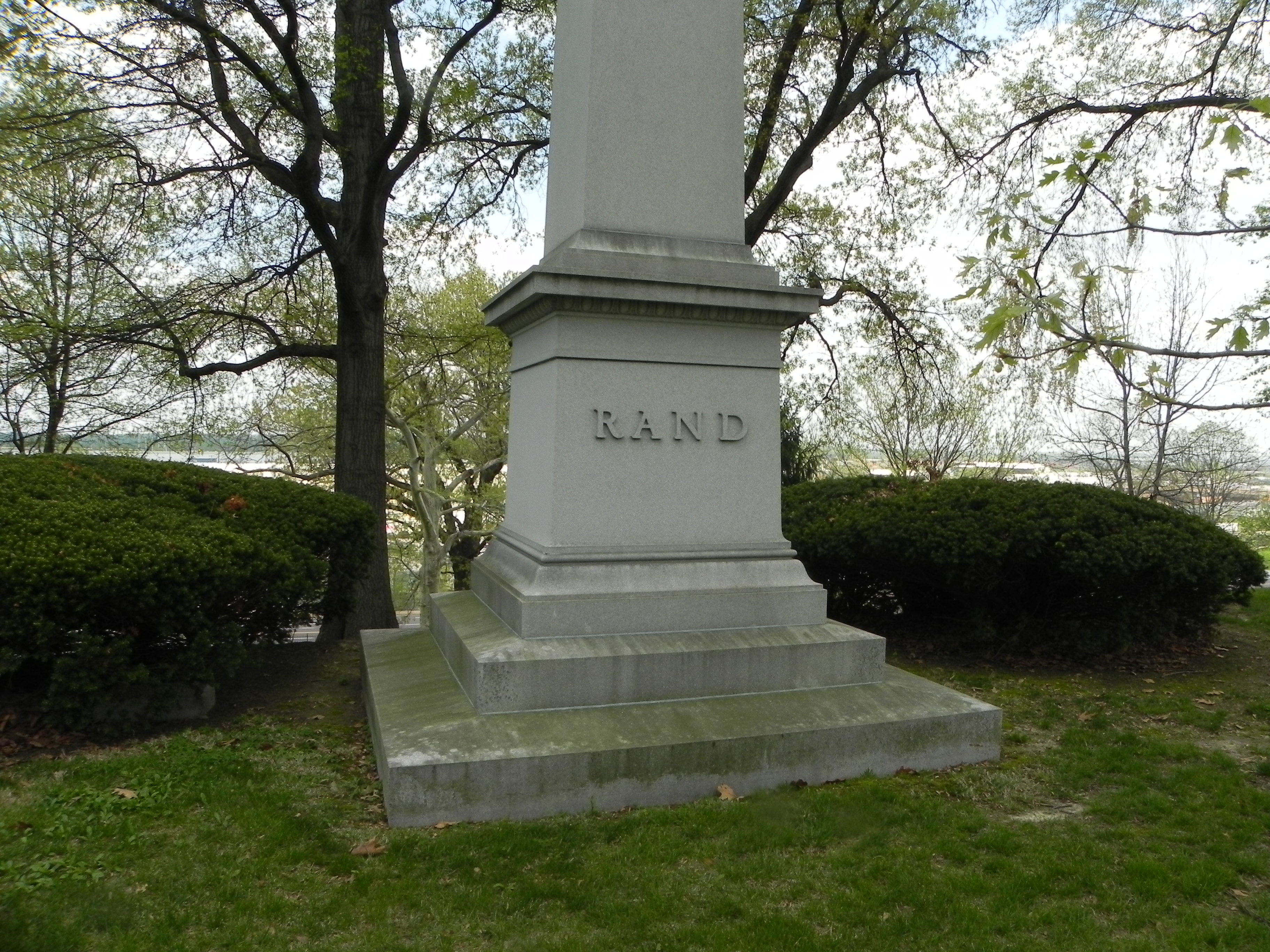
A familiar name--our Rand obelisk is in New Hampshire

A familiar name–our Rand obelisk is in New Hampshire however.

DSCN1342

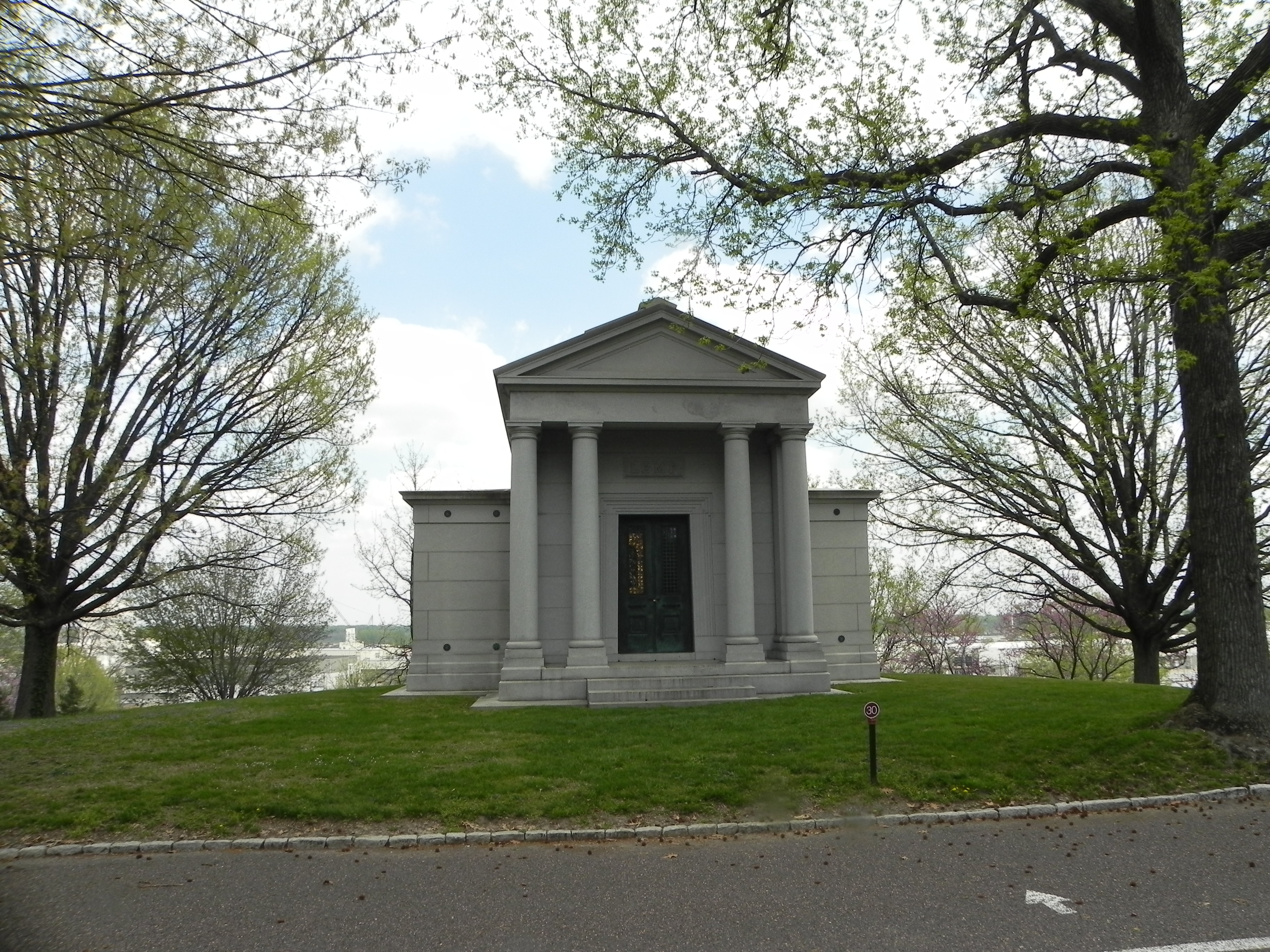
You can kind of see the River behind the Lemp mausoleum situated on a bluff.

DSCN1345

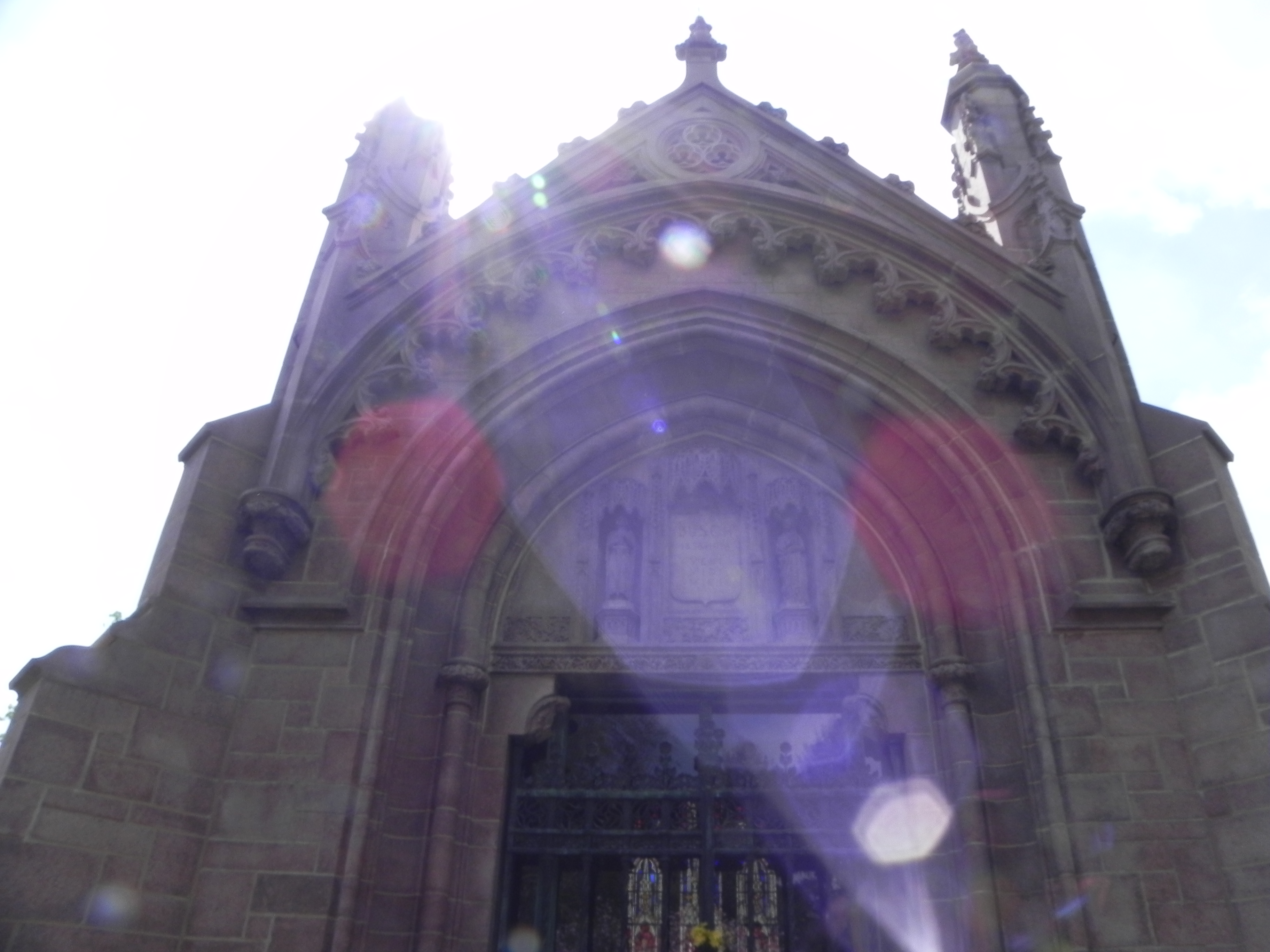
The Busch mini-Gothic-cathedral mausoleum

DSCN1346

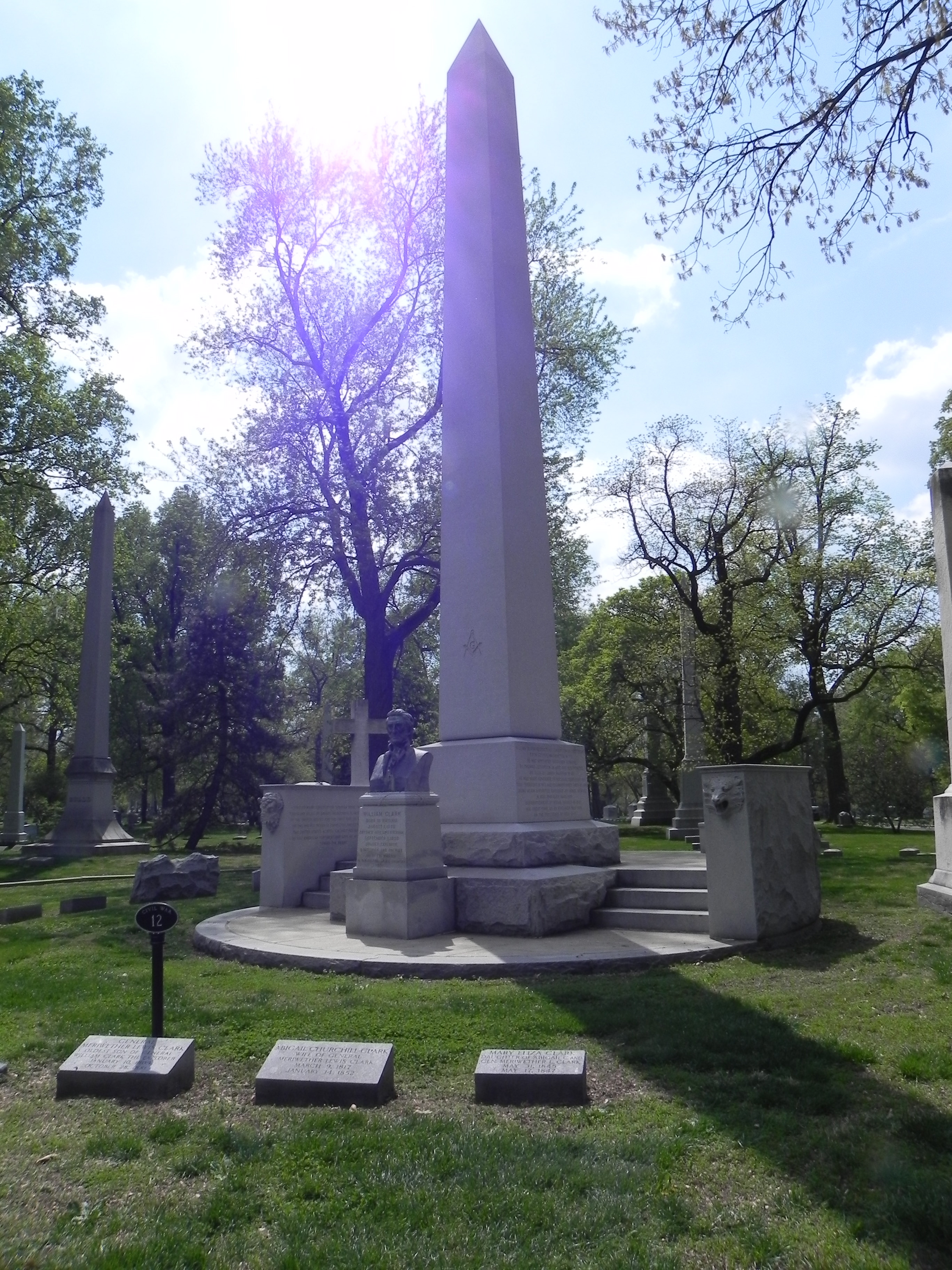
William Clark of Lewis and Clark fame is buried here.

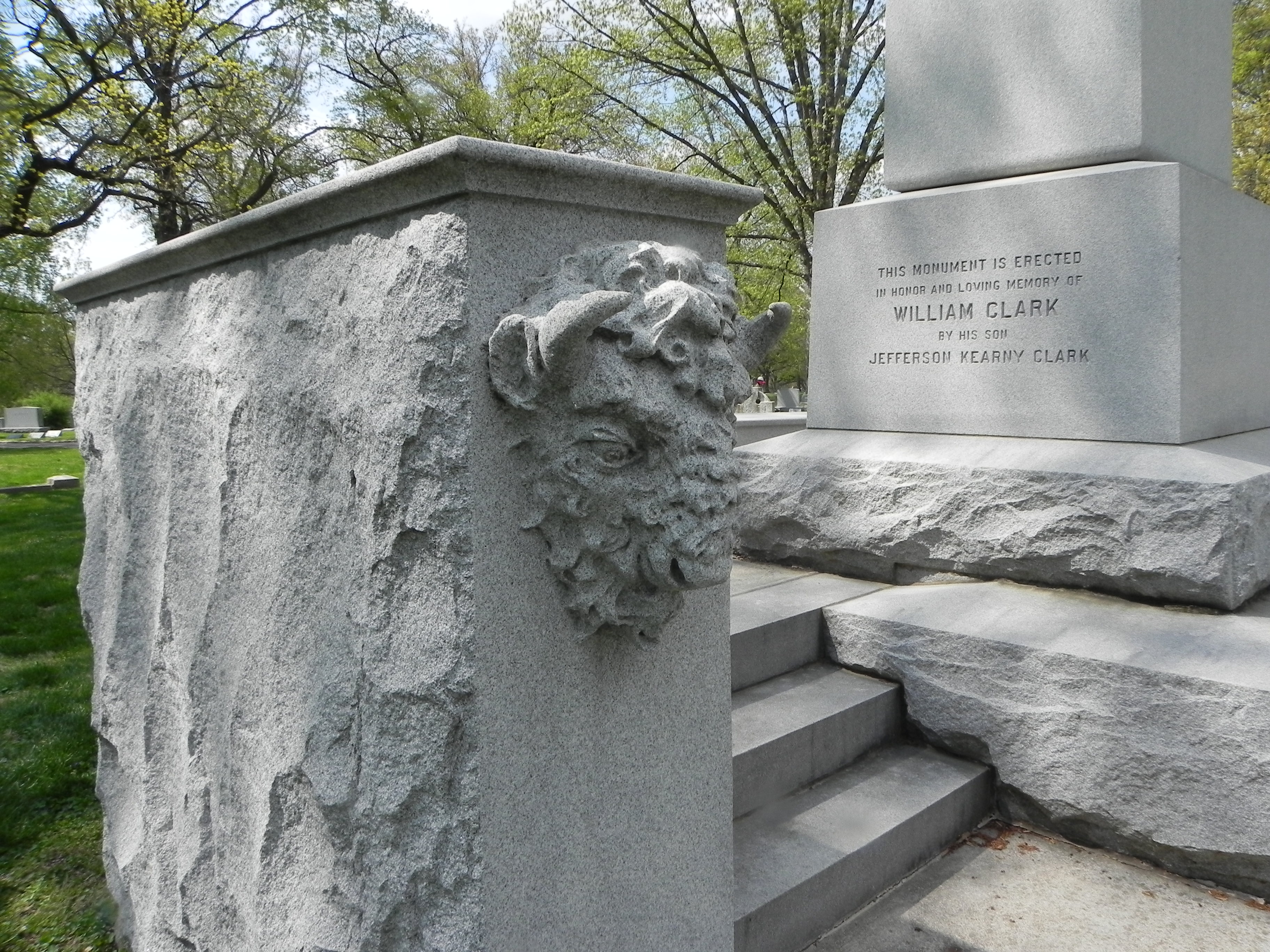
DSCN1348

How appropriate that his grave is decorated with buffs.

Well, I like cemeteries. Especially “rural” cemeteries like Bellefontaine. Visiting it was a fascinating way to spend a lovely spring afternoon and a great way to learn more about the history of my hometown. I was reminded of Prof. Wutheridge in The Bishop’s Wife (1947) who said, “For some time now, every time I pass the cemetery, I feel as though I’m apartment hunting.” Well, you couldn’t do much better than spending eternity in one of these mausoleums overlooking the mighty Mississippi River!

Sing of the love we bore him

by chuckofish

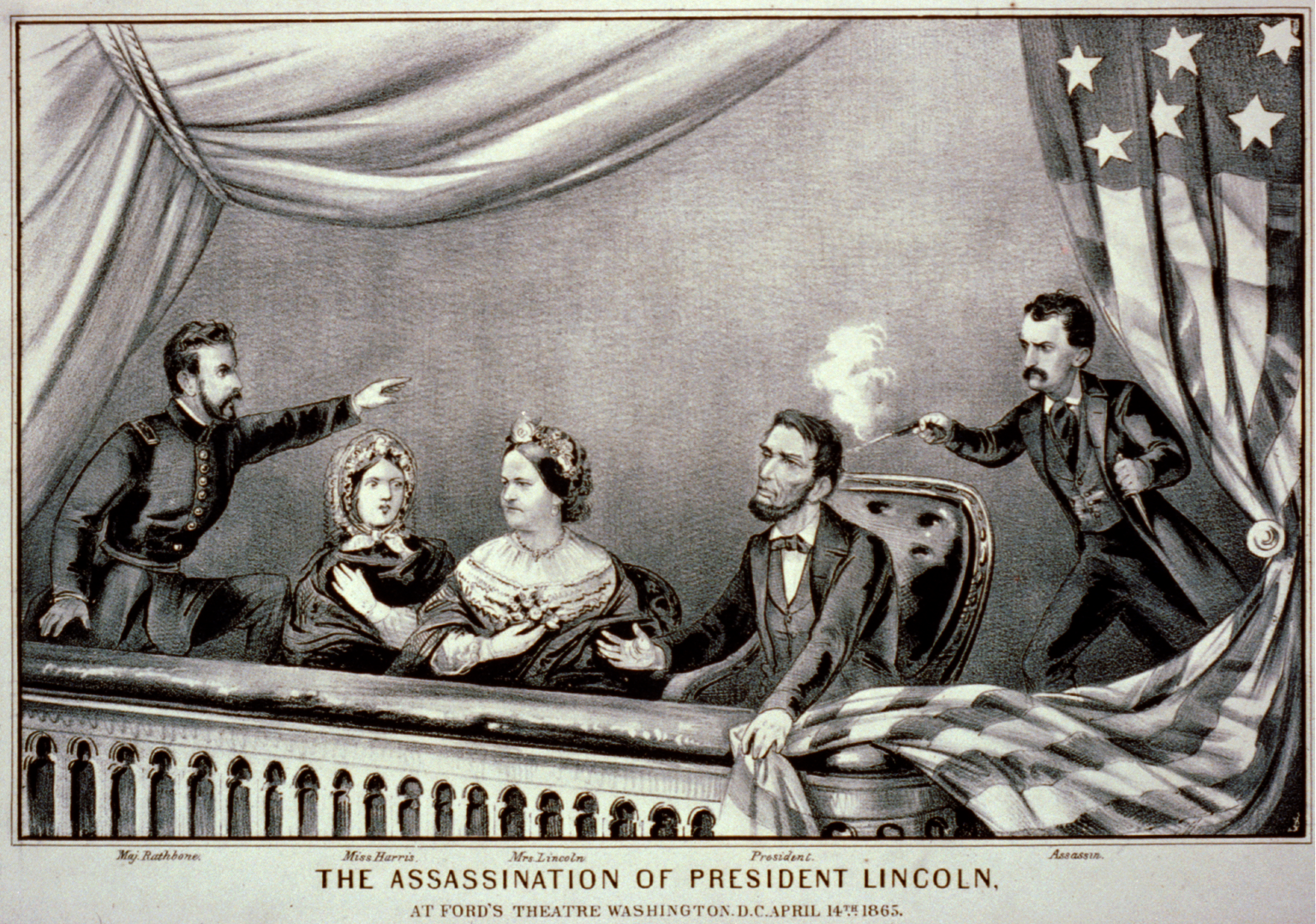
Today is the 150th anniversary of the death of Abraham Lincoln. He was shot on April 14 (only five days after Lee surrendered to Grant at Appomattox), but he lingered until the morning of the 15th.

The_Assassination_of_President_Lincoln_-_Currier_and_Ives_2

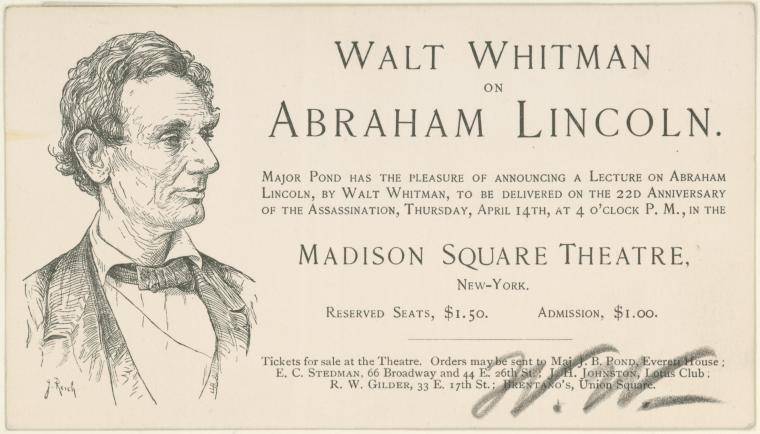
The death of President Abraham Lincoln had a profound impact on the poet Walt Whitman and his writing. It is the subject of one of his most highly regarded and critically examined pieces, “When Lilacs Last in the Dooryard Bloom’d” (1865-1866) and one of his best-known poems, “O Captain! My Captain!” (1865-1866). Whitman also delivered (sporadically) annual public lectures commemorating Lincoln’s death beginning in April 1879.

Whitman-Lincoln

Here is the first poem Whitman wrote about Lincoln’s death.

(May 4, 1865)

HUSH’D be the camps to-day,

And soldiers let us drape our war-worn weapons,

And each with musing soul retire to celebrate,

Our dear commander’s death.

No more for him life’s stormy conflicts,

Nor victory, nor defeat—no more time’s dark events,

Charging like ceaseless clouds across the sky.

But sing poet in our name,

Sing of the love we bore him—because you, dweller in camps,
know it truly.

As they invault the coffin there,

Sing—as they close the doors of earth upon him—one verse,

For the heavy hearts of soldiers.

Let’s all take a moment to ponder our fallen president and the great national calamity that was his death.

This and that

by chuckofish

Another busy week (almost) in the bag. Ugh.

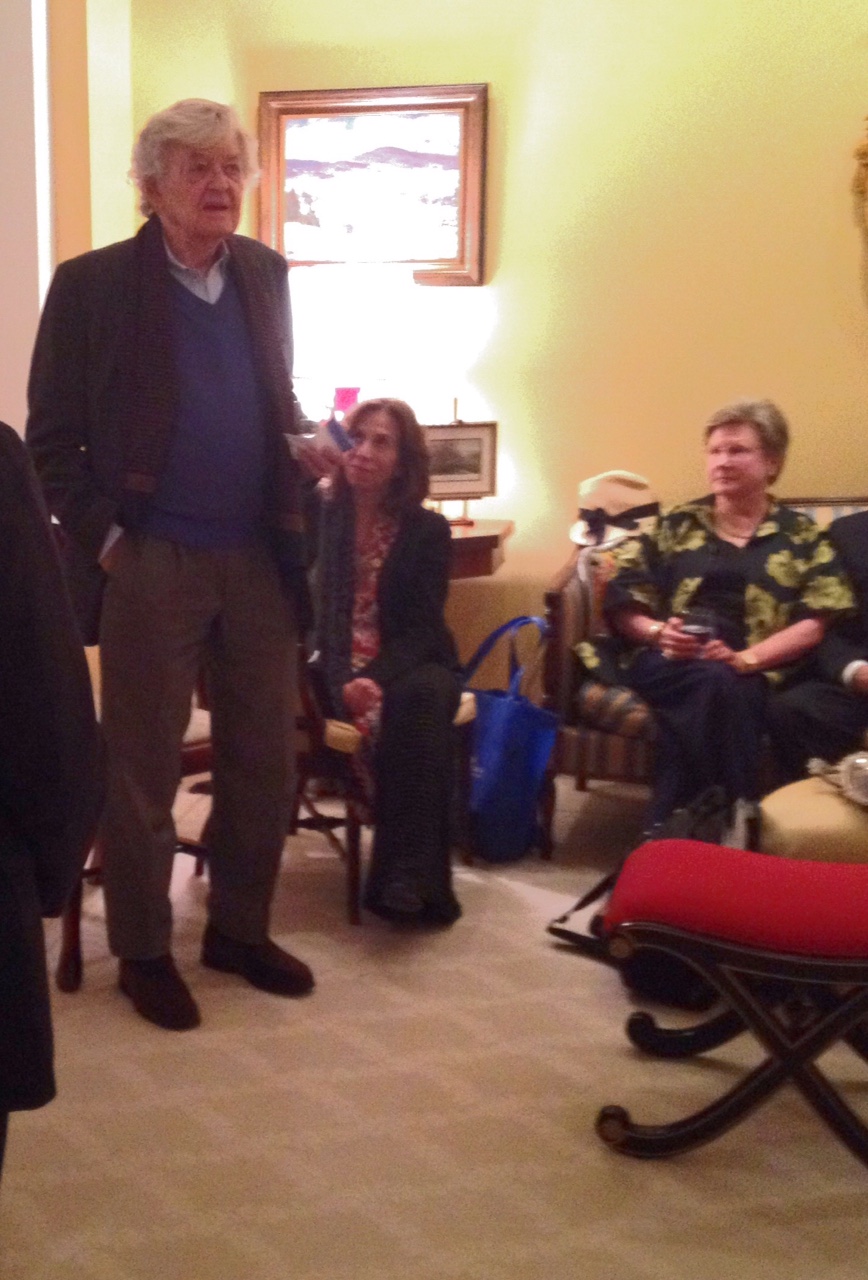
I went to a cocktail party last night where Hal Holbrook was the guest of honor.

FullSizeRender-4

I wish Dixie Carter had been there. I miss her.

Oh well. C’est la vie.

Tomorrow I head to the airport to pick up daughter #1 who is running in the Go! St. Louis half marathon on Sunday.

mary workout

She’s been training for awhile now.

Anyway, this race crosses two bridges back and forth over the mighty Mississippi. How cool is that?

It promises to be a busy weekend!

Baseball season has started, so I guess it is appropriate that we have been experiencing baseball-sized hail in our flyover state!

hqdefault

Photo lifted from KMOV.com

Well, if it’s not one thing, it’s another.

11133826_943103199054177_4141338433636704945_n

The sky in Farmington, MO the other day.

Oh, springtime in the Midwest!

We would be remiss if we did not mention that today is the 326th anniversary of William III and Mary II being crowned as joint sovereigns of Great Britain.

NPG D9227; Queen Mary II; King William III by Wallerant Vaillant, after  Unknown artist

Huzzah!

Have a great weekend!
What are you reading?

by chuckofish

It’s a great art, is rowing. It’s the finest art there is. It’s a symphony of motion. And when you’re rowing well, why it’s perfection. And when you near perfection, you’re touching the Divine. It touches the you of yous. Which is your soul. (George Yeoman Pocock)

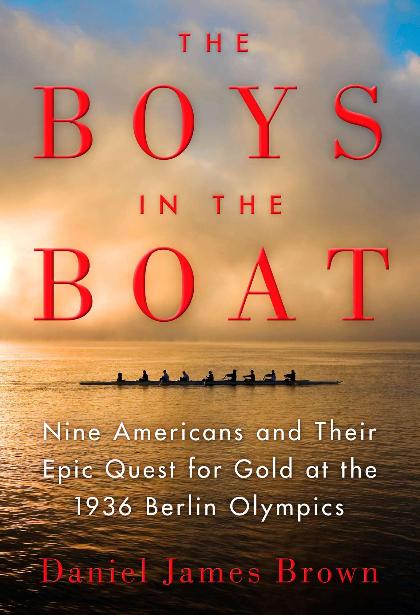
I am reading The Boys in the Boat by Daniel James Brown.

The-Boys-in-the-Boat-Daniel-James-Brown

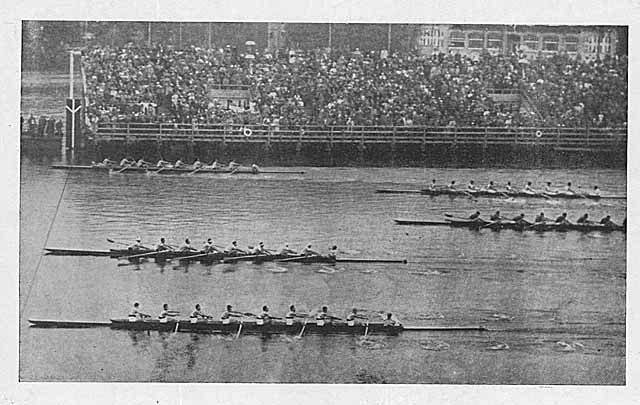
It is the story of the hard-working varsity crew at the University of Washington who beat out their American college rivals for a chance to show the world how great they were at the 1936 Olympics in Berlin. Most of these guys were already working their way through college (because it was the depression) and then working on top of that and their school work to perfect their “swing” on the crew team. What a work ethic!

120718_FRC_01_rowingteamEX.jpg.CROP.rectangle3-large

It is a wonderful story of those fine young men from “the greatest generation” who later would trounce Hitler in the war.

This book is particularly appealing to me because I rowed in college.

The boathouse on Paradise Pond at Smith College

The boathouse on Paradise Pond at Smith College

I took a class and then I rowed on an intramural team. I admit, I was pretty terrible. (My excuse is that my hands were too small to really get a good grip on the oar and my 110 lb. frame was pretty wimpy.) But I loved it. Eventually I moved to the coxswain’s seat, but I had a tendency to veer. I am no athlete, okay? But I did love being on the water and I rowed enough to understand what it’s all about.

There is a thing that sometimes happens in rowing that is hard to achieve and hard to define. Many crews, even winning crews, never really find it. Others find it but can’t sustain it. It’s called “swing.” It only happens when all eight oarsmen are rowing in such perfect unison that no single action by any one is out of synch with those of all the others.

I wanted to row because when I was a freshman at Smith, Thomas Corwin Mendenhall was the President of the College. It was his final year, and I actually had him in a freshman history course. He was the kind of professor who invited each student individually over to his house to discuss their final paper. We had tea in his messy study. It was the greatest.

Menden

Anyway, he rowed. A graduate of both Yale and Oxford, where he was a Rhodes Scholar, he captained the Balliol College crew while at Oxford. Later he coached the Berkeley College crew while teaching at Yale, served as an informal coach for college rowers at Smith and wrote three books on the subject, including A Short History of American Rowing.

I went to the Head of the Charles regatta my freshman year and Mr. Mendenhall was there talking to the coach of the Olympic crew team. He knew everyone.

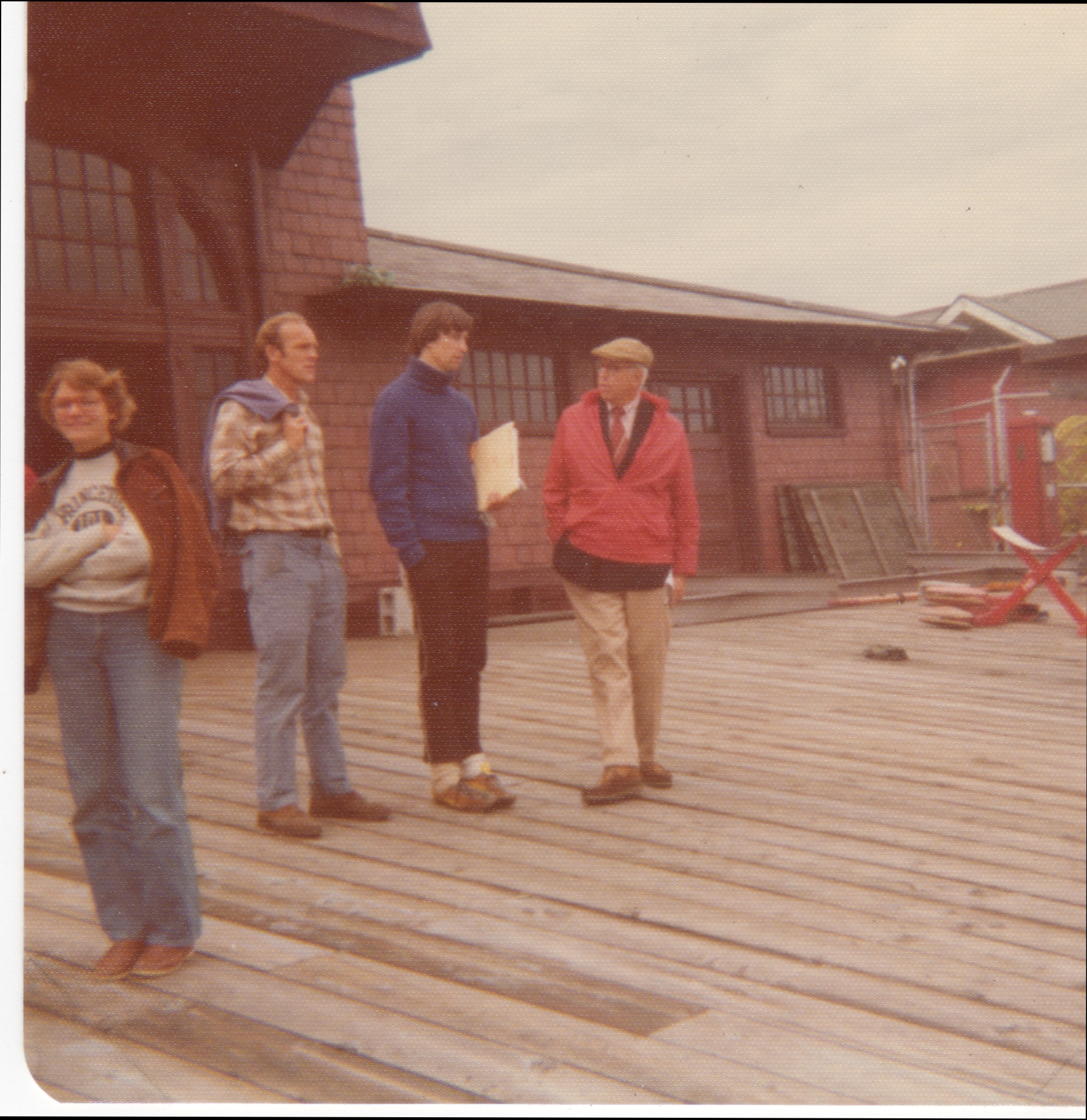
TCM (in red jacket) with U.S. Olympic crew coach at the Newell Boathouse, Head of the Charles 1975

TCM (in red jacket) with U.S. Olympic crew coach at the Newell Boathouse, Head of the Charles 1975

I kept in touch with Mr. Mendenhall after he retired. If I wrote him, he always wrote me back. On the day I graduated I ran into him by chance on the sidewalk outside the President’s house. He asked me what I was doing after graduation and I told him I didn’t know, because I had been turned down for the Master’s Program at William and Mary. Back in St. Louis a week later, I got a phone call from the head of the History Dept. at W&M and he said they had a spot for me after all and some money too. Well. I always thought that perhaps Mr. Mendenhall had given them a call. I’ll never know for sure, but he was that kind of guy.

Anyway, The Boys in the Boat is a good book and a rousing story. Word is that a movie is in development and that Kenneth Branagh has signed on to direct it. This story would make a great movie, although we do know how it works out.

0704_1936-olympics

The Nazis lose.

All is hushed at Shiloh

by chuckofish

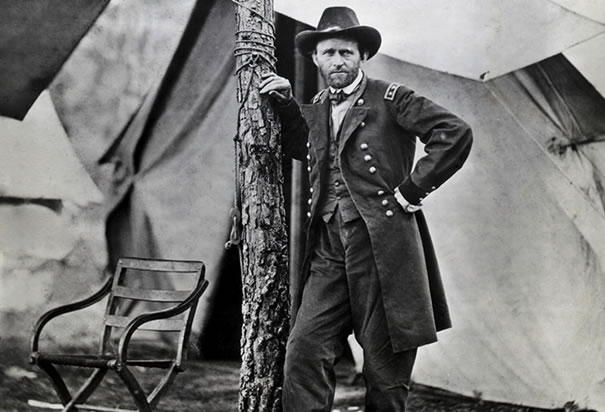
One hundred and fifty-three years ago, on April 7, 1862, Union forces led by Gen. Ulysses S. Grant defeated the Confederates at the battle of Shiloh in Tennessee. The day before, however, was a terrible day for Grant.

ulysses-s-grant-civiltree

In his memoirs Grant describes the night of April 6:

During the night rain fell in torrents and our troops were exposed to the storm without shelter. I made my headquarters under a tree a few hundred yards back from the river bank. My ankle was so much swollen from the fall of my horse the Friday night preceding, and the bruise was so painful, that I could get no rest. The drenching rain would have precluded the possibility of sleep without this additional cause. Some time after midnight, growing restive under the storm and the continuous pain, I moved back to the loghouse under the bank. This had been taken as a hospital, and all night wounded men were being brought in, their wounds dressed, a leg or an arm amputated as the case might require, and everything being done to save life or alleviate suffering. The sight was more unendurable than encountering the enemy’s fire, and I returned to my tree in the rain.

Historian Bruce Catton (Grant Moves South) describes a meeting between Sherman and Grant that night:

Late that night…Sherman came to see him. Sherman had found himself, in the heat of the enemy’s fire that day, but now he was licked; as far as he could see, the important next step was to “put the river between us and the enemy, and recuperate,” and he hunted up Grant to see when and how the retreat could be arranged. He came on Grant, at last, at midnight or later, standing under the tree in the heavy rain, hat slouched down over his face, coat-collar up around his ears, a dimly-glowing lantern in his hand, cigar clenched between his teeth. Sherman looked at him; then, “moved,” as he put it later, “by some wise and sudden instinct” not to talk about retreat, he said: “Well, Grant, we’ve had the devil’s own day, haven’t we?”

Grant said “Yes,” and his cigar glowed in the darkness as he gave a quick, hard puff at it, “Yes. Lick ’em tomorrow, though.”

And they did.

Among the enlisted men fighting that day were a young Ambrose Bierce of the Ninth Indiana and 21-year old Henry Morton Stanley (who later discovered Dr. Livingstone in Africa) of the 6th Arkansas Infantry.  Major General Lew Wallace (who later wrote Ben Hur) was there as well.

Herman Melville was not present at Shiloh, but he wrote a poem about it which I like very much:

Skimming lightly, wheeling still,
The swallows fly low
Over the field in clouded days,
The forest-field of Shiloh–
Over the field where April rain
Solaced the parched ones stretched in pain
Through the pause of night
That followed the Sunday fight
Around the church of Shiloh–
The church so lone, the log-built one,
That echoed so many a parting groan
And natural prayer
Of dying foeman mingled there–
Foeman at morn, but friends at eve–
Fame or country least their care:
(What like a bullet can undeceive!)
But now they lie low,
While over them the swallows skim
And all is hushed at Shiloh.

–Herman Melville, “Shiloh: A Requiem”

Let’s all just take a moment.