dual personalities

Category: genealogy

Tell old pharoah

by chuckofish

Amaryllis

The Old Testament reading on Sunday was about God appearing to Moses in the form of a Burning Bush (Exodus 3:1-15). I suppose that was why we sang Go Down, Moses as our communion hymn. We gave it our best shot tried, but Episcopalians plus negro spirituals equals truly awkward. We just can’t swing it, literally.

We had a lovely, balmy weekend and I tried to get out and about, but was still recovering from my cough/cold/whatever. I re-organized a large cupboard filled with an assortment of dishes, serving pieces, silver, holiday decorations, cleaning supplies, ephemera, etcetera. This turned into quite a job as you can imagine, but I got it all sorted out, cleaned and put away. I actually threw away very little (typical).

Since officially giving up on Humboldt’s Gift, I perused several bookshelves at home and picked out several possible books to read. I settled on The Proper Bostonian by Cleveland Amory, which I had picked up some time ago at an estate sale. It proved to be very enjoyable  and full of information. Published in 1947, it “is as humorous and entertaining as anything that could be written about the Boston Brahmins–the Cabots, Lodges, Lowells, Adamses and others that make Boston a synonym for staidness and sobriety.” (Chicago Tribune) Now there’s a qualified recommendation for you! I am learning all about Boston’s First Families and the foibles of the “Proper Boston lady” and the “Proper Boston gentleman.”

This is particularly interesting to me as our maternal grandmother was a Sargent  after all and lived on Clarendon Street in Back Bay for years. She was, indeed, a “Proper Boston lady.”
Mira

When our parents gave their third child the middle name ‘Sargent,’ our grandmother’s response was  not, “Oh, how nice,” but “Well, finally.”

Well, more on this later, because it is Monday and the bell tolleth for me. Have a good week!

P.S. I watched part of the Oscars–why? Why did they keep playing Que Sera Sera? It was a strange show. But I didn’t watch the whole thing. I went to bed. Give me some credit.

(The OM took the photo of the amaryllis.)
“I’m a thousand miles from nowhere Time don’t matter to me”*

by chuckofish

Our family has been in this country for nearly 400 years and the genealogy of some branches is quite well documented. We have some holes, however–especially those ancestors who pioneered west of the Alleghenies–and my dual personality and I are continually working on filling in those blanks.

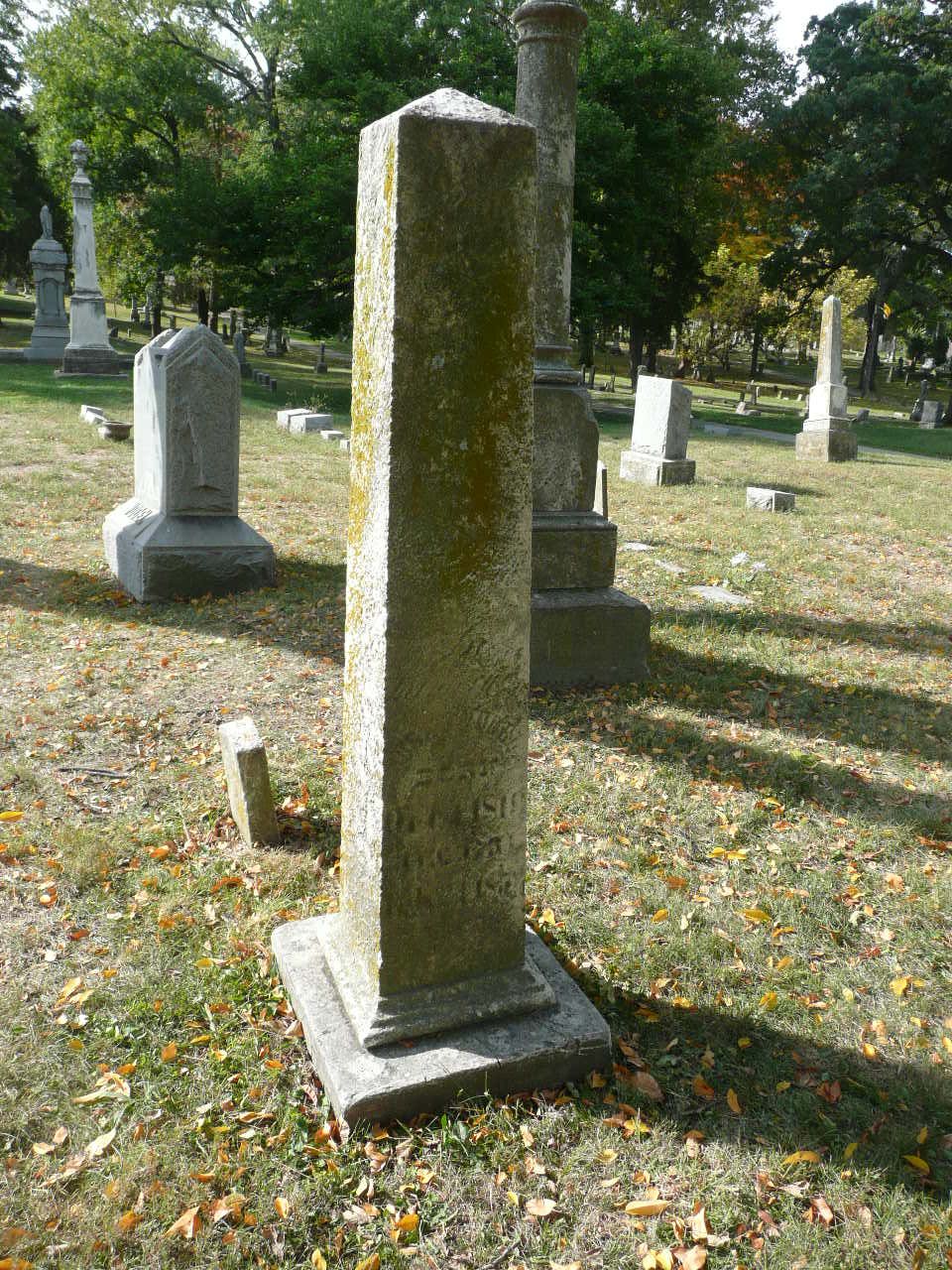
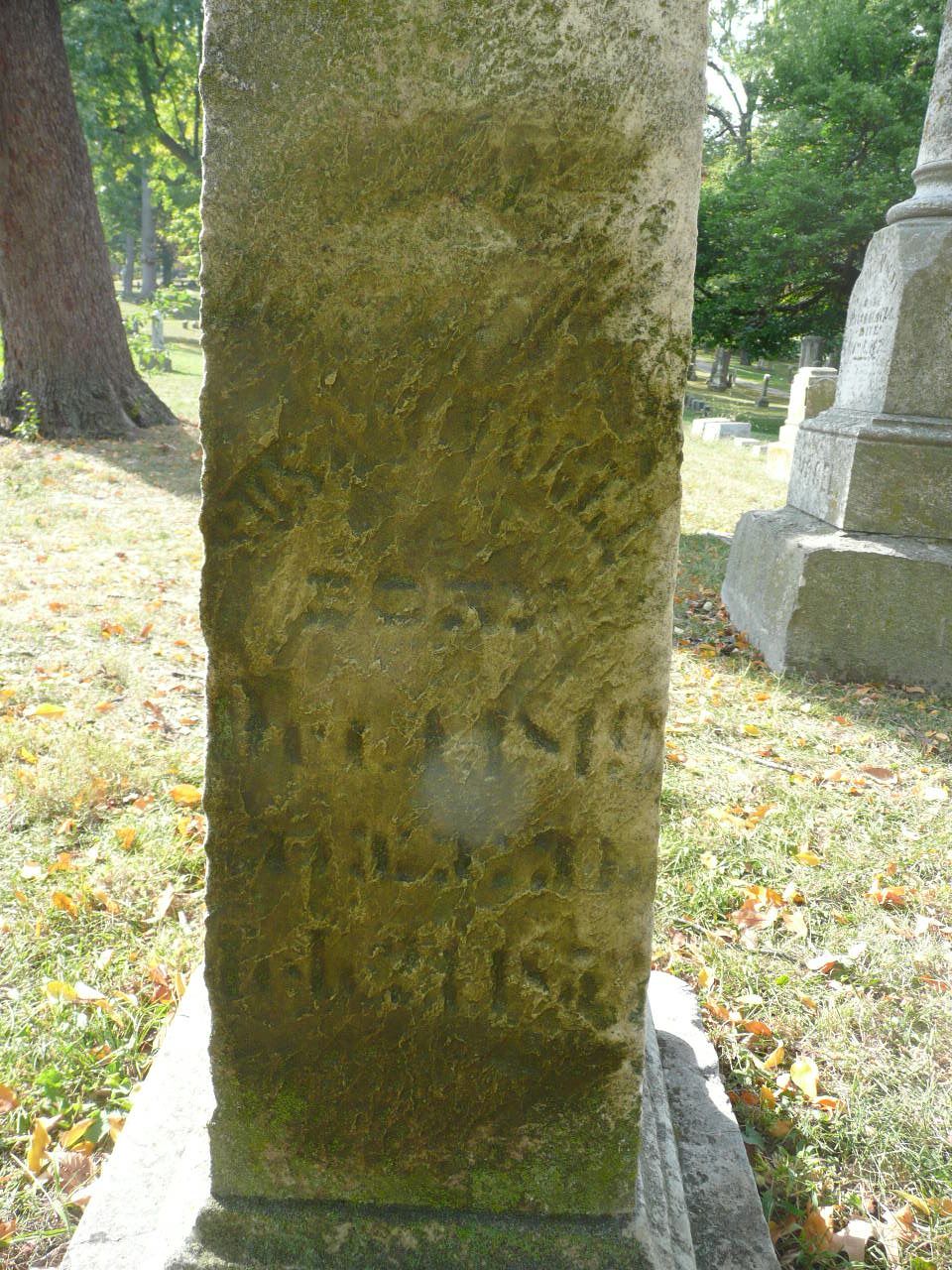
The other day I was messing around on the internet and I found the location of my great-great-great-grandmother’s grave in Westport, MO. I found this by purposefully mis-spelling her husband’s name. Bingo.

79942957_132054734317

SUSAN VOGEL BORN OCT. 1, 1819 DIED FEB. 24, 1853

susan vogel

Find a Grave photo

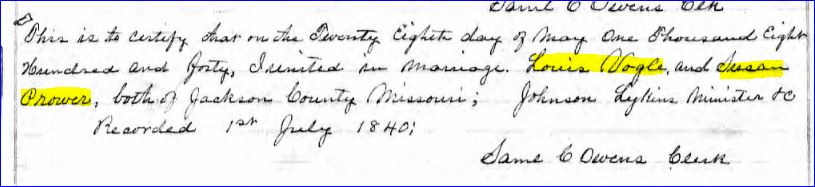
I also found this “marriage certificate”

marriage cert

which has three (!) spelling errors: Susan Prowers, Louis Vogel and the minister’s name, which is spelled Johnston Lykins. Louis Vogel was Susan’s second husband. She married him after her first husband, John Prowers, died in 1839. She already had two children under the age of two, John Wesley Prowers and Mary A. Prowers (my great-great-grandmother). She subsequently had three more children with Louis Vogel. Frequently all five children are listed on census lists and such under the name Vogel, but both Prowers children kept their father’s name and were proud of it.

Anyway, looking further, a whole new window opened. I found out that Susan’s maiden name was Matney and that her father William hailed from Washington County, Virginia. His father was born in Scotland.

William Matney married Sarah Yoachum from Jefferson County, Tennessee in 1809. (I always knew I had a claim to eastern Tennessee!) She was the daughter of Solomon Yoakum (Note spelling!) and Susannah Adams. Yoachum, by the way, can be spelled Yoakum, Yokum, Yocum, Yoakam, Joachim…zut alors!

They moved on to Arkansas, ultimately settling in Jackson County, MO where they had many children. This really puts a new spin on things. I had always thought that Susan and John Prowers moved together from Virginia to Westport, MO. Thus, when he died suddenly, he left her alone with two very small children. However, this does not seem to be the case. It would appear that she had parents and a large extended family.

Anyway, such break-throughs are very exciting to family historians. I plan to go and check out the Union Cemetery in KC soon.

*Dwight Yoakam–distant cousin

Stand ye steady

by chuckofish

newell

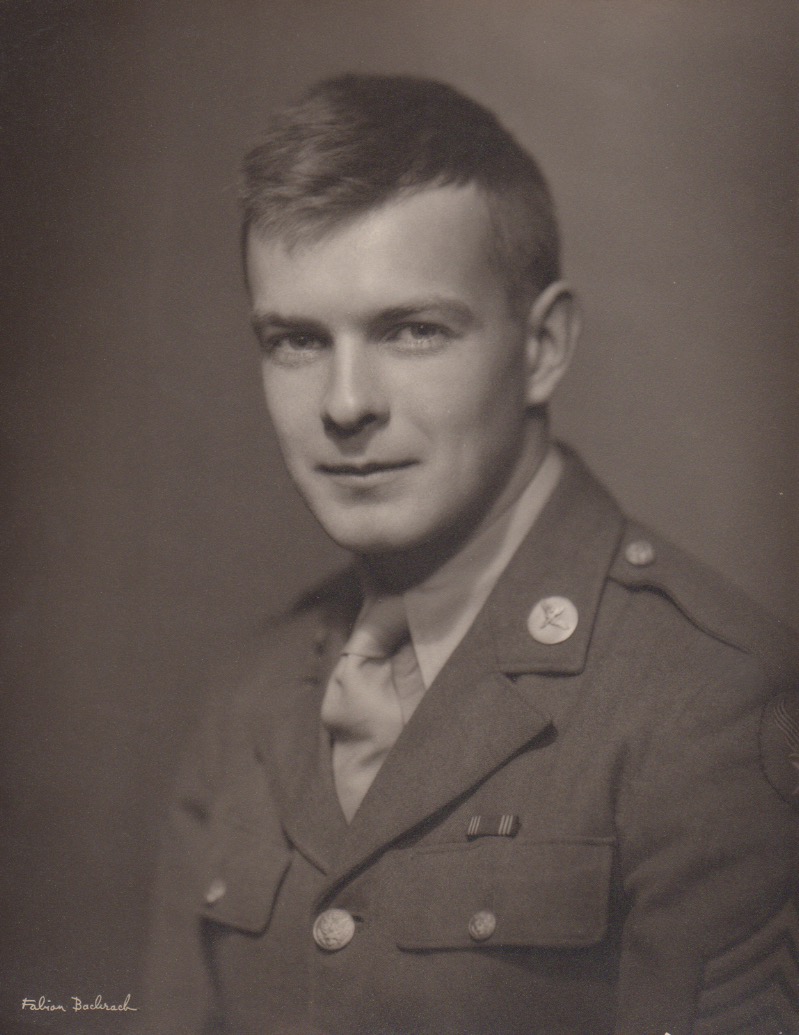
ANC III who served in WWII and Korea and lived to not talk about it.

ALMIGHTY God, our heavenly Father, in whose hands are the living and the dead; We give thee thanks for all those thy servants who have laid down their lives in the service of our country. Grant to them thy mercy and the light of thy presence, that the good work which thou hast begun in them may be perfected; through Jesus Christ thy Son our Lord. Amen

–the BCP, 1928

“It don’t matter where a man dies, as long as he dies for freedom.” –Sgt. Dane in Bataan (1943)

Windows open

by chuckofish

May is white clouds behind pine trees

Puffed out and marching upon a blue sky.

May is green as no other,

May is much sun through small leaves,

May is soft earth,

And appleblossoms,

and windows open to a south wind.

–Amy Lowell

I found this poem torn out of a magazine and stuck in my mother’s notebook about gardens where she had painstakingly copied out poems about gardens and bible quotations and other quotes.

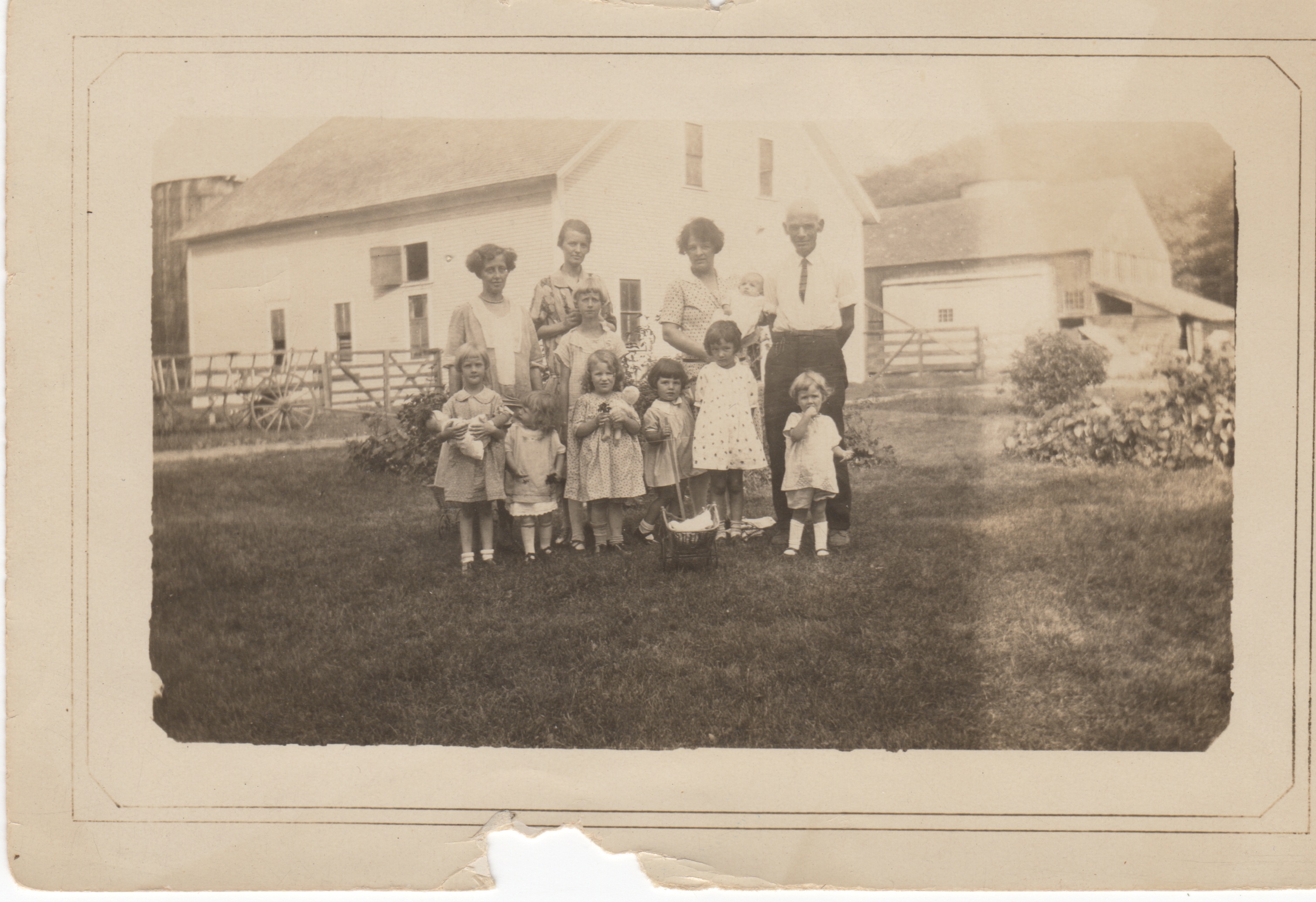
Also stuck in it was this photo:

farm family

You can click on it to enlarge the picture.

Her mother and grandfather are on the right. They are visiting their relatives (the Wheeler-Rand-Smiths) who owned the farm. My mother is the little dark-haired girl with the baby carriage and her older sister Susanne is to the right. I don’t know whose baby my grandmother is holding, because her youngest daughter was born in 1933 and this must be 1928-29, judging from my mother’s age (3?). The other women and the blonde children are members of the family (the Frohawks) who lived on the farm and farmed it.

My mother spent her summers on this farm in North Charlestown, N.H. and, boy, did she love it and the Frohawks. At that time, the farm had been in her family for 150 years. We heard about it all the time growing up. I would have liked to spend my summers there, but it had been sold after the war and was gone with the wind.

Sigh.

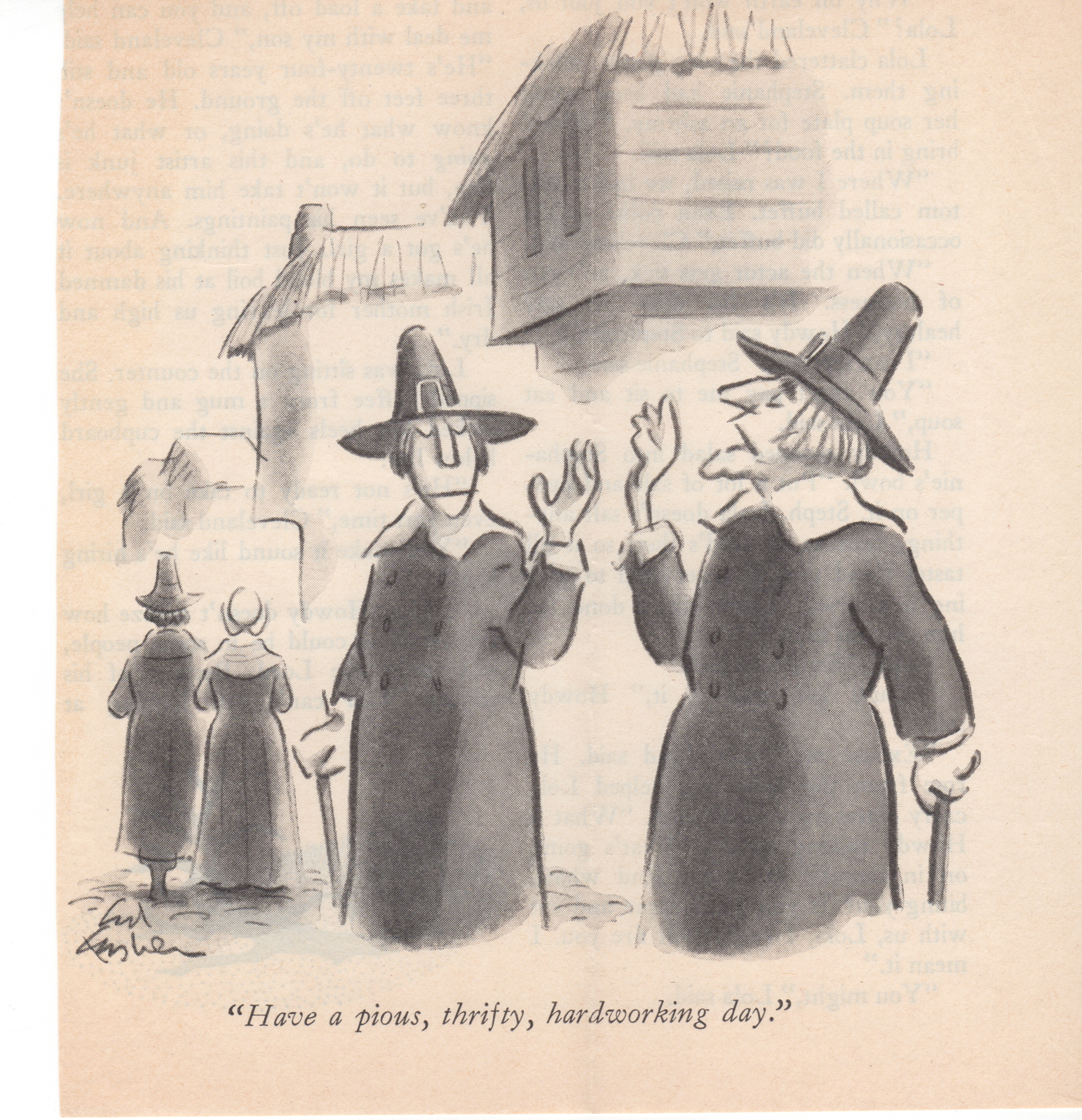
Anyway, also tucked into the notebook was this cartoon, which I am sure I had sent her.

puritans 1

It is still my mantra. So have a pious, thrifty, hardworking day…and weekend!

We are all living history…right?

by chuckofish

wrc special

This weekend I went through a huge box of my children’s childhood artwork, school work and other stuff. I found items like the above Sunday School ephemera (and the boy was, indeed, special, wasn’t he?) and practically every greeting card that was ever received by my children.

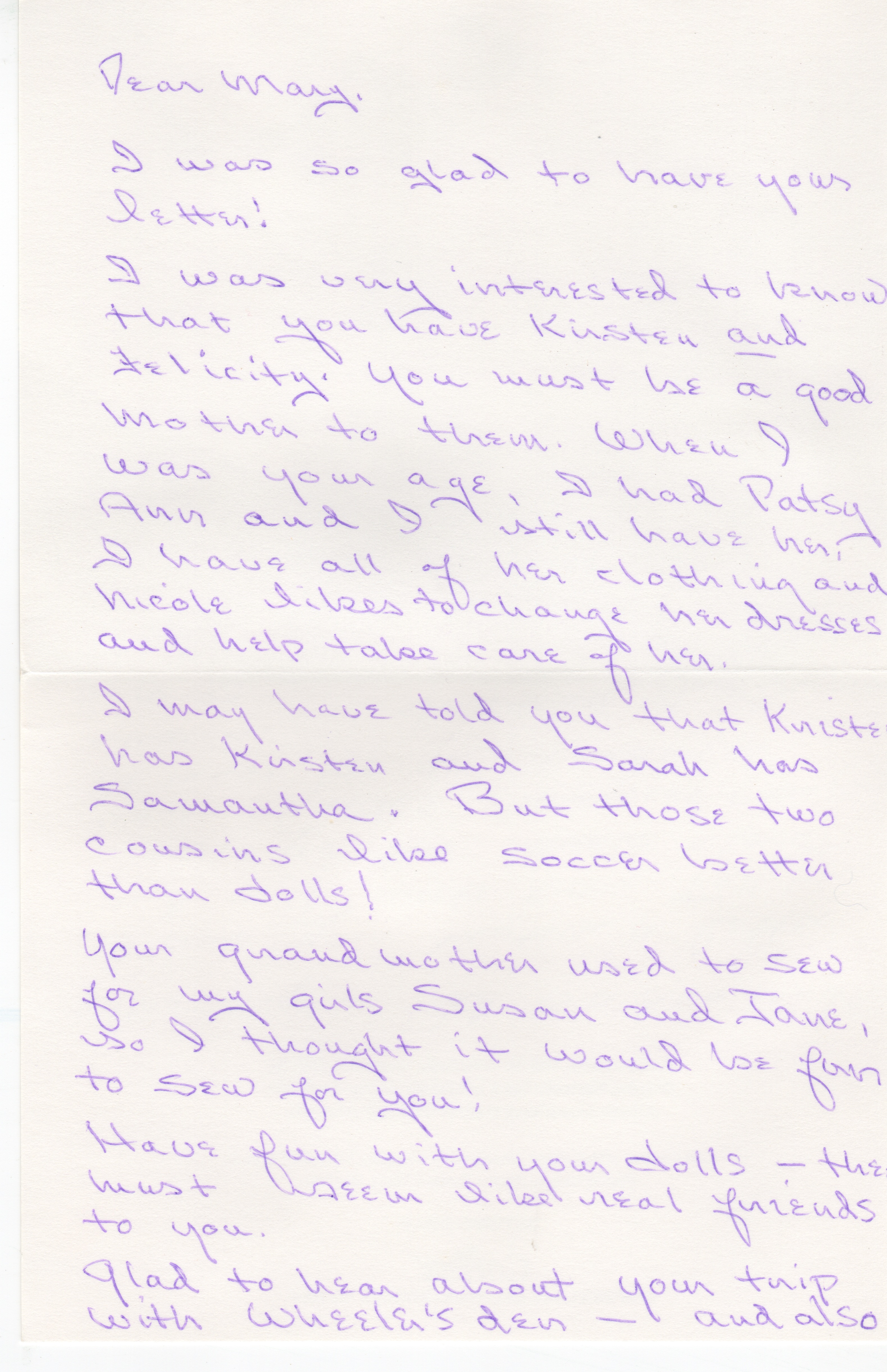
It is heartwarming to read the notes written by my two aunts to my children, attempting to fill the void left when my mother died as best they could from faraway Massachusetts.

susanne letter1

(BTW Kirsten, Felicity and Samantha are American Girl dolls.)

And I love reading the school journal entries written by my children such as this one by daughter #1 in first grade:

If you were here on Friday I wasn’t here because my mom said I could stay home because my Uncle Chris was in town and we went to the transportation museum and it was fun.

Today we have to be on our best behavior because there are going to be people voting. I lost a tooth.

Then there are mounds of camp letters–to and from–classics!

bartsimpson

Am I a fool to save all these? Well, after I get all this organized and catalogued into color-coded (?!) bins, it will be someone else’s problem to go through again some day.

For now, I am amusing myself…as usual.

“He was a good man. Make sure that it says so on the patrol report.”*

by chuckofish

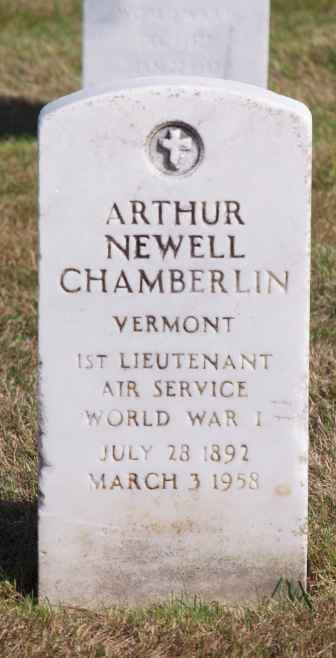
Arthur Newell Chamberlin grave

Our grandfather’s grave in San Francisco

Veterans Day was once known as Armistice Day. The term comes from an armistice between Germany and the Allied Nations on November 11, 1918. World War I actually ended on June 28, 1919, during the Treaty of Versailles. The first Armistice Day was acknowledged on November 11, 1919.

On June 1, 1954, Armistice Day had its named changed to Veterans Day, so that the veterans of WWII and all the men and women who have served in the U.S. Armed Forces would be honored.

So take some time today to think about your ancestors who served their country in the Armed Forces. A favorite fighting ancestor of mine is Moses Wheeler who fought in the French and Indian War. He was a soldier on the frontier as early as 1746,

and was one of the company of Capt. Stevens in his celebrated defense of the Fort at No. 4…and was also with Hobbs in his terrible encounter with Sackett…[Wheeler] was a very large man, yet of good proportions, and was said to have been, in his prime, the strongest man in the cordon of forts on the frontier. One time Wheeler and five others were detailed to take a cannon to the top of Hoosac Mountain. It appeared to some of them a hard task and they stood around it a long time earnestly discussing the way in which it should be done. At length, tiring of their suggestions, Wheeler threw up his arms, at the same time exclaiming “Stand aside boys, I am going to take the cannon up the mountain myself,” and swinging it upon his shoulder bore it to the place which had been designated for it, pausing only once for rest upon the way.

It is related that the reason of his pausing as he did was to get a drink from a spring which he saw bubbling up beside his path. As soon as he saw this he flung his cannon from his shoulder and throwing himself flat on his stomach, the more readily to get at the water, he commenced drinking, as the soldiers expressed it, “like a horse.” Thinking he would kill himself they warned him to desist, but as he gave no heed to their admonition three of them seized one leg and two the other and drew him forcibly away. He thought it rather hard usage but concluded on the whole it was best to submit to it. After resting awhile he again resumed his cannon and bore it to its place, when he found that he had burst his shoes open which were new when he started from the foot of the mountain, and his pantaloons were such a wreck that they were good for nothing afterwards. The officers and soldiers were, however, so pleased with his exploit they they clubbed together and very generously more than made up the loss. After this he became quite a hero to the Indians, who, whenever they came where he was, always wanted to see “The Strong Man.”

(History of Charlestown, New-Hampshire by Rev. Henry H. Saunderson, 1876)

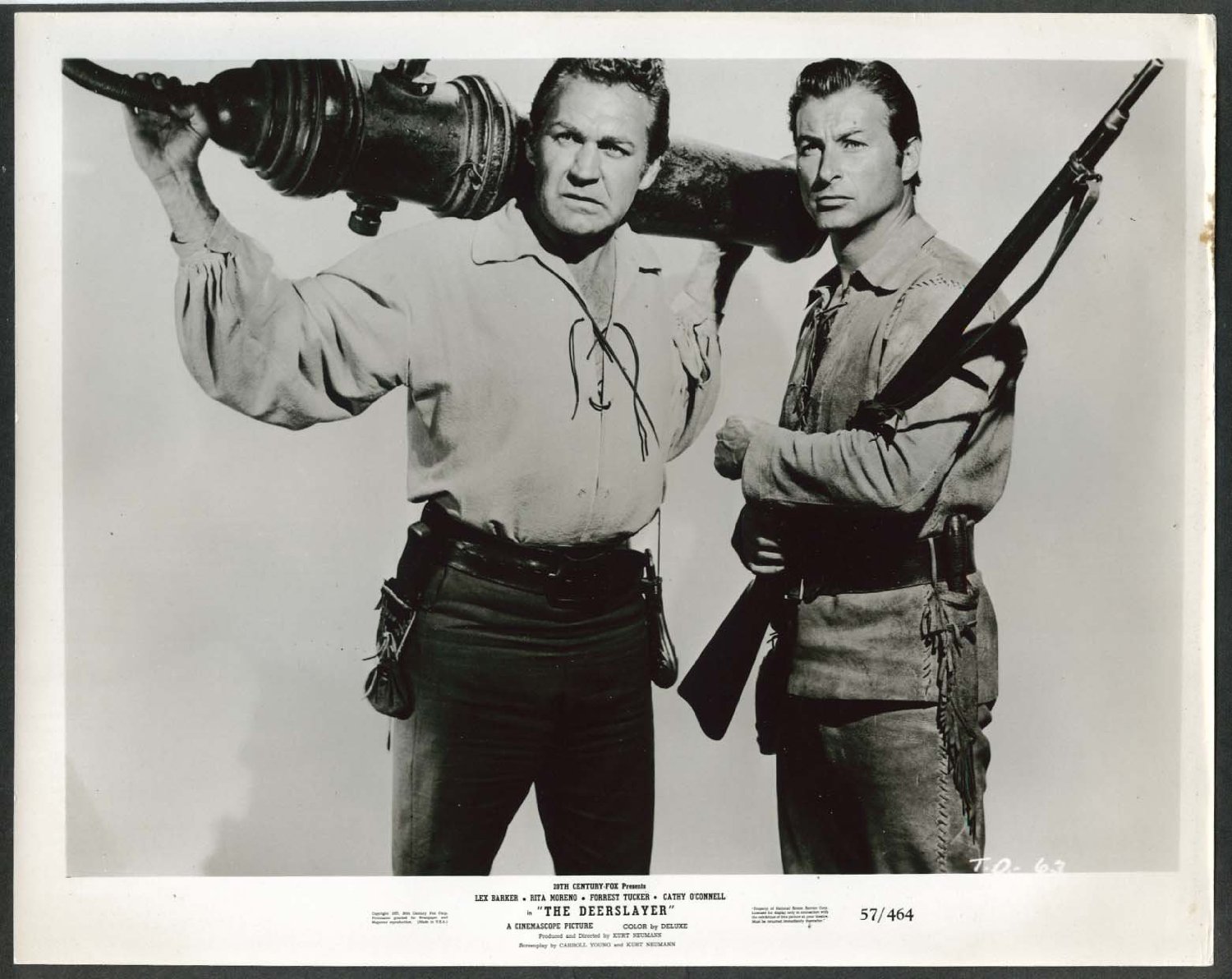
If this story sounds a bit familiar, it is because James Fenimore Cooper used some of Wheeler’s story to embellish a character in The Deerslayer. In the 1957 movie he was played by Forrest Tucker.

71SddV15GAL._SL1500_

Is it any wonder that 240 years later we named the boy after this ancestor?

If I had a copy of The Deerslayer, I would surely watch it tonight.  I’ll find something suitable. How about you?

*John Wayne in Operation Pacific

Sesquicentennial news

by chuckofish

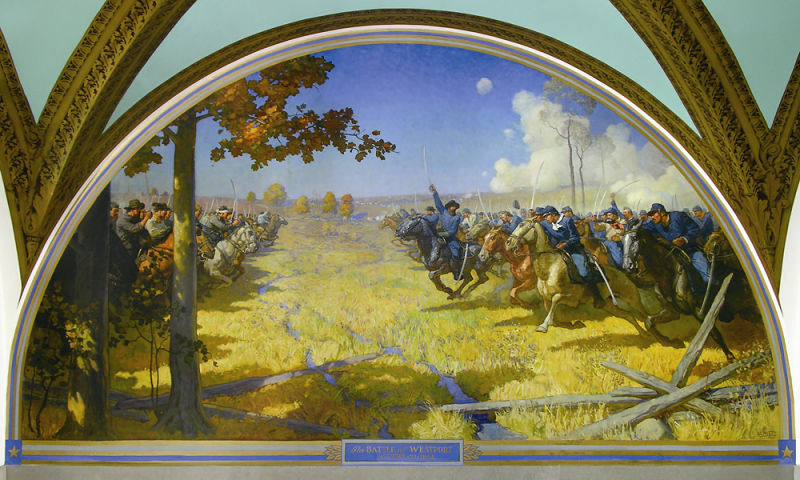
Today is the 150th anniversary of the Battle of Westport–sometimes referred to as the Gettysburg of the West–on October 23, 1864.

N.C. Wyeth mural of the Battle of Westport at the MO State Capitol

N.C. Wyeth mural of the Battle of Westport at the MO State Capitol

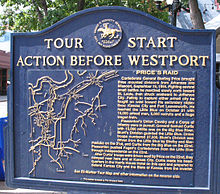
Union forces under Major Samuel R. Curtis decisively defeated an outnumbered Confederate force under Major Sterling Price. This engagement was the turning point of Price’s Missouri Expedition, forcing his army to retreat and ending the last significant Confederate operation west of the Mississippi River. This battle was one of the largest ever to be fought west of the Mississippi River, with over 30,000 men engaged. Buffalo Bill Cody, Wild Bill Hickcock (a scout for Gen. Curtis), Frederick Benteen, and Jeremiah Johnson all fought in this battle.

I am definitely adding this trip to my “To Do” list. I have been meaning to visit Westport, Missouri (now called Kansas City) where my ancestors were among the first pioneers to settle. And now I find that there was a major Civil War battle fought there? Where have I been?

220px-Westport-plan

Unfortunately, I will have to miss the reenactment, but, as you know, I am more of the self-guided-tour type anyway.

Road trip, anyone?

Trivia question: What famous movie character had a cat named after Gen. Sterling Price?  What movie?

Way Back When Wednesday

by chuckofish

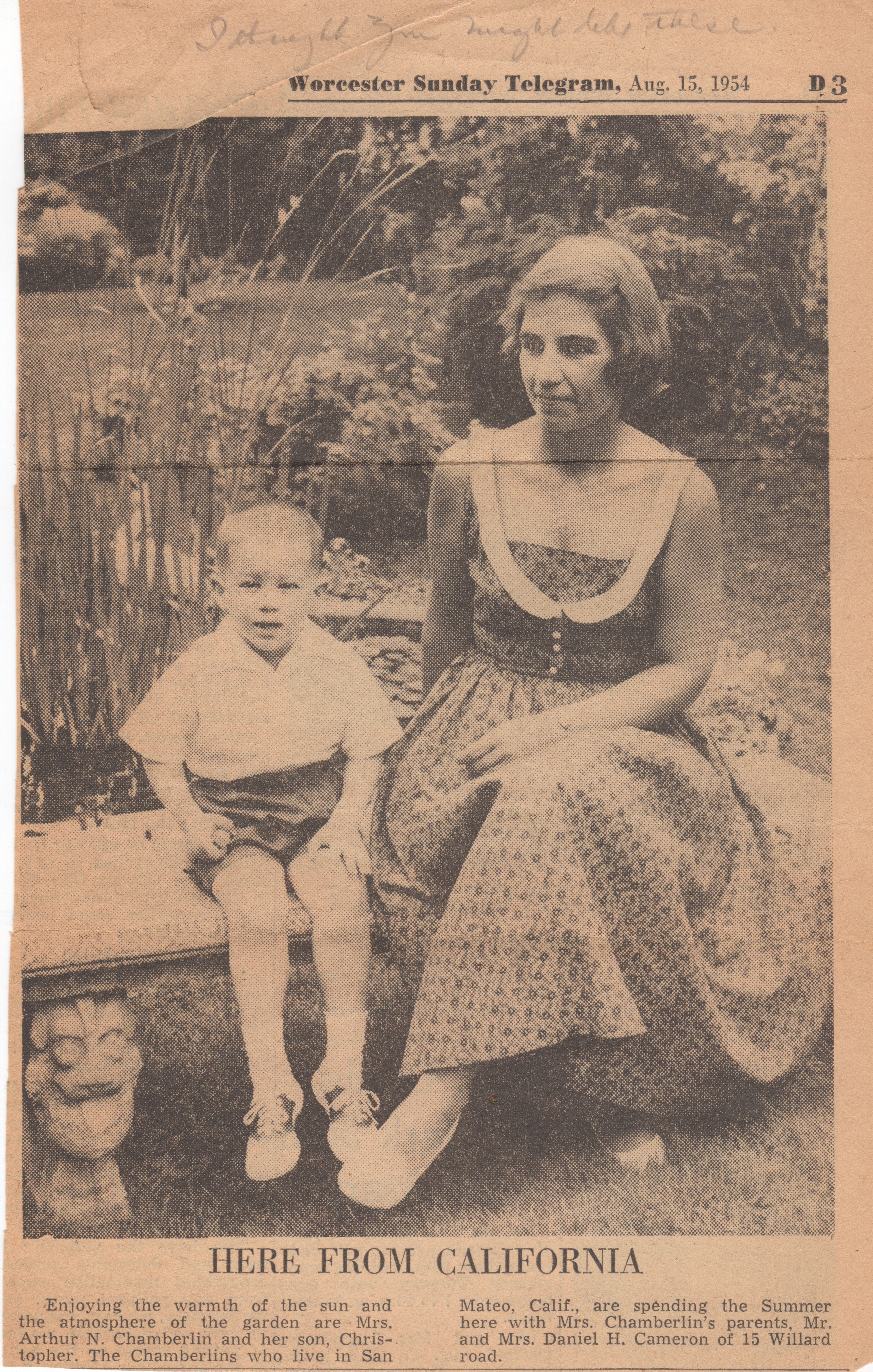
Worcester news clip

Remember the days when newspapers had a Society Page? Well, here is an example of the fun items that were included: our mother and our 3-year old brother Chris–newly shorn of his locks because his grandmother insisted–posing in our grandparents garden.

I think our mother looks pretty but a bit strained. Indeed, she was not pleased about Chris’s buzz-cut and she really did not like the resulting photo. I will refrain from further comment.

“Flow gently, sweet Afton, disturb not her dream”*

by chuckofish

As my dual personality mentioned last weekend, this is the birthday month of our grandmother Catherine Carnahan Cameron. I have searched high and low and cannot come up with the date of her birth in 1900, but it was probably this week. She also died in September, a few days after her 67th birthday.

You will recall that my great-grandparents had five children, the youngest of which was our maternal grandmother. Named after her two grandmothers, Mary Hough and Catherine Rand Carnahan, she was considered the family beauty–and by one of her sisters to be spoiled.

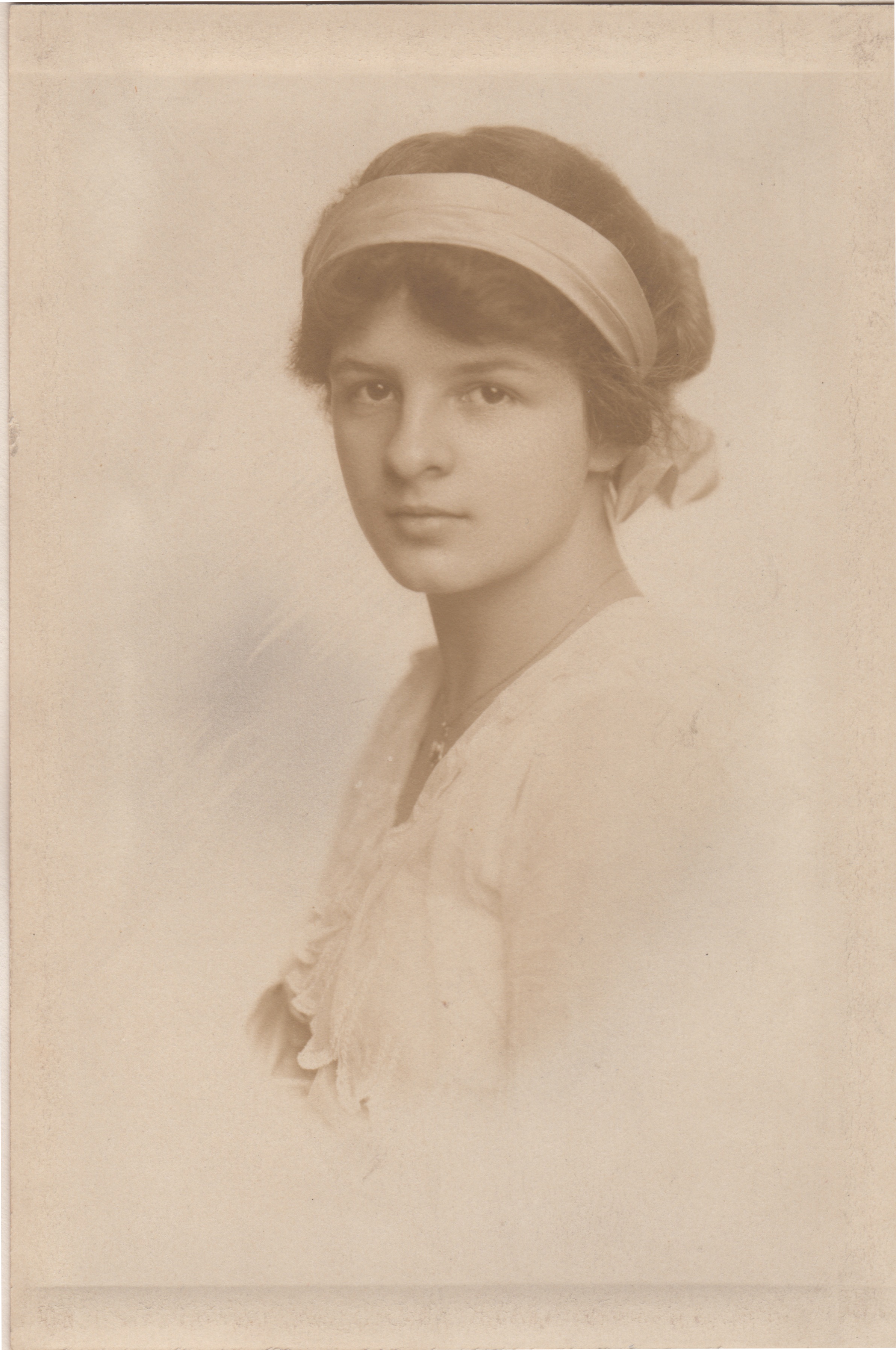
CCCameron

Catherine in 1917

My mother and her sisters always rejected this latter claim vociferously. They did not take kindly to anyone criticizing their mother.

She was brought up a strict Baptist in a deeply religious family. Her family observed the sabbath and no smoking, drinking, dancing, etc. was allowed ever. Not surprisingly, she fell in love with our wild grandfather and eloped with him in September of 1921.

She was raised to be a lady, but she was also trained to take care of herself and she believed in women’s equality. She never worked at a paid job, but she was the treasurer of every women’s club she belonged to (and she was quite a club-woman) and the first female treasurer of her large Baptist church in Worcester, MA. She also kept the books of her husband’s lumber company, and it is my belief that when Bunker faltered–as he did from time to time– she pulled the business through the hard years of the depression and WWII.

She had her own money and her own (female) stockbroker. She had a female doctor and a female lawyer. She believed, however, that a married woman with children should stay home. Today she would probably be the president of some bank. I have no idea what became of that accounting gene, but it got lost in my branch of the family!

I wish I had known my grandmother better. We always lived far away in flyover country and only got back to Massachusetts once in a blue moon. She and my grandfather only visited us once and they stayed for just a few days–our grandmother had meetings back at home she didn’t want to miss. Our mother was devoted to her and missed her a lot. On the other hand, I think she liked “doing her own thing”. She would have had a hard time living up to her mother’s high standards. I remember she told me once that her mother always wore a girdle, stockings and high heels every day. Well.

Catherine Cameron (right) in New Hampshire in 1963

Catherine Cameron (right) in New Hampshire in 1963

Catherine did her best to keep in touch via letter, but our mother was a terrible letter-writer, and it must have been frustrating for her. Frequently my grandmother would write to me, because I wrote her back. I think she meant this as a bit of a dig to our mother, hoping to encourage her to improve her habits.  It didn’t work.

She was not an outwardly warm person, but once she sent me the spoon I had admired when visiting her house and had insisted on using every morning to eat my cereal. I thought that showed that she had noticed and that she cared.

I still have that spoon–of course.

P.S. My movie pick for tonight is Ninotchka (1939) in honor of Greta Garbo whose birthday was yesterday.

Garbo with Melvyn Douglas finding love in Paris

Garbo with Melvyn Douglas finding love in Paris

If you haven’t seen Ninotchka, you are in for a treat! It’s the one where “Garbo laughs!” Directed by Ernst Lubitsch and written by Billy Wilder and Charles Brackett, it is one of the great comedies of all time. Garbo plays a stern Russian (Communist) woman sent to Paris on official business who finds herself attracted to a man who represents everything she is supposed to detest. If you have seen it, you are in for a treat, because its humor is as timeless as Garbo’s beauty.

Our mother loved this movie and raved about it to us growing up. We finally got an opportunity to see it when they were showing it at some film series at Washington University. We walked up to the campus to see it and I think our mother was a little nervous, fearing that she had built it up too much. But, of course, we all loved it too.

*Robert Burns, Sweet Afton