dual personalities

Category: genealogy

“Teach me some melodious sonnet”*

by chuckofish

Unknown.jpeg

Lottie is sure styling in her fall ensemble complete with jean jacket…

Another lovely fall weekend has flown by. There are a lot of leaves on the ground now, but even more are still on the trees. We will be raking/vacuuming leaves ’til Christmas around here.

Over the weekend the OM and I hung my latest eBay purchase, about which I am very pleased. I like to peruse eBay, but I have found that most things are overpriced compared to what you can find at estate sales and at auction houses. Nevertheless, I continue to search, because I enjoy it and because sometimes something worthwhile turns up.

Recently I found a mirror with églomisé reverse painted panel, purported to be a Bucks County “Federal mirror with historic history. Originally owned by Ulysses S. Grant’s Great Aunt & Uncle, Benjamin Hough and Hannah (Simpson) Hough.” The seller had all the genealogical info. 

Screen Shot 2019-11-18 at 3.37.43 PM.png

The mirror even has a brass plate dated August 24, 1791, the day Benjamin and Hannah married.

Well, hold the phone, Hannah is our great-great-great-great grandmother!

The price was too high so I put the mirror on my watch list and waited. Soon the seller made me an offer which I thought was reasonable and I bought it! We had a nice email exchange; she was happy to see it return to its family. She packed it well and it came to me unscathed.

IMG_4088.JPG

Well, I am pretty excited to have this piece of Hough family decorative art back in my family!

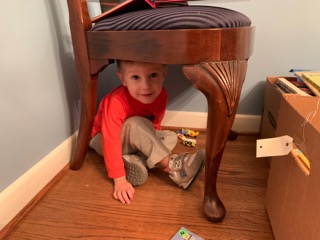
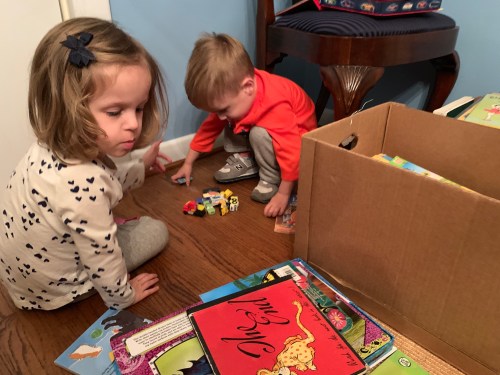
The boy and the wee babes came over for spaghetti Sunday night (daughter #3 had work to do on her side-hustle/Etsy shop).  The wee laddie was in a bad mood when he arrived (he had not been allowed to bring his steam shovel) and he proceeded to act badly, which finally landed him for the first time in Mamu’s Time Out. He got over it.

IMG_4185.jpeg

This was not his time out chair! He was just keeping those micro cars from Lottie…

The babes are getting to be such little people with distinct personalities now that they are approaching three years of age! They really are nutballs.

IMG_4177 3.jpegWell, here’s a great old hymn for Tuesday. We sing it in the Episcopal Church but with an organ accompaniment. However, I do like this rendition.

“Come Thou Fount of Every Blessing” is a hymn written by the 18th century pastor and hymnnodist Robert Robinson in 1757, but some things never get old.

Have a great week!


“Step down off your high horse, mister”*

by chuckofish

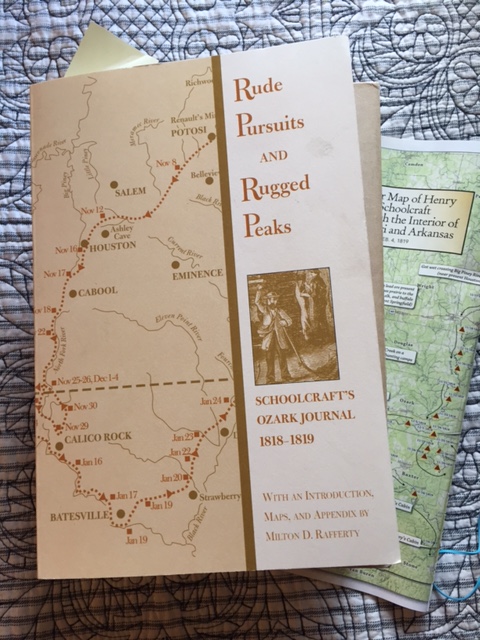
On Wednesday my copy of Rude Pursuits and Rugged Peaks, Schoolcraft’s Ozark Journal 1818-1819 arrived.

IMG_3877.JPG

Included in this edition, besides Schoolcraft’s journal of his and Levi Pettibone’s expedition from Potosi, Missouri, to what is now Springfield by way of Arkansas, are an introduction, maps and appendix by Milton D. Rafferty. Rafferty was a professor and head of the Department of Geography, Geology and Planning at Missouri State University in Springfield. These additions are very helpful.

I will read the whole thing, but I know you are all wondering what I found out about the Matneys, so I will tell you.

Screen Shot 2019-02-14 at 12.54.51 PM.png

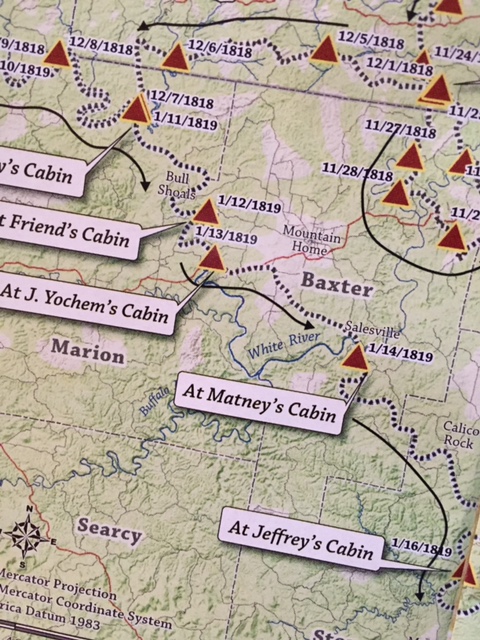
Schoolcraft and his partner arrived at dusk at their cabin, “wet and chilly” from swimming across the White River, on January 14.

Compelled, by the non-arrival of our canoe, to spend the day at this spot, I determined to improve the time by a ramble through the adjacent country, and to seek that amusement in the examination of rocks, and trees, and mountain-scenery, which was neither to be found in conversation with the inmates of the house, nor in any other way.

How rude.

With such an assemblage of interesting objects around me, I sauntered out to take a nearer view of the face of nature, and spent the day along the shores of the river, in the contiguous forest, or on the naked peaks of the neighboring hills.

After spending the day taking notes on the flora, fauna and mineral deposits in the area, Schoolcraft returned to the Matney Cabin to find that the hunters had not yet arrived with their canoe, but finally made their appearance at dusk…

accompanied by several neighbors and friends in their canoes, who also came down to trade, making a party of twelve or fourteen in all. Whisky soon began to circulate freely, and by the time they had unloaded their canoes, we began plainly to discover that a scene of riot and drinking was to follow. Of all this, we were destined to be unwilling witnesses; for as there was but one house, and that a very small one, necessity compelled us to pass the night together; but sleep was not to be obtained. Every mouth, hand, and foot, were in motion. Some drank, some sang, some danced, a considerable proportion attempted all three together, and a scene of undistinguishable bawling and riot ensued. An occasional quarrel gave variety to the scene, and now and then, one drunker than the rest, fell sprawling upon the floor, and for a while remained quiet. We alone remained listeners to this grand exhibition of human noises, beastly intoxication, and mental and physical nastiness. We did not lie down to sleep, for that was dangerous. Thus the night rolled heavily on, and as soon as light could be discerned in the morning we joyfully embarked in our canoe, happy in having escaped bodily disfiguration, and leaving such as could yet stand, vociferating with all their might like some delirious man upon his dying bed, who makes one desperate effort to rise, and then falls back in death.

What a picture he paints! Clearly he was not amused by their behavior, but I surely was, reading about it. Prof. Rafferty explains Schoolcraft’s sometimes disdainful appraisal of frontier life by asking us to consider his youth (he was only 25) and that he was “freshly indoctrinated with a church upbringing, including a strong emphasis on Christian dutifulness and temperance…”

I have to say, I can relate to young Schoolcraft. I remember going on a school-sanctioned float-trip back in high school–on some river in Missouri–where everyone got drunk, including the two male, gym-teacher chaperones! One other girl and I stayed awake most of the night watching out for our classmates and making sure they didn’t drown while relieving themselves. (Seriously) It was not fun, but nobody died or anything.

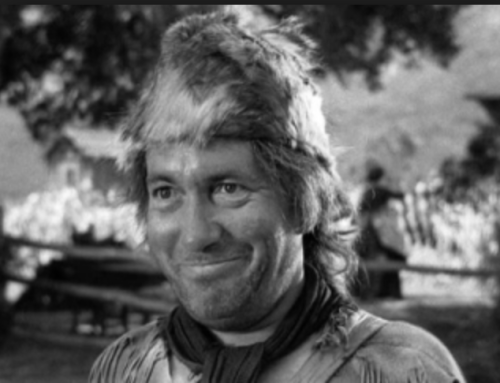
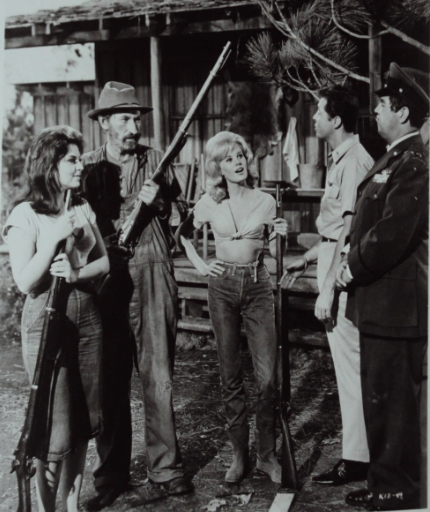
Matney and his companions remind me of Mac MacPherson, the wild Scotsman played by Wilfred Lawson in Alleghany Uprising (1939).

Screen Shot 2019-02-14 at 9.27.46 AM.png

Another literary evocation of this type is Worth Luckett in The Trees by Conrad Richter, who provides for his family by hunting wild animals for food and trading their pelts for other commodities they need. When Worth notices that the wild game is leaving the woods near their settlement in Pennsylvania, he convinces his wife and family to move where the animal population is more plentiful–further west.

These men were the hardiest of woodsmen, cut from the same cloth as Daniel Boone and his sons, who settled along the interior streams, hunting and trading. Schoolcraft “admired their stoic courage and tenacity, but could not conceal his disdain for their lack of education and rude lifestyle. He noted that men and women alike could talk only of bears, hunting, and the rude pursuits and coarse enjoyments of hunters.” (Rafferty) He had to admit they were hospitable.

I have always been oddly drawn to this type and I guess now I know why. It runs in my blood. Come the apocalypse, I want to be on their team. I am pretty sure this is how my great-great grandfather John Simpson Hough felt. He went west to get away from Philadelphia and all his well-meaning, upstanding Quaker relatives. He was smitten with all the old rough types he met in Missouri and Kansas and in his travels westward: Uncle Dick Wooten, Seth Hays, Kit Carson. I am sure he would have liked his freedom-loving grandfather-in-law, Mr. Matney.

Funnily enough, I have just been reading about Conrad Richter and had already resolved to re-read The Trees. Now I will for sure.

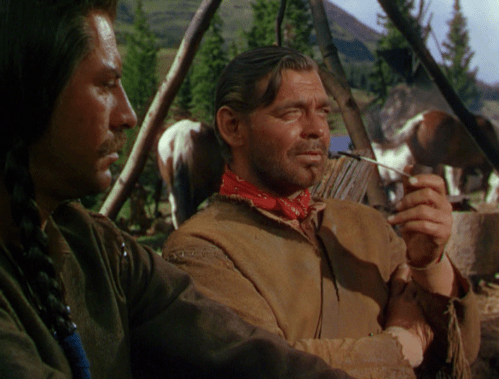
And this weekend I’ll find something to watch where the men wear buckskin suits.

Screen Shot 2019-02-14 at 8.50.05 PM.png

You betcha.

*Davy Crockett (John Wayne) in The Alamo (1960)

“Curiosity is what separates us from the cabbages.”*

by chuckofish

In case you didn’t know, a lot of things happened on February 13.

1542: Catherine Howard, fifth wife of Henry VIII, was executed for adultery.

1689: William and Mary, were proclaimed co-rulers of England.

1945: RAF bombers were dispatched to Dresden, Germany to attack the city with a massive aerial bombardment.

1955: Israel obtained four of the seven Dead Sea Scrolls.

1990: An agreement was reached on a two-stage plan to reunite Germany.

Yes, these are but a few of the interesting historical things you can find out more about if you are so inclined.

It is also the birthday of Chuck Yeager (b. 1923)– WWII flying ace and test pilot who famously broke the sound barrier.

Screen Shot 2019-02-12 at 5.40.45 PM

Sam Shepard played him in The Right Stuff (1983). Yeager wrote an autobiography called Yeager: An Autobiography, which I think I will read. I will certainly toast him tonight.

“You do what you can for as long as you can, and when you finally can’t, you do the next best thing. You back up, but you don’t give up.”

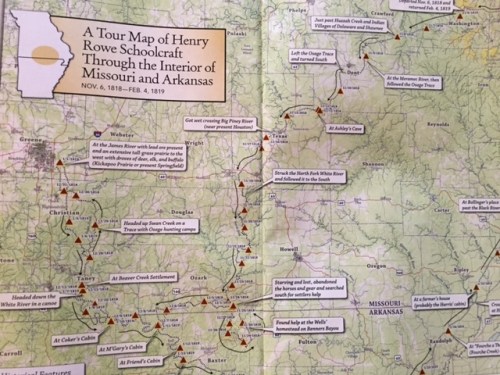
On a personal note regarding things in the history genre: the other day, while perusing the latest issue of Missouri Conservationist, I came across an interesting article about Henry Rowe Schoolcraft, who made an amazing 900-mile trek 200 years ago into what is now southern Missouri and northern Arkansas to learn more about the lead mining potential in the area. This was Osage country then and pretty wild. There were not a lot of white settlers around, just scattered cabins. It was easy to get lost and he and his partner did, several times.

IMG_3874.JPG

Fascinating in itself, but, hey, look:

FullSizeRender.jpg

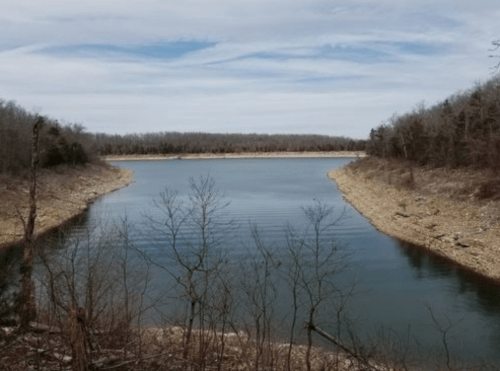
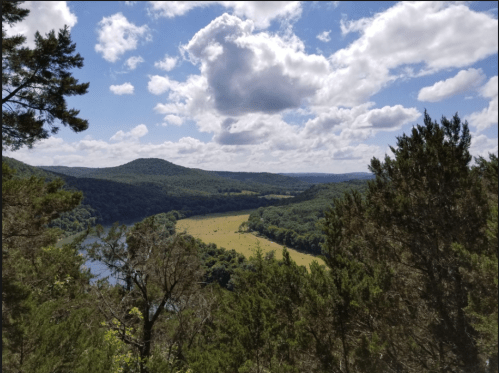
Matney’s Cabin! This is about the time our own Matneys were in Arkansas, having journeyed from western Virginia. (Our great-great-great grandmother Susanna Matney was, in fact, born in Arkansas in 1818!) Was this the cabin of William Matney, our great-great-great-great grandfather? Well, this got me started looking further into it and there is a Matney Knob in Arkansas on the White River that today features a beautiful Ozark Highlands Trail.

Screen Shot 2019-02-12 at 8.47.33 PM.png

I also ordered Schoolcraft’s book, so I shall see what he had to say about Matney’s Cabin. (Probably not much. It is a travel journal, after all.)

Screen Shot 2019-02-12 at 8.42.43 PM.png

The world is more than we know.

And this was adorable: the wee laddie on Instagram…

Screen Shot 2019-02-12 at 9.01.54 PM.png

*David McCullough

Guiding light

by chuckofish

How about a little Mumford & Sons to get you started this morning?

I meant to mention earlier that Mary Oliver, the poet, died last week. Known for her “secular psalms,” she has been dubbed by some “the unofficial poet laureate” of the Unitarian Universalist denomination. Well, then. I liked her anyway.

Song of the Builders

On a summer morning
I sat down
on a hillside
to think about God –
a worthy pastime.
Near me, I saw
a single cricket;
it was moving the grains of the hillside
this way and that way.
How great was its energy,
how humble its effort.
Let us hope
it will always be like this,
each of us going on
in our inexplicable ways
building the universe.

You can read about her here and here.

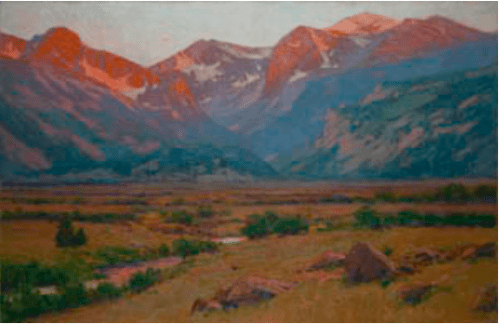
I will also note that on this day in 1848 James W. Marshall found gold at Sutter’s Mill near Sacramento. Our great-great-great grandfather, Silas Hough, went west the following year to seek his fortune, but died of cholera just east of the Rocky Mountains.

Screen Shot 2019-01-23 at 12.27.49 PM.pngHis 16-year old son, our great-great grandfather John Simpson Hough who had accompanied him, went home to Philadelphia. He didn’t stay long though. He had seen the Rocky Mountains and there was no holding him back.

And, hey, this was an interesting interview. (I had never heard of this book. I may have to read it.)

When people talk about poverty, there are different kinds. There is a poverty of status in our country where you have all the food and water you need but you think other people are doing better all around you. You can also have a poverty of control. You feel you can’t choose how you spend your day, when to get up. We don’t talk about those kinds of poverty a lot.

Food for thought.

(The painting is Sunrise on the Mountains at the Head of Moraine Park, Near Estes Park, about 1920, by Charles Partridge Adams, CU Art Museum, University of Colorado Boulder

“One clover, and a bee, And revery”*

by chuckofish

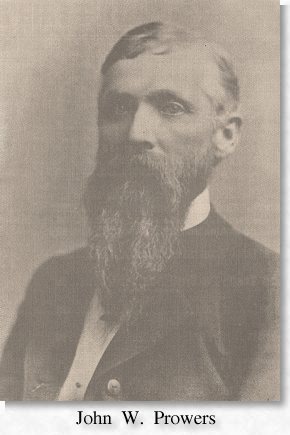
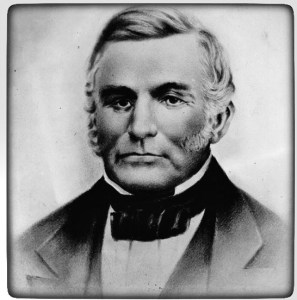
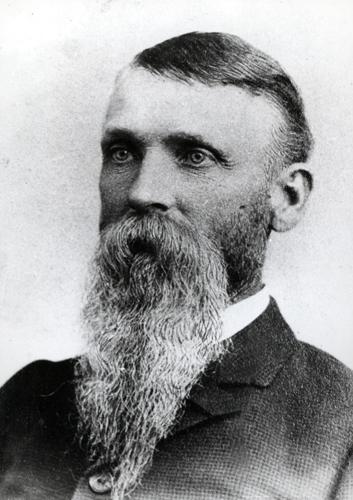
Yesterday was the birthday of one of our favorite ancestors, John Wesley Prowers,

bent1881_jwprowers.jpgthe older brother of our great-great grandmother, Mary Prowers Hough. I toasted him and we watched Red River (1948) in his honor.

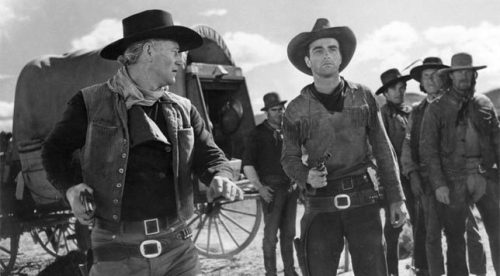
Red-River-1948-644x356.jpg

A more appropriate movie would probably be The Rare Breed (1966) with James Stewart, which is a fictionalized account of the introduction of the Hereford breed in America, but I didn’t feel like it. Red River is a much better movie.

It is, indeed, a fine, fine movie. The first hour is really great. It wanders a bit after that–especially when John Wayne is off stage–and my mind did too. Watching this time, I was struck by several things.

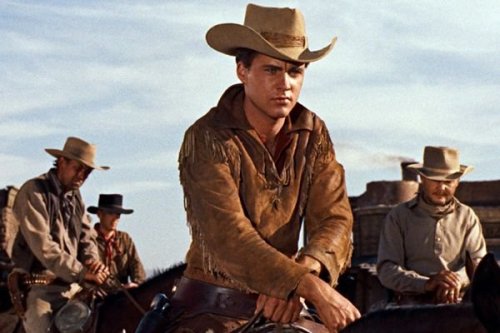
1. Ricky Nelson In Rio Bravo a few years later is really channeling Montgomery Clift hard. He even rubs his nose the same way.

tumblr_mapwe5urzf1ryhww8o1_1280.jpg

2.Walter Brennan plays a character named Nadine Groot. I wonder if the character Groot in Guardians of the Galaxy (2014) is named after him. If not, he should be.

guardians-of-the-galaxy-groot-13.jpg

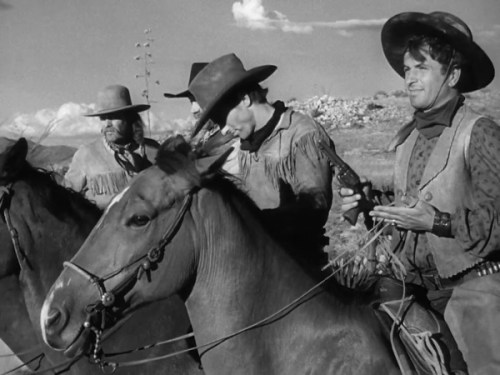
3. Young Noah Beery reminded me a lot of Nathan Fillion.

600px-RR-NBj-SAA-01.jpg

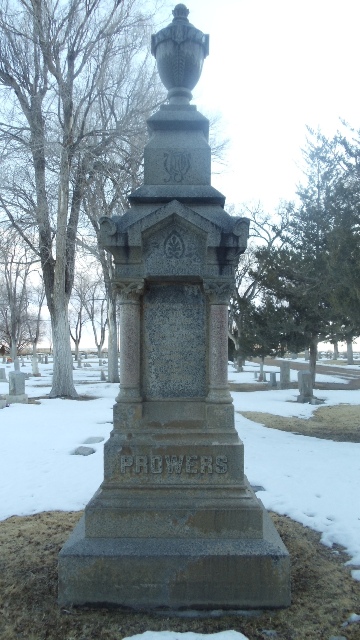
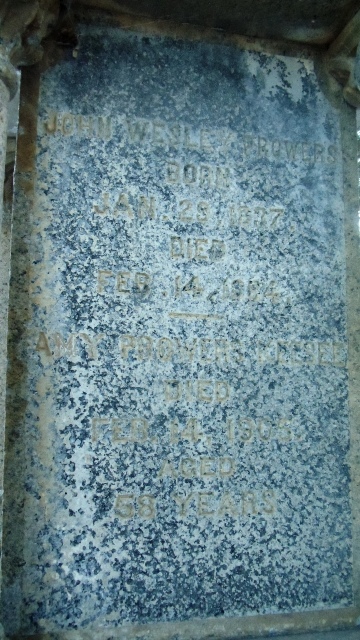
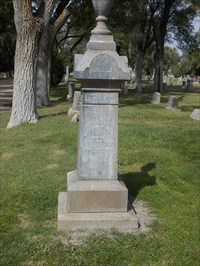
Anyway, John Prowers, a bonafide cattle king, died of cancer at age 46 in 1884. He was laid to rest in Las Animas Cemetery in Bent County, Colorado–not on the lone prairie, but in his family plot.54629765_132759232704.jpgProwers grave.jpgWilliam Bent is buried there as well.455abc96-fdf9-4846-b5bf-a4fbd9ed1111_d.JPGMaybe I will make it to Las Animas some day. It is kind of a godforsaken place, but that is not in itself unappealing.

“O bury me not on the lone prairie.”
These words came low and mournfully
From the pallid lips of the youth who lay
On his dying bed at the close of day

He had wasted and pined ’til o’er his brow
Death’s shades were slowly gathering now
He thought of home and loved ones nigh
As the cowboys gathered to see him die

“O bury me not on the lone prairie
Where coyotes howl and the wind blows free
In a narrow grave just six by three—
O bury me not on the lone prairie”

“It matters not, I’ve been told
Where the body lies when the heart grows cold
Yet grant, o grant, this wish to me
O bury me not on the lone prairie.”

“I’ve always wished to be laid when I died
In a little churchyard on the green hillside
By my father’s grave, there let me be
O bury me not on the lone prairie.”

“I wish to lie where a mother’s prayer
And a sister’s tear will mingle there
Where friends can come and weep o’er me
O bury me not on the lone prairie.”

I always liked this song, don’t you? The theme is played throughout Red River and a lot of other great westerns too. Think Stagecoach (1939).

*Emily Dickinson

“To make a prairie it takes a clover and one bee,
One clover, and a bee,
And revery.
The revery alone will do,
If bees are few.”

History lesson Friday

by chuckofish

Today is the 179th anniversary of a dark day in Missouri history–the day Gov. Lilburn Boggs

lilburn

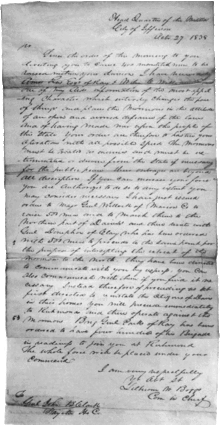
issued Missouri Executive Order 44, also known as the Extermination Order. This executive order, issued on October 27, 1838, claimed that Latter-day Saints had committed open and avowed defiance of the law and had made war upon the people of Missouri. Governor Boggs directed that “the Mormons must be treated as enemies, and must be exterminated or driven from the State if necessary for the public peace—their outrages are beyond all description.”

220px-Extermination_order.gif

Executive Order 44 was issued during the 1838 Mormon War,  which was caused by friction between the Mormons and their neighbors due to the economic and electoral growth of the Latter-day Saint community and Joseph Smith’s vocal opposition to slavery. In other words, the Mormons were too many and too affluent, and worst of all, they sided with the abolitionists.

The order was never rescinded–not until Missouri Governor Kit Bond did so in 1976–a mere 137 years after it was originally signed. Basically, for all that time, it was legal to murder Mormons! Bond expressed “on behalf of all Missourians our deep regret for the injustice and undue suffering which was caused by the 1838 order…” I should say so.

And now for our family connection…

Lilburn Wycliffe Boggs was born in 1797 in Lexington, Kentucky.  Boggs married his first wife Julia Ann Bent, a sister of the Bent brothers of “Bent’s Fort” fame, in 1816 in St. Louis.  They had two children, Angus and Henry. After she died at an early age, he married Panthea Grant Boone, granddaughter of Daniel Boone, in 1823 in Callaway County, Missouri. They had many children, the oldest being Thomas, born in 1824 in Bates County.

In 1840 Thomas Boggs went to what would eventually become the Colorado Territory to work with his father’s old in-laws, the Bent Brothers, at Bent’s Old Fort along the Arkansas River. In 1862, he settled along the Purgatoire (Picketwire) River south of present-day Las Animas and began a settlement known as Boggsville, which was the first white non-military outpost in that wild country.

You will recall that the brother of our great-great-grandmother, Mary Prowers Hough–John Wesley Prowers–

JW Prowers.jpeg

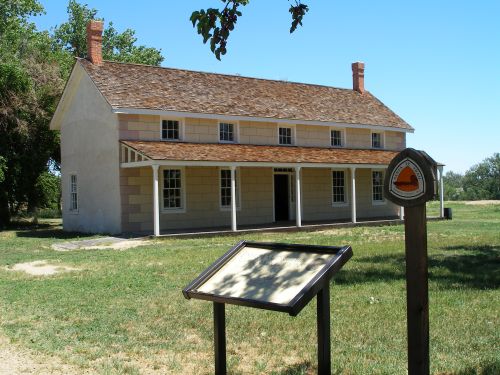
also lived in Boggsville with his family, and for awhile the Houghs lived there as well.

OLYMPUS DIGITAL CAMERA

The restored Prowers house in Boggsville.

Boggs raised sheep and Prowers raised cattle, separated by the Picketwire River in friendly fashion. Both ventures flourished on the land surrounding Boggsville during the 1860s and 1870s, and Boggsville thrived, serving as as a center of trade, agriculture, education and culture. It soon became an important stop on the Santa Fe Trail. In 1870, after the creation of Bent County, Boggsville became the county seat of Bent County. At it’s pinnacle, Boggsville boasted about 20 buildings, the first schoolhouse in Bent County, a stage stop and trading house. It was a hub of activity until 1873, when the Kansas Pacific Railroad established the town of Las Animas two miles north.

Boggsville was a very diverse settlement–in fact, our great-great-grandmother was the only “anglo” woman there in those early years. But even so, the name of the town may have turned off Mormons traveling west. Who could blame them?

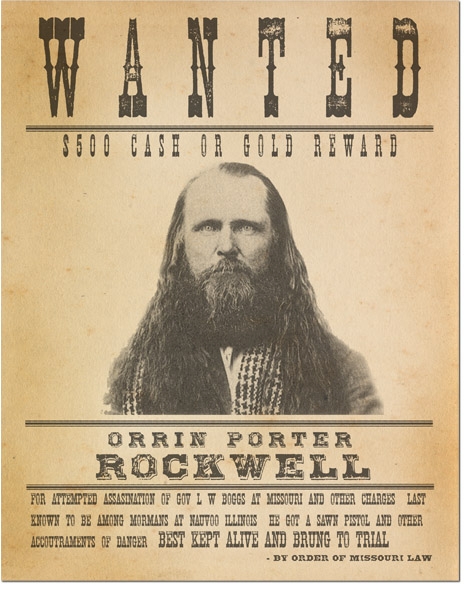
Interesting note (this is how my mind works): On May 6, 1842, Gov. Boggs was shot in the head through a window at his home. Boggs survived, but Mormons came under immediate suspicion. Orrin Porter Rockwell of the Mormon Danites was accused of the alleged assassination attempt.

11x14+FINAL+PORTER+ROCKWELL.jpg

Careful readers in the Longmire oeuvre will remember that Orrin Porter Rockwell is a character in A Serpent’s Tooth.

Have a great weekend–read some history!

“Isn’t it queer: there are only two or three human stories, and they go on repeating themselves as fiercely as if they had never happened before; like the larks in this country, that have been singing the same five notes over for thousands of years.”

Willa Cather, O Pioneers!

“Train up a child in the way he should go, Even when he is old he will not depart from it.”

by chuckofish

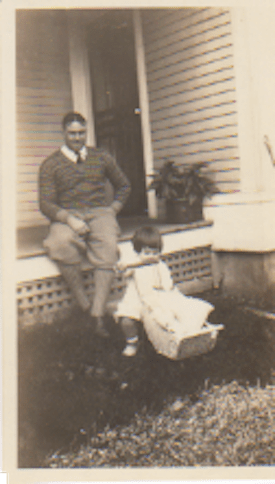
Tomorrow is our maternal grandfather’s birthday (Bunker Hill Day) and Sunday is Father’s Day. Here he is in c. 1929 with our mother.

1928.png

And here he is around 1964 again with our mother and her sister Susanne.

summer 64 1.png

Bunker (1900–1968) was quite a character (as I’ve written before) and our mother thought the world of him. He was a great sportsman and outdoorsman, a devoted fly-fisherman. He even went deep sea fishing at least once. He was a competitive table tennis player. It’s a good thing he never took up golf, because he would no doubt have become obsessed with that. The same goes for bridge. He loved baseball and Ted Williams and the Red Sox.

He took up furniture-making late in life as a hobby and turned out reproductions of antiques that were like works of art. He took classes and studied how to do it and read up on it and practiced and drew plans. Although not an academic per se, he was a student all is life. Our mother took after her father in that way.

Bunker was a manly man who didn’t have sons. C’est la vie.

So a toast to Bunker on his birthday and to all Fathers who do their best on Sunday. The boy will be celebrating his first Father’s Day–pretty exciting.

WRC dad.jpg

Enjoy your weekend–keep cool!

ebed676f351b918edef00f36e213475a.jpg

* Proverbs 22:6

Throwback Thursday

by chuckofish

Katie & Sarah 1959.jpeg

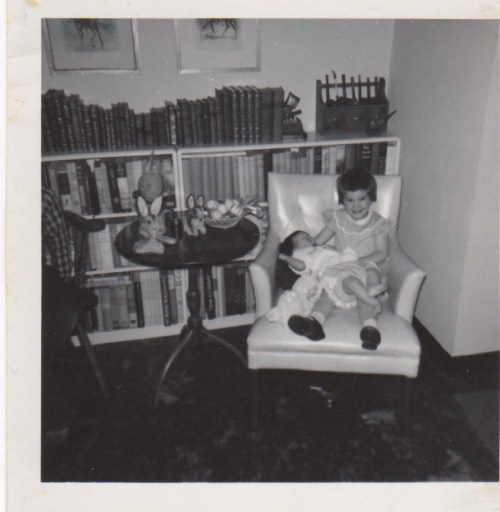
Here is a three-year old DP and her squalling 4-month old little DP circa  Easter 1959. You can tell it’s Easter by the the Steiff bunnies and  eggs on the table.

Old snapshots are great because of all the familiar stuff you see in the background–in this case, of our small two-bedroom apartment–the old books, the pipes on the pipe rack, the bookends, the table, the framed Edouard Detaille etchings.

Qu’est-ce que tu sais?

Throwback Thursday

by chuckofish

Mary CC.jpeg

This picture of our mother circa 1930 at “The Farm” in New Hampshire should bring a smile to your face.

And we could all use that, right?

“I wish I could leave you certain of the images in my mind, because they are so beautiful that I hate to think they will be extinguished when I am. Well, but again, this life has its own mortal loveliness. And memory is not strictly mortal in its nature, either. It is a strange thing, after all, to be able to return to a moment, when it can hardly be said to have any reality at all, even in its passing. A moment is such a slight thing. I mean, that its abiding is a most gracious reprieve.”

―Marilynne Robinson, Gilead 

Postcards from Kansas City

by chuckofish

“History is that certainty produced where the imperfections of memory meet the inadequacies of documentation.”–Julian Barnes, The Sense of an Ending

Everything may be up to date in Kansas City, but as far as I can tell, they are not really very interested in their history. This is a shame.
eef5bb17c3c40f7ec87425acc0af1946

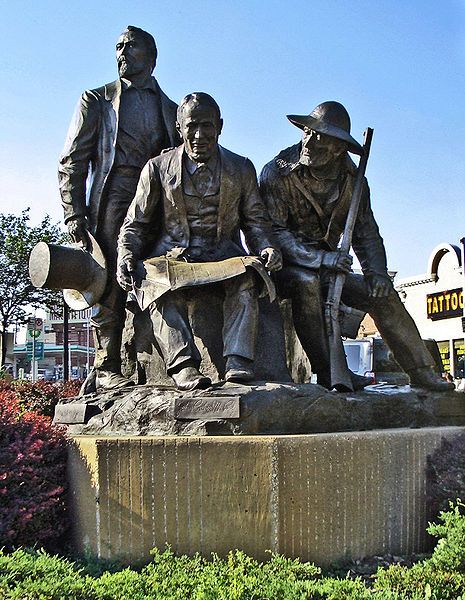
Majors, McCoy and Jim Bridger

We went to Westport hoping to get a sense of where some of my pioneer ancestors lived and made a home. But there is barely a trace left. Even the river has moved!

We did find the Union Cemetery where basically all the founding city Fathers (and Mothers) are buried: John Calvin McCoy, Virginia Crick McCoy, Alexander Majors, William Miles Chick, Nelsons,  McGees, George Caleb Bingham, and my great-great-great grandmother Susan Prowers Vogel who came with her parents and siblings from Virginia in the 1830s.
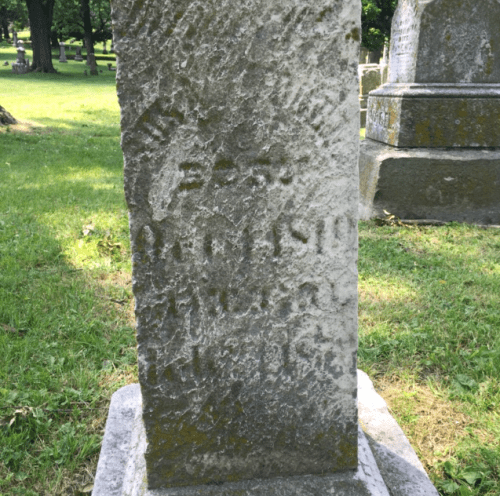
Screen Shot 2016-06-13 at 11.35.04 AM

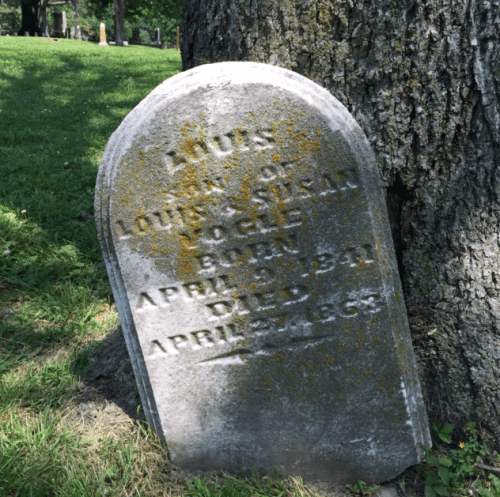
Also there is her second husband Louis Vogel and one son, Louis Vogel, Jr.
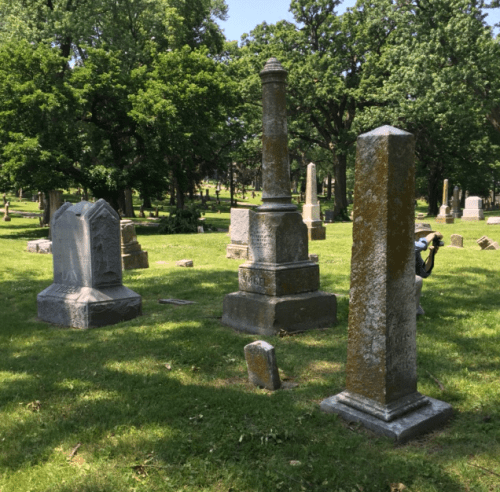
Screen Shot 2016-06-13 at 11.34.25 AM

Screen Shot 2016-06-13 at 11.35.21 AM

The cemetery is sadly neglected and in need of a lot of work. It is only a hop, skip and a jump away from the very fancy and well maintained National WWI Museum and the Crown Center. Boy, if I won the lottery, I know what I would do!

We went to the Westport Historical Society which is housed in one of only two surviving antebellum houses in the area.
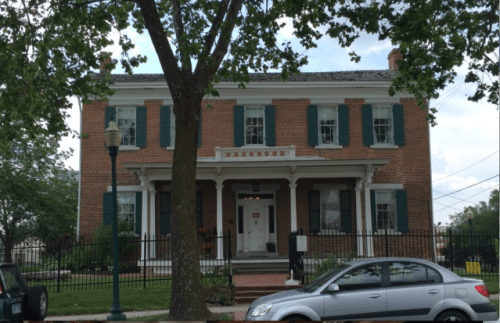
Screen Shot 2016-06-13 at 11.45.52 AM

It is a nicely kept house filled with period furniture.

Screen Shot 2016-06-13 at 11.46.12 AM

The docent gave a tour aimed at the typical tourist about pretentious slave-owning stereotypes which I felt probably had no basis in reality. Indeed, she and the other woman there could not offer me much real information. They showed me their library and offered the use of it, but I didn’t have the time on this trip to take them up on their offer.

They couldn’t really shed any light on my questions about what had happened to the “landing”–the natural rock shelf where the steamboats could land.
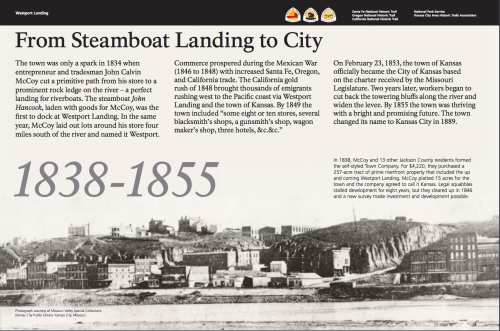
Screen Shot 2016-06-13 at 11.29.05 AM

Where, in fact, did the river go? Westport today is a hipster neighborhood surrounded by more buildings. There is no river in sight. What happened?! Well, they said, the landing is under tons of dirt and the river had moved. They didn’t know when or how exactly. There might be a rail yard there now.

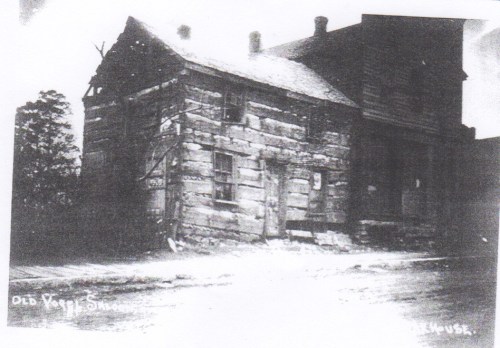
They had heard of Louis Vogel and they had a picture of his tavern, taken shortly before it was torn down at the turn of the century.
Vogel Saloon 2

They had never heard of John Prowers (my great-great-great grandfather), the man who had actually built the house himself before he died suddenly in 1839. Vogel married his widow, Susan Matney Prowers, and turned the two-story oak log house into “Vogel’s Saloon,” where in 1846 Francis Parkman received word of a caravan heading north and west out of Leavenworth, Kansas. Parkman decided to take the journey westward and The Oregon Trail is the result of that trip.

I explained what I could about the Prowers, their two children–John who grew up to become a cattle baron and have a county in Colorado named after him and Mary who married the cousin of U.S. Grant. They asked me to send them what information I had and I will do that, lest they all be forgotten as so many of the early pioneers of Kansas City have been forgotten. Sad to say, if it weren’t for a couple of well-meaning volunteer ladies in pearls and Pappagallos, no one would pay any attention to these things at all. One wonders who will man the Westport Historical Society a generation from now.

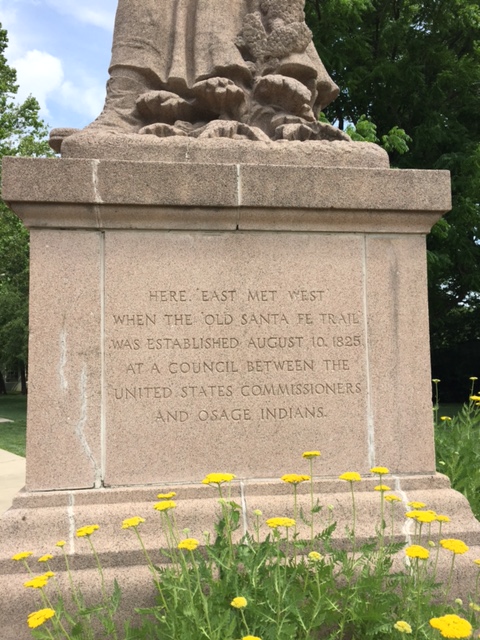
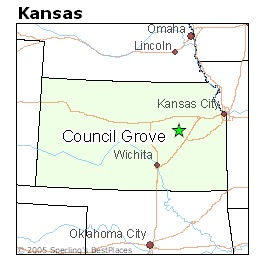
We headed over to Council Grove, Kansas on Saturday morning.
councilgrove_ks

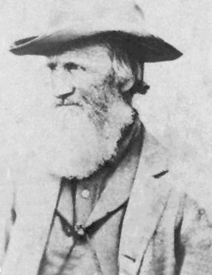
This town was one of the last stops on the Santa Fe Trail heading southwest. The first American settler was Seth Millington Hays, who came to the area in 1847 to trade with the Kaw tribe. Hays was a great grandson of Daniel Boone.
SethHays2

My great-great grandfather John Simpson Hough worked with Hays as an Indian trader between 1850 and 1855 and again for awhile after the Civil War by which time he was married and had two children.

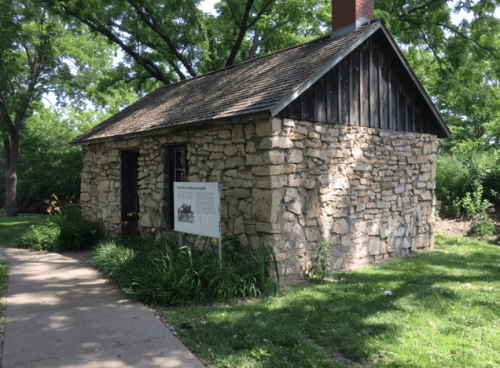
Council Grove today is a town of around 2,000 people. There are 13 sites listed on the National Register of Historic Places. One is the Post Office Oak.

Screen Shot 2016-06-13 at 12.24.57 PM

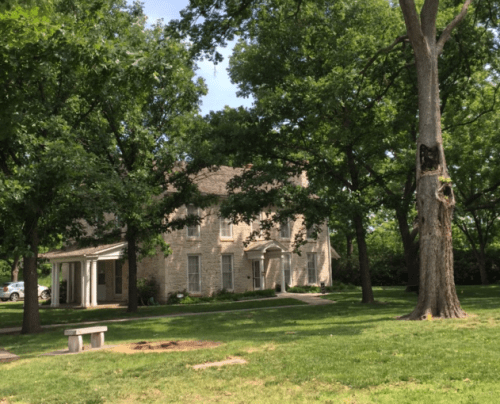
Travelers left their mail in this ancient tree to be picked up by others going in the right direction. There is the Kaw Mission School.
Screen Shot 2016-06-13 at 12.25.09 PM

Screen Shot 2016-06-13 at 12.25.21 PM

and the Farmers and Drovers Bank.

Farmers_and_Drovers_Bank_and_Indicator_Building_(8217689776)

We ate breakfast at the Hays House,

IMG_1955

which is said to be the oldest continuously operating restaurant west of the Mississippi River.

It is a nice, well kept little town. Clearly its residents take pride in this historic place.
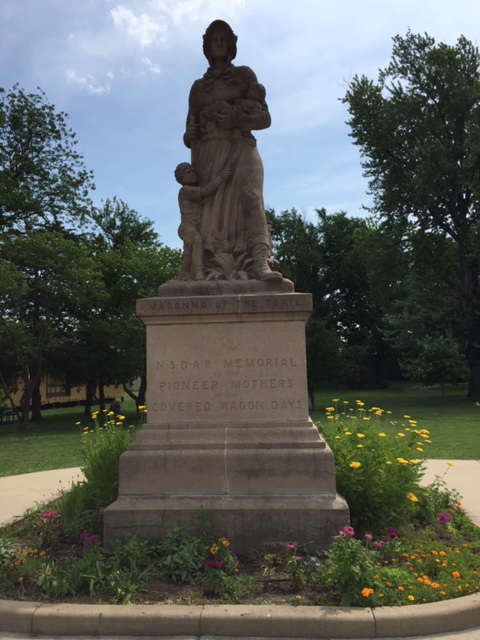
IMG_1959

IMG_1960

There is a part of me that would like nothing more than to retire to Council Grove in the lovely Flint Hills of Kansas and disappear under the radar.

You know what I mean?

“History overflows time. Love overflows the allowance of the world. All the vessels overflow, and no end or limit stays put. Every shakable thing has got to be shaken. In a sense, nothing that was ever lost in Port William ever has been replaced. In another sense, nothing is ever lost, and we are compacted together forever, even by our failures, our regrets, and our longings.”
― Wendell Berry, Jayber Crow