dual personalities

Category: Art

“You come with me, we hunt buffalo, get drunk together! Hallelujah! Hallelujah!”*

by chuckofish

This November, we celebrate Native American Heritage Month, a time to honor the history, culture, and traditions of Native Americans past and present.

On September 28, 1915, President Calvin Coolidge issued a proclamation that resulted in the first Native American heritage celebration in the United States; he declared the second Saturday of each May as American Indian Day. In 1990, President George H. W. Bush approved a joint resolution designating November as National American Indian Heritage Month.

We will try to be more respectful in our celebrations this month than might be suggested from our entertaining, but culturally appropriative, singing of “Ugga Wugga Wigwam” to the wee babes the other night.

Perhaps we will watch the final season of Longmire, which premiers next Friday.

But I doubt it. Since reading all the books last summer, I am loathe to watch the show, because in my opinion, the video version and its ridiculous story lines do not compare positively to the books. I mean, there is no torture of people (Indian or white) in the books (see trailer)! There is no evil Indian bad guy in the books! And I’m sorry, Walt is a lot smarter in the books! Furthermore, Walt has a good relationship with the Cheyenne in the books, not the relationship fraught with drama portrayed on the tv series. All the racial unrest on the show is inserted to heighten the drama and that drives me crazy. Ugh.

We’ll have to think of something to do to celebrate Native American Heritage Month, such as visit one of the various American Indian sites throughout our state. There are several–for instance, I did not know there is a restored and authentically finished 1790-1815 French and Indian trading post and village, at Fort Charrette Village and Museum, 10 minutes east of Washington, Missouri. The fort includes five log houses, one of which is believed to be the oldest log house west of the Mississippi River. All are furnished with 1700s American antiques. There is even a winery nearby!

In the meantime, here is something beautiful and perceptive from Willa Cather:

“It was the Indian manner to vanish into the landscape, not to stand out against it. The Hopi villages that were set upon rock mesas were made to look like the rock on which they sat, were imperceptible at a distance. …

In the working of silver or drilling of turquoise the Indians had exhaustless patience; upon their blankets and belts and ceremonial robes they lavished their skill and pains. But their conception of decoration did not extend to the landscape. They seemed to have none of the European’s desire to “master” nature, to arrange and re-create. They spent their ingenuity in the other direction; in accommodating themselves to the scene in which they found themselves. This was not so much from indolence, the Bishop thought, as from an inherited caution and respect. It was as if the great country were asleep, and they wished to carry on their lives without awakening it; or as if the spirits of earth and air and water were things not to antagonize and arouse. When they hunted, it was with the same discretion; an Indian hunt was never a slaughter. They ravaged neither the rivers nor the forest, and if they irrigated, they took as little water as would serve their needs. The land and all that it bore they treated with consideration; not attempting to improve it, they never desecrated it.”

Death Comes for the Archbishop

Screen Shot 2017-11-08 at 11.31.28 AM.png

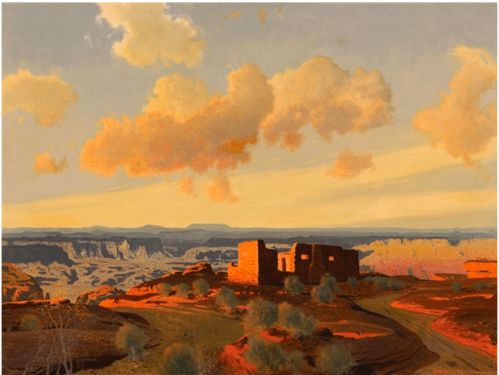
Ruins of Hopi Trading Post by James Swinnerton (1875–1974)
43e5bf44ad0298f0d8a498ee3f3c7b64.jpg

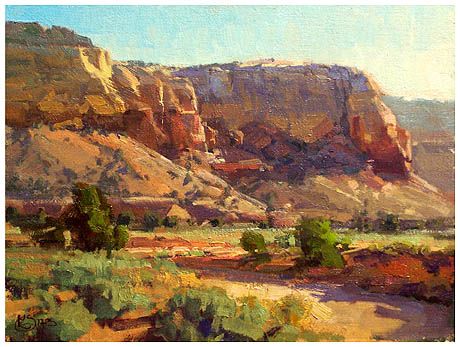
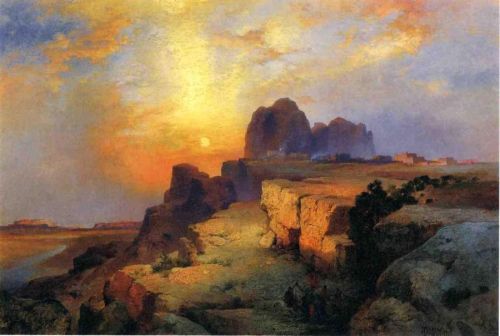
Thomas Moran (1837–1926)

06a1c5a60553a822961b4d062c1a12e8--southwest-art-landscape-paintings.jpg

Thomas Moran (American, 1837 – 1926) -“Hopi Museum, Arizona”, 1916

*Pony That Walks in She Wore a Yellow Ribbon (1949)
“Every artist dips his brush in his own soul, and paints his own nature into his pictures.”*

by chuckofish

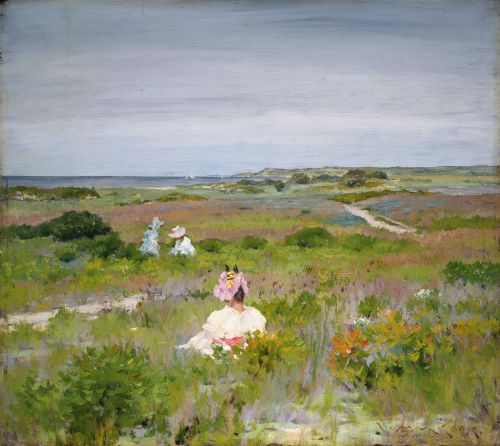
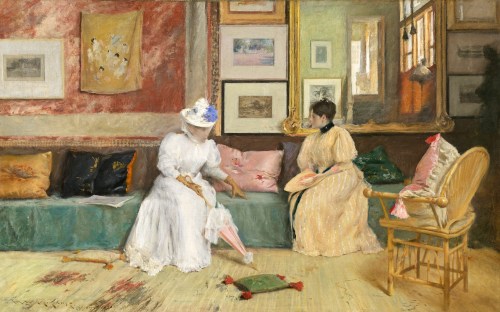
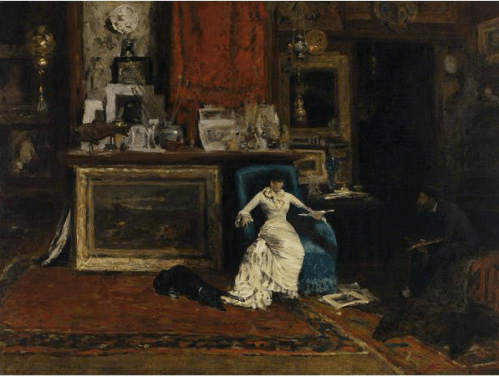
Today is the birthday of William Merritt Chase (November 1, 1849 – October 25, 1916) who was an American painter, known as an exponent of Impressionism and as a teacher.

But did you know that he was born in Indiana? Me neither. Although he studied for a short time in New York City as a youth, he was forced to leave New York in 1870 due to declining family fortune and return to St. Louis (!) where his family was then based. While he worked to help support his family, he became active in the St. Louis art community, winning prizes for his paintings at a local exhibition. Chase’s talent elicited the interest of wealthy St. Louis collectors who arranged for him to visit Europe for two years, in exchange for paintings and Chase’s help in securing European art for their collections. Well, well…

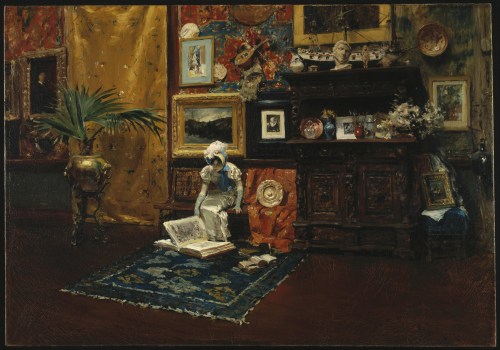
Anyway, I especially like his interiors with all their detail…

A_Friendly_Call.JPG

William_Merritt_Chase_-_Studio_Interior_-_Google_Art_Project.jpg

William_Merritt_Chase_-_Shinnecock,_Long_Island_(c.1896).jpg

Chase_William_Merritt_Portrait_of_Miss_Dora_Wheeler_1883.jpg

Chase_William_Merritt_Self_Portrait_1915

Self-portrait, 1915

Chase won many honors at home and abroad, was a member of the National Academy of Design, New York, and from 1885 to 1895 was president of the Society of American Artists.  After a long and successful career, Chase died on October 25, 1916, at his home in New York City, an esteemed elder of the American art world. He was interred in Green-Wood Cemetery, Brooklyn, New York.

William_Merritt_Chase_-_Open_Air_Breakfast_-_Google_Art_Project.jpg

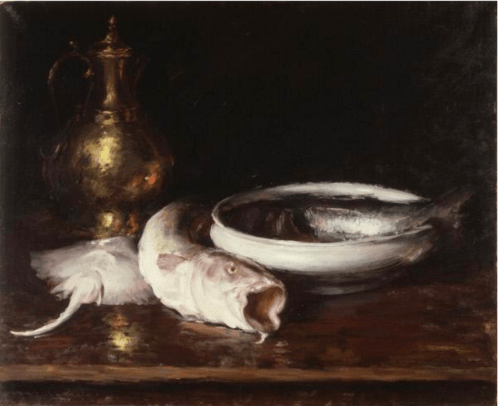
William_Merritt_Chase_-_First_Touch_of_Autumn_-_Google_Art_Project.jpgToday his works are in most major museums in the United States. We even have a couple in the Saint Louis Art Museum:

Screen Shot 2017-10-31 at 3.19.01 PM.png

Screen Shot 2017-10-31 at 3.19.55 PM.png

So a toast to old William Merritt Chase and…one more shout out for 500 years of speaking truth to power…

Screen Shot 2017-10-31 at 11.22.36 AM.png

*Henry Ward Beecher

Yours, yours. I was painted for you.

by chuckofish

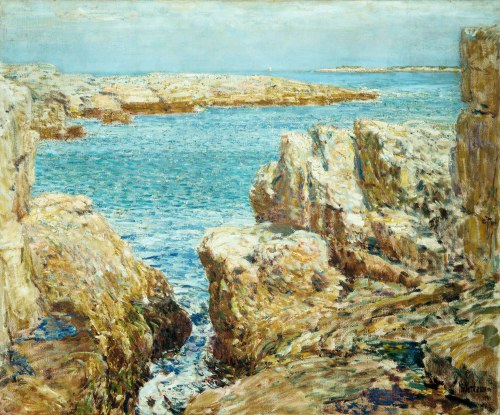
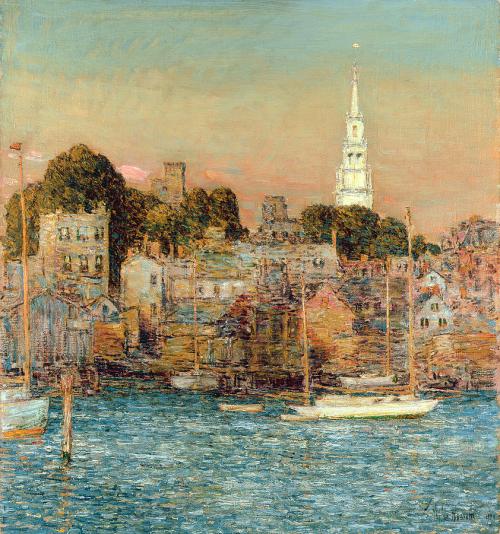
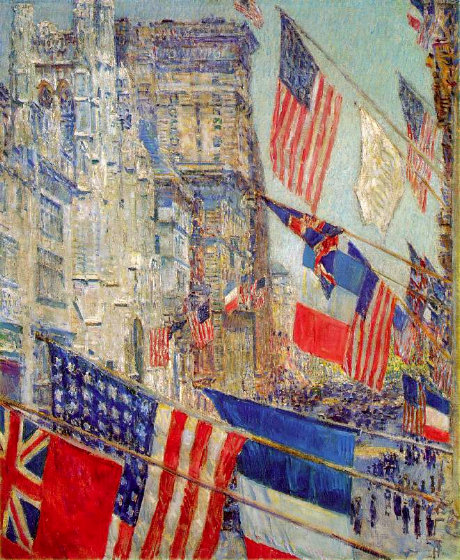
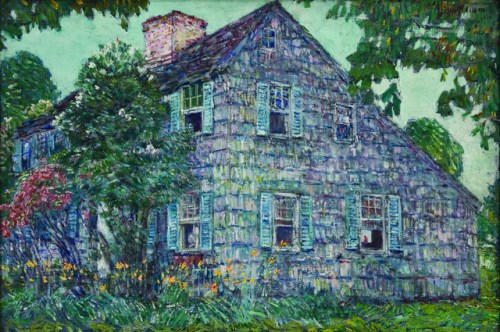
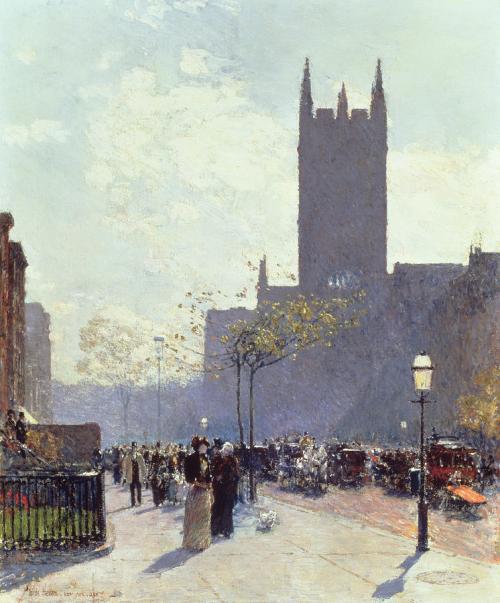
Today is the birthday of Frederick Childe Hassam (October 17, 1859 – August 27, 1935), one of our favorite American Impressionist painters, so it is a no-brainer what our post will be about.

6525_o_childe_hassam_self_portrait__american_artist

Self-portrait

In case you were wondering, his name “Hassam” comes from a seventeenth-century English ancestor whose name, Horsham, had been corrupted over time to Hassam. At least, that’s what Wikipedia says.

hb_09.72.6.jpg

1-october-sundown-childe-hassam.jpg

alliesdayhassam.jpg

large.jpg

1967.36.3-1024x856.jpglower-fifth-avenue-childe-hassam.jpg

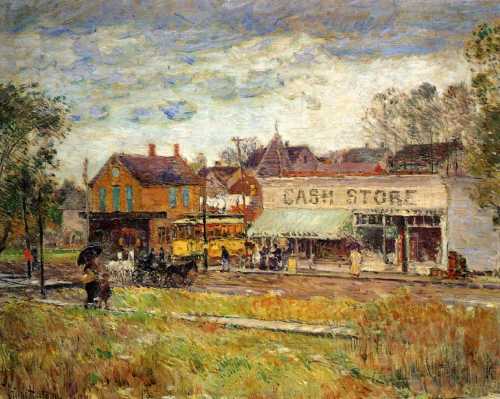
endtrolleylineoakparkillinois

“End of the Trolley Line, Oak Park, Illinois”–a flyover subject!

THAXTER__Childe_Hassam_painting_on_Appledore_611_737_s

Childe Hassam painting on Appledore

“Great paintings—people flock to see them, they draw crowds, they’re reproduced endlessly on coffee mugs and mouse pads and anything-you-like. And, I count myself in the following, you can have a lifetime of perfectly sincere museum-going where you traipse around enjoying everything and then go out and have some lunch. But if a painting really works down in your heart and changes the way you see, and think, and feel, you don’t think, ‘oh, I love this picture because it’s universal.’ ‘I love this painting because it speaks to all mankind.’ That’s not the reason anyone loves a piece of art. It’s a secret whisper from an alleyway. Psst, you. Hey kid. Yes you. An individual heart-shock. Your dream, Welty’s dream, Vermeer’s dream. You see one painting, I see another, the art book puts it at another remove still, the lady buying the greeting card at the museum gift shop sees something else entire, and that’s not even to mention the people separated from us by time—four hundred years before us, four hundred years after we’re gone—it’ll never strike anybody the same way and the great majority of people it’ll never strike in any deep way at all but—a really great painting is fluid enough to work its way into the mind and heart through all kinds of different angles, in ways that are unique and very particular. Yours, yours. I was painted for you. And—oh, I don’t know, stop me if I’m rambling… but Welty himself used to talk about fateful objects. Every dealer and antiquaire recognizes them. The pieces that occur and recur. Maybe for someone else, not a dealer, it wouldn’t be an object. It’d be a city, a color, a time of day. The nail where your fate is liable to catch and snag.”

―Donna Tartt, The Goldfinch 

Life is real! Life is earnest!

by chuckofish

Tell me not, in mournful numbers,
   Life is but an empty dream!
For the soul is dead that slumbers,
   And things are not what they seem.
Life is real! Life is earnest!
   And the grave is not its goal;
Dust thou art, to dust returnest,
   Was not spoken of the soul.
Not enjoyment, and not sorrow,
   Is our destined end or way;
But to act, that each to-morrow
   Find us farther than to-day.
Art is long, and Time is fleeting,
   And our hearts, though stout and brave,
Still, like muffled drums, are beating
   Funeral marches to the grave.
In the world’s broad field of battle,
   In the bivouac of Life,
Be not like dumb, driven cattle!
   Be a hero in the strife!
Trust no Future, howe’er pleasant!
   Let the dead Past bury its dead!
Act,— act in the living Present!
   Heart within, and God o’erhead!
Lives of great men all remind us
   We can make our lives sublime,
And, departing, leave behind us
   Footprints on the sands of time;
Footprints, that perhaps another,
   Sailing o’er life’s solemn main,
A forlorn and shipwrecked brother,
   Seeing, shall take heart again.
Let us, then, be up and doing,
   With a heart for any fate;
Still achieving, still pursuing,
   Learn to labor and to wait.

–Henry Wadsworth Longfellow, A Psalm of Life

The fall season always brings me back to New England–not literally, but in my imagination–and a poem by Longfellow seems appropriate. It is good to read these old poems, so out of fashion these days, but full of good stuff!

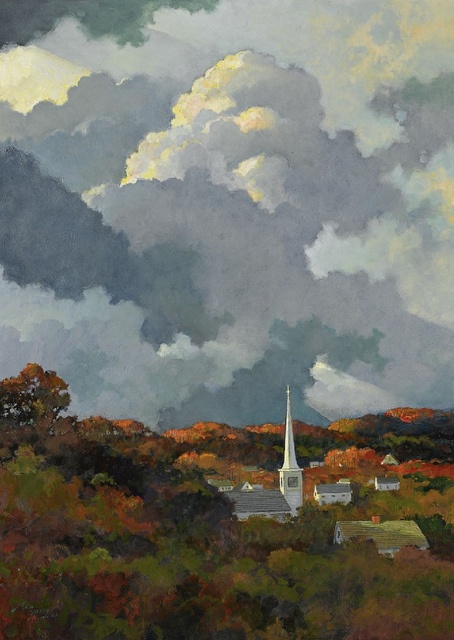
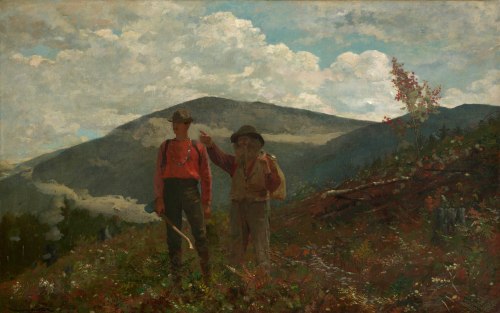
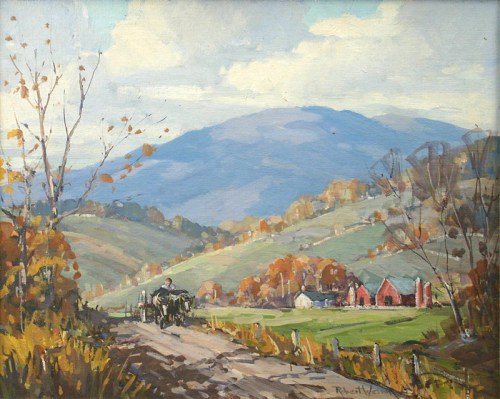
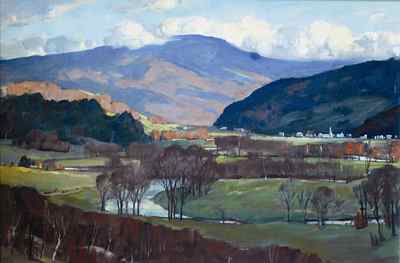
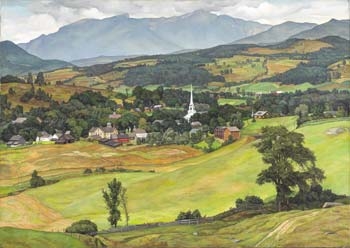
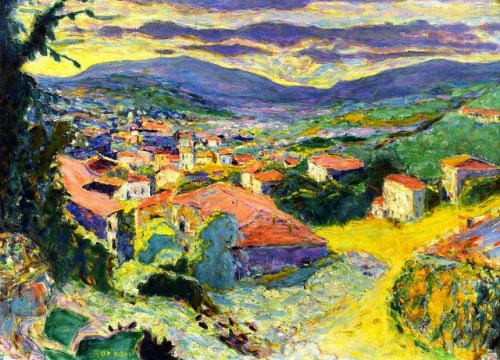
I would like to join the throngs of leaf-peepers, but I will have to be satisfied with flyover landscapes this year.  Here are a few paintings of New England landscapes to whet the whistle, so to speak.

c217cb0913386913186f3745b525b596--people-art-landscape-art

Eric Sloane

Winslow_Homer_-_The_two_guides

Winslow Homer

ori_333-34264-767917-Robert-Shaw-Wesson-painting-of-Vermont-farm-in-autumn-picture2

Robert Wesson

6cm337

Alden Bryan, 1955

lucioni_stowe_llc

Luigi Lucioni, Village of Stowe, 1931

And here’s a little Thoreau to wind things up:

Minott is, perhaps, the most poetical farmer–who most realizes to me the poetry of the farmer’s life–that I know. He does nothing with haste and drudgery, but as if he loved it. He makes the most of his labor, and takes infinite satisfaction in every part of it. He is not looking forward to the sale of his crops or any pecuniary profit, but he is paid by the constant satisfaction which his labor yields him.

A Writer’s Journal

And read this from the Big Surprise file…

Thoughts and prayers

by chuckofish

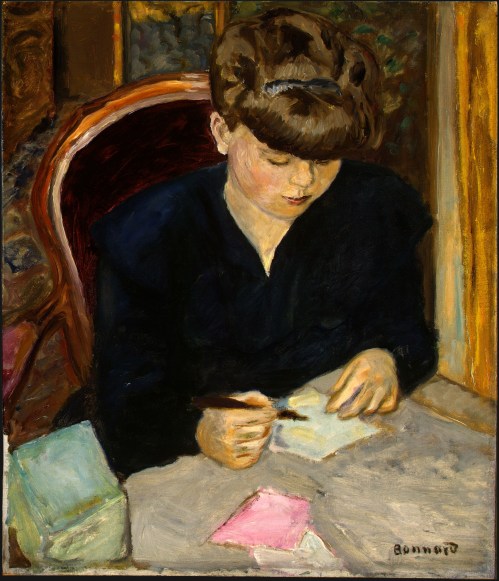
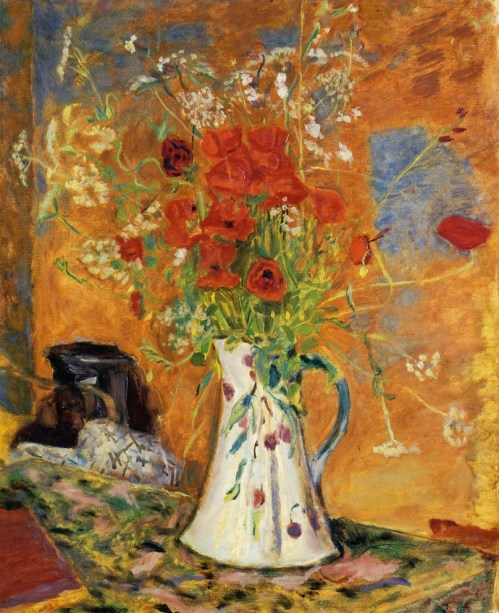
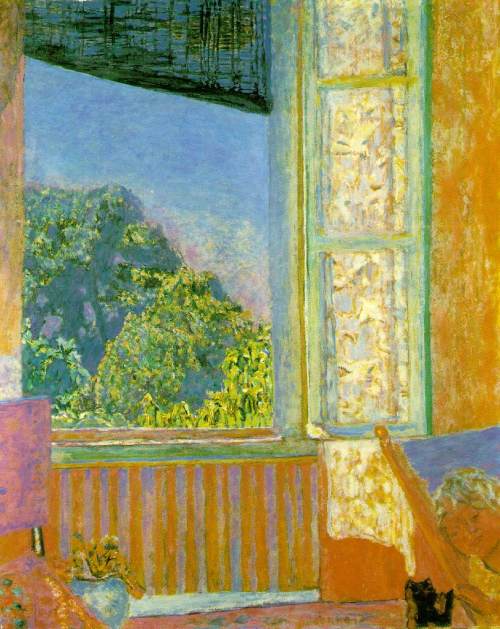
Pierre Bonnard (October 3, 1867 — January 23, 1947) was a French painter and printmaker, as well as a founding member of the Post-Impressionist group of avant-garde painters Les Nabis. Today is his birthday, so here are a few of his paintings to enjoy.

pierre-bonnard-the-work-table.jpg

c9130df05d02140fa848fef7cfd1493c 2.jpg

The_Letter,_Pierre_Bonnard,_c1906.jpg

poppies-1.jpg

07ce24c7dd75358e0044fe77bd65cad9.jpg

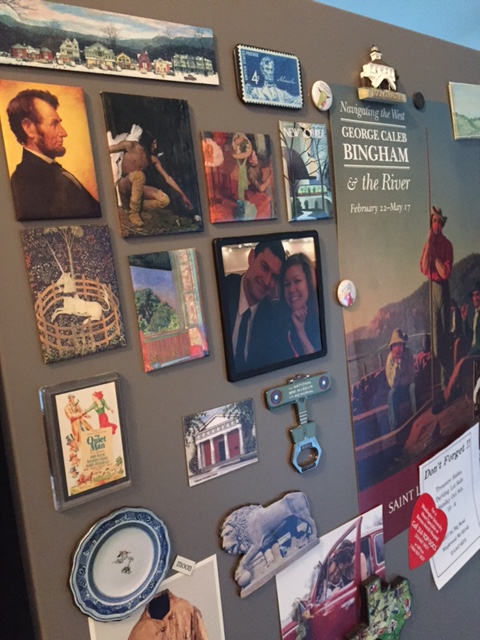
bonnard-the-open-window-1921-118x96-cm-the-phillips-colle.jpgThe last painting (above) can be seen in the Phillips Gallery in Washington D.C. and is a favorite of daughter #2. I have a magnet on my refrigerator to commemorate my lovely visit there with her.

IMG_2910.JPG

And I’m with the PBR.

Screen Shot 2017-10-02 at 5.14.59 PM.png

Not waving but drowning

by chuckofish

f2af0497430d6de5459b77d83b5c9d38.jpg
Nobody heard him, the dead man,
But still he lay moaning:
I was much further out than you thought
And not waving but drowning.
Poor chap, he always loved larking
And now he’s dead
It must have been too cold for him his heart gave way,
They said.
Oh, no no no, it was too cold always
(Still the dead one lay moaning)
I was much too far out all my life
And not waving but drowning.

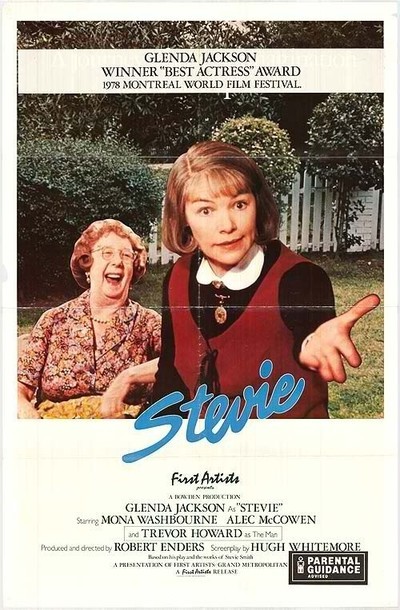
Today is the birthday of English poet and novelist Stevie Smith (1902–1971). I remember going to go see the movie Stevie (1978) based on the play about her by Hugh Whitemore. I went with my mother and she was deeply affected by it. She sometimes reacted very emotionally to sad things and this always deeply affected me. It made me worry that we (her children) had no idea how sad and lonely she really was. But I suppose that is true for most children.

large_o9V5tp1mszGjjqj17UkET5Hdkd8.jpg

The movie is available on YouTube, so maybe I’ll check it out. Anyway, a toast to Stevie Smith seems in order.

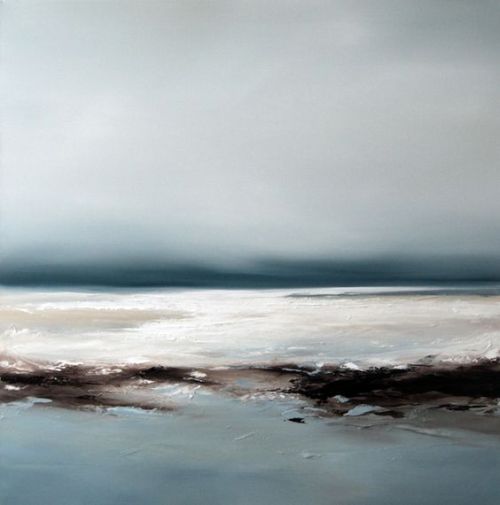
The painting is “Beyond the Sea 6” by Paul Bennett

Life is what we make it

by chuckofish

country-fair-1950.jpg

“I look back on my life like a good day’s work, it was done and I feel satisfied with it. I was happy and contented, I knew nothing better and made the best out of what life offered. And life is what we make it, always has been, always will be.”

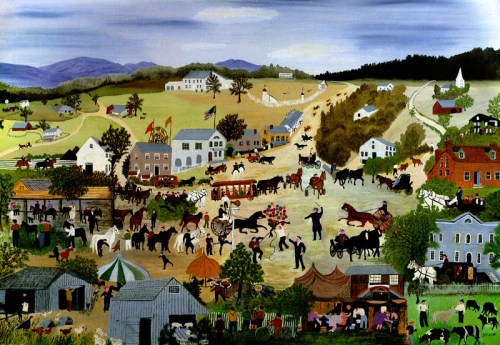
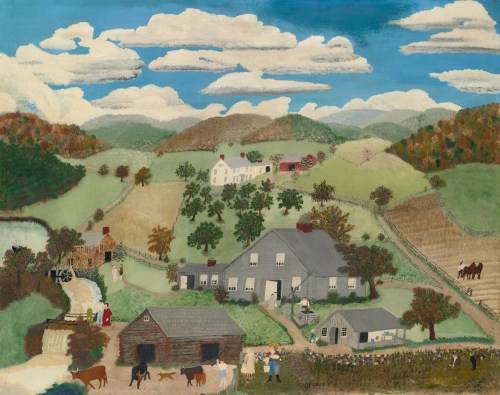
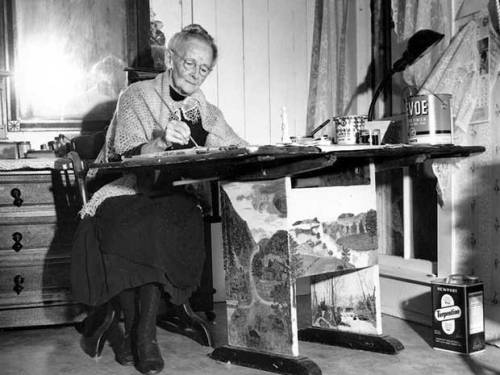
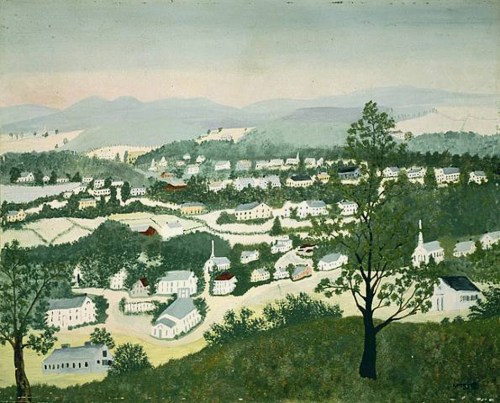
Wise words from Grandma Moses, who was born Anna Mary Robertson on this day in 1860. She died in 1961 at the age of 101. Having worked hard all her life, she then became famous as a renowned folk artist in her seventies. You can read her obituary here.

073N08911_5SB28.jpg

anna-mary-robertson-moses-better-known-as-grandma-moses-began-her-prolific-painting-career-at-78-in-2006-one-of-her-paintings-sold-for-12-million.jpg

Grandma Moses, In Green Mountains 1946.jpg

P.S. In looking around the internet, I found that everyone from Eleanor Roosevelt and Marilyn Monroe to Hannah Montana are credited with saying, “Life is what you make it!” Several books have been written with this title. I guess cliches are like that.

Well, anyway, here’s a poem from Mary Oliver:

Who made the world?

Who made the swan, and the black bear?

Who made the grasshopper?

This grasshopper, I mean-

the one who has flung herself out of the grass,

the one who is eating sugar out of my hand,

who is moving her jaws back and forth instead of up and down-

who is gazing around with her enormous and complicated eyes.

Now she lifts her pale forearms and thoroughly washes her face.

Now she snaps her wings open, and floats away.

I don’t know exactly what a prayer is.

I do know how to pay attention, how to fall down

into the grass, how to kneel down in the grass,

how to be idle and blessed, how to stroll through the fields,

which is what I have been doing all day.

Tell me, what else should I have done?

Doesn’t everything die at last, and too soon?

Tell me, what is it you plan to do

with your one wild and precious life?

Discuss among yourselves.

Some poetry and art for Wednesday

by chuckofish

tumblr_moydbch6wR1qid0gbo1_1280.jpg

When summer’s end is nighing
And skies at evening cloud,
I muse on change and fortune
And all the feats I vowed
When I was young and proud.

The weathercock at sunset
Would lose the slanted ray,
And I would climb the beacon
That looked to Wales away
And saw the last of day.

From hill and cloud and heaven
The hues of evening died;
Night welled through lane and hollow
And hushed the countryside,
But I had youth and pride.

And I with earth and nightfall
In converse high would stand,
Late, till the west was ashen
And darkness hard at hand,
And the eye lost the land.

The year might age, and cloudy
The lessening day might close,
But air of other summers
Breathed from beyond the snows,
And I had hope of those.

They came and were and are not
And come no more anew;
And all the years and seasons
That ever can ensue
Must now be worse and few.

So here’s an end of roaming
On eves when autumn nighs:
The ear too fondly listens
For summer’s parting sighs,
And then the heart replies.

–AE Housman, XXXIX (from Last Poems)

August is nearly over–can you stand it? It is getting darker earlier and the sunrise is later. Have you noticed?

We have had lovely weather this month–amazing for August! I feel kind of guilty enjoying it with all that is going on in Houston. Our prayers go out to everyone down there and to all those teams of disaster relief volunteers who are heading to Texas. Vaya con Dios.

Screen Shot 2017-08-29 at 7.25.09 PM.pngStill, enjoy these last days of summer if you can. Maybe these paintings will help!
b19b6e8d3c05ea76d60dfb2417f2671d.jpg

5e1c73421d93857d7373fb84bd2159af.jpg

Wessel, Herman Henry (1878-1969) a summer afternoon.jpg

769309c141407391c6175cc6700c0f93.jpg

Blog-Seurat-Sunday-Afternoon.jpg

On-the-Beach-1875-xx-Winslow-Homer.JPG

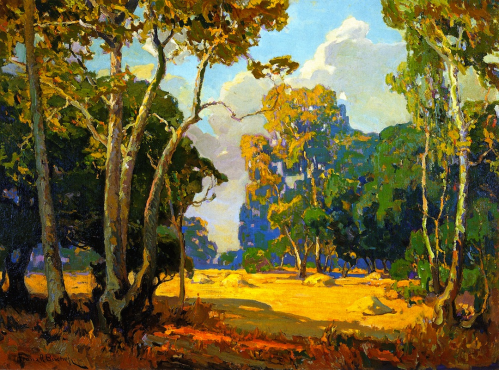
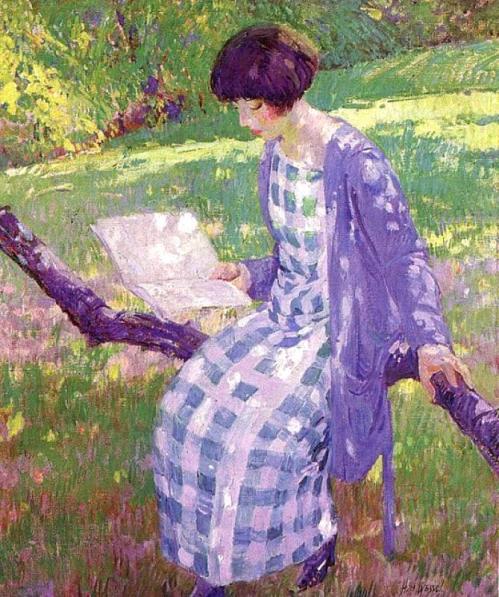
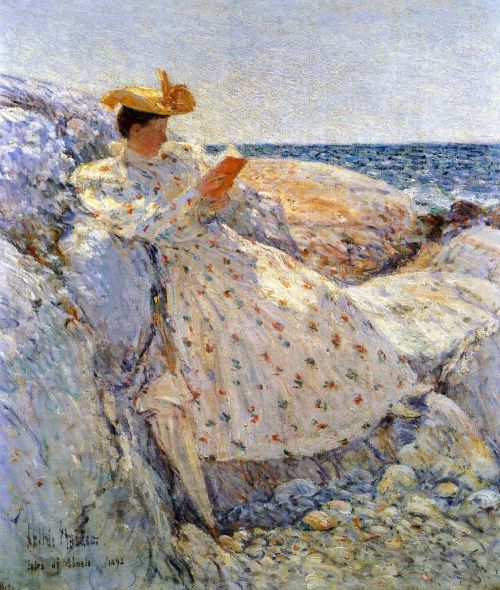
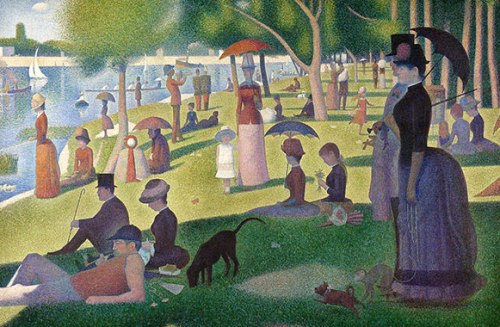
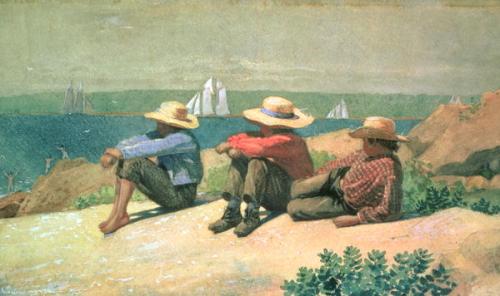
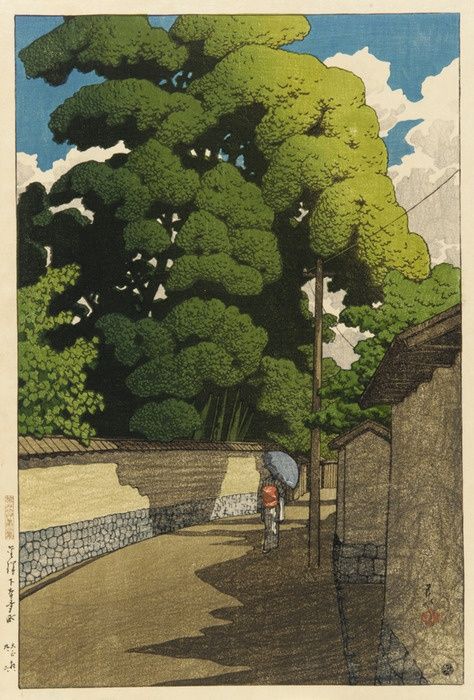
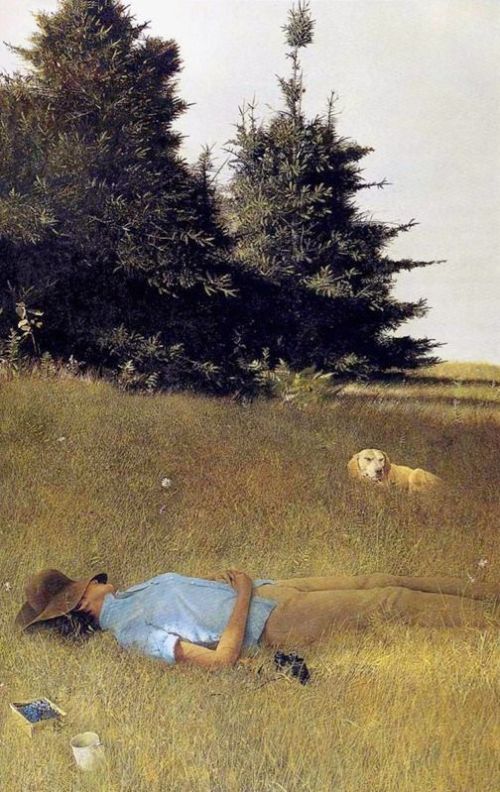
Paintings of summer afternoons are (from the top) by: Franz Bischoff, Kawase Hasui, Andrew Wyeth, Herman Henry Wessel, Childe Hassam, Georges Seurat, Winslow Homer.

Each mocking day

by chuckofish

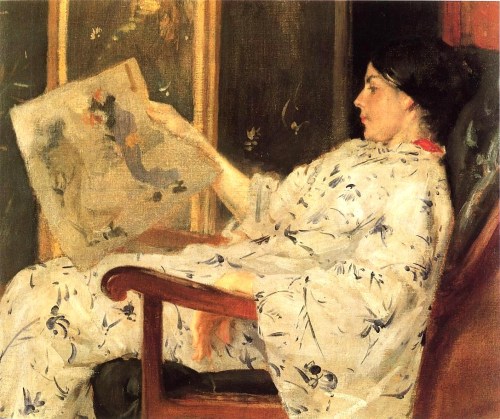
Japonisme. William Merritt Chase (1849 - 1916) Japanese Print 1898

Silence again. The glorious symphony
Hath need of pause and interval of peace.
Some subtle signal bids all sweet sounds cease,
Save hum of insects’ aimless industry.
Pathetic summer seeks by blazonry
Of color to conceal her swift decrease.
Weak subterfuge! Each mocking day doth fleece
A blossom, and lay bare her poverty.
Poor middle-agèd summer! Vain this show!
Whole fields of golden-rod cannot offset
One meadow with a single violet;
And well the singing thrush and lily know,
Spite of all artifice which her regret
Can deck in splendid guise, their time to go!

–Helen Hunt Jackson, August

The painting is by William Merritt Chase (1849 – 1916)– “Japanese Print” (1898)

Very star-like

by chuckofish

tumblr_me6nr3mJSO1qc6wuio1_r2_500.png

Here come real stars to fill the upper skies,

And here on earth come emulating flies,

That though they never equal stars in size,

(And they were never really stars at heart)

Achieve at times a very star-like start.

Only, of course, they can’t sustain the part.

–Robert Frost

John_Singer_Sargent_-_Carnation,_Lily,_Lily,_Rose_-_Google_Art_Project.jpg

We are currently experiencing the dog days of a flyover summer with daily temperatures soaring to 100+ degrees. There is still much to enjoy. I hope you are enjoying your summer!

The first picture is Fireflies at Ochanomizu, 1880, by Kobayashi Kiyochika; the second is John Singer Sargent, Carnation, Lily, Rose.