What are you reading?
by chuckofish
Daughter #2 is back today! I am happy to report that my daily reading habits have persisted, and while there are always misses among the hits, I have several good things to share.
Quick notes: I failed to finish Charlotte Brontë’s Villette (1853) — there is a reason Jane Eyre (1847) is the better known work — but while I trudged through the first half, I also read and thoroughly enjoyed two Fred Vargas mysteries. My mother had mailed them to me, which I appreciated, since I do not think my local prairie library carries French mysteries in translation. My mother has blogged about Vargas many times, but I’ll link to this post, which — bonus — mostly discusses her reading of The House of the Seven Gables (1851), a novel I love dearly and re-read at the beginning of the year.
My local prairie library does carry two shelves of “General Fiction,” which feature a funny mix of contemporary “chick lit” and classic canonical works. Something compelled me to grab John Steinbeck’s The Grapes of Wrath (1939), and I found it surprisingly easy to read. It is one of those epic long novels that, because the chapters are so short, allows you to leisurely chug along with great and frequent reward. Steinbeck alternates between naturalist descriptions of the American landscape, mini treatises on the American economy, and what I found to be the gripping plot of the Joad family’s Dust Bowl journey from Oklahoma to California. I was very happy to read in context the passage quoted in one of my favorite blog posts.

Finally, I recently finished Muriel Barbery’s The Elegance of the Hedgehog (2006). The novel’s dual protagonists are wise in different ways: Paloma beyond her 12 years, and Renée beyond her station (which she believes precludes the intellectual life she keeps a secret). When a Japanese man moves into the apartment building where they both live, the three forge an unlikely friendship. Interestingly, Kakura Ozu is able to intuit the rich inner lives of Paloma and Renée, and draws them out of their shells despite the social structures in which they find themselves stuck. While it was all a little far-fetched, I did appreciate the idea that we can recognize a kindred intellectual spirit when we encounter it, even briefly.
My favorite section of the novel, “On Grammar,” centered on the trio’s shared appreciation of language and disdain for those who misuse it. When Renée and Ozu meet, they both flinch when another — supposedly refined — tenant makes a glaring grammatical error. Their friendship is forged in this moment. And at one point, Paloma snaps when her literature teacher makes an asinine comment about grammar. Later, Paloma reflects in her journal,
“Personally, I think that grammar is a way to attain beauty. When you speak, or read, or write, you can tell if you’ve said or read or written a fine sentence. You can recognize a well-turned phrase or an elegant style. But when you are applying the rules of grammar skillfully, you ascend to another level of the beauty of language. When you use grammar you peel back the layers, to see how it is all put together, see it quite naked, in a way. And that’s where it becomes wonderful, because you say to yourself, ‘Look how well-made this is, how well-constructed it is! How solid and ingenious, rich and subtle!’ I get completely carried away just knowing there are words of all different natures, and that you have to know them in order to be able to infer their potential usage and compatibility. I find there is nothing more beautiful, for example, than the very basic components of language, nouns and verbs. When you’ve grasped this, you’ve grasped the core of any statement. It’s magnificent, don’t you think? Nouns, verbs…
“Perhaps, to gain access to all the beauty of the language that grammar unveils, you have to place yourself in a special state of awareness. I have the impression that I do that anyway without any special effort. I think that it was at the age of two, when I first heard grown-ups speak, that I understood once and for all how language is made. Grammar lessons have always seemed to me a sort of synthesis after the fact and, perhaps, a source of supplemental details concerning terminology.”
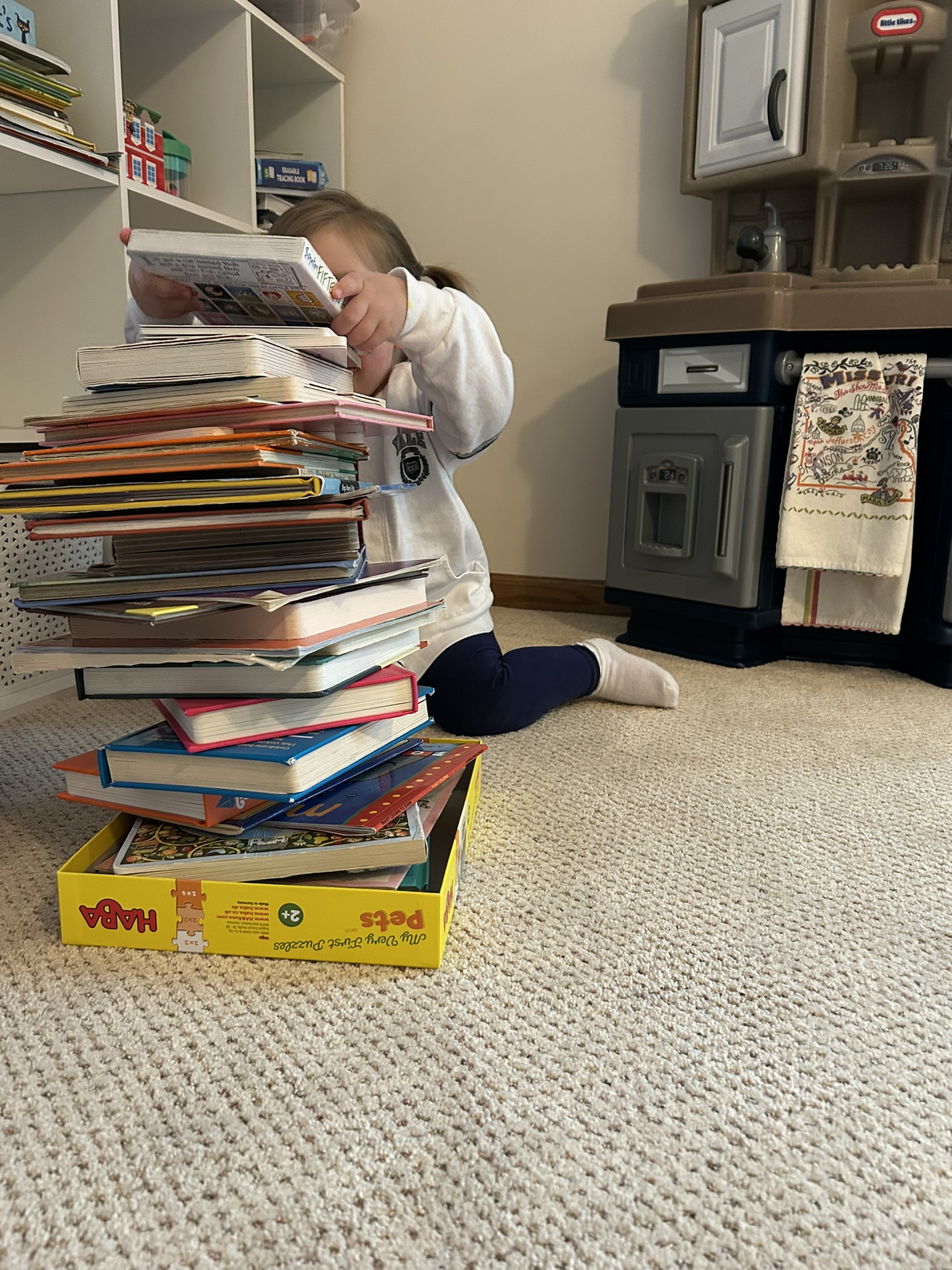
Paloma is a little overdone as a precocious tween, but I can’t help but relate to much of this. It’s very obvious to me that toddlers intuit grammar from the language around them, and yes, as their mother, I believe that Ida and Katie have an “elegant style” of speech. Ida once looked at the rainy back deck and said, “I wish we could go outside today.” (For reference, at her age, “go outside” would be typical.) Solid and ingenious, rich and subtle indeed!

Up next, I am testing my endurance with Wolf Hall. So far, so good!
 dual personalities
Wonderful suggestions!
Bad grammar also makes me flinch. Wolf Hall is absolutely wonderful. It won’t require endurance!
Wonderful, thoughtful post!