One generation passeth away, and another generation cometh*
by chuckofish
Today we toast Ulysses S. Grant and Julia Boggs Dent who were married on this day in 1848 in the Dent family townhouse in St. Louis. The ceremony was performed by Reverend Dr. William S. Potts, who was a close friend of the Dent family.

The Dent townhouse was torn down some time ago, but the Dent’s country home, named “White Haven”, still remains. Julia’s father, Col. Frederick Fayette Dent, was a fur trader operating along the Mississippi River. He became quite wealthy and built a 850-acre plantation outside of St. Louis. Julia Dent, the fifth of seven children, grew up at White Haven. She attended the Misses Mauros boarding school in St. Louis and graduated at the age of seventeen.
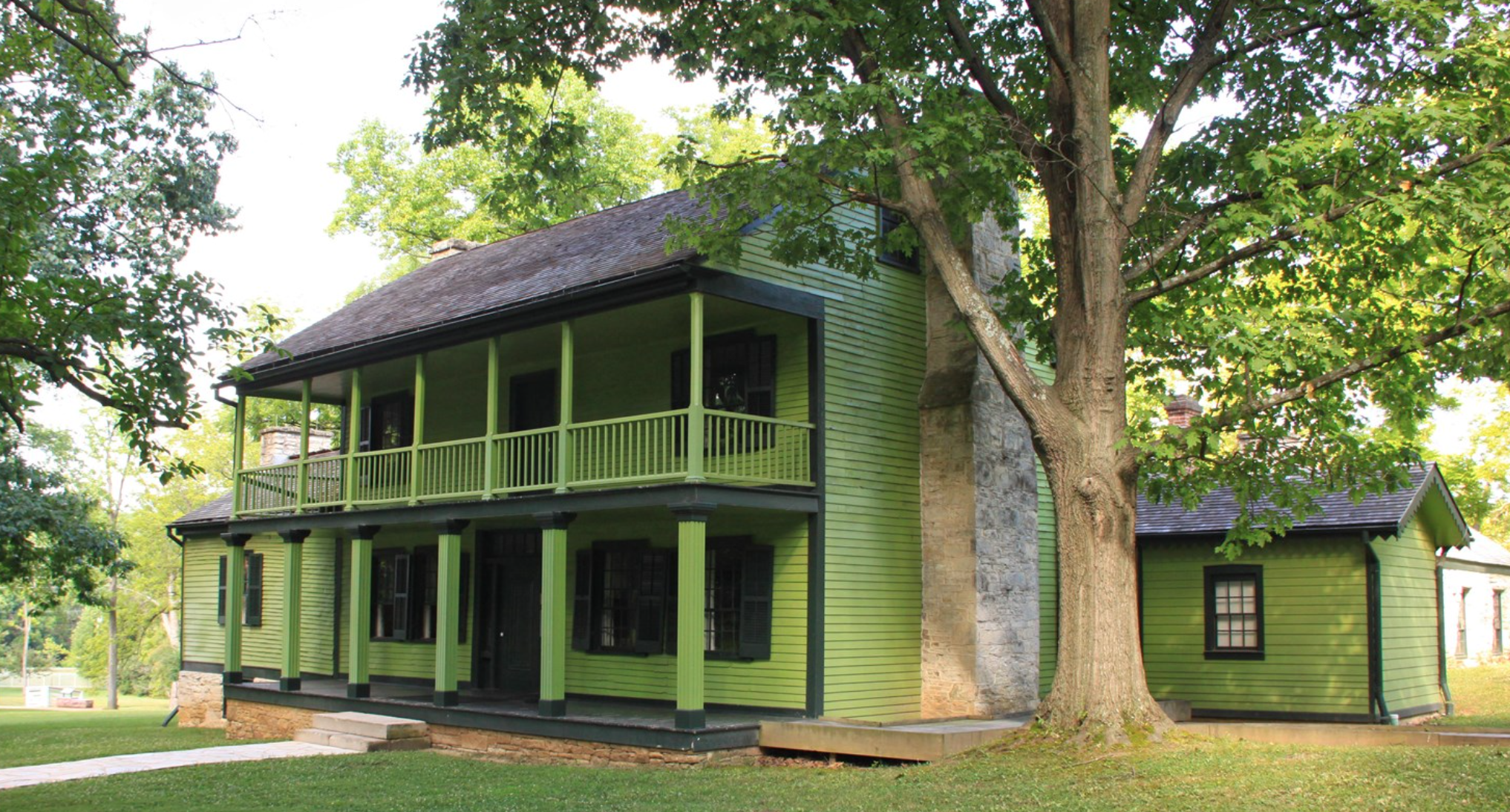
Following his marriage and after serving with distinction in the Mexican-American War, Ulysses Grant resigned from the army in 1854 and returned to civilian life somewhat impoverished. Grant tried several business ventures but failed. Julia and Ulysses returned to White Haven and lived there for five years until Grant reenlisted in the army to serve in the American Civil War. In 1866 Grant purchased parts of the property and established a commercial farm and horse breeding operation. Amid an increasingly volatile economy, Grant sold off livestock in 1875 before losing the estate outright in 1885 to William Henry Vanderbilt, just three months before his death.
A portion of the plantation was later purchased by Adolphus Busch where he developed his Grant’s Farm property. The acreage around the main house was initially rescued from development of a Grant-themed amusement park in 1913 by Albert Wenzlick, a St. Louis real estate developer. The house was maintained by Wenzlick and his son until the latter’s death in 1979 when, after years of public engagement and fundraising by local advocates, the 9.6-acre property was finally acquired by a joint venture between the Missouri Department of Natural Resources and St. Louis County. The property was listed on the National Register of Historic Places in 1979, and was designated a National Historic Landmark in 1986.
This is a fascinating article about the years-long struggle to save White Haven, which once again underscores the importance of grassroots support of historic preservation. I was surprised to learn that I knew several of the major players, but was unaware of all that was going on at the time.
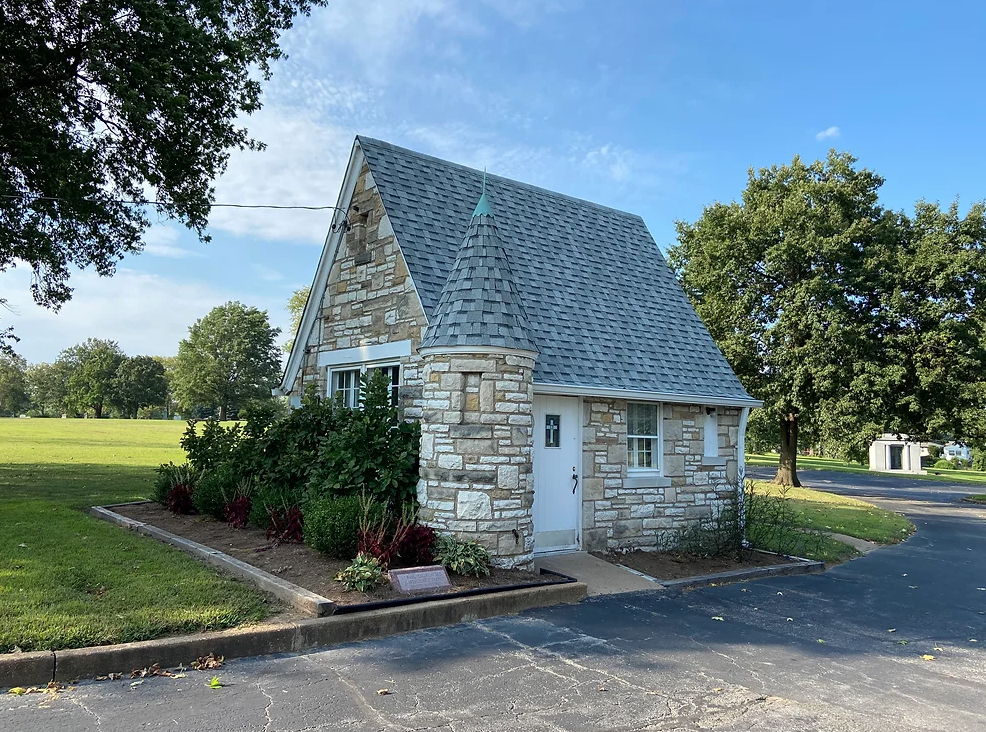
Earlier this year I also learned that part of the original acreage where Grant’s Hardscrabble log cabin was located is now a cemetery owned and maintained by the St. Paul’s UCC Church since 1926.
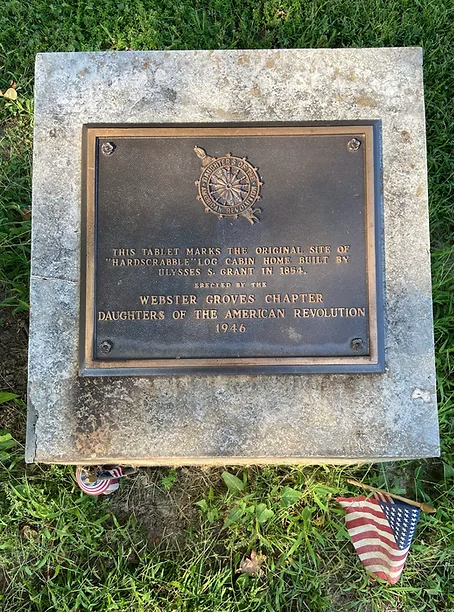
A marker was placed in 1946 by the Webster Groves chapter of the Daughters of the American Revolution to mark the site of Hardscrabble in the current St. Paul Churchyard. (The cabin now resides at Grant’s Farm.)
Since then the OM and I have bought grave sites at the cemetery. It seems entirely appropriate that the final resting place for our earthly remains will be in Cousin Lyss’s Hardscrabble farm.
*Ecclesiastes 1:4
 dual personalities