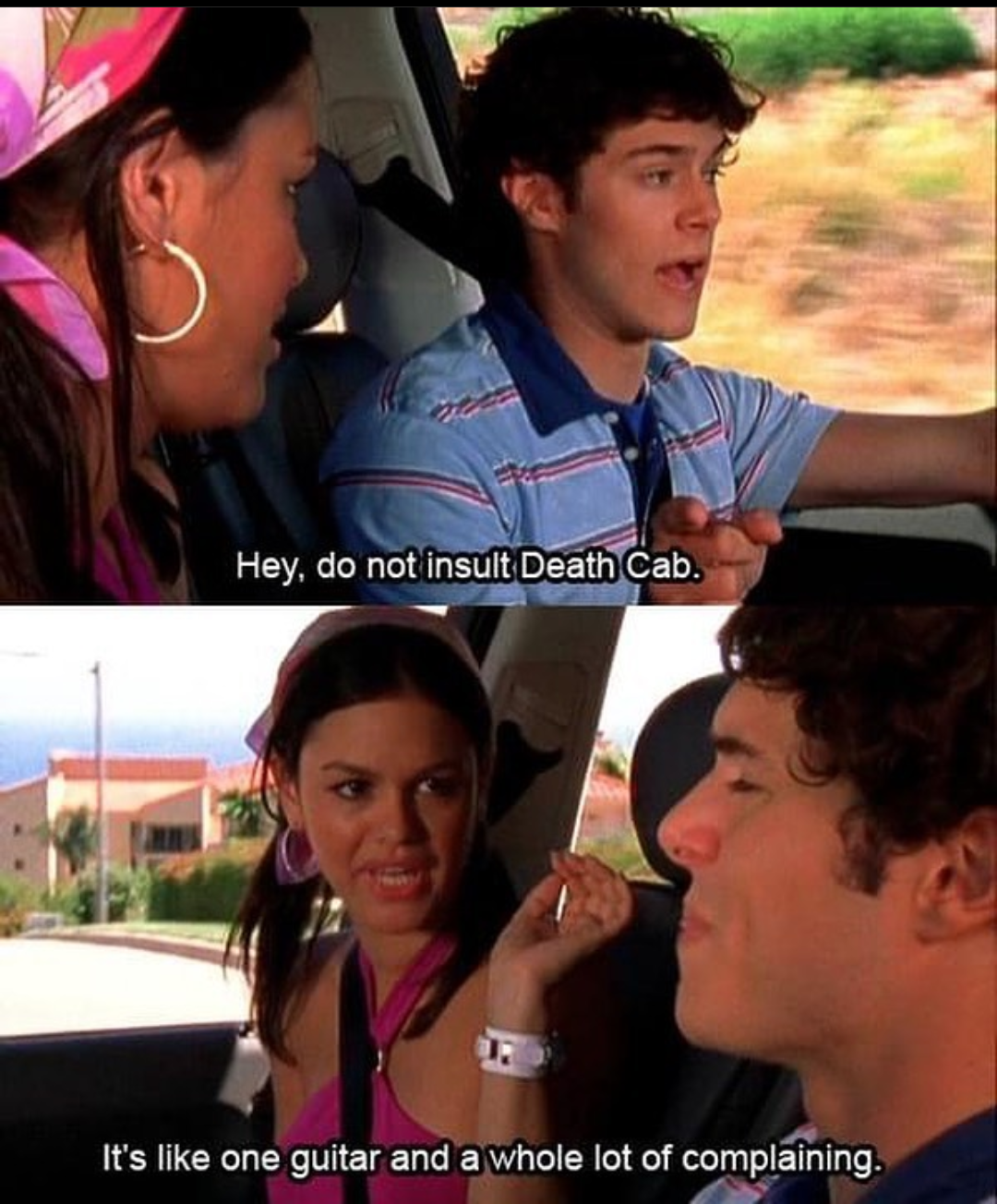
One guitar and a whole lot of complaining
by chuckofish
Ahead of Saturday—the 20th anniversary of the pilot episode of The O.C. airing on Fox—a guest post from DN. Because August 5, 2003 marked a seminal moment in millennial culture.
The O.C. was a teen soap whose first seven hours debuted in August and September—novel timing for a premiere, when no other network was showing new or original episodes. The premise is simple: Ryan, an outsider from the wrong side of town (Chino, CA), is adopted by the wealthy and wise Sandy Cohen (Peter Gallagher) of Newport Beach, CA. Ryan lives in the Cohens’ pool house, attends high school with their nerdy but witty son, Seth (Adam Brody), and queen bee Marissa (Mischa Barton), who lives next door. There is an absurd self-consciousness to the show’s tortured plotlines and heightened emotion.
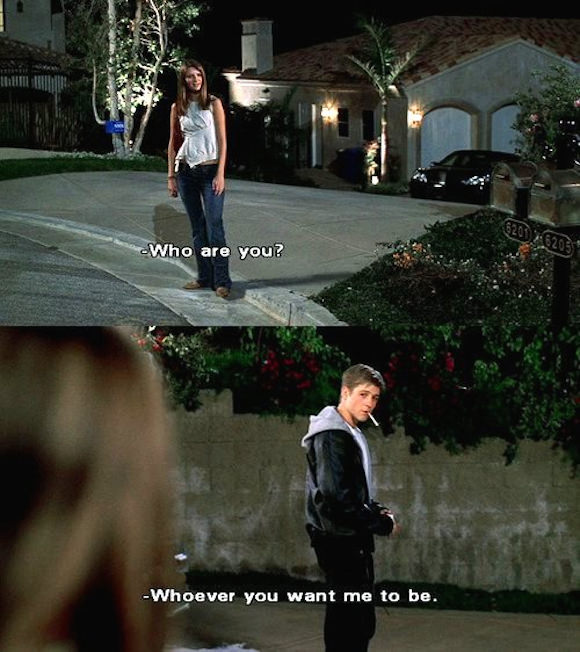
The first meeting between Ryan and Marissa involves an eyeroll-inducing homage to James Dean. It also includes the show’s only on-screen cigarette—a notable fact, given that part of The O.C.’s appeal was its edgy portrayal of sex and drugs among high schoolers. It felt fun and “adult.” It felt like summer.
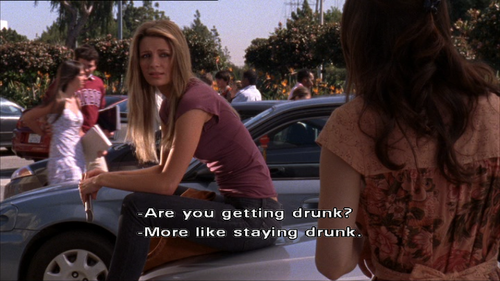
In August 2003, I felt like an adult, but not necessarily in a fun way. I was home from college and working full-time for the Army, commuting every morning to the Pentagon. For a summer job, I was making real money—40 hours per week! And for a summer job, I was commuting pretty far, about an hour each way. That’s the time it takes to drive from Chino to Newport Beach.
Reader, they did not.
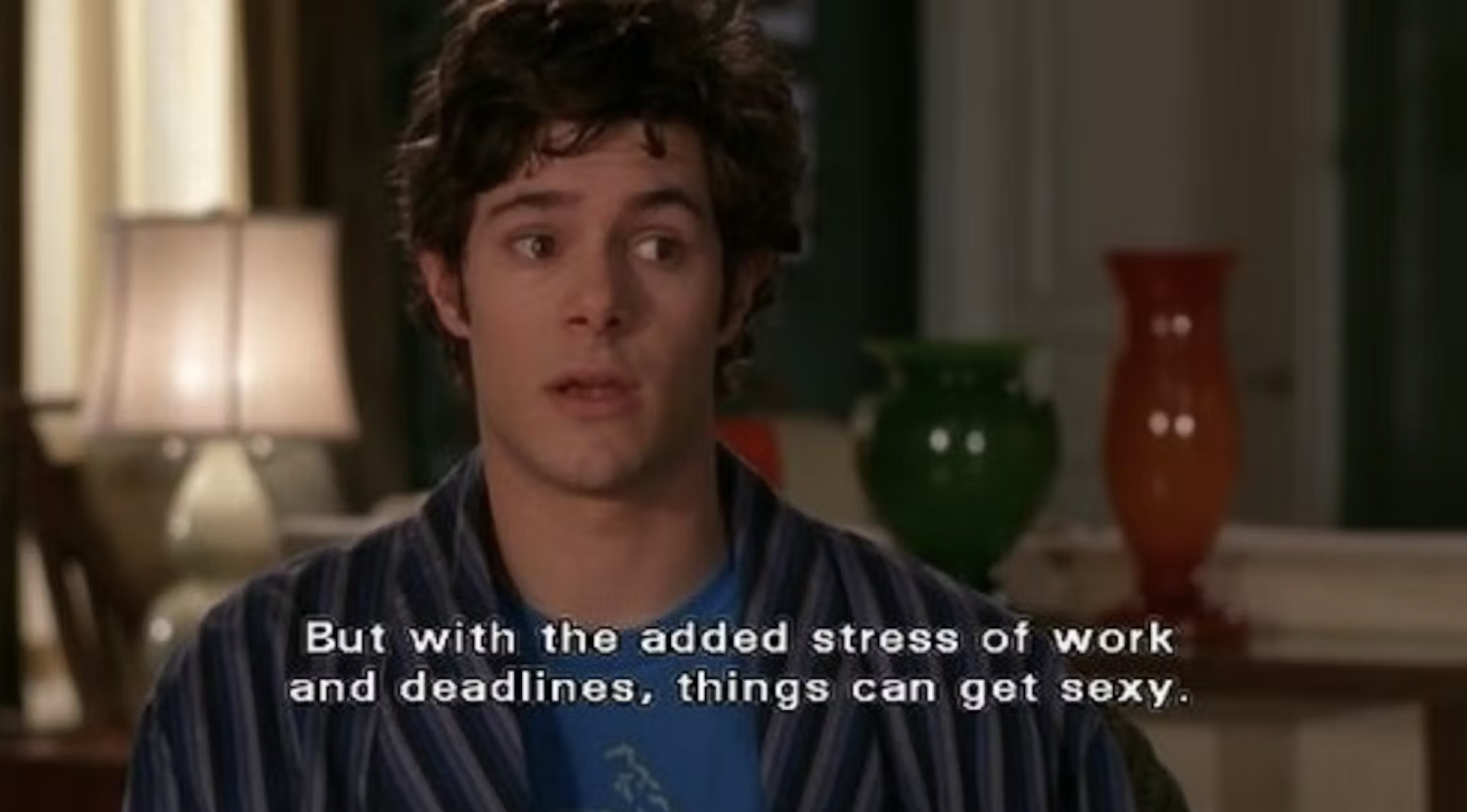
There’s too much to say about the first season of The O.C., whose 27 episodes (27 episodes!) tore through plot at a ridiculous pace. I haven’t even mentioned the drama between the parents on the show. Suffice it to say, the high schoolers act like adults and the adults act like children. All except the sage Sandy Cohen, who watches the drama from a slight distance and provides the show’s moral core. At one point, Marissa’s father, who has stolen hundreds of thousands of dollars and is under investigation by the SEC, lashes out at Sandy: “Who are you to tell me to get real? You live in a fantasyland! You’re married to the richest girl in the county. You live in a house you’ve never paid for! You have no idea what it’s like to provide for a family!” To which Sandy replies, “There’s more to providing for a family than money.”
No account of The O.C. is complete without mentioning some of the show’s legacies. First, and most important to me, is the show’s relationship to music. The O.C. had its finger on the pulse of “indie” music in the early/mid aughts, and it wore this cultural cred on its sleeve in the form of Seth Cohen, who basically shepherded the popularization of nerd culture. In a pre-MCU pre-streaming world, the fact that Seth’s taste in comics and music could even conceivably be coded as “cool” felt extraordinary.
But throughout The O.C.’s run, no song has had more lasting influence than Imogen Heap’s “Hide and Seek,” which is deployed at the end of the show’s second season, when Marissa impulsively shoots a man who is attacking Ryan.
The scene and its generic beats led to an iconic SNL sketch.
You can find the trope remixed across the internet, but my favorite is when mmm whatcha say came for Gandalf.
So Sandy was right: there really is more to providing for a family than money—you must also provide the memes. But it will be awhile yet until my sweet children are old enough to understand them.
 dual personalities