That’ll be the day
by chuckofish
Recently, I came across this article that compares Homer’s The Iliad to John Ford’s The Searchers. I was surprised to discover that the comparison works pretty well, and not in an entirely superficial way (well, maybe). Here’s a quick reminder of the salient points of The Iliad. When Agamemnon dishonors Achilles, the latter decides to sit out the war. As a result of losing their best fighter, things go badly wrong for the Greeks until Patroclus borrows Achilles’ armor to wear, so that the Trojans think Achilles is fighting. When Patroclus, Achilles best friend and cousin, gets killed, Achilles is beyond devastated that he wasn’t there to help his friend, and he goes for revenge in a big way. After slaughtering so many Trojans that the river becomes dammed with corpses, he kills Hector, the Trojan’s number one warrior, and mutilates the body until Priam, Hector’s father, visits to beg for his son’s return.
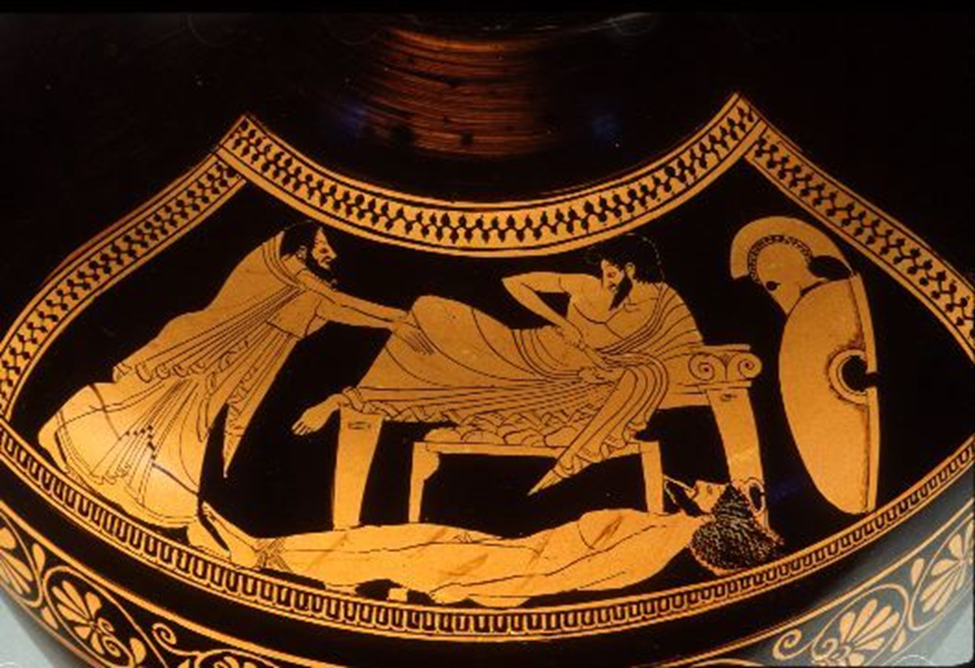
Priam’s grief reminds Achilles that his own father will soon mourn, for Achilles knows he will die at Troy. His humanity restored, he returns Hector’s body and the epic ends with the Trojan’s funeral. How, you ask, would that relate to The Searchers? Let’s see.
Years after fighting for the Confederacy during the Civil War, Ethan Edwards reunites with his brother’s family and particularly his sister-in-law, Martha, whom he loves. She returns that love but both are good people and do nothing about it. Martha is Ethan’s Patroclus.

When an Indian raid elsewhere draws the men away from the homesteads, Indians kill all of the family except for the youngest daughter, Debbie, whom they take. Thus, like Achilles, Ethan is absent when disaster strikes, and he cannot save his beloved Martha.
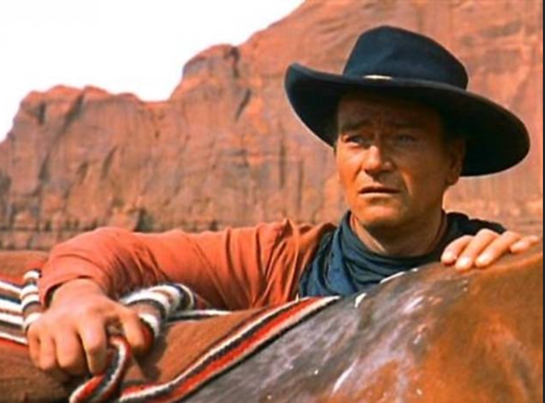
Like Achilles, Ethen is devasted but determined to get revenge. A changed man, he spends years looking for Debbie.
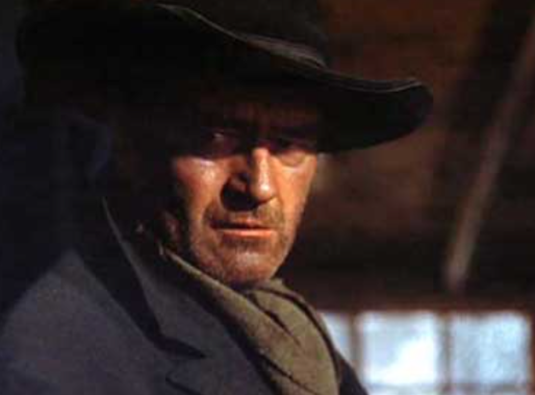
When he and Martin, Debbie’s adopted brother, catch up with the Indians who stole Debbie, Ethan kills their leader, Scar, and scalps him, thus (according to the article) crossing the line of regular heroic behavior. [I confess that I don’t remember Ethan scalping Scar and I could not verify it because I cannot use my DVD at the moment, but I’ll go with it.] Scar is Ethan’s Hector. Just when Ethan seems to be beyond redemption, he finds and embraces Debbie rather than killing her. His confrontation with Debbie restores his humanity. She is Ethan’s Priam.
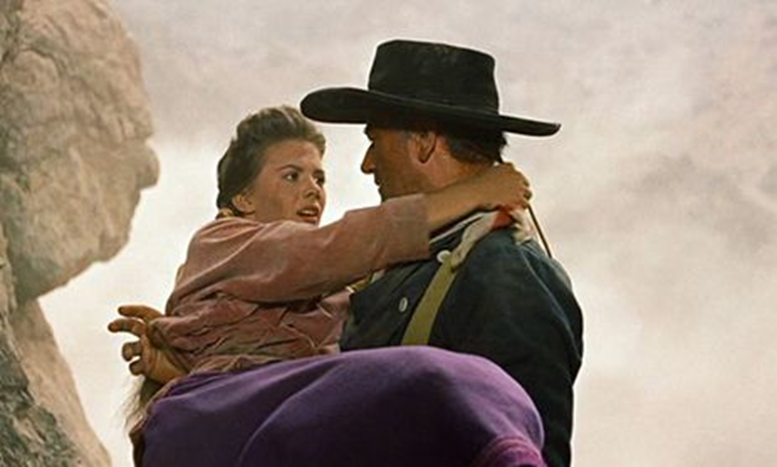
Ethan takes Debbie home but realizes that he does not belong among the other settlers and never will.
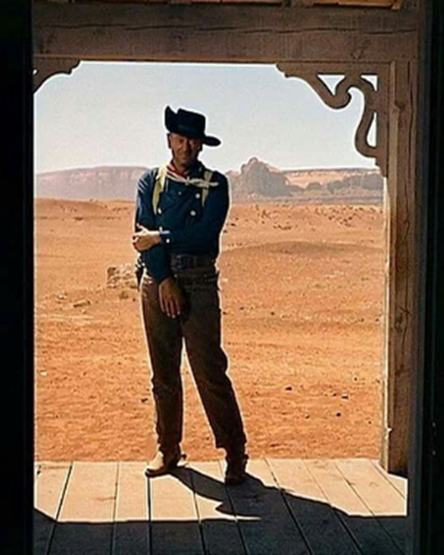
Ethan, like Achilles and most of the other heroes of The Iliad does not get a happy homecoming. Think about it. Achilles dies at Troy. Odysseus arrives home alone and then has to fight off the suitors to reclaim his home. After doing so, the gods require him to make another long journey in order to purify himself. Odysseus doesn’t get any peace until he’s an old man. Meanwhile, Agamemnon finds his adulterous wife who then murders him, and Ajax kills himself. Nope. Those Greek heroes did not find happy post-war peace.
The article is worth a read, but I leave it up to you to decide whether the comparison tells us anything new about The Searchers, John Ford or westerns in general. Please comment!
 dual personalities