How was your weekend? I have been sick since Thursday and quite under the weather. I didn’t go to my Bible study group and I even stayed home from church. (Daughter #1 convinced me it wasn’t kosher to go to church these days when you are coughing and have laryngitis.)
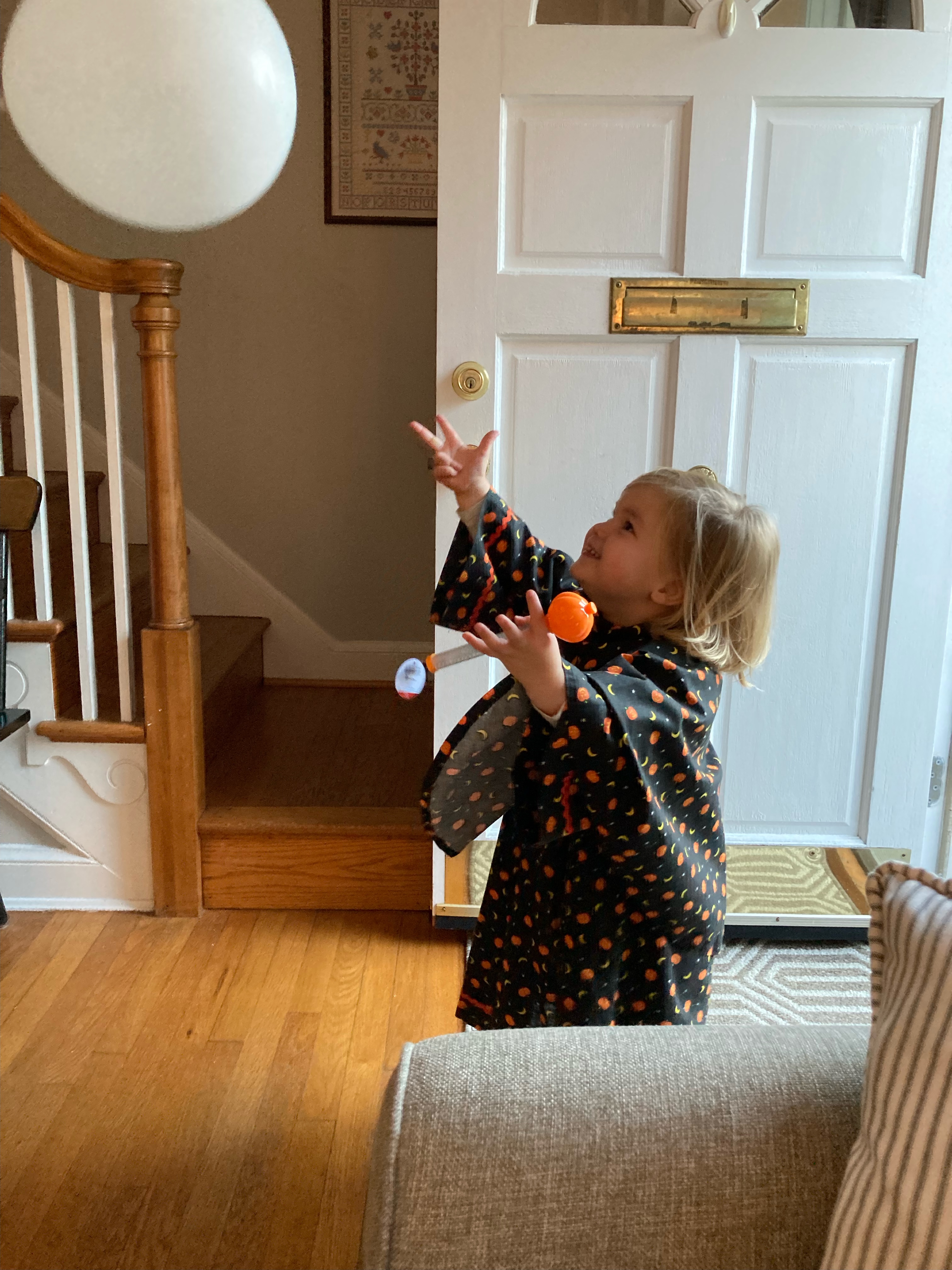
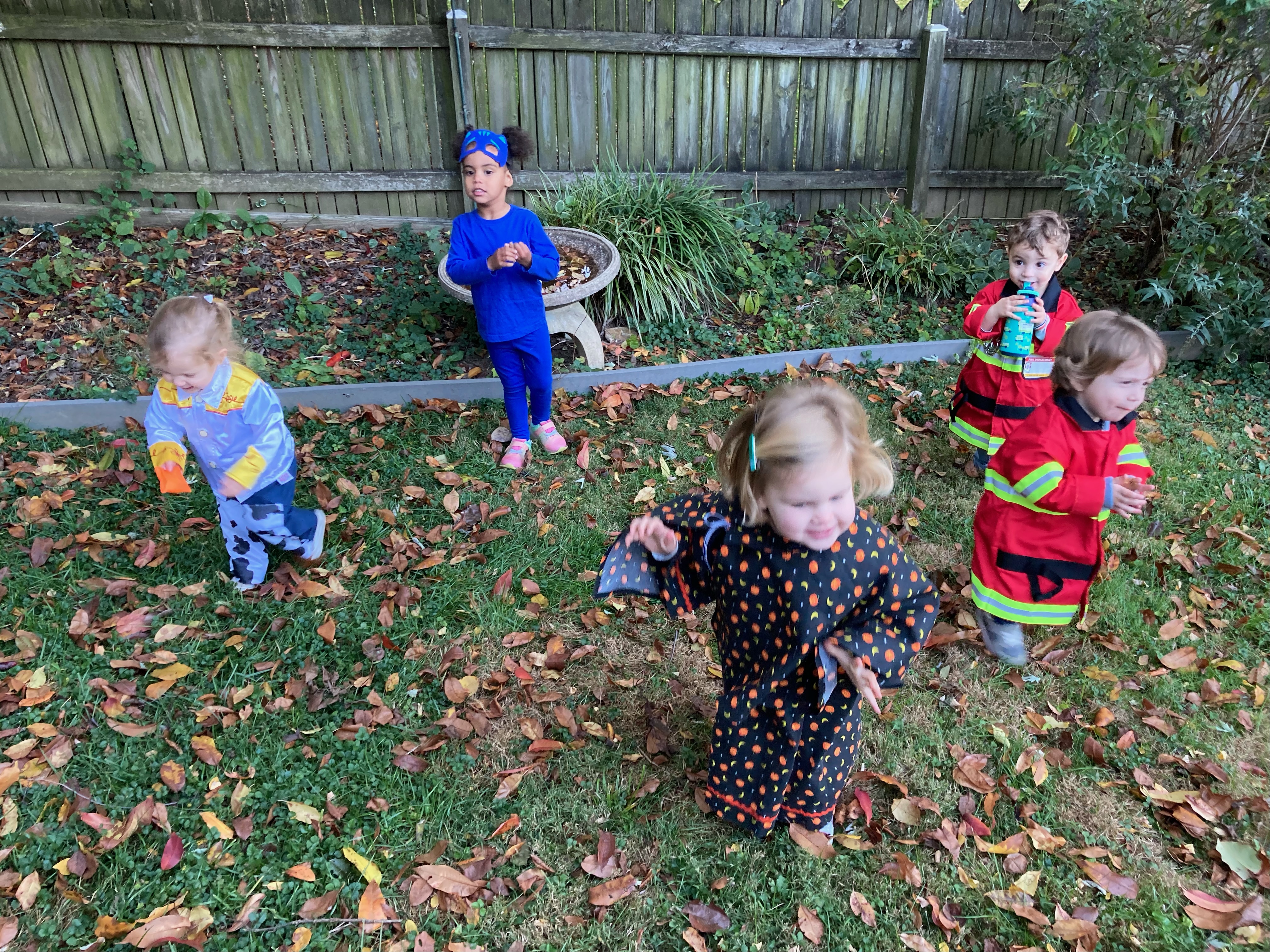
But I enjoyed vicariously Katie’s Halloween party she hosted for some of her wee compadres…
Quelle wild bunch!
Daughter #1 came home and watched Signs (2002) with me and we really enjoyed it. In my book it is not a horror movie; it is a story about a man regaining his faith.
The twins came over for brunch after they went to church. The OM had made shepherd’s pie and the kids ate leftover Chick-fil-A tenders. We had a special Halloween torte from Cosco that was a winner. There were jelly beans in a bowl. It was kind of a free-for-all, as usual, but c’est la vie.
And the OM wore special socks…
But don’t forget that the real reason to celebrate has nothing to do with witches and scary monsters.
Since your majesty and your lordships desire a simple reply, I will answer without horns and without teeth. Unless I am convicted by scripture and plain reason–I do not accept the authority of popes and councils for they have contradicted each other–my conscience is captive to the Word of God. I cannot and will not recant anything, for to go against conscience is neither right nor safe. Here I stand. I cannot do otherwise, God help me.
Another Saturday night, January 1738-39, I had such a sense, how sweet and blessed a thing it was, to walk in the way of duty, to do that which was right and meet to be done, and agreeable to the holy mind of God; that it caused me to break forth into a kind of loud weeping, which held me some time; so that I was forced to shut myself up, and fasten the doors. I could not but as it were cry out, “How happy are they which do that which is right in the sight of God! They are blessed indeed, they are the happy ones!” I had at the same time, a very affecting sense, how meet and suitable it was that God should govern the world, and order all things according to his own pleasure; and I rejoiced in it, that God reigned, and that his will was done.
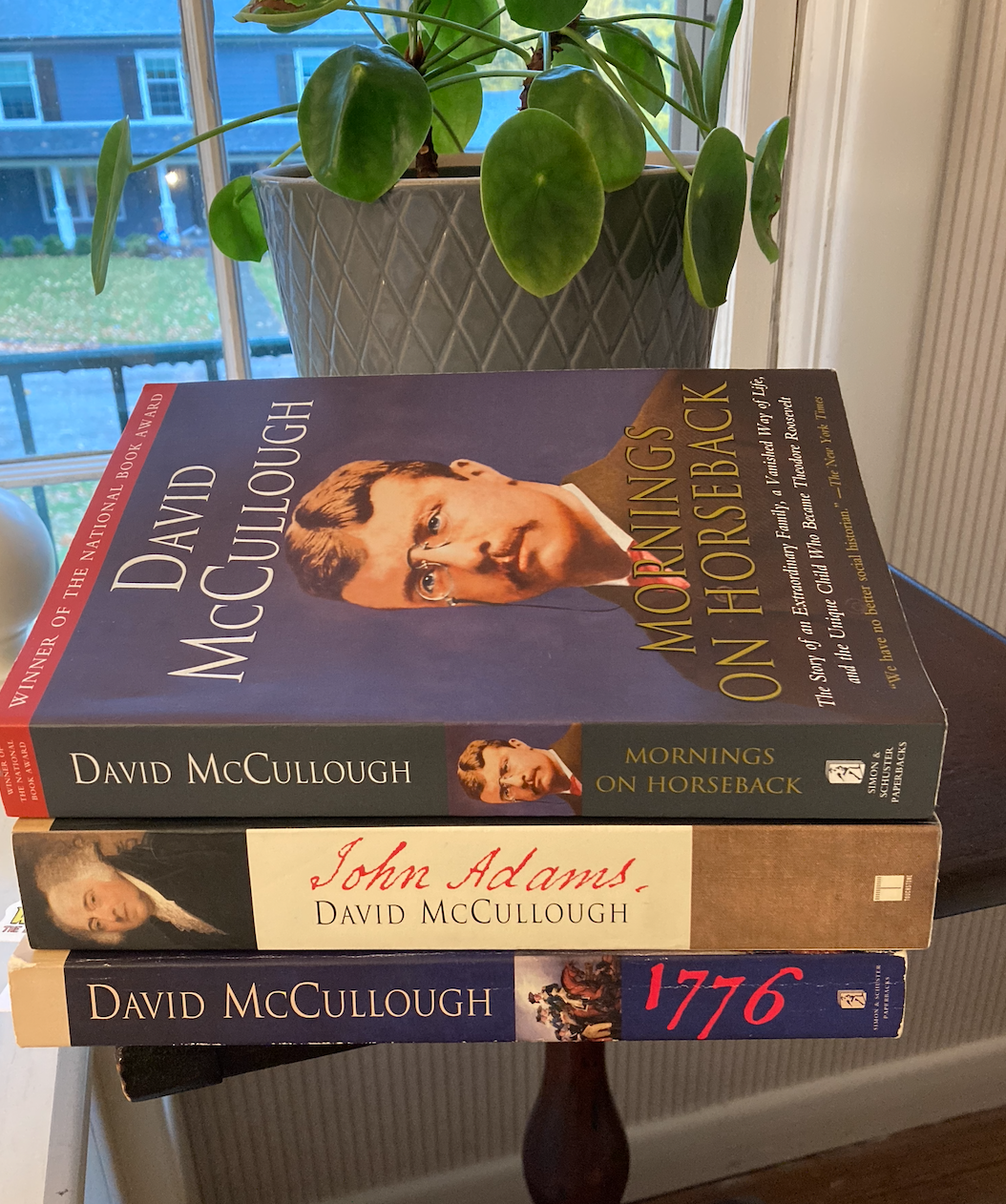
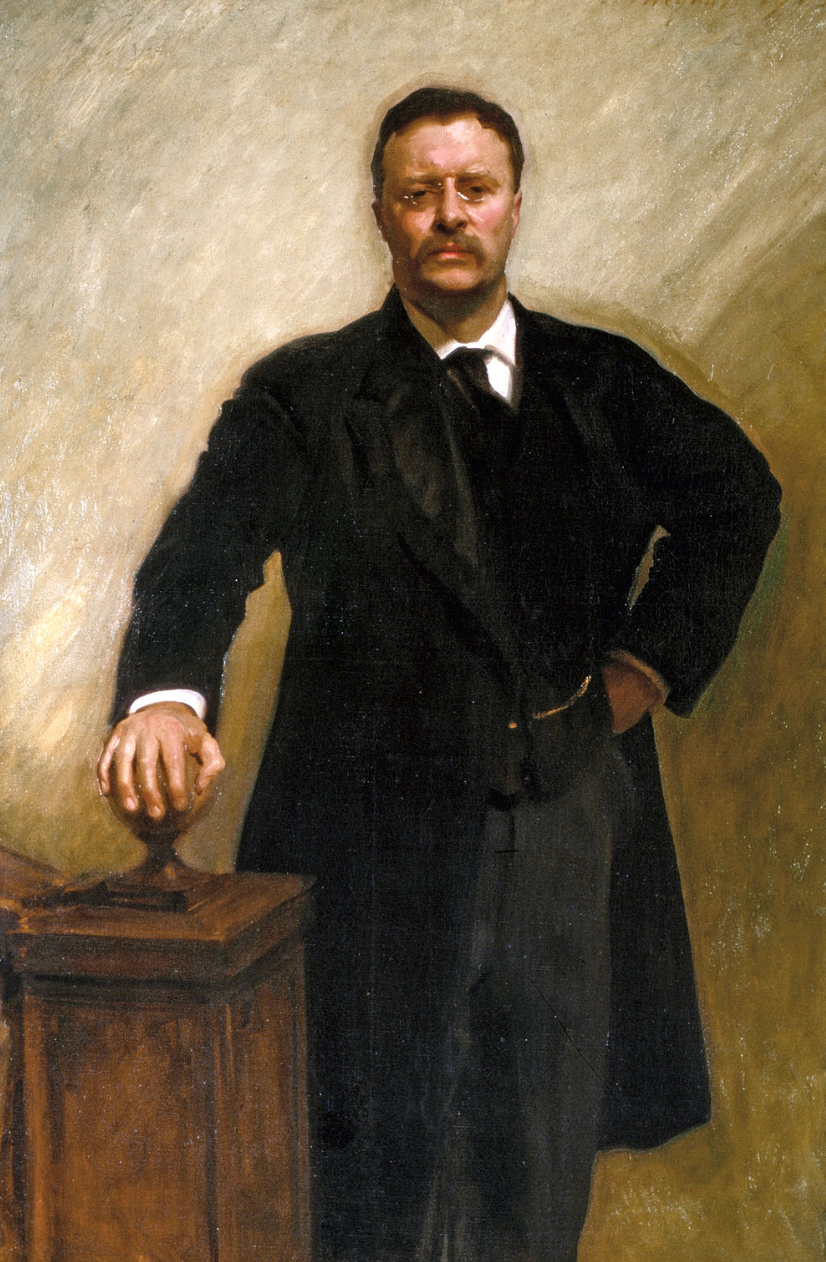
Currently I am reading David McCullough’s book about Theodore Roosevelt’s early years. TR has always been a favorite of mine, but I am learning a lot about his wonderful family. It is fascinating to see how his childhood made the man. As I’ve said before, McCullough understands context and presents history as it happened and not in relation to what is happening today. Today, by the way, is the great man’s birthday, so let’s all toast him tonight.
I am, of course, continuing with my Bible reading and have caught up after falling a wee bit behind while traveling last weekend. Tell me, are not these verses from Psalm 119 relevant to today?
33 Teach me, O Lord, the way of Your statutes, And I shall keep it to the end. 34 Give me understanding, and I shall keep Your law; Indeed, I shall observe it with my whole heart. 35 Make me walk in the path of Your commandments, For I delight in it. 36 Incline my heart to Your testimonies, And not to covetousness. 37 Turn away my eyes from looking at worthless things, And revive me in Your way. 38 Establish Your word to Your servant, Who is devoted to fearing You. 39 Turn away my reproach which I dread, For Your judgments are good. 40 Behold, I long for Your precepts; Revive me in Your righteousness.
Turn away my eyes from looking at worthless things.This is a serious problem for almost everybody these days. Instagram is my personal stumbling block. Can I get an Amen?
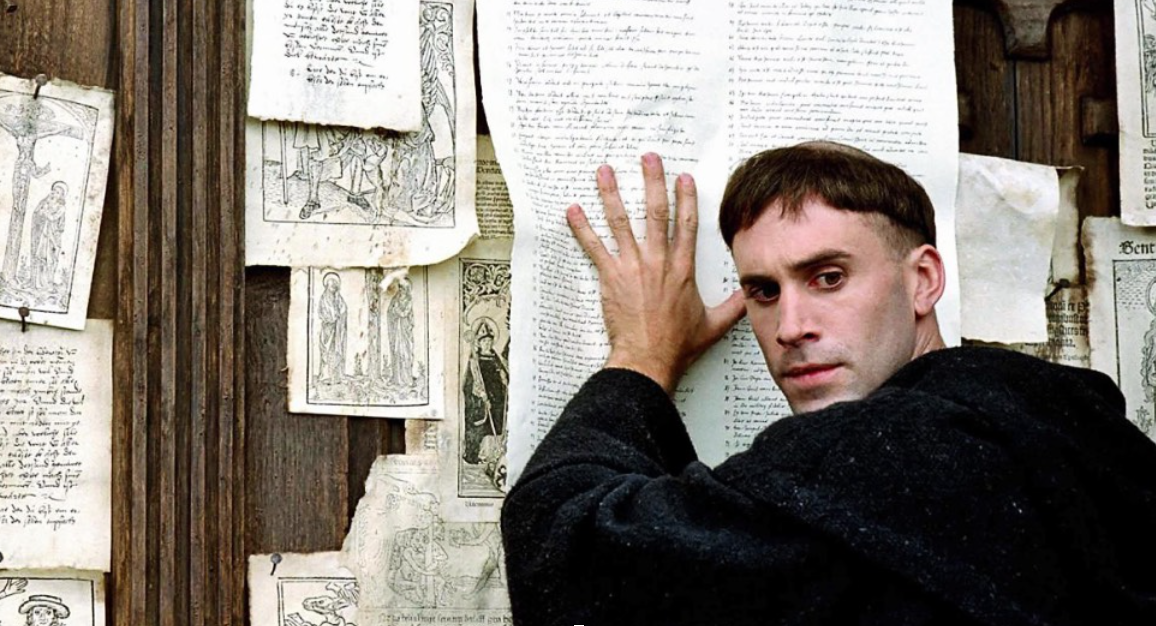
Yes, October 31 is Halloween, but it also marks 505 years since Martin Luther effectively—and unintentionally—sparked the Protestant Reformation with his Ninety-Five Theses. You can watch the award-winning documentary Luther: The Life and Legacy of the German Reformer streaming for free on Ligonier Ministries’ YouTube channel. I will probably also watch the excellent movie Luther (2003) starring Joseph Fiennes as the reformer this weekend.
Meanwhile in weather news, it rained for a night and a day, but yesterday the sun came out and it was a beautiful fall day. The yard is a mess with past due hostas and lots of wet leaves…
…but what ho, it is the bell and it tolleth for me. Time to go inside and read.
I’ve had a pretty crummy week or so but I’m keeping my chin up. I’ve had a difficult time finding anything to watch at night and I’ve found myself just watching episodes of The Simpsons, in order, not specially selected favorite episodes. Today’s title comes from “Bart the Murderer,” an episode I had not seen in ages. The Wikipedia page says Fat Tony is the longest-running role of Joe Mantegna’s career. Fun fact central.
Since I’m down in the dumps, this line from Annie Hall has been amusing me (as it does from time to time):
“I feel that life is divided into the horrible and the miserable. That’s the two categories. The horrible are like, I don’t know, terminal cases, you know, and blind people, crippled. I don’t know how they get through life. It’s amazing to me. And the miserable is everyone else. So you should be thankful that you’re miserable, because that’s very lucky, to be miserable.”
Alvie Singer, Annie Hall
I know, I know, this attitude is all wrong and I am really working on practicing contentment and pursuing righteousness, but sometimes Woody Allen is more my vibe.
Anyway, an interesting thing happened in the Capitol today. The giant chandelier that hangs from the rotunda was lowered to dust and change the lightbulbs. Here it is at eye level from the second floor:
And here it is from the first floor, back in its usual spot.
Yikes.
Licking envelopes and changing lightbulbs. Happy Wednesday!
SILVER SPRING, Md. – Greetings from the Dual Personalities East Coast Poetry Bureau! Senior T. S. Eliot correspondent DN here to mark the centennial of an annus mirabilis in English letters, 1922, when three seminal works of literary modernism debuted: James Joyce’s Ulysses,Virginia Woolf’s Jacob’s Room, and T. S. Eliot’s The Waste Land. October was the crux of this activity. Jacob’s Room was published on October 26, and The Waste Land appeared in the October 1922 issue—the first-ever issue!—of Eliot’s new literary quarterly, The Criterion. Talk about a side one, track one.
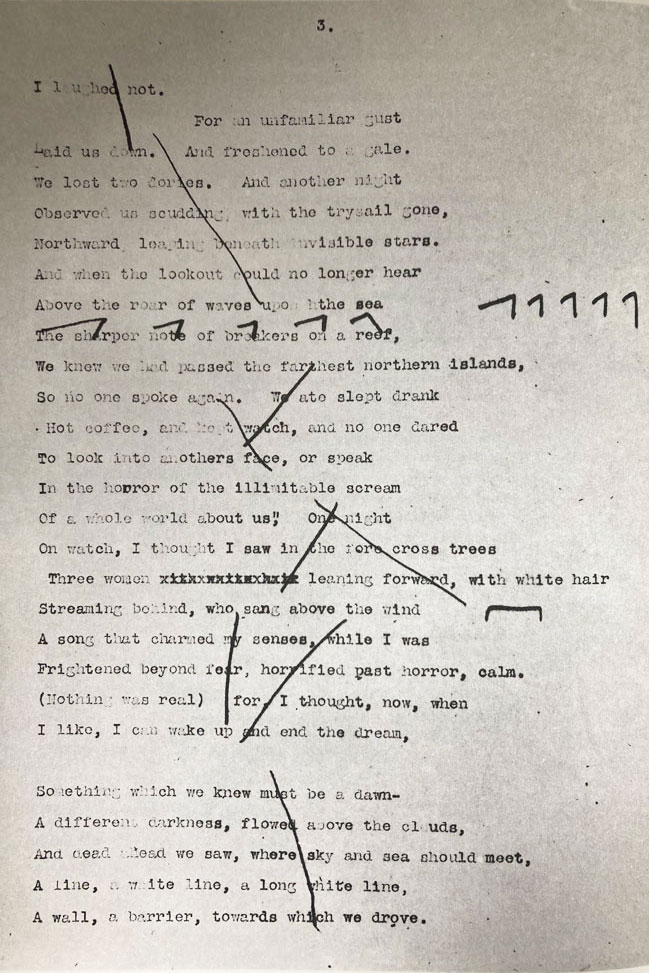
Both Woolf’s novel and Eliot’s poem break with formal conventions to treat the theme of loss after the Great War. Jacob’s Room is an elegy to a generation of young men struck down in their prime, while The Waste Land is (or is often interpreted to represent) an artifact of cultural loss in the century’s first decades. As you might expect from its title, the tone of The Waste Land is generally despairing. The poem reinforces this despair through its formal difficulty. Readers of The Waste Land encounter a cacophony of different voices and literary references juxtaposed without context or explanation. This obscurity is alienating: how on earth is this thing even readable? Such formal alienation is purposeful. Ezra Pound, to whom Eliot sent an early typescript draft, famously x-ed out entire sections of the poem to achieve this effect of obscurity.
Eliot dedicated the poem “FOR EZRA POUND / IL MIGLIOR FABBRO,” a phrase from Dante’s Purgatorio that translates to “the better craftsman.” A nice dedication, but “craftsman” is also kind of a dig. They were competitive guys! Still, Pound’s editorial eye was vital to the poem’s effects, in which compression of language reflects the alienation of industrialized, individualized, interwar modern life. And your modernist lit professor wants you not just to read but to reread it?! The poem is a hard sell.
In 1922, “hard sell” was literally true: the process of shopping the poem as a standalone book was exhausting, as Eliot continually sought to convince publishers that any readers would purchase it. Pound articulated a defense of the poem’s difficulty—its intentional obscurity—in a letter to Eliot: “Waste Land is one of the best things you [Eliot] have done … It is for the elect or the remnant or the select few or the superior guys, or any word you may choose, for the small number of readers that it is certain to have.”
For a work so self-consciously mandarin, The Waste Land continues to attract readers. There is something curiously engaging about it. The reader gets just enough—draws enough pleasure from the poem’s language, understands enough of its references—to continue reading on. Maybe you’re foolish enough to wish you were one of the “superior guys,” and you end up with a degree in modernist literature ¯\_(ツ)_/¯. This attraction was present in 1922 as well: all the cool kids wanted to be in the know, one of the small number of elect readers. A famous passage from Evelyn Waugh’s Brideshead Revisited captures how the poem held cultural cache for the youth. In one scene, the trendiest member in a group of edgy aesthetes broadcasts the poem from a second story window.
After luncheon he stood on the balcony with a megaphone which had appeared surprisingly among the bric-a-brac of Sebastian’s room, and in languishing tones recited passages from The Waste Land to the sweatered and muffled throng that was on its way to the river.
“I, Tiresias, have foresuffered all.” he sobbed to them from the Venetian arches;
“Enacted on this same d-divan or b-bed, / I who have sat by Thebes below the wall / And walked among the l-l-lowest of the dead…”
I like this scene because it captures how Eliot’s poem, as a cultural phenomenon, was something that elicited big emotions. Languishing tones. Sobbing. On its face, this reaction might seem at odds with The Waste Land’s current reputation as a Difficult Poem™. However, in the 1920s, this complexity was central to its emotional force.
Today, your mileage may vary. If you’re of a certain mood and mindset, I think, the way that The Waste Land suspends meaning just beyond articulation can be stimulating. The poem dwells upon loss, yes, but it also holds out the possibility of generation or growth. The reason that cultural loss is so devastating is because this absence presents a conundrum for the future: How can we grow from here?
April is the cruelest month, breeding
Lilacs out of the dead land, mixing
Memory and desire, stirring
Dull roots with spring rain.
lines 1-4
These are the poem’s famous first lines, ones that present a barren land. But hark: on this ground, something grows. The land is infertile, but still, life is beginning. Stirred by rain, the dull roots appear to remember how live. They even desire to do so! But this desire is complex: the roots aren’t exactly choosing to live. Rather, they are being bred. The month is cruel. The roots seem more haunted by memory and compelled by desire than fully flourishing. They only persist—and barely at that.
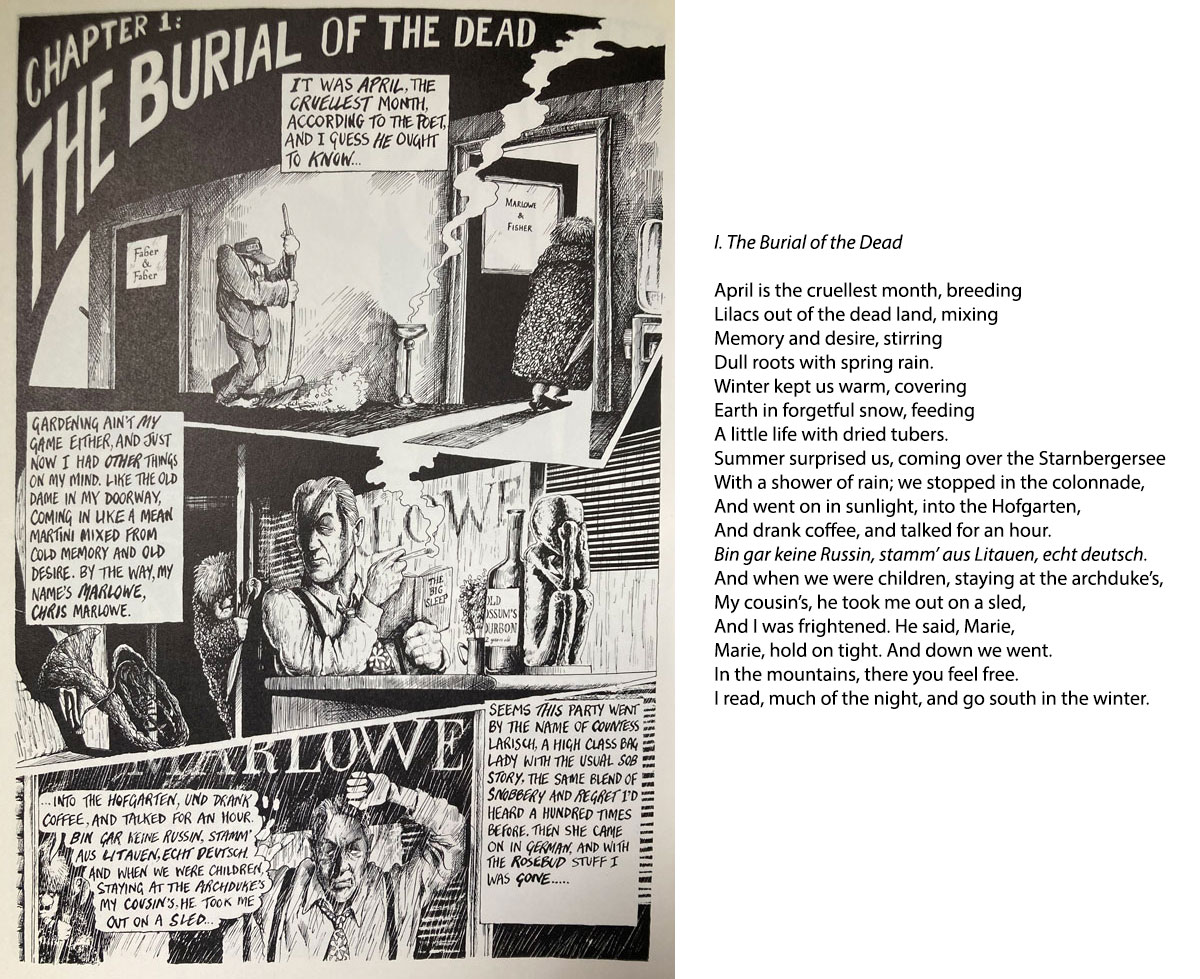
To the cartoonist Martin Rowson in 1990, this mixture felt familiar. Who else is haunted by memory, compelled by desire, and just barely eking out an existence? Who else is searching among opaque clues for a meaning or truth that just eludes them?
The transformation of The Waste Land into a Raymond Chandler mystery allegorizes the experience of reading the poem. Finding sense can be frustrating, yet it can also be stimulating.
Ultimately, Rowson’s graphic novel doesn’t hang together in its own right as a detective story. You need read it side-by-side with the poem…or, I suppose, have already memorized The Waste Land (but who would?). To me, that’s part of what I like about the comic. It’s not self-serious. Rather, it uses The Waste Land to generate something fun by translating the poem’s gloomy mood into noir. It is, as the kids say, a vibe. And vibes were very much part of The Waste Land’s appeal in the first place.
Unreal City,
Under the brown fog of a winter dawn,
A crowd flowed over London Bridge, so many,
I had not thought death had undone so many.
Sighs, short and infrequent, were exhaled,
And each man fixed his eyes before his feet.
Flowed up the hill and down King William Street,
To where Saint Mary Woolnoth kept the hours
With a dead sound on the final stroke of nine.
There I saw one I knew, and stopped him, crying: “Stetson!
“You who were with me in the ships at Mylae!
“That corpse you planted last year in your garden,
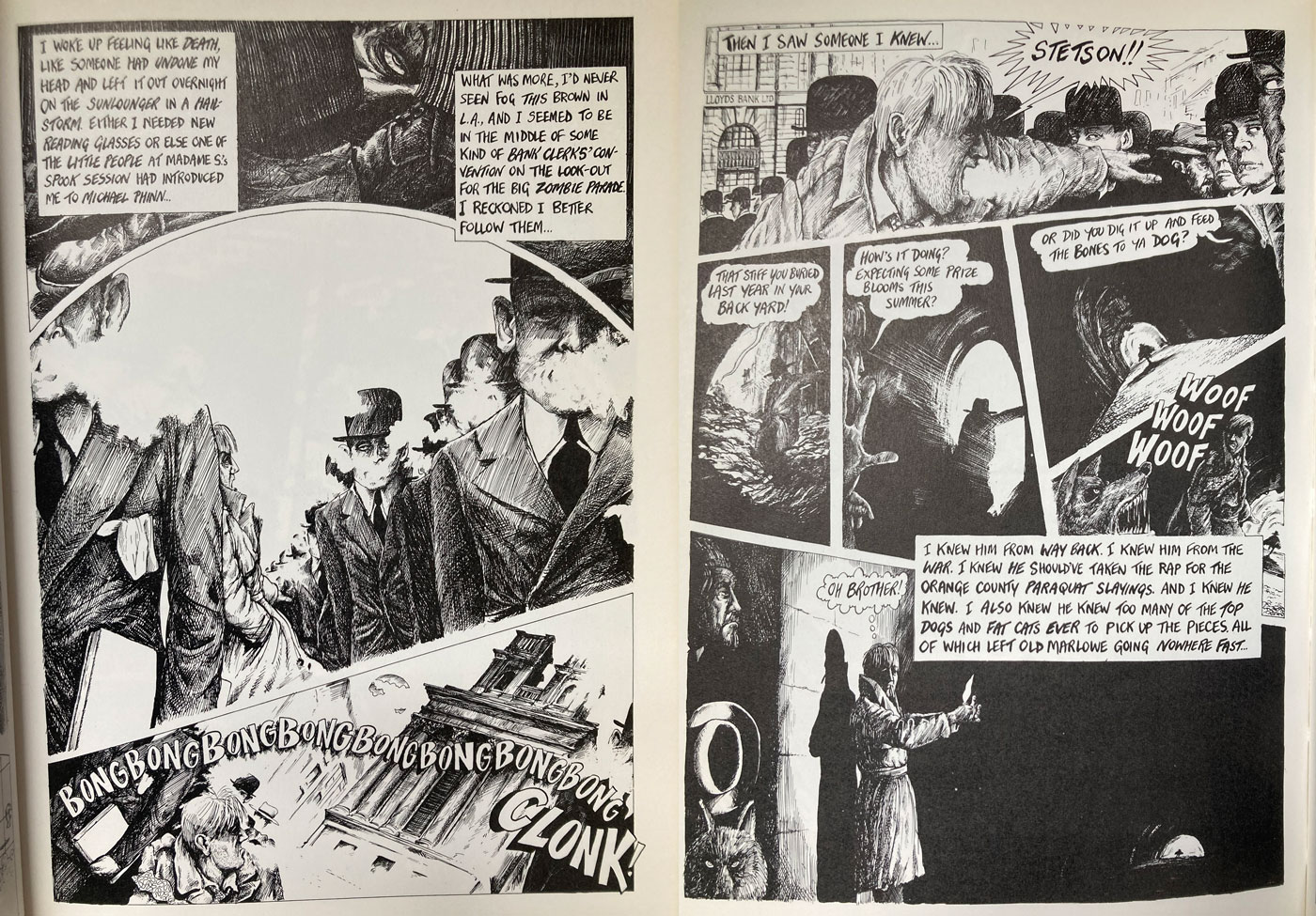
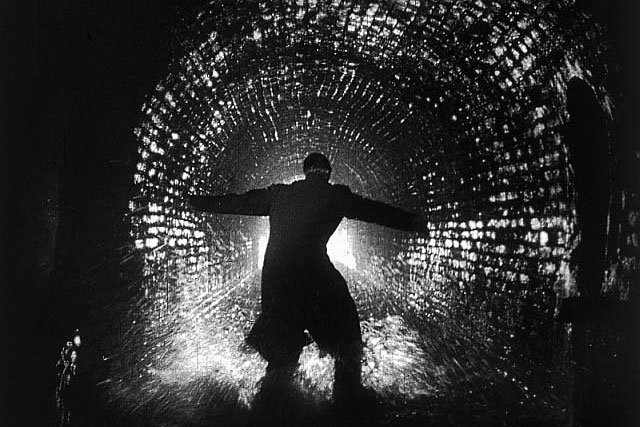
There’s lots of detail to enjoy here—the foggy crowd, Ezra Pound as Stetson, “mon frère” as “oh brother!”—but I especially love how the comic embraces The Waste Land’s approach to incorporating external cultural touchstones. In this case, on the middle panels of the second page, the imagery of the Vienna sewers from the famous chase scene in The Third Man.
Hey, I see what he did there! Maybe I really am one of the superior guys.
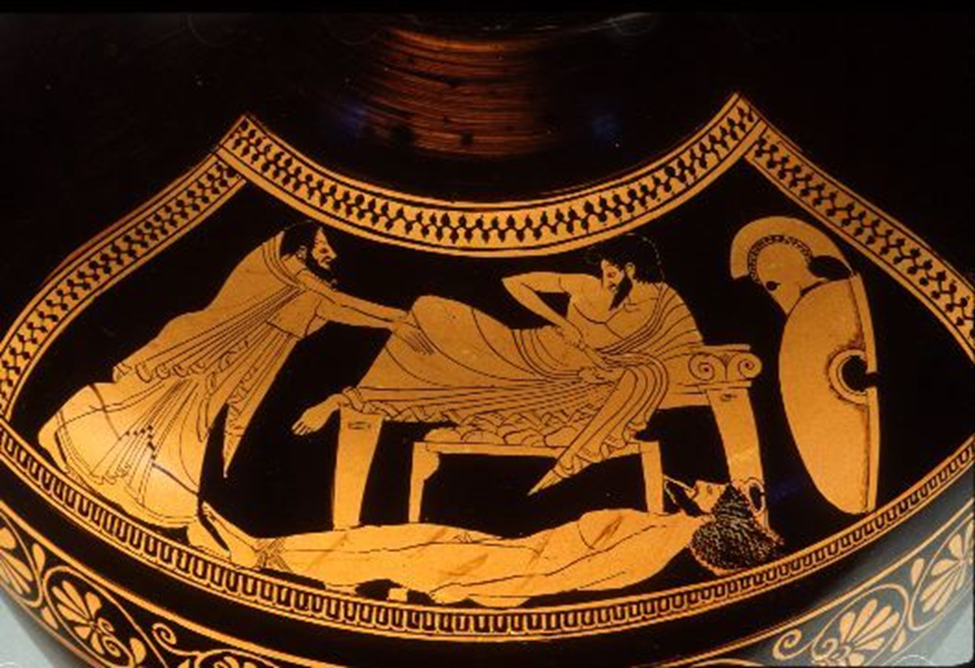
Recently, I came across this article that compares Homer’s The Iliad to John Ford’s The Searchers. I was surprised to discover that the comparison works pretty well, and not in an entirely superficial way (well, maybe). Here’s a quick reminder of the salient points of The Iliad. When Agamemnon dishonors Achilles, the latter decides to sit out the war. As a result of losing their best fighter, things go badly wrong for the Greeks until Patroclus borrows Achilles’ armor to wear, so that the Trojans think Achilles is fighting. When Patroclus, Achilles best friend and cousin, gets killed, Achilles is beyond devastated that he wasn’t there to help his friend, and he goes for revenge in a big way. After slaughtering so many Trojans that the river becomes dammed with corpses, he kills Hector, the Trojan’s number one warrior, and mutilates the body until Priam, Hector’s father, visits to beg for his son’s return.
Priam’s grief reminds Achilles that his own father will soon mourn, for Achilles knows he will die at Troy. His humanity restored, he returns Hector’s body and the epic ends with the Trojan’s funeral. How, you ask, would that relate to The Searchers? Let’s see.
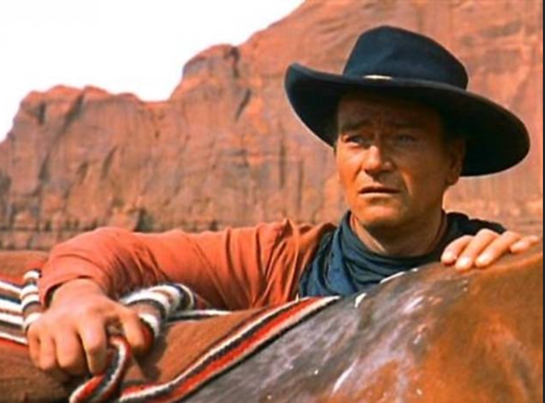
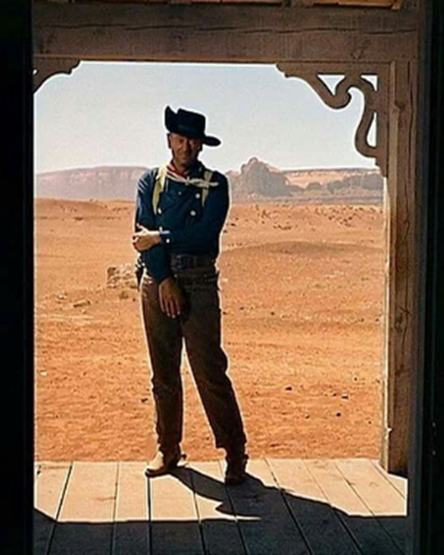
Years after fighting for the Confederacy during the Civil War, Ethan Edwards reunites with his brother’s family and particularly his sister-in-law, Martha, whom he loves. She returns that love but both are good people and do nothing about it. Martha is Ethan’s Patroclus.
When an Indian raid elsewhere draws the men away from the homesteads, Indians kill all of the family except for the youngest daughter, Debbie, whom they take. Thus, like Achilles, Ethan is absent when disaster strikes, and he cannot save his beloved Martha.
Like Achilles, Ethen is devasted but determined to get revenge. A changed man, he spends years looking for Debbie.
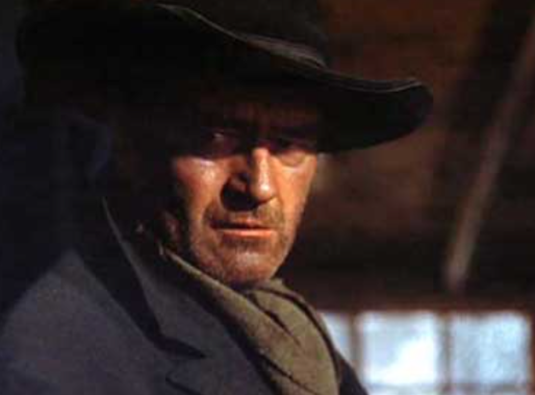
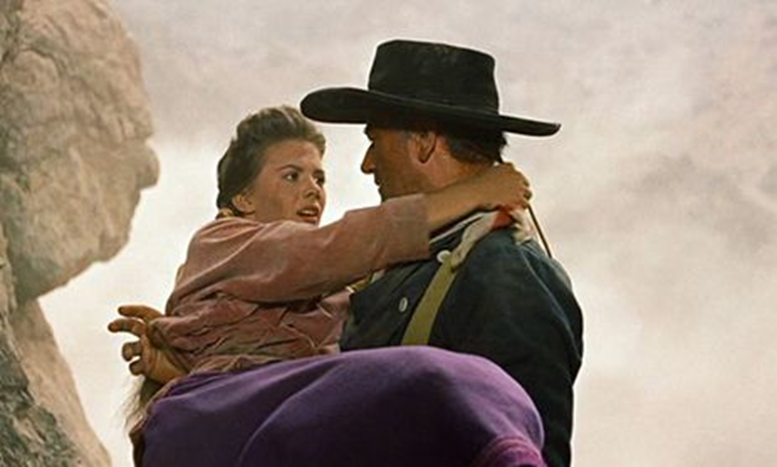
When he and Martin, Debbie’s adopted brother, catch up with the Indians who stole Debbie, Ethan kills their leader, Scar, and scalps him, thus (according to the article) crossing the line of regular heroic behavior. [I confess that I don’t remember Ethan scalping Scar and I could not verify it because I cannot use my DVD at the moment, but I’ll go with it.] Scar is Ethan’s Hector. Just when Ethan seems to be beyond redemption, he finds and embraces Debbie rather than killing her. His confrontation with Debbie restores his humanity. She is Ethan’s Priam.
Ethan takes Debbie home but realizes that he does not belong among the other settlers and never will.
Ethan, like Achilles and most of the other heroes of The Iliad does not get a happy homecoming. Think about it. Achilles dies at Troy. Odysseus arrives home alone and then has to fight off the suitors to reclaim his home. After doing so, the gods require him to make another long journey in order to purify himself. Odysseus doesn’t get any peace until he’s an old man. Meanwhile, Agamemnon finds his adulterous wife who then murders him, and Ajax kills himself. Nope. Those Greek heroes did not find happy post-war peace.
The article is worth a read, but I leave it up to you to decide whether the comparison tells us anything new about The Searchers, John Ford or westerns in general. Please comment!
Well, I am trying to pull my act together so I can get on an airplane tomorrow morning and fly to D.C. First I have to go to a funeral today for an old church friend. Her husband died a few years ago. Their son discovered him, still holding hands with his wife, in his favorite recliner. He had died watching an old John Wayne movie and she hadn’t noticed. Now she is gone too and back with Joe.
Our family has a lot of memories of this couple. We spent many Christmas Eves with them at an annual party they hosted at their home for people who didn’t have any family in town. She was also the head of the Sunday School for many years and was the Mother Hen of the congregation until an uppity interim priest who knew best fired her. It was a terrible blow to her; she never really recovered. People do terrible things to each other (and often at church), but that is life.
Into paradise may the angels lead thee, Mary Etta, and at thy coming may the martyrs receive thee, and bring thee into the holy city Jerusalem. (BCP, Burial of the Dead)
This article is helpful and clear. “It’s just Jesus. In Christ is all we get from God. Nothing more. Nothing other. He is the answer to our every need.”
And there are signs of hope in secular Scotland. And what ho, Sinclair Ferguson has retired home to Scotland. That should help.
Earlier this week I picked up a nice 18th century candle stand at an auction. It works nicely as a plant stand–of which I need many!
Practically every window in my house has a plant or two stationed there.
What’s a girl to do? When they come in from the Florida Room, they have to go somewhere.
Since I will be away having super fun with this hilarious youngster…
…I will not be able to post on Monday. But never fear, dear DN has offered to do so. So you can look forward to a more intellectually stimulating post than usual. Yay!
Have a good weekend. Pray for traveling mercies for little me as I brave the airport scene. “He will command his angels concerning you to guard you carefully.” (Luke 4:10)
How should we be able to forget those ancient myths that are at the beginning of all peoples, the myths about dragons that at the last moment turn into princesses; perhaps all the dragons of our lives are princesses who are only waiting to see us once beautiful and brave. Perhaps everything terrible is in its deepest being something helpless that wants help from us.
So you must not be frightened if a sadness rises up before you larger than any you have ever seen; if a restiveness, like light and cloudshadows, passes over your hands and over all you do. You must think that something is happening with you, that life has not forgotten you, that it holds you in its hand; it will not let you fall. Why do you want to shut out of your life any uneasiness, any miseries, or any depressions? For after all, you do not know what work these conditions are doing inside you.
Rainer Maria Rilke, Letters to a Young Poet
And don’t forget:
The steadfast love of the Lord never ceases; his mercies never come to an end; they are new every morning; great is your faithfulness.
Lamentations 3: 22-23
The painting is Interior with Cello by Carl Holsoe
Our weather continues to be beautiful, but cold temps are on the way, or so they say. I moved all the plants out of the Florida Room in anticipation of frosty temperatures. Lottie noted this on Sunday and declared that we could no longer call it the “Nature Room.” C’est la vie.
In other news, today is the OM and my anniversary–42 years.
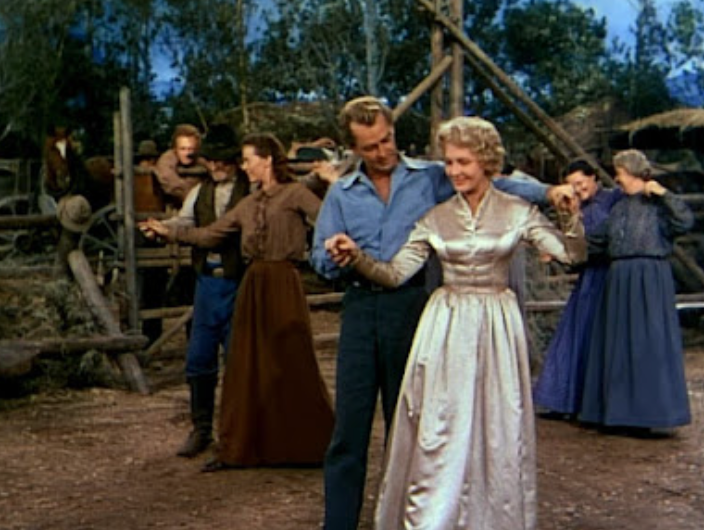
I plan to watch Shane (1953) as this is my new tradition. There is an anniversary celebration in that movie, you will recall, not long before the denouement of the film. Maybe the OM will run out to Chick-fil-A for dinner.
Meanwhile I am trying to get ready for a quick jaunt to Maryland on Friday to visit this little missy and her dear parents…
Go Terps!
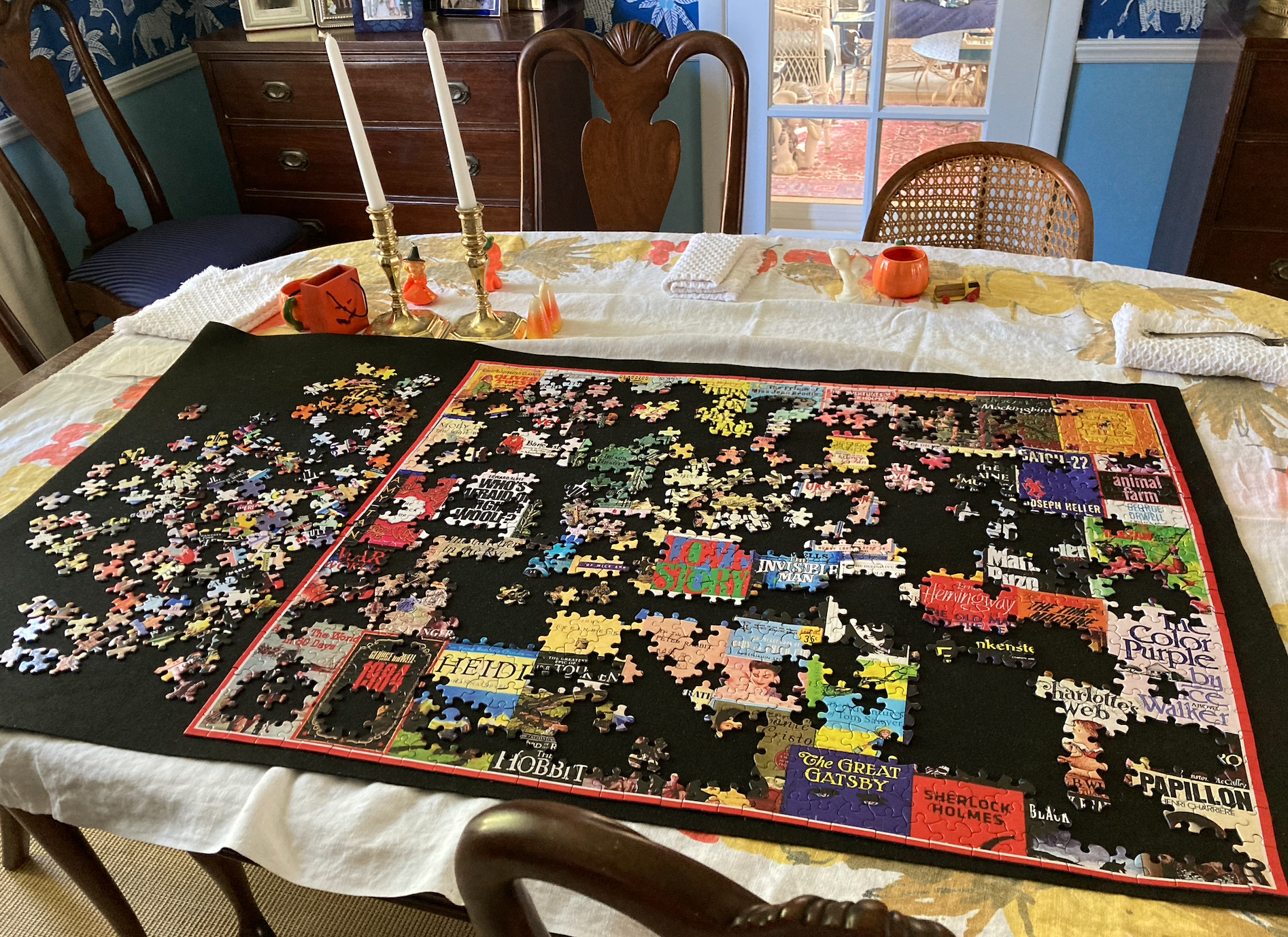
But I keep getting sidetracked by this 1,000 piece puzzle…
And, by the way, earlier this month was the 67th anniversary of the debut of the Captain Kangaroo Show in 1955. I watched this show for years in the sixties and loved it. The Captain actually read books on the show. I remember vividly his reading The Little House by Virginia Lee Burton and the pan and scan way they showed the pages. It was very simple and very effective, nothing showy or loud. Maybe there was some silliness with Mr. Greenjeans, Bunny Rabbit, Mr. Moose, and the rest. I remember them all with great affection.
Here’s an interesting little video about the show:
























 dual personalities