These I have loved: White plates and cups, clean-gleaming, Ringed with blue lines*
by chuckofish
Some people like to rescue lost animals or devote themselves to gardening. While I admire their altruism, I’m better suited to inanimate objects that never bite, aren’t bug-infested and don’t die. We all need to play to our strengths. Recently, I rescued some antique dinnerware at a local auction and then spent a blissful afternoon adding a few new pieces to my hutch and putting others away for a rest.
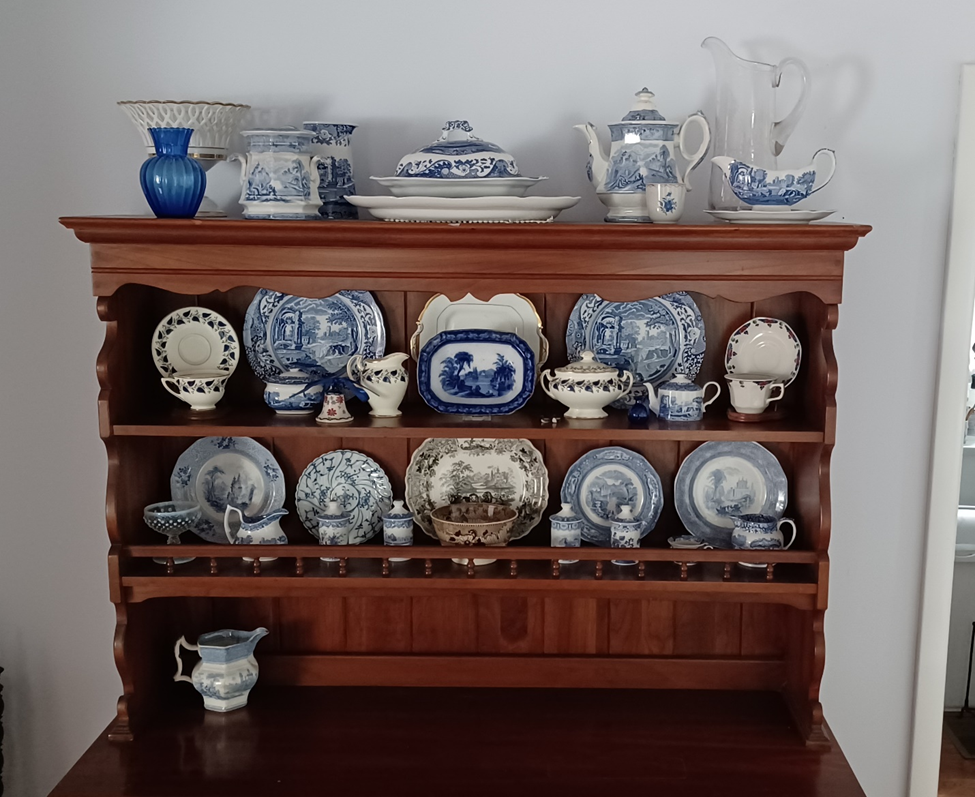
Then I got down to research. Though representing different Staffordshire manufacturers, the new (old) plates (three blue transferware plates on the lower shelf), the tea pot, sugar jar (top of hutch) and the creamer (all by itself on the bottom) all date to 1850 or earlier. Let’s take a closer look at the plates on the lower shelf. Here’s the one on the far left.
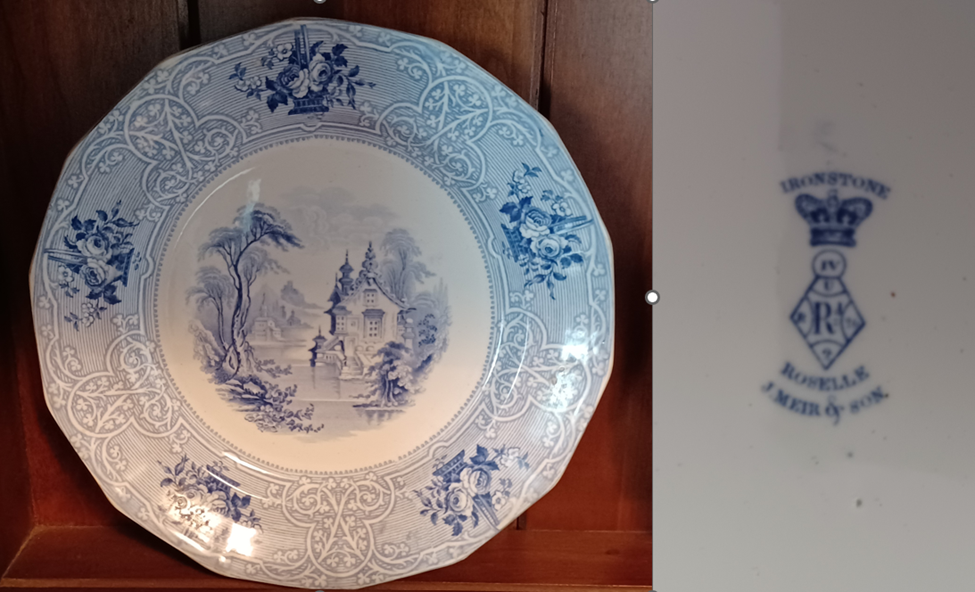
I learned how to read the diamond mark here, but basically it tells us that the piece was registered on August 26th, 1848, by John Meier and Son, a company located in Tunstall, Stoke-on-Trent, England. The pattern is called Roselle.
On the opposite end of the shelf, we find this plate.
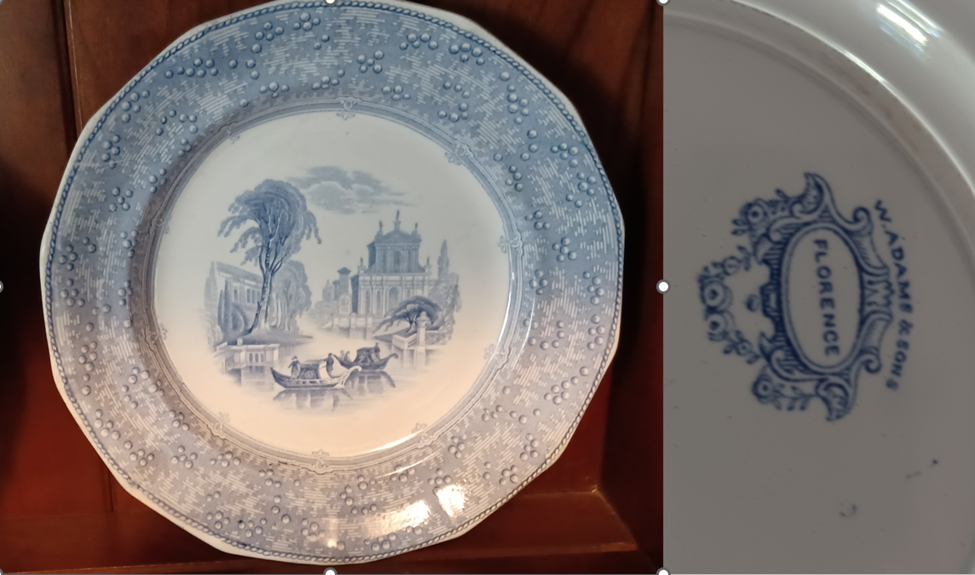
W. Adams and Sons were also based in Stoke-on-Trent, but the family developed several different inter-connected companies. If you are interested, you can read about it here. I gather from other sites that this plate pattern also dates to about 1850.
The similar looking plate next to the one above was made by yet another Stoke-on-Trent based entrepreneur, this one being Thomas Goodfellow, who operated between 1829 and 1854.
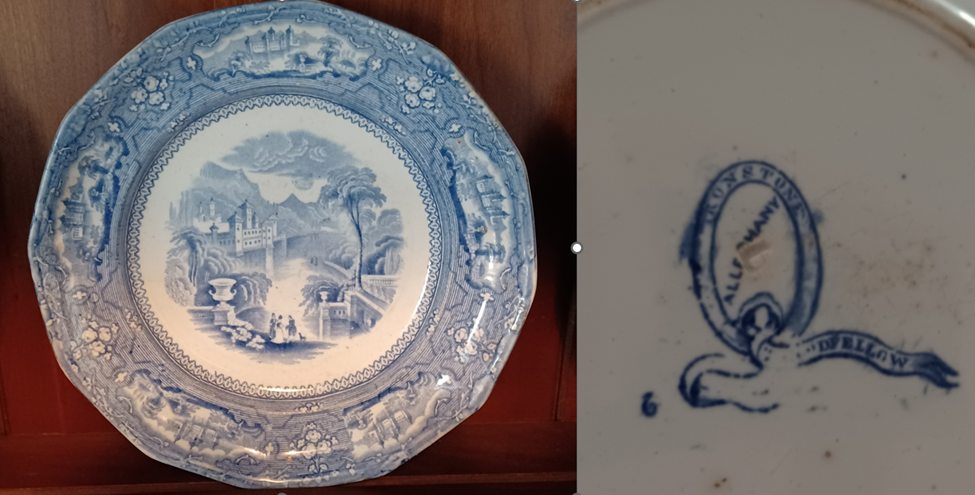
The plates are all in very good condition, as are two large platters that, alas, I have nowhere to display.
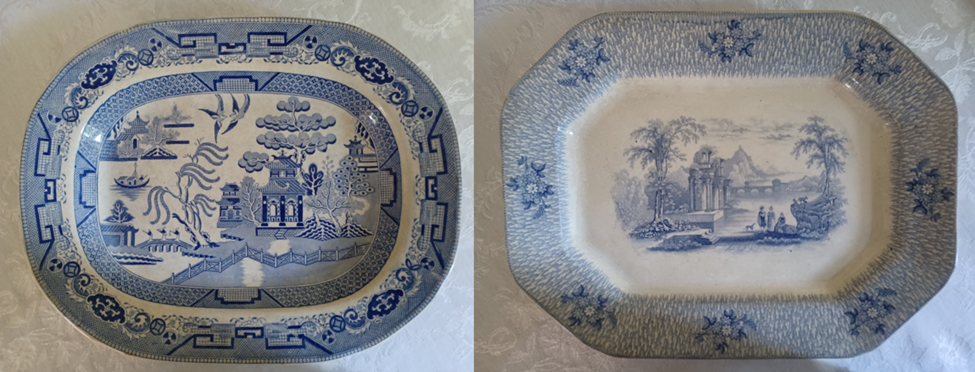
I’m still researching their marks, but so far all indications are that they are English Staffordshire from Stoke-on-Trent and were made around 1850. Whoever owned all of these pieces clearly had a penchant for obscure mid-19th century transferware. Delighted as I am with these finds, I can see why Spode outshone and outlasted the smaller manufacturers, whose blues are less vibrant, and whose patterns are busier and sometimes less sophisticated (i.e., the edge design on the middle plate and bottom right platter). Still, they are lovely and definitely worth rescuing!
That’s all I have to show for the week unless you count tidying, doing genealogy and reading. All is well and blessedly quiet. How are things with you?
*Rupert Brooke, “The Great Lover”
 dual personalities