Are not two sparrows sold for a cent?*
by chuckofish
With the help of our eldest son, we got our Christmas tree up and decorated last weekend. Every year I photograph the tree, though there is little to distinguish one year’s tree from another. Since I got my smartphone, the clarity has certainly improved, but in the photo below I managed to cut off the topper angel’s head. Obviously, I need to work on composition. (I also see the need to rearrange some of the lights. Note the big empty hole around the Idaho ornament at the lower center of the tree). We’ll consider this year’s tree a work in progress.

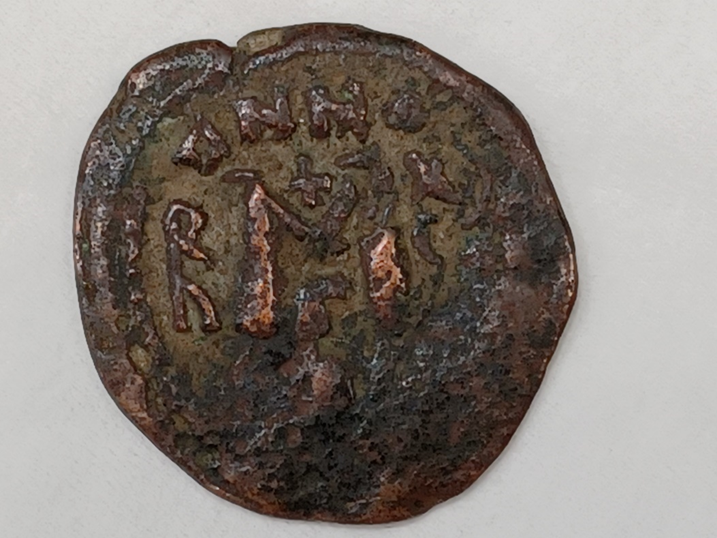
Aside from seasonal activities, we amused ourselves one evening doing numismatic research. One of my recent auction lot purchases included a few mysterious old coins, and we decided to try to identify them. The DH quickly recognized that he had a 7th century Byzantine follis.
The other side depicts the Empress Martina, the Emperor Heraclius (610-641) and their son Heraclius Constantine standing together, as in this example the DH found online.
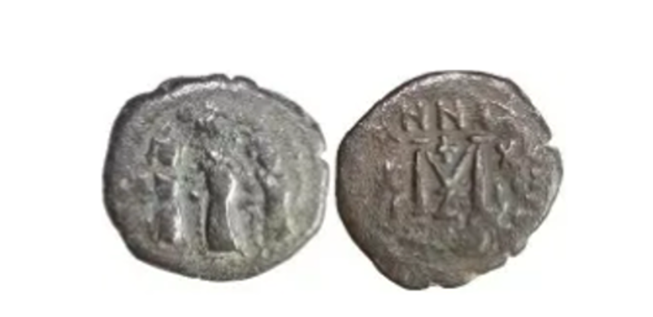
Apparently, the family caused quite a scandal since Martina, who was Heraclius’s second wife, was also his niece. His first wife, who had been extremely popular, died young, a fact that made the incestuous second marriage seem that much worse. Still, the royal couple managed to mint some celebratory coins and retain power in spite of their poor moral choices.
The coin I investigated also involved crime, albeit not the racy kind. It is a Roman denarius or antoninianus that I believe depicts Spanish-born Laelianus, who led a revolt in Mainz, Germany, where he was a governor in 269 AD. He held power long enough to mint some money before the rightful emperor, Postumus, put an end to his rival’s brief reign.
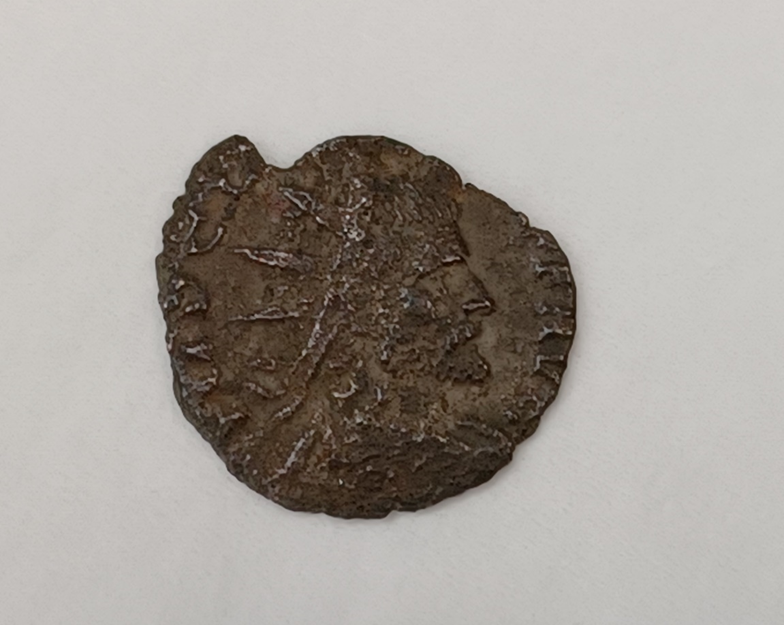
The reverse shows a winged victory.
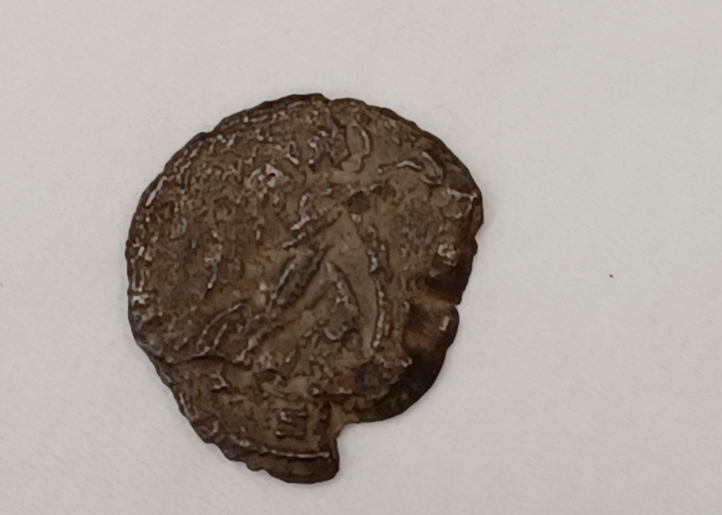
So much for the Spanish usurper and his 15 minutes of fame. He had a nice profile, though, don’t you think?
Taking on a major linguistic challenge, James chose one of the two Asian coins in the group.
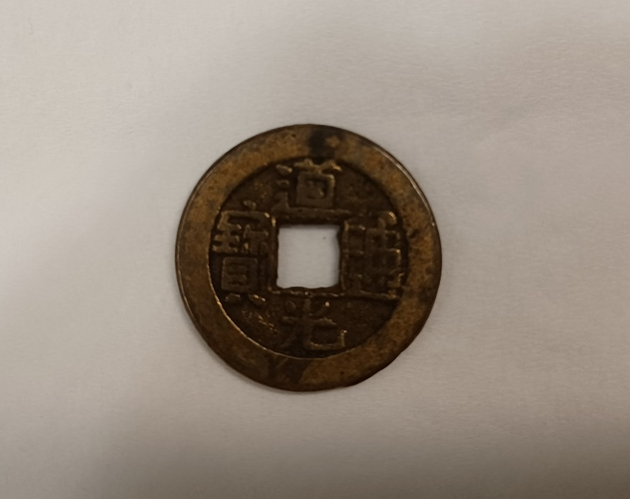
He discovered that this side has Chinese characters while the other side sports a different script that may be Vietnamese. The coin seems to date to the second half of the 19th century, but that’s as much as we can find out. James concluded that, far from being cursed or magical, the coin is simply old, loose change.
We could say the same for the Roman/Byzantine coins which are very small and thin, and for all we know could be fake. Even so, we had fun investigating. Next time you are bored, look around your house and see if there isn’t some object that raises your interest. Spend an hour or two trying to find out about it. You might learn about long-forgotten political chicanery or the shocking shenanigans of ancient royals! The artist Vasily Kandinsky captured this idea eloquently: “Everything that is dead quivers. Not only the things of poetry, stars, moon, wood, flowers, but even a white trouser button glittering out of a puddle in the street…” – even old coins have stories to tell.
Have a grand weekend! My hope is to finish my grading today and take off tomorrow, my birthday. The weather is supposed to be bad, so I have the perfect excuse to stay home and DO NOTHING!
*Matthew 10:29
 dual personalities