dual personalities

Month: August, 2021

“and in the rhythm of the swim/ I hummed a two-four-time slow hymn”*

by chuckofish

So have you been watching the Tokyo Olympics? Me neither. I have just lost all interest since everyone went professional. But I did enjoy being reminded of Billy Mills, the only American to win the Gold Medal for the Men’s 10,000 meters long-distance running event at the Summer Olympic Games. A Native American from the University of Kansas who was a three-time NCAA All-America cross-country runner but not expected to distinguish himself at the Olympics, he surprised everyone when he won Gold in 1964 in Tokyo. It is exciting to watch him come from behind and blast over the finish line.
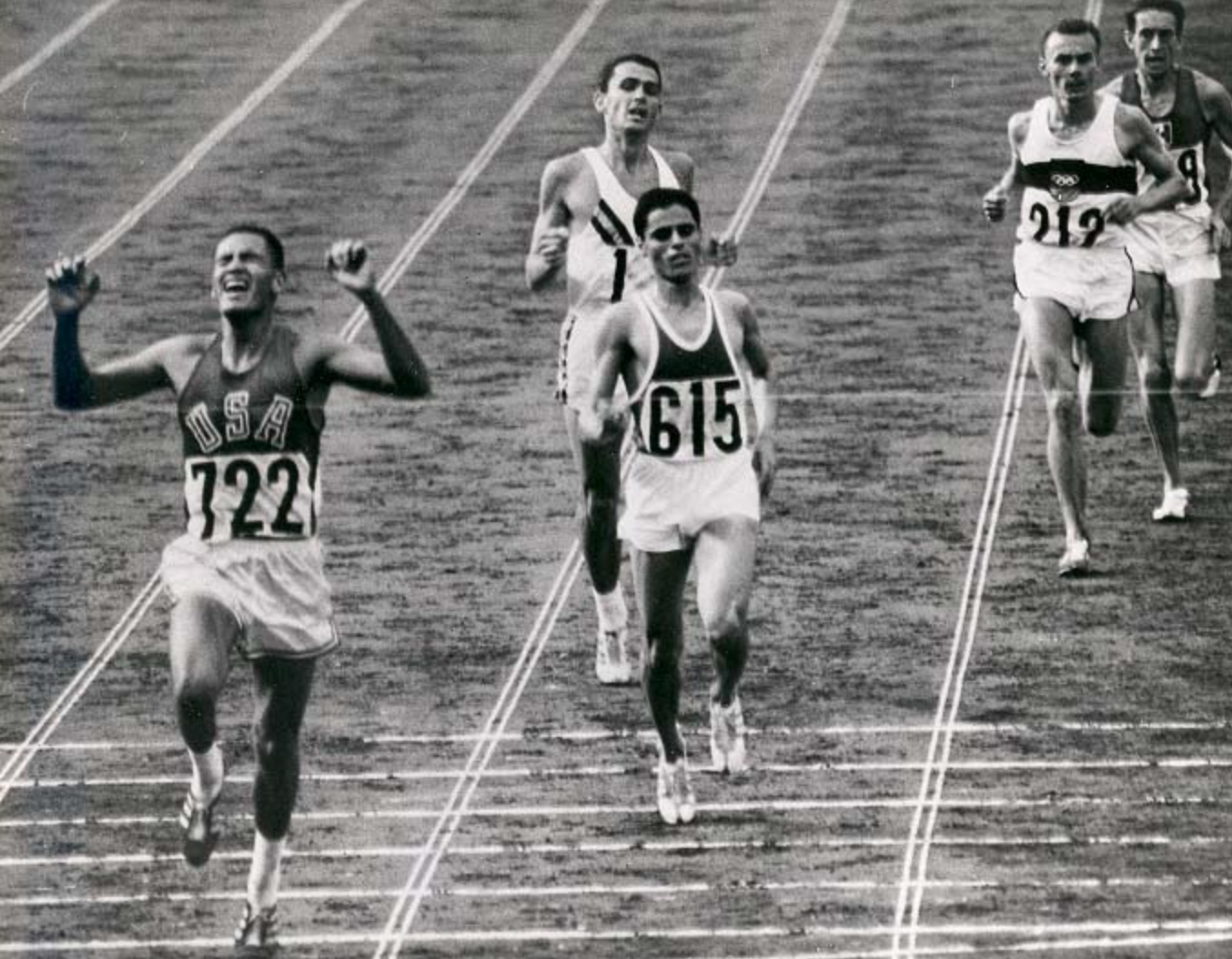
That is what the Olympics are all about to me. Amateurs who push themselves to do more than they think they can do and are proud to represent their country.

I had forgotten that they made a movie about Billy Mills called Running Brave (1984) which starred Robbie Benson. I have never seen it, but I may have to check it out if I can find it.

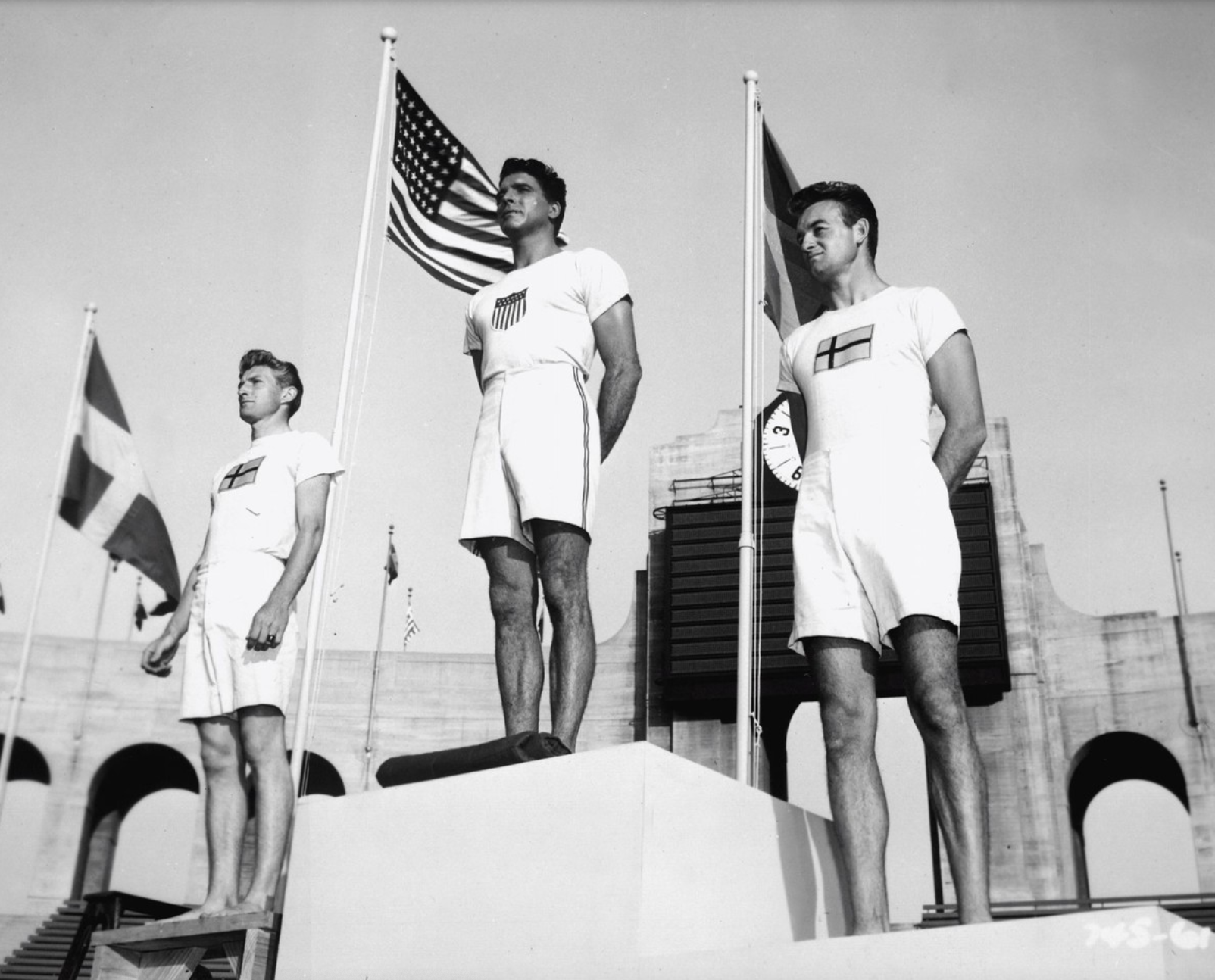
Jim Thorpe–All-American (1951), starring Burt Lancaster and directed by Michael Curtiz, tells the story of another great Native American athlete who won medals at the 1912 Olympics and distinguished himself in various sports, both in college and on professional teams. But the injustice of taking his medals away upset me a lot as a child when I first saw this movie and it still rankles, especially considering how everyone gets paid for everything now. (His Olympic honors were reinstated in 1983, thirty-two years after this film was released and thirty years after Thorpe’s death.)
Well, a toast to Billy Mills and to Jim Thorpe. And while we’re at it, I’m going to toast Buffalo Bill Cody, who was no Olympian, but could have been. When a scout for the U.S. Army, he performed an exceptional feat of riding as a lone dispatch courier from Fort Larned to Fort Zarah (escaping brief capture), Fort Zarah to Fort Hays, Fort Hays to Fort Dodge, Fort Dodge to Fort Larned, and, finally, Fort Larned to Fort Hays, a total of 350 miles in 58 hours through hostile territory, covering the last 35 miles on foot. Cody was awarded the Medal of Honor in 1872 for documented gallantry above and beyond the call of duty as an Army scout in the Indian Wars. It was revoked in 1917, along with medals of 910 other recipients dating back to the Revolutionary War, when Congress decided to create a hierarchy of medals. Good grief. His medal was reinstated in 1988.

Frankly, you can have your medals. This is how my mind works.

*Maxine Kumin, “Morning Swim”

“I see the stars, I hear the rolling thunder”*

by chuckofish

The last of the Hibiscus unfolding…beautiful!

How was your weekend? Mine was pretty quiet. Daughter #1 returned from her conference in Salt Lake City, but she went home on Saturday to attend to things in Jeff City before leaving again on Monday. I practiced driving the OM’s new car. I am so used to driving my little Mini Cooper that it takes quite an adjustment to get used to a large SUV with all the whiz bang updates. My car doesn’t even have a rearview camera much less a buzzing seat to tell you when you are drifting over the line!

This is an interesting piece about the Unifying Power of Singing. I have mentioned how nice it is to attend a church again where everyone sings–and sings with gusto. I grew up at a church where everyone sang and we all sang in morning chapel at my private school. But increasingly (in the Episcopal Church anyway) it seems that singing has been left to the choir. It is part of the show, something to be appreciated, but not to be participated in. Maybe the small congregations feel self-conscious singing, who knows. But singing is good for the soul.

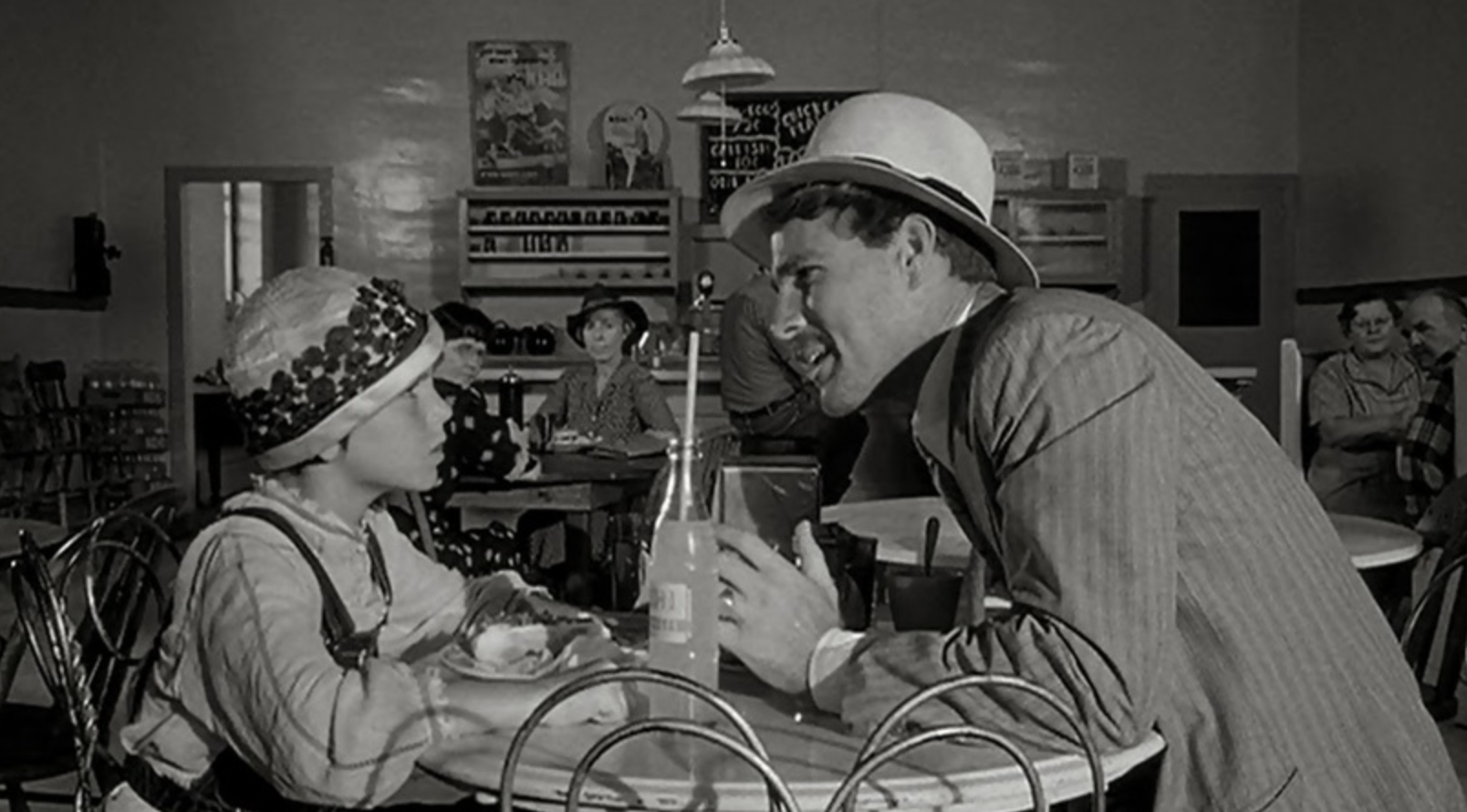
I recorded Paper Moon (1973) on TCM and watched it the other night. I had not seen it since 1973 when my Aunt Susanne took me to see it when I was back East visiting colleges the summer before my senior year in high school. I liked it then and I liked it this time around.

Well directed by Peter Bogdanovich, who keeps it simple, it was shot in Kansas and Missouri in black and white. It feels authentic to the 1930s without being precious. Ryan O’Neal plays an itinerant con man, Moses Pray, who meets nine-year-old Addie Loggins at her mother’s graveside service, where the neighbors suspect he is Addie’s father. He denies this, but agrees to deliver the orphaned Addie to her aunt’s home in St. Joseph, Missouri. O’Neal and his real-life daughter Tatum O’Neal work well together and Tatum steals the show without any Margaret O’Brien-style showing-off. I liked her. In reading about the movie, it seems that Bogdanovich had a hard time pulling a performance out of her, sometimes taking up to 50 takes of a scene (which sounds like borderline child abuse), but it doesn’t show. 

Tatum O’Neal won the Oscar for Best Supporting Actress, but clearly she is not a supporting actress. She was only nine years old, however, so I guess they thought that award was appropriate. Madeline Kahn was the supporting actress in the film and, as usual, she is terrific. You can watch it on Amazon Prime.

Here is Paul Zahl’s next list of “to watch” movies on TCM. As usual, he is right on target, but I do disagree about Vertigo (1958) which I find hokey and unwatchable. C’est la vie. I love it when he says a movie “is worth seeing once.” Quelle burn.

Here is a summer reading list of books on historical subjects from Albert Mohler, whose opinion I respect.

And finally, Baruch dayan ha’emet, Jackie Mason, who died on Saturday at age 93.

*Stuart Hine, “How Great Thou Art”