A thousand, thousand points of light
by chuckofish
This week, in between doing the things I always do, I started reading a book that my DP and I once gave our mother about C.S. Lewis and his world. Full of lovely photos of the countryside and thoughtful quotes, it makes soothing bedtime reading. Lewis was a lifelong, avid walker who covered a great deal of ground in Britain and Northern Ireland. He went out in all types of weather and noticed everything.
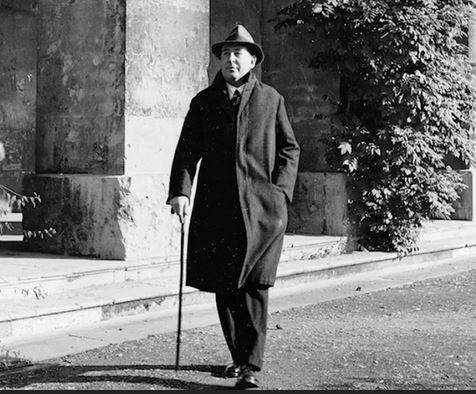
I love this passage from Lewis’s book Surprised by Joy (quoted in the book we gave our mother) in which he discusses what a friend has taught him:
But Jenkin seemed able to enjoy everything; even ugliness. I learned from him that we should attempt a total surrender to whatever atmosphere was offering itself at the moment; in a squalid town to seek out those very places where its squalor rose to grimness and almost grandeur, on a dismal day to find the most dismal and dripping wood, on a windy day to seek the windiest ridge. There was no Betjemannic irony about it; only a serious, yet gleeful, determination to rub one’s nose in the very quiddity of each thing, to rejoice in its being (so magnificently) what it was.”
At a time when our culture encourages us to seek novelty and worry about what we don’t have rather than appreciate what we do have, that passage is a good reminder to live in the here and now. It is not just a matter of ‘seizing the day’; it is a matter of gratitude and wonder. This life is short and we don’t want to squander it.
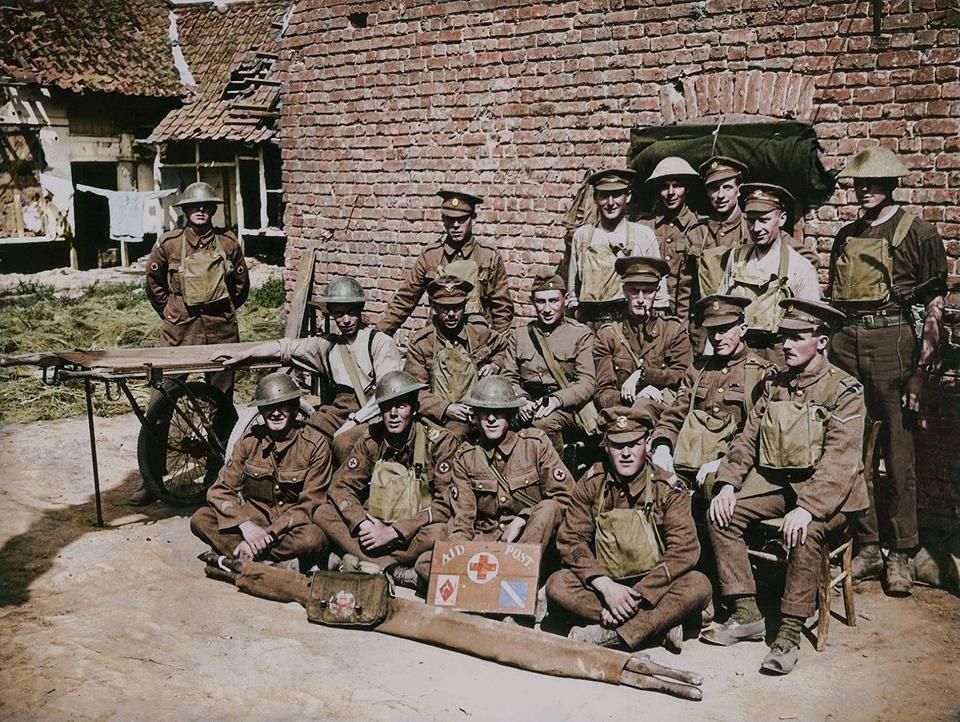
Well, as is often the case, one book sent me to another, and I started reading the first volume of C.S. Lewis’s letters. I was curious to find out about his experience in WWI, during which he served as a 2nd Lieutenant in the Somerset Light Infantry. Here’s a photo of the regimental aid and post staff (not Lewis’s section but the only photo I could find of Somersets).
It seems that Lewis spent much of his war in the hospital, first with a nasty bout of trench fever and then again after being wounded at the 2nd Battle of Arras. Although I knew he had been wounded, my grasp of the details was hazy to say the least. For some reason, I thought that he had been left for dead on the battlefield at the Somme, but it turns out he wasn’t even in the army in 1916. Lewis was wounded at Arras on April 15, 1918, when a shell hit, killing the Sergeant standing next to him and knocking Lewis out. In a letter to his father dated May 4th, he described his wounds:
As a matter of fact I was really hit in the back of the left hand, on the left leg from behind and just above the knee, and in the left side just under the arm pit. All three were only flesh wounds. The myth about being hit in the face arose, I imagine, from the fact that I got a lot of dirt in the left eye which was closed up for a few days, but is now alright. I still can’t lie on my side (neither the bad one nor the other one) but otherwise I lead the life of an ordinary mortal and my temperature is alright. So there is no need for any anxiety at all.
With typical humor, he wrote in another letter home:
I expect to be sent across in a few days time, of course as a stretcher case: indeed whatever my condition they would have to send me in that way, because I have no clothes. This is a standing joke out here–the mania which people at the dressing stations have for cutting off a wounded man’s clothes whether there is any need for it or not. In my case the tunic was probably beyond hope, but I admit that I mourn the undeserved fate of my breeches. Unfortunately I was unconscious when the sacrilege took place and could not very well argue the point.
It turned out that his wounds were more severe than he initially described, since two pieces of shrapnel had penetrated his chest and could not be removed. Indeed, if we pay attention to the letter dates and read between the lines, his near-death becomes apparent. Eventually, he was transferred back to England, and though soon ambulatory, he was still in the hospital in mid-June.
One can’t help thinking how different our world would have been if Lewis had not survived. Yet survive he did, and by 1929 he could deny his belief in God no longer. The rest of the story you know well, but I highly recommend that you revisit Lewis’s Christian writings; they’re next on my list.
Have a blessed Palm Sunday!
Letter quotes from Lewis, C. S.. The Collected Letters of C.S. Lewis, Volume 1: Family Letters, 1905-1931. HarperOne. Kindle Edition.
 dual personalities