Quarantine literature
by chuckofish
Toward the beginning of the COVID-19 crisis, lots of people were writing about plague literature. Most often referenced was Albert Camus’s The Plague, though people also loved to note that Shakespeare largely wrote his plays while in quarantine. So far I have failed to bring much literary focus to this blog, though I did make the rather obvious observation that Thoreau socially distanced at Walden Pond.
Well, I finally got around to making some headway in The Scarlet Letter, which I started way back when in February. And I couldn’t help but think that Hester Prynne, too, was an expert at social distancing. I’m half kidding. Ostracized is more like it, but she had her little cabin outside of town and she rarely went within six feet of others.
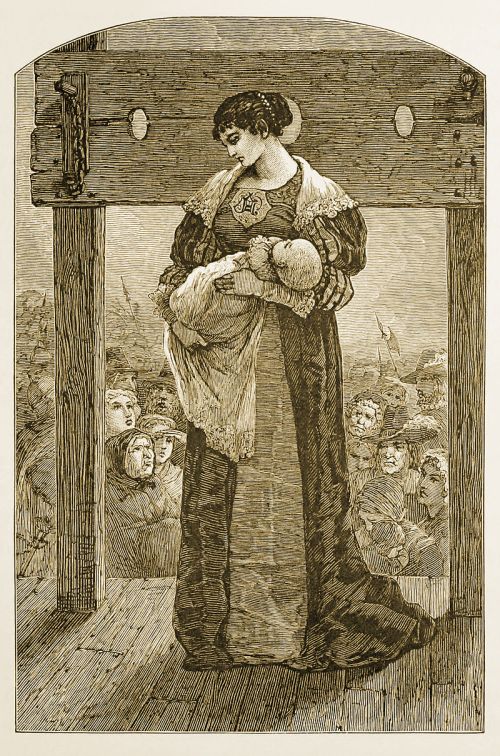
In the bit I read last night, Hester reconnects with Arthur Dimmesdale, and feels liberated from her “quarantine” for the first time in seven years:
But Hester Prynne, with a mind of native courage and activity, and for so long a period not merely estranged, but outlawed, from society, had habituated herself to such latitude of speculation as was altogether foreign to the clergyman. She wandered, without rule or guidance, in a moral wilderness; as vast, as intricate and shadowy, as the untamed forest, amid the gloom of which they were now holding a colloquy that was to decide their fate. Her intellect and heart had their home, as it were, in desert places, where she roamed as freely as the wild Indian in his woods. For years past she had looked from this estranged point of view at human institutions, and whatever priests or legislators had established; criticising all with hardly more reverence than the Indian would feel for the clerical band, the judicial robe, the pillory, the gallows, the fireside, or the church. The tendency of her fate and fortunes had been to set her free. The scarlet letter was her passport into regions where other women dared not tread. Shame, Despair, Solitude! These had been her teachers, — stern and wild ones, — and they had made her strong, but taught her much amiss.
Do you feel that you are wandering a moral wilderness?
Anyway, I haven’t yet finished the novel and I’ve forgotten precisely how it ends. I’ll have to let you know if — and how — Hester (and her daughter) successfully reenter society.
 dual personalities