Food for thought
by chuckofish
For the past couple of weeks, this book has been calling to me from the shelf:

It is a wonderful annotated selection of Emerson’s works that is as pretty to look through as it is inspiring to read. If I recall correctly, my DP aunt sent it to me the first Christmas that I was in graduate school.
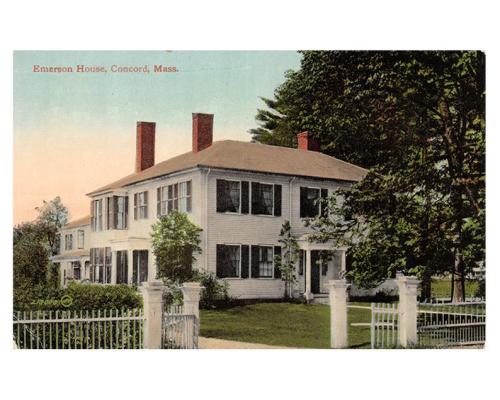 Reading a paragraph or two of Emerson is always a good idea. Without further ado…
What I must do, is all that concerns me, not what the people think. This rule, equally arduous in actual and in intellectual life, may serve for the whole distinction between greatness and meanness. It is the harder, because you will always find those who think they know what is your duty better than you know it. It is easy in the world to live after the world’s opinion; it is easy in solitude to live after our own; but the great man is he who in the midst of the crowd keeps with perfect sweetness the independence of solitude.
–From “Self-Reliance”
Books are the best of things, well used; abused, among the worst. What is the right use? What is the one end which all means go to effect? They are for nothing but to inspire. I had better never see a book than to be warped by its attraction clean out of my own orbit, and made a satellite instead of a system. The one thing in the world of value, is, the active soul, — the soul, free, sovereign, active. This every many is entitled to; this every man contains within him, although in almost all men, obstructed, and as yet unborn. The soul active sees absolute truth; and utters truth, or creates. In this action, it is genius; not the privilege of here and there a favorite, but the sound estate of every man. In its essence, it is progressive. The book, the college, the school of art, the institution of any kind, stop with some past utterance of genius. This is good, say they, — let us hold by this. They pin me down. They look backward and not forward. But genius always looks forward.
— From “The American Scholar”
Dream delivers us to dream, and there is no end to illusion. Life is a train of moods like a string of beads, and, as we pass through them, they prove to be many-colored lenses which paint the world their own hue, and each shows only what lies in its focus. From the mountain you see the mountain. We animate what we can, and we see only what we animate. Nature and books belong to the eyes that see them. It depends on the mood of the man, whether he shall see the sunset or the fine poem. There are always sunsets, and there is always genius; but only a few hours so serene that we can relish nature or criticism. The more or less depends on structure or temperament. Temperament is the iron wire on which the beads are strung.
— From “Experience”
 dual personalities