Working 9 to 5
by chuckofish
My mother and I were recently chatting about the different buzz around millennials and work — she had seen something like this story, which notes that half of millennials surveyed and 75% of Gen Z-ers surveyed had quit jobs at least in part because of mental health issues.
In the past year, DN and I have both transitioned from the fully-academic life to the academic administration life, i.e., staff jobs. 9-to-5s! Salaries! Office culture! Meetings, meetings, meetings. In many ways, this has been an extreme improvement, namely because of an increase in financial stability and a decrease in the emotional pressure to consistently prove one’s brilliance through scholarly arguments. For me, the beauty of a job is actually stressing less about it. Of course, I am prone to declaring that “I need a glass of wine” at the end of a day full of this or that annoyance. But I’m not sure if that makes me a millennial with marginally better mental health than others, or if academia has just set the bar for the workplace very, very low.

That said, I would like to own this hat
At any rate, it’s been a topic for reflection lately, and when I thought “maybe I’ll blog about work this week,” I was reminded of Louisa May Alcott’s nineteenth-century novel Work: A Story of Experience. One of my friends has said that she thinks it’s truly the Great American Novel, which, I’m not quite there, but it is good and I do recommend it.
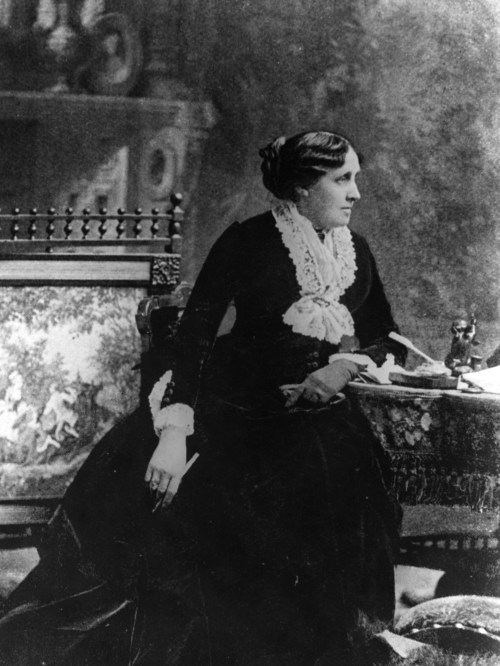 The novel’s protagonist, Christie Devon, is a young woman like many in the nineteenth century: she wants her life to have purpose. She wants to work! She believes in family and the home, but she also wants to see the world and contribute to it. Some people seem to think this is a new approach to womanhood, but it really isn’t! Christie tests out a variety of careers, including work as an actress, a caregiver, and a seamstress. What I like about the novel is that it doesn’t focus on the work at the expense of all else. Christie also has friendships and romances, and at times even chooses not to work in order to be at home. It isn’t about the work, you see — it’s about collecting a whole life of experiences.
Christie was one of that large class of women who, moderately endowed with talents, earnest and true-hearted, are driven by necessity, temperament, or principle out into the world to find support, happiness, and homes for themselves. Many turn back discouraged; more accept shadow for substance, and discover their mistake too late; the weakest lose their purpose and themselves; but the strongest struggle on, and, after danger and defeat, earn at last the best success this world can give us, the possession of a brave and cheerful spirit, rich in self-knowledge, self-control, self-help. This was the real desire of Christie’s heart; this was to be her lesson and reward, and to this happy end she was slowly yet surely brought by the long discipline of life and labor.
How good is that?
 dual personalities