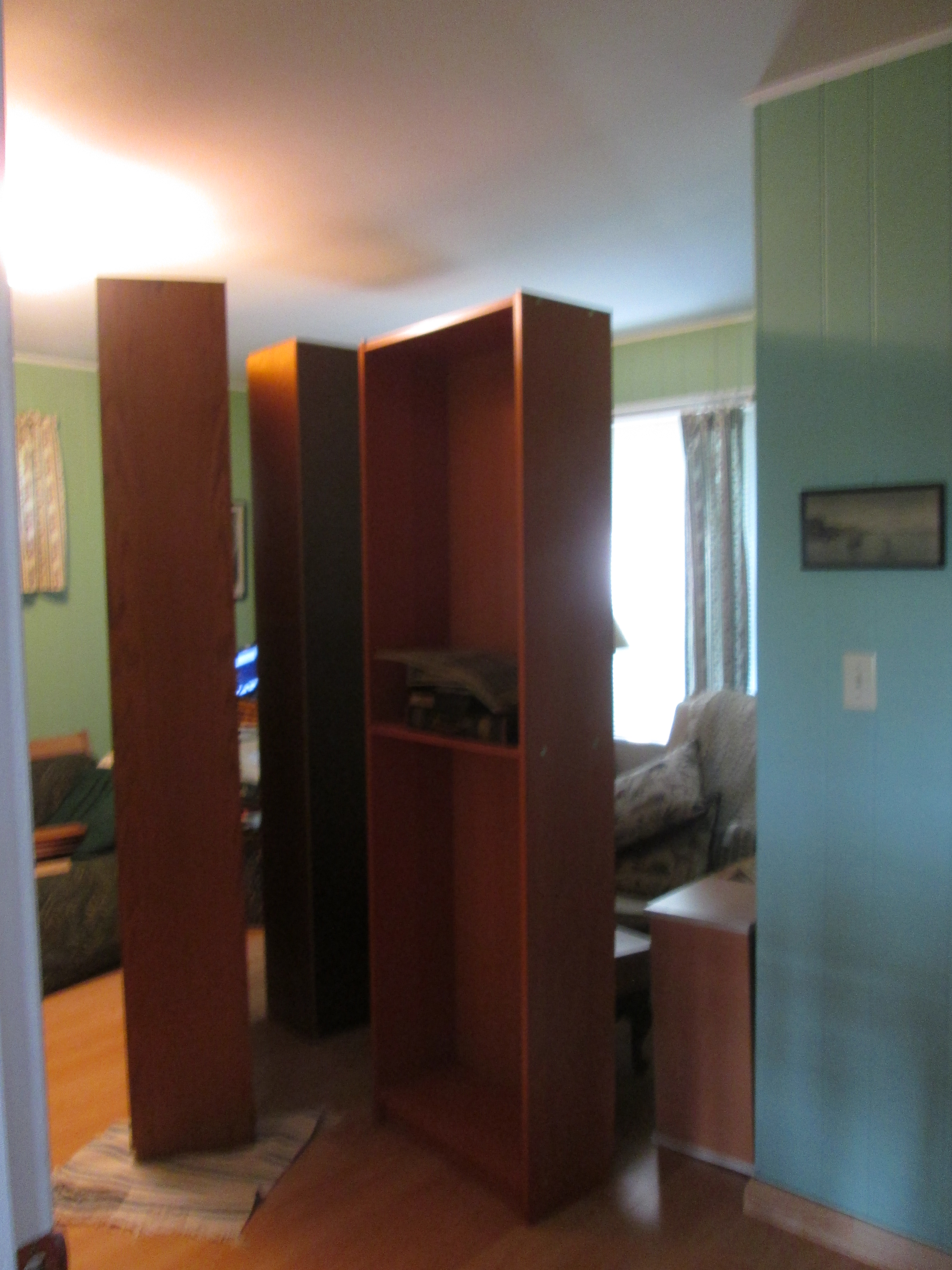
I spent the week moving books. On Monday the DH and I rented a UHAUL van so that we could move home three large, heavy, wooden bookshelves that I bought from a retiring colleague. It was a harder job than I anticipated and getting them from the second floor office to the van was a major pain, but with the help of a couple of colleagues and a kind, brawny passerby we managed. At home we did all the hefting ourselves. These shelves are big and extremely heavy!
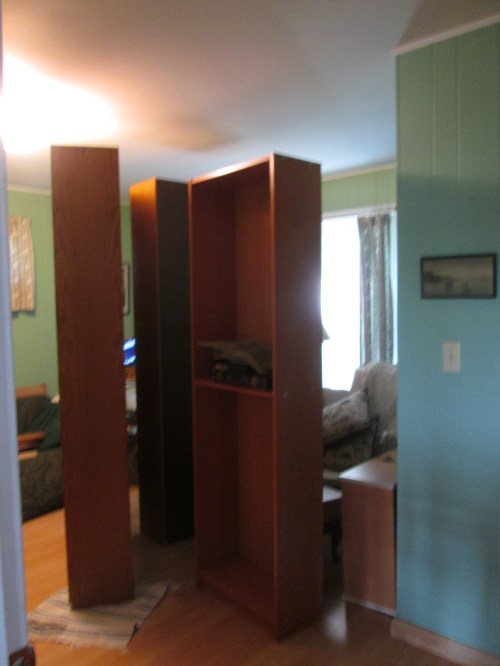
After we wrestled the shelves into the family room, the rest was up to me. I got busy moving books.

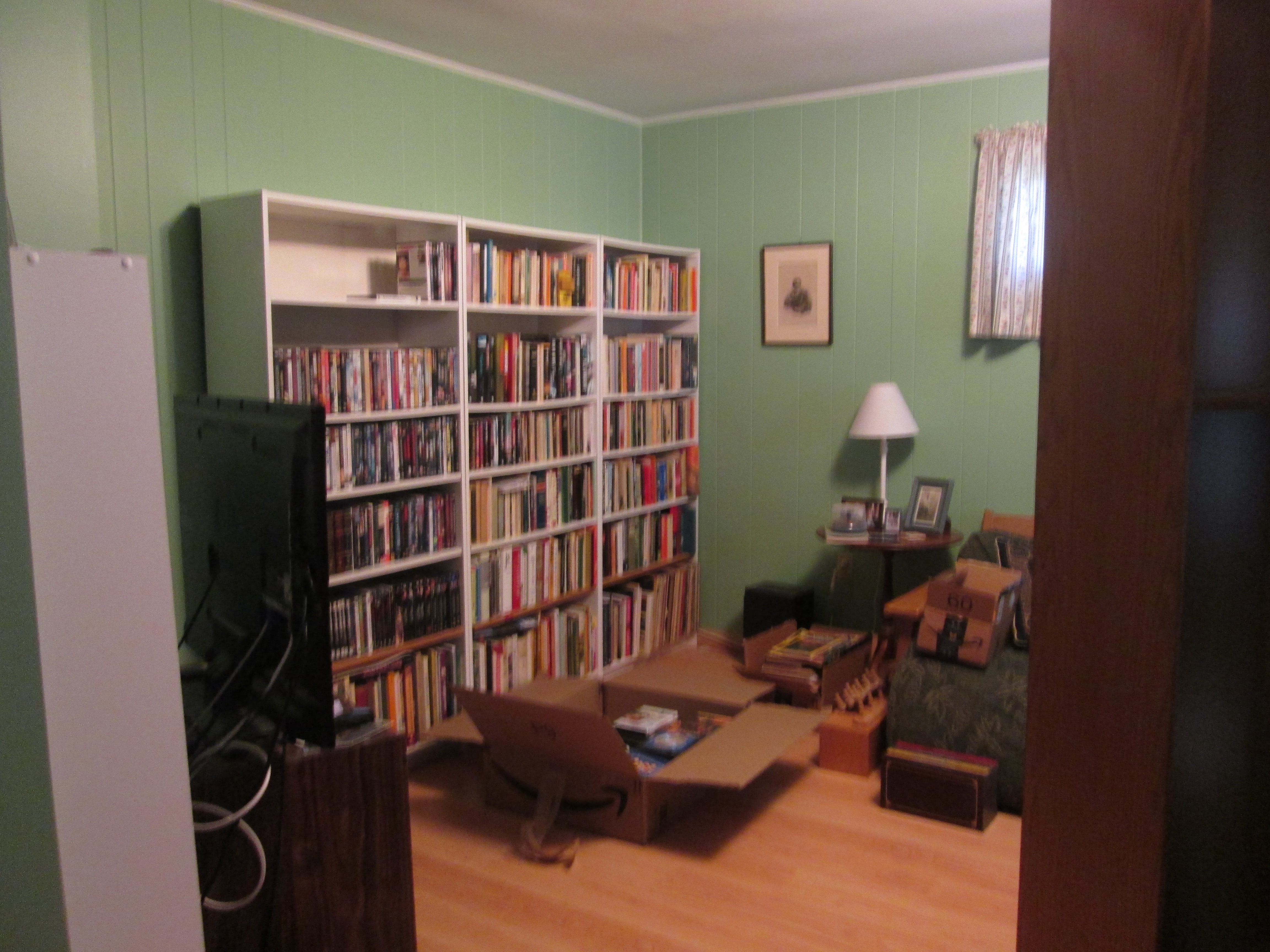
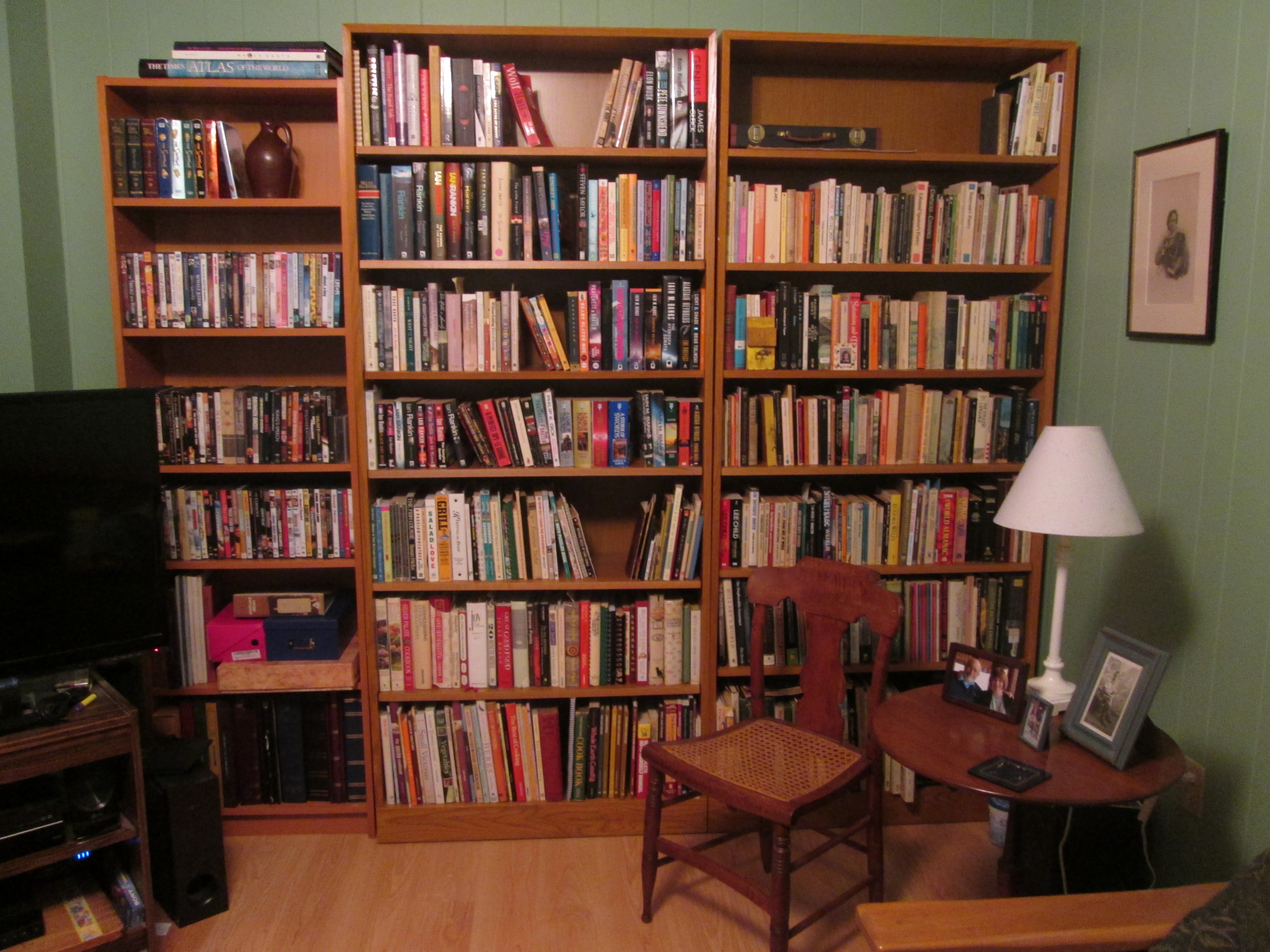
Since, as my mother used to say, “there are only so many hours in a day and so many minutes in an hour, and I tend to get tired,” it was a multi-day process that involved much bending, stretching, bruising and — dare I say it — swearing. But the results were quite satisfactory. We gained so much shelf space that I have room to grow!
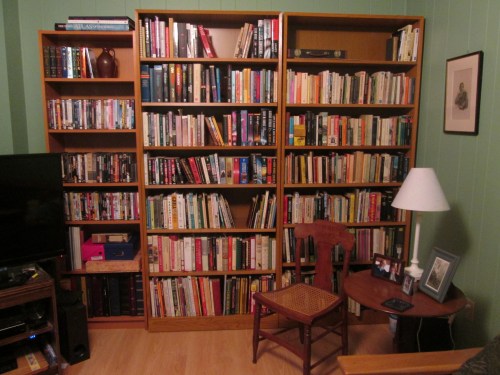
Should I have put the small bookcase between the two big ones?
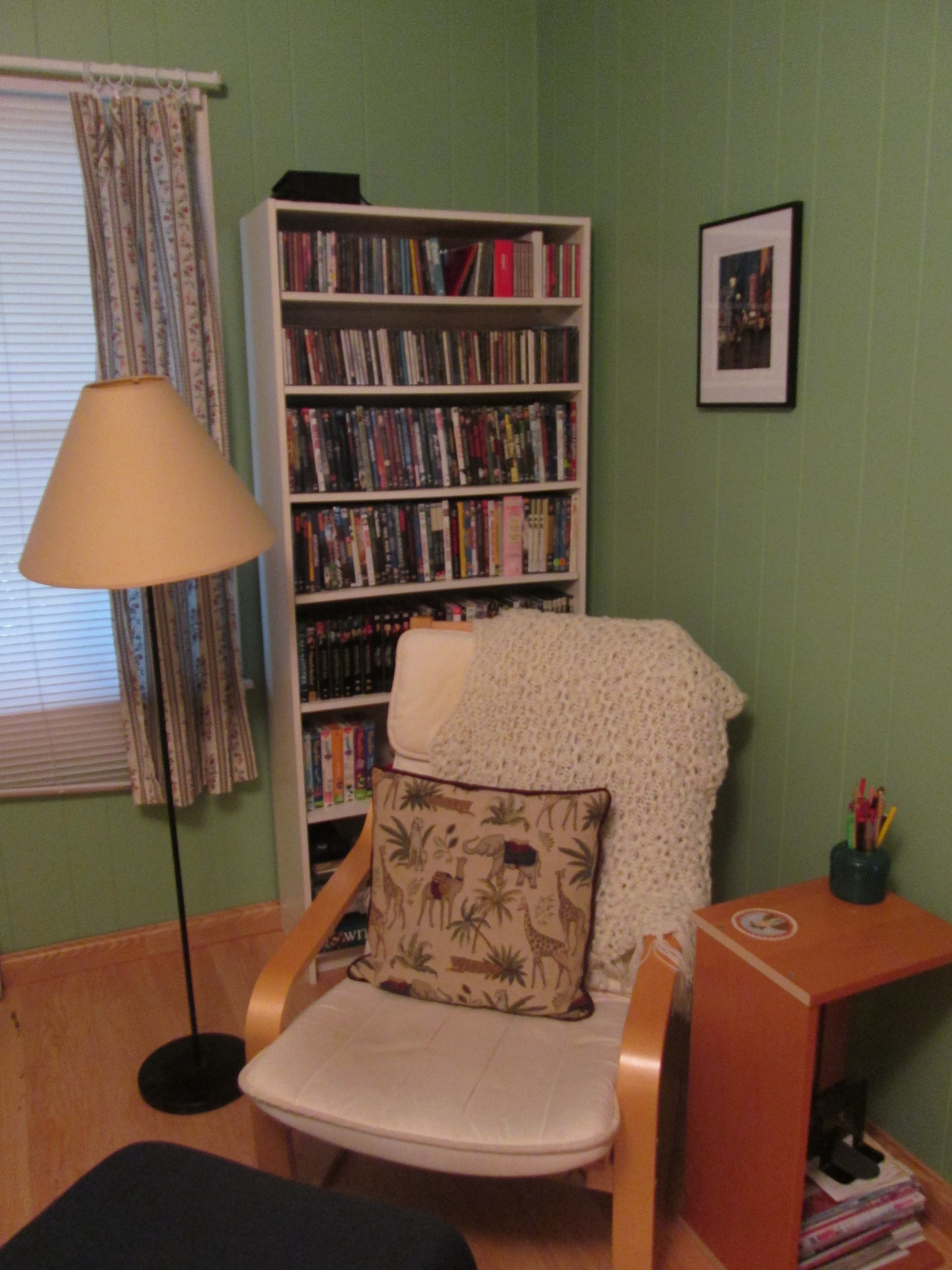
And I kept one of the old, white bookcases for DVDs and CDs.

Note the new pillow — I picked up two of them in Idaho. The Ikea chair is on its last legs, but it’ll do for now.
For the first time ever we have more shelf space than books — hallelujah! How long do you suppose it will take us to fill the space?
When I wasn’t moving books or grumbling about my aches and pains, I was reading David McCullough’s wonderful Morning on Horseback, his biography of a young Theodore Roosevelt. As I read the Author’s Note at the beginning of the book, I was particularly struck by this comment — pay special attention to the last couple of sentences:
But it was when I discovered the range and richness of surviving Roosevelt family correspondence — the many thousands of letters written not just by TR but by his mother, father, sisters, brother, grandmother, aunts, uncles, and private diaries and journals in the great Theodore Roosevelt Collection at Harvard’s Houghton Library — that I realized what a truly marvelous and very large subject I had. The letters, only a small fraction of which have been published, offered the chance to get inside the life of a well-to-do Victorian American family — a very particular and vanished way of life — to go below the surface of their world, in a way that is seldom possible for a writer, except in fiction. It became the most engrossing work imaginable. The point that one of their number was to “make history” one day seemed almost immaterial. It was a story I would have wanted to tell had their names been something other than Roosevelt or had none of them done anything special later in life.
I felt vindicated reading that! The fact that I have several large plastic tubs full of memorabilia and letters — letters I wrote and those I received from my parents, sister, brother, aunts, cousins, and friends — has excited strange looks and not a few comments from people who think that keeping such things is a waste of space and who assume that I have a morbid fear of being forgotten, which is not the case at all. The point is that the way of life that we enjoyed growing up has vanished, and someday someone might want to know what it was like to live in the second half of the 20th century. Haven’t you ever wished that you had letters your great grandparents wrote? Don’t you wonder what they were like? Well, I do, and my personal identity is very much wrapped up with my family history. Anticipating that some descendant (or perfect stranger) could think similarly, I will keep all my ‘stuff’ to pass along. So, children, please don’t throw it all away!!
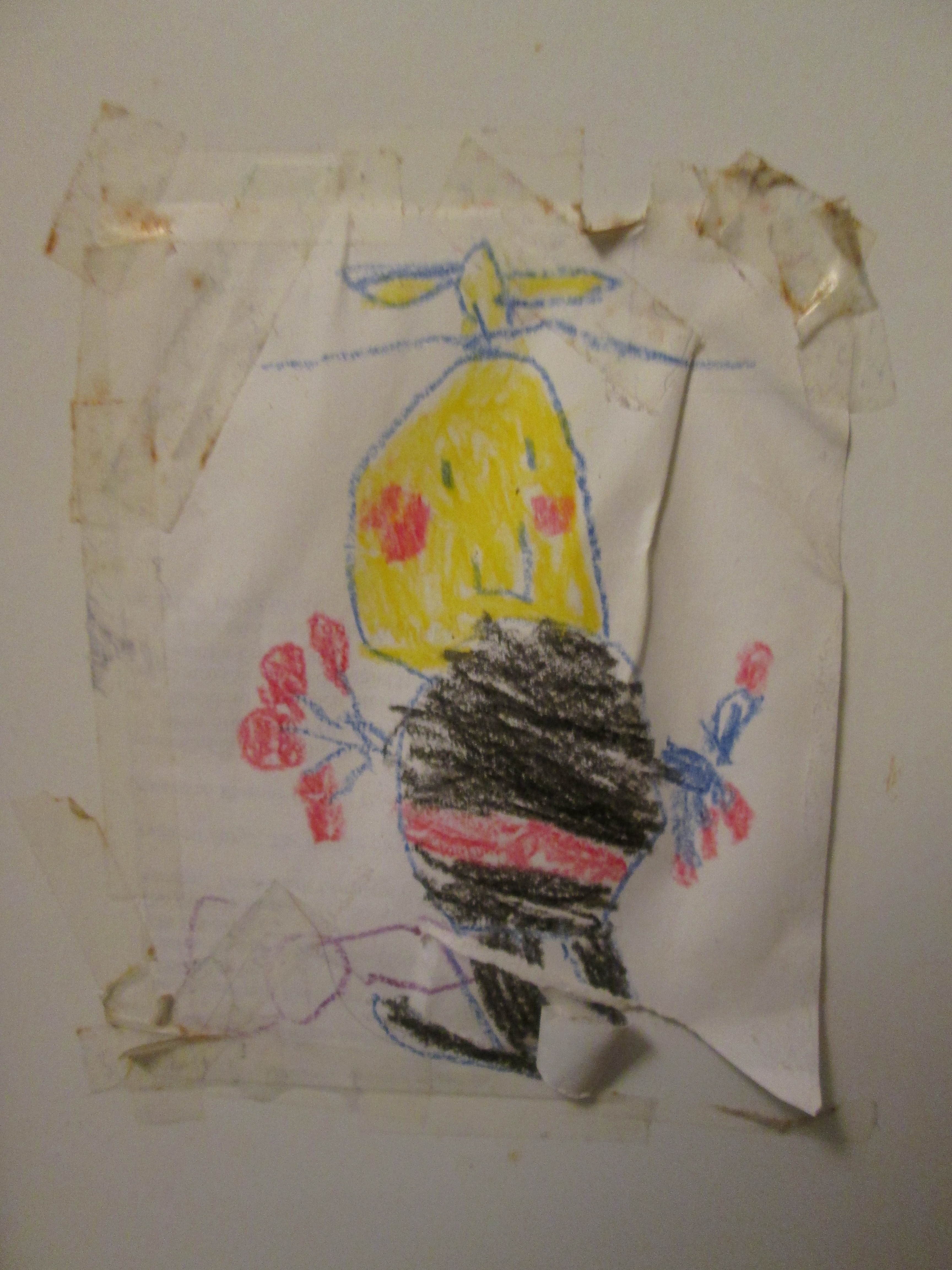
Look around! There are memories everywhere. Taped to the side of one of those white bookcases and totally hidden from view, I found this lovely drawing:
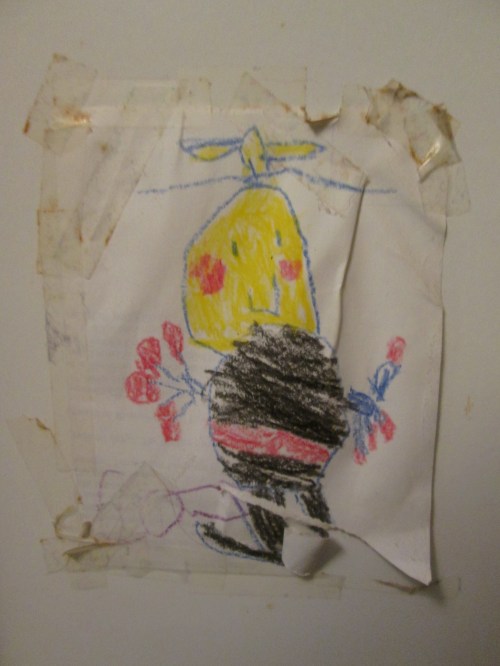
I’m not sure which of my children drew it, but I’m going to leave it where it is. If that makes me a sentimental fool, well, so be it. I’d rather be surrounded by memories than living in a context-free, meaningless present. Remember what Shirley Jackson said about reality: “No live organism can continue for long to exist sanely under conditions of absolute reality; even larks and Katydids are supposed, by some, to dream.” Words to ponder.

 Here’s to hanging in there.
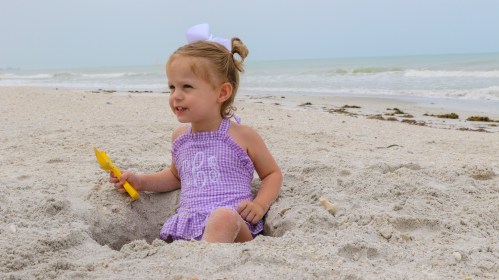
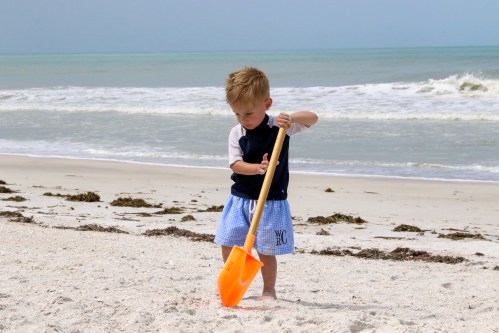

 They’ll be gone for a week. We’ll rest up in the meantime.

 dual personalities