Be that as it may*
by chuckofish
“There does not exist any more a holy mountain or a holy city or holy land which can be marked on a map. The reason is not that God’s holiness in space has suddenly become unworthy of Him or has changed into a heathen ubiquity. The reason is that all prophecy is now fulfilled in Jesus, and God’s holiness in space, like all God’s holiness, is now called and is Jesus of Nazareth.”
―
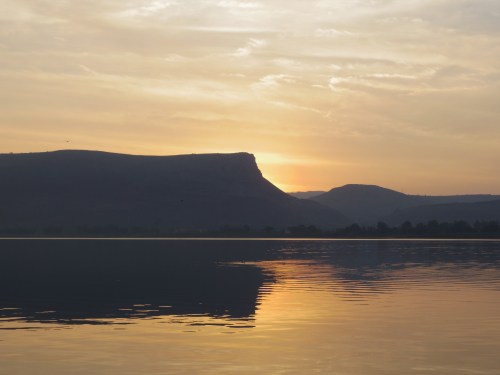
Karl Barth is correct, of course. You can go to Israel and walk where Jesus walked and see the landscape that he saw, but he is risen and no longer there. And what is left, other than the landscape, is pretty crass.
I loved the Sea of Galilee,
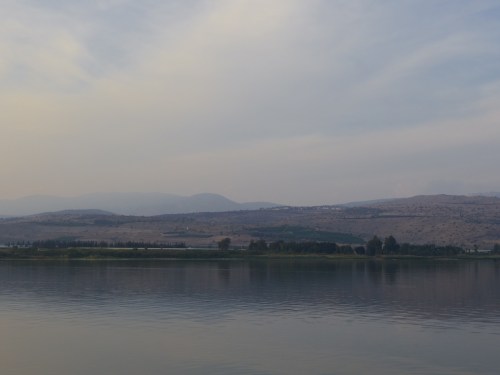 the sunrise
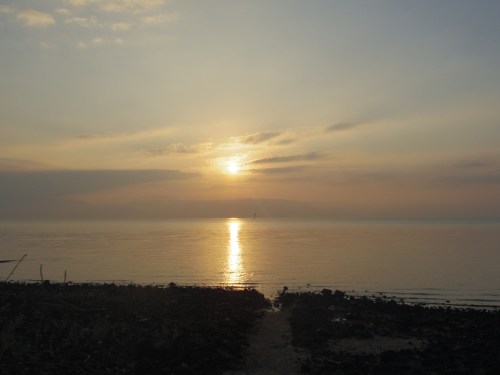 and the sunset.
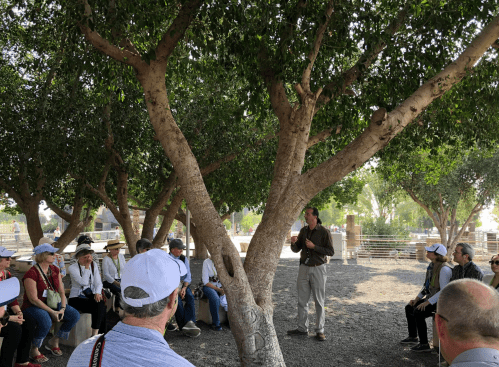
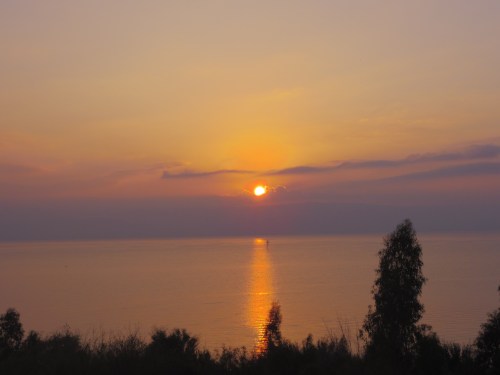 I liked Capernaum, a fishing village on the northern shore of the Sea of Galilee where Jesus centered his public ministry in Galilee. I liked sitting under the olive trees
 and imagining Jesus there.
 But once we were off to Cana, the site of Jesus’s first public miracle, changing water to wine at a wedding reception, where the Franciscans have built a church,
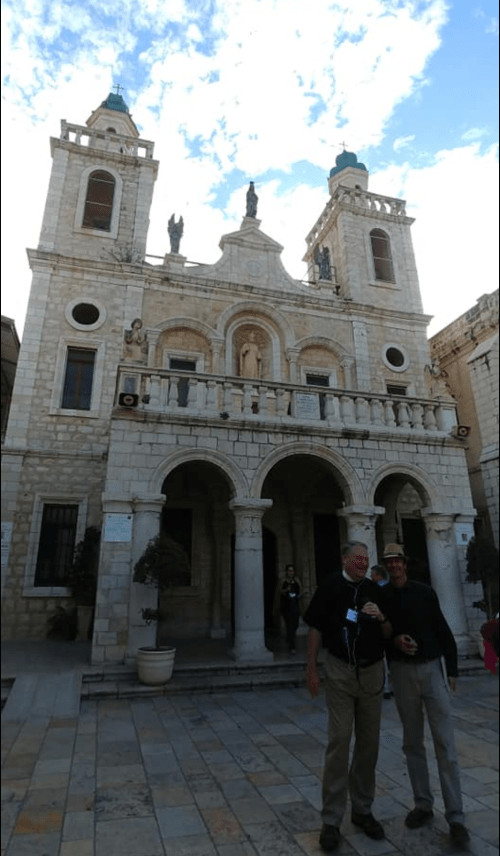
they lost me.
I mean, I thought I was in Italy.

I did not expect to have a big mountain-top experience or anything like that on this trip and I was not surprised to find the heavily Roman Catholic presence at the Christian sites there. I can even say I am grateful to the Crusaders and the Franciscans for preserving the Christian presence in a land that is, of course, 99% Jewish and Muslim now. Without them the sites would have been obliterated long ago.
On the other hand, most of the sites are fanciful at best. The Church of the multiplication of the loaves and fishes,
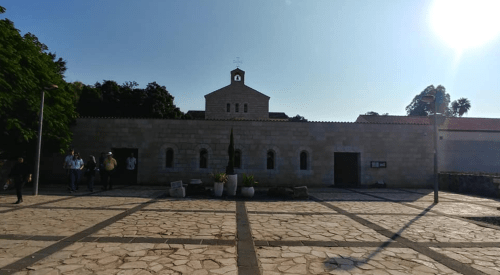
the Church of the Annunciation, built over multiple “sacred spaces” that venerated the family home of Mary, Jesus’ mother,
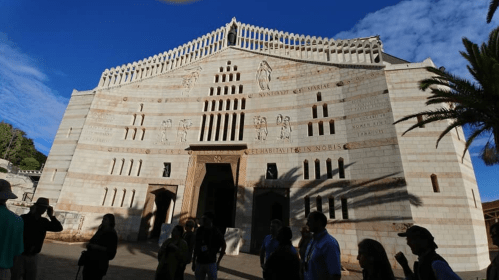
Jacob’s Well in Nablus, where Jesus asked a Samaritan woman to give him a drink,
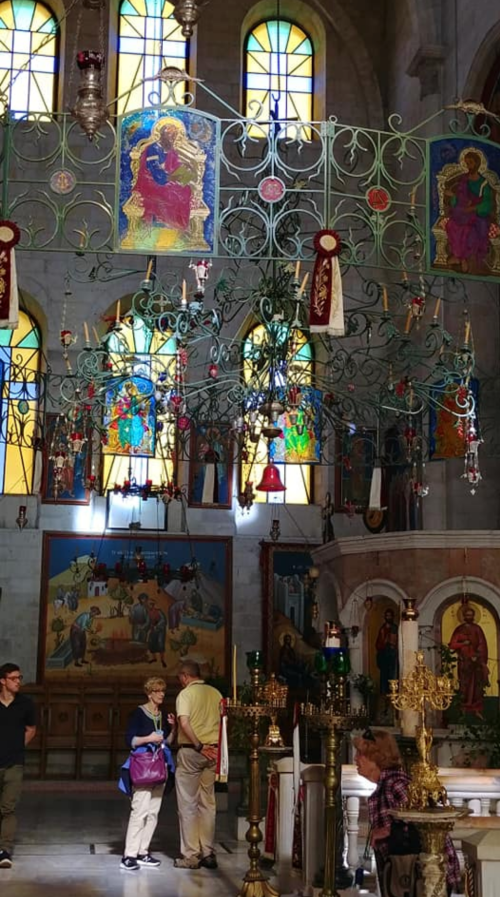 the Church of Peter in Gallicantu (where the rooster crowed), the Church of the Nativity, the Church of the Shepherds’ Fields, the Church of the Visitation (honoring Mary’s visit to Elizabeth, who was told by an angel that Elizabeth was pregnant), the Church of St. John in the Mountains (said to be the birthplace of John the Baptist), the Church of Pater Noster (located on the Mount of Olives), the Church of All Nations (built on “the rock of the agony,” where Jesus prayed before his betrayal), the Church of the Holy Sepulchre (on the site where Christ died on the cross and rose from the dead), and so on and so on.
Good grief.

I couldn’t help wondering what Jesus would make of all this.
We had a good guide, who rated the sites on a scale of 1-3 according to their historical veracity. Even so, let’s say that Jacob’s well may well be the actual well where Jesus drank water from the Samaritan woman, but the monstrosity built above it was quite distracting to me.
And all those places we visited having to do with the fabricated life of Mary? Sola scriptura was my mantra. I tried not to roll my eyes too much. I focused on the fantastic flora of Israel.
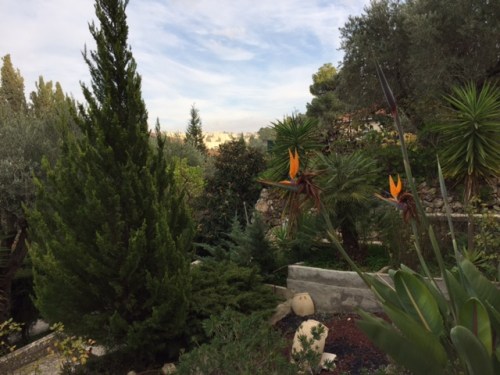
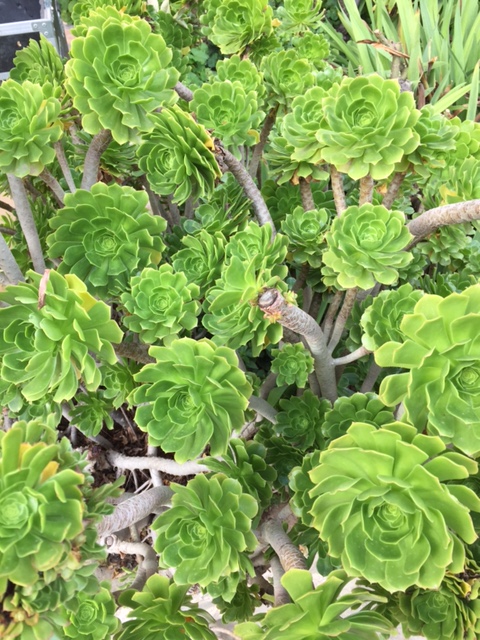
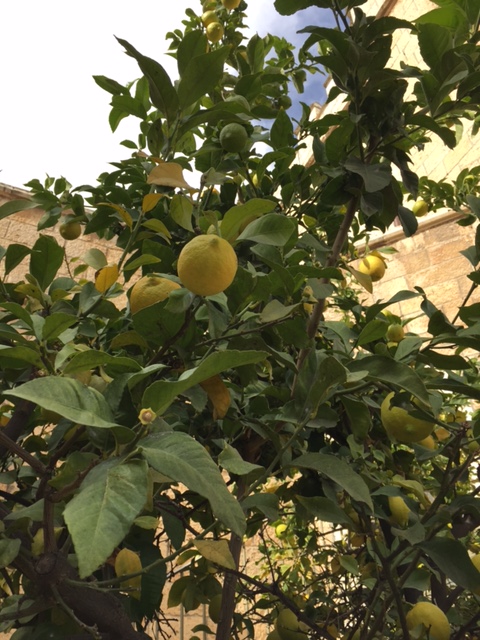
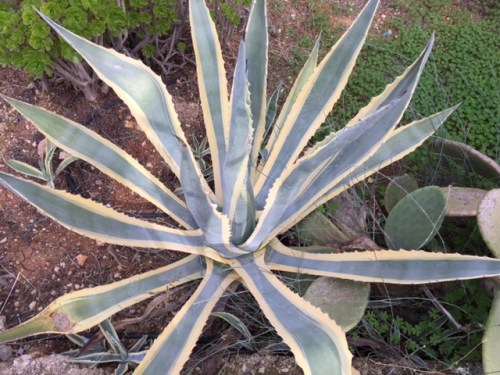
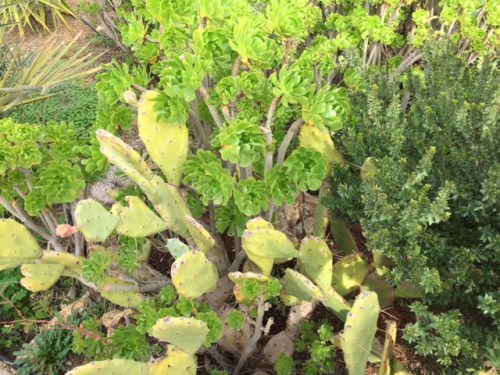
Having said that, I had a wonderful time in Israel and I saw a lot of wonderful things and met a lot of wonderful people. I will focus on those wonderful things in my next posts.
So then, brethren, we are debtors, not to the flesh, to live according to the flesh— for if you live according to the flesh you will die, but if by the Spirit you put to death the deeds of the body you will live. For all who are led by the Spirit of God are sons of God. For you did not receive the spirit of slavery to fall back into fear, but you have received the spirit of sonship. When we cry, “Abba! Father!” it is the Spirit himself bearing witness with our spirit that we are children of God, and if children, then heirs, heirs of God and fellow heirs with Christ, provided we suffer with him in order that we may also be glorified with him. (Romans 8:12-17)
*Our guide was always saying this after explaining what something was. And then he would say, “It doesn’t matter, Jesus is not here. He is RISEN.”
 dual personalities