Où le Dieu a vous semé, il faut savoir fleurir*
by chuckofish
Happy Saturday! I spent a nice quiet week working on genealogy and reading, and I hope to do the same over the weekend. I don’t have anything new to report on the genealogy front, so I’ll concentrate on what I’m reading, starting with Alan Furst, the prolific novelist, whose books take place in Europe during the 1930s and ’40s and deal with espionage and resistance against totalitarianism (mostly Fascist, but sometimes Communist, or even both). So far I’ve read Midnight in Paris, The Polish Officer, Kingdom of Shadows, The Foreign Correspondent, Spies of Warsaw, and a Hero of France, and I just started Spies of the Balkans.
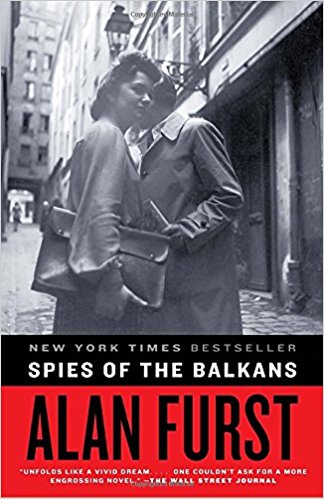
What’s so good about these books? Well, for starters, they’re well-written (barring a few annoying grammatical quirks) and extremely well researched. Furst paints a vivid picture of wartime Europe and its people. The characters are well drawn, although they vary little from book to book. Though the hero’s name, background, nationality, and circumstances all change, he is always essentially the same person — as in a Dick Francis novel. Ditto women and supporting characters. I don’t mind that in the least. In fact, there’s something oddly reassuring about it, and it works because each novel deals with a different aspect of the war and how regular people, who were not trained spies or fighters, rose to the occasion and fought back as they could. The books are remarkably restrained in terms of violence and body-count. Furst relies on his readers’ prior knowledge in that sense: we all know how bad the Gestapo and SS were, and we don’t need to have it spelled out in great detail. In fact, I think the tension is worse when these things are left to the imagination. The books aren’t perfect. I could do without the obligatory sex scenes, which are a lazy stand-in for actual romance, but you can’t have everything. These books remind us, their thoughtlessly comfortable and privileged readers, just how lucky we are that our predecessors had gumption and were willing to sacrifice everything so we could be free.
Yes, I’ve been binge-reading Alan Furst, but I’ve also been reading a couple of other books: Drew Gilpin Faust’s, This Republic of Suffering: Death and the American Civil War, and John Lewis Gaddis’ On Grand Strategy.

I bought the Faust book a few years ago and read much of it then, but other things intervened and I never finished it. I am determined to do so now. It’s a great read.
John Lewis Gaddis, Robert A. Lovett Professor of Military and Naval History at Yale, runs a strategy seminar that is famous on and off campus.
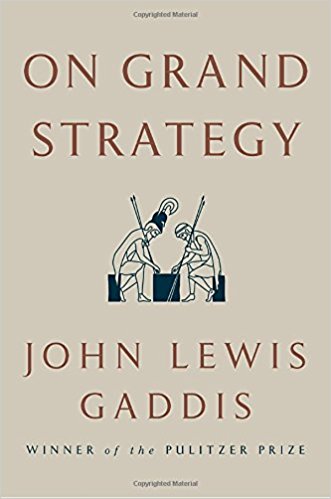
So far, the book offers an accessible and interesting introduction to the subject. I’ll let you know how it goes.
After I read these books, it will be time to consider my summer reading list. That reminds me of my youth when I made one every year about this time, though I confess that I rarely read what was on the list. Did you make reading lists? Do you still? What will be on your summer reading list?
Why not start with a classic?

Whatever you choose, keep reading!
*”Wherever God has planted you, you must know how to flower” (French proverb, in Alan Furst, Spies of Warsaw)
 dual personalities
I will be starting the FURST novels asap! Also I am just sending the Faust book to Susie! Love the gif.
I’m really enjoying Kingdom of Shadows so far! Thanks for the recommendation.
You could always add some nineteenth-century American women writers to your list, in solidarity with my dissertation defense this summer 😉 I just gave Mom Catharine Sedgwick’s A New England Tale. I am looking forward to reading the Faust soon!
Thanks for the recommendation — I’ll look up Catharine Sedgwick!