Begin at the beginning
by chuckofish
In his “10 tips to writing”, Elmore Leonard advised, “Avoid prologues. They can be annoying, especially a prologue following an introduction that comes after a foreword.” Inasmuch as he was advising against pretentious self-indulgence, I agree. But there is an argument to be made in favor of ancillary material. If you explore a book before starting to read, you can find all sorts of wonderful gifts: an introduction; foreword; prologue; epilogue; afterward; appendices; maps and illustrations; lists of dramatis personae, and indices. They may not all be necessary, but they can be helpful, edifying, or just plain funny.
Take, for example, this ‘letter’ at the beginning of John Buchan’s The Three Hostages (1924):
To a young gentleman of Eton College:
Honoured Sir,
On your last birthday a well-meaning godfather presented you with a volume of mine, since you had been heard on occasion to express approval of my works. The book dealt with a somewhat arid branch of historical research, and it did not please you. You wrote to me, I remember, complaining that I had “let you down,” and summoning me, as I valued your respect, to “pull myself together.” In particular you demanded to hear more of the doings of Richard Hannay, a gentleman for whom you professed a liking. I too have a liking for Sir Richard, and when I met him the other day (he is now a country neighbour) I observed that his left hand had been considerably mauled, an injury which I knew had not been due to the War. He was so good as to tell me the tale of an unpleasant business in which he had recently been engaged, and to give me permission to re-tell it for your benefit. Sir Richard took a modest pride in the affair, because from first to last it had been a pure contest of wits, without recourse to those more obvious methods of strife with which he is familiar. So I herewith present it to you, in the hope that in the eyes of you and your friends it may atone for certain other writings of mine which which you have been afflicted by those in authority.
The Three Hostages is a wonderful addition to the Richard Hannay series, and if you are in the mood for intrigue, little violence, and upstanding heroes behaving bravely, I highly recommend it. Be warned, however, that Buchan’s attitude toward race belongs firmly in his era. Modern sensibilities may be affronted on occasion. He was a firm believer in British imperialism and exceptionalism.
Just after reading Buchan, I cam across this gem that I’ve excerpted (with edits) from the introduction of William Faulkner’s Sanctuary (1932). In the author’s own words,
This book was written three years ago. To me it is a cheap idea, because it was deliberately conceived to make money. I had been writing books for about five years, which got published and not bought. But that was all right. I was young then and hard-bellied. I had never lived among nor known people who wrote novels and stories and I suppose I did not know that people got money for them. I was not very much annoyed when publishers refused the mss. now and then. Because I was hard-gutted then. I could do a lot of things that could earn what little money I needed, thanks to my father’s unfailing kindness which supplied me with bread at need despite the outrage to his principles at having been of a bum progenitive.
Then I began to get a little soft. I could still paint houses and do carpenter work, but I got soft. I began to think about making money by writing. I began to be concerned when magazine editors turned down short stories, concerned enough to tell them that they would buy these stories later anyway, and hence why not now. Meanwhile, with one novel completed and consistently refused for two years, I had just written my guts into The Sound and the Fury though I was not aware until the book was published that I had done so, because I had not done it for pleasure. I believed then that I would never be published again. I had stopped thinking of myself in publishing terms.
[After a while]…I began to think of myself again as a printed object. I began to think of books in terms of possible money. I decided I might just as well make some of it myself. I took a little time out, and speculated what a person in Mississippi would believe to be current trends, chose what I thought was the right answer and invented the most horrific tale I could imagine and wrote it [Sanctuary] in about three weeks…[My publisher] wrote immediately, “Good God, I can’t publish this. We’d both be in jail.” So I told [myself], “You’re damned. You’ll have to work now and then for the rest of your life.” That was in the summer of 1929. I got a job in the power plant, on the night shift, from 6 P.M. to 6 A.M., as a coal passer, I shoveled coal from the bunker into a wheel-barrow and wheeled it in and dumped it where the fireman could put it into the boiler…
I think I had forgotten about Sanctuary, just as you might forget about anything made for an immediate purpose, which did not come off… I rewrote the book…and I hope you will buy it and tell your friends and I hope they will buy it too.
You should look it up and read the whole intro. It’s really something. But much as I like Faulkner, this book is so dismally depressing that I could not read more than a third of it. It’s the story of dreadful people doing dreadful things and a decent man who, try as he might, can’t do anything about it. IMHO the best thing about the book is the introduction.
This all goes to show how important it is for readers to start at the actual beginning of a book — not with the first pages of the central text — and to explore all its nooks and crannies thoroughly. You never know what wonders you will discover.
Just so I can post one picture, I leave you with this weekend’s movie recommendation: 12 Strong. It has a great cast, including handsome Chris Hemsworth, a fine script, and wonderful scenery.
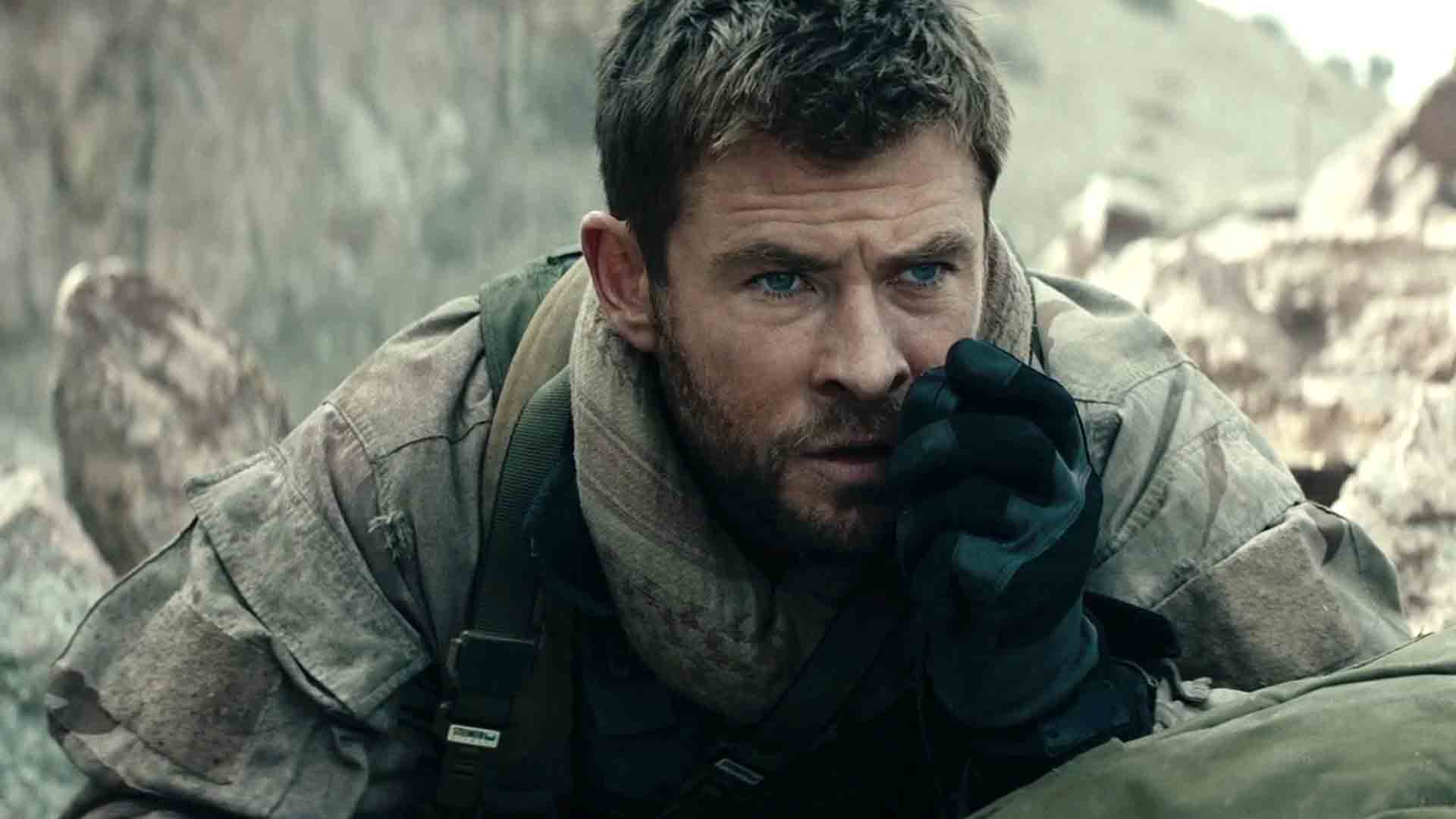
It is very well directed and surprisingly restrained in terms of violence (there’s plenty, but without the usual gouts of blood) or over-the-top machismo. Really, it’s about thoughtful, brave men doing brave things under difficult circumstances. They have a job to do and they do it — no complaints and no internal conflict. That is not to say that they enjoy killing; they just learn to live with it. Even their wives accept the situation stoically. The film has something to say beyond “war is bad.” Go see it.
Have a great weekend!!
 dual personalities
I have always loved Prefaces! Hawthorne always had prefaces to his romances, and Whitman wrote some great ones too. Wonderful post 🙂
Prefaces, appendices, introductions, all that good stuff, they can often be a lot of fun to read, but they’ve really gone out of style lately. I also miss authorial asides. I’m currently reading Ivanhoe, and it’s peppered with footnotes from Sir Walter, some elaborating upon historical points, some containing his personal opinions, and some just containing jokes. You don’t get those anymore outside of the late Terry Pratchett.
I haven’t read anything with a preface in awhile, but I promise to read it all when I do encounter one! Also, I can’t wait to see that movie (on DVD)!
This definitely put me in the mood for some Richard Hannay! I haven’t read any Buchan since I took a trip to Hilton Head almost FIVE years ago!